Quantcast

Happy Independence Day!

The 4th of July was often such an innocent thing for me as a kid with the carnival and the fireworks and the cotton candy in my small town, but as I’ve grown older and studied some of the nation’s history, I find it a more reverent occasion.

Rather than just sit back and enjoy the revelry, my mind often wanders to my grandfather and my uncle and the sacrifices they made in the name of freedom to ensure the U.S. and other countries remained free from tyranny.  I miss my grandfather and his ability to move beyond those dark days in WWII, and his love of life — embracing it full on, though not without grumbling from time to time.

It is in times like the ones we are in now where our own government spies on our activities — though I am not as naive to think that they have never done so before — that I feel we take our freedoms for granted.

However, with my little girl nearing school age, I find that I want to spend quiet moments and enjoy her experiences — things that are all new to her, those are the moments of wonder and joy that we sometimes miss out on when we’re hustling to and from work, etc.  So take time to spend with family and enjoy those moments before they disappear once again into the background.

Happy Independence Day to you all!
Interview with Poet Kathryn Kirkpatrick

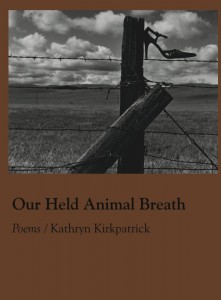
I reviewed Our Held Animal Breath by Kathryn Kirkpatrick back in June and found that the book stayed with me long afterward, forcing me to revisit some particularly resonant pieces, like “Millennium” and “At the Turkey Farm,” that question the loneliness we feel when what we should see and feel is that connection we have with the animals and world around us.  There is so much to discuss in the collection, that it would make an interesting book club discussion.  I was intrigued enough to pose my own questions to the poet, and today, I share with you her answers.

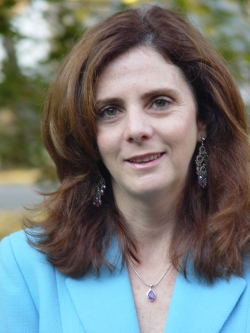
Please give Kathryn Kirkpatrick a warm welcome.

Our Held Animal Breath seems to refer to the connections between ourselves and the wider animal kingdom; what is your view of humanity’s place in the animal kingdom and nature?

I’ve always felt myself to be what would now be called bio-centric or eco-centric.  That means our species doesn’t have any greater right to the planet than any other; we should be sharing it with all the other creatures.  I can remember as a sophomore in college giving an impassioned report to my biology class on endangered species.  That was back in the early 1970s when it was becoming widely known how human activities were depriving so many species of their habitats.  As a poet, I am increasingly working to develop my already strong empathy for animals.

How hard is it to change perceptions about how humans should treat animals and the environment and how important is it that we do so, in your opinion?

I think it’s critical that we change because our anthropomorphic beliefs and behaviors have already created what Bill McKibben has called Eaarth; he’s changed the spelling of earth to denote the radical shifts that have already happened to our atmosphere and our oceans such that the severe effects of climate change are now here and coming.  I find it heartbreaking that this wasn’t inevitable; the scientists have been warning us for decades.

But perhaps what the scientists missed was that at the root of this environmental crisis is the human assumption that nature is here exclusively for our use, and we can see this everywhere in the U.S., most especially in our attitudes toward and our treatment of animals.  We value those animals who serve a function for us–as companions, as workers; we encroach on the habitats of wild animals; and, we warehouse animals for food in the most appalling conditions.  But animals are subjects of their own lives, and if we believed that we would respect their habitats and see that ultimately treating the earth with respect and gratitude is good for both us and all the others.

Most people actually love animals, and it takes a lot of work by the dominant culture to get them to ignore the suffering of animals.  So when I can evoke feelings in a poem for other creatures, I can remind readers of the empathy they have always had.  That might be some small step toward changing behaviors.

Ecofeminist ideas seem to make their way into your poems as well, have you studied the philosophy and its principles or stumbled upon them?

I’ve had my thinking transformed by the great eco-feminist thinkers of the last decades—Carol Adams, Val Plumwood, Vandana Shiva, Karen Warren, Greta Gaard.  They make the crucial connections between oppressions of women, other marginalized peoples, and nature.  It’s the most compelling philosophy we’ve come up with as a species, and if I were to have one hope for the 21st century, it’s that we’d act on those insights.

As a poet, do you find it difficult to build readership in today’s Internet driven world or is it easier?
The Internet, assuming we can keep it free, is a wonderful tool, and I think it’s brought poetry to a great many more people than ever before.  A poem in a good online magazine reaches far more people than it does in a print journal.  That doesn’t mean I think we should get rid of print journals—there’s a place for all of it.  The monolithic thinking that says we’re all digital is the same kind of thinking that has brought us monocultures in all their limiting forms—in our food, our languages, our mindsets.

Finally, what are some of your favorite poems/poets who you’d like to see gain a wider audience?

I’d include in any list of my favorite poets Adrienne Rich, Seamus Heaney, Eavan Boland, Denise Levertov, Sylvia Plath, Paula Meehan, Gary Snyder, William Butler Yeats, and Carolyn Kizer.  I have written a number of essays in the last ten years on the work of the Dublin poet, Paula Meehan.  There is no one working today that I know of whose craft and vision interest me more.

Thanks, Kathryn, for sharing your views on nature, poetry, and behavior with us today.

Dr. Radway’s Sarsaparilla Resolvent by Beth Kephart, Illustrated by William Sulit

Source: Author Beth Kephart
Paperback, 188 pages
I am an Amazon Affiliate

Dr. Radway’s Sarsaparilla Resolvent by Beth Kephart, illustrated by her husband William Sulit, is a companion to her centennial novel, Dangerous Neighbors (my review), that provides a more in-depth look at the mysterious William.  William Quinn is adrift when his father is sent to prison and his brother is murdered in 1871 Bush Hill, Pennsylvania.  His ma, Essie, is drowning in her melancholy, barely able to rise to drink a spot of tea in the afternoons, while William is wandering about considering the ways he can fix things.  While attempting to find the right elixir to cure his mother using the classified ads in the Ledger, William also is crafting a plan to right the other wrongs that have befallen his family to return it to stability.

“He reaches in, lifts Ma into his arms.  He presses a kiss to her forehead then straightens to find the balance of her, catching the sight of them both in the mirror across the room — William sandy-haired and river-eyed, Ma rubbed away and sinking, the two of them together like a lowercase T.  Ma’s hair is yellow and loose, a curl fallen to the center of her forehead.  Her skin is pale, her hands just slightly blue.  She doesn’t weigh her right size.  She doesn’t resist.  When the sheet pulls away, her nightdress bunches at her knees.  It’s Ma’s feet that frighten William most of all — the color of bone and much too skinny to put any walking on.”  (page 13 ARC)

Through a mix of true history, careful attention to detail (as always, with Beth), and dynamic characterization, this young man becomes a beacon of honesty and integrity.  His goodness is tested, but he’s on the straight and narrow, despite the stacked circumstances and the pressure to cave in and become someone less than he is.  Kephart brings home the pressure of change and darkness with the thrumming of the machines, the locomotive commotion, and the constant mechanization of the city pounding in the background.  While the industrialization signifies a change and progress that can be beneficial and create opportunity, there also is the darker underbelly of those changes that must be dealt with — the corruption and the abuse of those willing to take advantage of their position and of others.  There is a keen juxtaposition of this in the characters of Officer Kernon and the Ledger’s editor Mr. Childs — one who abuses his position to get what he wants and the other who offers his aid in the form of mentoring and money to young men in need of guidance.

William is intuitive, he’s caring, and he has a gift for returning lost animals to their rightful homes, and this becomes a way for him to see hope in his future and to his mother, a hope that even Dr. Radway’s Sarsaparilla Resolvent cannot offer.  Bush Hill comes to life in the hands of Kephart, who clearly loves her subject even the dark alleys and the unsavory places like Cherry Hill Penitentiary.  While William is less mysterious in this novel, there seems to be more to his story or at least there is more for him to see of the world, but readers will get the sense that he’s on the path he’s meant to follow and that he and his Ma will be OK.  Dr. Radway’s Sarsaparilla Resolvent by Beth Kephart, illustrated by William Sulit, is splendid and will leave readers wanting even more.

About the Author:

Beth Kephart is the author of 14 books, including the National Book Award finalist A Slant of Sun; the Book Sense pick Ghosts in the Garden; the autobiography of Philadelphia’s Schuylkill River, Flow; the acclaimed business fable Zenobia; and the critically acclaimed novels for young adults, Undercover and House of Dance. A third YA novel, Nothing but Ghosts, is due out in June 2009. And a fourth young adult novel, The Heart Is Not a Size, will be released in March 2010. “The Longest Distance,” a short story, appears in the May 2009 HarperTeen anthology, No Such Thing as the Real World.

Kephart is a winner of the Pennsylvania Council on the Arts fiction grant, a National Endowment for the Arts grant, a Leeway grant, a Pew Fellowships in the Arts grant, and the Speakeasy Poetry Prize, among other honors. Kephart’s essays are frequently anthologized, she has judged numerous competitions, and she has taught workshops at many institutions, to all ages. Kephart teaches the advanced nonfiction workshop at the University of Pennsylvania. You can visit her blog and my interview with her.

My other Beth Kephart reviews:

Summer Reading, Feeds, and Books

Lucky for me this week, I didn’t have any review books come in the mail. 

Library Loot is a weekly event co-hosted by Claire from The Captive Reader and Marg from The Adventures of an Intrepid Reader that encourages bloggers to share the books they’ve checked out from the library. If you’d like to participate, just write up your post-feel free to steal the button-and link it using the Mr. Linky any time during the week. And of course check out what other participants are getting from their libraries.

So, I’ll share with you a few of the books I snagged from the library this week instead:

1.  A Small Death in Lisbon by Robert Wilson, which I just started this past week and it’s good so far.

1941. Klaus Felsen, forced out of his Berlin factory into the SS, arrives in a luminous Lisbon, where Nazis and Allies, refugees and entrepreneurs, dance to the strains of opportunism and despair. Felsen’s assignment takes him to the bleak mountains of the north where a devious and brutal battle is being fought for an element vital to Hitler’s bliztkrieg. There he meets the man who plants the first seed of greed and revenge that will grow into a thick vine in the landscape of post-war Portugal. Late 1990s. Investigating the murder of a young girl with a disturbing sexual past, Inspector Ze Coelho overturns the dark soil of history and unearths old bones from Portugal’s fascist past. This small death in Lisbon is horrific compensation for an even older crime, and Coelho’s stubborn pursuit of its truth reveals a tragedy that unites past and present. Robert Wilson’s combination of intelligence, suspense, vivid characters, and mesmerizing storytelling richly deserves the international acclaim his novel has received.

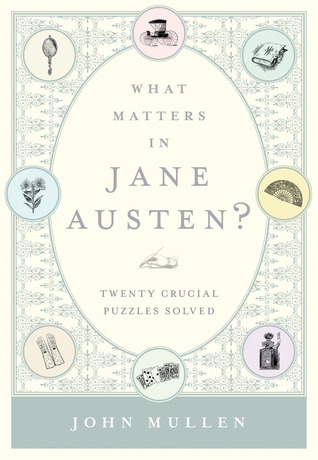
2.  What Matters in Jane Austen? Twenty Crucial Puzzles Solved by John Mullen, which I saw reviewed at Anna’s blog, Diary of an Eccentric and wanted to check out.

In twenty short chapters, each of which explores a question prompted by Austens novels, Mullan illuminates the themes that matter most in her beloved fiction. Readers will discover when Austen’s characters had their meals and what shops they went to; how vicars got good livings; and how wealth was inherited. What Matters in Jane Austen? illuminates the rituals and conventions of her fictional world in order to reveal her technical virtuosity and daring as a novelist. It uses telling passages from Austen’s letters and details from her own life to explain episodes in her novels: readers will find out, for example, what novels she read, how much money she had to live on, and what she saw at the theater.

3. His Majesty’s Dragon by Naomi Novik, which is our book club’s July pick.

When HMS Reliant captures a French frigate and seizes its precious cargo, an unhatched dragon egg, fate sweeps Capt. Will Laurence from his seafaring life into an uncertain future–and an unexpected kinship with a most extraordinary creature. Thrust into the rarified world of the Aerial Corps as master of the dragon Temeraire, he will face a crash course in the daring tactics of airborne battle. For as France’s own dragon-borne forces rally to breach British soil in Bonaparte’s boldest gambit, Laurence and Temeraire must soar into their own baptism of fire.

***My current read is Dr. Radway’s Sarsaparilla Resolvent by Beth Kephart***

As many of you already know, Google Reader ends today. I’ve started using Netvibes, but I exported by existing feeds from Google Reader that overwhelmed me to the point that I quit using it altogether.  But this past week I ended up going through it all and paring it down to the 55 Book Blogs I want to read, the 14 authors’ blogs I want to read, 12 writing advice blogs, and a few other miscellaneous blogs for photography, local events, and more.  I’ve since moved it to Feedly because I liked how I could organize the blogs into different categories all at once, etc.  It made it much easier.

My reading has slowed some with the other activities going on this summer and of course, the work schedule that seems to have heated up.  I seem to be barely keeping my head from exploding at work these days.

But I’m hoping for a nice long holiday weekend for the 4th where I can get some reading done, and just chill out a bit — maybe even get into D.C. for some photography or just some good time at home and fireworks.

How’s your summer reading and activities going?

208th Virtual Poetry Circle

Welcome to the 208th Virtual Poetry Circle!

Remember, this is just for fun and is not meant to be stressful.

Keep in mind what Molly Peacock’s books suggested. Look at a line, a stanza, sentences, and images; describe what you like or don’t like; and offer an opinion. If you missed my review of her book, check it out here.

Also, sign up for the 2013 Dive Into Poetry Challenge because its simple; you only need to read 1 book of poetry. Check out the stops on the 2013 National Poetry Month Blog Tour and the 2012 National Poetry Month Blog Tour.

Today’s poem is from Robert Louis Stevenson:

The Swing


How do you like to go up in a swing,
   Up in the air so blue?
Oh, I do think it the pleasantest thing
   Ever a child can do!

Up in the air and over the wall,
   Till I can see so wide,
Rivers and trees and cattle and all
   Over the countryside—

Till I look down on the garden green,
   Down on the roof so brown—
Up in the air I go flying again,
   Up in the air and down!

        -- from A Child's Garden of Verses (1999) 

What do you think?

Looking for Me by Beth Hoffman

Source: Author Beth Hoffman
Hardcover, 354 pages
I am an Amazon Affiliate

Looking for Me by Beth Hoffman is a coming of age story for Teddi Overman who has a gift for restoring old furniture that speaks to her.  Her small, close-knit family from Kentucky is as diverse in background and interests as any family could be, with her brother Josh so attuned to nature — he’s almost as wild as the animals he observes and cares for — to her uptight mother Franny, who has secrets hidden deep inside.  Teddi is an independent and stubborn girl whose life is altered when she meets an older man, Mr. Palmer, who’s passing through town.  He buys a refurbished chest from her side-of-the-road shop and encourages her to follow her dream and look him up in South Carolina.  When she graduates from high school, something irrevocably changes for her family as each member either seeks freedom or learns to find that freedom is already there.

“Some people run toward life, arms flung wide in anticipation.  Others crack open the door and take a one-eyed peek to see what’s out there.  Then there are those who give up on life long before their heart stops beating — all used up, worn out, and caved in, yet they wake each morning and shuffle their tired legs through another day.”  (page 1)

The double meaning in the title comes into play when her brother makes his flight from the family farm.  The close relationship between Josh and Teddi is tender and endearing, but it also makes his lack of communication with his sister heart-breaking.  In many ways, looking for me is not about Teddi finding herself — because she already knows who she is and what she wants out of life — but about her finding the piece of herself that went missing when her brother left.  Early on in the story, even Teddi recognizes that leaving home means leaving something of yourself behind, and she even suggests that it’s a piece that cannot be reclaimed, but waits for your return and for you to remember.  Recovering that piece of herself is a journey only she can accomplish, but even so, she can and does lean on the support system of friends she finds in Charleston.

Olivia and Teddi tell each other like it is, and like most real-life friends, keep secrets from one another when they know the unsolicited advice they’d receive is not something they would want to hear.  Teddi rebuilds and refinishes furniture, but in many ways she uses those same skills to restore her own family, which fell into disrepair through a series of missteps and miscommunications.  Through a greater understanding of her mother and father’s motivations and backgrounds, Teddi is able to come to terms with her past and embrace her future fully.  Grammy Belle, Josh, Sam, Albert, Inez, and Olivia will leave lasting impressions on Hoffman’s readers, causing them to be missed something fierce when the last page is turned.

Second novels can suffer from harsh criticism, especially when they follow a wildly successful debut novel, like Saving Cee Cee Honeycutt (my review), but Looking for Me breaks through preconceived expectations to weave a story that will enchant readers with not only its southern charm and hospitality, but also the mysteries of family connections and miscommunications.  Hoffman’s second novel is captivating from the first pages and will give readers hope that the future is brighter than we expect it to be.  Another winner from an author I love.

About the Author:

Twelve days after Beth Hoffman’s first novel was published in January 2010, she became a New York Times bestselling author with foreign rights selling to prestigious publishers in Italy, Germany, France, Poland, Norway, Hungary, Indonesia, Korea, Israel, and the United Kingdom.

Before beginning her writing career, Beth was president and co-owner of an interior design studio. An artist as well as an award-winning designer, her paintings are displayed in private and corporate collections in the United States, Canada, and the UK.

Beth lives, along with her husband and two very smart cats, in a restored Queen Anne home in a quaint historic district in Northern Kentucky. Her interests include the rescue of abandoned and abused animals, nature conservancy, birding, historic preservation, and antiquing.  Visit her on Twitter and Facebook.

Let’s Explore Diabetes With Owls by David Sedaris

Source:  Little, Brown & Company
Hardcover, 275 pages
I am an Amazon Affiliate

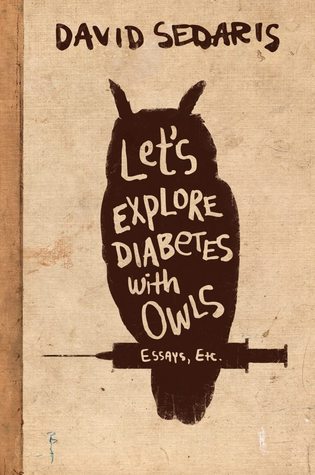
Let’s Explore Diabetes With Owls by David Sedaris is a collection of essays and some short blurbs that he suggests could be used by students in their competitions for “forensics.”  Many people talk about Sedaris’ humor and outrageous tales, and while many will look for his signature humor here, they may find that it is a bit subdued and less abrasive than usual.  Many of these essays seem more reflective than probing (think poking with a needle), but they also resemble the tall tales that young children tell their parents when explaining what they did that day or why they got in trouble, etc.

“Their house had real hardcover books in it, and you often saw them lying open on the sofa, the words still warm from being read.” (page 60 ARC)

The first two essays in the collection showcase backhanded sarcasm aimed at American and especially modern ideas about parenting and socialized healthcare, especially the dark fear that socialized healthcare means dirty cots and “waiting for the invention of aspirin” and the coddling of kids who are clearly engaged in bad behaviors simply because a stranger points out the child’s misbehavior.  The end of the collection, “Dog Days,” is a bit more crass in its humor, written in a rhyming poem about various dogs and the parts of themselves that are licked, snipped, and dipped.  These little stanzas were by turns slightly funny to just mediocre as they are things that any person with “toilet” humor would come up with.  In this essay collection, they stood out from the rest, but in a grotesque way.

The essays that reach back into his early family life are the most interesting, and the essay “Author, Author” is ironically humorless in its telling, but it drives the point home not only about author tours — the good and the bad — but also the changing landscape of book stores and readers.  Let’s Explore Diabetes With Owls by David Sedaris is an interesting essay collection, but fans may find it a bit more subdued than his other work.

About the Author:

David Sedaris is a playwright and a regular commentator for National Public Radio. He is also the author of the bestselling Barrel Fever, Naked, Holidays on Ice, Dress Your Family in Corduroy, Denim, When You Are Engulfed in Flames and Me Talk Pretty One Day. He travels extensively though Europe and the United States on lecture tours and lives in France.  Visit his Website.
This is my 41st book for the 2013 New Authors Challenge.

Do Androids Dream of Electric Sheep? by Philip K. Dick

Source: Public Library
Paperback, 244 pages
I am an Amazon Affiliate

Do Androids Dream of Electric Sheep? by Philip K. Dick, first published in 1968, was our June book club selection, and is the basis on which the classic movie Blade Runner is based.  (Previous to reading the novel, I’ve seen the movie, and recent memories of the watching the movie kept me alert for similarities in the book)  Rick Deckard is a bounty hunter, who works for little money in San Fransisco’s Police Department, and what money he does make is from bounties on the heads of escaped androids that escape Mars often by killing humans.  Society has evolved to the point at which androids are so human-like that they cannot be sniffed out except through a couple of tests administered by bounty hunters, which will puzzle the reader as to why the android would sit for such a test knowing that to fail means immediate retirement — a.k.a death.

Animals are no different, with many of the animals made extinct by the war and fallout, and residents of this desolate Earth are desperate to own an animal, even if it is an electric sheep.  As David Sedaris says in his essay “Loggerheads” in Let’s Explore Diabetes With Owls, “As with the sea turtle, part of the thrill was the feeling of being accepted … allowed you to think that you and this creature had a special relationship …”  These humans are looking for connections in any way that they can get them, either through animal ownership — such as ownership of electric animals — or through the empathy machine that connects them with other members of society through Mercerism.

“Empathy, he once had decided, must be limited to herbivores or anyhow omnivores who could depart from a meat diet.  Because, ultimately, the emphatic gift blurred the boundaries between hunter and victim, between the successful and the defeated.”  (page 51)

In Roger Zelazny’s introduction, he says, “His management of a story takes you from here to there in a God-knows-how, seemingly haphazard fashion, which, upon reflection, follows a logical line of development — but only on reflection.”  He’s correct in that the story shifts from Deckard’s story to that of J.R. Isidore, a so-called special or chickenhead who has been declared genetically unfit to emigrate to the Mars colony.  Isidore lives alone in a dilapidated apartment building filled with kipple, the detritus and radioactive dust, etc.  His condition requires readers to have a lot of patience for his ramblings, which in some cases seem like LSD trips or a schizophrenic break, but in some ways, Dick is attempting to demonstrate another aspect of loneliness and disconnect than what he’s showcased in the human-android relationship.  In addition, Dick seems to want readers to think long and hard about their faith in religion as the subject of Mercerism pervades the story as a way for humanity to connect on a deeper level through technological means.

“Here there existed no one to record his or anyone else’s degradation, and any courage or pride which might manifest itself here at the end would go unmarked: the dead stones, the dust-stricken weeds dry and dying, perceived nothing, recollected nothing, about him or themselves.”  (page 231)

Deckard is a man conflicted about his job, but only after he meets an android he finds attractive, and as with most men living on the edge and crossing over moral lines, he struggles to regain his footing and return to his real life and think little about what he’s done.  While he’s cocky about his abilities to take down androids, that bravado soon gives way to concern, doubt, and even fear.  Dick’s surreal narrative will leave readers guessing about the direction of the chase for the androids and whether Deckard will have the strength to complete his task or whether in completing that task he’ll have a complete breakdown or experience no repercussions what so ever.

Do Androids Dream of Electric Sheep? by Philip K. Dick is an exploration not of the future, but of ourselves and our never-ending search for connection with others — whether that is with an android, a spouse, a co-worker, a lover, or an animal.  In his convoluted and disconcerting narrative, the author seeks to upend the beliefs of his readers and challenge their moral boundaries.  Unfortunately, there are big gaps in the narrative and the background about the war that caused the destruction of Earth, the origins of Mercerism, and what exactly is going on Mars — are androids in control of Mars, turning humans into androids, or something else.  These are just some of the issues that are not explored fully in this cerebral exercise.

What the Book Club Thought:

Most of the book club liked the book a great deal, with two members liking it more than they expected to when they began reading it.  Dick is one of the member’s favorite authors.  In the discussion, we touched upon the jabs at capitalism throughout the text in that animals are bought and sold at high prices and the addiction of characters to the mood organ (on which they can preset their mood for the day) and the empathy machine, which allows humans to commune with one another and Mercer.  These machines seemed to leave humans dependent and in a fog, but there is also the surreal portions of the story that left many of us guessing as to whether a spider found by Isidore was real or imaginary and Rick’s sudden transformation into Mercer without the empathy machine after completing his job.

The ownership of androids (which are advertised as an incentive to move to Mars) was compared to that of owning slaves, as well as why bounty hunters were necessary to retire the androids — are they dangerous or just different?  I theorized that perhaps the incentive of owning an android was a ploy to get humans to Mars so they could be replaced with androids.  None of the other members seemed to agree.  One member also questioned from the beginning whether Rick was human or an android, though most of the members assumed he was human.  Other topics touched upon were that the androids were child-like and not as evolved as humans and hence why they sometimes acted with malice, and that perhaps given more time to live, they could develop empathy, thus making them harder to distinguish from humans.

Our July book club selection is His Majesty’s Dragon by Naomi Novik.

About the Author:

Philip K. Dick was born in Chicago in 1928 and lived most of his life in California. He briefly attended the University of California, but dropped out before completing any classes. In 1952, he began writing professionally and proceeded to write numerous novels and short-story collections. He won the Hugo Award for the best novel in 1962 for The Man in the High Castle and the John W. Campbell Memorial Award for best novel of the year in 1974 for Flow My Tears, the Policeman Said. Philip K. Dick died on March 2, 1982, in Santa Ana, California, of heart failure following a stroke.

This is my 40th book for the 2013 New Authors Challenge.

Mailbox Monday #226

Mailbox Monday (click the icon to check out the new blog) has gone on tour since Marcia at A Girl and Her Books, formerly The Printed Page passed the torch.  June’s host is Dolce Bellezza.

The meme allows bloggers to share what books they receive in the mail or through other means over the past week.

Just be warned that these posts can increase your TBR piles and wish lists.

Here’s what I received:

1.  Waiting to Be Heard by Amanda Knox from my mother.

Amanda Knox spent four years in a foreign prison for a crime she did not commit.

In the fall of 2007, the 20-year-old college coed left Seattle to study abroad in Italy, but her life was shattered when her roommate was murdered in their apartment.

After a controversial trial, Amanda was convicted and imprisoned. But in 2011, an appeals court overturned the decision and vacated the murder charge. Free at last, she returned home to the U.S., where she has remained silent, until now.

Filled with details first recorded in the journals Knox kept while in Italy, Waiting to Be Heard is a remarkable story of innocence, resilience, and courage, and of one young woman’s hard-fought battle to overcome injustice and win the freedom she deserved.

With intelligence, grace, and candor, Amanda Knox tells the full story of her harrowing ordeal in Italy—a labyrinthine nightmare of crime and punishment, innocence and vindication—and of the unwavering support of family and friends who tirelessly worked to help her win her freedom.

2.  Gracianna by Trini Amador for review with Historical Fiction Virtual Book Tours in August.

Gracianna is inspired by true events in the life of Trini Amador’s great-grandmother, Gracianna Lasaga. As an adult, Amador was haunted by the vivid memory of finding a loaded German Luger tucked away in a nightstand while wandering his great-grandmother’s home in Southern California. He was only four years old at the time, but the memory remained and he knew he had to explore the story behind the gun.

Decades later, Amador would delve into the remarkable odyssey of his Gracianna’s past, a road that led him to an incredible surprise. In Gracianna, Amador weaves fact and fiction to tell his great-grandmother’s story.

Gracianna bravely sets off to Paris in the early 1940s–on her way to America, she hopes–but is soon swept into the escalation of the war and the Nazi occupation of Paris. After chilling life-and-death struggles, she discovers that her missing sister has surfaced as a laborer in Auschwitz. When she finds an opportunity to fight back against the Nazis to try to free her sister, she takes it–even if it means using lethal force.

3.  Loteria by Mario Alberto Zambrano for review with TLC Book Tours in July.

With her older sister Estrella in the ICU and her father in jail, eleven-year-old Luz Castillo has been taken into the custody of the state. Alone in her room, she retreats behind a wall of silence, writing in her journal and shuffling through a deck of lotería cards. Each of the cards’ colorful images—mermaids, bottles, spiders, death, and stars—sparks a random memory.

Pieced together, these snapshots bring into focus the joy and pain of the young girl’s life, and the events that led to her present situation. But just as the story becomes clear, a breathtaking twist changes everything.

4.  City of Hope by Kate Kerrigan for review from the publisher.

The heartrending and inspiring sequel to Ellis Island, Kate Kerrigan’s City of Hope is an uplifting story of a woman truly ahead of her time

When her beloved husband suddenly dies, young Ellie Hogan decides to leave Ireland and return to New York, where she worked in the 1920s. She hopes that the city will distract her from her anguish. But the Great Depression has rendered the city unrecognizable. Gone are the magic and ambiance that once captured Ellie’s imagination.

Plunging headfirst into a new life, Ellie pours her passion and energy into running a refuge for the homeless. Her calling provides the love, support, and friendship she needs in order to overcome her grief—until, one day, someone Ellie never thought she’d see again steps through her door. It seems that even the vast Atlantic Ocean isn’t enough to keep the tragedies of the past from catching up with her.

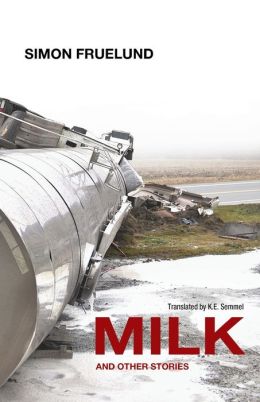
5.  Milk and Other Stories by Simon Fruelund, translated by K.E. Semmel for review from the translator.

The 14 stories in this collection display the often quiet, inconspicuous way in which terrible truths and experiences are intimated: the death of a sailboarder makes a widower see deeper into love and loss; a young poet visits his former teacher only to discover he is literally not the person he used to be; a middle-aged man glimpses the terrible humdrum of his third marriage as his son embarks on a new chapter in his life. Conveyed without grandeur or pathos, the revelations in these minimalist stories demonstrate clearly and effectively Fruelund’s gift of subtlety and nuance; like scenes from life, characters’ dramas are played out in brief but brilliant flashes. Ranging across the wide arc of human experience, from the comic to the tragic, each piece explores the complex emotions of the human heart.

What did you receive?

207th Virtual Poetry Circle

Welcome to the 207th Virtual Poetry Circle!

Remember, this is just for fun and is not meant to be stressful.

Keep in mind what Molly Peacock’s books suggested. Look at a line, a stanza, sentences, and images; describe what you like or don’t like; and offer an opinion. If you missed my review of her book, check it out here.

Also, sign up for the 2013 Dive Into Poetry Challenge because its simple; you only need to read 1 book of poetry. Check out the stops on the 2013 National Poetry Month Blog Tour and the 2012 National Poetry Month Blog Tour.

Today’s poem A Strange Place to Call Home by Marilyn Singer, Illustrated by Ed Young (my review):

Well-Oiled (petroleum flies)

Thousands
of them are born
in carrion, water,
or soil.  But not this crew. They hatch
in oil.

What do you think?

Three-Ring Rascals: The Show Must Go On! (Book 1) by Kate Klise, illustrated by M. Sarah Klise

Source:  Anna of Diary of an Eccentric gave me this ARC as the book was aimed at readers younger than The Girl, but only slightly older than my girl. (probably the longest explanation EVER!)
Paperback, 141 pages
I am an Amazon Affiliate

Three-Ring Rascals: The Show Must Go On! (Book 1) by Kate Klise, illustrated by M. Sarah Klise, is a cute book about circus life, complete with talking animals, feats that defy gravity and the laws of physics, and a scoundrel, which is due for publication in September 2013.  Sir Sidney’s Circus is a story about redemption and about being true to your friends, but it’s also about the surprising things that can happen when you’re not looking.

Sir Sidney is getting older and he’s looking for a manager when he settles on a self-proclaimed lion tamer named Barnabas Brambles, but while Sidney is away, Brambles has plans of his own — to make money for himself.  The path he takes to make more money backfires even as he strives to accomplish even more devious strategies.  Meanwhile, the animals sure miss their owner and suffer at the hands of Brambles, though they don’t exact any revenge.

Leaving the acrobats in charge of driving the train, Brambles finds that his plans are thrown out into the wind as the train gets stuck in places that will boggle his mind.  Klise is an imaginative storyteller, and readers will like the little definition explanations she includes for some of the larger words used, as well as the explanation behind the made-up words used by the mice, Bert and Gert.  The illustrations are fun and simple, and they include dialogue bubbles as the animals talk amongst themselves while Brambles makes his plans.  The text is mixed in beside and inside the illustrations, which will keep readers exploring the pages, rather than rushing over the pictures.

Three-Ring Rascals: The Show Must Go On! (Book 1) by Kate Klise, illustrated by M. Sarah Klise, is a book that will entertain younger readers, though age 10 may be a little old for the book depending on the readers’ abilities.  The book indicates it is for kids ages 7-10, but it read more like a book for ages 5-8, but younger readers may need help reading.  As a book read at bedtime for younger ages, parents could break it up in installments over several evenings.  The book is fun and only the first in the series, with certainly more antics to come, especially from Bert and Gert who are a riot.

**The Three-Ring Rascals Website offers some great insights into how the author and illustrator are like Bert and Gert, the two mice, and there are resources for teachers and fun games for kids.

About the Author and Illustrator:

Kate Klise and M. Sarah Klise have collaborated on numerous middle-grade and picture book projects. Their most recent series, 43 Old Cemetery Road, has been nominated for reading awards in nearly twenty states to date and is a Junior Library Guild selection. The pair’s novels and picture books can be found on their Website.  And to find out more about the Three-Ring Rascals, visit the Website.

This is my 39th book for the 2013 New Authors Challenge.

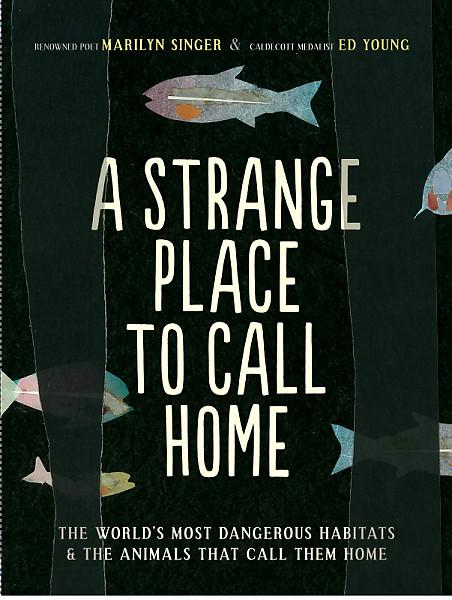
A Strange Place to Call Home by Marilyn Singer, illustrated by Ed Young

Source:  Purchased from Novel Books
Hardcover, 44 pages
I’m an Amazon Affiliate

A Strange Place to Call Home by Marilyn Singer, illustrated Ed Young, is a collection of poems and illustrations about animals that live in harsh environments and have adapted to their conditions.  The poetry forms include free verse, cinquain, haiku, villanelle, sonnet, and others that give young readers a brief look at the animals in their habitats from the Humboldt penguins that live in the warmer climates of Chile and Peru to the blind cave fish that live in the dark deep.  Included in the poetry book are at times abstract looking pictures of the animals or their habitats, though the images resemble collage techniques that incorporate various mediums.  The book also includes a break down of what poems exemplify which form and end notes that give a little more information about each animal.

Dry as Dust

They can deal solo
with dryness, but give them rain
and then: toads explode.

For my little girl, who is age 2, this book was a little too old for her.  She couldn’t pay attention long enough to get through the entire book, but she loved the pages with the snow monkeys in “Think Heat.”  There are a lot more questions than answers, and kids who are older are likely to want more information about each animal and habitat.  For younger kids, there’s just enough in each poem to mirror their own wonder, including them in the wider questioning of these animals’ lives.

A Strange Place to Call Home by Marilyn Singer, illustrated Ed Young, is a little too old for my little one, but if she retains her love of animals, she’ll likely enjoy this more as she gets older.  I found the poems a little too simple, and some did not have enough information about the animals or their habitats, but the end notes did offer a bit more information.  As a jumping off point, the book will spark questions from younger readers, and it could inspire a mother- or father-child exploration of these harsh habitats and adaptable animals.  Singer offers a special thanks at the beginning of the book to several people and museums, which seems to be where she obtained some of the information for her poems.

About the Poet:

Marilyn Singer was born in the Bronx (New York City) and lived most of her early life in N. Massapequa (Long Island), NY. She attended Queens College, City University of New York, and for her junior year, Reading University, England. She holds a B.A. in English from Queens and an M.A. in Communications from New York University.  Visit her Website.

About the Illustrator:

Caldecott Medalist Ed Young is the illustrator of over eighty books for children, seventeen of which he has also written. He finds inspiration for his work in the philosophy of Chinese painting.

Young began his career as a commercial artist in advertising and found himself looking for something more expansive, expressive, and timeless. He discovered all this, and more, in children’s books.  Visit his Website.


This is my 38th book for the 2013 New Authors Challenge.


This is my 24th book for the Dive Into Poetry Challenge 2013.