Quantcast

Mailbox Monday #274

Mailbox Monday, created by Marcia at To Be Continued, formerly The Printed Page, has a permanent home at its own blog.

To check out what everyone has received over the last week, visit the blog and check out the links.  Leave yours too.

Also, each week, Leslie, Vicki, and I will share the Books that Caught Our Eye from everyone’s weekly links.

Here’s what I received:

1. The House on Mermaid Point by Wendy Wax for review.

Maddie, Avery, and Nikki first got to know one another—perhaps all too well—while desperately restoring a beachfront mansion to its former grandeur. Now they’re putting that experience to professional use. But their latest project has presented some challenges they couldn’t have dreamed up in their wildest fantasies—although the house does belong to a man who actually was Maddie’s wildest fantasy once . . .

Rock-and-roll legend “William the Wild” Hightower may be past his prime, estranged from his family, and creatively blocked, but he’s still worshiped by fans—which is why he guards his privacy on his own island in the Florida Keys. He’s not thrilled about letting this crew turn his piece of paradise into a bed-and-breakfast for a reality show . . . though he is intrigued by Maddie. Hard as that is for her to believe as a newly single woman who can barely manage a dog paddle in the dating pool.

2.  The Underground Girls of Kabul by Jenny Nordberg from LibraryThing Early Reviewers.

In Afghanistan, a culture ruled almost entirely by men, the birth of a son is cause for celebration and the arrival of a daughter is often mourned as misfortune. A bacha posh (literally translated to “dressed up like a boy” in Dari) is a third kind of child – a girl temporarily raised as a boy and presented as such to the outside world. Jenny Nordberg, the reporter who broke the story of this phenomenon for the New York Times, constructs a powerful and moving account of those secretly living on the other side of a deeply segregated society where women have almost no rights and little freedom.

3.  One Evening in Paris by Nicolas Barreau, an unexpected surprise from St. Martin’s Press.

Alain Bonnard, the owner of a small art cinema in Paris, is a dyed-in-the-wool nostalgic. In his Cinéma Paradis there are no buckets of popcorn, no XXL coca-colas, no Hollywood blockbusters. Not a good business plan if you want to survive, but Alain holds firm to his principles of quality. He wants to show films that create dreams, and he likes most of the people that come to his cinema. Particularly the enchanting, shy woman in the red coat who turns up every Wednesday in row 17. What could her story be? One evening, Alain plucks up courage and invites the unknown beauty to dinner. The most tender of love stories is just getting under way when something incredible happens: The Cinéma Paradis is going to be the location of Allan Woods’ new film Tender Memories of Paris. Solène Avril, the famous American director’s favourite actress, has known the cinema since childhood and has got it into her head that she wants the film to be shot there. Alain is totally overwhelmed when he meets her in person. Suddenly, the little cinema and its owner are the focus of public attention, and the red-plush seats are sold out every evening.

What did you receive?

257th Virtual Poetry Circle

Welcome to the 257th Virtual Poetry Circle!

Remember, this is just for fun and is not meant to be stressful.

Keep in mind what Molly Peacock’s book suggested.

Look at a line, a stanza, sentences, and images; describe what you like or don’t like; and offer an opinion. If you missed my review of her book, check it out here.

Today’s poem is from Maya Angelou again:

Alone

Lying, thinking
Last night
How to find my soul a home
Where water is not thirsty
And bread loaf is not stone
I came up with one thing
And I don’t believe I’m wrong
That nobody,
But nobody
Can make it out here alone.

Alone, all alone
Nobody, but nobody
Can make it out here alone.

There are some millionaires
With money they can’t use
Their wives run round like banshees
Their children sing the blues
They’ve got expensive doctors
To cure their hearts of stone.
But nobody
No, nobody
Can make it out here alone.

Alone, all alone
Nobody, but nobody
Can make it out here alone.

Now if you listen closely
I’ll tell you what I know
Storm clouds are gathering
The wind is gonna blow
The race of man is suffering
And I can hear the moan,
‘Cause nobody,
But nobody
Can make it out here alone.

Alone, all alone
Nobody, but nobody
Can make it out here alone.

What do you think?

Summer Reading…Do You Have a List?

DSC_0147This is what I think about when I think of summer.  Relaxation, no work, beaches, water, and fun with my family, especially with my daughter who loves everything about the outdoors.  But it’s also a time when my reading gets less heavy.  I tend to read books to sweep my cares away and that leave me with a hopeful or happy feeling.  I’m just in that mood.

I’m not really sure how much reading I’ll get through, but I do have a preliminary list for this summer.

I’d love for everyone to share their lists, if you have them, or just the book you’re reading now — I might end up adding them to my list.

Here goes:

A Long Time Gone by Karen White — I’m reading this now and really enjoying it.
The House on Mermaid Point by Wendy Wax
Another World Instead: The Early Poems of William Stafford with an introduction by Fred Marchant
China Dolls by Lisa See
Tangle by Julie Cameron Gray
Muse by Dawn Marie Kresan
Grand Central: Original Stories of Postwar Love and Reunion (short story collection)
Don’t Want to Miss a Thing by Jill Mansell

Do you find that you read certain types of books because of the season?  What books are on your list?

Goodnight Songs by Margaret Wise Brown

Source: Sterling Children’s Books
Hardcover, 28 pages
I am an Amazon Affiliate

Goodnight Songs by Margaret Wise Brown is beautifully illustrated by 12 award-winning artists and has a great CD of songs to accompany it.  My daughter loves listening to the songs nightly these days — replacing the other goodnight songs, which were mostly nature sounds or easy-listening Eagles and Eric Clapton.  We’ve only ever read 2 other books by Brown, Goodnight Moon and The Runaway Bunny.  She’s loved that one, and the calm way I read it, but the verse in this collection does not seem as polished, which could be attributed to the fact that these lullabies were found in a chest of unpublished manuscripts.  However, what rings true is that these songs resemble those that children often sing to themselves when they are playing or picking up their things — spur-of-the-moment made-up lyrics — as said in the book’s introduction.

From The Mouse's Prayer (page 25)

Close my eyes and go to sleep.
Bugs no more on grass blades creep.
Bugs no more and birds no more,
In the woods will come no more

Dream of a weed growing from a seed,
Quietly, quietly from a seed.
In a garden
A slim green weed,
Quietly, quietly from a seed.

Each of these songs is repetitive in nature, like the songs children sing, and they are catchy when set to music.  My daughter is already singing them as she goes to sleep and takes her naps.  She’s engaged with the vivid drawings, which are fanciful and other worldly.  Goodnight Songsby Margaret Wise Brown is gorgeous, playful, and calming in words, illustration, and song — a delightful addition to anyone’s collection.

About the Author:

Margaret Wise Brown wrote hundreds of books and stories during her life, but she is best known for Goodnight Moon and Runaway Bunny. Even though she died over 45 years ago, her books still sell very well. Margaret loved animals. Most of her books have animals as characters in the story. She liked to write books that had a rhythm to them. Sometimes she would put a hard word into the story or poem. She thought this made children think harder when they are reading. She wrote all the time. There are many scraps of paper where she quickly wrote down a story idea or a poem. She said she dreamed stories and then had to write them down in the morning before she forgot them. She tried to write the way children wanted to hear a story, which often isn’t the same way an adult would tell a story. She also taught illustrators to draw the way a child saw things.

She Likes It Rough by GVR Corcillo

Source: Blackbird Press
Paperback, 302 pages
On Amazon and on Kobo

She Likes It Rough by GVR Corcillo is not the erotica novel most will imagine when they see the title for the first time.  In fact, Lisa Flyte, the protagonist, is eager to live life to the fullest, get braver, and do something positive and improve the lives of others.  She meets Jack Hawkins in her MBA class, and knows he’s the one to teach her about bravery.  He’s an outdoor adrenaline junkie who designs professional equipment for similar people, but he’s also got a secret and Lisa’s going to help him achieve that goal.

“I should stop.

In fact, I should’ve stopped chasing Jack twenty minutes ago.  That’s when he veered off the trail and disappeared into the forest.  But I didn’t stop.  I kept after Jack.  I pulled into the lot just in time to see him lope off the path and vanish into the green mess of a mountain.  Without stopping to consider for even a second, I put my car in park, popped the trunk, grabbed my workout bag, and jammed on my running shoes.  Then I stripped off my jacket and followed Jack into the wild.” (page 1-2)

Corcillo has a flare for comic timing, and this is a laugh fest that readers will enjoy over the summer and recommend it to others on the beach.  Female readers in particular will laugh out loud as these two spar with one another from the most mundane activities to their own trajectories in life.  Jack and Lisa are polar opposites when it comes to tackling physical and emotional challenges, but they are destined to learn from one another.  While there are moments that are overly dramatic and soap opera-like, it’s a fun ride and readers will love the antics of Lisa.  She’s a klutz who takes every challenge thrown at her by Jack, but he’s a little more reluctant to take on the challenges she throws at him.

She Likes It Rough by GVR Corcillo was fun, engaging, and a wild ride, but worth it.  Spending an afternoon with these characters is like watching a comedy.  It’s certainly that feel good read, with a good deal of romance thrown in, plus some quirky sidekicks.  Readers should be cautioned that there is some harsh language as Lisa is not a shrinking violet.

About the Author:

Winner of Rebecca’s Reads Choice Awards for Best Indie Book of 2013 and Best Humor Book of 2013!   With her Ivy League education, white-trash sensibility, and pop culture savvy, Corcillo writes humorous women’s fiction about characters who try not to trip as they valiantly march to their own bongo beat.

33rd book for 2014 New Author Challenge.

Black Lake by Johanna Lane

Source: Little, Brown and Company
Hardcover, 224 pages
On Amazon, on Kobo

Black Lake by Johanna Lane is set in Northern Ireland at the Campbell estate of Dulough, which translates to Black Lake.  A pool, a cold lake, hills, valleys, mountains, cottages, and a massive estate would seem overwhelming to any newlywed, and it is hard to believe that it can be run by just three people — John Campbell, Mary Connelly, and Francis Connelly.  Woven with alternate points of view, Lane provides the reader with a well-rounded view of the hardships this family faces.  Young Philip is named after the first ancestor who built Dulough and threw out the Irish tenants after the Great Famine, and he has a legacy that weighs heavily on his head, but he’s not the only Campbell to feel the weight of family history in this place.  Will the deal with the government be enough to keep the family estate in tact or will the deal break this family from its moorings.

“Finally, he began clearing a patch of brambles and thistles; their roots went deep into the earth and he had to be content with lopping them off at ground level rather than pulling them out altogether.” (page 66-7 ARC)

John is a quiet man who knows how to deal with solitude in the Irish country, but his wife Marianne must grow accustom to the quieter life after living so long in Dublin.  His ability to be alone becomes a detriment in matters of his family, though he does enjoy schooling the children at home.  His relationship with his wife is enigmatic because he is less expressive, and she passively follows his lead until she reaches a breaking point.

“The whole painting gave the impression that Dulough might be engulfed at any moment, the lake rising to envelop the house, the sea covering the island, and the land reclaimed, the work of his ancestor obliterated.” (page 194 ARC)

Deep beneath the surface of this family are hidden bonds that only can surface in tragedy and loss.  From a man who is backed into a corner to maintain a large estate without the inheritance to do so to wife and son who have come to love their home as much, if not more, than their ancestors.  Black Lake by Johanna Lane is by turns as dreary as the rainy countryside and as dangerous as the quick-footed tide that nearly swallows the island where the estate church and graveyard lie.  Readers will be swept away by Lane’s frail family and their struggles.

About the Author:

Johanna Lane was born in Ireland, studied English Literature in Scotland, and earned her MFA at Columbia University. She teaches composition and creative writing in New York City.  Check out her Pinterest board for the book.

12th book for 2014 European Reading Challenge(Set in Ireland)


32nd book for 2014 New Author Challenge.


2nd book for the Ireland Reading Challenge.

Mailbox Monday #273

Mailbox Monday, created by Marcia at To Be Continued, formerly The Printed Page, has a permanent home at its own blog.

To check out what everyone has received over the last week, visit the blog and check out the links.  Leave yours too.

Also, each week, Leslie, Vicki, and I will share the Books that Caught Our Eye from everyone’s weekly links.

Here’s what I received:

1.  Cooking with Amar’e: 100 Easy Recipes for Pros and Rookies in the Kitchen by Amar’e Stoudemire and Maxcel Hardy III for review.

New York Knicks captain Amar’e Stoudemire may be on fire when he’s on the court, but the nearly seven-foot-tall hoops star didn’t know the first thing about lighting a fire. When his personal chef Maxcel Hardy began giving him informal cooking lessons, the six-time NBA All-Star learned to become a comfortable, experienced cook able to whip up tasty, healthy dishes for his family.

Cooking with Amar’e is an engaging chronicle of their informal sessions—a unique, collaborative cookbook featuring stories, recipes, tips, advice, and instructions on cooking techniques, equipment, shopping, party planning, and preparation for home cooks of all levels. Comprehensive and convenient, it allows beginners and practiced cooks to hone their kitchen skills and master dishes at their own pace.

2.  The Wild Dark Flowers by Elizabeth Cooke, which arrived unexpectedly.

From inside their sprawling estate of Rutherford Park, the Cavendish family had a privileged perspective of the world. On the first morning in May, 1915, with a splendid view that reached across the gardens to the Vale of York, nothing seemed lovelier or less threatening. And yet…

At the risk of undoing the Cavendish name with scandal, William and Octavia Cavendish have been living a lie, maintaining a marriage out of duty rather than passion. But when their son Harry joins the Royal Flying Corps in France, the Cavendish family are forced to face the unavoidable truths about themselves, the society in which they thrive, and the secrets they can no longer bear.

In the wake of a terrible war, the emotional shifts between a husband and a wife, a wife and her lover, and a mother and her children, will shake the very foundation of the Cavendish family, and change the uniquely vulnerable lives of all who reside at Rutherford Park.

What did you receive?

256th Virtual Poetry Circle

Welcome to the 256th Virtual Poetry Circle!

Remember, this is just for fun and is not meant to be stressful.

Keep in mind what Molly Peacock’s book suggested.

Look at a line, a stanza, sentences, and images; describe what you like or don’t like; and offer an opinion. If you missed my review of her book, check it out here.

Today’s poem is from Maya Angelou in honor of her passing this week:

Still I Rise

You may write me down in history
With your bitter, twisted lies,
You may trod me in the very dirt
But still, like dust, I’ll rise.

Does my sassiness upset you?
Why are you beset with gloom?
‘Cause I walk like I’ve got oil wells
Pumping in my living room.

Just like moons and like suns,
With the certainty of tides,
Just like hopes springing high,
Still I’ll rise.

Did you want to see me broken?
Bowed head and lowered eyes?
Shoulders falling down like teardrops,
Weakened by my soulful cries?

Does my haughtiness offend you?
Don’t you take it awful hard
‘Cause I laugh like I’ve got gold mines
Diggin’ in my own backyard.

You may shoot me with your words,
You may cut me with your eyes,
You may kill me with your hatefulness,
But still, like air, I’ll rise.

Does my sexiness upset you?
Does it come as a surprise
That I dance like I’ve got diamonds
At the meeting of my thighs?

Out of the huts of history’s shame
I rise
Up from a past that’s rooted in pain
I rise
I’m a black ocean, leaping and wide,
Welling and swelling I bear in the tide.

Leaving behind nights of terror and fear
I rise
Into a daybreak that’s wondrously clear
I rise
Bringing the gifts that my ancestors gave,
I am the dream and the hope of the slave.
I rise
I rise
I rise.

What do you think? Did Maya Angelou make an impression on you before her passing?

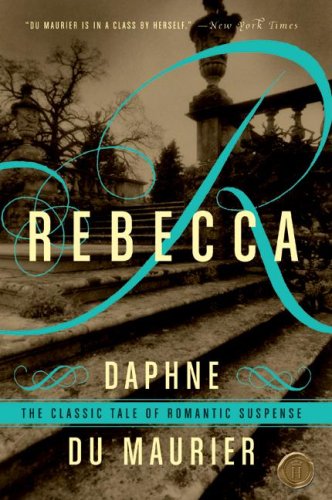
Rebecca by Daphne Du Maurier

Source: Public Library
Paperback, 410 pages
On Amazon, on Kobo

Rebecca by Daphne Du Maurier, which was our May book club selection, is a suspenseful story centered around Rebecca de Winter, who by society’s standards was charming, beautiful, and unmatched by other ladies of the upper class.  It has been about 10 months to a year since her passing when Maxim de Winter meets a young woman, who remains the unnamed narrator of the story, in Monte Carlo as the paid companion of Mrs. Van Hopper a gossipy and grasping woman who uses any tiny connection to weasel her way into parties, etc.  Once her employer contracts influenza, the narrator is free to do what she likes since a private nurses is necessary.  As a result, she ends up spending a number of afternoons with the enigmatic Mr. de Winter and later agrees to marry him.

“The woods, always a menace even in the past, had triumphed in the end.  They crowded, dark and uncontrolled, to the borders of the drive.  The beeches with white, naked limbs leant close to one another, their branches intermingled in a strange embrace, making a vault above my head like the archway of a church.” (page 1)

While my copy’s jacket cover speaks of the novel as a “classic tale of romantic suspense,” there was little romance between the unnamed narrator and Mr. de Winter.  While the new Mrs. de Winter is naive and unable to cope with running a magnificent household like Manderlay, she has zero backbone, even as Mrs. Danvers, the home’s housekeeper, plays the dirtiest trick on her.  This narrator is an unlikeable character from the start with her whiny nature and her inability to speak her mind, even to her husband.  Even though in this time period, women were supposed to be obedient and meek, they also were expected to run entire households with a forceful hand.  The new Mrs. de Winter is Rebecca’s antithesis in every way.

“I listened to them both, leaning against Maxim’s arm, rubbing my chin on his sleeve.  He stroked my hand absently, not thinking, talking to Beatrice.

‘That’s what I do to Jasper,’ I thought. ‘I’m being like Jasper now, leaning against him.  He pats me now and again, when he remembers, and I’m pleased, I get closer to him for a moment. He likes me in the way I like Jasper.'” (page 103)

Neither of the main characters are likeable, as the retrospective narrative keeps readers at a distance from their love affair and their romance.  The highlights of the novel were the comical Mr. Favell, Rebecca’s first cousin, and Beatrice, who is plain spoken.  Rebecca by Daphne Du Maurier is suspenseful, though ridiculous at times, and there are highly descriptive paragraphs about nature.  The narrative is bogged down by the descriptions and the dream-like conversations she has with herself about upcoming events and confrontations.  While the plot is interesting, it is tough to feel empathy for the main narrator and to cheer her on.

About the Author:

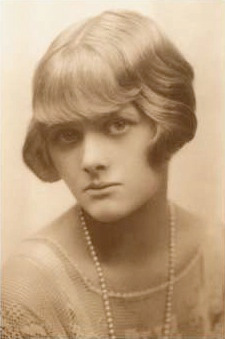
Daphne was born in 1907, grand-daughter of the brilliant artist and writer George du Maurier, daughter of Gerald, the most famous Actor Manager of his day, she came from a creative and successful family.

The du Maurier family were touring Cornwall with the intention of buying a house for future holidays, when they came across “Swiss Cottage”, located adjacent to the ferry at Bodinnick. Falling in love with the cottage and its riverside location, they moved in on May 14th, 1927, Daphne had just turned 20.

She began writing short stories the following year, and in 1931 her first novel, ‘The Loving Spirit’ was published. It received rave reviews and further books followed. Then came her most famous three novels, ‘Jamaica Inn’, ‘Frenchman’s Creek’ and Rebecca’. Each novel being inspired by her love of Cornwall, where she lived and wrote.

What the Book Club Thought:

The book club had a mixed reaction to this one; there were several members who enjoyed the story, but not the descriptions of nature.  There were too many words, one member said.  Others saw the background of the narrator as an obstacle she needed to overcome in order to mature.  One member pointed out that the narrator — even in retrospect — did not seem to offer any judgment about herself and behaviors, leaving readers to wonder whether she had matured at all.  The whiny nature of the character was tough to take for some readers, while other were interested in her little internal debates about others’ reactions to her actions or the actions she could have taken.  A few did not see the relationship between Max and the new wife as very loving, especially when she talks about him petting her like a dog.

11th book for 2014 European Reading Challenge(Set in Monaco)

18th book for 2014 Historical Fiction Reading Challenge.

31st book for 2014 New Author Challenge.

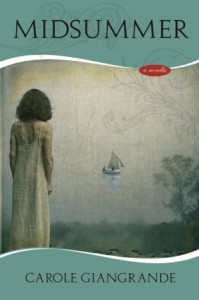
Midsummer by Carole Giangrande

Source: Inanna Poetry and Fiction Series and TLC Book Tours
Paperback, 150 pages
I am an Amazon Affiliate

Midsummer by Carole Giangrande is a poetic novella that settles the reader into the complexities of an immigrant family from Italy — a brother who chooses to stay in America and make his way in finance and a sister who returns to Italy to begin a life with her successful husband.  Nonno Lorenzo came to America and dug the New York City subway tunnels, only to land his pickaxe on the hull of a missing ship — Tijger — that was caught on an old shoreline.  Beneath his working class roots in America, the man was a visionary artist who never became famous, but he begets a number of dreamers, including a granddaughter who has suffered the most along the way — losing family and friendship.

“‘One day,’ said my aunt, ‘I would like you to hear my stories in Italian.’
‘But you grew up in America,’ I said.
‘The stories grew up somewhere else,’ she replied.”  (page 14)

Giangrande navigates memory and emotion carefully, guiding the reader outside the prime maritime routes into the deepest seas of human connection, with one’s family.  The intersection of Joy’s family and that of her husband, Adrian, comes together just as her grandfather discovered a lost Dutch ship beneath the Twin Towers in New York City.  Through family legends and a shared language, Giangrande weaves a story steeped in myth and love, despite tragedy.

“A creature trapped in a pretty, long necked bottle, a frantic beating of wings against glass, waiting for deft fingers, the touch of his hand to release her.  I sensed she enjoyed her entrapment for the moment of release it brought.” (page 53)

Joy and her family are caught in their own silences, unable to utter apologies even though they exist without being uttered.  Lorenzo’s ability to see into the future through his painting has left the family with a haunted legacy, but it is clear that the legacy will be ever-lasting.  Like a painting that comes to life, Midsummer by Carole Giangrande is like the longest-day of summer in families when tragedy saddens everyone in different ways, regrets threaten to bring members to their knees, and forgiveness is a shining beacon that can save them all.

About the Author:

Born and raised in the New York City area, Carole Giangrande now resides in Toronto, Canada. Her novella, A Gardener On The Moon was co-winner of the 2010 Ken Klonsky Novella Contest, and is published by Quattro Books. She’s the author of two novels (An Ordinary Star and A Forest Burning), a short story collection (Missing Persons), all published by Cormorant, and two non-fiction books. Her new novella, Midsummer, will be published in April 2014 by Inanna. She’s worked as a broadcast journalist for CBC Radio (Canada’s public broadcaster), and her fiction, articles and reviews have appeared in Canada’s major journals and newspapers. Her 50-part literary podcast Words to Go has been downloaded over 20,000 times in 30 countries. She comments as The Thoughtful Blogger, and she’s recently completed a novel. She’s a dual citizen of the United States and Canada.

Find out more about Carole at her website, connect with her on Facebook, follow her on Twitter, and find her on Goodreads.

30th book for 2014 New Author Challenge.

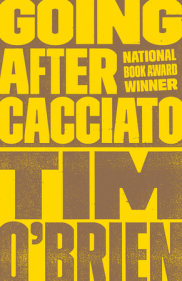
Giveaway: Newly Reissued Tim O’Brien Books

Tim O’Brien is my go-to writer for Vietnam War-related literature, but even for those who are not interested in war literature, he’s a fantastic story-teller.  You can get lost in his books, totally taken in by his prose and his damaged characters.

I have read everyone of his books, except Going After Cacciato, which Anna and I will be doing later this year in a read-a-long at War Through the Generations in December.

Random House has kindly offered a prize pack of Tim O’Brien books (those 4 books pictured above) for one of my U.S.-based or Canada-based readers.

Giveaway will run through June 6, 2014, at 11:59 PM EST  Use the form.

Diving Into the Wreck by Adrienne Rich

Source: Purchased
Paperback, 72 pages
I’m an Amazon Affiliate

Diving Into the Wreck by Adrienne Rich rocks readers with each wave of verse, undulating in the depths of darkness to rise up into the air gasping for breath.  Rich explores human nature, relationships between lovers, sisters, and more, but some of the most visceral poems are about self-reflection and even self-repair.  Beyond the verse and the poet’s exploration of self and humanity, these poems force readers into their own self-examinations, looking at their pasts, the current relationships, and where they wish to be in the future.  The hardest part about these kinds of poems is the internal digging that readers must do.

From "After Twenty Years" (page 13)

It is strange to be so many women,
eating and drinking at the same table,
those who bathed their children in the same basin
who kept their secrets from each other
walked the floors of their lives in separate rooms

How many different selves do we each have? If you’re a mother, there could be the professional self, the mother, and the individual without all the responsibilities and obligations, but Rich explores what all of those selves mean overall and that we must grab on to possibility, learning not to limit ourselves by adopting those labels.  In “When We Dead Awaken,” she explores the toll that the world can take on us, branding us with memories — both good and bad — but also how these experiences inform and shape us.  We have a duty to look out at our world, take in what we enjoy and reject what we do not — strive not only to change ourselves, but also our environment, which she achieves with phenomenal imagery of scarred landscapes by mining and more.

Diving Into the Wreck by Adrienne Rich works on several planes of existence at once — the surface self-examination of the poet, then of the reader, but more so of humanity and its impact on the environment and each individual.  At times, these poems will feel like drifting on the current, and at others, readers’ ships will be overrun with waves as Rich bombards them with images and twists in her verse.  There is a distinctly feminist and political bent to some of these poems, particularly those focused on the Vietnam War.  A phenomenal collection worth discussing with book clubs, but also something for quieter reflection.

About the Author:

Poet and essayist Adrienne Rich was one of America’s foremost public intellectuals. Widely read and hugely influential, Rich’s career spanned seven decades and has hewed closely to the story of post-war American poetry itself. Her earliest work, including A Change of World (1951) which won the prestigious Yale Younger Poets Award, was formally exact and decorous, while her work of the late 1960s and 70s became increasingly radical in both its free-verse form and feminist and political content.

Book 16 for the Dive Into Poetry Reading Challenge 2014.


29th book for 2014 New Author Challenge.