Quantcast

Gorillas in Our Midst by Richard Fairgray and Terry Jones

Source: Sky Horse Press
Hardcover, 32 pages
I am an Amazon Affiliate

Gorillas in Our Midst by Richard Fairgray and Terry Jones, is titled in a way that will remind adult readers of that movie, Gorillas in the Mist, but this is not that movie and this boy is not Diane Fossey.  He’s been told from a young age that he should always carry a banana with him because a gorilla could show up at any time and anywhere.  In fact, they often get jobs in which they wear masks, like surgeons or scuba divers, but they also disguise themselves with funny masks and t-shirts that say they are not gorillas.  This book contains fun plays on names, like Gorilliam Shakespeare and Apebraham Lincoln, but it also is fun to read with children and ask them to spot the hidden gorillas in the background.

Our narrator also is quick to explain how gorillas are adept at hiding but not other types of primates.  The surprise ending will have kids laughing as well.  My daughter and I were giggling at its conclusion after trying spot all of the gorillas throughout the book.  As you can tell, we make reading a game sometimes.  It’s always good to make reading as fun as it can be.

Gorillas in Our Midst by Richard Fairgray and Terry Jones is a cute book that can become a game for parents and kids reading together, and there isn’t a whole lot of text, so it can be easily used to help children begin the stages of word recognition.  The illustrations here have an old comic strip feel to them, like those that used to be in the newspaper and that every kid and adult loved to share over the breakfast table.

About the Authors:

Richard Fairgray is also an active Podcaster, blogger, and writer/illustrator of picture books. His Morgan series has sold well throughout New Zealand and overseas and his new title Gorillas In Our Midst was released in April worldwide.
Longbourn by Jo Baker (audio)

Source: Public Library
Audio, 13.5 hrs.
I am an Amazon Affiliate

Longbourn by Jo Baker, narrated by Emma Fielding, is a look at the servants behind the scenes of Pride & Prejudice by Jane Austen.  Sarah is an orphaned, hard-working housemaid in the Bennet household at Longbourn, but even as she keeps within the confines of her role, she begins to wish for something more.  Baker clearly delineates the roles of the household servants, and depicts the realities of that life with a frankness that cannot be ignored.  While readers may be cheering Sarah on in her dreams of something more, they also realize that dreaming for too much can become a devastating blow when it does not come to pass.  With the arrival of a new footman, Sarah finds herself torn between her feelings for him and that of Ptolemy Bingley, a mulatto servant of the Bingley family.  What readers will find here is that the servants interactions with the main characters of Austen’s work reinforce their flaws for the most part, which is to be expected when writing from the perspective of those in the lower class.

Fielding is a great narrator and does really well with the prose that closely mirrors that of Austen, ensuring that readers get wrapped up in the story.  The only drawback in this story is Ptolemy because he is a character who is under-developed and whose back story becomes a mere catalyst for Sarah’s evolution beyond her current status in the household.  It is almost as if he could have been someone that was talked about among the servants, rather than actually met by Sarah, as she’s only superficially tempted by him and what he represents tangentially.

It is almost as if the naive housemaid believes Ptolemy represents a greater freedom than he actually does, especially given that he was a former slave on a plantation owned by the Bingleys.  To another point, would the Bingleys actually have been plantation owners?  Perhaps not, given that most newly rich families earned their money in business dealings, not that plantation ownership could not be a business dealing.  This part of the story is not fully fleshed out, leaving readers with a very superficial view of his life and current situation.

Austen’s main story is not disrupted by Baker’s novel in any major way, with the girls being married off and some more favorably than others.  What’s strong here is the steady hand of Mrs. Hill and her ability to not only see past her own misfortunes but to also offer hope within her sage advice to Sarah.  Longbourn by Jo Baker, narrated by Emma Fielding, is engaging and captivating, while never putting window dressing on the lives of servants.

About the Author:

Jo Baker was born in Lancashire. She was educated at Oxford and at Queen’s University, Belfast, where she completed a PhD on the work of the Anglo-Irish writer Elizabeth Bowen. Her first novel, Offcomer, was published by William Heinemann in 2001. Her second book, The Mermaid’s Child, is was published in August 2004. Jo Baker has also written for BBC Radio 4, and her short stories have been included in a number of anthologies. From 2001-2003 she was the Artistic Director of the Belfast Literary Festival. She lives in Belfast with her husband, the playwright and screenwriter Daragh Carville, and their son Daniel. The Telling is her third novel.

Brown Girl Dreaming by Jacqueline Woodson

Source: Public Library
Hardcover, 337 pgs.
I am an Amazon Affiliate

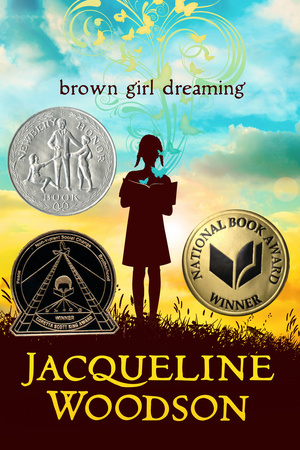
Brown Girl Dreaming by Jacqueline Woodson, a National Book Award Winner and Newbery Honor Book, is a coming-of-age novel in verse that is fresh and child-like in its perspective.  Jacqueline Woodson clearly bases her novel on her own experiences as a young black girl who grows up in a home with a single mother and older siblings.  Moving from Ohio and her father to Greenville, S.C., in the 1960s to live with her mother, siblings, and grandparents, Jackie is too young to understand the breakup of her family and remember her past.  Running in parallel to the Civil Rights Movement, young Jackie learning her letters and trying to keep up with her older siblings.  As she finds she doesn’t measure up to her smart sister in the classroom, she also learns that each sibling may have hidden talents, like her brother’s singing voice.

From "February 12, 1963" (pg.1-2)

I am born in Ohio but
the stories of South Carolina already run
like rivers
through my veins.

From "My Mother and Grace" (page 25-26)

Both know that southern way of talking
without words, remember when
the heat of summer
could melt the mouth,
so southerners stayed quiet

Jackie is a young girl finding her way, looking to be strong, but also learning to listen to her elders and to others influencing the civil rights movement. She hasn’t made up her mind, but she’s learning piece by piece what it means to be a young black woman in the south and how that differs from being black in New York.  Woodson’s style is frank, but firmly rooted in the point of view of a young girl who observes both the benefits of the movement and the drawbacks of fighting for what you believe in.  Along the way, she becomes friends with Maria whose mother cooks the best Hispanic food, and they do everything together, including swap dinners in the stairwell.

Brown Girl Dreaming by Jacqueline Woodson is a journey of a young black woman growing up in the 60s and 70s and serves as an excellent introduction to not only the time period, but also the struggles of black in the south and in the north for those ages 10 and up.  There are moments in which the author relies on a dream-like quality to present her narrator’s ideals, but at other points, it is very clear cut what has happened.  In many ways, this rendition is a mere outline of the harsher parts of life and it is reflected well through a child’s eyes.

About the Author:

Jacqueline Woodson is an American writer of books for children and adolescents. She is best known for Miracle’s Boys, which won the Coretta Scott King Award in 2001, and her Newbery Honor-winning titles Brown Girl Dreaming, After Tupac & D Foster, Feathers, and Show Way. Her work is filled with strong African-American themes, generally aimed at a young adult audience.

For her lifetime contribution as a children’s writer, Woodson won the Margaret Edwards Award in 2005 and she was the U.S. nominee for the biennial, international Hans Christian Andersen Award in 2014. IBBY named her one of six Andersen Award finalists on March 17, 2014. She won the National Book Award in 2014 in the category of “Young People’s Literature” for Brown Girl Dreaming.


The Prince by Niccolò Machiavelli

Source: Public Library
Paperback, 85 pgs
I am an Amazon Affiliate

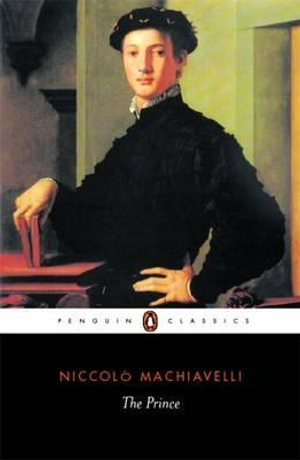
The Prince by Niccolò Machiavelli, which was our June book club selection and my second reading (I haven’t read this since college), is a nonfiction analysis of different types of principalities and how a prince can keep them when factions or people move against him.  The work is considered a classic and it is an examination of what traits make principalities hard to maintain or easy to keep, as well as what characteristics a prince should foster in himself to hold onto his principality.  Although this is a slim volume, the economy of the language makes it quite dense and oftentimes dry.  Many often attribute the sayings of “the ends justify the means” and “might makes right” to Machiavelli, though they are not necessarily accurate interpretations of what he espoused.

It is clear that his life experiences as a civil servant in Italy, which had been far from unified under one government and was operated more through a balance of various factions and the strength of the truth.  It is clear that Machiavelli viewed political success from a practical standpoint, without an emphasis on morality.  More accurate attributions of wisdom to him might be that you can gauge the intelligence of a prince by those he has around them or that it is better to be feared than loved.

“The main foundations of every state, new states as well as ancient or composite one, are good laws and good arms; and because you cannot have good laws without good arms, and where there are good arms, good laws inevitably follow … ” (page 40)

The Prince by Niccolò Machiavelli has become a guidebook for many leaders, and has been perverted by others, including Hitler and Stalin.  Whatever readers may take away from his advice on principalities, Machiavelli is clearly a keen observer of human behavior, especially among rulers.  It is highly humorous that he would give this book as a gift to a new ruler of the Medici family in the hope of gaining favor with the new government, especially since the book tends to provide a framework for governing as if the reader would need pointers.  How many rulers would take to that kindly?

What the book club thought:

Everyone seemed to agree that this was almost like a how-to guide on how to become a prince and maintain the power they gain, regardless of the political or geographical situation.  One member expressed the opinion that Machiavelli seemed to focus on his own ambitions, despite his couching of his advice as something to help Medici, who was currently in power at the time the book was written.  Others did not see that, and I mentioned that he was incredibly disappointed that his political and civilian government life had come to an end too quickly and that he was motivated to ensure his return to that life.  Overall, most people found the book interesting and though that it would be interesting to see what Machiavelli would have written about the U.S. presidency or if his guide would work in today’s modern world.  The book generated a great deal of discussion, and most were surprised that it was not more evil than they expected.

About the Author:

Niccolò di Bernardo dei Machiavelli was an Italian political philosopher, musician, poet, and romantic comedic playwright. He is a figure of the Italian Renaissance and a central figure of its political component, most widely known for his treatises on realist political theory (The Prince) on the one hand and republicanism (Discourses on Livy) on the other.

Mailbox Monday #328

Mailbox Monday, created by Marcia at To Be Continued, formerly The Printed Page, has a permanent home at its own blog.

To check out what everyone has received over the last week, visit the blog and check out the links.  Leave yours too.

Also, each week, Leslie, Vicki, and I will share the Books that Caught Our Eye from everyone’s weekly links.

Here’s what I received:

1.  Animal Gas by Bryan Ballinger for review from Sterling Children’s Books, and it came with a whoopee cushion.

Every kid knows that nothing’s funnier than a fart joke. And it’s also a universal truth (and mysterious fact) that people don’t mind the smell of their own farts. Animal Gas explores this hilarious concept through a parade of animals who describe why they don’t think their own farts stink—against the truth about how they REALLY smell!

2.  Stencil Craft by Margaret Peot for a TLC Book Tour in July.

The art and craft world is in love with the versatility, creativity and endless possibilities stencils provide. And right here is your all-access pass to learn how to create and use all types of stencils–from carefully cut Mylar to lace, leaves and other found objects. Using original, and even pre-made designs, you can create unique pillowcases, tote bags, business cards, portraits and more.


3.  Urban Art Berlin: Version 2.0 by Kai Jakob, a gift from Emma Eden Ramos.

A collection of Berlin street art photographs by the freelance photographer Kai Jakob.


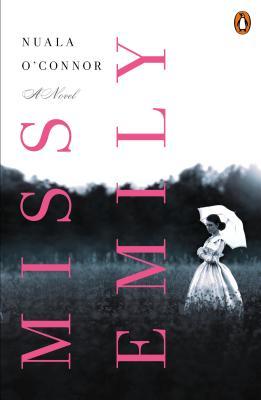
4.  Miss Emily by Nuala O’Connor for review from the publisher in July.

Eighteen-year-old Ada Concannon has just been hired by the respected but eccentric Dickinson family of Amherst, Massachusetts. Despite their difference in age and the upstairs-downstairs divide, Ada strikes up a deep friendship with Miss Emily, the gifted elder daughter living a spinster’s life at home. But Emily’s passion for words begins to dominate her life. She will wear only white and avoids the world outside the Dickinson homestead. When Ada’s safety and reputation are threatened, however, Emily must face down her own demons in order to help her friend, with shocking consequences.

What did you receive?

310th Virtual Poetry Circle

Welcome to the 310th Virtual Poetry Circle!

Remember, this is just for fun and is not meant to be stressful.

Keep in mind what Molly Peacock’s book suggested.

Look at a line, a stanza, sentences, and images; describe what you like or don’t like; and offer an opinion. If you missed my review of her book, check it out here.

Today’s poem is from Jehanne Dubrow:

Much Tattooed Sailor Aboard USS New Jersey

Squint a little, and that’s my husband
           in the photograph, the sailor on the left—
the one wearing a rose composed of ink
           and the Little Bo Peep who stands
before a tiny setting sun and the blur
           on his forearm which might be a boat—
while the sailor on the right is leaning in,
           his fingers touching the other man’s skin,
tracing what looks like the top of an anchor
           or the intricate hilt of a sword, perhaps
wiping blood from the artful laceration,
           in his other hand something crumpled,
his cap I think or a cloth to shine brass,
           lights on a bulkhead, fittings and fixtures,
because let’s not forget this picture
           must be posed, the men interrupted—
mops laid down, ropes left uncoiled, or else
           on a smoke break, Zippo and Lucky Strikes
put aside—the men shirtless on a deck,
           legs bent at beautiful angles,
a classical composition this contrast
           of bodies and dungarees, denim gone black
and their shoulders full of shadow—
           although on second thought how effortless
this scene, both of them gazing toward
           a half-seen tattoo so that we too lean in
trying to make out the design on the bicep,
           close enough we can almost smell the salt
of them and the oil of machinery,
           which is of course the point, as when in a poem
I call the cruiser’s engine a pulse inside my palm
           or describe my husband’s uniform,
ask him to repeat the litany of ships and billets,
           how one deployment he sliced himself
on a piece of pipe and how the cut refused
           to shut for months—Hold still, I tell him,
I need to get the exquisite outline of your scar.

What do you think?

Changes: A Child’s First Poetry Collection by Charlotte Zolotow, illustrated by Tiphanie Beeke

Source: Sourcebooks/Shelf Awareness
Hardcover, 40 pgs
I am an Amazon Affiliate

Changes: A Child’s First Poetry Collection by Charlotte Zolotow is gorgeously illustrated by Tiphanie Beeke, and the 28 poems are divided into seasons to reflect the title.  This collection is published posthumously, poems her daughter calls clean and clear about what changes and what stays the same.  The collection opens with “Changes” that talks about the differences between the seasons but that they always come around the same time each year, even though the narrator has changed through the years.  These verses are fantastic for little kids, projecting images that are complemented by the illustrations and allowing them to visual nature and the seasons.

These poems read as if told from the perspective of a child who stares in awe at the birds in the sky, the birds flying by, and all that surrounds them.  From the cool breezes of spring and the budding flowers to the salty wind of the sea in summer on vacation, children will see the fun and get absorbed in the costumes of Halloween, the beginning of school in the fall, and the winter wonders of snowmen and the first snow.  Beeke’s images are reminiscent of the whispy-ness of water color images and pastel smudges.  Zolotow clearly has a firm grasp of the wonder most children have when they are young; they are curious and inquisitive, but there also are some who are contemplative.  Read aloud these poems create a new world of rhyme and lyrical verse for children.

Changes: A Child’s First Poetry Collection by Charlotte Zolotow, illustrated by Tiphanie Beeke, is a great collection to start young readers with the wondrous world of poetry.  The illustrations are well matched with Zolotow’s lines.  My daughter and I have read this collection several times, and she often asks what season we are in when we read the poems.

About the Author:

Charlotte Zolotow—author, editor, publisher, and educator—had one of the most distinguished careers in the field of children’s literature. Born in Norfolk, Virginia in 1915, Changes: A Child’s First Collection of Poetry is published on the occasion of Charlotte Zolotow’s 100th birthday.

Doctor Sleep by Stephen King (audio)

Source: Public Library
Audio, 18 hrs
I am an Amazon Affiliate

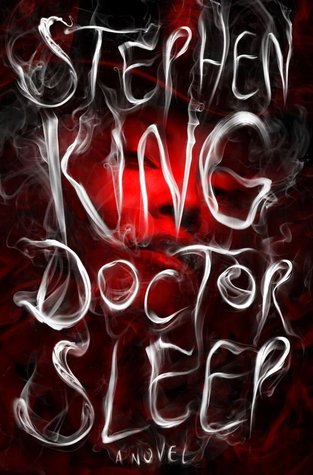
Doctor Sleep by Stephen King is a sequel to The Shining, starring Dan Torrance who was just a young boy in the first book.  In this novel, we learn about the life Dan led after the infamous events at the Overlook Hotel.  Dan has struggle most of his adult life against addiction to alcohol, like his father, but in many ways, the alcohol became a way for him to hide from his gifts.  As he copes with his addiction, he finds solace in that he can help those leaving this world for the next go peacefully.  Eventually, he becomes known as Doctor Sleep in a small New Hampshire town at a nursing home.

Meanwhile, Abra Stone, a gifted twelve-year-old girl, has caught the eye of the members of the True Knot who are human and not-human.  The True Knot seems to be an unstoppable force that are sucking the life force out of those with special gifts, but they haven’t yet met their match.  This novel is a slow builder, but in true King style, the characters are varied and dynamic.  Blending not only the supernatural with small town creepiness, King creates an atmosphere that is at once familiar and other worldly.

Doctor Sleep by Stephen King is an adventure and otherworldly with interesting characters, but there were times during the audio that my mind wandered.  The narrator, Will Patton, does a great job of creating voices that are nuanced enough to be separate entities in the performance.  I enjoyed the audio performance, but felt as though Dan’s flaws lost their impact along they way — does that mean his character evolved or that they were forgotten? — and Abra has gone from a scared Shiner to a formidable foe awfully quickly.  There are some story arcs that are quickly wrapped up and others that seem glossed over, leaving readers to fill in the gaps.  However, in terms of a sequel, written so many years after the first book, King has created a book that could be read wholly on its own, but is richer if readers have read the first book.

About the Author:

Stephen King is the author of more than fifty books, all of them worldwide bestsellers. His recent work includes Doctor Sleep and Under the Dome, now a major TV miniseries on CBS. His novel 11/22/63 was named a top ten book of 2011 by The New York Times Book Review and won the Los Angeles Times Book Prize for Mystery/Thriller as well as the Best Hardcover Book Award from the International Thriller Writers Association. He is the recipient of the 2003 National Book Foundation Medal for Distinguished Contribution to American Letters. He lives in Bangor, Maine, with his wife, novelist Tabitha King.

U.S. Only Giveaway: Summer Secrets by Jane Green

About the book from GoodReads:

June, 1998: At twenty seven, Catherine Coombs, also known as Cat, is struggling. She lives in London, works as a journalist, and parties hard. Her lunchtimes consist of several glasses of wine at the bar downstairs in the office, her evenings much the same, swigging the free booze and eating the free food at a different launch or party every night. When she discovers the identity of the father she never knew she had, it sends her into a spiral. She makes mistakes that cost her the budding friendship of the only women who have ever welcomed her. And nothing is ever the same after that.

June, 2014: Cat has finally come to the end of herself. She no longer drinks. She wants to make amends to those she has hurt. Her quest takes her to Nantucket, to the gorgeous summer community where the women she once called family still live. Despite her sins, will they welcome her again? What Cat doesn’t realize is that these women, her real father’s daughters, have secrets of their own. As the past collides with the present, Cat must confront the darkest things in her own life and uncover the depths of someone’s need for revenge.

Doesn’t this sound intriguing? 

If it does, and you are 18 or older living in the United States with a valid address, please leave a comment below about your summer plans.

Deadline to enter to win 1 copy is June 24, 2015, at 11 p.m. EST.

Doughnuts & Deadly Schemes by Janel Gradowski

Source: Author Janel Gradowski
eBook, 210 pgs
I am an Amazon Affiliate

Doughnuts & Deadly Schemes (Culinary Competition Mysteries #3) by Janel Gradowski is just what you expect from a cozy mystery — an amateur detective helping out her police friend, baking up some savory dishes, and enjoying the ride. These are the kinds of books that are perfect for summer because they are full of adventure, laughs, and fun. Carla and Amy are best friends, and you can tell that they genuinely love one another and act like sisters. While one is a planner, the other is more spontaneous; when it comes to having the wedding of her friend’s dreams, though, Amy is doesn’t take no for an answer.

“‘You are a brave woman to put together a wedding that quickly.  Heroically brave to spring this on the Over-Planning Queen.'”

“‘Believe me.  We thought of that, but I’m pretty sure you would kill us if we snuck away like that.  So, as my compromise, instead of leaving you completely out of the wedding by eloping … I’m giving you over two weeks to pull one out of thin air.'”

Challenge accepted!  Amy has a tough task on her hands planning her best friend’s wedding in less than a month, but she’s never one to shy away from a challenge — including those culinary contests.  Not only is she baking up culinary confections for local contests in Kellerton, but she’s also slinking around trying to uncover who the extortionist hacker and murderer plaguing local businesses might be.  She’s not on the police force, but Carla’s fiance, Bruce Shepler, is quick to accept her outrageous theories for new perspective on a perplexing case that has business owners’ mouths taped shut.

Doughnuts & Deadly Schemes (Culinary Competition Mysteries #3) by Janel Gradowski is a fun ride, and I loved every minute spent with these ladies.  They are quirky and fun, and the confections in these pages will make readers drool.  Don’t forget, Janel always includes some recipes in the back of the book, which you’ll want to try — I’m already dreaming about that Peach Pie Iced Tea!  But I digress.  If you haven’t read these cozy mysteries, what are you waiting for?!

About the Author:

Janel Gradowski lives in a land that looks like a cold weather fashion accessory, the mitten­-shaped state of Michigan. She is a wife and mom to two kids and one Golden Retriever. Her journey to becoming an author is littered with odd jobs like renting apartments to college students and programming commercials for an AM radio station. Somewhere along the way she also became a beadwork designer and teacher. She enjoys cooking recipes found in her formidable cookbook and culinary fiction collection. Searching for unique treasures at art fairs, flea markets and thrift stores is also a favorite pastime. Coffee is an essential part of her life. She writes the Culinary Competition Mystery Series, along with The Bartonville Series (women’s fiction) and the 6:1 Series (flash fiction). She has also had many short stories published in both online and print publications. Check her Website, on Facebook, and on Twitter.

Other books by this author, reviewed here:

Mailbox Monday #327

Mailbox Monday, created by Marcia at To Be Continued, formerly The Printed Page, has a permanent home at its own blog.

To check out what everyone has received over the last week, visit the blog and check out the links.  Leave yours too.

Also, each week, Leslie, Vicki, and I will share the Books that Caught Our Eye from everyone’s weekly links.

Here’s what I received:

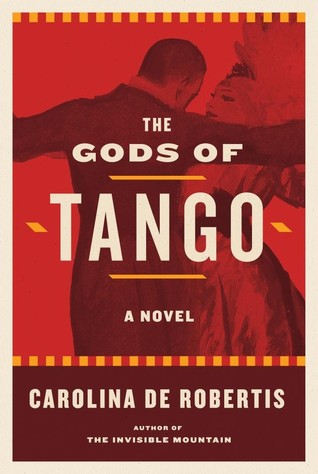
1. The Gods of Tango by Carolina de Robertis for review.

February 1913: seventeen-year-old Leda, carrying only a small trunk and her father’s cherished violin, leaves her Italian village for a new home, and a new husband, in Argentina. Arriving in Buenos Aires, she discovers that he has been killed, but she remains: living in a tenement, without friends or family, on the brink of destitution. Still, she is seduced by the music that underscores life in the city: tango, born from lower-class immigrant voices, now the illicit, scandalous dance of brothels and cabarets. Leda eventually acts on a long-held desire to master the violin, knowing that she can never play in public as a woman. She cuts off her hair, binds her breasts, and becomes “Dante,” a young man who joins a troupe of tango musicians bent on conquering the salons of high society. Now, gradually, the lines between Leda and Dante begin to blur, and feelings that she has long kept suppressed reveal themselves, jeopardizing not only her musical career, but her life.

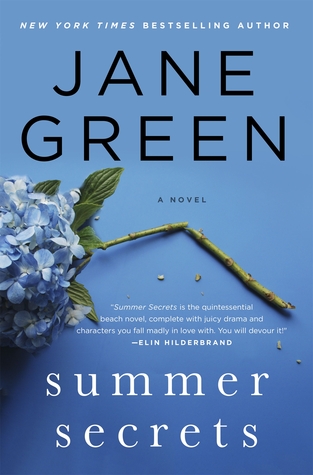
2.  Summer Secrets by Jane Green, a surprise from Tandem Literary.

June, 1998: At twenty seven, Catherine Coombs, also known as Cat, is struggling. She lives in London, works as a journalist, and parties hard. Her lunchtimes consist of several glasses of wine at the bar downstairs in the office, her evenings much the same, swigging the free booze and eating the free food at a different launch or party every night. When she discovers the identity of the father she never knew she had, it sends her into a spiral. She makes mistakes that cost her the budding friendship of the only women who have ever welcomed her. And nothing is ever the same after that.

June, 2014: Cat has finally come to the end of herself. She no longer drinks. She wants to make amends to those she has hurt. Her quest takes her to Nantucket, to the gorgeous summer community where the women she once called family still live. Despite her sins, will they welcome her again? What Cat doesn’t realize is that these women, her real father’s daughters, have secrets of their own. As the past collides with the present, Cat must confront the darkest things in her own life and uncover the depths of someone’s need for revenge.

3.  Uglies by Scott Westerfeld from the library sale.

Tally is about to turn sixteen, and she can’t wait. Not for her license – for turning pretty. In Tally’s world, your sixteenth birthday brings an operation that turns you from a repellent ugly into a stunningly attractive pretty and catapults you into a high-tech paradise where your only job is to have a really great time. In just a few weeks Tally will be there.

But Tally’s new friend Shay isn’t sure she wants to be pretty. She’d rather risk life on the outside. When Shay runs away, Tally learns about a whole new side of the pretty world and it isn’t very pretty. The authorities offer Tally the worst choice she can imagine: find her friend and turn her in, or never turn pretty at all.

4.  Sharp Objects by Gillian Flynn from the library sale, which is great since its the August Book Club pick.

Fresh from a brief stay at a psych hospital, reporter Camille Preaker faces a troubling assignment: she must return to her tiny hometown to cover the murders of two preteen girls. For years, Camille has hardly spoken to her neurotic, hypochondriac mother or to the half-sister she barely knows: a beautiful thirteen-year-old with an eerie grip on the town. Now, installed in her old bedroom in her family’s Victorian mansion, Camille finds herself identifying with the young victims—a bit too strongly. Dogged by her own demons, she must unravel the psychological puzzle of her own past if she wants to get the story—and survive this homecoming.

5.  Dragon Bones by Lisa See from the library sale, which is one I don’t have by this author.

In a magnificent land where myth mixes treacherously with truth, one woman is in charge of telling them apart. Liu Hulan is the Inspector in China’s Ministry of Public Security whose tough style rousts wrongdoers and rubs her superiors the wrong way. Now her latest case finds her trapped between her country’s distant past and her own recent history.

The case starts at a rally for a controversial cult that ends suddenly in bloodshed, and leads to the apparent murder of an American archaeologist, which officials want to keep quiet. And haunting Hulan’s investigation is the possible theft of ancient dragon bones that might alter the history of civilization itself.

Getting to the bottom of ever-spiraling events, Hulan unearths more scandals, confronts more murderers, and revives tragic memories that shake her tormented marriage to its core. In the end, she solves a mystery as big, unruly, and complex as China itself.

6.  The Yellow House by Martin Gayford from the library sale, which is about painters I love.

This chronicle of the two months in 1888 when Paul Gauguin shared a house in France with Vincent Van Gogh describes not only how these two hallowed artists painted and exchanged ideas, but also the texture of their everyday lives. Includes 60 B&W reproductions of the artists’ paintings and drawings from the period.

My daughter got a ton of awesome DVDs at the library sale, including a set of Strawberry Shortcake videos, which she’s been running around the house smelling because they smell just like strawberry shortcake!

She also got a box set of Dora the Explorer books, and some other fun reads.

Sipping Spiders Through a Straw: Campfire Songs for Monsters by Kelly Dipucchio and illustrated by Gris Grimly

A delightfully chilling musical romp through the gross and gory world of campfire songs!

In this howlishly fun collection of campfire songs, little monsters everywhere will love singing along to their favorite campfire tunes which have been altered for optimal gross-out effect by the ghoulish Kelly DiPucchio and illustrated by the Master of Creep, Gris Grimly.

Disgusting highlights include “If You’re Scary and You Know It,” “99 Bottles of Blood on the Wall,” and the classic in the making, “Do Your Guts Hang Low?” Gather your creepy, crawly friends and get ready to slither and slink and howl and stink!

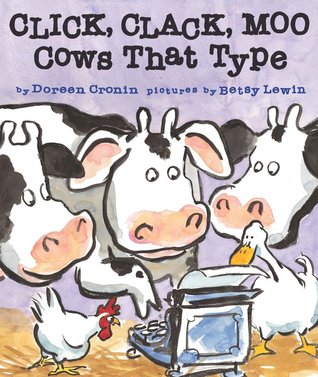
Click, Clack, Moo: Cows That Type by Doreen Cronin and illustrated by Betsy Lewin

Farmer Brown has a problem.

His cows like to type.

All day long he hears

Click, clack, MOO.

Click, clack, MOO.

Clickety, clack, MOO.

But Farmer Brown’s problems REALLY begin when his cows start leaving him notes….

Doreen Cronin’s understated text and Betsy Lewin’s expressive illustrations make the most of this hilarious situation. Come join the fun as a bunch of literate cows turn Farmer Brown’s farm upside down.

Peter Pan Fairy Tale Favorites A Pop-Up Book by John Patience

What did you receive?

309th Virtual Poetry Circle

Welcome to the 309th Virtual Poetry Circle!

Remember, this is just for fun and is not meant to be stressful.

Keep in mind what Molly Peacock’s book suggested.

Look at a line, a stanza, sentences, and images; describe what you like or don’t like; and offer an opinion. If you missed my review of her book, check it out here.

Today’s poem is from Kim Addonizio:

The Matter

“Some men break your heart in two,
Some men fawn and flatter,
Some men never look at you;
And that cleans up the matter.”
—Dorothy Parker, “Enough Rope”

Some men carry you to bed with your boots on.

Some men say your name like a verbal tic.

Some men slap on an emotional surcharge for every erotic encounter.

Some men are slightly mentally ill, and thinking of joining a gym.

Some men have moved on and can’t be seduced, even in the dream bars you meet them in.

Some men who were younger are now the age you were then.

Some men aren’t content with mere breakage, they’ve got to burn you to the ground.

Some men you’ve reduced to ashes are finally dusting themselves off.

Some men are made of fiberglass.

Some men have deep holes drilled in by war, you can’t fill them.

Some men are delicate and torn.

Some men will steal your bracelet if you let them spend the night.

Some men will want to fuck your poems, and instead they find you.

Some men will say, “I’d like to see how you look when you come,” and then hail a cab.

Some men are a list of ingredients with no recipe.

Some men never see you.

Some men will blindfold you during sex, then secretly put on heels.

Some men will try on your black fishnet stockings in a hotel in Rome, or Saran Wrap you

to a bedpost in New Orleans.

Some of these men will be worth trying to keep.

Some men will write smugly condescending reviews of you work, making you remember

these lines by Frank O’hara:

I cannot possibly think of you/other than you: the assassin/of my orchards.

Some men, let’s face it, really are too small.

Some men are too large, but it’s not usually a deal breaker.

Some men don’t have one at all.

Some men will slap you in a way you’ll like.

Some men will want to crawl inside you to die.

Some men never clean up the matter.

Some men hand you their hearts like leaflets

and some men’s hearts seem to circle forever: you catch sight of them on clear nights,

bright dots among the stars, and wait for their orbits to decay, for them to fall to earth.

What do you think?