Quantcast

337th Virtual Poetry Circle

Welcome to the 337th Virtual Poetry Circle!

Remember, this is just for fun and is not meant to be stressful.

Keep in mind what Molly Peacock’s book suggested.

Look at a line, a stanza, sentences, and images; describe what you like or don’t like; and offer an opinion. If you missed my review of her book, check it out here.

This poem is from Emma Lazarus:

The New Colossus

Not like the brazen giant of Greek fame,
With conquering limbs astride from land to land;
Here at our sea-washed, sunset gates shall stand
A mighty woman with a torch, whose flame
Is the imprisoned lightning, and her name
Mother of Exiles. From her beacon-hand
Glows world-wide welcome; her mild eyes command
The air-bridged harbor that twin cities frame.
“Keep, ancient lands, your storied pomp!” cries she
With silent lips. “Give me your tired, your poor,
Your huddled masses yearning to breathe free,
The wretched refuse of your teeming shore.
Send these, the homeless, tempest-tost to me,
I lift my lamp beside the golden door!”

What did you think?

Happy Holidays 2015

It’s amazing how quickly the end of the year arrives.  I was very far behind on all holiday fun.  I tried to make the best of it, and I hope that it went better for the rest of you.

I should have a best of list at some point, but there are a few books I want to finish up before Dec. 31.

Enjoy your family and friends, and a few good books.  I’m there with you in spirit.

National Geographic Book of Nature Poetry: More than 200 Poems With Photographs That Float, Zoom, and Bloom! by J. Patrick Lewis


Source: Media Masters Publicity
Hardcover, 192 pgs.
I am an Amazon Affiliate

National Geographic Book of Nature Poetry: More than 200 Poems With Photographs That Float, Zoom, and Bloom! by J. Patrick Lewis is a wonderful collection of poems and corresponding photographs that will engage younger readers.  The collection includes poems from the greats like Langston Hughes, Billy Collins, Emily Dickinson, and many others, but there also are less known poets included.  Paired with photos of scenes, geological formations, close-ups of insects and animals, and the moon, these poems take on a new life.  The collection also includes some fantastic Haiku, which are short poems that younger readers can follow along with easily.

The collection also includes some visual poems, like “Two Falling Flakes” by Douglas Florian, and prose poems that read more like stories.  Youngest readers will enjoy listening to their parents read the poems as they look at the full-color, glorious pictures of nature.  Parents can use this book as a jumping off point to explore nature with their children, to take photos together and compare perspectives, and to take up the pen and paint word pictures.

National Geographic Book of Nature Poetry: More than 200 Poems With Photographs That Float, Zoom, and Bloom! by J. Patrick Lewis will delight readers of all ages with the stunning photographs and poems, encouraging readers to investigate the natural world around them, to take trips outside their urban areas, and to learn more about the natural world.  Poems often provide unique perspectives on emotion and human interaction, but like Haiku poems, words can offer surprising realizations about the connections we don’t immediately see between ourselves and nature.

About the Editor:

J. Patrick Lewis is an American poet and prose writer noted for his children’s poems and other light verse. He worked as professor of economics before devoting himself full-time to writing in 1998.  Visit his website.

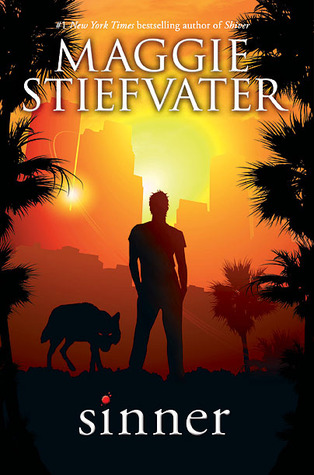
Sinner by Maggie Stiefvater

Source: Public Library
Hardcover, 357 pgs.
I am an Amazon Affiliate

Sinner by Maggie Stiefvater is the culmination of everything readers will love about the Shiver series; these characters, flawed as they are, have come a long geographic distance to outrun their problems but instead are faced with the reality that they cannot be run from.  Cole St. Clair, a former famous rocker, has come to Los Angeles to get away from the empty quiet of Minnesota, and as the new star on a reality TV series, he hopes that he’ll find a way to win Isabel Culpeper’s heart and keep her forever by his side.  However, he has forgotten one thing, Isabel is not interested in being an accessory for anyone’s life; she’s a star of her own show, even if it is inside a cold winter not-so-wonderland.

Baby, the producer of the reality TV series, is well aware that Cole is a reformed addict — though she doesn’t know about his baser nature — and she’s ready to make some great TV, even if she has to throw naked women at the fallen rock star. Isabel, however, is made of tougher stuff, or so she thinks. She’s an ice queen, but like ice under pressure, she’s bound to crack.

Stiefvater’s characters may have supernatural problems, but those only really magnify what’s broken inside them emotionally. Feeling abandoned, out of place, unloved — all are deep problems that cannot be ignored, lest they destroy the victim.  Sinner by Maggie Stiefvater is a wonderful addition to the Shiver trilogy, and it will have readers cheering for that reality TV happy ending. But will they get it?

Other Reviews:

About the Author:

New York Times bestselling author of The Shiver Trilogy, The Raven Cycle, and The Scorpio Races. Artist. Driver of things with wheels. Avid reader. All of Maggie Stiefvater’s life decisions have been based around her inability to be gainfully employed. Talking to yourself, staring into space, and coming to work in your pajamas are frowned upon when you’re a waitress, calligraphy instructor, or technical editor (all of which she’s tried), but are highly prized traits in novelists and artists. She’s made her living as one or the other since she was 22. She now lives an eccentric life in the middle of nowhere, Virginia.

Emma: A Modern Retelling by Alexander McCall Smith (audio)

Source: Public Library
Audiobook, 9 CDs
I am an Amazon Affiliate

Emma: A Modern Retelling by Alexander McCall Smith, narrated by Susan Lyons, updates Jane Austen’s tale of a young woman in high society who starts meddling in the lives of those around her.  Smith’s Emma Woodhouse is far more brazen in her comments of others, and its clear that when she returns from university that she wants to make her mark by making people happier.  Unfortunately, taking her interior design education and applying it to the relationships of her friends and neighbors is not a good fit.  Lyons does an excellent job with the narration, and she really knew which parts to emphasize.

Unlike her sister, who is happy to meet a man and start a family, Emma doesn’t have a conventional future in mind.  She wants to start her own business in the suburbs, rather than in London, which suits her hypochondriac father well.  He thinks London is a place that will make people ill, but his eldest daughter takes off with her new husband to begin their family there.  Meanwhile, Emma is content to stay in the village and take the summer to assess her options.  Smith follows the original plot pretty well with his rendition, with many of his modern elements woven in well, but some of the main conflicts appear glossed over — beginning and ending swiftly.

One area that is tough to take is Emma’s harsher characterization, which can be attributed to the much harsher and self-absorbed nature of today’s society.  However, how Emma is still given a pass in a modern society where class does not hold as much respect or weight as it once did in Austen’s time is left unexplained.  Smith creates a different backstory for Emma and Mr. Knightly, which works in this modern retelling, but may not win points with Austen’s fan base.  Mr. Woodhouse, however, is treated with a bit more respect than he was in Austen — he’s a little less ludicrous, which was a refreshing change.  The governess, however, seems to be a mouthpiece for the author, steering Emma in the right direction and the relationship between the two seems flat.

Emma: A Modern Retelling by Alexander McCall Smith, narrated by Susan Lyons, was a mixed bag with modern updates, like including cars and women going to college, but lacking in the obsession with selfies, cellphones, and other technology.  It also was mixed in terms of Smith’s treatment of the characters and the original story.  While Knightly was a guiding force for Emma, here he is relegated to the sidelines and a new character emerges, the governess.

About the Author:

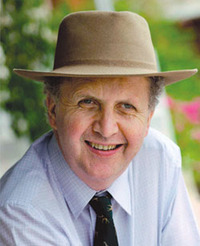
Alexander McCall Smith is the author of the international phenomenon The No. 1 Ladies’ Detective Agency series, the Isabel Dalhousie Series, the Portuguese Irregular Verbs series, and the 44 Scotland Street series. He is professor emeritus of medical law at the University of Edinburgh in Scotland and has served on many national and international bodies concerned with bioethics. He was born in what is now known as Zimbabwe and he was a law professor at the University of Botswana. He lives in Scotland. Visit him online at www.alexandermccallsmith.com, on Facebook, and on Twitter.

Mailbox Monday #354

snowy-mailbox-1484089Mailbox Monday, created by Marcia at To Be Continued, formerly The Printed Page, has a permanent home at its own blog.

To check out what everyone has received over the last week, visit the blog and check out the links.  Leave yours too.

Also, each week, Leslie, Vicki, and I will share the Books that Caught Our Eye from everyone’s weekly links.

Here’s what I received:

Pride and Prejudice and Zombies (Movie-Tie-In edition) by Jane Austen and Seth Grahame-Smith.

In the five years since its publication, Pride and Prejudice and Zombies has become a true cultural phenomenon, amassing a legion of fans and spawning an entire “mash-up” genre. As our story opens, a mysterious plague has fallen upon the quiet English village of Meryton . . . and the dead are returning to life! Feisty heroine Elizabeth Bennet is determined to wipe out the zombie menace, but she’s soon distracted by the arrival of the haughty and arrogant Mr. Darcy. What ensues is a delightful comedy of manners with plenty of civilized sparring between the two young lovers—and even more violent sparring on the blood-soaked battlefield as Elizabeth wages war against hordes of flesh-eating undead. This movie tie-in edition features eight pages of color movie stills and a new introduction by coauthor Seth Grahame-Smith.

What did you receive?

336th Virtual Poetry Circle

Welcome to the 336th Virtual Poetry Circle!

Remember, this is just for fun and is not meant to be stressful.

Keep in mind what Molly Peacock’s book suggested.

Look at a line, a stanza, sentences, and images; describe what you like or don’t like; and offer an opinion. If you missed my review of her book, check it out here.

This poem is from Anna Akhmatova:

Requiem

Not under foreign skies
Nor under foreign wings protected –
I shared all this with my own people
There, where misfortune had abandoned us.
[1961]

INSTEAD OF A PREFACE

During the frightening years of the Yezhov terror, I
spent seventeen months waiting in prison queues in
Leningrad. One day, somehow, someone ‘picked me out’.
On that occasion there was a woman standing behind me,
her lips blue with cold, who, of course, had never in
her life heard my name. Jolted out of the torpor
characteristic of all of us, she said into my ear
(everyone whispered there) – ‘Could one ever describe
this?’ And I answered – ‘I can.’ It was then that
something like a smile slid across what had previously
been just a face.
[The 1st of April in the year 1957. Leningrad]

DEDICATION

Mountains fall before this grief,
A mighty river stops its flow,
But prison doors stay firmly bolted
Shutting off the convict burrows
And an anguish close to death.
Fresh winds softly blow for someone,
Gentle sunsets warm them through; we don’t know this,
We are everywhere the same, listening
To the scrape and turn of hateful keys
And the heavy tread of marching soldiers.
Waking early, as if for early mass,
Walking through the capital run wild, gone to seed,
We’d meet – the dead, lifeless; the sun,
Lower every day; the Neva, mistier:
But hope still sings forever in the distance.
The verdict. Immediately a flood of tears,
Followed by a total isolation,
As if a beating heart is painfully ripped out, or,
Thumped, she lies there brutally laid out,
But she still manages to walk, hesitantly, alone.
Where are you, my unwilling friends,
Captives of my two satanic years?
What miracle do you see in a Siberian blizzard?
What shimmering mirage around the circle of the moon?
I send each one of you my salutation, and farewell.
[March 1940]

INTRODUCTION
[PRELUDE]

It happened like this when only the dead
Were smiling, glad of their release,
That Leningrad hung around its prisons
Like a worthless emblem, flapping its piece.
Shrill and sharp, the steam-whistles sang
Short songs of farewell
To the ranks of convicted, demented by suffering,
As they, in regiments, walked along –
Stars of death stood over us
As innocent Russia squirmed
Under the blood-spattered boots and tyres
Of the black marias.

I

You were taken away at dawn. I followed you
As one does when a corpse is being removed.
Children were crying in the darkened house.
A candle flared, illuminating the Mother of God. . .
The cold of an icon was on your lips, a death-cold
sweat
On your brow – I will never forget this; I will gather

To wail with the wives of the murdered streltsy (1)
Inconsolably, beneath the Kremlin towers.
[1935. Autumn. Moscow]

II

Silent flows the river Don
A yellow moon looks quietly on
Swanking about, with cap askew
It sees through the window a shadow of you
Gravely ill, all alone
The moon sees a woman lying at home
Her son is in jail, her husband is dead
Say a prayer for her instead.

III

It isn’t me, someone else is suffering. I couldn’t.
Not like this. Everything that has happened,
Cover it with a black cloth,
Then let the torches be removed. . .
Night.

IV

Giggling, poking fun, everyone’s darling,
The carefree sinner of Tsarskoye Selo (2)
If only you could have foreseen
What life would do with you –
That you would stand, parcel in hand,
Beneath the Crosses (3), three hundredth in
line,
Burning the new year’s ice
With your hot tears.
Back and forth the prison poplar sways
With not a sound – how many innocent
Blameless lives are being taken away. . .
[1938]

V

For seventeen months I have been screaming,
Calling you home.
I’ve thrown myself at the feet of butchers
For you, my son and my horror.
Everything has become muddled forever –
I can no longer distinguish
Who is an animal, who a person, and how long
The wait can be for an execution.
There are now only dusty flowers,
The chinking of the thurible,
Tracks from somewhere into nowhere
And, staring me in the face
And threatening me with swift annihilation,
An enormous star.
[1939]

VI

Weeks fly lightly by. Even so,
I cannot understand what has arisen,
How, my son, into your prison
White nights stare so brilliantly.
Now once more they burn,
Eyes that focus like a hawk,
And, upon your cross, the talk
Is again of death.
[1939. Spring]

VII
THE VERDICT

The word landed with a stony thud
Onto my still-beating breast.
Nevermind, I was prepared,
I will manage with the rest.

I have a lot of work to do today;
I need to slaughter memory,
Turn my living soul to stone
Then teach myself to live again. . .

But how. The hot summer rustles
Like a carnival outside my window;
I have long had this premonition
Of a bright day and a deserted house.
[22 June 1939. Summer. Fontannyi Dom (4)]

VIII
TO DEATH

You will come anyway – so why not now?
I wait for you; things have become too hard.
I have turned out the lights and opened the door
For you, so simple and so wonderful.
Assume whatever shape you wish. Burst in
Like a shell of noxious gas. Creep up on me
Like a practised bandit with a heavy weapon.
Poison me, if you want, with a typhoid exhalation,
Or, with a simple tale prepared by you
(And known by all to the point of nausea), take me
Before the commander of the blue caps and let me
glimpse
The house administrator’s terrified white face.
I don’t care anymore. The river Yenisey
Swirls on. The Pole star blazes.
The blue sparks of those much-loved eyes
Close over and cover the final horror.
[19 August 1939. Fontannyi Dom]

IX

Madness with its wings
Has covered half my soul
It feeds me fiery wine
And lures me into the abyss.

That’s when I understood
While listening to my alien delirium
That I must hand the victory
To it.

However much I nag
However much I beg
It will not let me take
One single thing away:

Not my son’s frightening eyes –
A suffering set in stone,
Or prison visiting hours
Or days that end in storms

Nor the sweet coolness of a hand
The anxious shade of lime trees
Nor the light distant sound
Of final comforting words.
[14 May 1940. Fontannyi Dom]

X
CRUCIFIXION

Weep not for me, mother.
I am alive in my grave.

1.
A choir of angels glorified the greatest hour,
The heavens melted into flames.
To his father he said, ‘Why hast thou forsaken me!’
But to his mother, ‘Weep not for me. . .’
[1940. Fontannyi Dom]

2.
Magdalena smote herself and wept,
The favourite disciple turned to stone,
But there, where the mother stood silent,
Not one person dared to look.
[1943. Tashkent]

EPILOGUE

1.
I have learned how faces fall,
How terror can escape from lowered eyes,
How suffering can etch cruel pages
Of cuneiform-like marks upon the cheeks.
I know how dark or ash-blond strands of hair
Can suddenly turn white. I’ve learned to recognise
The fading smiles upon submissive lips,
The trembling fear inside a hollow laugh.
That’s why I pray not for myself
But all of you who stood there with me
Through fiercest cold and scorching July heat
Under a towering, completely blind red wall.

2.
The hour has come to remember the dead.
I see you, I hear you, I feel you:
The one who resisted the long drag to the open window;
The one who could no longer feel the kick of familiar
soil beneath her feet;
The one who, with a sudden flick of her head, replied,

‘I arrive here as if I’ve come home!’
I’d like to name you all by name, but the list
Has been removed and there is nowhere else to look.
So,
I have woven you this wide shroud out of the humble
words
I overheard you use. Everywhere, forever and always,
I will never forget one single thing. Even in new
grief.
Even if they clamp shut my tormented mouth
Through which one hundred million people scream;
That’s how I wish them to remember me when I am dead
On the eve of my remembrance day.
If someone someday in this country
Decides to raise a memorial to me,
I give my consent to this festivity
But only on this condition – do not build it
By the sea where I was born,
I have severed my last ties with the sea;
Nor in the Tsar’s Park by the hallowed stump
Where an inconsolable shadow looks for me;
Build it here where I stood for three hundred hours
And no-one slid open the bolt.
Listen, even in blissful death I fear
That I will forget the Black Marias,
Forget how hatefully the door slammed and an old woman
Howled like a wounded beast.
Let the thawing ice flow like tears
From my immovable bronze eyelids
And let the prison dove coo in the distance
While ships sail quietly along the river.
[March 1940. Fontannyi Dom]

What do you think?

Piglet Bo Is Not Scared! by Geert De Kockere, illustrated by Tineke Van Hemeldonck

Source: Sky Pony Press
Hardcover, 32 pgs.
I am an Amazon Affiliate

Piglet Bo Is Not Scared! by Geert De Kockere, illustrated by Tineke Van Hemeldonck, is a cute story about the things we tell ourselves when we feel fear creeping over our shoulders.  In this story, Piglet Bo claims not to be scared of anything or anyone, but as Bo pumps himself up and tries to project fear onto a tiny mouse, readers come to realize that Bo is afraid.  Kockere’s story is a little more wordy than other picture books, but this story is one that demonstrate to young readers that emotion can be not only portraying in illustrations but also through words.

Piglet Bo is the typical child looking for greater independence and refusing to admit the need for help or reassurance, especially when fear is involved.  Bo puffs up at the sign of shadows, making excuses for not going into the dark room or riding the roller coaster, but when Bo wakes up in the forest at night, there is little room for an excuse.  A realization strikes that fear is real and can be overwhelming.

Piglet Bo Is Not Scared! by Geert De Kockere, illustrated by Tineke Van Hemeldonck, is a great book introducing children to fear and how it can be rationalized into other emotions and how excuses do not let them escape the fear but trick their minds.  Younger readers may wonder why Bo is so afraid of a mouse or a roller coaster, but adventures will require courage and fears can come in all sizes and forms.  Kockere’s book enables young readers to see that it is okay to be afraid, and that in some cases, it can be useful.  The illustrations are a little abstract at times, which will require a little explanation for younger readers.

Other Reviews:

Piglet Bo Can Do Anything!

About the Author:

Geert De Kockere studied to become a teacher but instead became a professional journalist. Currently he is the editor of Buitenbeen, a nature magazine for Flanders and the Netherlands. He has written many children’s books, including several collections of poems, and has won a variety of book prizes for his work. He resides in Kempen, Belgium.

About the Illustrator:

Tineke Van Hemeldonck studied graphic design, specializing in illustration, at Provinciale Hogeschool Limburg in Hasselt. She has done all kinds of graphic design work, and this is her first children’s book. She currently resides in Bunsbeek, Belgium.

The Pioneer Woman Cooks: Food from My Frontier by Ree Drummond

Source: Public Library
Hardcover, 293 pgs.
I am an Amazon Affiliate

The Pioneer Woman Cooks: Food from My Frontier by Ree Drummond, which was a February book club pick, is a fantastic cookbook for novice cooks and those with a little more experience.  This cookbook not only provides step-by-step instructions that are easy to follow, uses items that are pre-prepared (such as Pillsbury Crescent Rolls), and offers alternative ingredients, but it also tells a story of frontier life and gives step-by-step photos to show what recipes look like throughout the process to ensure that those following along are doing things as close to her instructions as possible.  I found the instructions and pictures of each step very helpful; they kept me on track, which I need with a 4-year-old helping in the kitchen who tends to get me easily distracted and missing steps.

For Thanksgiving week, I made the Peach-Whiskey Chicken using chicken legs, but you can use breasts and other types of pairings and types of chicken.  The directions were easy to follow with the measurements laid out, though the times for cooking in each step were approximate depending on your stove type and some steps could take longer.  We thoroughly enjoyed these messy chicken legs, and while I had a hard time finding peaches — I ended up using frozen peaches — it was good to make something so tasty from scratch.  This was the recipe that took me the longest time to prepare.

For the actual Thanksgiving dinner, I made the Whiskey-Glazed Carrots — are you sensing a theme here? — which was a relatively simple recipe to follow, though it took me a bit to find the skillet I have that has a lid — many of my pans do not have lids.  There’s something I do each Thanksgiving — I make different types of carrots with the hope that I can get Anna‘s daughter to eat them.  She doesn’t like carrots very much.  So far, I’ve gotten 2 okays in the last couple of years.  I’ll take it.  Next year, I’ll find another recipe for carrots.

After the Thanksgiving holiday, I had a day off to do some editing and decided to take a break and make Apple Dumplings using Pillsbury Crescent Rolls.  Cutting the apples was the hardest part because I don’t own an apple corer for some reason, so I had to cut the apples into 8 pieces — no they were not the same size — and core them once I cut the apple.  The rest of the recipe was a breeze, though I didn’t use Mt. Dew as the recipe indicated.  I used the variation of ginger ale, and I think they came out really well.  I don’t often eat ice cream, but I bet these would taste delicious with some vanilla bean ice cream.

The Pioneer Woman Cooks: Food from My Frontier by Ree Drummond is delightful cookbook, filled with great recipes, anecdotes about frontier life, and advice on alternative recipes and pairings.  This is a cookbook I would recommend to anyone who wants to try something new but wants it kept simple.  I love that there are a variety of meals from spicy to mild, and the desserts in this book look so good just from the pictures.

About the Author:

Ree Drummond began blogging in 2006 and has built an award-winning website, where she shares recipes, showcases her photography, and documents her hilarious transition from city life to ranch wife. She is the author of the #1 New York Times bestselling cookbook The Pioneer Woman Cooks. Ree lives on a working cattle ranch near Pawhuska, Oklahoma, with her husband, Ladd; their four kids; their beloved basset hound; and lots of other animals.

Blue Lily, Lily Blue by Maggie Stiefvater (audio)

Source: Digital Library
Digital audio, 9+ hrs
I am an Amazon Affiliate

Blue Lily, Lily Blue by Maggie Stiefvater, narrated by Will Patton, is the third book in this series, and it is such a strong series of books.  Listening to these back to back on audio with the fabulous Will Patton as the narrator has been an immersive experience.  Where a hot room can feel like a jacket closing you in, readers will fall into the world Steifvater has created, wanting to uncover the magic and secrets within the pages quickly, but at the same time struggle not to linger over her images and poetic prose.  Adam and Blue are sent on a journey into the caves with the other Raven Boys, but as they are less sure of their own abilities, they are edging closer to a precipice they may not come back from.

What do you so when your psychic mother disappears, the Greenmantle comes to down to unearth darkness, and the Raven Boys are ever closer to discovering the resting place of a former Welsh king, Glendower?  While things have seen more certain, they are less certain than ever because the ley lines are in disorder, dream thieves are rifling with things they do not fully understand, and others are scrying in the search for guidance.  Time is fluid in this book, and so is what is real and what is not.  Stiefvater has woven a believable world in which readers will be trapped with Blue and the Raven Boys, searching for the unknown and hoping for answers.

Blue Lily, Lily Blue by Maggie Stiefvater, narrated by Will Patton, reveals answers and poses more questions, but readers will never tire of this world and its fantastical elements.  Her characters are nuanced, engaging, twisted and damaged, but they all cling to some form of hope, a hope that things will improve, things will go their way, and that all will be re-aligned as it should be.  However, what they believe it to be, might not be how it ends up when all is said and done.  Stiefvater is a rare talent in the young adult fiction genre.

Other Reviews:

About the Author:

New York Times bestselling author of The Shiver Trilogy, The Raven Cycle, and The Scorpio Races. Artist. Driver of things with wheels. Avid reader. All of Maggie Stiefvater’s life decisions have been based around her inability to be gainfully employed. Talking to yourself, staring into space, and coming to work in your pajamas are frowned upon when you’re a waitress, calligraphy instructor, or technical editor (all of which she’s tried), but are highly prized traits in novelists and artists. She’s made her living as one or the other since she was 22. She now lives an eccentric life in the middle of nowhere, Virginia.

The Lost Journals of Sylvia Plath by Kimberly Knutsen

Source: Media Buck Book Publicity
Paperback, 384 pgs.
I am an Amazon Affiliate

The Lost Journals of Sylvia Plath by Kimberly Knutsen is an ambitious novel that weaves in elements of Sylvia Plath’s life subtly, and the Lavender family is on the edge of crisis.  Katie is a mother of three whose wild ways secure her in a nuclear family, one that she is ill-equipped to navigate without stumbling.  Wilson is a former addict attempting to finish his PhD, while engaging young students in women’s studies courses.  Much of the novel is a series of flashbacks to Katie’s tormented past and an event that changed her forever, before Katie’s sister arrives on her doorstep to stir up even more trouble.

“Victimized by sex is the human race. Animals, the fortunate lower beasts, go into heat. Then they are through with the thing, while we poor lustful humans, caged by mores, chained by circumstance, writhe and agonize with the appalling and demanding fire licking always at our loins.” – Sylvia Plath, The Unabridged Journals of Sylvia Plath

Knutsen’s novel seems to explore Plath’s comments about sex and married life as personified in Katie.  She has a husband who is her best friend, but she cannot confide in him about her lustful need to conquer their younger neighbor, Steven.  Meanwhile, Wilson has felt trapped from day one after Katie announced her pregnancy, but like an addict, he dives in head first into the marriage pool.  He wants to give it his all, but even as he does, these strong personalities cannot live in the same space without arguments and other adverse effects.

“There were two worlds when I was a kid.  The Cinderella world, with its fancy light, is the one I miss.  It lasted until I was eight.  Then it disappeared.” (pg. IX)

“There was a second world.  It was the texture of pumice.  It was the taste of metal in my mouth.  It was the stopped heart, the brain that could never catch its breath.  This world eclipsed the Cinderella world, and it visits me still in the night, sliding along the edges of the room, slipping into my mouth to sit in my throat, acrid and black, its tendrils snaking down to hook, but good, my heart.” (pg. X)

Although Wilson is meant to be rewriting Plath’s lost journals — those that went missing or were destroyed as his doctoral dissertation — he finds his hours spent in the office not writing.  Perhaps he has lost faith in his knowledge of women since his marriage to Katie has begun to crack, or perhaps he has come to the conclusion that he is a farce of the genius image he has created throughout his academic career.  Knutsen examines the illusion of a happy marriage, especially between traumatized people.

The people in this world are highly damaged and have lost their moral ground, but rather than fight against the nature they are familiar with to create a new life, a changed life, they step into their old shoes.  The Lost Journals of Sylvia Plath by Kimberly Knutsen is about lost souls whose lives are documented only by their relations and themselves.  Some readers may have a tough time reading some of these situations and the language, but overall, Knutsen has captured the darker side of trauma and its long-term effects.

Check out my interview with Knutsen, here.

2015-08-17 05.00.08-3 (1)About the Author:

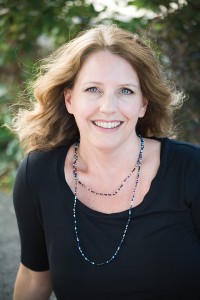
A native Portlander, Kimberly Knutsen is a graduate of the Iowa Writers’ Workshop. She has an MA in English from New Mexico State University and a PhD in English from Western Michigan University. She has won many fellowships and awards for her writing and has published short stories in The Hawaii Review and the Cimarron Review. She has written a novel, The Lost Journals of Sylvia Plath, and is currently finishing a second novel, Violet.

Kim comes to Portland from Kalamazoo, Michigan where she taught writing and women’s studies at Western Michigan University and Kalamazoo Valley Community College. She loves working with her students at CU and is continually amazed by their intelligence, creativity, kindness and wisdom.

Mailbox Monday #353

Mailbox Monday, created by Marcia at To Be Continued, formerly The Printed Page, has a permanent home at its own blog.

To check out what everyone has received over the last week, visit the blog and check out the links.  Leave yours too.

Also, each week, Leslie, Vicki, and I will share the Books that Caught Our Eye from everyone’s weekly links.

Here’s what I received:

Jane Austen Lives Again by Jane Odiwe from the author for review.

When Jane Austen’s doctor discovers the secret to immortal life in 1817, she thinks her wishes have come true. But when she wakes up from the dead, a penniless Miss Austen finds herself in 1925, having to become a governess to five girls of an eccentric and bohemian family at the crumbling Manberley Castle by the sea. Jane soon finds she’s caught up in the dramas of every family member, but she loves nothing more than a challenge, and resolves on putting them in order. If only she can stop herself from falling in love, she can change the lives of them all!  Inspired by Jane Austen’s wonderful novels and written in the tradition of classic books like Cold Comfort Farm, I Capture the Castle, and Miss Pettigrew Lives for a Day, Jane Austen Lives Again is an amusing fairy story for grown-ups.

Fudge Brownies & Murder by Janel Gradowski from the author for review.
Culinary whiz and reluctant amateur sleuth, Amy Ridley, has a lot on her plate. Her very pregnant best friend, Carla, can barely move from her couch per doctor’s orders. So Amy is tasked with preparing meals for the expanding family along with baking endless pans of brownies to quench Carla’s pregnancy cravings. Not only is she playing chef, but she’s also trying to convince the mommy-to-be that she needs to have a baby shower. But when a restaurant owner is murdered at a blogging conference, Amy finds herself in a race to catch the killer before the baby is born.

As Carla’s baby bump gets bigger, so does the list of suspects. While Amy pares down the potential murderers and staves off disgruntled cooking competition rivals, the clock ticks down, the baby’s arrival draws closer, and the danger grows stronger! If Amy doesn’t watch her back, she may be the next member of the competition going down.

The Diary of Emily Dickinson by Jamie Fuller, illustrated by Marlene McLoughlin, which I picked up at the library sale shelf for 50 cents.

The discovery of Emily Dickinson’s poetry after her death unleashed a series of mysteries and revelations that astonished those who knew her and continue to intrigue readers today. Who was the reclusive woman who wrote these wise and beautiful verses? Slowly answers came and, with them, more questions. Why did Emily continue to seek the advice of Thomas Wentworth Higginson when he never recognized her genius? To whom were the mysterious “master” letters, written at the height of her poetic creativity, addressed? Why did she keep most of her writing secret from her family? Did she hope for eventual fame? Answers to such questions could have been suggested in 1916, when, during reconstruction of the Dickinson house in Amherst, Massachusetts, a worker discovered Emily’s secret diary hidden in a crevice of the wall of the conservatory. Unfortunately, he kept the discovery to himself for many years. Only now has this remarkable document, edited and annotated by Jamie Fuller, become available to Dickinson admirers. Such is the premise of this unique fictional work. The diary begins in March 1867 and ends in April 1868. During this span Dickinson recounts the revelations and trials of her day-to-day life, from burnt puddings to professions of undying love.

With discriminating insight, Fuller helps extract from Dickinson’s cryptic style her views on God, family, nature, death, love, poetry, fame, and her role as a woman in a patriarchal society. Most of all, The Diary of Emily Dickinson is an exquisite account of what it means to live the writing life, to live for poetry. Author Jamie Fuller has given us a fictional diary based on close readings of Dickinson’s writings and contemporaneousmaterials, that is so sensitive and sympathetic, so delicately and smoothly written, in a style so closely resembling Emily’s own, that one could well believe it contains the private musings of the enigmatic poet. In it, Emily Dickinson comes alive.

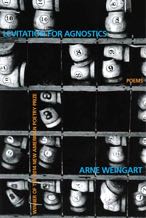
Levitation for Agnostics by Arne Weingart for review from Book Savvy Public Relations.

Arne Weingart’s debut poetry collection. Winner of the 2014 New American Poetry prize.

Arne Weingart is the 2015 laureate of the New American Press Poetry Prize, awarded for his debut poetry collection, Levitation for Agnostics (New American Press, January 2016). A Pushcart Prize nominee, Arne also won the 2013 Sow’s Ear Poetry Review Poetry Contest and has had poems featured by such esteemed publications as RHINO, The Georgetown Review, Oberon, Arts & Letters and The Spoon River Poetry Review.  He has been granted a writing residency at the Atlantic Center for the Arts and is alumnus of Columbia University’s MFA program in writing. Arne and his family live in Chicago, where he is the principal of a graphic design firm specializing in identity and wayfinding.

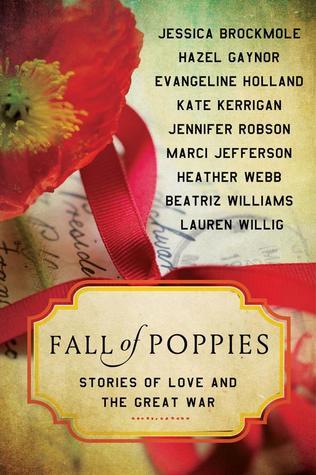
Fall of Poppies by Heather Webb, Hazel Gaynor, Beatriz Williams, Jennifer Robson, Jessica Brockmole, Kate Kerrigan, Evangeline Holland, Lauren Willig, and Marci Jefferson for review from Harper Collins and TLC Book Tours.

On the eleventh hour of the eleventh day of the eleventh month…

November 11, 1918. After four long, dark years of fighting, the Great War ends at last, and the world is forever changed. For soldiers, loved ones, and survivors the years ahead stretch with new promise, even as their hearts are marked by all those who have been lost.

As families come back together, lovers reunite, and strangers take solace in each other, everyone has a story to tell.

In this moving anthology, nine authors share stories of love, strength, and renewal as hope takes root in a fall of poppies.

What did you receive?