Quantcast

335th Virtual Poetry Circle

Welcome to the 335th Virtual Poetry Circle!

Remember, this is just for fun and is not meant to be stressful.

Keep in mind what Molly Peacock’s book suggested.

Look at a line, a stanza, sentences, and images; describe what you like or don’t like; and offer an opinion. If you missed my review of her book, check it out here.

This poem is from Walt Whitman:

To a Locomotive in Winter

Thee for my recitative!
Thee in the driving storm even as now, the snow, the winter-day declining,
Thee in thy panoply, thy measur’d dual throbbing and thy beat convulsive,
Thy black cylindric body, golden brass, and silvery steel,
Thy ponderous side-bars, parallel and connecting rods, gyrating, shuttling at thy sides,
Thy metrical, now swelling pant and roar, now tapering in the distance,
Thy great protruding head-light fix’d in front,
Thy long, pale, floating vapor-pennants, tinged with delicate purple,
The dense and murky clouds out-belching from thy smoke-stack,
Thy knitted frame, thy springs and valves, the tremulous twinkle of thy wheels,
Thy train of cars behind, obedient, merrily following,
Through gale or calm, now swift, now slack, yet steadily careering;
Type of the modern—emblem of motion and power—pulse of the continent,
For once come serve the Muse and merge in verse, even as here I see thee,
With storm and buffeting gusts of wind and falling snow,
By day thy warning ringing bell to sound its notes, By night thy silent signal lamps to swing.

Fierce-throated beauty!
Roll through my chant with all thy lawless music, thy swinging lamps at night,
Thy madly-whistled laughter, echoing, rumbling like an earthquake, rousing all,
Law of thyself complete, thine own track firmly holding,
(No sweetness debonair of tearful harp or glib piano thine,)
Thy trills of shrieks by rocks and hills return’d,
Launch’d o’er the prairies wide, across the lakes, To the free skies unpent and glad and strong.

What do you think?

The Runaway Santa: A Christmas Adventure Story by Anne Margaret Lewis, illustrated by Aaron Zenz

Source: Sky Pony Press
Hardcover, 40 pgs.
I am an Amazon Affiliate

The Runaway Santa: A Christmas Adventure Story by Anne Margaret Lewis, illustrated by Aaron Zenz, is an adorable book about Santa Claus and his desire for a vacation away from the North Pole.  The author teams up with the same illustrator of The Runaway Pumpkin, and the results are very similar, only this time the wife is carefully watching her husband on his adventures instead of the mother watching her pumpkin son.  We’ve read this one a couple of times, and she loves picking out where Mrs. Claus is hiding in the background as Santa talks about his adventures in the mountains and the jungle, among other places.

The drawings are simple line drawn characters that are easily recognized by young readers, and the adventures give young readers an idea of what different locations look like and what equipment or items you might need to pack.  This one also had a lot of my daughter’s sight words that she’s learning in preschool, which was good for her to practice recognizing them outside of her flashcards.  Out favorite parts were when Mrs. Claus rode a Kangaroo and Santa swung through the jungle with the monkeys and rode an elephant.

The Runaway Santa: A Christmas Adventure Story by Anne Margaret Lewis, illustrated by Aaron Zenz, offers advice on how to be prepared for adventures, even though they are supposed to be fun.  It also expresses love and care for loved ones, teaching kids empathy for others and concern about their well-being — allowing them to look outside their selves and their own concerns.  Finally, the story also offers a moment of inclusion, as Santa realizes that his wife thinks the vacation adventure may be a good idea and that he would love for her to come along.

Other Reviews:

The Runaway Pumpkin: A Halloween Adventure Story

The Dream Thieves by Maggie Stiefvater (audio)

Source: Public Library
Audiobook, 11 CDs
I am an Amazon Affiliate

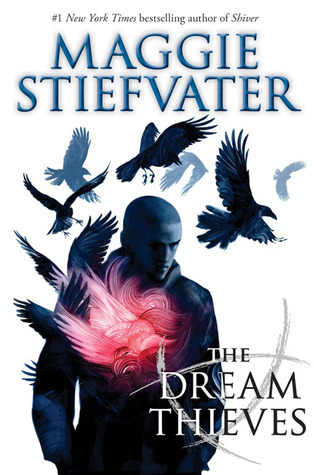
The Dream Thieves by Maggie Stiefvater, narrated by Will Patton, continues the series with the Raven Boys and Blue fighting the dark forces of dreamland.  The ley line has been awakened but the Raven Boys and Gansey continue their search for the dead ancient king Glendower.  As they continue their search, the Gray Man is searching for a mechanism, but even with the help of Blue’s psychic family, he has no idea what he is searching for. The romantic tension is present here, but the book is less about teen romance than about the battle between good and evil and the known versus the unknown.

Meanwhile, the magic of Cabes Water has disappeared or fizzled out, as if a power surge has disrupted its power.  Ronan, who has been the black sheep, has finally found a purpose, and in this volume, he has come into his own, while Adam still seems lost.  Despite the fluid relationships between the Raven Boys and Blue and her family, they have little choice but to push aside their emotions to save the magic of Cabes Water, jumpstart the power of the fading lay line, and keep the evil forces at bay.  Stiefvater’s prose is thrilling, visually arresting, and unforgettable.

The Dream Thieves by Maggie Stiefvater, narrated by Will Patton, is a whirlwind of magic that will leave readers wanting more.  Will these boys survive the magic? Can they wield the magic with aplomb and responsibility? Or will they be devoured by the fire that threatens to burn the town and take the magic with it?  This is a series that will have readers begging for more, and they’ll be unable to get these living nightmares out of their head long after the book is closed.

Other Reviews:

About the Author:

New York Times bestselling author of The Shiver Trilogy, The Raven Cycle, and The Scorpio Races. Artist. Driver of things with wheels. Avid reader. All of Maggie Stiefvater’s life decisions have been based around her inability to be gainfully employed. Talking to yourself, staring into space, and coming to work in your pajamas are frowned upon when you’re a waitress, calligraphy instructor, or technical editor (all of which she’s tried), but are highly prized traits in novelists and artists. She’s made her living as one or the other since she was 22. She now lives an eccentric life in the middle of nowhere, Virginia.

Forever by Maggie Stiefvater (audio)

Source: Public Library
Audiobook, 10 CDs
I am an Amazon Affiliate

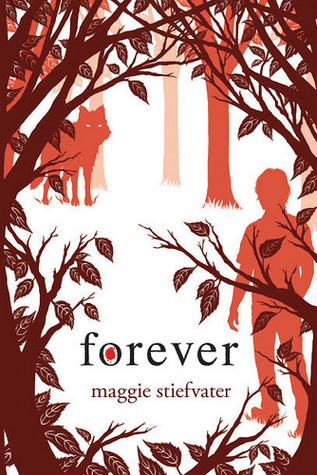
Forever by Maggie Stiefvater — narrated by Dan Bittner, Pierce Cravens, Emma Galvin, Jenna Lamia, and Maggie Stiefvater — is stunning in its twists and turns, its big reveals, and its ever-poetic language that takes readers into boundary wood.  In this third book in the Mercy Falls series, Sam and Grace are again separated by circumstances, and even when they can be together, there are things that separate them, leaving each waiting in anticipation for the other — for their connection to be rekindled.  Their connection, however, is so strong that it transcends species and is a testament to love, loyalty, and family.

Sam looks to Grace as his center, and she often helps him overcome his indecision, but when Grace is in danger, he’s forced to make his own choices, forced to grow up into the man he is.  Beck is no longer there as a buffer, and Cole may be older and more focused on saving the pack, but he is not who the wolves will follow.  Sam has to make a sacrifice he didn’t think he could make again, but when he decides to do it, he is all in.  Isabelle and Cole’s budding relationship, meanwhile, is filled with obstacles, including both characters’ personal baggage.

Forever by Maggie Stiefvater — narrated by Dan Bittner, Pierce Cravens, Emma Galvin, Jenna Lamia, and Maggie Stiefvater — is part of a highly imaginative series of books about werewolves in Mercy Falls.  These characters are forced to grow up too soon, but even as they want to cling to their childhood freedoms, they know that their lives are forever changed once they make the leap into adulthood.  These characters are bound to make a lasting impression on readers, and Mercy Falls will be missed when it’s over.

Other Reviews:

About the Author:

New York Times bestselling author of The Shiver Trilogy, The Raven Cycle, and The Scorpio Races. Artist. Driver of things with wheels. Avid reader.  All of Maggie Stiefvater’s life decisions have been based around her inability to be gainfully employed. Talking to yourself, staring into space, and coming to work in your pajamas are frowned upon when you’re a waitress, calligraphy instructor, or technical editor (all of which she’s tried), but are highly prized traits in novelists and artists. She’s made her living as one or the other since she was 22. She now lives an eccentric life in the middle of nowhere, Virginia.

Interview with Kimberly Knutsen

As the holidays continue to approach, and things have gotten a bit off schedule in my house – at least reading wise — the forthcoming posts are expected to a bit more haphazard in topic than I would prefer.

Today, I have an interview with the author of The Lost Journals of Sylvia Plath, Kimberly Knutsen.

About the Book from GoodReads:

Set in the frozen wasteland of Midwestern academia, The Lost Journals of Sylvia Plath introduces Wilson A. Lavender, father of three, instructor of women’s studies, and self-proclaimed genius who is beginning to think he knows nothing about women. He spends much of his time in his office not working on his dissertation, a creative piece titled “The Lost Journals of Sylvia Plath.” A sober alcoholic, he also spends much of his time not drinking, until he hooks up with his office mate, Alice Cherry, an undercover stripper who introduces him to “the buffer”—the chemical solution to his woes.

Wilson’s wife, Katie, is an anxious hippie, genuine earth mother, and recent PhD with no plans other than to read People magazine, eat chocolate, and seduce her young neighbor—a community college student who has built a bar in his garage. Intelligent and funny, Katie is haunted by a violent childhood. Her husband’s “tortured genius” both exhausts and amuses her.

Please give Ms. Knutsen a warm welcome:

Why Sylvia Plath? What is it about her that intrigued you to incorporate her journals into your novel?

As a writer, I was intrigued by the many facets of Plath’s personality: the good girl in Letters Home; the funny, snarky coed in the journals; the cool primeval persona of the Ariel poems; Esther, so mean and desperate and sad in The Bell Jar. The characters in The Lost Journals of Sylvia Plath—Wilson, his wife Katie, and her sister January—are also fractured due to childhood trauma and addiction. No matter how hard they try, they are unable to truly connect with another.

As far as the journals go, Wilson is rewriting Plath’s lost journals—the ones that went missing or were destroyed after her death—as his doctoral dissertation. A popular instructor of women’s studies who is beginning to think he knows nothing about women, he is bravely co-opting the voice of a fellow “tortured genius.” There’s just one catch: He spends most of his time not writing, and by mid-novel has come up with just one line: “Felt like singing today!”

What is your favorite Sylvia Plath poem and why?

I love “Elm.” The tree is magnificent in its dying. The imagery captures the fury and violence and horrifying beauty of life: “I have suffered the atrocity of sunsets./ Scorched to the root/ My red filaments burn and stand, a hand of wires.” Love it! “Elm” contains one of my favorite lines, which I used as an epigraph in my novel Violet: “Love is a shadow./ How you lie and cry after it.”

Have you written poetry? Why or why not.

I teach an introductory course in poetry and often do the exercises with the students, and I can say with authority that I am definitely not a poet, although my writing—the language and rhythm—can be very poetic. I’m always amazed at the work my college students produce. They have so much primal energy, and the key is to just help them harness it.

I did publish one poem in Hoot: http://www.hootreview.com/. They print poems on postcards, and provide audio of the poets reading on the website. I think my poem was a total of thirty words, and I must have spent hours recording myself reading it aloud in this strange, breathy voice. As soon as I pushed record on the phone, I’d panic and freeze: no inhalation, no exhalation. Just dumb, stunned silence. And then the voice. Like if a balloon could form words. Barely.

Work/Life balance is tough as a mother, can you offer any advice that has worked for you as an author, professor, and mother? What are your thoughts about women who want to take it all on and fail?

That’s an interesting question. We never ask men this question: How do you balance work and fatherhood? It’s a given that work is important and fatherhood will fall into place naturally.

Mothers, however, have impossible standards to live up to. We are responsible for every horrible thing our children do. We’re the life-givers and the destroyers. If our child is an addict, well, we must have enabled them by loving them too much, or else we traumatized them by not loving them enough. Working mothers come home from work and dive into the second shift—laundry, dishes, grocery shopping, the cat litter box—and a, we better not complain, and b, we better look good doing it.

With that said, I love being a mom. To me, motherhood is life (and I fully recognize that this is not necessarily true for others, nor should it be). I find that bitching and complaining is a great way to blow off steam and keep myself sane. I highly recommend it.

My advice for working mothers/writers: Create. If you can only write for twenty minutes in the bathroom while one child takes a bath and the other unrolls the entire roll of toilet paper, do it. I wrote my entire 570-page dissertation in coffee shops, and sometimes even in my car parked in a church parking lot, while paying a babysitter for those two hours of freedom. If you are blessed with artistic gifts, let them blossom. A silent writer is a life half lived, and a writer who writes is able to live life twice. Create teeny-tiny poems. Type them on a postcard. Record yourself reading them aloud. Don’t forget to breathe!

A final word on housekeeping. As a mom, I try to block out media messages that tell me how perfect my children and home and teeth and boobs should be. Where did this idea of having a showplace home come from? When I was a kid growing up in the 70s, houses were just houses, with the same pictures on the walls, year in and year out, and the same 1970s brown shag carpet, the same old furniture, the same old Tupperware. Nothing was fancy and nothing changed—not even the meals. I try to keep my home 70s style: clean enough, but certainly not pristine or fancy. There’s still the horrible carpet the elderly dog dribbles on and the mini-blinds that you all of a sudden realize are really disgusting. But how much does it matter in the end?

It’s not life or death. Dirty mini-blinds are not life or death. Creating, living life authentically, loving and helping others—this is what matters. Dirty mini-blinds and old carpet are way down on the list. (But you can see how much these mini-blinds are bothering me!)

How many writing projects do you work on at one time? Do you outline? What other practices did you learn at the Iowa Writers’ Workshop?

The most important thing I learned at the Iowa Writers’ Workshop was how to be an advocate for myself and my writing. Before you go, you’re usually the “star” of your writing program, and all the professors love you and you win all the awards, and you think you’re some kind of literary goddess! Riiight. Then you get to Iowa and you learn pretty quickly that everyone is a “star” and nobody thinks you or your writing are anything special, and you’re really nobody, and it’s a huge blow to your ego.

I loved when Hannah on Girls went to Iowa because it’s exactly like that: She got there and everyone hated her and her work, and there’s always one guy with three names, like Ethan Phillip Thomas, who all the professors love, and he’s the one that gets the agent and the book deal while still in the program, and wins the Michener award and the Stegner award, and this guy with the three names, this E.P.T., is definitely not you! As a writer, you can either crumble and quit or keep writing. Not for the attention and the awards and the praise, but for yourself, because you are a writer and writers write. Period.

At Iowa, I learned about rejection and disinterest, which is 99.9 percent of a writer’s life. But as I’ve said before, you only need one yes, so keep writing!

Oh, and to answer the question: I usually obsess about just one project at a time, and I do create a crazy, color-coded outline, but only near the end of the revision process. I go through each chapter and note symbols, themes, motifs, character arcs, etc. The outline is bright and colorful and shows how brilliant our subconscious minds are, and how clunky and obvious and downright dumb our conscious minds can be.

Thank you for sharing your thoughts with us today.

Mailbox Monday #352

Mailbox Monday, created by Marcia at To Be Continued, formerly The Printed Page, has a permanent home at its own blog.

To check out what everyone has received over the last week, visit the blog and check out the links.  Leave yours too.

Also, each week, Leslie, Vicki, and I will share the Books that Caught Our Eye from everyone’s weekly links.

Here’s what I received:

Piglet Bo Is Not Scared! by Geert De Kockere, illustrated by Tineke Van Hemeldonck, for review from Sky Pony Press.

Piglet Bo insists that he is not scared. Not scared of anything and not scared of anyone. And if you think he seems scared, well, you’re misunderstanding the situation. Really, Piglet Bo can’t go into the dark cave because he doesn’t want to disturb the bats. And he can’t go into the deep pit because he’s pretty sure the termites are having a birthday party and it would be rude to show up without a gift. But what are those shadows lurking on each page? How long can Piglet Bo’s excuses last?

What did you receive?

334th Virtual Poetry Circle

Welcome to the 334th Virtual Poetry Circle!

Remember, this is just for fun and is not meant to be stressful.

Keep in mind what Molly Peacock’s book suggested.

Look at a line, a stanza, sentences, and images; describe what you like or don’t like; and offer an opinion. If you missed my review of her book, check it out here.

This poem is from Robert Hayden:

Those Winter Sundays

Sundays too my father got up early
and put his clothes on in the blueblack cold,
then with cracked hands that ached
from labor in the weekday weather made
banked fires blaze. No one ever thanked him.
I’d wake and hear the cold splintering, breaking.
When the rooms were warm, he’d call,
and slowly I would rise and dress,
fearing the chronic angers of that house,
Speaking indifferently to him,
who had driven out the cold
and polished my good shoes as well.
What did I know, what did I know
of love’s austere and lonely offices?

What do you think?

The Night Before Christmas: A Brick Story by Clement C. Moore, illustrated by Amanda Brack

Source: Sky Pony Press
Hardcover, 32 pgs.
I am an Amazon Affiliate

The Night Before Christmas: A Brick Story by Clement C. Moore, illustrated by Amanda Brack, follows the traditional story of the clatter on the roof and the calls to the reindeer.  What makes this story different is the use of bricks (also known as Lego pieces) to illustrate the story.  The pieces are well placed and resemble the elements of the story, and the scenes are augmented with felt stockings and other non-brick items.  These elements help provide readers with a more realistic feel.

Our favorite parts of the story were of course the rhyming lines that tell the story, but also the sugarplums dancing in the heads of the children and the flying reindeer.  My daughter and I had a conversation about Santa Claus’ other name, St. Nicholas, and what coursers were and why the word was used in the story.  We’re already having conversations about language usage and choice, though I’m not sure she understands it completely.  One tiny quibble is the fact that the smoke from Santa’s pipe does not look like a wreath above his head as it says in the story, but I’m sure that would be difficult to reproduce.

The Night Before Christmas: A Brick Story by Clement C. Moore, illustrated by Amanda Brack, is a cute book for those modern kids familiar with these plastic bricks used to build scenes.  Maybe some readers would take what they saw in the book and create their own Santa and Christmas scenes.

About the Author:

Clement Clarke Moore, (July 15, 1779 – July 10, 1863), is best known as the credited author of A Visit From St. Nicholas (more commonly known today as Twas the Night Before Christmas). Clement C. Moore was more famous in his own day as a professor of Oriental and Greek literature at Columbia College (now Columbia University) and at General Theological Seminary, who compiled a two volume Hebrew dictionary. He was the only son of Benjamin Moore, a president of Columbia College and bishop of the Episcopal Diocese of New York, and his wife Charity Clarke. Clement Clarke Moore was a graduate of Columbia College (1798), where he earned both his B.A. and his M.A.. He was made professor of Biblical learning in the General Theological Seminary in New York (1821), a post that he held until 1850.

Locke & Key: Alpha & Omega Vol. 6 by Joe Hill, illustrated by Gabriel Rodríguez

Source: Public Library
Paperback, 192 pgs.
I am an Amazon Affiliate

Locke & Key: Alpha and Omega Vol. 6 by Joe Hill, illustrated by Gabriel Rodríguez, is where all the dark forces come alive at the same time, and the Locke family is even more distant from one another.  Tyler is trying to forget the darkness and move on, while Bode is still not himself and Kinsey has started to fit in at school and wants to join in.  Their mother has stopped drinking and seems to be more sober in her thinking and parenting, while uncle Duncan is still trying to be a guiding force for the kids who have had to deal with the death of their father and more.  The illustrations continue in the same style in this volume as in most of the other volumes, and bring to life Joe Hill’s story in a way that is both gruesome and terrifying.

The dark lady has all the keys she needs to unleash her demon brethren on the world, but her plans have changed, as she’s seen how powerful family can be.  She wants to create her own, make a family of demons beholden to only her.  Of course, there is still a place for slaves in this new kingdom.  Kinsey, Tyler, and Bode are up against all the darkness behind the black door, and they must outsmart the dark lady if they hope to win.

Locke & Key: Alpha and Omega Vol. 6 by Joe Hill, illustrated by Gabriel Rodríguez, is a wonderful conclusion to this series of graphic novels.  The tug of war between good and evil is frightening, especially when readers realize that the fate of goodness is in the hands of teenagers.  Overall, Hill has created a series of graphic novels that will keep readers entertained, horrified, and guessing about whether good will win out.  Rodríguez is a talented artist, and his artistry is on full display in these novels.

Other Reviews:

About the Author:

Joseph Hillstrom King is an American writer of fiction, writing under the pen name of Joe Hill.  Hill is the the second child of authors Stephen King and Tabitha King. His younger brother Owen King is also a writer. He has three children.

Hill’s first book, the limited edition collection 20th Century Ghosts published in 2005 by PS Publishing, showcases fourteen of his short stories and won the Bram Stoker Award for Best Fiction Collection, together with the British Fantasy Award for Best Collection and Best Short Story for “Best New Horror”. In October 2007, Hill’s mainstream US and UK publishers reprinted 20th Century Ghosts, without the extras published in the 2005 slipcased versions, but including one new story.

About the Illustrator:

Architect, artist and illustrator. He started his career with myth based illustrations for card games, and then jumped into the world of professional comics working with IDW Publishing. In addition to his current work in Locke & Key, his collaborations with IDW include Clive Barker’s The Great and Secret Show, Beowulf, George Romero’s Land Of The Dead, as well as several CSI comics and some covers for Angel and Transformers.

Locke & Key: Clockworks Vol. 5 by Joe Hill, illustrated by Gabriel Rodríguez

Source: Public Library
Paperback, 159 pgs.
I am an Amazon Affiliate

Locke & Key: Clockworks Vol. 5 by Joe Hill, illustrated by Gabriel Rodríguez, is a whirlwind adventure into the past as the Locke family discovers the timeshift key for the grandfather clock in the house.  This key enables them to go back to 1775 to find out what happened to their ancestors in colonial Massachusetts during the British occupation of Lovecraft, which was not an integral part of the revolution.  The presence of the British in this area signifies a search for an advantage in the war, though it is not really expanded upon.  The Locke children learn the source of the keys and how the demons cam to live in Lovecraft and make their way into the well house.  But there has always been magic here, with or without the discovery of the black door.

The illustration in this volume is consistent with the tale, in which the time shifts to 1775 have a old-world feel compared to the present day.  Hill has a great backstory reveal in this volume, and the Locke kids are up against something that even their father did not fully understand.  There is more death and mayhem in this one, and there is a disturbing image of a possessed goat that left an impression even on me.

Locke & Key: Clockworks Vol. 5 by Joe Hill, illustrated by Gabriel Rodríguez, provides a backstory on the ancestors and the Locke children’s father, and it’s good to see that these characters are evolving amid all the horror, death, and mayhem created by the demon and the misuse of the keys.  Even their mother has stopped her destructive behavior, but it is clear that there is more devastation to come.

Other Reviews:

About the Author:

Joseph Hillstrom King is an American writer of fiction, writing under the pen name of Joe Hill.  Hill is the the second child of authors Stephen King and Tabitha King. His younger brother Owen King is also a writer. He has three children.

Hill’s first book, the limited edition collection 20th Century Ghosts published in 2005 by PS Publishing, showcases fourteen of his short stories and won the Bram Stoker Award for Best Fiction Collection, together with the British Fantasy Award for Best Collection and Best Short Story for “Best New Horror”. In October 2007, Hill’s mainstream US and UK publishers reprinted 20th Century Ghosts, without the extras published in the 2005 slipcased versions, but including one new story.

About the Illustrator:

Architect, artist and illustrator. He started his career with myth based illustrations for card games, and then jumped into the world of professional comics working with IDW Publishing. In addition to his current work in Locke & Key, his collaborations with IDW include Clive Barker’s The Great and Secret Show, Beowulf, George Romero’s Land Of The Dead, as well as several CSI comics and some covers for Angel and Transformers.

Locke & Key: Keys to the Kingdom Vol. 4 by Joe Hill, illustrated by Gabriel Rodríguez

Source: Public Library
Hardcover, 152 pgs.
I am an Amazon Affiliate

Locke & Key: Keys to the Kingdom Vol. 4 by Joe Hill, illustrated by Gabriel Rodríguez, is a crazy mishmash of events that flash forward and back, which is less effective than the narration in previous books.  It’s almost as though the author wanted to tell too many events in one graphic novel.  The graphics in this one also are all over the place, transforming from a cartoonish quality at the beginning to the normal style and then to a more gritty military style found in comic books.

The Locke family is about to meet the threats of the dark lady head on in this book, and there are lasting consequences for this segment of the battle.  The keys to the kingdom are at stake, and while the family may feel like they are making progress, she’s always a few steps ahead of them.  Kinsey is still without fear, and some of her decision-making becomes very skewed as a result, while Tyler is battling his own guilt and the betrayal of two people he trusted.  Bode, meanwhile, continues to play with objects he doesn’t fully understand.

Locke & Key: Keys to the Kingdom Vol. 4 by Joe Hill, illustrated by Gabriel Rodríguez, has some great battles in it, and the characters are forced to face not only the dark lady’s advances, but the effects of the keys.  These keys were hidden for a reason, and uncovering them and using them may not have been the best idea.

Other Reviews:

About the Author:

Joseph Hillstrom King is an American writer of fiction, writing under the pen name of Joe Hill.  Hill is the the second child of authors Stephen King and Tabitha King. His younger brother Owen King is also a writer. He has three children.

Hill’s first book, the limited edition collection 20th Century Ghosts published in 2005 by PS Publishing, showcases fourteen of his short stories and won the Bram Stoker Award for Best Fiction Collection, together with the British Fantasy Award for Best Collection and Best Short Story for “Best New Horror”. In October 2007, Hill’s mainstream US and UK publishers reprinted 20th Century Ghosts, without the extras published in the 2005 slipcased versions, but including one new story.

About the Illustrator:

Architect, artist and illustrator. He started his career with myth based illustrations for card games, and then jumped into the world of professional comics working with IDW Publishing. In addition to his current work in Locke & Key, his collaborations with IDW include Clive Barker’s The Great and Secret Show, Beowulf, George Romero’s Land Of The Dead, as well as several CSI comics and some covers for Angel and Transformers.

Mailbox Monday #351

Mailbox Monday, created by Marcia at To Be Continued, formerly The Printed Page, has a permanent home at its own blog.

To check out what everyone has received over the last week, visit the blog and check out the links.  Leave yours too.

Also, each week, Leslie, Vicki, and I will share the Books that Caught Our Eye from everyone’s weekly links.

Here’s what I received:

Nine Coins/Nueve Monedas by Carlos Pintado, translated by Hilary Vaughn Dobel, introduction by Richard Blanco for review from Akashic Books.

Nine Coins/Nueve monedas is a palimpsest of love, fears, dreams, and the intimate landscapes where the author seeks refuge. These poems appear like small islands of salvation, covered with the brief splendor of the coins people sometimes grab hold of, taking the form of a very personal and often devastating map. Each poem is a song at the edge of an abyss; an illusory gold coin obtained as a revelation; a song of hope and understanding. The volume’s dreamlike geography prompts the reader to revisit the thread, the labyrinth, and the Minotaur’s legends. The night streets of South Beach, Alexandria, and many other cities, lit by the fading torches, seem to guide us in conversation with characters who are long dead.

The Forgotten Room by Karen White, Beatriz Williams, Lauren Willig, and more for review from Penguin for review.

1945: When the critically wounded Captain Cooper Ravenal is brought to a private hospital on Manhattan’s Upper East Side, young Dr. Kate Schuyler is drawn into a complex mystery that connects three generations of women in her family to a single extraordinary room in a Gilded Age mansion.

Who is the woman in Captain Ravenel’s portrait miniature who looks so much like Kate?  And why is she wearing the ruby pendant handed down to Kate by her mother?  In their pursuit of answers, they find themselves drawn into the turbulent stories of Gilded Age Olive Van Alen, driven from riches to rags, who hired out as a servant in the very house her father designed, and Jazz Age Lucy Young, who came from Brooklyn to Manhattan in pursuit of the father she had never known.  But are Kate and Cooper ready for the secrets that will be revealed in the Forgotten Room? 

The Bazaar of Bad Dreams by Stephen King from my mom as an early Christmas present.

Since his first collection, Nightshift, published thirty-five years ago, Stephen King has dazzled readers with his genius as a writer of short fiction. In this new collection he assembles, for the first time, recent stories that have never been published in a book. He introduces each with a passage about its origins or his motivations for writing it.

There are thrilling connections between stories; themes of morality, the afterlife, guilt, what we would do differently if we could see into the future or correct the mistakes of the past. “Afterlife” is about a man who died of colon cancer and keeps reliving the same life, repeating his mistakes over and over again. Several stories feature characters at the end of life, revisiting their crimes and misdemeanors. Other stories address what happens when someone discovers that he has supernatural powers—the columnist who kills people by writing their obituaries in “Obits;” the old judge in “The Dune” who, as a boy, canoed to a deserted island and saw names written in the sand, the names of people who then died in freak accidents. In “Morality,” King looks at how a marriage and two lives fall apart after the wife and husband enter into what seems, at first, a devil’s pact they can win.

What did you receive?