Quantcast

374th Virtual Poetry Circle

Welcome to the 374th Virtual Poetry Circle!

Remember, this is just for fun and is not meant to be stressful.

Keep in mind what Molly Peacock’s book suggested.

Look at a line, a stanza, sentences, and images; describe what you like or don’t like; and offer an opinion. If you missed my review of her book, check it out here.

Today’s poem is from Gary Snyder:

Hay for the Horses

He had driven half the night
From far down San Joaquin
Through Mariposa, up the
Dangerous Mountain roads,
And pulled in at eight a.m.
With his big truckload of hay
        behind the barn.
With winch and ropes and hooks
We stacked the bales up clean
To splintery redwood rafters
High in the dark, flecks of alfalfa
Whirling through shingle-cracks of light,
Itch of haydust in the 
        sweaty shirt and shoes.
At lunchtime under Black oak
Out in the hot corral,
---The old mare nosing lunchpails,
Grasshoppers crackling in the weeds---
“I’m sixty-eight” he said,
“I first bucked hay when I was seventeen.
I thought, that day I started,
I sure would hate to do this all my life.
And dammit, that’s just what
I’ve gone and done.”

What do you think?
Guest Post & Giveaway: How Austen Seduced Hemingway by Collins Hemingway

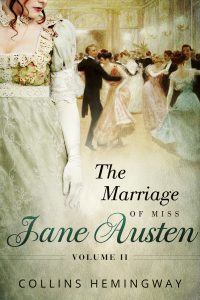
Vol 2 Final 07-08-16If you’ve been reading this blog long enough, you know that I love Jane Austen, particularly Pride & Prejudice, and that I sometimes read variations and re-tellings of her work, or novels that have Jane Austen as a character.

The Marriage of Miss Jane Austen: Vol. 2 looks at how Austen would have fared had she married and had a family.

About the Novel:

The Marriage of Miss Jane Austen trilogy by Collins Hemingway respectfully reimagines the beloved English author’s life and resolves the biggest mystery around the actual historical records about her life during the Regency era in England: What really happened during the “missing years” of her twenties? Why did her sister destroy all of her letters and records of her life then? Why have rumors of a tragic lost love persisted for two hundred years? www.austenmarriage.com

Please welcome, Collins Hemingway, the author of The Marriage of Miss Jane Austen, to the blog today as he talks about how Austen seduced him.

Since embarking on my Jane Austen journey, I’ve been asked many a time why a present-day man, who spent most of his career involved with computers, marketing, and aviation, would explore the “what ifs” of the life of a literary woman from two hundred years ago.

The answer goes back primarily to Dr. Duncan Eaves, my graduate school instructor and an expert in Eighteenth Century literature. He and another wonderful instructor at my school, Dr. Ben Kimpel, wrote the definitive biography of Samuel Richardson, usually considered the first English novelist, and Dr. Eaves edited an edition of Richardson’s novel Pamela.

Dr. Eaves could recite Gray’s “Elegy Written in a Country Graveyard” as mournfully as the tolling of a bell, or playfully rattle off long stretches of Pope’s satiric heroic couplets. He could convince his students, by good humor alone, to finish Richardson’s agonizingly dull Pamela or Clarissa.

Jane Austen herself found Richardson gratifying, according to her brother Henry, who was careful to add, however, that “her taste secured her from the errors of his prolix style and tedious narrative.”

Dr. Eaves eschewed the usual Jane Austen reads, Pride and Prejudice and Sense and Sensibility, for Emma, which he considered much the superior work.

At this same time, in a class on modern poetry, I read a poem—by Anne Sexton or Maxine Kumin, I believe—that described what life would have been like for Romeo and Juliet had they not “escaped” with a romantic death: squalling babies, money hassles, arguments over daily life.

I had married young, had a child, and was struggling financially. I knew, even at the age of 21, that courtship and marriage were radically different things.

The situation led to animated exchanges with Dr. Eaves about Austen. My view was that she was a brilliant but superficial writer simply because courtship did not lend itself to investigation of the deepest feelings of the heart or the substance of life. Her books, I told Dr. Eaves, ended where they should have begun: with marriage.

Dr. Eaves told me to come back and read Austen every ten years or so. As I gained experience, he said, I would see more of life woven into the fabric of her work and less of the comedy of manners. Over time, his prediction came true. Austen pushed the bounds of convention, and likely her own sense of propriety, by addressing substantive issues obliquely—premarital sex and the slave trade, to mention two.

Even the delightful Emma, with its breezily misguided protagonist, manages to provide “perfect happiness” for a scandalous situation, that of Harriet’s illegitimacy. Interestingly enough, her being a “natural” daughter turns out not to be nearly as important as whether her father was a gentleman, as Emma supposes, or a tradesman, as turns out to be the case.

Novels of the day often addressed the question of a lady’s virtue but never seriously addressed other matters of consequence, before or after the wedding. Austen’s secondary characters are the ones involved in dubious—thus consequential—activities, and she often leaves open the question of future happiness for them. The main characters, meanwhile, skip off gaily into the future.

I felt that there had to be a way to capture Austen’s spirit and insight while also bringing the more serious issues of Austen’s day out of the background and into the light. I wanted to see how an intelligent woman of the early 1800s would respond if personally tested by those issues.

For many, many years, while mastering computer products during the day, I continued to study the history of the Regency period and to read Austen and what biographers had to say about her. All of the matters above percolated in my head.

My wife and I visited southern England several times, from the coast of Kent to Land’s End. On one of these trips, in 2006, we took the train down to Bath, where we spent several days seeing the sights and visiting some of Austen’s haunts. I picked up more books and bios.

Bath was not Austen’s favorite locale, but I was affected by being where she had walked and shopped and visited with her family—and had many of her own characters interacting. At the end of the weekend, I was struck by a thought as sharp as Emma’s arrow: Write my story.

I understood immediately. Write the story of Jane Austen living to the fullest the personal life that most women then experienced. Write the story of the public life she would have undertaken if she had had the opportunity to engage in the exciting, chaotic maelstrom that was the Regency period. Write as she would have, freed from the restrictions and conventions that stifled women authors then.

On the train back to London, I pulled out my journal and began to jot down notes under a title that wrote itself: The Marriage of Miss Jane Austen.

A decade later, I’m returning to Bath to launch the second volume of the trilogy that, I hope, does justice to the voice that struck me: the voice of Jane Austen.

Thank you for stopping by.

Please leave a comment below with an anecdote or piece of advice about marriage or finding love?

Deadline to enter for U.S./Canada residents is Sept. 16, 2016, 11:59 PM EST. Good Luck!

***GIVEAWAY HAS ENDED***

Parasite by Mira Grant (audio)

Source: Public Library
Audiobook, 16+ hours
I am an Amazon Affiliate

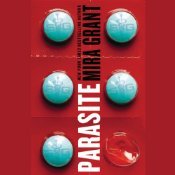
Parasite by Mira Grant, narrated by Christine Lakin, is another series of books in which the world has been turned upside down. Sally Mitchell was involved in horrific car accident and a genetically engineered worm is introduced to her body. When she wakes up, she has no memory of her life before and must begin again, learning how to walk, talk, and interact. In a world where germs are eradicated and worms are used in symbiosis with human bodies to ensure the immune system functions properly, it’s no wonder that things go haywire in 2027.

With only six years of life to build upon, Sal Mitchell must create a new life for herself and leave the old Sally behind. With her doctor boyfriend and continued checkups at SymboGen Corp., her life is pretty carefree, unless you like being poked and prodded. Her father, a general, works in a lab that keeps a check on the nation’s diseases and outbreaks, and her sister works there too as an intern. Sal may be a lab rat, but everyone around her seems to be a scientist. The entire world has bought into the Intestinal Bodyguard worm marketing of SymboGen, except for Sal’s boyfriend Dr. Kim.

Grant has become a go-to author for me when I want something fresh. Her books push the envelope of science as far as it will go to create a world that resembles our current reality but is horrifying. Her ability to create a believable world in which science has gone beyond the bounds of ethics and created something they can no longer control is nothing short of a miracle. You could step into these worlds and believe they are your reality. And that is very scary.

Lakin does an excellent narrative job as she voices Sal and the other characters, making each one distinct without making them sound ridiculously accented. Parasite by Mira Grant, narrated by Christine Lakin, is spell-binding and would be great for a book club discussion about medical and scientific ethics. This is book one, and you can bet I’m reading the rest of this series.

RATING: Quatrain

Other Reviews:

About the Author:

Born and raised in Northern California, Mira Grant has made a lifelong study of horror movies, horrible viruses, and the inevitable threat of the living dead. In college, she was voted Most Likely to Summon Something Horrible in the Cornfield, and was a founding member of the Horror Movie Sleep-Away Survival Camp, where her record for time survived in the Swamp Cannibals scenario remains unchallenged.

Mira lives in a crumbling farmhouse with an assortment of cats, horror movies, comics, and books about horrible diseases. When not writing, she splits her time between travel, auditing college virology courses, and watching more horror movies than is strictly good for you. Favorite vacation spots include Seattle, London, and a large haunted corn maze just outside of Huntsville, Alabama.

Mira sleeps with a machete under her bed, and highly suggests that you do the same.

Night Ringing by Laura Foley

tlc tour hostSource: TLC Book Tours
Paperback, 108 pgs.
I am an Amazon Affiliate

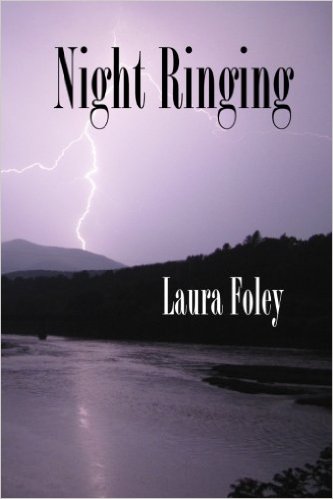
Night Ringing by Laura Foley speaks to the risks we take, no matter how small, and the reverberations they generate in our lives. Each action has a consequence, even if those results are not seen immediately. Her simple observations are similar in that they quietly call attention to a moment and decision, and the effects creep up on the reader. Even the organization of the poems in each section seems to build upon the last, creating louder echoes of the ringing throughout the narrator’s life.

In “Daddy’s Girls,” the narrator talks about a father who wanted boys but had four girls. His actions toward them taught them to shy away from his attentions, eventually leading to the collapse of their own self-esteem. “Quickly, we learned/to turn away, duck his gaze,/but still he broke us,/” Her poems are short, but that makes them no less powerful. The girls are not the only ones broken, so too is the returned Viet Nam soldier in “The Staff of Life” who wakes from a dream with his hands around his girlfriend’s neck. “Driving Route 95” is the worst nightmare of any mother, the loss of family — a family that abandons you, not one that you leave behind. But it is true of all of us — we all fear being left behind, alone. This is a poem that will sear that fear into the hearts of readers. These are frightening images, images that will call up readers’ own histories of traumas past. How do you suppress those images? Do you knead the muscles until the pain subsides? do you meet those images head on?

Many of our memories are filled with regret, and these regrets often haunt us if we let them “I’m stumbling through/the dark, winding down a circular stair, to the place where the/ringing doesn’t end.”, the narrator says in “Night Ringing.” It is how we react to these traumatic moments and regrets that defines who we are — are we the moaning and yelping animals in a panic in “The Sounds Oblivion Makes” or are we swimming along even as we appear to be drowning, like the narrator in “Not Drowning”?

Night Ringing by Laura Foley examines a life led on its own terms in spite of the disappointments and the obstacles. A life that may look as though it was faltering and a person who seemed to be drowning, but a life that was lived with as little regret as possible. Foley expresses a wide variety of emotion in these compact poems, and readers will feel the crescendo when it hits.

RATING: Quatrain

Other Reviews:

About the Poet:

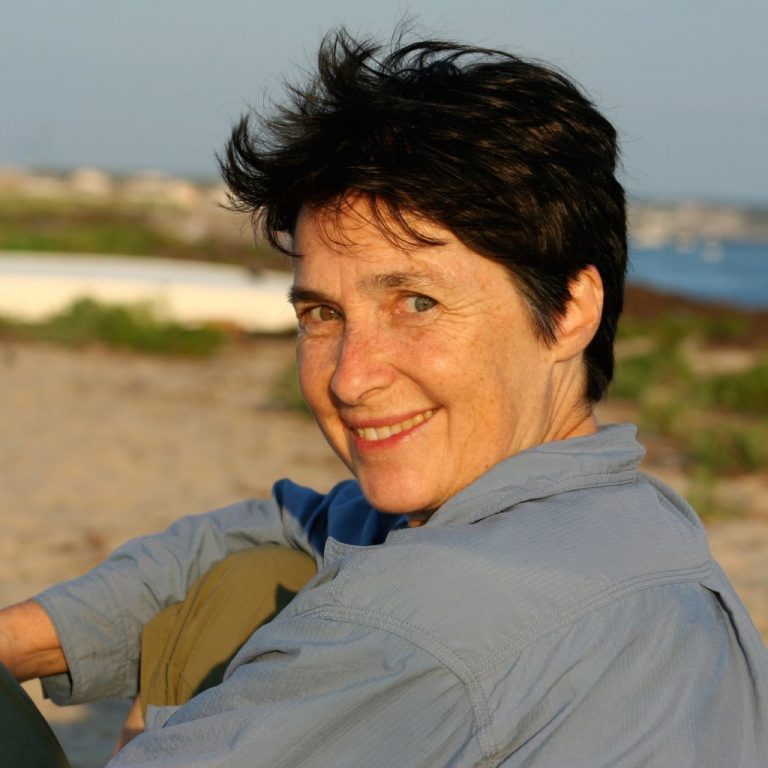
Laura Foley is an internationally published, award-winning poet, author of five collections. She won First Place in the Common Goods Poetry Contest, judged by Garrison Keillor, who read her poem on “A Prairie Home Companion”; and First Place in the National Outermost Poetry Prize, judged by Marge Piercy. Her poetry collections include: Night Ringing, The Glass Tree and Joy Street. The Glass Tree won a Foreword Book of the Year Award; Joy Street won the Bisexual-Writer’s Award. Her poems have appeared in The Writer’s Almanac, Valparaiso Poetry Review, Pulse Magazine, Lavender Review, The Mom Egg Review, in the British Aesthetica Creative Writing Anthology, and many other journals.

A certified Shri Yoga Instructor and creative arts facilitator in hospitals, she is the mother of three grown children and has just become a grandmother. She and her partner Clara Gimenez live among the hills of Vermont with their three big dogs.

Mailbox Monday #391

Mailbox Monday, created by Marcia at To Be Continued, formerly The Printed Page, has a permanent home at its own blog.

To check out what everyone has received over the last week, visit the blog and check out the links. Leave yours too.

Also, each week, Leslie, Vicki, and I will share the Books that Caught Our Eye from everyone’s weekly links.

Here’s what I received:

Parasite by Mira Grant, which I borrowed from the library’s digital collection.  I really enjoyed her Newsflesh Trilogy.

A decade in the future, humanity thrives in the absence of sickness and disease.

We owe our good health to a humble parasite – a genetically engineered tapeworm developed by the pioneering SymboGen Corporation. When implanted, the tapeworm protects us from illness, boosts our immune system – even secretes designer drugs. It’s been successful beyond the scientists’ wildest dreams. Now, years on, almost every human being has a SymboGen tapeworm living within them.

But these parasites are getting restless. They want their own lives…and will do anything to get them.

Edgar Allan Poe Adult Coloring Book by Odessa Begay for review from Sterling Publishing.

Dive into the macabre, mysterious world of Edgar Allan Poe’s chilling tales with popular coloring book artist Odessa Begay (Little Birds). Inspired by Poe’s beloved stories, Begay has created images that reference settings, motifs, and details that fans will recognize.

What did you receive?

373rd Virtual Poetry Circle

Welcome to the 373rd Virtual Poetry Circle!

Remember, this is just for fun and is not meant to be stressful.

Keep in mind what Molly Peacock’s book suggested.

Look at a line, a stanza, sentences, and images; describe what you like or don’t like; and offer an opinion. If you missed my review of her book, check it out here.

Today’s poem is from Li-Young Lee:

The Hammock

When I lay my head in my mother’s lap
I think how day hides the stars,
the way I lay hidden once, waiting
inside my mother’s singing to herself. And I remember 
how she carried me on her back
between home and the kindergarten,
once each morning and once each afternoon.
 
I don’t know what my mother’s thinking.
 
When my son lays his head in my lap, I wonder:
Do his father’s kisses keep his father’s worries
from becoming his? I think, Dear God, and remember
there are stars we haven’t heard from yet:
They have so far to arrive. Amen,
I think, and I feel almost comforted.
 
I’ve no idea what my child is thinking.
 
Between two unknowns, I live my life.
Between my mother’s hopes, older than I am
by coming before me, and my child’s wishes, older than I am
by outliving me. And what’s it like?
Is it a door, and good-bye on either side?
A window, and eternity on either side?
Yes, and a little singing between two great rests.

What do you think?

Haiku Is Live!

Hi everyone,

Since my last writing update here on the blog, the Fall/Winter 2016 issue of Wild Plum magazine is out.

This issue is chock full of wonderful haiku from all over the world.  Mine is included on page 36, but I recommend you read the others as well.

I’m forever grateful for Wild Plum’s acceptance of my haiku.  It’s a bright spot in my recent publication journey.

Thanks to everyone who supports my writing.


The A.B.C. Murders by Agatha Christie

Source: Audible
Audiobook, 6 hrs.
I am an Amazon Affiliate

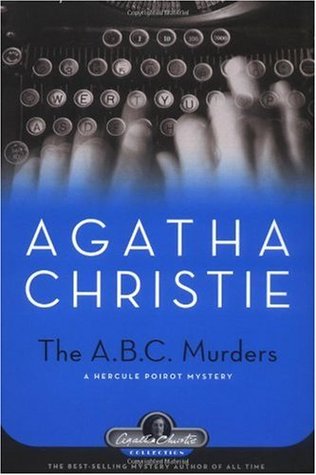
The A.B.C. Murders by Agatha Christie, our August book club selection, is narrated by Hugh Fraser and is the 13th book in the series.  Despite being so far into the series, it was refreshing to read a murder-mystery that was more intellectual in nature. Hercule Poirot is being taunted by the serial killer working his way through victims based on the alphabet, and beside his victims, he leaves the ABC Railway Guide open at the name of the town where the murder has taken place. Arthur Hastings, a longtime friend of Poirot, is excited to be working with his friend after a long time, and this book is told from Hastings’ point of view for the most part. The other narration is a third-person narrative created by Hastings’ reconstructions of other eye-witness accounts. Christie creates another mysterious layer this way because readers will always partially doubt the validity of those recollections.

The first three murders occur with little evidence of who the killer is, but once the killer decides to make an enemy of Poirot, he is bound to make mistakes. There also is a certain complexity of motive here, in which it is obscured again and again by other events and things that occur. While Hastings is in awe of his friend’s ability to solve cases, Inspector Crome is less than a fan. It’s interesting to see these two opinions face off, and it forces the reader to wonder is Poirot a super-detective or is he a man that gets lucky. Like many mysteries, the truth is somewhere in the middle.

The camaraderie between Poirot and Hastings is great, and the pace is spot on, even as the murders seem as though they will never be solved. A careful reader or listener can see the clues and figure out who the killer is, but Christie is adept at throwing in obstacles to obscure the truth. Hugh Fraser was a good narrator for Hastings, though at times some of the other characters got a bit muddled in the reading. The A.B.C. Murders by Agatha Christie is a well written mystery that will have readers guessing and re-assessing.

RATING: Quatrain

About the Author:

Agatha Christie is the best-selling author of all time. She wrote eighty crime novels and story collections, fourteen plays, and several other books. Her books have sold roughly four billion copies and have been translated into 45 languages. She is the creator of the two most enduring figures in crime literature-Hercule Poirot and Miss Jane Marple-and author of The Mousetrap, the longest-running play in the history of modern theatre.

Field Guide to the End of the World by Jeannine Hall Gailey

Source: Moon City Press
Paperback, 72 pgs.
I am an Amazon Affiliate

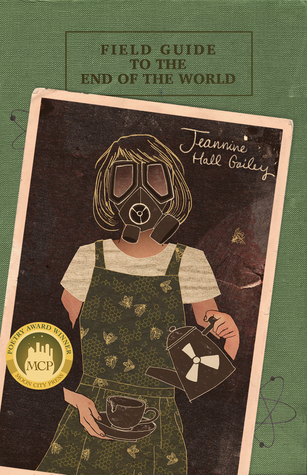
Field Guide to the End of the World by Jeannine Hall Gailey, which is the winner of the 2015 Moon City Poetry Award, is nothing short of phenomenal. While Gailey often puts herself in her poems, there are times when she adopts personas to create poems of female empowerment. This collection has a similar fantasy style (including a moment with Wile E. Coyote, Super Genius) to it with a post-apocalyptic setting, but it also is vastly more personal. While some of the poems may be a bit tongue-in-cheek about death (see “In Case”) and the end of the world and how duct tape is a miracle survival tool, underneath those quips is the seriousness that imminent danger and possible death bring.

She hints in “Introduction to Mutagenesis” that these genetic missteps could be changes we do not understand and that we may need them to survive in the evolving world. It is this kind of hope in the face of despair that is unexpected and inspiring.

Errors in replication — beyond our control — and yet sometimes the systemic destruction
of a certain cell might lead to a breakthrough, a land mass not yet discovered inside us,

clever adaptations that let us survive genetic drift in cases of plague or flood,
carriers of one disease not susceptible to another, …

In our own “black boxes”, our cells tell our history, the lives we’ve led, the deaths we’ve faced, and what finally takes us to the grave, she says in “Every Human Is a Black Box.” None of us have “turnkey solutions” and would we want to — would we want that kind of predictability? Even if the prospect of death or battling cancer is frightening, even paralyzing, would we want the solution to be simple? It would seem that kind of world would be less precious, less of a marvel.

From “Introduction to Spy Narrative as Love Story” (pg. 21)

When I look in a mirror all I see is you
written across my body like the shadow of a blackbird

Gailey’s verse is unique, haunting, and cheeky, but at its heart, her poems teach us that to live is to take the good and bad together and laugh, enjoy life, savor it. Even if the apocalypse is upon you, it is not the time for wallowing in sadness and self-pity, but a time for you to rise up beyond your circumstances and find a way to survive. From “Shorting Out” (which is just gorgeous in its use of white space) to “At the End of Time (Wish You Were Here)”, readers are reminded of the fragility of the mind, of memory, especially when “40 years of learning were leaking through the lesions.” (from “At the End of Time (Wish You Were Here)”).

Field Guide to the End of the World by Jeannine Hall Gailey, which is the winner of the 2015 Moon City Poetry Award, is a guidebook for living, for more than survival in a world about to end. She asks us to remember not to be lonely in the woods, not to be frightened of bears because “There’s the comfort of the knocking on hollow/branches, the scratching song of insects, and those tubes/of sunlight that show up on the path, lighting the way.” (from “Remnant”).

RATING: Cinquain

Other Reviews:

About the Poet:

Jeannine Hall Gailey served as second poet laureate of Redmond, Washington. She’s the author of four previous books of poetry: Becoming the Villainess, She Returns to the Floating World, Unexplained Fevers, and The Robot Scientist’s Daughter. Her work has been featured on Verse Daily and NPR’s The Writer’s Almanac, and included in The Year’s Best Fantasy and Horror.

Guest Post & Giveaway: Jill Esbaum, Author of If A T. Rex Crashes Your Birthday Party!

T Rex coverIn honor of the publication of If a T. Rex Crashes Your Birthday Party by Jill Esbaum, illustrated by Dasha Tolstikova, Jill Esbaum is here offering tips on what to do should a T. Rex crash your party.

Read aloud tips for parents from Jill Esbaum, author of If A T. Rex Crashes Your Birthday Party!

  1. Put lots of expression into your reading. Try to pre-read books you’ll share with kids, so you’ll know which parts need more oomph.
  2. Use different voices for different characters. This really adds to the fun of silly books.
  3. If a story is on the quiet side or particularly moving, take care to read it slowly, lingering over lyrical phrases and beautiful images.
  4. Stop and discuss what’s happening from time to time, asking open-ended questions – especially if your kiddos are very young and might not understand what the main character is up to. Exercise little imaginations by asking something like, “What do you think will happen next?”
  5. Keep the TV off while you’re reading. When you treat reading time like the best part of your day, little listeners learn two things: a. that they are important and you love spending time with them, and b. that reading is important. A book should always be a treat!

Download the fun T.rex Party Kit!

To Enter to Win 1 copy (U.S. Residents only) — 1 entry per task:
1. Leave a comment about your last birthday part for a kid
2. Follow the blog’s Facebook page and leave a comment.
3. Share this giveaway on Twitter, and let me know you did.

Deadline is Sept. 9, 2016, at 11:59 PM EST.

****GIVEAWAY IS NOW CLOSED****

Guest Review: Empire Falls by Richard Russo

Empire Falls by Richard Russo
Reviewed by H. C. at The Irresponsible Reader (where you can find a longer, more rambly and personal version of this post)

It is just daunting to try to talk about this book — especially in something that’d make a decent-length blog post and not a full-fledged dissertation. Empire Falls won Richard Russo his (seemingly) inevitable Pulitzer Prize in 2002 and stands as one of the greatest achievements in his storied career. It is at once a story about a town and a man, microcosms for the state and the nation; it’s both sweeping and epic while being personal and intimate.

empirefThe story centers on Miles Roby, manager of the Empire Grill in Empire Falls, ME. He has an ex-wife (who I truly despised), a daughter (who I wanted more of), an ex-mother- in-law that seems to like and respect him a lot more than her own daughter, s (even if they don’t see eye to eye much lately). But more importantly he has a patron — the town matriarch, owner of the Empire Grill, and most of the various places of employment in town. She’s a patron, a would-be surrogate mother (for a select few), and petty tyrant over the city. It’s one of those small towns where the mayor/council/etc. have real power, but it’s only the power she lets them have, you know? Francine Whiting isn’t evil — well, I’ll let you decide for yourself — but at the end of the day, she thinks she’s doing what is right for Empire Falls, the Whiting legacy and her daughter — whether or not anyone wants what she thinks is best. She still could be evil, I guess, and I could very likely made a case for it. Anyhow, let the reader decide.

The trials and dreams and efforts of Miles and his family as he tries to do something different with his life are the core of the novel — but they’re not all of it. The town is full of interesting people — many aren’t vital to the overall story (but you can’t know until the end who those are), but they all add flavor. Most are so fleshed out that you could imagine a short story/novel centered on them. While reading Song in Ordinary Time a few months back, I kept asking myself what made the people in that novel so unlikeable when in many ways they reminded me of Empire Falls‘ cast. I came to this conclusion (and have since reconsidered and still think it’s basically right): Russo uses the flaws in his characters to emphasize their humanity, Morris uses the flaws to emphasize their flaws.

But I come not to bury Morris (again), but to talk about Empire Falls, so let me focus on this a bit more: the flawed humanity isn’t pretty, it’s frequently ugly, people who make mistakes (some tragic, some dumb) are usually trying to do the right/moral/noble thing and it doesn’t work. But it’s real. This could all be real. Even Janice, Miles’ ex, is a well-developed character — and I think I’ve met a handful of people just like her — and I wouldn’t dislike her as much as I did if Russo hadn’t nailed the writing.

There’s an event towards the end — one of the two or three that you ultimately realize the whole novel has been leading up to — that in 2001 would’ve been truly shocking (shocked me a few years ago), but in many ways it’s de rigueur now. 2016 readers might be bored by it, but I can’t imagine that many readers in 2001 were. I’m not going to say more — just if you read this, put yourself in the shoes of readers from 15 years ago when you get to that bit. Yes, Empire Falls is slow (sometimes), ponderous (sometimes) but it’s also inspiring (sometimes), heartwarming (sometimes) and many other things that I could parenthetically qualify. But every negative about it is utterly worth it for the positives.

What I learned about Maine: (haven’t done this in awhile, whoops). It’s a beautiful state, filled with people who could be better educated, who aren’t vocationally ready for what’s coming for them thanks to the technological shift in jobs. It’s a state where people, nature and industry who have been damaged by reckless policies and practices. It’s a state where nature exerts itself every now and then to remind people how powerful it is. Basically, Maine’s just like every other state in the union — just a little different.

One more thing, not that this’ll surprise many, but I’d advise skipping the HBO miniseries — yeah, it’s a fairly faithful adaptation, it just doesn’t have the heart.

I’ll be honest with you, I didn’t read this book for this series of posts — breaking a personal resolution. There were 3 reasons for this: 1. Time; 2. I really wasn’t up for the emotional punches this delivers, and 3. I didn’t need to — I still remember it well enough to discuss at a length greater than I have despite being 4 years and change since I read it. That right there should tell you something about the book — hundreds of books later and I almost feel like I read it a couple of weeks ago. I’m not sure this is the Russo novel I’d tell people to start with (probably Straight Man), and I don’t think it’s his best (probably Bridge of Sighs (tells a story almost as epic in scope, with greater economy and greater depth when it comes to individual characters), but there’s no denying the talent on display here, the greatness of the execution, the vibrancy of the characters, or the impact it has on the reader. No brainer, 5 Stars from me.

Mailbox Monday #390

Mailbox Monday, created by Marcia at To Be Continued, formerly The Printed Page, has a permanent home at its own blog.

To check out what everyone has received over the last week, visit the blog and check out the links. Leave yours too.

Also, each week, Leslie, Vicki, and I will share the Books that Caught Our Eye from everyone’s weekly links.

Here’s what I received:

Field Guide to the End of the World by Jeannine Hall Gailey from the publisher for review.

Field Guide to the End of the World, winner of the 2015 Moon City Poetry Award, delivers a whimsical look at our culture’s obsession with apocalypse as well as a thoughtful reflection on our resources in the face of disasters both large and small, personal and public. Pop-culture characters—from Martha Stewart and Wile E. Coyote to zombie strippers and teen vampires—deliver humorous but insightful commentary on survival and resilience through poems that span imagined scenarios that are not entirely beyond the realm of possibility. The characters face their apocalypses in numerous ways, from strapping on rollerblades and swearing to taking notes as barns burn on the horizon. At the end of the world, the most valuable resource is human connection—someone holding our hands, reminding us “we are miraculous.”

The A.B.C. Murders by Agatha Christie purchased from Audible as it is the next book club selection.

There’s a serial killer on the loose, bent on working his way through the alphabet. And as a macabre calling card he leaves beside each victim’s corpe the ABC Railway Guide open at the name of the town where the murder has taken place. Having begun with Andover, Bexhill and then Churston, there seems little chance of the murderer being caught – until he makes the crucial and vain mistake of challenging Hercule Poirot to frustrate his plans.

What did you receive?