Quantcast

Guest Post & Giveaway: The Lovesick Author by Spencer Seidel

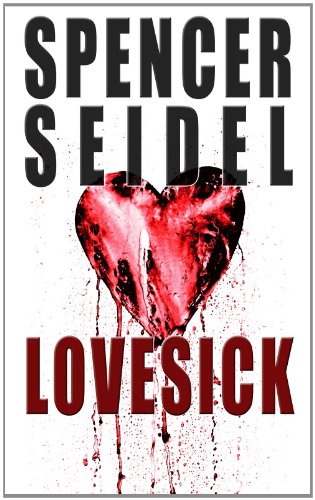
Valentine’s Day is the time to celebrate your loved ones whether they are spouses, significant others, boyfriends, girlfriends, etc.  But there is a darker side to love that creeps into novels like Lovesick by Spencer Seidel.

In the novel, forensic psychologist Dr. Lisa Boyers receives a call from an old friend Attorney Rudy Swaner who needs her to interview young killer Paul Ducharme, who claims he does not remember the events of a murder.  However, as she helps him uncover his memories, she realizes that she must confront her troubled past.

Today, Spencer Seidel is offering us a guest post about the darker side of love.  Please give him a warm welcome.  Also, stay tuned for a giveaway for my U.S. and Canadian readers:

Fiction is best when the author’s voice cannot be heard. But sometimes, inevitably, that voice creeps in. Perhaps a character’s political views too conveniently match those of the author. Or perhaps the raunchy, inorganic sex scenes you’re reading in a new novel make you wonder if the author’s wife really turns her back to her husband at night.

That gets me to thinking. What if an author were to fall hopelessly head-over-heels in love with a character? Better yet, what if he were compulsively and obsessively (ahem) lovesick with his own creation? Hell, it’s Valentine’s Day! We can have a little creepy fun with that, right? Surely things would eventually take a turn for the worse for our poor lovesick author. . .

I imagine a messy desk, littered with manuscript paper, sketches, rejection letters, and overdue bill notices. Above this, a series of composite photos of a woman are pinned to the wall, every image lovingly and painstakingly photoshopped together from various files pulled from Google. Each is slightly different from its neighbor. The woman to the right has larger lips. The other, at the end of the row, smaller breasts. Our author hasn’t gotten her quite right yet and never will. It’s more fun that way. Perhaps she was an old lover or someone he used to know. Or maybe this woman is no one at all. A figment of his imagination. His perfect woman.

The author himself is seated there at his desk, a scotch just out of reach of his right hand. Next to it, a cigarette smolders in a dirty ashtray. The room is dark because the shades are always closed. A pale, unnatural glow from the computer monitor highlights our author. His brown hair spikes outward in greasy clumps. His beard is dark and patchy on his white skin. He wears a faded threadbare bathrobe, untied. He is naked underneath.

To our author’s left is a stack of manuscript paper a foot and a half high, each page neatly aligned with the one beneath and filled with double-spaced type. There must be 1,000 pages or more stacked there, representing years of work.

He types loudly, angrily, in bursts, while gazing absently at the monitor in front of him. Gulps his booze. Pulls hard on his cigarette from time to time. After each writing session, he masturbates compulsively while studying her picture and waiting for his laser printer to finish printing the day’s work.

For months before she left him for good with their young daughter and black lab in tow, his wife tried to understand. She begged him to stop, but like a compulsive gambler, our lovesick writer can’t. He loves his character too much to stop writing about her. And it will cost him everything: his wife, his writing career, his health, his house, and his sanity. In the end, having spent a lifetime writing about his imaginary woman, he will likely die in a psychiatric ward at his keyboard, and his creation will cease to exist shortly after.

On page 18,699.

Thanks, Spencer, for sharing this darker side of love with us.  If you’d like to win a copy of Lovesick, please leave a comment here about the dark obsession of love.  Deadline to enter will be Feb. 29, 2012, at 11:59PM EST.  Happy Leap Year and Happy Valentine’s Day!

For additional chances to win, check out the Blog Tour Scavenger Hunt.

Winners and a Reading

Thanks to all of you who entered the book club giveaway for The Art of Fielding by Chad Harbach.  With the help of Random.org, Anne Berger won a book for each of her club’s 8 members.

Congrats to her and her members, and we hope that you enjoy it.  Hachette Group will mail the books out to you and your book club soon.


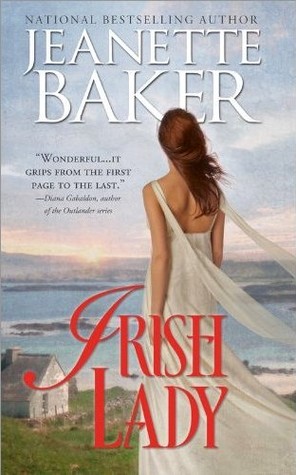
Also Congrats to Margaret who won a copy of Irish Lady by Jeanette Baker from Sourcebooks.


I also wanted to update you on the reading I attended at The Writer’s Center in Bethesda, Md., which turned out to be a mostly empty room and me as the only woman in the room — other than Wiggles.  The illustrious authors were Eric Goodman, author of Tracks — which I’m sure by now you’ve heard me rave about — and Eric Dezenhall, author of my newly acquired book, The Devil Himself.  Each author took to the reading in a different way, with Eric Goodman reading abridged short stories from his novel in stories, Tracks, and Eric Dezenhall deciding to tell the true story behind his historical fiction novel set during WWII.

Goodman read the Prologue, which is told from the point of view of the conductor, and Prewitt’s story from the beginning of the book.  Both stories are funny in their own quirky ways, and provides the initial set up for the rest of the book.  He also read the story about the poet and his climb on the mountain of sand, which is as true to the life of a poet as any story could be.

Dezenhall began by shying away from reading from the book and told us of how he verified the historical facts in his novel.  Operation Underground began when Naval Intelligence realized that German spies could have been responsible for the sinking of the Normandie near Manhattan following the bombing of Pearl Harbor.  In order to police the docks and discover the spies, the government made a devil’s pact with the Jewish and Italian mobs that controlled them at the time.  Meyer Lansky, a real life mobster, agreed to help the government in exchange for benefits for Lucky Luciano and other mobsters.  There is a convoluted spy game afoot here, but I’ll not recount it because you must read the book.

Want to learn more about the book, visit Dezenhall’s Website.

There was no formal question-and-answer following the reading, but there was a more informal reception for the readers and the guests, which turned out to be less than a dozen due to the cold weather.  I did not partake of the cheese and beverages, but did have a nice conversation with Goodman about Social Media and the firewall it provides those of us who are more shy in public.  I also got my copy of Tracks signed, and my new book signed by Dezenhall, who seemed to take a shine to Wiggles — I think it was the cheeks.

Here’s a couple of pictures and a really short video since my memory card ran out of space:

Have you been to any great readings in your area?

Mailbox Monday #164

Mailbox Mondays (click the icon to check out the new blog) has gone on tour since Marcia at A Girl and Her Books, formerly The Printed Page passed the torch. This month’s host is the Metro Reader.

Kristi of The Story Siren continues to sponsor her In My Mailbox meme.

Both of these memes allow bloggers to share what books they receive in the mail or through other means over the past week.

Just be warned that these posts can increase your TBR piles and wish lists.

Here’s what I received this week:

1. Heading Out to Wonderful by Robert Goolrick, unrequested from Algonquin

2.  All Woman and Springtime by Brandon Jones, unrequested from Algonquin

3. Messenger by Lois Lowry from the library sale for 50 cents.

4. Resistance by Anita Shreve from the library sale for 50 cents.

5. Hunted by P.C. Cast + Kristin Cast from the library sale for 50 cents.

6. Black Beauty by Anna Sewell for 50 cents from the library sale.

7. American Dervish by Ayad Akhtar, which I won from Under My Apple Tree.

8. The Devil Himself by Eric Dezenhall, which I bought at The Writer’s Center at the reading of Eric and Eric D. Goodman, author of Tracks (which I reviewed this year and loved). Thanks to both for a good reading and for signing my books.

What did you receive this week?

Perpetual Challenge Accepted

As many of you know, I read It by Stephen King last year as a read-a-long with Anna and really loved re-reading the novel. I’ve just learned recently that there is a Stephen King Perpetual Reading Challenge.

There will be several mini-challenges, which I may or may not participate in — time permitting, but here’s a look at the schedule for that:

Feb | March | April — mini-challenge
May | June | July — mini-challenge
Aug | Sept | Oct — mini-challenge
Nov | Dec — free months

Giveaway instructions related to the mini-challenges are listed, here.  I’m joining to make sure that I read all of the King books I have not read, with at least 1 read this year.  I’m going to start with the new book, 11/22/63.

Do you plan on joining?

Call for Poetry Book Donations & Looking for Tour Hosts

National Poetry Month 2012 is nearly upon us, with less than two months to go.  I’ve got a few great bloggers willing to talk about poetry and to host reviews and guest posts in April, but I’ve still got some open spots on the schedule.  Won’t you help me fill them in?

I’ve got a few guest posts coming in from poets that need blog tour hosts for them.  Just drop me an email if you want one and what day you want to host.

Also, if you’re a poet or a publisher of poetry, I’m looking for short guest posts from you about poetry for some fellow bloggers who want to join the tour but don’t feel they want to review a book.  I’m looking to help them out with a guest post form you.  Please email me with your ideas at savvyverseandwit AT gmail

Finally, anyone who would love to share the love of poetry through some giveaways in April, please sign up to donate books, poetry workshop classes, poetry journals, literary magazines, and any other poetry-related items.  Send me an email to savvyverseandwit AT gmail with your donations and if you prefer I run the giveaway or you’d like to run it yourself.

OK, that’s it.  I hope everyone can help out.  See you for the big tour in April.

136th Virtual Poetry Circle

Welcome to the 136th Virtual Poetry Circle!

Remember, this is just for fun and is not meant to be stressful.

Keep in mind what Molly Peacock’s books suggested. Look at a line, a stanza, sentences, and images; describe what you like or don’t like; and offer an opinion. If you missed my review of her book, check it out here.

Also, sign up for the 2012 Fearless Poetry Reading Challenge because its simple; you only need to read 1 book of poetry. Please visit the stops on the National Poetry Month Blog Tour from April 2011 and beginning again in April 2012.

Today’s poems is from Andrew Marvell:

The Definition of Love

My Love is of a birth as rare
As 'tis for object strange and high:
It was begotten by Despair
Upon Impossibility.

Magnanimous Despair alone
Could show me so divine a thing,
Where feeble Hope could ne'er have flown
But vainly flapped its Tinsel wing.

And yet I quickly might arrive
Where my extended soul is fixt,
But Fate does iron wedges drive,
And always crowds itself betwixt.

For Fate with jealous eye does see
Two perfect Loves; nor lets them close:
Their union would her ruin be,
And her tyrannic power depose.

And therefore her decrees of steel
Us as the distant Poles have placed,
(Though Love's whole World on us doth wheel)
Not by themselves to be embraced.

Unless the giddy Heaven fall,
And Earth some new convulsion tear;
And, us to join, the World should all
Be cramped into a planisphere.

As lines so Loves oblique may well
Themselves in every angle greet:
But ours so truly parallel,
Though infinite can never meet.
                                                    
Therefore the Love which us doth bind,
But Fate so enviously debars,
Is the conjunction of the Mind,
And opposition of the Stars.

What do you think?

Curiosity Quills Blog Tour Continues…

Hello everyone.  I just wanted to let you know that my crazy obsession with poetry is spreading to another blog this week.  Today, I’m guest posting at The Hopeful Librarian as part of the Curiosity Quills Blog Tour.  I hope you’ll check out my essay, which includes quotes from some of my favorite writers — Beth Kephart, Charles Jensen, and Sweta Srivastava Vikram.

Please stop by and let me know what you think.  Also, you can check out my guest interviewer for the tour, here.

The War to End All Wars: World War 1 by Russell Freedman

The War to End All Wars: World War 1 by Russell Freedman is a collection of historical information about the war enhanced by photos and a good introduction to this part of history for ages 7 and up.  Not only does Freedman offer the political, social, and military ins and outs of the build up to WWI, he illustrates the circumstances of the time period through photographs of soldiers in training, women pinning flowers on marching soldiers leaving for war, women plowing the fields without horses, and event the modern weaponry used.

Readers looking for an in-depth examination of the period will want to this book because the photos break up the factual litany and provide a human face behind the story.  Some of the surprising pictures for me were of the modern tanks that the British created and the gas masks made for horses.  Ironically, the rebels who were the catalyst behind the war had no idea that Archduke Franz Ferdinand was sympathetic to the Serbs cause for greater free and a larger voice in the Austria-Hungary empire.  In another section of the book, readers will discover similarities between WWI and the Cold War with the build up of armies and weapons, but unlike during the Cold War, the leaders during WWI were unsuccessful in their attempts at diplomacy even though many of the royal leaders were related.

However, don’t mistake this as a completely dark and dreary book because there are lighter moments depicted where soldiers created a snowman and gave him military gear, including a spiked helmet and Mauser 98 rifle.  However, war is far from pretty with the death of comrades from artillery shells to the rampant diseases that quickly spread through the primitive trenches, including trench foot, trench fever spread by bloodsucking lice, and other ailments.

“Added to these indignities was the awful stench that hung over the frontlines, a foul odor that instantly assaulted visitors.  You could smell the frontline miles before you could see it.  The reek rose from rotting corpses lying in shallow graves, from overflowing latrines, and from the stale sweat of men who had not enjoyed the luxury of a bath for weeks.”  (page 68)

To be honest, the photos accompanying the early sections about the serious living conditions these soldiers faced in the trenches are inadequate, but there is little the author could do about that.  The images of men caught up in barbed wire in No-Man’s Land or crossing the battlefield in a cloud of poison gas are simply haunting in a way that the numbers of dead (4 million Russian soldiers by the end of 1915) are unfathomable.  Modern warfare began during WWI with the manufacture of tanks and German U-boats, which were allegedly responsible for the sinking of the Lusitania in 1915.  But the United States did not declare war until 1917 after Germans attacked a number of U.S. ships.  There are stunning images of how societies coped with food shortages as trade was disrupted and how people reacted as they were forced to pick up the pieces after soldiers left.

The War to End All Wars: World War 1 by Russell Freedman is a comprehensive look at WWI and all the nations involved, as well as how it impacted not only the societies bombed and destroyed, but also the soldiers.  Despite all the destruction, patriotism drove many soldiers and supporters of the war, and it begs the question when does patriotism become a detriment to society and humanity.

This is my 9th book for the 2012 New Authors Challenge.


This is my 4th book for the WWI Reading Challenge.

Interview with Eric D. Goodman, Author of Tracks

Tracks by Eric D. Goodman (my review) is one of the best novel in stories I’ve read in a long time, and it will likely end up on my best of the year list. It not only reads like separate short stories, if you just want to read something satisfying in a short slot of time, but also is a connected story by the train, the conductor, and the mystery/action storyline.  In many ways, I’ve thought about how it reminds me of Agatha Christie’s Murder on the Orient Express, but the reader is the detective.  However, there also are deeper themes at work of feeling stuck and unable to move on or wanting to change, but unable to accomplish that goal because of an inability to take a risk or the inability to let go of the past.  I digress, just go read the review, you’ll see what I mean.

I’ve got a great treat for my readers today, as Eric agreed to an interview about his book and his writing experiences. Please give him a warm welcome.

1. Since Tracks takes place on a train traveling between Baltimore
and Chicago, it is clear that trains are important to you. When did
you first realize that you loved trains and what do they mean to you?

As a child, I think I had a love of trains that many children share:
toy train sets, a need to watch trains as they passed by, an urge to
place coins along the tracks to be warped and smashed by the
locomotives. And there was always a spirit of adventure involved with
coming across a line of tracks and walking along it.

I was probably about six when I took my first trip on Amtrak. It was
exciting, an adventure, and much more fun than the usual cross-country
driving trips my family took. But then there was a long period of no
trains. Unfortunately, trains seem to be underfunded in our country
and, therefore, are sometimes more expensive than planes and certainly
cars and busses.

It was when I was a college student traveling in Russia that I
rekindled my interest in trains. Trains were a popular and
inexpensive way to get around. I took sleeper cars on overnight trips
often while in Russia. Sometimes, that was the most fun part of a
trip.

2. Baltimore is almost like its own character in the book, looming
ominously over some of the characters while anchoring others to a
sense of home. Was it hard to show both the darker and lighter sides
of Baltimore given its reputation as a high-crime city? And how do
you view Baltimore, as a resident and a writer?

Baltimore is a wonderful place to live if you’re a writer or an
artist. The literary community is tight knit and most of the writers
I know are very supportive of their fellow authors. As far as the
crime goes, I think Baltimore is a lot like any other large city:
there are areas with high crime, areas with virtually no crime, and
much of the violent crime exists in its own little sub-culture. I’ve
lived in Ohio, California, Rhode Island and lots of places in between.
I won’t pretend they’re the same, but I will say that I’ve personally
encountered no more crime here than in the other places I’ve lived. In
other words, it exists, but it’s easy to avoid.

Baltimore has a lot of character; it was easy to set certain scenes
from Tracks in rich locations with exciting backdrops.

3. When writing Tracks did you find that one scene or character
surprised you? If so, which one and how so?

My writing tends to be inspired by an idea or theme or some nugget of
conversation that I found interesting. It doesn’t begin with plot;
the idea comes first, then the character, then the plot. So my
characters surprise me often. I know what I want the theme or idea to
be, when I begin writing, but not always exactly what they’re going to
do.

The Conductor, Franklin, sort of surprised me. His two stories were
actually the last two I wrote. In the original manuscript, he didn’t
even have his own stories. He appears in everyone else’s story and
always seems like such a nice, chipper, friendly guy. And he is. But
when I began to dig deeper and write about him in his own stories, I
discovered that he had another side.

4. The conductor and the Amtrak train tie the stories together, but
the stories also could stand on their own. Was there any point in the
process where you thought that 
Tracks should just be a short story
collection and not be a novel in stories? What convinced you to stay
with the novel in stories format?

I had written three stories individually before I decided that I
should make this a collection. Then, as I continued to weave the
stories closer together, I thought it would be nice to create a sort
of hybrid—to write a novel and a set of stories at once. Part of it
was with the goal of both working on a novel and having stories to
submit to journals at the same time. But part of it was just out of
curiosity—could I pull off a “novel in stories?”

Coincidentally, by the time this went to print, there seemed to be a
revival in the format: A Visit from the Goon Squad, Olive Kitteridge,
Later at the Bar, The Civilized World. But I wasn’t riding a wave; I
was doing my first draft before it started!

5. From first draft to publication, how long did it take to complete
Tracksand find it a home on bookstore shelves? Have you had any
champions behind the book that spurred you to get it published and who
have helped hand-sell (I use this term lightly — noting that social
media and the Internet could help spread the word) copies?

It’s been a long line of track. I think it was back in 2006 when I
wrote the first draft. I tend to write a manuscript, then put it away
for a year or longer, then rewrite it. So although I didn’t spend
time each year working on the manuscript, about five years passed from
first draft to bookshelf. During that time I wrote a couple other
book drafts (one of which is with my agent now) and did a lot of
tinkering and polishing. I had it ready to submit to agents in 2009,
got an agent in 2010, and secured a publisher later that same year.
Then it was released in 2011.

I’ve been overwhelmed by the kind reception Tracks has received from
other writers. Some of the biggest include Madison Smartt Bell,
Thomas Steinbeck, Bathsheba Monk, Jessica Anya Blau, Rebecca Barry,
and Victoria Patterson. I even got notes of congratulations (but not
official blurbs) from Jonathan Franzen, Jennifer Egan, T.C. Boyle, and
Junot Diaz! It’s felt good to be noticed, even if sometimes only as
an insect.

Thanks, Eric for answering my questions. If you are in the Washington, D.C., area and interested in reading Goodman’s book, he’ll be reading at the Open Door Series at the Writer’s Center in Bethesda, Md., on Feb. 12 at 2 p.m. Register for the event.


Additionally, this is a stop on The Literary Road Trip since Eric is a local author in Baltimore, Md.

Guest Post: The Heart of the Writing Space by Sheryl Steines

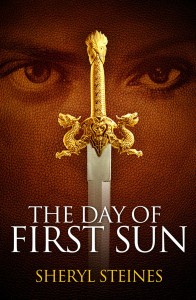
Sheryl Steines, author of The Day of First Sun, is stopping by the blog today to talk about her writing space and how the heart of her home became to best place for her to complete a novel that has vampires, zombies, and magical wizards.

Her novel (according to the Amazon synopsis):

In this Young Adult Fantasy, Annie Pearce and Bobby “Cham” Chamsky are tracking the vampire Sturtagaard who they believe is creating a zombie army. Before they find him and learn why, the FBI recruits them to solve the murder of the mortal Princess Amelie: who they believe was killed by magical means. Amelie’s magical boyfriend Jordan is missing and with him the key to finding her murderer. The key, a magical glass Orb used to capture and trap souls, is the vital item needed to create the zombie army.

The vampire Sturtagaard needs it and when Annie and Cham finally catch up with Jordan, they encounter Sturtagaard too. While in custody, Jordan is murdered and the Wizard Council becomes aware that there is a mole in the council who is hampering the case. It becomes clear that Amelie and Jordan’s death is collateral damage in a plot to overthrow the ruling Wizard Council. A trap is set using the Orb, knowing that someone is desperate to have it. Annie and Cham need to hurry before the magical holiday, The Day of First Sun, a time when the magical energy created on that day can expose their world and endanger the non magical society as well. The Orb, the Wizard Council and the world are waiting on Annie and Cham.

I just love fantasy worlds with vampires and zombies. Now, without further ado, please welcome Sheryl as she shares with us her writing space.

My workspace. It probably wouldn’t be considered the most productive place in which to write a book. I really tried when I first started writing. I set up my desk in the guest room with my computer, my printer, extra pens and paper. You know, an office separate from the rest of the house, where I could go and work. The first time I sat at the desk I remember how quiet that room was. Really, really quiet. I was fidgety and would find other things to do. A little filing, a little cleaning, a little internet searching. For white noise, I brought in my MP3 player, but all that accomplished was a good deal of daydreaming. My dreams of writing the next great American novel would never materialize at this rate.

Every workspace is individual to the person who uses it. We find comfort in the things around us, and hopefully become inspired by those spaces. If a space limits our creativeness, or makes us uncomfortable or doesn’t offer us inspiration then we need to find a new space to work.

I moved my workspace to the family room, the heart of my home. It has a big comfortable couch, blankets when I’m cold and it’s close to the kitchen. And most importantly, it had a television. Now I don’t recommend doing homework or writing a best selling book with the television on, but I have to say, with the right program, the white noise, keeps me sane and even focused. And sometimes, a particular program, a word, a thought, a plot twist can inspire something grand.

Eight chapters into my second book, I happened to be watching Torchwood, one of my favorite science fiction programs. The storyline of the show was similar to the storyline in my book. And I paid special attention to the plot. I was concerned with how the characters got themselves into the problem and back out, how the story flowed and progressed to the finale. I realized quickly that my own work, my plot, my characters, had taken the easy way, something that I found myself doing in my first book. And it occurred to me at that moment, that sometimes a little stress, a little angst, a little in fighting and definitely not working through the problem quickly is the way that I should now be thinking of my story. I made a book altering decision and rewrote the first eight chapters of my book and I didn’t look back.

My goal isn’t to rewrite what others have done. My desire as I watch television shows and book in my genre, is to remind me and inspire me to think about things in a different way, remind me that there are no rules, no formula to a fantasy novel. It only takes that one idea, to spark an entire book.

Moving my workspace to my family room was a much more productive workspace than the quiet of my guest room. Though I have to admit, when the kids are home from school, it’s not the easiest of places to work. I have to learn how to do my most productive work when they’re not home, make sure that I set aside a time to only work and not get caught up into the rest of my life. My writing is my full time job and I need to treat it as such.

The workspace is far more than a place to sit down and write a little. It has to offer us comfort and safety as we continue to strive to meet our goals. As unconventional as my space may seem, it is the place that I work well in, it offers me a chance to find inspiration and I don’t dread my time there. I wouldn’t have it any other way.

Thanks, Sheryl, for sharing your workspace with us.

About the Author:

Sheryl Steines’ mind is chaotic and surprising and it shows in her writing. Never one to sit back and see what may come, Sheryl is driven to write everyday. Somehow, amidst the chaos, she finds the time to volunteer and give talks to book clubs and students about her writing. She even walked the Avon Breast Cancer walk two years in a row.

Sheryl’s series Annie Loves Cham is full of surprises and mystery. Refusing to be restricted by genre Sheryl has taken the characters she loves and set them in new situations which test them and their friendships. The second book in the series is set to release in late summer 2012.

Follow her on Twitter and Facebook. Also check out her blog.

Compulsively Mr. Darcy by Nina Benneton

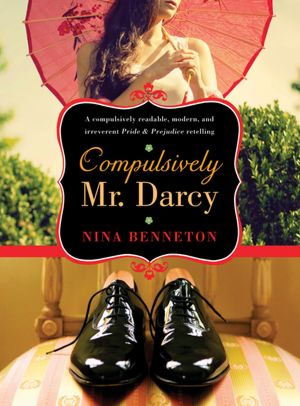
Compulsively Mr. Darcy by Nina Benneton (check out her writing space guest post) is a modern re-telling of Pride & Prejudice by Jane Austen, but in this rendition, Darcy is not only proud, but he has OCD (obsessive compulsive disorder).  He’s not the only one with control issues, though, with Bingley showing symptoms of ADHD (attention deficit hyperactivity disorder) and Lizzy Bennet being completely spontaneous and snap in her judgements and decisions.  Jane as always is responsible and caring — so much so that she’s taken over the running of a local orphanage in Vietnam, while her sister works at the local hospital treating patients with infectious diseases for free.  While selfless, both Bennets have particular prejudice against those who waste their money, and Lizzy is the most vocal about the rich tourists and their egotistical ways.

 “‘I’ve been doing yoga for a while.  I bet I can keep my balance on that bicycle,’ Bingley said.

Behind closed eyelids, Darcy’s eyes attempted a roll.  He hoped the bouncy Tigger next to him had remembered to take his daily Ritalin.  He didn’t feel up to dealing with an impulsive Bingley.

‘I’ll be right back.’  Bingley leaped out of the car before anyone could stop him.”  (page 3 of ARC)

Benneton’s wise-cracking and dry humor is delightful as Darcy and Bingley bumble their way through Vietnam as tag-a-longs with the Hursts who are seeking the latest rage in high society –to adopt a third-world child — and climb the social ladder.  The first meeting between Lizzy and Darcy is not pleasant and some presumptions are made by Lizzy about Darcy and Bingley’s relationship.  Although the original meetings and situations from Austen’s work are altered, there are brief nods to the famous writer in the dialogue between Darcy and Lizzy.  The chemistry between Darcy and Lizzy heats up once the misconceptions Lizzy and Darcy have about one another are quickly dispatched, but there are other obstacles to test their whirlwind relationship, especially from family members Richard, Anne, and Catherine.

Some may find the sex scenes a little too detailed, but they certainly heat up the tension between the lovers as they come to know one another better and stumble along the way.  Benneton’s Lizzy and Darcy still fail to trust and must build it from the ruins of misconception, but they are stronger for it.  Benneton showcases her wit in this rendition of the Darcy and Lizzy love story, and the additional behavioral disorders of the main heroes was entertaining.  More than a love story, Compulsively Mr. Darcy is about loving someone faults and all, accepting and not changing who they are, and growing together in love.  Steamy, sexy, and fun, it will have readers giggling and blushing at the same time.

***As a side note, it had me wondering about how Benneton knew about the differences in tonal language between Vietnamese and English; she explained it so well, I learned something new. ***

About the Author:

Nina Benneton was a scientist on her way to save the world and win a Nobel Prize in something, anything, when a rare-bird enthusiast nut whisked her off her restless feet. A flock of beautiful children and a comfy nest kept Nina contented in domestic bliss until one day, she woke up and saw that she was too obsessed with alphabetizing her spices and searching for stray Barbie shoes.

Find her on Facebook, Website, and Austen Authors. Her book is also on GoodReads.

This is my 8th book for the 2012 New Authors Challenge.

Mailbox Monday #163

Mailbox Mondays (click the icon to check out the new blog) has gone on tour since Marcia at A Girl and Her Books, formerly The Printed Page passed the torch. This month’s host is the Metro Reader.

Kristi of The Story Siren continues to sponsor her In My Mailbox meme.

Both of these memes allow bloggers to share what books they receive in the mail or through other means over the past week.

Just be warned that these posts can increase your TBR piles and wish lists.

Here’s what I received this week:

1. West of Here by Jonathan Evison, unrequested from Algonquin Books, which I’ll likely pass on.

2. Resilience edited by Eric Nguyen, sent to me by poet Emma Eden Ramos for review. “Money from the sale of this book will be used to help fund The Make It Safer Project, which aims to bring LGBT-related books into schools and homeless shelters and into the hands of LGBT kids. For more information on the Make It Safe Project, visit www.makeitsafeproject.org. For more information on Resilience, visit www.betterbookproject.blogspot.com.”

3. The Virgin Journals by Travis Laurence Naught for review from the poet.

4. Gabby by Gabrielle Gifford and Mark Kelly, borrowed from my mom.

5. Coming Up For Air by George Orwell, which I bought at the library for 50 cents.

6. Mr. Churchill’s Secretary by Susan Elia MacNeal, which I received from LibraryThing Early Reviewers for April review.

What did you receive this week?