Quantcast

Pat the Beastie and Love the Beastie by Henrik Drescher

Source: Purchased
Board Book, 11 pages
I am an Amazon Affiliate

Pat the Beastie: A Pull-and-Poke Book by Henrik Drescher is perfect for parents with pre-school-age children just learning about the joys of books and reading.  Paul and Judy have a pet named Beastie, and young readers learn alongside these pint-sized protagonists that it’s not very nice to pull Beastie’s hair or poke his eyes.  There are consequences after these children torment Beastie, and my little one calls this the “boogie nose” book.  Each page is full of interactive fun and colorful pages that pop.  She’s had so much fun with this book, she reads it on the potty and wants it read on the couch before bed, at bedtime, and anytime she feels like it really.  The moral of this little story is to be kind to your pets, but the book is just good old fashioned fun for kids.

Source: Purchased
Board Book, 11 pages
I am an Amazon Affiliate

Love the Beastie: A Spin-and-Play Book by Henrik Drescher is the second of the books, but the first my little one picked out at a bookstore — and she chose it over a monkey puppet, which is rare for her.  Paul and Judy have been forgiven by Beastie and learned a lesson since the last book.  In this one, the siblings take Beastie on some adventures and play games with him.  The book pays homage to the power of forgiveness and the love that owners (especially kids) can share with pets.  The colors are vibrant in this book, and yes there are some funny bits, but the kids are not as nasty, which is a good way for parents to teach the same lessons to their own kids.

About the Author:

Henrik Drescher was born in Copenhagen and immigrated to the United States in 1967. He began a career in illustration as a young man and has been traveling throughout the United States, Mexico, Europe and China, creating massive journals of notes and drawings wherever he went.  Check out his Website.
This is my 62nd book for the 2013 New Authors Challenge.
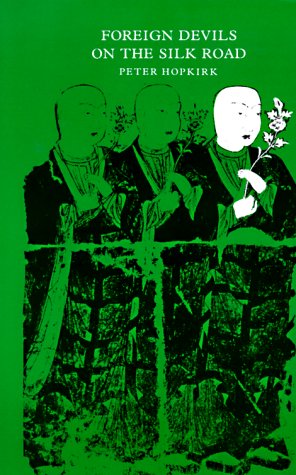
Foreign Devils on the Silk Road by Peter Hopkirk

Source: Purchased at Novel Books
Paperback, 241 pages
I am an Amazon Affiliate

Foreign Devils on the Silk Road by Peter Hopkirk, which was my book club’s September selection, is the kind of nonfiction that could be engaging with a different kind of narrative.  The author seeks to cover the archaeological digs and finds of six men over the first quarter of the century — Sven Hedin of Sweden, Sir Aurel Stein of Britain, Albert von Le Coq of Germany, Paul Pelliot of France, and Langdon Warner of the United States, though there is a little bit about Count Otani of Japan.  There is little about Otani, and as such could have been omitted as the records are considered secret by the government.  There also is little about Pelliot and Warner, which really leaves the author with the three main archaeologists — whom the Chinese view as thieves given the art and manuscripts the men stole.  The harsh conditions of the Silk Road through the Taklamakan Desert left many expeditions decimated, animals dead, and others sickened.

“On one stretch they found the route marked by wooden posts placed there to prevent travelers from straying away from the caravan trail at night or during a sandstorm as so many unfortunates had done over the centuries.”  (page 76)

There is a complete chapter of China’s past going as far back as 221 bc and before the birth of Christ, and a second chapter that focuses on the elements of the map, going across every road and aspect of a map that could easily be looked at on its own.  These pages would have been better served with details of the expeditions of the individual men, which the author clearly obtains from personal accounts of the men.  Hopkirk does quote from some of these accounts throughout the book, but readers may soon find that reading the first accounts of these expeditions would be more detailed and engaging than the recounting of them by Hopkirk.

The narrative is dry for more than 60 pages, leaving readers wanting more from the author.  It seems odd that the book would be so light on details of how the archaeologists obtained the frescoes and manuscripts they found until more than halfway through the book.  Rather than make rubbings of the artifacts or careful drawings — cameras were more than likely cost prohibitive at this time, not to mention huge — these archaeologists used knives and saws to cut away the wall drawings in pieces.  These actions are very disheartening and seem to be motivated by personal glory or scholastic gain.  Foreign Devils on the Silk Road by Peter Hopkirk could have been so much more, but the narrative was lacking, and readers would be better served finding the accounts from the archaeologists and their peers — though one caution would be to watch out for political spin as a number of countries were competing for these treasures at the time.

**Unfortunately, with other obligations on the table, I missed the September discussion of this book.***

About the Author:

Peter Hopkirk is a British journalist and author who has written six books about the British Empire, Russia and Central Asia.

This is my 61st book for the 2013 New Authors Challenge.

Flow: The Life and Times of Philadelphia’s Schuylkill River by Beth Kephart

Source: Purchased
Hardcover, 120 pages
I am an Amazon Affiliate

Flow: The Life and Times of Philadelphia’s Schuylkill River by Beth Kephart is a well imagined autobiography of the Schuylkill River (Hidden Creek) near Philadelphia told from the point of view of the river.  A hopeful river intrigued by the humans that come upon her, collecting those forgotten items, and enjoying the natural wonders of frozen surfaces and fishing.  Coupled with the poetic narrative are notes on the time period and the major events near and around the river, including the Revolutionary War and the Civil War.  As the industrial revolution takes hold, the river finds that the humans who have been intrigued by her beauty and hidden secrets and those that have piqued her interest are busy moving through their lives with little thought to her, dumping their waste, chemicals, animal parts, and more into her flowing waters.

“Imagine taking a needle to the point of blood on your palm.  Imagine drawing that needle around and around, leaning in on it, forcing an edge, rearing at the creases and the lifelines, the ridges and slightest hills that forecast your happiness.  Imagine the skin giving way.

That’s skating.”  (Page 32)

There are moments of fear, curiosity, and hatred.  “How is it that I became the quickest route to your confession–the door you close to those parts of yourself that you hope no one will see?  Call me what you’ve made me, which is a grave.”  (page 87)  She’s a river (dare I call her Flo) who ages beyond her years thanks to the careless dumping and even direct interference as dams are built to harness power.  Kephart melds her prose with photography, poetry, and factual notations.  There’s a sense of nostalgia in Flow that breathes life into history, ensuring readers sense the culture of the time period, the struggles of the people, and their dreams.  The river just wants to live, but she remains curious about her own environment, curious about how the people use and abuse her, and disheartened when it seems as though she has been forgotten or replaced.

Flow: The Life and Times of Philadelphia’s Schuylkill River by Beth Kephart is a historical look at the river and Philadelphia, handled with a careful and creative hand.  The river comes alive, just like Philadelphia’s people and her history.  Readers will learn a great deal about the river, the industrial revolution, and our nation’s history.  The Schuylkill River is no longer the hidden gem of Pennsylvania.

About the Author:

Beth Kephart is the author of 10 books, including the National Book Award finalist A Slant of Sun; the Book Sense pick Ghosts in the Garden; the autobiography of Philadelphia’s Schuylkill River, Flow; the acclaimed business fable Zenobia; and the critically acclaimed novels for young adults, Undercover and House of Dance. A third YA novel, Nothing but Ghosts, is due out in June 2009. And a fourth young adult novel, The Heart Is Not a Size, will be released in March 2010. “The Longest Distance,” a short story, appears in the May 2009 HarperTeen anthology, No Such Thing as the Real World.

Kephart is a winner of the Pennsylvania Council on the Arts fiction grant, a National Endowment for the Arts grant, a Leeway grant, a Pew Fellowships in the Arts grant, and the Speakeasy Poetry Prize, among other honors. Kephart’s essays are frequently anthologized, she has judged numerous competitions, and she has taught workshops at many institutions, to all ages. Kephart teaches the advanced nonfiction workshop at the University of Pennsylvania. You can visit her blog.  Here’s my most recent interview with her too.

My other Beth Kephart reviews:

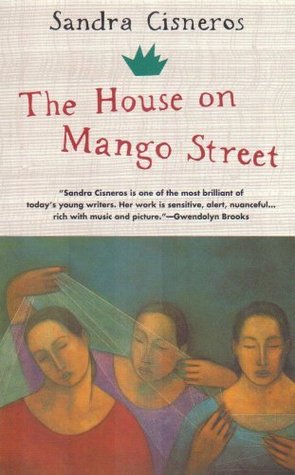
The House on Mango Street by Sandra Cisneros

Source: Purchased at Public Library Book Sale
Paperback, 110 pages
I am an Amazon Affiliate

The House on Mango Street by Sandra Cisneros is a coming-of-age story about Esperanza Cordero in a Latino neighborhood on Mango Street in Chicago.  She doesn’t remember much of the time before Mango Street, and it is clear that things were both good and bad there.  Neighbors she knew were hit by their husbands, while others had given up on their dreams simply because they got married.  In many ways these stories are woven together and are lyrical enough that they could be an epic poem about growing up as an immigrant in America.

Each short vignette tells a story from Esperanza’s point of view, revealing the harsh realities of growing up in an area other people are afraid to step foot in.

“All brown all around, we are safe.  But watch us drive into a neighborhood of another color and our knees go shakity-shake and our car windows get rolled up tight and our eyes look straight.”  (page 28)

Esperanza is growing up and learning how to become a woman, running in the city streets in heels an old lady hands her and her friends.  At the same time, she’s struggling to hold onto her childhood, while she’s admiring the older girls in the neighborhood wearing make-up and nylons.  She’s naive about relationships between girls and boys and she finds herself in situations where she can be taken advantage of, thanks to those she trusts.  But she also comforts her father when he cries.

“They don’t walk like ordinary dogs, but leap and somersault like an apostrophe and comma.” (page 71)

Cisneros paints a bleak picture as seen through Esperanza’s eyes, but at the same time she allows her character to feel something beyond the confines of her neighborhood.  She does not want to be that woman who merely looks at the possibilities and wallows in sadness and regret.  The House on Mango Street by Sandra Cisneros pays homage to these struggling women in a cadence, and she ensures readers not only glimpse a life that may be unfamiliar but that still contains a sliver of hope.

About the Author:

Sandra Cisneros was born in Chicago in 1954. Internationally acclaimed for her poetry and fiction, she has been the recipient of numerous awards, including the Lannan Literary Award and the American Book Award, and of fellowships from the National Endowment for the Arts and the MacArthur Foundation. Cisneros is the author of two novels The House on Mango Street and Caramelo; a collection of short stories, Woman Hollering Creek; two books of poetry, My Wicked Ways and Loose Woman; and a children’s book, Hairs/Pelitos. She is the founder of the Macondo Foundation, an association of writers united to serve underserved communities (www.macondofoundation.org), and is Writer in Residence at Our Lady of the Lake University, San Antonio.

This is my 58th book for the 2013 New Authors Challenge.

Origins (The Vampire Diaries: Stefan’s Diaries Vol. 1) by L.J. Smith, Kevin Williamson, Julie Plec

Source: Purchased from Borders ages ago
Paperback, 237 pages
I am an Amazon Affiliate

Origins (The Vampire Diaries: Stefan’s Diaries Vol. 1) by L.J. Smith, Kevin Williamson, Julie Plec is the first in the diaries series stemming from L.J. Smith’s original novels.  Stefan Salvatore is the younger of two brothers, and he’s the one that does as his father asks and rarely speaks out against him.  Damon, who is away during the Civil War, is the outspoken rebel.  Told from Stefan’s point of view, readers will get a sense of the tug between duty and desire, but as the second son and most responsible, his sense of duty often sways his choices.  When his father pushes him to pay his attentions to a local beauty from a powerful family, he does so, but it is clear that the match is one of convenience, not love.

“There was no mystery or intrigue in Mystic Falls.  Everyone knew everyone else.  If Rosalyn and I were to get married, our children would be dancing with Daisy’s children.  They would have the same conversations, the same jokes, the same fights.  And the cycle would continue for eternity.”  (Page 39)

In fact, a stranger in town, Katherine Pierce, has turned his head, and he cannot get her out of his mind.  A tug of war between his desires and his duty ensues, but other than Katherine’s beauty and mystery, you know little of her and why Stefan wants to be with her.  Is it mere animal lust, has she taken over his mind to make him feel that way?  These are questions that are left unanswered, but the infatuation he has with her leads to jealousy when his brother Damon returns from General Groom’s camp and spends a great deal of time with her.  She continues to be a mysterious figure even at the end of the novel, but as there are others in the series, she must be that way for a reason.

Although some of the chapters are written in diary form, the story is in prose, with Stefan’s inner thoughts sprinkled throughout as diary entries.  Despite wishing Stefan were more like Damon, unfettered, he sticks to his duties until the dam breaks for him emotionally.  He has little choice but to follow his desires when his duty has failed him.  The juxtaposition between the human and vampire Stefan is hinted at here, especially as he continues to compare himself to his brother and to find the life under his father’s thumb stifling.  Origins (The Vampire Diaries: Stefan’s Diaries Vol. 1) by L.J. Smith, Kevin Williamson, Julie Plec is a solid first book that introduces the town of Mystic Falls, the threat that faces the townsfolk as the Civil War brews outside their doors, and the unseen dangers that lie amongst them in wait.

About the Author:

L.J. SMITH has written over two dozen books for young adults, including The Vampire Diaries, now a hit TV show. She has also written the bestselling Night World series and The Forbidden Game, as well as the #1 New York Times bestselling Dark Visions. She loves to walk the trails and beaches in Point Reyes, California, daydreaming about her latest book. She also loves to hear from readers ([email protected]) and hopes they will visit her continually updated website, where information, new stories, and contests can be found.

This is my 55th book for the 2013 New Authors Challenge.

Joyland by Stephen King

Source: Purchased at Public Library sale
Paperback, 283 pages
I am an Amazon Affiliate

Joyland by Stephen King showcases that same storytelling ability King has demonstrated his entire career, but rather than focus on the gruesome or horror, Joyland is about amusements, growing up, and tangentially crime.  Devin Jones is a 21-year-old college kid who goes down to North Carolina from New Hampshire on a whim to become a greenie at the local amusement park, Joyland.  The park, which houses a number of rides and is fading in popularity in 1973, has a haunted past.  Jones is just getting the hang of being on his own away from college, finding a room to rent and learning how to butter-up the powers that be to get the job.  While he’s great at making friends and impressing the supervisors, he’s also crap with women from the girlfriend who’s leading him on a string and bucking his attempts at romance to the sisterly love of Erin Cook.

“The truck’s headlights went out.  I heard the door open and shut.  And I heard the wind blowing through the Spin’s struts — tonight that sound was a harpy’s screech.  There was a steady, almost syncopated rattling sound, as well.  The wheel was shaking on its tree-thick axle.”  (page 258)

This summer, Jonesy learns a whole new language and way of life — carny from carny — and at the same time nurses a broken heart while having as much fun as he can with the kids who attend the park looking for Howie the Hound and his young friends, Erin and Tom Kennedy.  He’s constantly surrounded by a typical cast of carnies from Madame Fortuna to Lane Hardy and Eddie Fu****g Parks.  These subordinate characters are far from that, playing an integral part in Jonesy’s experiences during the summer and into the fall when the other college kids have gone back to school.  Unlike, King’s typical horror novels there is little gore and slashing here, but he makes up for it in setting, character, and story.  Readers will be immersed in the carny life and language, getting caught up in the lingo, the scams, the rides, and the sheer summer fun just like his main character, Dev.

King is adept at building stories from the ground up, weaving in details from several story lines through the nostalgic point of view of his main character (aged and wiser) in a way that never gets bogged down.  Readers will feel as though they are sitting by the campfire listening to a tall tale, much like the feeling Dev experiences when his landlady, Mrs. Shoplaw, tells him about the Linda Gray murder in Horror House.  Very much a period piece, this novel is the 1970s from the cultural references and the religious fervor that held women to a certain standard, but it also has a modern feel in how it is told through the eyes of an older Dev looking back on this summer of firsts and lasts for him.

Joyland by Stephen King in some ways is reminiscent of IT‘s story telling as characters look back on themselves and their actions from the present, extracting things and feelings they may not have expressed at the time, providing a new perspective on their experiences.  Dev does this, and while not as steeped in the supernatural as IT was, there is murder, psychics/seers, ghosts, and an early televangelist.  King has brought to life the childlike joy of carnivals and amusement parks and brought in a dose of reality as Dev is put to “wearing the fur” and scrubbing down the rides until the sweat pours off of him, while at the same time unraveling a murder mystery to its gyrating climax.

Like IT, this will be on the coveted Best of King shelf and likely will be re-read.

About the Author:

Stephen King is the author of more than fifty books, all of them worldwide bestsellers. His recent work includes Doctor Sleep and Under the Dome, now a major TV miniseries on CBS. His novel 11/22/63 was named a top ten book of 2011 by The New York Times Book Review and won the Los Angeles Times Book Prize for Mystery/Thriller as well as the Best Hardcover Book Award from the International Thriller Writers Association. He is the recipient of the 2003 National Book Foundation Medal for Distinguished Contribution to American Letters. He lives in Bangor, Maine, with his wife, novelist Tabitha King.

Handling the Truth by Beth Kephart

Source: Purchased from Hooray for Books
Paperback, 252 pages
I am an Amazon Affiliate

The best teachers are those that give of themselves freely to their students and their craft, and with reference books available on various ways to write, what to write, and when to write, many will glance at yet another writing reference and dismiss it out of hand. What does that mean? That those people are fools — for Handling the Truth: On the Writing of Memoir by Beth Kephart, released today, is not a reference, it is a memoir about writing memoir (marking a 6th memoir from her). It is a reference guide written from the perspective of a teacher and writer on how to approach a genre riddled with scandal and debunked by naysayers.  Not only does she peel back the layers that can and should be part of memoir creation, but she also peels back her own experiences and perspective to shed light on the hard work memoirists should expect of themselves.

“Teaching memoir is teaching vulnerability is teaching voice is teaching self.”  (page xii)

“Some of the best memoirs are built not from sensate titillations but from the contemplation of universal questions within a framed perspective.” (page 10)

She shares her favorite places, her favorite music, her favorite memoirs, and her students’ work, and she begs that anyone interested in writing memoir do it because the story must be told and is relate-able to someone outside the self.  Writing the genre requires the writer to be as honest with herself as she can be and to fill the gaps in memory with facts from documents or cross-referencing conversations and moments with those that share the memory.  Reading this reference memoir is like getting to know Kephart on a personal level, but it’s also about getting to know the writer inside you — the one that wants to write the book but doesn’t know where to start.  Although this advice is geared toward those who wish to write their own personal histories, there is sage advice for other writers — fiction writers struggling with what tense to put their book in, for example.

On Mark Richard’s memoir House of Prayer No. 2, she says, “He does it because, in this case, the you is more intimate, more forgiving, more moving than the I ever will be.  It enables Richard to say things about himself and his ungodly circumstance that would be otherwise unthinkable.”  (page 46)

Readers and writers will love the explanations, which are peppered with examples from other writers’ memoirs to demonstrate why certain forms and styles are selected, because at Kephart’s core is a dedicated teacher.  It is these dedicated people who write the best reference books because they put more of themselves and more of their passions into writing them, making them innately more engaging and interesting than other reference guides that merely spout out bullet point advice and little else.  Kephart not only references the memoirs she loves, pulling apart the choices authors made in creating them, but also the ways in which she gets students (and now the readers of her book) to think about memoir and their own lives.  Writing exercises that not only focus on early memories, but also the backgrounds of photos (which can be like those fuzzy memories that have little detail) and poems (from some of my favorites like Ted Kooser).

“A way of eating passes away with your mother.  How you held the sugar on your tongue.  How you stirred the crumbled cheese into the oiled broth.  How you savored the sweet grit of flour in the gravy pot, and the thick pink of the beef, and the heated pear with its nutmeg top, and the brownies with the confectioner’s crust.  You will dig through the freezer at your father’s house, mad for one last frozen roll of checkerboard cookie dough, one Tupperware of thick red sauce, one crystallized slice of eggplant parmesan.  You will burn your fingers with the cold.  Your mother’s cooking will be gone.”  (page 92)

But at all costs, she reminds us that “writing is a privilege,” and that privilege should NEVER be taken lightly.  Effectively, she dispels the myths about memoir, explains what memoir is not, and ensures readers and writers look deeper than the memories and events in their lives to uncover the recurring themes, which could provide insight to others and generate empathy, if not understanding and connection.  More importantly, she reminds readers that memoirs by-and-large leave huge chunks of people’s lives off the page, despite the journaling, writing, and researching done into every aspect.  Handling the Truth: On the Writing of Memoir by Beth Kephart is an intelligent, passionate reference that not only guides writers on how to tackle memoir writing, but also inspires them to read the memoirs of others and to learn from, as well as advising them on how to live with openness and curiosity.

***I don’t have too many writing reference books because I only keep the ones that speak to me and offer the best advice, and each of those is chock full of sticky flags, and Kephart’s book is going on that shelf.***

Also, check out how this book made me almost cry when reading it.

About the Author:

Beth Kephart is the author of 10 books, including the National Book Award finalist A Slant of Sun; the Book Sense pick Ghosts in the Garden; the autobiography of Philadelphia’s Schuylkill River, Flow; the acclaimed business fable Zenobia; and the critically acclaimed novels for young adults, Undercover and House of Dance. A third YA novel, Nothing but Ghosts, is due out in June 2009. And a fourth young adult novel, The Heart Is Not a Size, will be released in March 2010. “The Longest Distance,” a short story, appears in the May 2009 HarperTeen anthology, No Such Thing as the Real World.

Kephart is a winner of the Pennsylvania Council on the Arts fiction grant, a National Endowment for the Arts grant, a Leeway grant, a Pew Fellowships in the Arts grant, and the Speakeasy Poetry Prize, among other honors. Kephart’s essays are frequently anthologized, she has judged numerous competitions, and she has taught workshops at many institutions, to all ages. In the fall of 2009, Kephart will teach the advanced nonfiction workshop at the University of Pennsylvania.

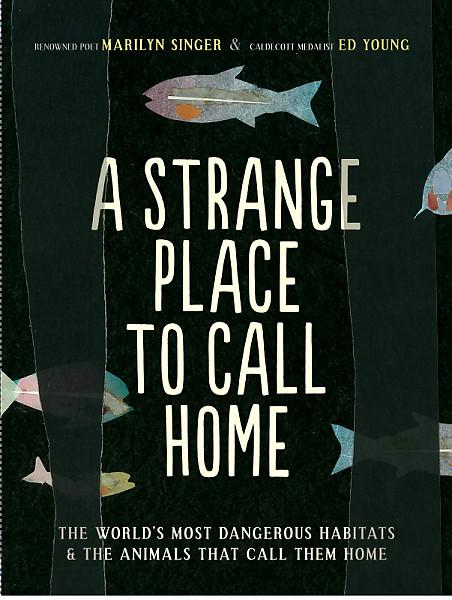
A Strange Place to Call Home by Marilyn Singer, illustrated by Ed Young

Source:  Purchased from Novel Books
Hardcover, 44 pages
I’m an Amazon Affiliate

A Strange Place to Call Home by Marilyn Singer, illustrated Ed Young, is a collection of poems and illustrations about animals that live in harsh environments and have adapted to their conditions.  The poetry forms include free verse, cinquain, haiku, villanelle, sonnet, and others that give young readers a brief look at the animals in their habitats from the Humboldt penguins that live in the warmer climates of Chile and Peru to the blind cave fish that live in the dark deep.  Included in the poetry book are at times abstract looking pictures of the animals or their habitats, though the images resemble collage techniques that incorporate various mediums.  The book also includes a break down of what poems exemplify which form and end notes that give a little more information about each animal.

Dry as Dust

They can deal solo
with dryness, but give them rain
and then: toads explode.

For my little girl, who is age 2, this book was a little too old for her.  She couldn’t pay attention long enough to get through the entire book, but she loved the pages with the snow monkeys in “Think Heat.”  There are a lot more questions than answers, and kids who are older are likely to want more information about each animal and habitat.  For younger kids, there’s just enough in each poem to mirror their own wonder, including them in the wider questioning of these animals’ lives.

A Strange Place to Call Home by Marilyn Singer, illustrated Ed Young, is a little too old for my little one, but if she retains her love of animals, she’ll likely enjoy this more as she gets older.  I found the poems a little too simple, and some did not have enough information about the animals or their habitats, but the end notes did offer a bit more information.  As a jumping off point, the book will spark questions from younger readers, and it could inspire a mother- or father-child exploration of these harsh habitats and adaptable animals.  Singer offers a special thanks at the beginning of the book to several people and museums, which seems to be where she obtained some of the information for her poems.

About the Poet:

Marilyn Singer was born in the Bronx (New York City) and lived most of her early life in N. Massapequa (Long Island), NY. She attended Queens College, City University of New York, and for her junior year, Reading University, England. She holds a B.A. in English from Queens and an M.A. in Communications from New York University.  Visit her Website.

About the Illustrator:

Caldecott Medalist Ed Young is the illustrator of over eighty books for children, seventeen of which he has also written. He finds inspiration for his work in the philosophy of Chinese painting.

Young began his career as a commercial artist in advertising and found himself looking for something more expansive, expressive, and timeless. He discovered all this, and more, in children’s books.  Visit his Website.


This is my 38th book for the 2013 New Authors Challenge.


This is my 24th book for the Dive Into Poetry Challenge 2013.

Trace by Eric Pankey

Book Source: Purchased at Novel Places
Paperback, 68 pgs
I am an Affiliate of Amazon.com

Trace by Eric Pankey, published by Milkweed Editions on 100 percent post-consumer waste paper, is a melancholy collection of poems that explores faith and the vacillation between believing and not.  Combining science and philosophy with observations of nature, Pankey examines the impact of life upon life, memory, and the other.  “If all matter is constant, what can one add to creation?”, the narrator of “A Line Made While Walking” asks.  What are these lines that we draw between our past and present, God and ourselves, and even between one another — are they not just arbitrary demarcations.  Like in “Out-of-the-Body,” the narrator watches the river otter and wonders if the animal is at play or working and whether even such distinctions enter into his thoughts while he’s busily breaking up the ice.  And if the otter does not make these distinctions, why do we, especially when we lie awake at night.  If only we could watch ourselves from outside of ourselves, what would we see?

Pankey’s preoccupation with death and its ultimate push to think about faith in something greater than ourselves permeates each and every poem in the collection, though some more intensely than others.  “All of winter, like a suppressed yawn, wells up inside me” is just one line from “Cogitatio Mortis” or I think of death (a rough Latin-to-English translation).  Death is never far from us or our thoughts, especially in today’s media hyped up world in which news from across the globe reaches us in seconds and wars continue to break out across the world.

Edge of Things

I wait at the twilit edge of things,
A dry spell spilling over into drought,

The slippages of shadow silting in,
The interchange of dusk to duskier,
The half-dark turning half-again as dark.

There:  night enough to call it a good night.

I wait for the resurrection, but wake to morning:
Mist lifting off the river.
Ladders in the orchard trees although the picking's done.

There are moments of hope in the collection, as Pankey’s poems discuss the death of the body, but not the soul. In “The Place of Skulls,” the narrator talks about the millstones and the hauling down of the bodies, but that the tree continues living and bearing fruit. Whether this is a poem about reincarnation, the absorption of the soul into the tree, or the mere image of saplings that have grown up and bear their own fruit after the sire has passed on does not matter because there is hope that life never just stops.  Faith is at the edges of these poems and underneath them, but on the surface, there is death, loss, and memories of all that has passed, even if those memories are faded and carry different emotional context than they did in the moment of creating them.

Trace by Eric Pankey is a collection focused on faith and passing on and what one wishes to leave behind, compared to what is actually left behind.  It is about the struggle to continue to get up every day and face it head on, even if death is closer than ever.

About the Poet:

Eric Pankey is the author of nine collections of poetry. TRACE, published by Milkweed Editions this year is the most recent. Two new collections, DISMANTLING THE ANGEL, and CROW-WORK are forthcoming. He is the Heritage Chair in Writing at George Mason University.

He’ll be at the May Gaithersburg Book Festival for “Poetry in the Afternoon” moderated by me!


This is my 21st book for the Dive Into Poetry Challenge 2013.


This is my 32nd book for the 2013 New Authors Challenge.

The Fact of the Matter by Sally Keith

The Fact of the Matter by Sally Keith, published by Milkweed Editions on 100 percent post-consumer waste paper and who will be at the 2013 Gaithersburg Book Festival) allows nature to run rampant through the poems, lifting up the reader and at the same time opening the door to reality.  While we strive to compartmentalize our lives to the before, during, and after of pivotal moments, the reality is that these moments are not separate and cannot be separated.  This analytical approach to our very journeys runs contrary to the emotional and experiential ways in which we live.  The struggle between the logical part of the brain and the emotional part can be seen in every poem, but it is particularly pronounced in the poems “Providence,” “Knot,” and “Crane.”

Keith’s use of nature elements, especially wind, provide readers with not only emotional cues to the state of things, but also paints vivid landscapes that evoke emotional responses.  In each poem, there is a longing for the past and what was, but it is not so overwhelming that the present moment nor the emotional memory of the past is lost.  While facts play a key role in grounding some of these poems, behind the scenes Keith weaves a narrative that haunts each poem with a depth of emotion and progression toward the realization of one’s own mortality and its nearness at all times.  “What is Nothing But a Picture,” is a prime example of this technique as the narrator paints a mural of seascapes and battles in the past, while examining the past, present, and end.  Like with many artists, there is a restless to the narrative, and this restlessness becomes overwhelming by the end of the poem when “The dogs’ hot breath hits in gusts./Clouds thicken.  Clouds splice/down far-off mountainsides no one sees./The surface of the ocean is heavy./The surface is a ruin that breathes./”  (pages 27-42)

For Example (page 52)

The pale undersides of sycamore leaves, knocking
at seed pods hanging in brown bunches

so that they helicopter down.
Slag heap, mad slack, taut song:

Which morning am I making up now?
Somewhere wild animals are seeking cool hollows

in which to lay themselves down.
A wall of cotton disperses in the wind.

Keith references the great battles and losses of Achilles and Hector on more than one occasion, and it would seem that these references point to a kinship between these heroes and the people of today, although the losses may not achieve the same legendary magnitude.  The Fact of the Matter by Sally Keith explores not only the facts of matter, but also the emotional ties that bind us and the art that is born out of those experiences, which can never truly capture those moments in the same way that they were lived — a kind of existential examination of grief and mortality.

About the Poet:

Sally Keith is the author of two previous collections of poetry: Design, winner of the 2000 Colorado Prize for Poetry, and Dwelling Song, winner of the University of Georgia’s Contemporary Poetry Series competition. Her poems have appeared in Colorado Review, A Public Space, Gulf Coast, New England Review, and elsewhere. Keith teaches at George Mason University and lives in Washington, DC.

This is my 20th book for the Dive Into Poetry Challenge 2013.


This is my 30th book for the 2013 New Authors Challenge.


She’ll be at the May Gaithersburg Book Festival for “Poetry in the Afternoon” moderated by me!

The Scabbard of Her Throat by Bernadette Geyer

The Scabbard of Her Throat by Bernadette Geyer, published by The Word Works in Washington, D.C., is a beautifully lyric collection of poems that explore the fine line between imagination/hope and reality, and on many occasions, Geyer’s poems end with an unexpected result.  In the first section, she explores the wonders of childbirth and miracles, but these poems also hover on the edge of death and the power that comes with bringing about the end.  In “Without Warning,” the onset of death is wrought with many to-do lists, but never on the list is what can be done with the last breath.  But in “After Having Been Distracted,” the narrator’s attention is called to the struggle for life of a cicada only to find that she must be the one to end it.  In many ways, these are poems about miracles, but miracles that don’t exactly have happy endings.

From "Afternoon on Portland Harbor" (page 18-9):

... Gravity tugs
us along the tilted deck -- our braced thighs hum

to the heartbeat of keel against water.
The crew feathers the sails to lessen the heel.

Hush the harbor soothes as we slow
to a near-stall.  Buoy bells toll

Geyer’s poems are musical and the rhythm transports her readers to that place she’s describing, like the boat in the poem cited above.  In the third section of poems, illusions — many of them held since childhood — are broken down, like the superhero hands of a mother being scarred and gnarled.  There also are poems that touch on the healing, or maybe numbing, effects of time, particularly its ability to make the hurt of abandonment not as fresh as it could be, like in Geyer’s “The Door.”  But then there is the silence of widowhood, which calls to mind Plath’s version of this topic in her collection Crossing the Water.  While Plath talks of widowhood as a crushing state for women who are overshadowed by their husbands even after death, Geyer’s poem speaks to the silent pride of the state and the perseverance it takes to keep moving forward.  And while there is a sense of loss in many of these poems, this section also speaks of hope — the unexpected still to come with renewal, particularly in “New Porch.”

Geyer deftly combines fairy tales with nature imagery and more modern situations and sensibilities in a collection that strives to sing the praises of restraint and letting go.  The Scabbard of Her Throat by Bernadette Geyer explores the tipping point between expressing fear, anger, sadness, and other emotions at any moment and the decisions to remain silent and strong in the face of others and for others.  Like the scabbard that holds the sword from the fight or releases it, the throat becomes that scabbard to hold back or let loose the voice and emotion of these poems.  Another collection that has spoken and blow me away with its lyricism and poignancy.

This is my 12th book for the Dive Into Poetry Challenge 2013.


This is my 21st book for the 2013 New Authors Challenge.


About the Poet:

Bernadette Geyer is a poet and copy editor in the Washington, DC, area.  Geyer’s first full-length manuscript, The Scabbard of Her Throat, was selected by Cornelius Eady for publication in the Hilary Tham Capital Collection series of The Word Works. Geyer is the author of a poetry chapbook, What Remains, and recipient of a 2010 Strauss Fellowship from the Arts Council of Fairfax County. Her poetry has appeared in Oxford American, North American Review, The Midwest Quarterly, Verse Daily, and elsewhere.  Geyer’s non-fiction has appeared in WRITERS’ Journal, The Montserrat Review, Freelance Writer’s Report, World Energy Review, and Marco Polo Magazine. Photo by Emily Korff, Veralana Photography

Click the image below for today’s National Poetry Month Tour Post!

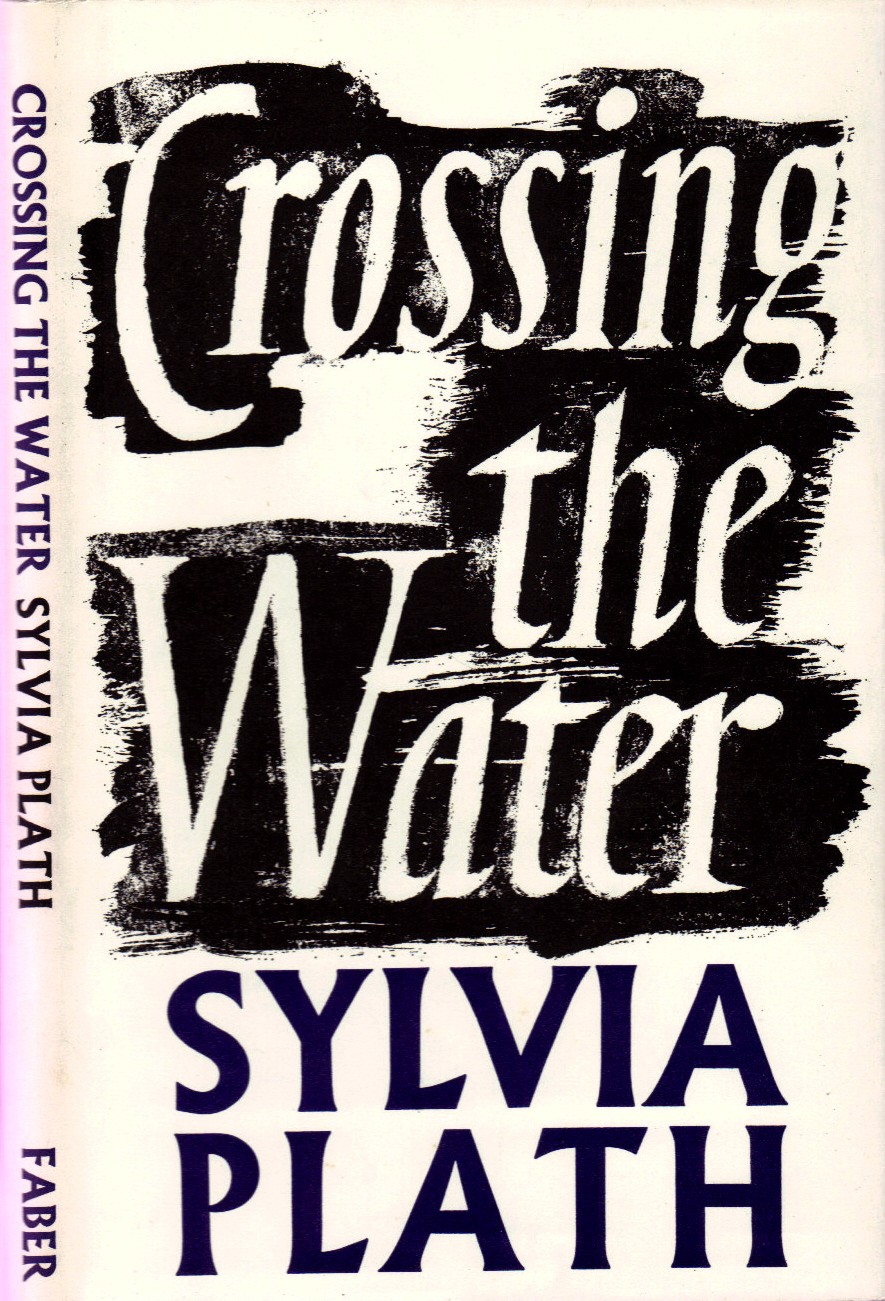
Crossing the Water by Sylvia Plath

Have you had enough Sylvia Plath this week? I hope note, because I’ve got another review for you today.

Crossing the Water by Sylvia Plath is the collection between The Colossus and before the publication of Ariel (my review), and it continues to push the envelop between dark and light.  Plath has come to represent the dichotomy of dark and light in all of us, with our deep passions and desires that lie in tension with our duty to family and society.  In this collection, the water becomes a metaphor for the surface veneer that many of us carry, but Plath examines how easily this surface can be shaken and disturbed.

In “Finisterre,” “Now it is only gloomy, a dump of rocks–/Leftover soldiers from old, messy wars./The sea cannons into their ear, but they don’t budge./Other rocks hide their grudges under the water.//”  (page 15)  Plath examines the aging process and the grudges carried from the past into the present and how that sullies the outside like the weathering of a rock face.  The poem further flourishes into a series of worshiping people looking to that which is beyond themselves, particularly the larger “Lady of the Shipwrecked” who admires the sea as the man worships her and the peasant worships the sailor.

Crossing the Water (page 14)

Black lake, black boat, two black, cut-paper people.
Where do the black trees go that drink here?
Their shadows must cover Canada.

A little light is filtering from the water flowers.
Their leaves do not wish us to hurry:
They are round and flat and full of dark advice.

Cold worlds shake from the oar.
The spirit of blackness is in us, it is in the fishes.
A snag is lifting a valedictory, pale hand;

Stars open among the lilies.
Are you not blinded by such expressionless sirens?
This is the silence of astounded souls.

Many of these poems are about the art of reflection or reflecting the outside world, becoming or acting as a mirror without judgment. Speaking in “Widow,” the narrator runs through the typical emotions of loneliness without the spouse, but later in the poem, Plath explores the weight of the lost spouse’s memory and how it still lies heavily on her life even as the man has died.  It is this shadow from which she cannot escape even in widowhood.  However, there also is a certain distance to these poems, like Plath is holding readers at arm’s length — each poem depicts a sense of control.  But her observances of mindless working zombies on city streets or the attempt to recapture youth through cosmetic surgery are spot on and raise an awareness of the foolhardy nature of hubris.

There is a disquietude in these poems, but yet a blissful communion with nature. It is as if she is recognizing the connection we have with nature, but at the same time calling attention to what separates us from it, like in “I Am Vertical.”  Crossing the Water by Sylvia Plath may be the smallest of her collections, but is no less powerful.  It looks at life through the lens of a woman at odds with herself and society.

This is my 11th book for the Dive Into Poetry Challenge 2013.


Click the image below for today’s National Poetry Month tour stop!