
Quantcast

Ariel by Sylvia Plath


Click the image above for one National Poetry Month tour stop, and visit Life’s A Stage for a second today.
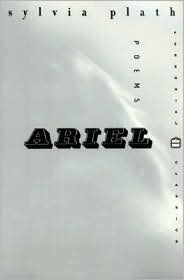
Ariel by Sylvia Plath is a collection that she crafted near the end of her life, before her suicide, according to the forward by Robert Lowell (Check out “Ariel“).  These poems are what Plath has been best know for, other than The Bell Jar, and these poems are by turns blunt and dark as she refers to death at nearly every turn and the fleeting nature of life.  Her poems are not only confessional in nature about her emotions and life, but they also examine the bittersweet nature of life and being a woman.

In “Elm,” the narrator speaks of having no fear, a fear of the unknown or a fear of loss, particularly in relation to love.  There is that fast movement forward, a moving onward to the next experience and next moment in time.  Many of her poems reflect this urgency to move forward and to stay in the moment — to enjoy it.  Her poetry, like many have said of her own personality, burns brightly and intensely, making no excuses for rawness there — like the predawn light on the horizon not marred by expectation or perception.

She talks of motherhood in a way that is unvarnished, speaking, “These children are after something, with hooks and cries,//And my heart too small to bandage their terrible faults./” in “Berck-Plage.”  In spite of the parasitic nature she ascribes to children, the title of the poem tells the tale of how joyous motherhood can be, with plage being a beach or a sunspot and the echo of France’s Berck-sur-Mer.  She also displays a bit of whimsy in her portrayal of “Gulliver” as he is over-run by the citizens of Lilliput.  Plath is hindered by the confines of society and expectation, and in these poems there is by turns the holding back or the tying down of narrators or images that dream of release or are released.  The push and pull of these images run throughout the book and probably echo the feelings Plath felt herself after her divorce and the onset of her single-motherhood.

Ariel by Sylvia Plath is a collection full of tension, explosions of release, and a search for balance between constraint and freedom.  Death is not necessarily death in the demise of the physical self, but a release and return to the freedom that is desired.

About the Poet:

Sylvia Plath was born in Boston, Massachusetts. Her mother, Aurelia Schober, was a master’s student at Boston University when she met Plath’s father, Otto Plath, who was her professor. They were married in January of 1932. Otto taught both German and biology, with a focus on apiology, the study of bees.

In 1940, when Sylvia was eight years old, her father died as a result of complications from diabetes. He had been a strict father, and both his authoritarian attitudes and his death drastically defined her relationships and her poems — especially “Daddy.” Photo Credit Rollie McKenna.
This is my 10th book for the Dive Into Poetry Challenge 2013.

The Hardship Post by Jehanne Dubrow

The Hardship Post by Jehanne Dubrow, published by Three Candles Press, is about the many posts that we take on in life that are in the midst of the fray — whether that is the overseas diplomat in a war-torn country or the descendent of a Holocaust victim.  Dubrow’s verse is infused with its own rhythm and even sometimes an internal rhyme, and this musicality penetrates the mind of the reader, bringing to life not only the harsh, and sometimes distant, memories of pain, but the reverberations of that pain decades into the future.

From Bargaining With the Wolf: (page 9-10)

The world's been tamed--your fangs are white
as though you seldom kill, twilight
now hums a stranger violence.
I hate these bloodless cadences.
Teach me to howl, to bay, to bark
new terrors prowling through the dark.

Section one of this collection seems to have a greater universality to them, and in many ways, these poems become more and more personal as they enter into section two. For instance, “Exile’s Fairytale” talks about the anxiety of being a refugee and how that life leaves a mark just as the life left behind — and each life subsequently left behind as the refugee continues to pack up and move on. “beneath her skin–these are the birthrights/of refugees. She trespasses/but never finds a place to rest,/each night the uninvited guest.” Does she mean that the refugee is the uninvited guest or is it more that the night is the uninvited guest because it leaves him/her with his or her thoughts and memories of the past.

The most resonant section of the collection is part two as a “Third Generation” much removed from the initial pain still carries the weight of that “Baggage”: “fix DNA, defect that made/us find the door in any space,/a gene that warned me when to slide/the suitcase from its hiding place.” (page 26). There are internal changes that are absent to the naked eye that Dubrow explores, particularly how events can change someone’s internal outlook or cause a new habit to form, but on the outside everyone still sees that person as “sweet” like in “Kosher Dills.”

The Hardship Post by Jehanne Dubrow has crafted a heartbreaking collection of how the past continues to haunt and mark us, but it also calls for pride, a sense of accomplishment that survival was even possible.  But it also calls on the rest of us who are not as personally touched by the tragedies of the holocaust to remember what happened, the deep scars that were left, and to step away from the belittling nature that can sometimes tarnish history with platitudes and patina.

About the Poet:

Jehanne Dubrow is the author of four poetry collections, including most recently Red Army Red and Stateside (Northwestern UP, 2012 and 2010). Her first book, The Hardship Post (2009), won the Three Candles Press Open Book Award, and her second collection From the Fever-World, won the Washington Writers’ Publishing House Poetry Competition (2009). Finishing Line Press published her chapbook, The Promised Bride, in 2007.

Her poetry, creative nonfiction, and book reviews have appeared in journals such as Southern Review, The New Republic, Poetry, Ploughshares, The Hudson Review, The New England Review, West Branch, Gulf Coast, Blackbird, Copper Nickel, Prairie Schooner, as well as on Poetry Daily and Verse Daily.

Please click on the image below for today’s National Poetry Month tour stop!

This is my 9th book for the Dive Into Poetry Challenge 2013.
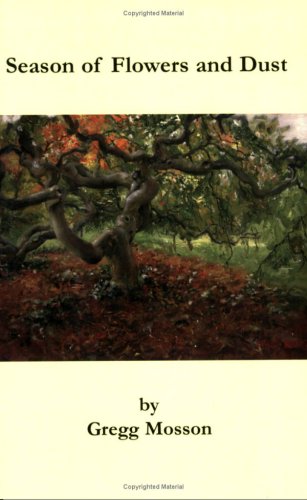
Season of Flowers and Dust by Gregg Mosson

Season of Flowers and Dust by Gregg Mosson, published by Goose River Press, is a journey in nature, particularly the nature of the Pacific Northwest during the Fall, Winter, and Spring.  Yes, no summer poems here.  In each poem, nature is winding down toward hibernation, and when winter settles in, readers will feel the cold in their bones as “the white-out of sudden tundra,/driveways are culled, families forge snowmen” in “First Snowfall.” (page 25), and when “winter’s chrysalis” in “Winter Rainfall” takes over.  Mosson has clearly spent time sitting, watching, and being with nature during these seasons, as his verse captures the movement of water, wind, and more so easily.
Readers will picture themselves in the Pacific-Northwest, even if they’ve never been there, which is particularly true of his poem “Cannon Beach in Autumn” where the water and the jutting rocks are clearly visible as the lovers untangle themselves and fall into Autumn with the nature around them.  This poem is particularly well crafted as the lovers lose their arms and can no longer hug as the trees lose their branches and leaves, and they drift into one another and create enough friction for a fire to burn.  Does Autumn signify an ending or does it signify a change into something new?

From So Long Flowers, So Long: (page 7)

A sparrow jerks off a twig; vibrations
caterpillar up
From Western Orange Sunset: (page 47)

Sunset opens like the eyes of hurricanes,
spotting the world with swirls of heat,
softening the landscape with tornadoes of light and warmth,
From Burial of Snow Storms: (page 26)

Snowstorms machine-gun humans into homes,
entomb them with just awareness of the world.
They rise to their tasks, but the bombardment
continues.

Mosson’s images have their own rhythm and startling beauty, particularly the vibrations inching along the branch in “So Long Flowers, So Long” and in “Western Orange Sunset,” the sunset becomes as frightening and beautiful as the eye of a hurricane. While much of the collection is in free verse, there also are sonnets, particularly in the “Winter” section, which signifies the compactness and hibernation of the season more so than the free flowing poems in “Spring.” Each poem has a deep reverence for the beauty inherent in nature, but also its ability to change with the seasons.

Season of Flowers and Dust is a journey to the Pacific Northwest that will have readers slowing down and taking in nature with each deep breath. And while these poems evoke beauty and the cycle of seasons, there also is a darkness just beneath the surface that plays at the edges of some poems and is more prominent in others, like “Night on Burnside” and “Burial of Snow Storms.”

About the Poet:

Gregg Mosson is the author of a book of nature poetry, Season of Flowers and Dust (Goose River Press, 2007), and one of social engagement and witness, Questions of Fire (Plain View Press, 2009). His work has appeared in The Baltimore Review, The Cincinnati Review, and The Potomac Review, among other journals. He has an MA from the Johns Hopkins Writing Seminars, where he was a teaching fellow and lecturer, and lives in Maryland.

Click the image below for today’s National Poetry Month Blog Tour Stop!


This is my 8th book for the Dive Into Poetry Challenge 2013.


This is my 19th book for the 2013 New Authors Challenge.

Every Man Dies Alone by Hans Fallada, translated by Michael Hofmann

Every Man Dies Alone by Hans Fallada, translated by Michael Hofmann, is not an epic love story of triumph over evil, but a psychologically and emotionally jarring, dramatized examination of German society as Hitler garnered more and more power, conquered more nations, and turned his own people against themselves.  Otto and Anna Quangel have one son and he was taken from them when he went to the front for the Fatherland.  This event changes everything for them, and their journey begins anew even as they strive to maintain some normalcy.

Meanwhile, Eva Kluge has made a decision to kick her husband out of her life for good and to sever all ties.  He’s a drunkard, a gambler, and a womanizer, and he deserves nothing less than to be kicked to the curb.  However, Enno Kluge only becomes more debased when he encounters Emil Borkhausen — another drunken criminal, but one with a focus on how to best screw the next person over for his own benefit.  There are the Nazi Party members, the Persicke’s and Judge Fromm, as well as Frau Rosenthal, and Inspector Escherich, who all come into contact with many of these characters at times when fates are decided.

“No, it wasn’t a letter, it was silly, useless chatter, and not even true at that.  She wasn’t safe at all.  Never in the last ghastly months had she felt herself in such danger as in this quiet room.  She knew she would have to change here, she wouldn’t be able to escape herself.  And she was afraid of who she might turn into.  Perhaps she would have to endure even more terrible things to come, she who had already changed from Lore to a Sara.”  (page 80)

Early on, readers will find Fallada’s style unusual, especially when the author interjects himself into the story to explain the fate’s of minor characters and because each chapter is given a heading, which are unnecessary and mostly give away the contents of those chapters — even those chapters that are a mere three pages and major plot points occur.  There also are moments in the narrative where points of view are switched without a break in the text or a new section beginning, which can leave some readers feeling a little lost or frustrated.  However, later on, these transitions smooth out a bit more and fade away as chapters begin to designate points of view switch.  With that said, Fallada has created a world as close to the real Germany under the Third Reich as can be fictionalized without readers having to read a nonfiction book or having to live through the torture and constant fear themselves.  Although some aspects are overly melodramatic on some occasions and some of the minor characters were a bit superfluous, readers will be swept up in the fear, the pain, and all of the other emotions tied to the Gestapo’s investigations, German residents’ spying, and death of loved ones and dreams.

“‘Who wants to die?’ he asked.  ‘Everyone wants to live, everyone–even the most miserable worm is screaming for life! I want to live, too.  But maybe it’s a good thing, Anna, even in the midst of life to think of a wretched death, and to get ready for it.  So that you know you’ll be able to die properly, without moaning and whimpering.  That would be disgusting to me…'” (page 294)

Fallada throws in hiding a Jewish woman, the spying neighbors, the conspirator cells against the Third Reich, and the high-and-mighty Nazi members.  What’s great is how well all of these subplots, characters, and themes mesh together to highlight the struggle of coping with loneliness, the possibility of death, and the hopelessness of fighting something bigger than oneself because it is right and decent.  While readers may not agree with everything that these characters do, the fear that pervades the German Reich effectively influences each character differently.  Every Man Dies Alone by Hans Fallada, translated by Michael Hofmann, is a wide ranging look at how small actions can lead to either small changes in others or spur wider change.  But it also demonstrates the strength of love that may not be as obvious on the surface or to outsiders.

This is my 16th book for the 2013 New Authors Challenge.


About the Author:

Born on July 21, 1893, Hans Fallada was one of the famous writers in the first half of the 20th century. Most of his novels were written in German and only 11 of them were translated in English, one of them was “Every Man Dies Alone.” The said novel was first published in 1947. But it was only in 2009 that it was translated in the English language by Michael Hoffman.

Shortly after Fallada completed it, he died in Berlin due to heart failure on the 5th of February 1947.

What the Book Club Thought: (Beware of spoilers)

Every Man Dies Alone by Hans Fallada was our March book club pick, thanks to our resident WWII expert Anna from Diary of an Eccentric.  Anna and one other member loved the book and planned to give it five stars, while one member was unsure whether he would rate it three or four stars.  As I had not finished the novel prior to discussion, I had not made up my mind, but was leaning toward four stars, which is where I finally landed.  Two other members did not read the book and one did not finish.  Our youngest member did not participate in this discussion or read due to the content of the novel.

Most of the members enjoyed Fallada’s characters Otto and Anna Quangel and their work with the postcards to open the eyes of fellow Germans to the atrocities of the Reich, while one member vehemently hated Enno Kluge and another member thought Borkhausen was comical.  I agree that Borkhausen was a bit comical, especially given his outrageous decision-making and the events that befell him.  Some members agreed that the writing style was tough to get used to, and that the beginning half was slower than the latter third of the book, which was a fast-paced wrap up of the events and more.  One member did not think the final chapter was necessary, while Anna said that maybe the final chapter was to end the novel on a good note.  I have to agree with Anna that I liked the final chapter in the novel because it wrapped up some loose ends and really ended the novel on a more hopeful note.

One aspect of the novel that was brought up was the role of the cyanide pill in providing solace to one character and torture to another.  It was interesting to see how someone could feel free knowing that the cyanide pill was available, while another character could only feel free once the pill was eliminated from the equation.  I was intrigued by Inspector Escherich, and found him to be one of the most dynamic and complex secondary characters in the book.  It almost would have been more interesting to have seen more of him, but not totally necessary.

Overall, there seemed to be a mixed reaction to the writing style, but overall about half of the members enjoyed the novel.  I did wonder about how prepared one could make himself or herself for death given the circumstances these characters find themselves in, and I also wonder how much of Fallada’s experiences with loneliness and persecution are infused in the novel as well, particularly in the case of Rosenthal and the Quangels.

Short Story Friday: Rules for Virgins by Amy Tan

It’s Friday again, and as promised, here is one of the occasional Short Story Friday features. Today’s feature will focus on Amy Tan’s e-short story, Rules for Virgins.

Rules for Virgins by Amy Tan is a short story in which a virgin courtesan is being told the ins and outs of the profession.  Set in 1912 Shanghai, Magic Gourd is explaining the ways in which courtesans gain favor with the wealthiest of men.  Violet, a young woman whose mother owned a similar house of women, is being tutored in the ways of beguiling and pampering not only the men they want to attract, but the other women in the house so that competition does not become deadly.

“While you are still a virgin courtesan, you must know all the arts of enticement and master the balance of anticipation and reticence.”

The way in which the story is told is in the form of teacher-student, and while Magic Gourd is harsh at times and provides unabashed detail about the expectations of men.  She exposes the inner workings of the house and the other women’s jealousies, but she also explains the function of the “mosquito press” in spreading rumors that build the reputations of new girls and houses.

“Few men are capable of preserving their ideal self.  If he is a scholar, what philosophical principles were sacrificed to ambition?  If he is a banker, what oath of honesty was dirtied by favors?  If he his a politician, what civic-minded policies were destroyed by bribes?  You must cultivate his sentimentality for moral glory and help him treasure his myth of who he was.”

The narration is reminiscent of Tan’s earlier work, but in this case, the women are not related by birth, but by situation, and the older, wiser Magic Gourd is imparting her wisdom to the younger courtesan.  Rules for Virgins by Amy Tan is a great look into this mysterious world of entertainment and enticement, but it seems too short and would have been great to see Violet begin to navigate this world at the guiding hand of Magic Gourd.

About the Author:

Amy Tan is an American writer whose works explore mother-daughter relationships. Her most well-known work is The Joy Luck Club, which has been translated into 35 languages. In 1993, the book was adapted into a commercially successful film.

The Heart of Haiku by Jane Hirshfield

The Heart of Haiku by Jane Hirshfield, which I first read about it on Beth Kephart’s blog, is lyrical, meandering, and informative not only about Haiku — the art, its origination, and its longevity — but also about one of the greatest poets, Bashō, who lived and breathed Haiku.  Knowing very little about this Japanese poet from the 17th century doesn’t mean you don’t know him because as Hirshfield points out, he infuses every Haiku with his soul and experiences.  Not only can readers live his moments alongside him, but they also can create their own experiences within the Haiku.

“To read a haiku is to become its co-author, to place yourself inside its words until they reveal one of the proteus-shapes of your own life.  The resulting experience may well differ widely between readers:  haiku’s image-based language invites an almost limitless freedom of interpretation.”

Like many poets, verse comes naturally and is less like a job or profession than it is like breathing.  With elements of Zen and Shinto’s spiritual traditions, the poet led a contemplative life focused on not only the natural world, but his experiences with it and as part of it.  At many points in his life, he is affected by events beyond his control, but his poetry never fails to account for these moments or to push him through those hardships — even though it doesn’t seem as though Bashō considered them hardships.  Hirshfield says, “He wanted to renovate human vision by putting what he saw into a bare handful of mostly ordinary words, and he wanted to renovate language by what he asked it to see.”

“Zen is less the study of doctrine than a set of tools for discovering what can be known when the world is looked at with open eyes.  Poetry can be thought of in much the same way, and the recognition of impermanence, ceaseless alteration, and interdependence–the connection of each person, creature, event, and object with every other–need not be “Buddhist.”  These elements permeate the poetry of every tradition. . .”

What is most beautiful about Hirshfield’s examination of Bashō is the reverence she pays to him and her passion for not only his work, but also his dedication to improving it even when near death.  And like many others, he remained focused on pushing his students to strive for more than even he could achieve, urging them not to be the “other half of the split melon” by mirroring his own work.  Hirshfield not only provides history and poetry in this essay, but she also pinpoints the evolution of Haiku and discusses its beauty and its endurance through the ages, even as a teaching tool.

The Heart of Haiku by Jane Hirshfield is a stunning examination of one Japanese poet’s work and his love of life and poetry.  Her narration provides a unique way of stepping into the life and thoughts of Bashō as writer, poet, teacher, and human being.

About the Author:

Jane Hirshfield was born in New York City in 1953. After receiving her B.A. from Princeton University in their first graduating class to include women, she went on to study at the San Francisco Zen Center. Her books of poetry include Come, Thief (Alfred A. Knopf, 2011), After (HarperCollins, 2006); Given Sugar, Given Salt (2001), which was a finalist for the National Book Critics Circle Award, The Lives of the Heart (1997), The October Palace (1994), Of Gravity & Angels (1988), and Alaya (1982).

This is my 11th book for the 2013 New Authors Challenge.

Red Army Red by Jehanne Dubrow

Red Army Red by Jehanne Dubrow is a collection that is broken down into three, clear sections — Cold War, Velvet Revolution, and Laissez-Faire — with a preface section — Red Army Red — and one poem, “Chernobyl Year.”  Dubrow’s narrator recalls the lives of American Diplomats in Communist-controlled Poland during the Cold War and pays homage to the Velvet Revolution in Czechoslovakia and the rebellion of youth before concluding in the commercialized freedom and excess of capitalism.  Her poems are all at once playful, somber, and achingly real.

From "Aubade": (page 9)

Often I lay awake to listen for
my parents returning from the embassy,
a key toothing the lock, the front door

opening to let them in, its rusty
hinges a metal warning.  Every
evening the same.  I drank the words cold war

from the water glass on my nightstand.

Her words echo even after the end of each line, and sometimes even in the middle of a line, leaving a haunting impression on the reader. In “Vinegar Aphrodisiac,” the narrator asks, “What’s sweet//without the wanting, the queue around the block/when even you are out of stock?” The lines for food in a communist society even when there is no more left, and the hope that there will be something there for them when they get to the front of the line. The wanting or the hope is palpable and heartbreaking. The poems in the first section eerily reflect the realities of the time, and there is a juxtaposition of the diplomat life with that of the Poles — “Each morning my mother’s velvet purse/wilted on a chair, empty of its midnight contents:/ruby lipstick, tiny lake of a pocket mirror./My father’s tie lay crumpled on the bed./The romance of objects–both their costumes/on hangers again, still clasping the scent/” (from “Fancy,” page 12)

There is unrest in the second section — the upheaval of adolescence marked by the rising up of workers and society against a communist society that fails to live up to expectation, a theme prominent in “Five-Year Plan.” A deep, unbidden want bursts forth in Dubrow’s lines as the communist Poles want release from their worker chains, so does the diplomat’s daughter want escape from the “crystal” world in which she lives just outside reality, yet feeling that reality keenly. Not entirely part of the communist world, but not completely outside of its empty promises. Always beneath the austere exterior in these poems, there is a burning passion waiting to explode onto the page, and while it may not happen in the same poem, explosions of light, sex, and want emerge of their own volition and when least expected.

Red Army Red by Jehanne Dubrow is a phenomenal collection that is bound to generate much discussion from book clubs, but it also speaks to the truths of ideals and realities and how they never meet expectations.  In many ways, the collection comments overall on the “grass is always greener” idiom, but it also highlights the separation felt by a young woman growing up in a foreign land and having the freedom her country provides, but at the same time feeling the constraints of her host nation.  Amazing use of imagery, politics, real events, and more.

About the Poet:

Jehanne Dubrow is the author of four poetry collections, including most recently Red Army Red and Stateside (Northwestern UP, 2012 and 2010). Her first book, The Hardship Post (2009), won the Three Candles Press Open Book Award, and her second collection From the Fever-World, won the Washington Writers’ Publishing House Poetry Competition (2009). Finishing Line Press published her chapbook, The Promised Bride, in 2007.

Her poetry, creative nonfiction, and book reviews have appeared in journals such as Southern Review, The New Republic, Poetry, Ploughshares, The Hudson Review, The New England Review, West Branch, Gulf Coast, Blackbird, Copper Nickel, Prairie Schooner, as well as on Poetry Daily and Verse Daily.

If you’re going to be in Boston for the AWP conference in March, you might catch Dubrow at a couple of panels.

This is my 5th book for the Dive Into Poetry Challenge 2013.

A Thousand Mornings by Mary Oliver

A Thousand Mornings by Mary Oliver is meditative observance, but also a collection of poems full of praise not only of the natural order but of humanity’s place in that order.  In “And Bob Dylan Too,” she talks of how the shepherds sing as the sheep praise the grass by eating it and how the bees’ hum signals the opening of spring blossoms.  And in many ways, nature comes to life, becomes anthropomorphized in conversation with a narrator, allowing for the unspoken rules to be broken and/or expanded.  Oliver has a deep sense of connection to the natural world that shines through in each line of each poem, and yet, there is a bit of rebellion in her poems that points to a time when breaking free of the natural order is not only OK, but unexpected and inspiring.

From "Lines Written in the Days of Growing Darkness" (page 27):

to the petals on the ground
to stay,
knowing as we must,
how the vivacity of what was is married

to the vitality of what will be?
I don't say
it's easy, but
what else will do

What readers will love about Oliver’s poetry is the homage she pays to the natural world in all its beauty, but also the connect we have to it. In “The Moth, the Mountains, the Rivers,” the narrator of the poems asks that we each take the time to live in awe of the wonders around us, to truly sit without worry about the busy schedule and to just be and observe. It is almost a plea of sorts.  In other poems, the narrator simply marvels at nature and even decides to take her home to a mountaintop for silence and reflection and invites the reader along.  But one of the most descriptive and captivating poems in the collection was “Tides,” about the movement of the ocean and the only purpose it has: to be.  Unlike those who talk of its erosion of beaches and its awesome power, Oliver focuses in on its rhythmic movement, its constancy, and its beauty and in this way draws a parallel to how the narrator casually, calmly walks the beach.

A Thousand Mornings by Mary Oliver is reflective of the past, of youth, and of wilder days, but it also is about recapturing that youth, if only in the mind, remembrance, and observance of nature.  But there are moments of distinct action and conviction that the past can be recaptured even if it is at the end of life.  For those looking for Oliver’s traditional poetry, this collection is ripe with observation of the natural world, but it also offers a deeper look at aging and longing for things that have passed.

About the Poet:

Mary Oliver was in Maple Heights, Ohio.  As a teenager, she lived briefly in the home of Edna St. Vincent Millay, where she helped Millay’s family sort through the papers the poet left behind.  In the mid-1950s, Oliver attended both Ohio State University and Vassar College, though she did not receive a degree.

Her first collection of poems, No Voyage, and Other Poems, was published in 1963. Since then, she has published numerous books, including Thirst (Beacon Press, 2006); Why I Wake Early (2004); Owls and Other Fantasies : Poems and Essays (2003); Winter Hours: Prose, Prose Poems, and Poems (1999); West Wind (1997); White Pine (1994); New and Selected Poems (1992), which won the National Book award; House of Light (1990), which won the Christopher Award and the L. L. Winship/PEN New England Award; and American Primitive (1983), for which she won the Pulitzer Prize.

This is my 4th book for the Dive Into Poetry Challenge 2013.

The Kitchen Boy by Robert Alexander

The Kitchen Boy by Robert Alexander focuses on the last, secluded, and trapped days of the Romanov family before they are ultimately assassinated in 1918 as told by the kitchen boy, Leonka. Their lives were routine as royals with set times for dinners, etc., but in captivity, there days are even more regimented as they are expected to present themselves for inspection at certain hours, attend church services, and eat meals at certain times.  In fact, their lives are so routine, including that of the kitchen boy, the only highlights are wheeling the youngest, male heir about the home and imagining games until the Bolsheviks deign to open a window.

Shifting from the 1990s to the early 1900s, the narrator takes readers through the final days of the Tsar and his family and often interrupts his own story — being told on audio tape to his granddaughter, Katya — to interject the outcome of certain events or to provide other tangential historical information.  This disjointed narration often pulls readers out of the story, but once the narrator gets into the final three days of their captivity, the story moves rather quickly.  Moreover, the kitchen boy’s story is so complex that it takes a long time to unfold and by the end, readers will either have guessed the truth of the Romanov’s last days or they will feel betrayed by the narrator’s unreliability.

“My name is Mikhail Semyonov.  I live in Lake Forest village, Illinois state, the United States of America.  I am ninety-four years old.  I was born in Russia before the revolution.  I was born in Tula province and my name then was not Mikhail or even Misha, as I am known here in America.”  (page 3)

“His story, his truth, was what he would leave behind and it would be, he was certain, the definitive truth that would stand for decades if not centuries.”  (page 87)

However, the half-truths and subterfuge executed by the narrator do have a purpose and are understandable once the novel has completely unfolded, particularly given the tumultuous time period in Russian history.  Leonka is a young boy working in the kitchen of the Tsar’s prison, from which they are only allowed at most 1 hour outside in the courtyard’s fresh air as all the windows are permanently closed.  His duties are relegated to menial tasks of fetching water and preparing the day’s meals, but he’s also very observant.  Through carefully crafted context clues, readers will learn about the inner workings of the prison and the careful planning of not only the Romanovs but also the guards watching over them.

The Kitchen Boy by Robert Alexander is an intricate story of those last days of a family held by their enemies in which the more human side of the royals surfaces through the eyes of a young kitchen boy.  However, the greater mystery is by turns too well hidden, it is almost a trick of the author when it is revealed.  Alexander’s narration could have staved off disappointment with more from Katya’s portion of the story as she seeks to execute her grandfather’s will and wishes.  As an epilogue, it is too neatly wrapped up with very little build up.

About the Author:

Robert Alexander is the author of the bestselling novels Rasputin’s Daughter, The Kitchen Boy, and the forthcoming The Romanov Bride. He has spent over thirty years traveling to Russia, where he has studied and also worked for the U.S. government. He speaks frequently to book clubs, and the schedule for his live video webcasts can be found at his Website.

This is my 8th book for the 2013 New Authors Challenge.

House Inspections by Carsten René Nielsen, translated by David Keplinger

House Inspections by Carsten René Nielsen of Aarhus, Denmark, translated by David Keplinger, is a collection that the poet himself calls surrealist, but readers will find them poignant and truthful as well.  The collection includes not only the original prose poems in Danish, but also the English translations Keplinger did in collaboration with the poet.  David Keplinger introduces the collection with:  “It was in this place of natural beauty and order that we set to work on Nielsen’s poems of the neighborhood, rich in imagery of human interaction, comedies of errors, unanswerable questions, an Escherlike world of dark cellars, blind alleys, tenements and fitting rooms.” (page 7)  There is definitely a dark, blind alley in each of these poems — like “Fitting Room,” “Steps,” and “Wistfulness” — that the narrator leads readers to before springing the unexpected upon them.  In many ways, these surprise endings remind me of the one sentence endings of some Anita Shreve novels that change the entire story in a moment.

One stellar poem in the collection is “Reading,” in which the narrator calls attention to something amiss in the text, but does not reveal what it is.  By the end of the poem, it is clear that the one giving the reading does not mean what s/he says.  “the lips don’t move in full accord with what is actually said.”  (page 17)  While the thing that is amiss or the actual context of the situation remains a mystery, readers can easily connect with the realization that something that was thought to be true is not.  A running theme in many of these poems is the careful inspection or observation of the players or the scene to uncover what is “wrong” with the situation or what is unusual about it.  There is always someone watching or the feeling of being watched, like in “Theater.”

There also are a few poems that examine the passing of time and aging in such a unique way that readers may have to take a moment and revisit these poems to truly see the underlying meaning.  “Book” is an interesting look at what we look for in the books that we read — a reflection of ourselves — and how it puts us on edge that someone will turn the page on us.  There is that sense of fear in all of us that our lives are beyond our control or that the choices we’ve made are not appropriate.  In “Birthday,” life burns on its own and cannot be doused by minor events, and in many ways Nielsen is suggesting (without saying it) that life goes on even if events happen that are unplanned or even when they are planned.

Beyond the serious nature of some of these poems, House Inspections by Carsten René Nielsen also has a playful side in which shirts are turned into birds escaping from cages.  The collection tackles life’s biggest issues about mortality and enjoying the moments of life we have as we live them, not as they lie in the past.  Another collection that could be considered for the best of list.

About the Poet:

Carsten René Nielsen is a Danish poet. He has published nine books of poetry in Danish and received several fellowships from the Danish State Foundation for the Arts. Translations of his work have been published in The Paris Review, AGNI, Mid-American Review, The Mississippi Review, and in a collection of prose poems, The World Cut Out With Crooked Scissors (New Issues, 2007).

This is the 26th book for my 2012 Fearless Poetry Exploration Reading Challenge.


This is my 84th book for the New Authors Reading Challenge in 2012.

Native Guard by Natasha Trethewey

Native Guard by Natasha Trethewey, winner of the 2007 Pulitzer Prize, is sliced into three sections with the first section paying homage to a mother who has passed from this world into the next.  In “The Southern Crescent,” travel plays a particularly prominent role, with the train “humming like anticipation” as the narrator and her mother travel east and she sees her mother in the window clearly.  Trethewey’s poems are concise and filled with imagery that anyone can connect with on a visceral level.

“Graveyard Blues” screams loss and regret from the “stone pillow” for the narrator’s head at the end of the poem to the “hollow sound” of the mud as it sticks to mourners shoes during the funeral in the rain.  And “Myth” is a heart breaking poem, an elegy to the narrator’s mother — a hope that she can pull her from the other side into the real world through her dreams.  Many of us can relate to deep loss and the desire to change that loss and bring back loved ones from the dead — as if we could resurrect them.

In the second section, Trethewey tackles the oppressive memory of history in the deep South and how it is celebrated, feared, and hated for its bigotry and death.  From the prosperous hills of cotton harvested to the humps on the children’s backs from years of hard labor in the fields, the lines draw parallels in different segments of the poem to shed light on oppression — its costs and rewards.  The narration in these is a bit removed, more like an observer commenting on the events.  In the final section, Trethewey melds the personal stories with the historic events of the South and slavery to reveal a love-hate relationship with her native state Mississippi.  In many ways these poems reflect the tension between the white ancestry and the black ancestry of mulatto children from the south.

Even from the point of view of a child learning history and it is depicted as though slaves were well-treated and happy, it is hard to counter the widely held belief even if ancestry tells the student otherwise.  From “Monument” to “Elegy for the Native Guards,” there is a desire on the part of the narrator to pay homage to these pillars of the black community who stood up for what they believed in and made the best they could from the hands they were dealt.  At the same time, there is this reality that sinks in and mars any monument that can be resurrected, especially when made as an afterthought or belated gesture.  Native Guard by Natasha Trethewey tackles not only the sense of identity these biracial children struggle with, but also the struggle of Southerners to explain their pride in their history when it is so riddled with hatred.

About the Poet:

Natasha Trethewey was born in Gulfport, Mississippi, in 1966. She earned an M.A. in poetry from Hollins University and M.F.A. in poetry from the University of Massachusetts.

This is the 25th book for my 2012 Fearless Poetry Exploration Reading Challenge.

Life on Mars by Tracy K. Smith

Life on Mars by Tracy K. Smith, published by Graywolf Press on 30 percent post-consumer wastepaper, is a collection sliced up into four parts, and it won this year’s Pulitzer Prize in Poetry.  In the first section there are two parallels that Smith draws — the one between poet and astronomer searching for meaning in vastness and the parallels between the physical and spiritual world.  Like in “Cathedral Kitsch,” the narrator speaks of the gleam of gold in the church and wonders if God is there shining back on himself, but by the end of the poem, the narrator remarks on man’s stamp on the church and on faith.  “I feel/Man here.  The same wish/That named the planets.//Man with his shoes and tools,/His insistence to prove we exist/Just like God, in the large/And the small, the great//”

Some of the best lines come in “My God, It’s Full of Stars” where the narrator talks about God and the great unknown alongside the physical world in which she lives.  Rather than compare the two in pros and cons, the narrator takes a third path:

"Not letting up, the frenzy of being.  I want it to be
wide open, so everything floods in at once.
And scaled tight, so nothing escapes.  Not even time,
Which should curl in on itself and loop around like smoke.
So that I might be sitting now beside my father" (page 10)

There is a sense of wide-eyed, childlike wonder about the world and the unknown space and world of God. Rather than shrink from either, the narrator embraces their possibilities and revels in the possibilities.  Part two speaks for itself and pays homage to a father lost and time with him too short.  The collection then gives way to more timely matters in the news from a young woman kept as a sex slave to her father in the basement of a home he shared with his wife to the Abu Ghraib prisoners who were savagely mistreated by soldiers under too much pressure.  In the final section of the collection, Smith opens up her verse at full throttle to explore the infinite energy and being of all in the universe and the pulse of that energy as it continues to churn.

Life on Mars by Tracy K. Smith is well worth the prize it has won.  Her verse is well paced and masterful in how it draws parallels and leaves larger issues open ended for readers to think more about on their own.  She’s taken larger than life issues and honed in on them with a sharp eye, boiling them down to what really matters through personal accounts and a satiric remixing of facts from the news and more.  Definitely a collection for book clubs and to return to again and again when readers are feeling a bit enamored of the great unknowns.

About the Poet:

Tracy K. Smith was raised in Falmouth, Massachusetts. She studied at Harvard, where she joined the Dark Room Collective, a reading series for writers of color. She went on to receive her MFA from Columbia University.

This is the 24th book for my 2012 Fearless Poetry Exploration Reading Challenge.