Quantcast

Countdown by Mira Grant

Source: Amazon Kindle
ebook, 82 pgs
On Amazon and on Kobo

Countdown (A Newsflesh Novella) by Mira Grant is a great addition to the trilogy, chronicling the emergence of Kellis-Amberlee from its aucpicious beginnings as separate cures for the common cold and cancer.  There is the saying that there can be too much of a good thing, and in this case, these good things combined to create one of the most destructive things imaginable for the human race.  Dr. Alexander Kellis is working on a way to cure the common cold, but his testing is still in animal trials, while Dr. Daniel Wells is working on the Marburg Amberlee cure for cancer and is testing on humans with some success.

“‘This guy thinks he can eat textbooks and shit miracles,’ was the pitch.”

“Freed from its secure lab environment, Alpha-RC007 floated serene and unaware on the air currents of the stratosphere.  It did not enjoy freedom; it did not abhor freedom; it did not feel anything, not even the cool breezes holding it aloft.  In the absence of a living host, the hybrid virus was inert, waiting for something to come along and shock it into a semblance of life.”

“There is nothing so patient, in this world or any other, as a virus searching for a host.”

While these scientists are working on separate cures, there are forces outside of their labs that threaten their progress.  The Mayday Army, once a pot-head group of kids, is bent on “sticking it to The Man.”  They see an opportunity and take it.  Meanwhile, the unsuspecting people throughout the country, including the Masons from the trilogy itself, are left to deal with the wide-ranging consequences.  Through a series of blog entries, these tales unfold in rapid succession, ramping up the tension toward the ultimate conclusion before the start of the official trilogy.

Countdown (A Newsflesh Novella) by Mira Grant is not a necessary addition to the series, but certainly one that will be appreciated by those that love the novels and want more about how the outbreak that ended modern civilization occurred.  Readers will enjoy how Grant mixes scientific jargon into a thriller.

About the Author:

Born and raised in Northern California, Mira Grant has made a lifelong study of horror movies, horrible viruses, and the inevitable threat of the living dead. In college, she was voted Most Likely to Summon Something Horrible in the Cornfield, and was a founding member of the Horror Movie Sleep-Away Survival Camp, where her record for time survived in the Swamp Cannibals scenario remains unchallenged.

Mira lives in a crumbling farmhouse with an assortment of cats, horror movies, comics, and books about horrible diseases. When not writing, she splits her time between travel, auditing college virology courses, and watching more horror movies than is strictly good for you. Favorite vacation spots include Seattle, London, and a large haunted corn maze just outside of Huntsville, Alabama.

Mira sleeps with a machete under her bed, and highly suggests that you do the same.

Extractions by Melissa M. Firman

Source: Purchased
E-short story
I am an Amazon Affiliate

Extractions by Melissa M. Firman is an e-short story in which something is not quite right with Kari and her family.  While they have that suburban home, there are some financial issues lurking in the background, but that could just be the tip of the iceberg.  This family is racking up the debt with no end in sight and her impending dental work is only going to exacerbate that situation.  Firman has packed a lot of detail into the first couple of pages of this short story, which according to the Kindle estimate is just seven pages in total.

Whether Kari’s drinking has to do with their financial problems or the fact that she’s cyber-stalking an ex-boyfriend on Facebook, it doesn’t matter.  Something has got to change for this family.  They are in a very precarious situation and something is going to push them over the brink.  Kari is dissatisfied, and she’s searching for something outside herself to make herself content.  An unexpected act of vandalism, however, will have her questioning her own actions.   Extractions by Melissa M. Firman is well done, but will likely leaving readers wanting more.

About the Author:

Growing up in the suburbs of Philadelphia, Pa., Melissa Firman was convinced she would be a world-famous author before she was 18. When that didn’t quite happen, she earned a B.A. in English/Communications from Cabrini College and worked with various nonprofits. Melissa currently lives in Pittsburgh with her husband of 20 years and their two children.

“Extractions” is Melissa’s first short story published on Amazon. She recently edited young adult author Melissa Luznicky Garrett’s much-anticipated novels “The Prophecy” and “Blood Draw.”

Melissa Firman is currently in the process of writing her first novel and is a freelance book reviewer for the Pittsburgh Post-Gazette. Connect with Melissa on her website and blog at MelissaFirman.com or on Facebook at Melissa Firman, writer – www.facebook.com/TheFirmanGroup.

80th book for 2014 New Author Reading Challenge.

Northern Lights by Tim O’Brien

Source: Personal library
Paperback, 372 pgs
On Amazon and on Kobo

Northern Lights by Tim O’Brien, which was our November and final book club pick of the year and a re-read for me, is the author’s first book, and not my favorite.  The story is about two brothers — Perry and Harvey — and one went to Vietnam and the other stayed home and got married.  Perry works for the agriculture department in Sawmill Landing, Minn., which is a small dying town with very few farmers left.  Heavily populated by Swedes, Finns, and Germans, the town has gone through periods of prosperity and periods of fallow ground.  Harvey is set to return from the war, and he’s altered in more than one way.  While O’Brien has crafted a story of brothers who were always different from one another — Harvey, the bull, considered the outdoorsy and confident brother, and Perry, the book smart and self-conscious brother — the story slowly unwinds to show just how false those perceived differences were.

“They call it a dying town.  People were always saying it: Sawmill Landing won’t last another decade.  But for all the talk, Perry never saw the death, only the shabby circumstances of the movements around him.  It was melancholia, seeded in the elements, but he had no idea where it started.”  (page 65)

When his brother returns, there is a heaviness that settles on the house, a house their father lived and died in and a house that was often filled with tension between the three men.  With Grace, Perry’s wife, in the house, there is a lightness from her womanly touch as she tries to keep the peace and make Harvey feel at home.  But then there is Addie, a young lady who flirts endlessly and teases all the time.  She’s an enigma, flirting with married Perry and with single Harvey, but it is clear that she’s never serious.  She likes the games.  The moral tension is palpable throughout the novel in whether Harvey and Perry are flirting with Addie, or whether Perry has to overcome his fears and hunt in the woods as his brother did with their father.

Rather than focus on the Vietnam War, Northern Lights by Tim O’Brien is a look at the home front after the soldier returns home and tries to fit back into society, as well as the brother’s struggle with seeing his own brother so changed.

***Unfortunately, due to car issues, I missed this meeting with the book club.  A meeting I was really looking forward to.***

About the Author:

Tim O’Brien was born in 1946 in Austin, Minnesota, and spent most of his youth in the small town of Worthington, Minnesota. He graduated summa cum laude from Macalester College in 1968. From February 1969 to March 1970 he served as infantryman with the U.S. Army in Vietnam, after which he pursued graduate studies in government at Harvard University. He worked as a national affairs reporter for The Washington Post from 1973 to 1974.  Here’s the reading group guide.

36th book for 2014 Historical Fiction Reading Challenge.


32nd book (Vietnam War) for the 2014 War Challenge With a Twist.

Don’t Want to Miss a Thing by Jill Mansell

Source: Gift from Diary of an Eccentric
Paperback, 418 pages
On Amazon and on Kobo

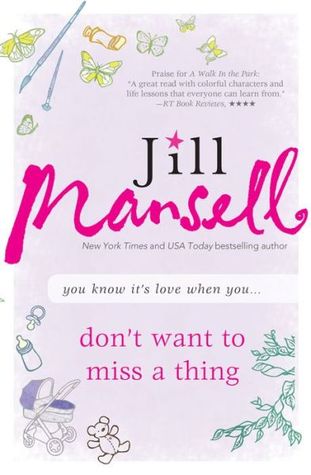
Don’t Want to Miss a Thing by Jill Mansell is another delightful story of love and life changes, and Mansell’s characters are always flawed human beings in search of better lives.  Dexter Yates takes the cake with his womanizing ways and charmed high-income life, but his sister has faith that he’s just lost and in need of a little guidance.  Soon, Laura will get her wish when Delphi, Dex’s niece, is born and the two become inseparable.  Molly Hayes, a cartoonist, lives in a Cotswolds village, and she’s happily teaching her classes at a local cafe and avoiding her latest ex-boyfriend, who just can’t seem to take no for an answer.  The village was the setting for a hit show Next to You, and her friend Frankie has the perfect marriage and family.

“Dex spent his life being laid-back and supremely confident; it was endearing to see him admit to a weakness.  Laura said encouragingly, ‘You can do it.  Just remember to support her head.  Like this.’

She demonstrated with her own hands and watched from the bed as Dex copied her.  ‘There you go, that’s it.'” (page 4)

Dex decides to buy the Gin Cottage in Molly’s village after she nearly drops a stinky fish on him and his current flavor of the month.  He has no one else to turn to when his sister suddenly dies and he has to make a major life decision in the blink of an eye, but the encouragement from a stranger seems to be all he needs.  Mansell excels at characterization and there is now doubt about her ability to write believable female leads, but in this novel, her lead is male, and she does an equally great job.  Dex is multifaceted and lacks the confidence he needs to fully commit to his decision, and Molly is strong and tries to keep her distance, even as she falls for Delphi.

“Well anyway, good luck to them.  Molly’s stomach tightened as she doodled a quick sketch of Amanda Carr with her geometrically perfect hair, pert nose, and crisp white shirt, always so calm and in control.  They were probably close in age, but Amanda was the proper grown-up.  She had a stethoscope.

With mixed emotions, Molly exaggerated the slightly pointed chin and narrow mouth for witchy effect.  Perhaps it was the grownupness that had attracted Dex’s interest.  Maybe this was what he wanted or needed from a partner in order to stop him endlessly sloping off in search of the next conquest.” (page 236)

Don’t Want to Miss a Thing by Jill Mansell is heartwarming, fun, and full of missed cues and lost chances, but its also about second chances and glances and what it means to be a family.  Mansell has hit another one out of the park, which is why she continues to be a favorite women’s fiction author of mine.  You’re always going on a fantastic ride with her and her characters.

About the Author:

Jill Mansell lives with her partner and children in Bristol, and writes full time. Actually that’s not true; she watches TV, eats fruit gums, admires the rugby players training in the sports field behind her house, and spends hours on the internet marvelling at how many other writers have blogs. Only when she’s completely run out of displacement activities does she write.

Other Mansell books reviewed:

The Best Loved Poems of Jacqueline Kennedy Onassis by Caroline Kennedy

Source: Purchased
Hardcover, 192 pages
I am an Amazon Affiliate

The Best-Loved Poems of Jacqueline Kennedy Onassis selected and introduced by Caroline Kennedy, her daughter, is a collection of classic poems that the former first lady adored for either their sense of adventure and whimsy or because she felt the passion of the love the poets expressed.  Caroline Kennedy does an excellent job of explaining why the poems meant so much to her mother and how they were selected and categorized, and it was great to see that she carried on the traditions started by her own mother with her own children.  In particular, Jacqueline Kennedy Onassis started a tradition of having her children read, write, and recite poems for each holiday and birthday, and the children were encouraged to write the poems down and illustrate them, and those memories were kept in a scrapbook.  Rather than making it seem like work, it became a competition among the children to find the longest poem, the best poem, and to outshine one another when they read them.  I can only imagine what pride that gave their mother.

First Fig by Edna St. Vincent Millay

My candle burns at both ends;
It will not last the night;
But ah, my foes, and oh, my friends—
It gives a lovely light!
Second Fig by Edna St. Vincent Millay

Safe upon the solid rock the ugly houses stand:
Come and see my shining palace built upon the sand!

As with any collection dealing with the Kennedy family, it is no wonder that this poetry collection begins with poems that pay homage to America, and also includes the poem read by Robert Frost at the Kennedy inauguration.  Kennedy said at the dedication of a library named for Robert Frost, “The men who create power make an indispensable contribution to the Nation’s greatness, … When power corrupts, poetry cleanses.  For art establishes the basic human truth which must serve as the touchstone of our judgment.” (page 5)  There are points in the collection that will require readers to have more patience as the older poems have more complex language and verses.

The Best-Loved Poems of Jacqueline Kennedy Onassis selected and introduced by Caroline Kennedy is a homage to poetry’s place in the United States, in politics, and in families, but it also provides a portrait of a multifaceted woman who became the darling of a nation and the face of sorrow when her husband was assassinated.  But like most women, she was more than her family, her famous husband, or her stint in the White House.  She was a passionate woman who loved the arts, particularly poetry, and wanted to pass the love of beauty onto her children.  Readers will come to see that she was successful in that endeavor at least and she inspires all mothers to do the same.

About Caroline Kennedy:

Caroline Bouvier Kennedy is an American author and attorney. She is the daughter and only surviving child of U.S. President John F. Kennedy and his wife, Jacqueline Bouvier Kennedy Onassis. An older sister, Arabella, died shortly after her birth in 1956. Brother John F. Kennedy, Jr. died in a plane crash in 1999. Another brother, Patrick Bouvier Kennedy died two days after his birth in 1963.

Book 22 for the Dive Into Poetry Reading Challenge 2014.

Stella Bain by Anita Shreve

Source: Gift from Anna
Hardcover, 272 pgs
On Amazon and on Kobo

Stella Bain by Anita Shreve, which was the War Through the Generations August read-a-long book, is set during WWI.  When the novel opens, a woman who has been wounded finds herself in a field hospital in Marne, France, in 1916.  She was found in the uniform of a British nurse’s aide, but has an American accent and cannot remember her own name.  As she grapples with her lost memory and identity, she plucks Stella Bain from her mind and begins to call herself such, even though she knows it may not be her real name.  Stella continues to work alongside the French women near the front and eventually volunteers as an ambulance driver.  Her jumbled mind takes a back seat to her duties at the front, but eventually, she feels drawn to England and the Admiralty, though she’s not sure what she’ll find there or if she will uncover anything about who she was.

“‘No.  Nothing is normal.  How can it be? I don’t yet know who I am.  I may discover, when I know my identity, that I’m not a good person at all.  I fear that I’m not.  I seek my identity, and yet I’m afraid of it.  But I’m more afraid of never knowing.'” (page 75)

Stella learns her true identity, and her true name is a near-anagram of the one she had chosen for herself.  When she learns of her identity and all that she frantically left behind in the United States, she must make passage home.  While Dr. Bridge and his wife, Lily, helped her to be calm and recover her name and identity, they are left behind in England without so much as a goodbye from her.  However, she never forgets their kindness and through letters, readers are given insight into her gratitude.  Shreve’s prose in this novel is distant.  While we see Stella’s point of view, readers are still distanced from her, which could be intentional given the absence of her memories and true identity.  In many ways, as the mystery unravels and readers learn more about the woman without a name, she becomes an everywoman for those women leaving during the early 1900s — caged in by marriage and family, but yet yearning for something outside of their home and legally allowed to own their own property.

Stella Bain by Anita Shreve is not just about a woman with shell shock or a lost memory, but a woman in an era where the modern world was just beginning to take shape.  A world in which women were fighting for independence from their families and husbands, to live lives as they wished to without seeking permission or approval.  Overall, while the ending could leave some readers wanting more, the novel would make for an excellent book club discussion.

About the Author:

Anita Shreve is an American writer. The daughter of an airline pilot and a homemaker, she graduated from Dedham High School in Massachusetts, attended Tufts University and began writing while working as a high school teacher in Reading, MA.

Interested in the read-a-long discussions at War Through the Generations, go here; though there will be spoilers.

17th book for 2014 European Reading Challenge(Set in France, England)


27th book for 2014 Historical Fiction Reading Challenge.


22nd book (WWI) for the 2014 War Challenge With a Twist.

Love, Accidentally by Sarah Pekkanen

Source: Kindle Freebie
e-short story, 40 pages
On Amazon and on Kobo

Love, Accidentally by Sarah Pekkanen follows her short-e-story All Is Bright (my review), telling the other side of the story from Ilsa Brown‘s point of view, rather than that of Elise Andrews.  Between these two short stories, the love triangle between these characters is real, but not as fleshed out as they would be in a full-length novel.

Ilsa Brown is a veterinarian and she meets Grif by chance in a park where his foster-dog, Fabio, has been injured.  They grow fond of each other, but Ilsa is cautious when her sister’s solid marriage loses its footing.  It makes her wonder how much Grif regrets his past break-up with Elise.  Pekkanen is adept at navigating the fragile balance of male-female relationships, especially when a break-up has recently occurred and one of the pair is still healing.  Ilsa is a strong woman, but she also realizes that the past must be embraced in order for the future to be clear.

“To hide her confusion, she did what came naturally: She reached out with her strong, thin fingers–the two crescent-shaped scars on the back of her right hand gleaming pale and smooth–and began to examine the little mixed-breed dog.”

Both new to Los Angeles, Grif and Ilsa hit it off over their love of animals and pizza, and their relationship moves at a fast pace.  But Ilsa is never more aware of taking things one step at a time as when she talks with her sister, Corrine, about him or when her sister talks about her marriage.  Pekkanen’s prose is simple and captivating in building up the romance in a short amount of time, but it’s her characters that will keep readers engaged because they are not two-dimensional.  Love, Accidentally by Sarah Pekkanen is about how love can hit at the most unexpected times and how it needs to be nurtured and understood in order to flourish.  Readers may want more from these characters, and perhaps the author will weave them into a full-length novel.

About the Author:

Sarah is the mother of three boys, which explains why she wrote part of her novel at Chuck E. Cheese. Seriously. Sarah penned her first book, Miscellaneous Tales and Poems, at the age of 10. When publishers failed to jump upon this literary masterpiece (hey, all the poems rhymed!) Sarah followed up by sending them a sternly-worded letter on Raggedy Ann stationery. Sarah still has that letter, and carries it to New York every time she has meetings with her publisher, as a reminder that dreams do come true. At least some dreams – Brad Pitt has yet to show up on her doorstep wearing nothing but a toolbelt and asking if she needs anything fixed. So maybe it’s only G-rated dreams that come true. Please visit her Website.

Vietnam: The Real War with introduction by Pete Hamill

Source: Gift
Hardcover, 304 pages
I am an Amazon Affiliate

Vietnam: The Real War with introduction by Pete Hamill is a coffee table book that is heavy with photographic evidence of war, the burdens soldiers and civilians carry from those conflicts, and the moral ambiguity soldiers find themselves mired in when faced with unexpected death.  There are images in this collected visual and textual history that will haunt readers for years to come, but the story told in these pages through the eye-witness accounts of journalists who thrust themselves in combat alongside soldiers should make the harsh realities of war even more frightening for those of us who merely read history and have not lived it as a pawn in a larger strategic game of politics and nationalism.

“Most of the experienced correspondents in Saigon doubted that many Viet Cong hidden in their jungle spider holes were debating the Marxist theory of surplus value.  Nationalism was a much more powerful motivator.  They definitely wanted to get the foreigners the hell out of their country.”  (page 21)

Even with all that is known about the war and the inflated body counts made by the U.S. military during the war, there are still some great unknowns and even some smaller more poignant ones for the families of journalists and soldiers lost in Vietnam.  For instance, did the January 1952 bombings in Saigon really happen because of the Viet Minh, the predecessor to the Viet Cong, or was it U.S. intelligence agents?  And what really happened to Sean Flynn, a freelance photojournalist and son of the actor Errol Flynn, in the early 1970s — was he killed in action or captured?  Lest readers think that photojournalists and reporters were kept back at the barracks or the camps, this book sheds light on just how dedicated these journalists were and how close to the action they had been — some of them taking photos only to drop their cameras and help civilians, soldiers, or become wounded themselves.

There are, of course, the most famous images from the Vietnam war from the Associated Press, including the Buddhist Monk who set himself on fire in the streets, the young girl running naked after Napalm was dropped on her and other civilians by the U.S. military, or the shooting of an unarmed Viet Cong after capture in the Saigon street.  But there are other photos that show the beauty of Vietnam, including an aerial view of the newly plowed rice paddies and the pristine beaches, as well as the most mundane activities — watching a soldier shave while battle surrounds him or men on their way to bathe in towels while still carrying their weapons.  Sad photos stretch across these pages from the unknown soldier who looks too young to be in battle, wearing a helmet with the phrase “War Is Hell” written across it or the woman who pleads to be evacuated with her wounded husband, but is left behind.

Vietnam: The Real War is heavy in subject and content. It should give readers pause. The text accompanying the photos and the background on the war are to the point and provide enough detail without getting bogged down too heavily in the politics or the perspectives floating around in hindsight. An excellent starter for those looking to learn more about the war.

About the Author:

The Associated Press won an unprecedented six Pulitzer Prizes for its coverage of the Vietnam War. To create this book, the agency selected 300 photographs from the thousands filed during the conflict.

Pete Hamill is an American journalist, novelist, essayist, editor, and educator. The recipient of numerous awards, Hamill is currently a Distinguished Writer in Residence at the Arthur L. Carter Journalism Institute at New York University.

19th book (Vietnam War) for the 2014 War Challenge With a Twist.


44th book for 2014 New Author Challenge.

Diving Into the Wreck by Adrienne Rich

Source: Purchased
Paperback, 72 pages
I’m an Amazon Affiliate

Diving Into the Wreck by Adrienne Rich rocks readers with each wave of verse, undulating in the depths of darkness to rise up into the air gasping for breath.  Rich explores human nature, relationships between lovers, sisters, and more, but some of the most visceral poems are about self-reflection and even self-repair.  Beyond the verse and the poet’s exploration of self and humanity, these poems force readers into their own self-examinations, looking at their pasts, the current relationships, and where they wish to be in the future.  The hardest part about these kinds of poems is the internal digging that readers must do.

From "After Twenty Years" (page 13)

It is strange to be so many women,
eating and drinking at the same table,
those who bathed their children in the same basin
who kept their secrets from each other
walked the floors of their lives in separate rooms

How many different selves do we each have? If you’re a mother, there could be the professional self, the mother, and the individual without all the responsibilities and obligations, but Rich explores what all of those selves mean overall and that we must grab on to possibility, learning not to limit ourselves by adopting those labels.  In “When We Dead Awaken,” she explores the toll that the world can take on us, branding us with memories — both good and bad — but also how these experiences inform and shape us.  We have a duty to look out at our world, take in what we enjoy and reject what we do not — strive not only to change ourselves, but also our environment, which she achieves with phenomenal imagery of scarred landscapes by mining and more.

Diving Into the Wreck by Adrienne Rich works on several planes of existence at once — the surface self-examination of the poet, then of the reader, but more so of humanity and its impact on the environment and each individual.  At times, these poems will feel like drifting on the current, and at others, readers’ ships will be overrun with waves as Rich bombards them with images and twists in her verse.  There is a distinctly feminist and political bent to some of these poems, particularly those focused on the Vietnam War.  A phenomenal collection worth discussing with book clubs, but also something for quieter reflection.

About the Author:

Poet and essayist Adrienne Rich was one of America’s foremost public intellectuals. Widely read and hugely influential, Rich’s career spanned seven decades and has hewed closely to the story of post-war American poetry itself. Her earliest work, including A Change of World (1951) which won the prestigious Yale Younger Poets Award, was formally exact and decorous, while her work of the late 1960s and 70s became increasingly radical in both its free-verse form and feminist and political content.

Book 16 for the Dive Into Poetry Reading Challenge 2014.


29th book for 2014 New Author Challenge.

Rose by Li-Young Lee

Source: Purchased
Paperback, 71 pages
I am an Amazon Affiliate

Rose by Li-Young Lee is a collection of poems filled with esteem and reverence for a father who is not fallible, but who is unattainable because of the myth a son has created about him.  Like roses, fathers can be beautiful and yet dangerous creatures, prickly to the touch and radiant.  On the face of Lee’s verse, it is simple, but looking more closely, readers will discern multiple levels of meaning.

From “The Weight of Sweetness” (page 20)

The good boy hugs a bag of peaches
his father has entrusted
to him.
Now he follows
his father, who carries a bagful in each arm.
See the look on the boy’s face
as his father moves
faster and father ahead, while his own steps
flag, and his arms grow weak, as he labors
under the weight
of peaches.

Like in “The Weight of Sweetness,” the boy is beaming with joy that his father would entrust him with something as precious as a bag of peaches, like knowledge passed from one generation to another, only to have that precious gift become a burden and weigh down the child’s steps as he moves forward.  Although there are some poems laden with a heaviness, there are also moments of sweetness, like that in “The Gift”: (page 15)

Look how I shave her thumbnail down
so carefully she feels no pain.
Watch as I lift the splinter out.
I was seven when my father
took my hand like this,

Here it is clear that the child, who has become a man, continues to esteem his father, holding him high and praising any small gift bestowed upon him, even if it is the most mundane knowledge.  Many kids look up to their parents, and it is a wonder when kids become adults and still admire their parents — faults included — but Lee touches on the big question mark in all these relationships, the inability of us all to truly “know” our parents — to understand their motivations — so that we can learn to emulate the best parts of them.  Rose by Li-Young Lee is powerful, endearing, and filled with heartbreaking awe.

About the Poet:

Li-Young Lee is an American poet. He was born in Jakarta, Indonesia, to Chinese parents. His maternal grandfather was Yuan Shikai, China’s first Republican President, who attempted to make himself emperor.

28th book for 2014 New Author Challenge.


Book 15 for the Dive Into Poetry Reading Challenge 2014.

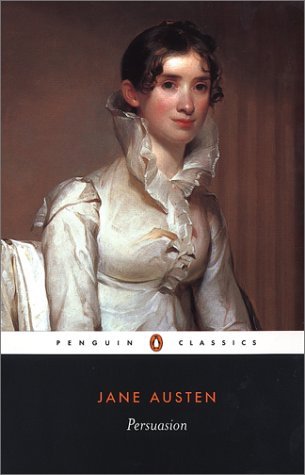
Persuasion by Jane Austen

Source: Purchased
Paperback, 236 pages
I am an Amazon Affiliate

Persuasion by Jane Austen (on Kobo) is her final, full manuscript, and it is one of the most mature of her works. Anne Elliot is the heroine of this novel, but often in the beginning of the novel she is in the background as an observer, as she is talked about or looked over by even her own father and older sister. She is 27, unmarried, and by all appearances, a wallflower, who loves to read. Through the influence of Lady Russell, a friend of her deceased mother, Anne broke off an engagement with Frederick Wentworth because the match was imprudent as he was not yet established in a career and was not of the same social standing as the Elliots. Lead by her friendship with Lady Russell and a sense of duty to her family, Anne broke the engagement and suffered for more than eight years, though she did have other prospects. Austen seems to remind us that when love is true and deep, it can cut us just as deeply when things end poorly, but it also can continue to live inside of us, even when all hope is lost.

“A few years before, Anne Elliot had been a very pretty girl, but her bloom had vanished early; and as even in its height, her father had found little to admire in her, (so totally different were her delicate features and mild dark eyes from his own); there could be nothing in them now that she was faded and thin, to excite his esteem.”  (page 7)

The contrasts set forth by Austen in this novel between the Musgroves and the Elliots is almost as wide as the Grand Canyon, and yet, Anne finds herself easily swept into either family — adaptable to any situation — but she seems to feel the most comfort when surrounded by the jubilant Musgroves.  Her adventures with her younger sister, Mary, and the Musgroves bring Anne a stroke of not only luck but happiness when she is reunited, if only in proximity, to Captain Wentworth.  Although she spends a great deal of time making excuses to be absent from gatherings where she knows he will be present, she eventually has little choice but to be in his company, finding that it is not as horrible as she imagined.

“Doubtless it was so; and she could take no revenge, for he was not altered, or not for the worse.  She had already acknowledged it to herself, and she could not think differently, let him think of her as he would.” (page 57)

Austen’s tale of a second chance at love is more about the anxiety that can plague new love and acquaintances, but also the reunited lovers who misunderstood one another’s motivations in their youth.  There are missteps to be sure, as Wentworth unwittingly finds himself engaged to another without explicitly making his intention to be so known and Anne is led to believe that Mr. Elliot has his eye set on her.  These characters are more mature in their motivations, while there are still some who are a bit ridiculous — from her father’s obsession with status and how handsome he still is to Mary’s constant complaining and hypocritical behavior — most of the characters are mature enough to know their own desires and to seize opportunities when they are presented.  Persuasion by Jane Austen is a fine novel, less about Anne’s initial persuasion away from Wentworth and more of her persuading herself that he still loves her and that hope lives.

About the Author:

Jane Austen was an English novelist whose works of romantic fiction, set among the landed gentry, earned her a place as one of the most widely read writers in English literature.

9th book for 2014 European Reading Challenge(Set in England)


14th book for 2014 Historical Fiction Reading Challenge.

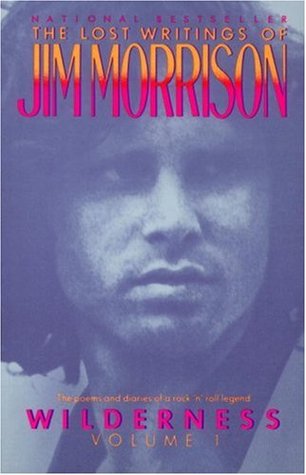
Wilderness: The Lost Writings of Jim Morrison Volume 1

Source: Purchased
Paperback, 214 pages
I am an Amazon Affiliate

Wilderness: The Lost Writings of Jim Morrison Volume 1 is a collection of poems, scribbled notes, photos, and a self-interview from Jim Morrison, lead singer of The Doors.  Like he music produced by Morrison and his band mates, his poetry has a hallucinatory quality.  Foremost a poet who unexpectedly found himself as a lead singer, lyrics of The Doors are in these poems, or vice versa depending on which he wrote first.  Fans of the band will enjoy looking at Los Angeles through Morrison’s eyes in these poems, with several referring to the city as LAmerica.  The seedy sides of L.A. are not glossed over, nor are his nomadic days with his family.  While much of his poetry is psychedelic in nature, dark, and offensive at times about carnal desires, there also is a reverence paid to the military, particularly military veterans, which could be influenced by the fact that his father was a military veteran.  However, like most artists, when compared to one another, the poems often contradict one another, as if the poet is working out some internal struggle of ideas.

“An interview also gives you the chance to try and eliminate all of those space fillers … you should try to be explicit, accurate, to the point … no bullshit.  The interview form has antecedents in the confession box, debating and cross-examination.  Once you say something, you can’t really retract it.  It’s too late.  It’s a very existential moment.” (page 1 — Self-Interview)

There are moments where the poems are lucid and easy to follow, but there are other times when the poems are confusing and make little sense to the reader without some reference point in the literature (i.e. William Blake or Nietzsche) or other knowledge Morrison picked up in his reading and living.  Despite the notes in the back that suggest Morrison often wrote many drafts of his poems (though the editors had a problem with chronology of those unnumbered and undated drafts), many of these poems feel unfinished and unpolished.

Selections from a few untitled poems:

"Men who go out on ships
To escape sin & the mire of cities
watch the placenta of evening stars
from the deck, on their backs
& cross the equator
& perform rituals to exhume the dead" (page 25)

LAmerica

"Androgynous, liquid, happy
Heavy
Facile & vapid
Weighted w/words
Mortgaged soul
Wandering preachers, & Delta Tramps" (page 87)

"Airport.
Messenger in the form of a soldier.
Green wool. He stood there,
off the plane.
A new truth, too horrible to bear.
There was no record of it
anywhere in the ancient signs
or symbols." (page 89)

"Actors must make us think
they're real
Our friends must not
make us think we're acting

They are, though, in slow
Time" (page 117)

As I Look Back

As I look back
over my life
I am struck by post
cards
Ruined Snap shots
faded posters
Of a time, I can't recall (page 201)

Wilderness: The Lost Writings of Jim Morrison Volume 1 is an existential journey of a poet, artist, and musician.  Fans of the band will love this collection, those that want an experience and look at the 1970s in Los Angeles will also love this collection.  Those looking for poetry that wows or connects with them may find it harder to connect with, especially since the poetry is a bit cryptic in purpose.

About the Poet:

Jim Morrison was an American singer-songwriter and poet, best remembered as the lead singer of Los Angeles rock band The Doors.

Book 14 for the Dive Into Poetry Reading Challenge 2014.


22nd book for 2014 New Author Challenge.