Quantcast

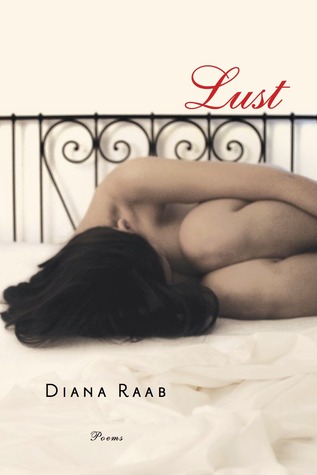
Lust by Diana Raab, Read by Kate Udall

tlc tour host

Source: TLC Book Tours and Diana Raab
Audio, 1hr+;
Paperback, 104 pages
I am an Amazon Affiliate

Lust by Diana Raab, read by Kate Udall, is uninhibited, sensuous, and consumed with physical and emotional pleasure.  The poems, as read by Udall, are impassioned and shocking at times, as Udall breathes life into each stanza and word, painting a titillating scene with each image and story.  The poems explore not only the primal lust of the physical body, but the desire we have to feel and be loved, even as we age.  There is an intimacy that the narrator hopes will open readers up to share their own most secretive selves and desires with their own partners.  There are selves inside that we rarely show to the world, and in the lovemaking that we have with our partners, we can abandon the outer shells to regain a connection with our true selves and that of our partners.

Imagine all of the nerve endings and hair follicles coming alive, that is what this collection is — electrified narrative poems.  Udall’s voice is hypnotic, drawing listeners into the stories and letters Raab crafts with seductive language and imagery.  There are marriages kept alive with passion, there are adulterous affairs that are “burps” disrupting the fake smiles on our faces, and there are one-night encounters.

And even in these passionate moments, there is the acknowledgement that these encounters are temporary and fleeting, even among lovers joined in marriage and commitment.  But there is more than just passion here, there is sorrow, regret, confusion, addiction, fantasy, and love.  Raab’s poems are passionate and temporal, but striving to transcend reality and reach an out of body experience where appearances do not matter.

Lust by Diana Raab, read by Kate Udall, is stunning and memorable on more than one level.  Lovers and married couples should consider reading these poems to one another, so that perhaps they can deepen their own desires for one another, their own passions, and reach a new kind of ecstasy.  Lie upon the bed and take turns reading these verses and passions are likely to flare.

***Handle with care, as the language here is very sexual in nature.***
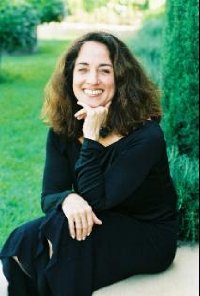
About the Poet:

Diana Raab is an award-winning poet, memoirist, and believer in the healing power of the written word. She began crafting poems at the age of ten when her mother gave her her first Khalil Gibran journal to help her cope with her grandmother and caretaker’s suicide. A few years later she discovered the journals of diarist Anaïs Nin and learned that, like Raab, Nin began journaling as a result of loss (the loss of her father). Much of Raab’s poetry has been inspired by Anaïs Nin’s life and works.

She is the author of four poetry collections, My Muse Undresses Me (2007); Dear Ans: My Life in Poems for You (2008); The Guilt Gene (2009); and Listening to Africa (2011).

Her poetry and prose have appeared in numerous journals and anthologies including Rattle, Boiler Room Journal, Rosebud, Litchfield Review, Tonopah Review, South Florida Arts Journal, Prairie Wolf Press, The Citron Review, Writers’ Journal, Common Ground Review, A Café in Space, The Toronto Quarterly, Snail Mail Review, New Mirage Journal, and Jet Fuel Review.

She is editor of two anthologies, Writers and Their Notebooks (2010) and Writers on the Edge (2012), co-edited with James Brown. Both these collections have submissions from poets and prose writers.

Diana has two memoirs, Regina’s Closet: Finding My Grandmother’s Secret Journal (winner of the 2009 Mom’s Choice Award for Adult Nonfiction and the National Indie Excellence Award for Memoir), and Healing With Words: A Writer’s Cancer Journey (winner of the 2011 Mom’s Choice Award for Adult Nonfiction).

She is a regular blogger for The Huffington Post and writes a monthly column for the Santa Barbara Sentinel, “The Mindful Word.” She lives in Southern California with her husband, and has three grown children. She is currently working on her doctorate in psychology and is researching the healing power of writing and creativity.

Other Books Reviewed:

Book 23 for the Dive Into Poetry Reading Challenge 2014.

My Mother’s Secret by J.L. Witterick and Giveaway

Source: Penguin Random House
Paperback, 180 pages
On Amazon and on Kobo

My Mother’s Secret by J.L. Witterick is inspired by the real-life story of Franciszka and Helena Halamajowa who in Nazi-occupied Poland were able to save several families and a German soldier from being killed by the Nazis.  Told in understated, spare prose, the novel travels through the perspectives of Helena who grows up in Poland with her mother and brother without a father; Bronek, the head of one of the Jewish families; Mikolaj, the son of a premiere Jewish doctor before the Nazi occupation; and Vilheim, the German soldier who is vegetarian and does not want to kill.

“In all of us, there is a child that exists while we have our parents.

With my mother gone, I feel a sadness for the loss of the child within myself.” (page 68)

Helena’s perspective is the most developed of the four, in that readers garner a deeper understanding of her family and the losses they endure. Despite those hardships, she admires her mother’s commitment to doing the right thing. Her relationship with her brother is heart-warming from the beginning as they struggle to keep their stomachs full and steer clear of their father’s rage. Her mother’s secret is not so much that she begins hiding families from the Nazis but that she has the strength and conviction to do so no matter how much it could cost her personally. And while Helena sees herself differently, she carries with her that same strength, especially when her way of life changes drastically under Nazi occupation.

My Mother’s Secret by J.L. Witterick covers the range of reasons people were in hiding during WWII, and examines the perseverance of those hiding them. But it also takes a look at how keeping up appearances and going unnoticed can be the key to survival, as is showing love to fellow man with no expectation of getting anything in return.

About the Author:

Originally from Taiwan, J.L. Witterick has been living in Canada since her family’s arrival in 1968. She attended the University of Western Ontario, graduating from the Richard Ivey School of Business. My Mother’s Secret is her debut novel. It is a bestseller in Canada and has been published in several countries around the world. Witterick lives in Toronto with her husband and son.

Giveaway:

U.S./Canada residents 18+ can leave a comment below to be entered; list a WWII book that you’ve loved. Deadline to enter is Sept. 22, 2014, 11:59 PM EST.

58th book for 2014 New Author Reading Challenge.


18th book for 2014 European Reading Challenge; (Set in Germany/Poland)


29th book for 2014 Historical Fiction Reading Challenge.


23rd book (WWII) for the 2014 War Challenge With a Twist.

I’m Joining the R.eaders I.mbibing P.eril IX Challenge

Stainless Steel Droppings hosts the RIP Challenge every autumn, and I’m finally joining.

Here are the details:

Sept. 1 is right around the corner. It is time to begin.

Mystery.
Suspense.
Thriller.
Dark Fantasy.
Gothic.
Horror.
Supernatural.

Or anything sufficiently moody that shares a kinship with the above.

That is what embodies the stories, written and visual, that we celebrate with the R.eaders I.mbibing P.eril event.

As time has wound on I’ve honed this event down to two simple rules:

1. Have fun reading (and watching).
2. Share that fun with others.

R.I.P. IX officially runs from September 1st through October 31st.

There are several levels to join in, and I’m picking:


Peril the Second:

Read two books of any length that you believe fit within the R.I.P. categories:

  • Mystery.
  • Suspense.
  • Thriller.
  • Dark Fantasy.
  • Gothic.
  • Horror.
  • Supernatural.

I will be reading Blackfin Sky by Kat Ellis and Feed by Mira Grant.

Are you joining?

The Rat by Elise Gravel

Source: Tundra Books
Hardcover, 32 pages
On Amazon and on Kobo

The Rat (Disgusting Creatures) by Elise Gravel packs a lot of information in its pages and includes colorful images and punchy commentary.  My daughter enjoys looking at the fun pictures of the Rat, and some of the large words are easier for her to notice, which makes a teachable moment for her to learn new words.  While some of the information may be too much for kids in one sitting, after a few reads, kids will learn more an more about rats.  Other books in the series focus on flies, head lice, slugs, spiders, and worms.  Most kids are fascinated with bugs and creepy crawly things, probably because they are smaller and often within their field of view and touch, unlike birds and other animals.

Gravel’s images are fun, and it allows young readers to learn about the rat, his habits, and his behavior, as well as how important rats are to human research.  When the rat picks her nose with her tail, kids will laugh or say its disgusting.  It’s just one example of how these books can entertain readers as well as help them learn.  The Rat (Disgusting Creatures) by Elise Gravel is fun and informative, allowing young readers to learn new words and spellings, while also having fun with life’s more creepy creatures.

About the Author/Illustrator:

Elise Gravel is an award-winning author/illustrator from Quebec. She was the winner of the 2013 Governor General’s Award for Children’s Illustration in French, and is well-known in Quebec for her original, wacky picture books. She has published a number of books with US publisher Blue Apple and is currently working on a graphic novel for Roaring Brook Press. Having completed her studies in graphic design, Elise found herself quickly swept up into the glamorous world of illustration. Her old design habits drive her to work a little text here and there into her drawings and she loves to handle the design of her assignments from start to finish. She is inspired by social causes and is likes projects that can handle a good dose of eccentricity.

57th book for 2014 New Author Reading Challenge.

The Best Loved Poems of Jacqueline Kennedy Onassis by Caroline Kennedy

Source: Purchased
Hardcover, 192 pages
I am an Amazon Affiliate

The Best-Loved Poems of Jacqueline Kennedy Onassis selected and introduced by Caroline Kennedy, her daughter, is a collection of classic poems that the former first lady adored for either their sense of adventure and whimsy or because she felt the passion of the love the poets expressed.  Caroline Kennedy does an excellent job of explaining why the poems meant so much to her mother and how they were selected and categorized, and it was great to see that she carried on the traditions started by her own mother with her own children.  In particular, Jacqueline Kennedy Onassis started a tradition of having her children read, write, and recite poems for each holiday and birthday, and the children were encouraged to write the poems down and illustrate them, and those memories were kept in a scrapbook.  Rather than making it seem like work, it became a competition among the children to find the longest poem, the best poem, and to outshine one another when they read them.  I can only imagine what pride that gave their mother.

First Fig by Edna St. Vincent Millay

My candle burns at both ends;
It will not last the night;
But ah, my foes, and oh, my friends—
It gives a lovely light!
Second Fig by Edna St. Vincent Millay

Safe upon the solid rock the ugly houses stand:
Come and see my shining palace built upon the sand!

As with any collection dealing with the Kennedy family, it is no wonder that this poetry collection begins with poems that pay homage to America, and also includes the poem read by Robert Frost at the Kennedy inauguration.  Kennedy said at the dedication of a library named for Robert Frost, “The men who create power make an indispensable contribution to the Nation’s greatness, … When power corrupts, poetry cleanses.  For art establishes the basic human truth which must serve as the touchstone of our judgment.” (page 5)  There are points in the collection that will require readers to have more patience as the older poems have more complex language and verses.

The Best-Loved Poems of Jacqueline Kennedy Onassis selected and introduced by Caroline Kennedy is a homage to poetry’s place in the United States, in politics, and in families, but it also provides a portrait of a multifaceted woman who became the darling of a nation and the face of sorrow when her husband was assassinated.  But like most women, she was more than her family, her famous husband, or her stint in the White House.  She was a passionate woman who loved the arts, particularly poetry, and wanted to pass the love of beauty onto her children.  Readers will come to see that she was successful in that endeavor at least and she inspires all mothers to do the same.

About Caroline Kennedy:

Caroline Bouvier Kennedy is an American author and attorney. She is the daughter and only surviving child of U.S. President John F. Kennedy and his wife, Jacqueline Bouvier Kennedy Onassis. An older sister, Arabella, died shortly after her birth in 1956. Brother John F. Kennedy, Jr. died in a plane crash in 1999. Another brother, Patrick Bouvier Kennedy died two days after his birth in 1963.

Book 22 for the Dive Into Poetry Reading Challenge 2014.

The Vintner’s Daughter by Kristen Harnisch

Source: Caitlin Hamilton Marketing and She Writes Press
Paperback, 368 pgs
On Amazon and on Kobo

The Vintner’s Daughter by Kristen Harnisch is set in Loire, France, in 1895 on the Thibault vineyards, as a family struggles to revive their grapes after a blight rocked the industry.  Sara has dreams of becoming a vintner like her father, and he has cultivated those dreams, allowing her to work the vines and learn all that she can from Jacques, the foreman.  She keeps a seasonal notebook about each harvest and process for making the wine, but when a blight threatens their harvest once again and the set price for barrels offered by the Lemieux family is too low to pay the vineyard’s debts, her father makes a fateful decision that changes the course of the entire family’s lives.  Harnisch clearly knows wine, vineyards, and the trade itself; her research is in depth and adds layers to her narrative.  Her characters are dynamic and engaging, and readers will be drawn into the Thibault family and cheer for them to triumph over the rival Lemieux family.

“Upon Jacques’s return, Sara wished him adieu and lifted her skirts to trudge through the mud between the vines toward the other end of the field.  There she hunched over to examine one of the vines more closely.  She ran her fingers over the leaves’ withering edges, fearing the worst.  She took her knife from her belt and split the vine’s bark.  With the tip of her blade, she scraped out hundreds of translucent eggs that lined the interior of the vine.  Some had already hatched, producing the dreaded pale yellow insects that were now sucking the vine dry.”  (page 8 ARC)

Fleeing France with her sister, Lydia (who resembles the Lydia of Pride & Prejudice in some ways), Sara finds herself adrift in New York City and reliant on the kindness of a convent and the church.  In their highly regimented life, she learns of the lush land in California and its vineyards, and she finally begins to dream of a way in which she can reclaim her family’s lost fortune.  While she’s making plans, she’s swept up in a different life, assisting a midwife.  As she learns to hold her ground in this more modern world in which women are making their own way, Sara is even more confident that she can right the wrongs done to her family.  When tragedy strikes again, Sara is forced to remain strong and to do what she thinks is best as she runs from the specter of the guillotine.

The Vintner’s Daughter by Kristen Harnisch is a fascinating look at the business of vineyards right around the time of prohibition in the United States and during the suffrage movement for women.  Sara comes into her own in the New World, and she learns what it is she truly has lost when she is pushed back to France by her boss in California.  Harnisch has crafted a emotional journey of a young woman coming into her own in the modern world and learning to forgive and be forgiven.  Stunning debut.

About the Author:

Kristen Harnisch’s ancestors emigrated from Normandy, France, to Canada in the 1600s. She is a descendant of Louis Hebert, who came to New France from Paris with Samuel de Champlain and is considered the first Canadian apothecary. She has a degree in economics from Villanova University and now lives in Connecticut. The Vintner’s Daughter, her debut novel, is the first in a series about the changing world of vineyard life at the turn of the century.

29th book for 2014 Historical Fiction Reading Challenge.


56th book for 2014 New Author Reading Challenge.

A Hero for the People by Arthur Powers

Source: Author and Book Junkie Promotions
Paperback, 190 pages
I am an Amazon Affiliate

A Hero for the People by Arthur Powers is a quiet collection of short stories about the Brazilian backlands that examine faith and perseverance among people who were downtrodden and beaten down by their richer brethren off and on between 1964 and the early 1990s.  In this crucible, men and women are either made stronger or they are broken by the land, the people, and the government.  Powers uses sparse language and thrusts the reader in the middle of situations, but there is enough background given so that the reader understand each character’s position in the towns they visit — from the Brother sent to help an older priest live out his final years before the parish is closed and finds himself becoming a people’s hero to the young wife and mother who dreams of escaping her life as a wife for a passionate love affair.

“She turned and walked inside.  She would miss this house.  The house where she had grown up had been made of wattle — mud and sticks — plastered over in parts where the plaster hadn’t worn through.  Its floor had been dirt, pressed hard enough so that you could sweep it almost clean, but turning muddy when rain leaked through the old tile roof.  In this house, when water leaked through the tiles in the hard rains, it could be swept off the floor.  And here there was a pump in the kitchen; she didn’t have to walk to the river for water.”  (from “The Moving”, page 96)

While Powers begins his collection with a note about the political and social environment during the time in which these stories are set; it is hardly necessary because it is clear that those factors influenced the lives of his characters.  At the heart of these stories are families trying to make their way in the world and keep what little they have, but there are the missionaries who come from the outside world to help them and there are the wealthy landowners and their gangs who try to take it all.  Powers’ style is reminiscent of the stories told by the fire before televisions were prevalent in homes, and these stories will transport readers outside of their own lives into the lives of these Brazilian farmers and ranchers.  As they struggle, readers will feel the tension grown, and when they fall, they will cheer them onward.

A Hero for the People by Arthur Powers is a powerful look at a less affluent society that is no less worthy of prosperity and happiness than the next.  Hearts will break, families will falter, but in the end faith and love hold them together through the toughest parts of their lives.  Powers has crafted harrowing stories that dig at the root of all human societies when they are beginning anew.

About the Author:

Arthur Powers went to Brazil in 1969 and lived most his adult life there. From 1985 to 1997, he and his wife served with the Franciscan Friars in the Amazon, doing pastoral work and organizing subsistence farmers and rural workers’ unions in a region of violent land conflicts. The Powers currently live in Raleigh North Carolina.

Arthur received a Fellowship in Fiction from the Massachusetts Artists Foundation, three annual awards for short fiction from the Catholic Press Association, and 2nd place in the 2008 Tom Howard Fiction Contest. His poetry, fiction, and essays have appeared in many magazines & anthologies. He is the author of A Hero For The People: Stories From The Brazilian Backlands (Press 53, 2013) and The Book of Jotham (Tuscany Press, 2013).

Website | Facebook | Twitter | Goodreads

heroforpeople


55th book for 2014 New Author Reading Challenge.


28th book for 2014 Historical Fiction Reading Challenge.

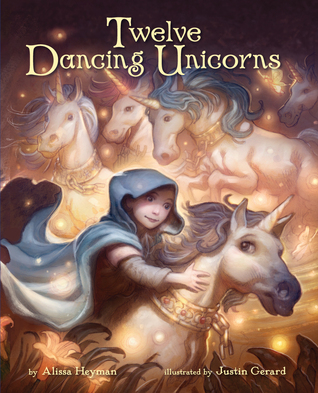
Twelve Dancing Unicorns by Alissa Heyman

Source: Sterling Children’s Books
Hardcover, 32 pages
I am an Amazon Affiliate

Twelve Dancing Unicorns by Alissa Heyman, illustrated by Justin Gerard, is gorgeously illustrated. Like paintings that leap off the page by some magical power, these unicorns will dance into the hearts and dreams of any little girl.  Heyman adapts her fairytale from Grimm’s “Twelve Dancing Princesses,” and here the little girl loves the unicorns so much that she is willing to help them in any way she can.  When the King says that he will grant any wish to the person who finds out how the chains are broken each night by the unicorns in his corral, she is determined to do just that.  While there are few obstacles in the girl’s way and the text can be in huge paragraphs for little kids, Heyman does a great job of showing the girl’s determination and love for the unicorns in a few pages.

The illustrations are fantastic; it’s like stepping into another world, but the unicorns look as if they could be real animals.  The book is clearly for older learning readers probably ages 6+, as some of the words will require assistance from parents and older readers and the paragraphs are longer than in other picture books.  While the story has little that’s new to offer and is not in the poetry-like prose my daughter enjoys most, the story will seem new to younger readers and engage them with its fantastic world popping off the pages.  Twelve Dancing Unicorns by Alissa Heyman, illustrated by Justin Gerard, is visually stunning and shows that young girls can not only solve problems but achieve their goals, no matter how overwhelming they may seem.

Follow the Twelve Dancing Unicorns blog tour tomorrow on Kindred Spirit Mommy.

About the Author:

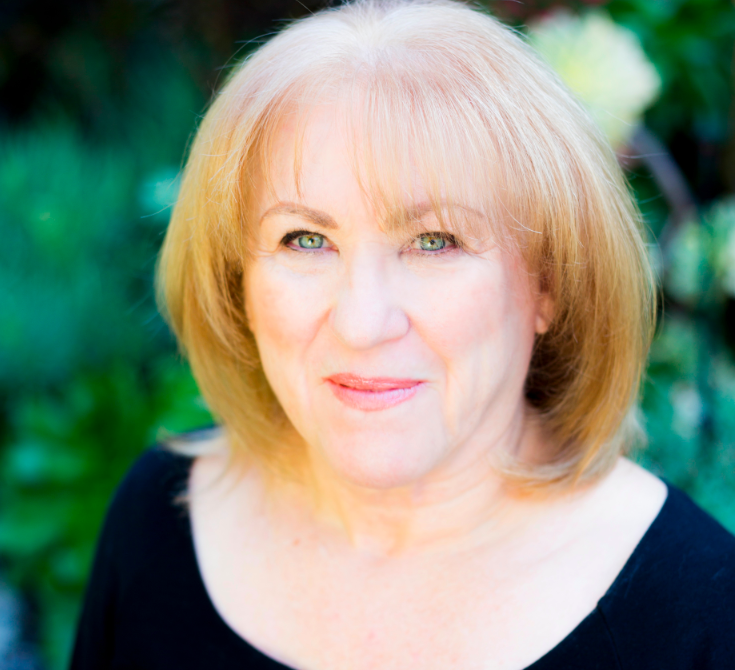
Alissa Heyman is a freelance writer who edited The Best Poems of the English Language (Mud Puddle Books). Her poems have appeared in the St. Petersburg Review, Lyric, and Quarto, and she has adapted The Big Book of… series for Sterling Publishing, which includes The Big Book of Horror, The Big Book of Fairies, and The Big Book of Pirates. Alissa lives in New York City where she also curates the Perfect Sense poetry reading series at the Cornelia Street Café.

About the Illustrator:

Justin Gerard has done illustration for DreamWorks, Warner Brothers, Disney, HarperCollins, Penguin, Little, Brown, and others. The Society of Illustrators featured his illustration “Beowulf and Grendel” in the 50th Annual of American Illustration, from his IPPY Award-winning book, Beowulf, Book I: Grendel the Ghastly. Justin lives in Greenville, SC.

54th book for 2014 New Author Reading Challenge.

Stella Bain by Anita Shreve

Source: Gift from Anna
Hardcover, 272 pgs
On Amazon and on Kobo

Stella Bain by Anita Shreve, which was the War Through the Generations August read-a-long book, is set during WWI.  When the novel opens, a woman who has been wounded finds herself in a field hospital in Marne, France, in 1916.  She was found in the uniform of a British nurse’s aide, but has an American accent and cannot remember her own name.  As she grapples with her lost memory and identity, she plucks Stella Bain from her mind and begins to call herself such, even though she knows it may not be her real name.  Stella continues to work alongside the French women near the front and eventually volunteers as an ambulance driver.  Her jumbled mind takes a back seat to her duties at the front, but eventually, she feels drawn to England and the Admiralty, though she’s not sure what she’ll find there or if she will uncover anything about who she was.

“‘No.  Nothing is normal.  How can it be? I don’t yet know who I am.  I may discover, when I know my identity, that I’m not a good person at all.  I fear that I’m not.  I seek my identity, and yet I’m afraid of it.  But I’m more afraid of never knowing.'” (page 75)

Stella learns her true identity, and her true name is a near-anagram of the one she had chosen for herself.  When she learns of her identity and all that she frantically left behind in the United States, she must make passage home.  While Dr. Bridge and his wife, Lily, helped her to be calm and recover her name and identity, they are left behind in England without so much as a goodbye from her.  However, she never forgets their kindness and through letters, readers are given insight into her gratitude.  Shreve’s prose in this novel is distant.  While we see Stella’s point of view, readers are still distanced from her, which could be intentional given the absence of her memories and true identity.  In many ways, as the mystery unravels and readers learn more about the woman without a name, she becomes an everywoman for those women leaving during the early 1900s — caged in by marriage and family, but yet yearning for something outside of their home and legally allowed to own their own property.

Stella Bain by Anita Shreve is not just about a woman with shell shock or a lost memory, but a woman in an era where the modern world was just beginning to take shape.  A world in which women were fighting for independence from their families and husbands, to live lives as they wished to without seeking permission or approval.  Overall, while the ending could leave some readers wanting more, the novel would make for an excellent book club discussion.

About the Author:

Anita Shreve is an American writer. The daughter of an airline pilot and a homemaker, she graduated from Dedham High School in Massachusetts, attended Tufts University and began writing while working as a high school teacher in Reading, MA.

Interested in the read-a-long discussions at War Through the Generations, go here; though there will be spoilers.

17th book for 2014 European Reading Challenge(Set in France, England)


27th book for 2014 Historical Fiction Reading Challenge.


22nd book (WWI) for the 2014 War Challenge With a Twist.

Art from Dreams: My Jungian Journey in Collage, Assemblage, and Poetry by Susan Levin

Source: MBM Book Publicity and Susan Levin
Paperback, 48 pages
Purchase on Levin’s Website.

Art from Dreams: My Jungian Journey in Collage, Assemblage, and Poetry by Susan Levin combines poetry, collage, and assemblage into two parts — “My Jungian Dreams” and “Nocturnes” — but the poetry only appears in the first section to accompany the dream-inspired collages.  When it comes to Jungian dream interpretation, there are several archetypes — including the persona, the shadow, the animus, the divine child, the wise one, the great mother, and the trickster — and the archetypal events like birth, death, separation from one’s parents, marriage, and the union of opposites.  The poems are very lyrical in the first half, though almost as enigmatic as some of the images produced from Levin’s dreams.  The collage or assemblage pieces came first, but the poems were written later.  In the foreword, Shana Nys Dambrot said that Levin embraces the role of the unconscious mind as a creative force in her work, which is clear.

Alchemy (page 14)

Nobody sees us-
the Archeologist and me-
as we excavate the night
searching for beginnings,
unearthing symbols, images.
Everything is held to the fire
We get close to truth,
to what is known and unknown.
We awaken to re-imagine our lives

Think about those dreams you remember and how we try to make sense of them, looking for symbols and hidden meanings; we’re much like the archeologists digging in the dirt, looking at bones to re-create the past and create a history that can be understood. Levin uses the poems to enhance her collage, and in many ways, she reminds us that art merely imitates life. In her poem, “Picasso Dream” and the accompanying collage is clearly inspired by the artist and his work. In the second session, Levin is exploring the darker underbelly of her dreams. There is a darkness inside us all, it nibbles just below the surface.

Art from Dreams: My Jungian Journey in Collage, Assemblage, and Poetry by Susan Levin is an exploration in art and dreamscapes, as well as everything that makes us human. These images she’s created through collage, sculpture and found objects will make a deep impression and stay with readers long after they have closed the last page.

About the Artist:

Susan Levin is a multi-media artist. She works in landscapes, portraits, works on paper, collage, collage/assemblage, found object, and sculptural art. For the past 2 years, she has focused on dream imagery and expressing the connections she has had with Carl Jung’s theories on dream imagery and how art therapy can help individuals express their own subconscious thoughts.

Book 21 for the Dive Into Poetry Reading Challenge 2014.


53rd book for 2014 New Author Challenge.

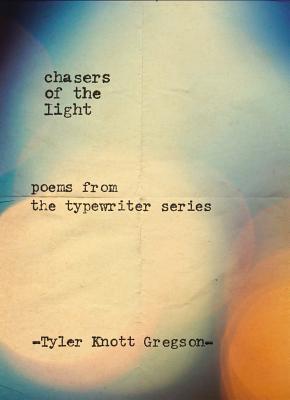
Chasers of the Light: Poems from the Typewriter Series by Tyler Knott Gregson

Source: Perigee/Penguin Random House
Hardcover, 144 pages
I am an Amazon Affiliate

Chasers of the Light: Poems from the Typewriter Series by Tyler Knott Gregson is a collection of poems written on a typewriter Gregson found in an antique store in Montana.  He wrote the first poem in this collection in the store on a page from a broken book he was buying for $2.  A chance find in a store turned into a mission to bring light to readers and viewers of photography alike.  In the introduction, he says, “In all I write and all I say, I am trying to chase the light that I cannot help but see around me.  This book, in the simplest of terms, is a map my wandering feet have taken in that pursuit.  It is simple words on random pieces of paper that snuck into my along the way.  There will always be light, and I will never stop chasing it.”

"The oars and the compass, the anchor and the wheel,
have long since abandoned me.
Can you hear what I've longed to tell you,
that I go where the waves wish to deliver me
and you, my love, are the tide."

Many of these poems are about love and love that is lost.  There are poems in which he asks to be haunted by his lost love and that he wishes to love every scrap of her that remains.  In a poem early in the collection, he compares himself to a ship without a rudder and the lover is compared to a hurricane.  In undulating rhythm, Gregson is a ship at sea carried away by waves — the waves of the tide, his lover.  It is an unnamed poem, like all of them, that is beautiful in its simplicity.  The love experienced in this poem is grand and overpowering.  Each of these poems are typed on scraps of paper, pieces of books, napkins, and receipts.   He also includes some gorgeous photographs, with accompanying poems.

In one gorgeous compilation piece, Gregson pairs a poem about being broken and healed with a photo of a dilapidated roof through which one shaft of bright light shines through.  Like many of the poems in this collection, they are beautiful in their simplicity.  He sheds light on the smallest of moments, like a flowering weed growing out of a bullet shell.  We carry our loves and losses inside each of us, and they become part of who we are.  What would we be without those past emotions and experiences.  Chasers of the Light: Poems from the Typewriter Series by Tyler Knott Gregson is gorgeous from cover to cover,

About the Poet:

Tyler Knott Gregson is a poet, author, professional photographer, and artist who lives in the mountains of Helena, Montana. When he is not writing, he operates his photography company, Treehouse Photography, with his talented partner, Sarah Linden.  Visit him on Twitter, Facebook, Instagram, and Pinterest.  Check out his Website.


Book 20 for the Dive Into Poetry Reading Challenge 2014.


52nd book for 2014 New Author Challenge.

The Last Kabbalist of Lisbon by Richard Zimler

Source: Public Library
Paperback, 318 pages
On Amazon and on Kobo

The Last Kabbalist of Lisbon by Richard Zimler set during the 1500s at the time of the Lisbon Massacre of April 1506, in which about 2,000 Jews were killed.  Zimler breathes life into this time period and the Jewish Kabbalah, a time in which Jews were in hiding and many were converted to New Christians (Marranos) in 1497 — some after fleeing Spain — to remain safe from persecution. Even their conversion is not enough to satisfy Old Christians as they run rampant through the city killing Jews, putting their heads on spikes, throwing them on pyres, and more.  King Manuel I, while more tolerant of the Jewish community, allowed the massacre to rage on, and eventually, 30 years later, the inquisition was established in Portugal, just as it had been in Spain.  Berekiah Zarco, a young manuscript illuminator, becomes caught up in the search for a killer, after he discovers his uncle, the keeper of forbidden Hebrew texts, has been murdered.

“We are all of us deep and wide enough to welcome a river of paradoxes and riddles into our souls.” (page 21)

Berekiah, also known as Pedro as a New Christian, worked with his uncle illuminating texts for others that were hiding from the Christians and trying to keep their Jewish faith alive, but he is unaware of how his uncle smuggled precious texts out of the city and into Turkey so as to keep them from being lost.  Zimler demonstrates through Zarco’s search for his uncle’s killer how the Jews were forced to wear a great many masks to hide their religion, but at the same time, these masks could be false ones and even the most trustworthy in the community could be hiding nefarious deeds.  The tale is told as Zarco unravels the mystery of his uncle’s death, and while he becomes absorbed in vengeance and the search for justice, his Muslim friend, Farid, who cannot speak except with his hands, steers him in the right direction and reminding him of compassion and empathy along the way.

“Yet the wall tiles and window eyelets, desks and chairs returned my gaze without the slightest quiver of motion.  The room was empty, seemed hollow, like the rib cage of an animal whose heart had suddenly ceased beating.”  (page 57)

With a turncoat in the Jewish community, Zarco narrows the field to a few suspects and sets about finding the truth, even as the Old Christians continue to rage, pillage, and kill Jews in their wake.  While the dialogue is a bit comical after a time, with Zarco accusing elders in the community of being murderers and them immediately denying it and him accepting their answers, in the context of the time period in which elders were to be believed, the conversations make sense.  Zarco’s life is in endanger at every turn as he seeks the killer, but he relies on his Kabbalist faith to see him through and finds a strength through his uncle’s teachings.

The Last Kabbalist of Lisbon by Richard Zimler provides a window into the early 1500s when Jews were being pushed out of their homes, and much of the situations during this time mirrors the reasons reiterated during the time of the Nazis — that the Jews were taking all of the jobs and the money away from those who were true Portuguese.  Christian versus New Christian and Jew, Kabbalah was all the Jews had to cling to as a way to survive persecution and continue flourishing.  It is a harrowing story of evil, death, and perseverance, but it is also about the ties we have to our faith and family, even after much of our family has passed on.

About the Author:

Richard Zimler was born in Roslyn Heights, a suburb of New York City, in 1956. After earning a bachelor’s degree in comparative religion from Duke University (1977) and a master’s degree in journalism from Stanford University (1982), he worked for eight years as a journalist, mainly in the San Francisco Bay area. In 1990, he moved to Porto, Portugal, and he has taught journalism for the last sixteen years, first at the College of Journalism and now at the University of Porto. Richard has both American and Portuguese nationality.

1st book for the 2014 Portuguese HF Challenge.


16th book for 2014 European Reading Challenge(Set in Portugal)


26th book for 2014 Historical Fiction Reading Challenge.


51st book for 2014 New Author Challenge.