Quantcast

War Babies by Frederick Busch

Source: Public library
Paperback, 114 pages
I am an Amazon Affiliate

War Babies by Frederick Busch is a novel about two adult children whose lives connect long after their fathers have died in the Korean War and not by accident.  A thirty-plus year-old attorney decides he’s established enough in his career to seek out the answers he wants about his father’s role in the Korean War and how it landed him in jail.  Peter Santore has struggled with the loss of his father, who is said to be a traitor in a Korean War POW camp, and he decides it is time to travel to England to get some answers.  He discovers through his research in the United States that his father may have played a role in the death of Hilary Pennels’ father in the POW camp.  Traveling to Salisbury, he debates how he will find this woman and introduce himself, but clearly he decides that he will use her to get the information he wants if he has to.  Along the way, he also runs into Mr. Fox, a survivor of the Korean War POW camp.

“I had two canvas bags and a wrinkled blazer, and the sure sense, as I left London, that I didn’t know what I would do if I found Miss Hilary Pennels, or whatever her married name might be.  How do you do.  My father committed treason in Korea at about the same time your father, terribly wounded, was saving the lives of his men and distinguishing himself in the eyes of history forever.  I just wondered if my father might have done anything to, er, kill yours?”  (page 6-7)

Busch’s third person narrative, which also changes to first and second person randomly, distances the reader from these characters in a way that makes the instant connection between Hilary and Peter tough to believe.  Moreover, how they interact with one another is by turns sympathetic and hurtful, perhaps more so by Hilary who seems manipulative.  While Peter struggles with his feelings for this woman and the “relationship” they’ve started, he also wants to close a chapter in his life that has to do with the Korean War and his father.  How does he navigate this fragile relationship to get the information he needs?

Mr. Fox is a damaged war veteran, but the horrors of the Korean War are never far from his mind, and how he lurks in the corners of this “conversation” between Hilary and Peter is downright creepy.  His hatred of Peter’s father is evident and understandable, but the projection of that hatred by Mr. Fox demonstrates just how broken and lost the veteran is.  He’s brutal in describing the camps, but he’s also brutal in how he approaches the tale and other people he interacts with.  Busch even describes his rotting breath and fetid teeth and gums, which can only signify his moral depravity.  Fox’s issues go beyond the PTSD, and Busch relays his story of the camps in just the way a veteran who is bitter would, and these are the strongest parts of the story.  Some readers may find connecting with these characters difficult because their motivations are hidden and how they interact really has no context.

“Mind you, I don’t know how easy it might be.  But you should make the effort.  You should prosper in the wake of your past, not live a cripple.  England’s full of cripples.  It’s the country of cripples.  You see them all over the towns, in braces and wheelchairs and with no arms, wheezing and spitting blood and falling over in pubs.”  (page 62)

War Babies by Frederick Busch is complex and deals with the after effects of war on the children of veterans, POWs, and traitors.  It is ultimately about the choice that these families and their individual members must make for themselves — they need to learn to accept the past that cannot be changed and to move forward.  Connections can help strengthen the will to move on from the past, but those connections also must be bred in honesty and mutual respect.

About the Author:

Frederick Busch was an American writer. Busch was a master of the short story and one of America’s most prolific writers of fiction long and short.

Interested in the War Through the Generations discussion, see part 1 and part 2.
13th book for 2014 European Reading Challenge(Set in England)


23rd book for 2014 Historical Fiction Reading Challenge.


16th book (Korean War) for the 2014 War Challenge With a Twist.


39th book for 2014 New Author Challenge.

Grand Central: Original Stories of Postwar Love and Reunion

Source: Penguin
Paperback, 368 pages
On Amazon and on Kobo

Grand Central: Original Stories of Postwar Love and Reunion is a collection of short stories by a number of great authors from Karen White to Sarah McCoy and Pam Jenoff in which the linchpin is Grand Central Station in New York City.  What makes this collection a solid five stars (a designation I never use in reviews) is the connections — small as they may be — between the stories and characters.  You’ll find one character from a story early on is in the background and evokes an emotion in a character in a story later on.  This collection is so strong and examines that various aspects of reunion and love after World War II — whether that is love between father and daughter or an instant connection between strangers in a train station.

From “Going Home” by Alyson Richman

“But no matter the style, the clocks all gave a sense that one had to keep moving, and Liesel liked this.  It enabled her to focus on her responsibilities.  When she wasn’t dancing, she was sewing.  And when she wasn’t sewing, she was dancing, either at her ballet studies or performing at the supper clubs that helped pay her bills.” (page 14)

In these talented ladies’ hands, Grand Central comes to life with the bustling passengers on their way to trains and coming from trains and the subway, the people earning a living with their art in the hallways, and those waiting for their soldiers to return from war.  World War II was a pivotal time in history, but it also was the last time that the country was truly united behind a cause — the cause against a pervasive evil that must be vanquished.  These stories are about what happens when that cause is complete and those who fought and those left behind have to pick up what’s left of their lives.  What does it mean to be lucky, especially when you are all that’s left of your family — like Peter in “The Lucky One” by Jenna Blum?  Or what does a mother do after the Lebensborn program ends when her children are gone and the Nazis are vanquished in Sarah McCoy’s “The Branch of Hazel.”

From “The Harvest Season” by Karen White:

I glanced down at my ruined hands, thinking of Johnny and all the boys in the county who would never be coming home.  I wanted desperately to hold on to this moment for Will, to allow him to believe that while he’s been away we’d held on to the life he remembered so he could slip back into it like a familiar bed.  But time could not be fenced no matter how hard we tried.”  (page 336)

Some of these men and women face pivotal moments in their lives in Grand Central Station, while others are merely passing through onto that moment that will change their lives forever, but all together these are tales of strong people living beyond the hurt of the past to seek out the hope of the future.  Grand Central: Original Stories of Postwar Love and Reunion is stunning, an emotional collection tied together by love, sadness, loss, and Grand Central Station. No matter who passes through their lives, there is an indelible impression left behind.

22nd book for 2014 Historical Fiction Reading Challenge.


15th book (WWII) for the 2014 War Challenge With a Twist.

War Babies Read-a-Long and Happy Birthday

First, this message for my husband:

Secondly, Today, at War Through the Generations, Anna and I are holding our first discussion for the Korean War read-a-long pick, War Babies by Frederick Busch.

We hope that you’ll join us in a discussion of this short book. For this week, we’re focusing on pages 51-end of the book.

Check out the discussion here.

For the first part of the discussion, go here.

The Impossible Knife of Memory by Laurie Halse Anderson

Source: Public library
Hardcover, 391 pages
On Amazon and on Kobo

The Impossible Knife of Memory by Laurie Halse Anderson is set five years or more after Hayley Kincaid’s father came back from two tours each in Afghanistan and Iraq.  They had been on the road as he drove semi-trucks and home-schooled her, but they return to his home town to set down some roots and for her to attend senior year in a regular school.  She barely reconnects with her childhood friend Gracie and she is plunged head first into peer-pressure drama as she tries to hide her own past and home life struggles.  She meets mega-hottie Finn, who has stopped being the star swimmer for the high school team, and they strike up an unconventional relationship of him doing her favors she never asks for in exchange for articles for the nearly defunct school newspaper.

“My earbuds were in, but I wasn’t playing music.  I needed to hear the world but didn’t want the world to know I was listening.” (page 5)

As much as this story is about Hayley and her ability to connect with people her own age, it is also a story about the wide-ranging effects of PTSD.  Anderson sprinkles in what look like memories from Hayley’s father, which provide enough background on his experiences to demonstrate how real his nightmares had become.  These nightmares are so real that she loses sleep herself, and like most children of addicted parents, she teeters on the edge of caring for him and allowing herself to live her own life without worrying about him.

“A few days after we moved in, Daddy got unstuck from time again, like the Pilgrim guy in Slaughterhouse.  The past took over.  All he heard were exploding IEDs and incoming mortar rounds; all he saw were body fragments, like an unattached leg still wearing its boot, and shards of shiny bones, sharp as spears.  All he tasted was blood.”  (page 9)

Trauma is tricky, and while many veterans never speak of their experiences, family can glean from their nightmares the events that continue to plague their living hours.  Anderson writes for young adults with a seriousness that ensures young readers will feel at home in the worlds she creates, but she never sugarcoats the realities of war or PTSD.  Hayley is strong, but still teeters on the edge when her father takes a wrong turn or stops coming out of his room.  The only thing keeping her in the present and connected are her relationships with Gracie and Finn.  The Impossible Knife of Memory by Laurie Halse Anderson is highly emotional, could be considered a tearjerker, and will leave a lasting imprint on readers’ memories.

About the Author:

Laurie Halse Anderson is the New York Times-bestselling author who writes for kids of all ages. Known for tackling tough subjects with humor and sensitivity, her work has earned numerous American Library Association and state awards. Two of her books, Speak and Chains, were National Book Award finalists. Chains also made the Carnegie Medal Shortlist in the United Kingdom.

Laurie was the proud recipient of the 2009 Margaret A. Edwards Award given by YALSA division of the American Library Association for her “significant and lasting contribution to young adult literature…”. She was also honored with the ALAN Award from the National Council of Teachers of English and the St. Katharine Drexel Award from the Catholic Librarian Association.

Also Reviewed:

14th book (Gulf Wars — Operation Iraqi Freedom) for the 2014 War Challenge With a Twist.

Another World Instead: The Early Poems of William Stafford 1937-1947

Source: Gift (Published by Graywolf Press)
Hardcover, 128 pages
I am an Amazon Affiliate

Another World Instead: The Early Poems of William Stafford 1937-1947 edited and introduced by Fred Marchant, which was our June book club selection, is a collection of mostly never before published poems by William Stafford while he worked with the Civilian Public Service (CPS) after becoming a conscientious objector of WWII.  While it is a collection of poems by a young poet working in camps on civil service projects who felt exiled within his own country for being a pacifist, these poems also represent a poet searching for his own voice and style.  There are variations in tone, punctuation, and capitalization, as well as a wide use of the em dash.

The Prisoner (page 26)

Touched the walls on every side again—
Obsessed with prowling thoughts of free live men.
He heard when guards had slammed the outer gates,
How suddenly like wool the silence waits.
Resigned, he sat and thought of all the dead.
"I'll soon wake up from life," the prisoner said.
                      c. Magnolia, Arkansas
                      [1942]

While Stafford was a conscientious objector, life in the camps was not easy going — it was hard work, and many might even characterize it as a punishment for those who objected to doing their soldierly duty.  While he seemed to know that he was a pacifist, he continued to struggle with what it meant to be a pacifist, and this struggle is evident in his poems.  Another running theme through the poems is a deep sense of loneliness, a being apart from the whole of society, and wondering how he fits into not just his pacifist society at the camps, but in the greater society outside of those camps.  In this internal struggle, Stafford writes about listening and observation and in many ways he takes these “passive” activities and makes them active inspection and cause for action.

From "Their voices were stilled..." (page 24)

Their voices were stilled across the land.
I sought them. I listened.
The only voices were war voices.
Where are the others? I asked, lonely
      in the lush desert.
One voice told me secretly:
We do not speak now, lest we be misunderstood.
We cannot speak without awaking the dragon of anger
      to more anger still.
That is why you are lonely.
You must learn stillness now.

I looked into his eyes, and they were a dragon's eyes,
      and I could not speak,
And we were as grains of sand huddled under the wind,
Awaiting to be molded, waiting to persuade with yielding
      the feet of the dragon.

                        Magnolia, Arkansas
                        May 1, 1942

Another World Instead: The Early Poems of William Stafford 1937-1947 edited and introduced by Fred Marchant explores the early writings of a national poetic icon, who stood behind his convictions even if it meant he was separated from society at large and required to work so hard it seemed like a punishment.  Stafford’s “deep listening,” as Marchant says, requires active participation on his part, he evokes pacifism in a way that will leave readers re-examining their own convictions where war is concerned.

***Disclosure, Fred Marchant is my former poetry professor from my Alma Mater.***

What the Book Club Thought:

The book club seemed to enjoy the poems, though there were a few members who found the poems in the end section rather odd compared to the others.  Once we got Skype going with the editor of the collected poems, several members were engaged in the conversation, poems were read aloud and discussed, and afterward, several said they would go back and re-read some of the poems now that they had more background on the poet and his experiences.  Having Fred Marchant join us engaged more of the members in conversation and reading of poems, and the background information seemed to help put the poems in perspective.  The poems were dated, so we could follow the historical time line, such as one poem written about the bombings of Nagasaki and Hiroshima.  Members indicated they would be interested in another Skype session.

About the Editor:

Fred Marchant is an American poet, and Professor of English and Literature at Suffolk University. He is the director of both the Creative Writing program and The Poetry Center at Suffolk University. In 1970, he became one of the first officers of the US Marine Corps to be honorably discharged as a conscientious objectors in the Vietnam war.

38th book for 2014 New Author Challenge.


21st book for 2014 Historical Fiction Reading Challenge.


Book 19 for the Dive Into Poetry Reading Challenge 2014.

13th book (WWII) for the 2014 War Challenge With a Twist.

The Bambino and Me by Zachary Hyman

Source: Tundra Books and LibraryThing Early Reviewers
Hardcover, 48 pages
On Amazon and on Kobo

The Bambino and Me by Zachary Hyman, illustrated by Zachary Pullen and audio narration by Jason Alexander, is a great little book about baseball and the heroes we have as children.  While this story is completely fictionalized, the author used some of Babe Ruth’s own words to inspire the story.  A young boy, named George, receives a baseball jersey for his birthday, but its for the wrong team.  George is a New York Yankees fan, but his uncle just buys him a nice jersey to wear to his first baseball game with his father.  George’s dream to see Babe Ruth play for the Yankees is about the come true, but there’s only one catch, his mother is going to make him wear his present, a Red Sox Jersey.  And if you know anything about baseball, that’s not a good situation.

George also has another problem, he’s not very good at bat when he plays with his friends, but Babe Ruth has some great advice about that.  For ages 6-9, this book is geared mostly toward boys who struggle with their sports abilities and fitting in just as much as girls.  However, my daughter really enjoyed the audio version narrated by Jason Alexander as we followed along with the book.  She liked it so much we read it twice in a row.  When I asked her what her favorite part of the book was, she said, “The Bambino.”

The Bambino and Me by Zachary Hyman, illustrated by Zachary Pullen and audio narration by Jason Alexander, is a great story for young readers about heroes and the bravery it takes to be an individual and keep trying no matter how much we fail.  There are great messages here about perseverance, respecting the gifts we’re given, and the respect we need to show to our families and others. Jason Alexander is superb as he breathes life into the main protagonist, his mother, and the Babe. He’s a great actor and it shines through in his vibrant narration.

About the Author:

Zachary Hyman is one of North America’s top young hockey prospects and was drafted by the Florida Panthers in the 2010 NHL Entry Draft. In 2011, Hockey Canada named Zachary Hyman the Canadian Junior A Player of the Year and his sweater hung in the Hockey Hall of Fame. His love of baseball and his passion for history inspired Zachary to pen The Bambino and Me. Hyman studies and plays hockey at the University of Michigan, where in 2012 he received the Freshman Academic Achievement Award.

About the Illustrator:

Zachary Pullen’s character-oriented illustrations have been seen in numerous publications including The New York Times Book Review, Sports Illustrated, Esquire, and The Wall Street Journal to name a few. He has been honored several times through the prestigious Society of Illustrators juried shows and Communication Arts Illustration Annual of the best in current illustration. Pullen lives with his wife and son in Wyoming. To see more of his work, please visit www.zacharypullen.com.

About the Narrator:

Jason Alexander is best known for his role as George Costanza on the TV series Seinfeld, but his acting credits span from the Broadway stage to film to music videos. His list of awards is long and varied, and includes a Tony Award and Magician of the Year at the esteemed Magic Castle in Los Angeles. He’s also an award-winning author, librettist and director; a noted cabaret artist and comedian; and a poker enthusiast. A true renaissance man, he lives in Los Angeles with his wife and sons.

37th book for 2014 New Author Challenge.



20th book for 2014 Historical Fiction Reading Challenge.

Disney Princess: Fairy Tale Moments and Disney Junior Sofia the First: Practice Makes Princess

DisneyPrincesses_SC_Hi_Res_FrntDisneyJR_PracticeMakesPrincess_SC_Hi_Res_Frnt

Source: Goodman Media
Paperbacks, 128 pages (each)
I am an Amazon Affiliate

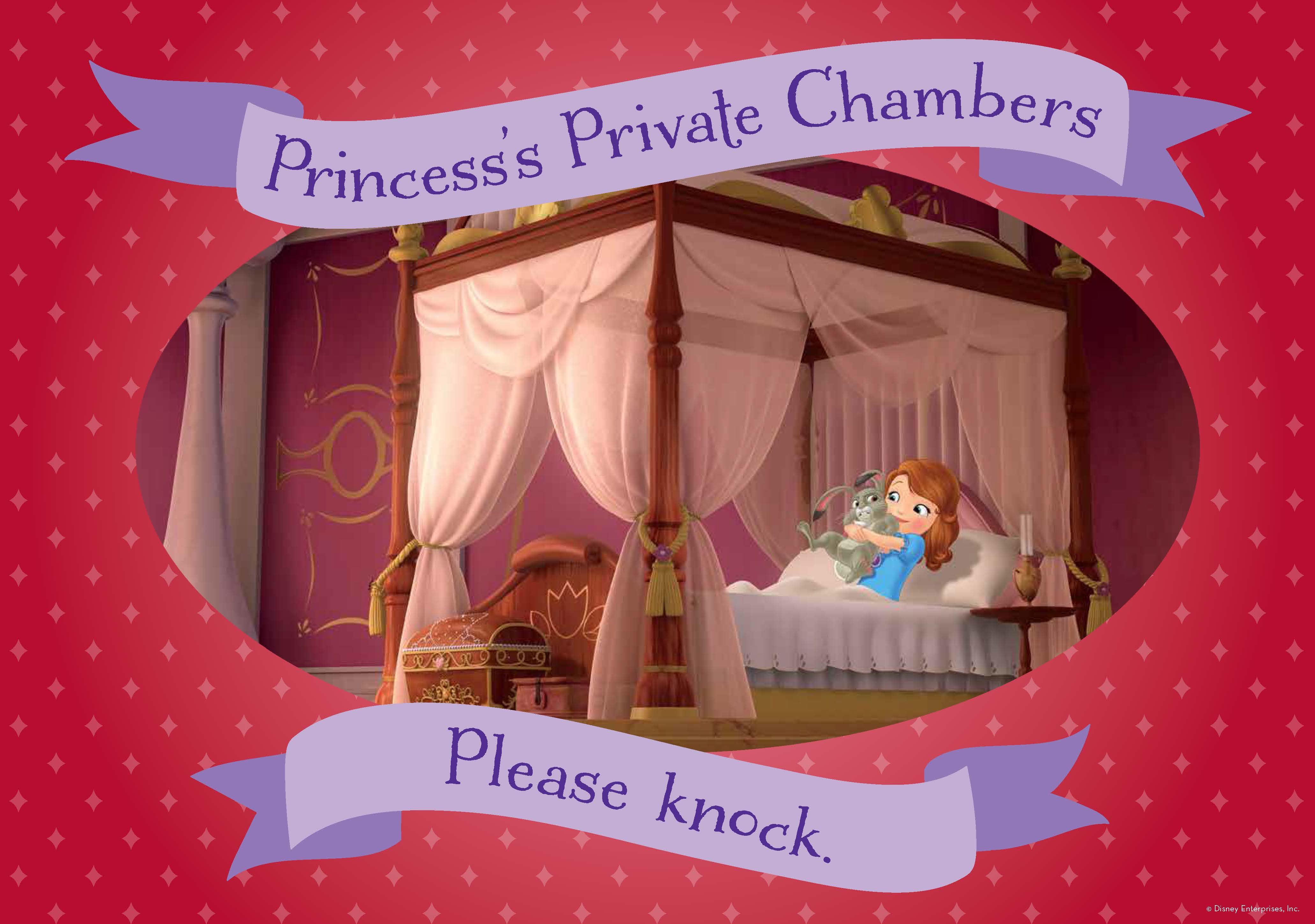
Disney Princess: Fairy Tale Moments and Disney Junior Sofia the First: Practice Makes Princess are being issued by Time Home Entertainment Inc. as part of a Poster-A-Page book series for kids ages 4-12.  These thick books are chock full of posters to hang on the walls, though you’ll want to mete out which posters are added to the walls if you have small rooms or just want to make the fun last with your kids.  One poster in each book allows youngsters to color their favorite princesses.  Obviously, these two are geared more toward female children ages 4-12, but they also have wonderful messages about kindness and teamwork that could apply to all kids.  There are posters on every page and nine super-size posters that can be used as door signs or room decorations.

Disney Sofia Please Knock Poster

The perforations in the books make it easy to tear out the posters and pages.  In Sophia The First, young readers not only get colorful pictures of the characters from the cartoon, but they also get to see her beginnings as a princess unfold and what she learns along the way.  In the Disney Princess book, provides snapshots of each fairy tale princess — Rapunzel, Ariel, Cinderella, Merida, Tiana, and Jasmine, etc.  And these posters are more about making kids rooms their own sanctuaries.

Disney Fairy Tale Moments Slipper Poster (2)

Disney Princess: Fairy Tale Moments and Disney Junior Sofia the First: Practice Makes Princess were well received by my daughter who promptly had me help her tear out the posters she could color.  While she is still filling them in with color slowly, she was thrilled to see that the other pages came out too.  Right now, she wants to keep the books in tact, but that will change as the days move forward and she realizes she can redecorate her room and replace the Dr. Seuss with the princesses she loves.  The one thing she wanted in the books, however, were stickers.  She’s big into her own art and loves adding new stickers to her collections.  Princess stickers would have knocked this out of the park for her, but she still loves them.

36th book for 2014 New Author Challenge.

Muse by Dawn Marie Kresan

Source: Tightrope Books
Paperback, 80 pages
I am an Amazon Affiliate

Muse by Dawn Marie Kresan is a powerful poetry collection in which inspiration takes center stage as the narrator examines the relationship between the muse and an artist.  The collection begins with a biographical note about Dante Gabriel Rossetti’s muse, Elizabeth Siddal, who also became an artist herself after modeling for only one artist.  Kresan examines her role as Rossetti’s muse, an inspiration for a great many paintings, and how the artist must have seen her and how there is now a disconnect between the woman she was and the woman that patrons of the arts now see in those paintings.  She establishes the tone in the beginning with the poem “Found” when he gazes upon her beauty and is stunned, but the tone quickly devolves into something sadder with “Housebroken,” as the muse is compared to a dog and the trade-offs that are inherent when someone is dependent upon the good will of another.

From: "John Ruskin: The Patron" (page 21)

Your hair a canopy that blazes, feverish,
around the pallor of sunken cheeks.
He decides you have genius, and for this reason
must be saved, as one would save a beautiful tree
from being cut down.

Kresan has mastered the use of imagery in her poems; they convey so much in so few words.  The loss of a child and one’s sanity becomes palatable, like bile rising in the throat, threatening to burn the reader, providing just a taste of that loss.  Kresan’s collection is searing and emotional, but also contemplative.  It asks the questions: what do we give up to be artists?  what do our inspirations/muses (even spouses) give up to be with artists?  How does this relationship challenge us … change us?

From "Brides with Plots: A Three-Act Play" (page 37)

Each time he paints you, you die again.  His signature, a bold
slash, enacts your vanishing.  The role
of muse requires

many deaths. ...

In the final part of the collection, there are a series of conversations and interactions between Siddal and other famous women — women who were considered muses in their own right, though maybe not to artists. She speaks with Princess Diana, Sylvia Plath, and others. Muse by Dawn Marie Kresan is well paced for a poetry collection, evolving over and over, creating a more complex look at the relationship between muse and artist, muse and reader/viewer, and muse to oneself.

Book 18 for the Dive Into Poetry Reading Challenge 2014.


35th book for 2014 New Author Challenge.

War Babies Read-a-Long

Today, at War Through the Generations, Anna and I are holding our first discussion for the Korean War read-a-long pick, War Babies by Frederick Busch.

We hope that you’ll join us in a discussion of this short book.  For this week, we’re focusing on pages 1-50.

Check out the discussion here.

Tangle by Julie Cameron Gray

Source: Tightrope Books
Paperback, 96 pages
I am an Amazon Affiliate

Tangle by Julie Cameron Gray is a collection of poems that weave in and out of one another, exploring the twisted up relationships between family and between lovers.  These poems are a tangled web that must be read and re-read, read out of order, in order, at random.  The themes vacillate from obsession to the breaking free of obsession to find yet another.  Section two is witty and sad in its emphasis on the mundane working life of workaholics everywhere.  This hodgepodge of poems works to tangle and untangle the complexity of our lives and to point out the most mundane.

From "Never: Red Fable" (page 15)

Never for a mouth crushed with roses.
Never wolf, never red cape, have and having
to which I want to say, hoodless,
again and again and again, lick
the edges of red absence from your lips,
and you'll want twice,
and then--
gently if you can.
You will never be this red again.

Gray’s lines roll out and back in, onto themselves, creating lyrical puzzles that lull readers into a song … losing themselves in the mystery of her words.  Whether it is “Haiku for Penguins in a Box” that surprise the reader with its content or the illustrated nature of “The Commuter’s Elimination Dance” (a personal favorite of mine), Gray is imaginative and innovative in her poetry, pushing the envelope as far as it will go.  Sometimes, she even breaks free of that envelope to set her imagery free.

Tangle by Julie Cameron Gray explores the gap between human experiences and the understanding of those experiences, she tackles the relationships humans have to one another and to their own work lives, and she juxtaposes the wild lives of animals with that of urbanity.  While these poems are glorious in imagery and verse, they may be a little tougher for beginning readers to understand upon first reading.

Book 17 for the Dive Into Poetry Reading Challenge 2014.


34th book for 2014 New Author Challenge.

A Long Time Gone by Karen White

Source: Penguin
Hardcover, 432 pages
On Amazon, on Kobo

A Long Time Gone by Karen White is the quintessential novel with a multigenerational family saga, southern  charm, and mystery wrapped up in one package.  Vivien Walker is the latest generation of Walker women to chase ghosts and leave the Mississippi Delta for parts unknown, but she’s also a lot more like her mother Carol Lynne than she thinks.  Love is boundless among these women who care for vegetables and family with the same careful hands, nurturing them until they are ready to take to their own journeys.  Vivien comes back to Mississippi after her marriage to a plastic surgeon fails miserably, but she’s hopeful that her grandmother, Bootsie, can help pick up the pieces.

“I was born in the same bed that my mama was born in, and her mama before her, and even further back than anybody alive could still remember.  It was as if the black wood of the bedposts were meant to root us Walker women to this place of flat fields and fertile soil carved from the Great Mississippi.  But like the levees built to control the mighty river, it never held us for long.”  (page 1)

Vivien’s childhood was peppered with short visits from her mother, as she left on another adventure in the 1960s.  She grew to resent her mother’s absences and when she left her childhood home for California, she didn’t look back for nine years.  Upon her return, Vivien is unsure how she feels about her mother’s presence and the loss of so much, including a beloved family member.  Vivien must learn to reach out of the fog that keeps her docile and deal not only with her past, but the future as well.  White’s characters are always complex, and while not without faults, nearly always easy to cheer for.  Vivien has lived too much in the past, and she must realize that she cannot go back and change things, but move forward with greater purpose and conviction.

“I wonder how far from Mississippi I have to get before I forget about the place I came from.  My memories of home are like a river, and I spend a lot of time fighting the current that’s always trying to take me back.”  (page 189)

Told in shifting point of views between the 2000s and the 1920s, plus the 1960s diary entries of Carol Lynne, White builds the past through the eyes that saw it happen, peppering it with parallels to the future in Vivien’s life path.  Weaving in elements of history from hidden genealogy of mixed race children, bootleggers, KKK, and the 1960s freedom rides and hippie days, White has created an engaging and informative novel about the trials each of us faces in our own families and how even outside forces can influence those lives in unforeseen and unexpected ways.  A Long Time Gone by Karen White is about the long road some of us can take to find our homes and feel our family connections deeply even when we’re away.  It’s about forgiveness and love, and how it can tether us together even miles from home.

About the Author:

Known for award-winning novels such as Learning to Breathe, the Southern Independent Booksellers Alliance 2009 Book of the Year Award finalist The House on Tradd Street, the highly praised The Memory of Water, the four-week SIBA bestseller The Lost Hours, Pieces of the Heart, and her IndieBound national bestseller The Color of Light, Karen has shared her appreciation of the coastal Low country with readers in four of her last six novels.

Italian and French by ancestry, a southerner and a storyteller by birth, Karen has made her home in many different places.  Visit the author at her website, and become a fan on Facebook.

19th book for 2014 Historical Fiction Reading Challenge.

She Likes It Rough by GVR Corcillo

Source: Blackbird Press
Paperback, 302 pages
On Amazon and on Kobo

She Likes It Rough by GVR Corcillo is not the erotica novel most will imagine when they see the title for the first time.  In fact, Lisa Flyte, the protagonist, is eager to live life to the fullest, get braver, and do something positive and improve the lives of others.  She meets Jack Hawkins in her MBA class, and knows he’s the one to teach her about bravery.  He’s an outdoor adrenaline junkie who designs professional equipment for similar people, but he’s also got a secret and Lisa’s going to help him achieve that goal.

“I should stop.

In fact, I should’ve stopped chasing Jack twenty minutes ago.  That’s when he veered off the trail and disappeared into the forest.  But I didn’t stop.  I kept after Jack.  I pulled into the lot just in time to see him lope off the path and vanish into the green mess of a mountain.  Without stopping to consider for even a second, I put my car in park, popped the trunk, grabbed my workout bag, and jammed on my running shoes.  Then I stripped off my jacket and followed Jack into the wild.” (page 1-2)

Corcillo has a flare for comic timing, and this is a laugh fest that readers will enjoy over the summer and recommend it to others on the beach.  Female readers in particular will laugh out loud as these two spar with one another from the most mundane activities to their own trajectories in life.  Jack and Lisa are polar opposites when it comes to tackling physical and emotional challenges, but they are destined to learn from one another.  While there are moments that are overly dramatic and soap opera-like, it’s a fun ride and readers will love the antics of Lisa.  She’s a klutz who takes every challenge thrown at her by Jack, but he’s a little more reluctant to take on the challenges she throws at him.

She Likes It Rough by GVR Corcillo was fun, engaging, and a wild ride, but worth it.  Spending an afternoon with these characters is like watching a comedy.  It’s certainly that feel good read, with a good deal of romance thrown in, plus some quirky sidekicks.  Readers should be cautioned that there is some harsh language as Lisa is not a shrinking violet.

About the Author:

Winner of Rebecca’s Reads Choice Awards for Best Indie Book of 2013 and Best Humor Book of 2013!   With her Ivy League education, white-trash sensibility, and pop culture savvy, Corcillo writes humorous women’s fiction about characters who try not to trip as they valiantly march to their own bongo beat.

33rd book for 2014 New Author Challenge.