Quantcast

United States of Books: The Awakening by Kate Chopin

Source: Public Library
eBook and audiobook, 211 pgs.; 4+ hrs.
I am an Amazon Affiliate

For Louisiana, Entertainment Weekly says, “Chopin’s early feminist work, which presents a woman carving an identity for herself that has nothing to do with wifedom or motherhood, also serves as an engrossing immersion in the historical worlds of New Orleans and the Louisiana Gulf Coast.”
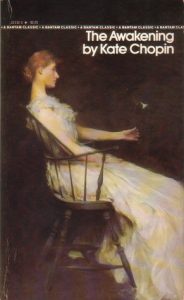
awakeningThe Awakening by Kate Chopin is considered by many to be a work of Feminism, published in the early 1900s. Mrs. and Mr. Pontellier appear to have a mutual respect for one another and the relationship many married couples fall into, such as nods and certain looks that are read easily by one another. He is a broker and has very specific ideas about how much attention his wife should pay to the children. But despite their easy way with one another, there is something distant in their relationship, as he feels she does not value his conversation and she tries to tamp down her anguish about only being a mother and a wife.

While summering at Grand Isle, she comes to view their relationship much differently and that of her place in the world. Mrs. Pontellier can see from the actions of other mothers vacationing there that she is much different. She does not worship her children and she does not have all the sophistication of a societal wife. As she becomes aware of these differences, Robert Lebrun begins to pay her special attention, which recalls for her many youthful infatuations. However, when Alcee Arobin crosses her path, things begin to change dramatically for the reborn painter, Mrs. Pontellier.

Edna Pontellier returns to the city and begins to break with tradition, which raises her husband’s eyebrows. Chopin’s work is not so much about the liberation of a woman from societal expectations. It is an introspective look at how we present ourselves to our husbands, children, friends, and greater society. Our inner selves, our true selves — if they ever emerge — are buried deep within our private worlds. For many of us, our true self is only known by us and, in some cases, not even then. Edna has been awakened to her true self and she embarks on a journey to realize it fully.

“She was becoming herself and daily casting aside that fictitious self which we assume like a garment with which to appear before the world.”

In terms of the setting, it’s clear that they live in Louisiana and music and art are strong cultural elements. The roots of French colonization remain in the area, and many of the people Edna interacts with speak French. Many of these people are definitely from the upper crust as they do little more than socialize, entertain one another, and gossip. The Awakening by Kate Chopin explores the consequences of becoming independent and stripping all pretension, leaving Edna in a solitary world (which mirrors the one she held close prior to her awakening). However, it seems as though Edna fails to evolve, merely bringing her inner world to the surface to find that she cannot survive, rather than exploring what that means and how she should move forward.

RATING: Tercet

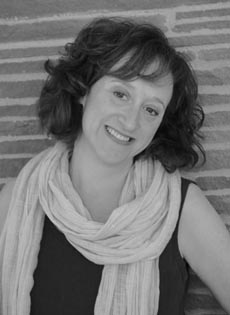
chopinAbout the Author:

Kate Chopin was an American novelist and short-story writer best known for her startling 1899 novel, The Awakening. Born in St. Louis, she moved to New Orleans after marrying Oscar Chopin in 1870. Less than a decade later Oscar’s cotton business fell on hard times and they moved to his family’s plantation in the Natchitoches Parish of northwestern Louisiana. Oscar died in 1882 and Kate was suddenly a young widow with six children. She turned to writing and published her first poem in 1889. The Awakening, considered Chopin’s masterpiece, was subject to harsh criticism at the time for its frank approach to sexual themes. It was rediscovered in the 1960s and has since become a standard of American literature, appreciated for its sophistication and artistry. Chopin’s short stories of Cajun and Creole life are collected in Bayou Folk (1894) and A Night in Acadie (1897), and include “Desiree’s Baby,” “The Story of an Hour” and “The Storm.”

usbooks_la

Raccoon on the Moon and Other Tales illustrated by David Semple

img_3746Source: Purchased from Usborne Books
Hardcover, 144 pgs.
I am an Amazon Affiliate

Raccoon on the Moon and Other Tales, illustrated by David Semple, is a set of stories in the Phonics Stories series for young readers.  With my daughter beginning Kindergarten this year, I wanted to get some more books focused on phonics, and this one looked cute, especially since my daughter loves animals and outer space.  Since this book arrived in the house, it has been part of the evening reading ritual before bed.

Each night she picks a story from the list, and we read it.  If we have time, she begs for a second story. The illustrations are clear, brightly colored, and fun!  Kids will love these stories and, after several readings, they will be reading along with you.  In the final pages of this collection of stories, there are puzzles for kids to complete — from finding which words rhyme or which words in the sentence are the wrong one given the context and image.

Our favorites in this collection are Raccoon on the Moon, Llamas in Pajamas, and Mole in a HoleRaccoon on the Moon and Other Tales, illustrated by David Semple, is a fun collection to help young readers learn new words, take adventures with fun animal characters, and read long with their parents.

RATING: Cinquain

***For those on Facebook, I’ll be having a book party for Usborne on Oct. 21. I can invite you if you are interested, though we have to be friends on Facebook***

Review and Giveaway: Edgar Allan Poe: An Adult Coloring Book by Odessa Begay

Source: Sterling Publishing
Paperback, 96 pgs.
I am Amazon Affiliate

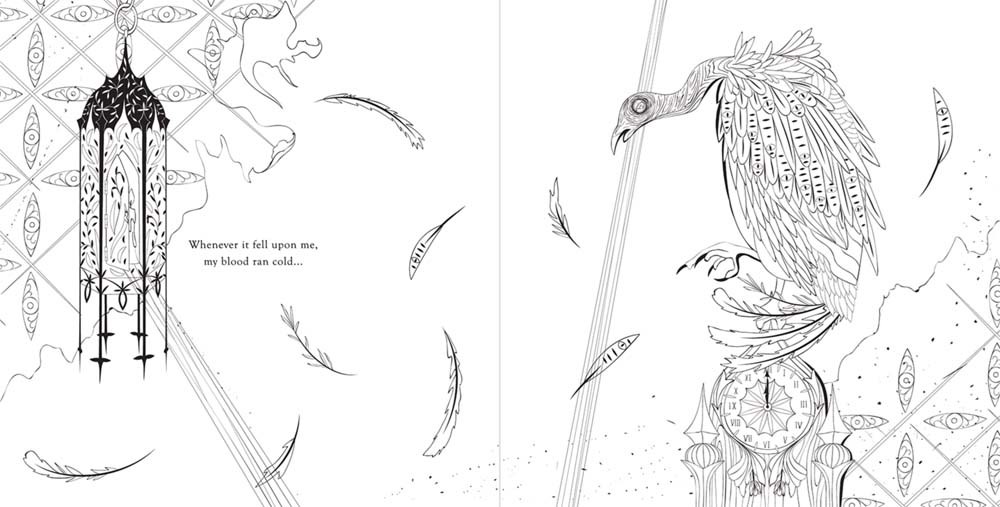
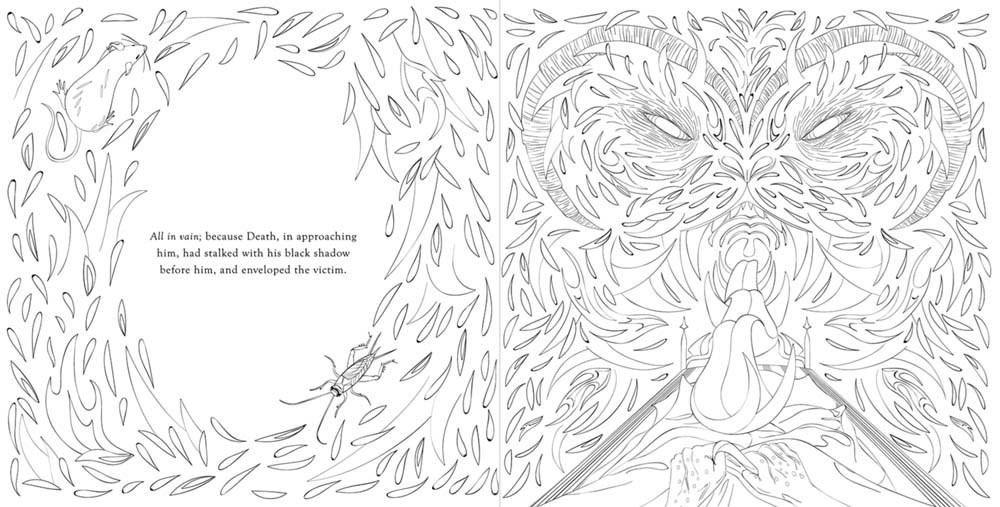
Edgar Allan Poe: An Adult Coloring Book by Odessa Begay is a gorgeous coloring book that perfectly illustrates the beauty and sadness of Poe’s work, with quotes from various stories interspersed throughout. Begay is a talented artist who carefully weaves in beauty with each horrifying image — from skulls to pestilence personified. Many of these designs are very intricate and will require a steady hand to keep within the lines, but that’s half the fun of achieving calm through coloring. It’s almost meditative to follow the curves of her images and think about how to complement each color to make an overall pleasing image.

Aren’t those images gorgeous? This book is perfect for those who love Edgar Allan Poe, participating in the fall R.I.P. challenge, or those who just want to color some horrifyingly beautiful illustrations. Edgar Allan Poe: An Adult Coloring Book by Odessa Begay is a wonderful tribute to the macabre Poe and his darkly beautiful work.

Here’s one of my pictures — it’s not very good:

img_3740

RATING: Cinquain

About the Author/Illustrator:

Odessa Begay resides in Philadelphia, PA. She is a graduate of NYU/The Tisch School of the Arts where she studied photography and imaging. She has licensed her work widely in the children’s/baby markets, as well as botanicals for home décor, paper, and fabric. Learn more about her at Website.

Want a copy of your own? Live in the United States or Canada?

Leave a comment on this post by Sept. 29, 2016, 11:59 PM EST, about which story or poem by Edgar Allan Poe is your favorite.

***GIVEAWAY IS NOW CLOSED!***

Heirlooms: Stories by Rachel Hall

Source: Caitlin Hamilton Marketing & Publicity
Paperback, 190 pgs.
I am an Amazon Affiliate

Heirlooms: Stories by Rachel Hall is a series of connected stories that read like a novel. Four generations of a Jewish family are touched by the secrets held as one generation copes with the Nazi occupation and, ultimately, flees France to safety. What are the heirlooms this family carries into their new lives? Is it a baby carriage? A beloved wedding band? Or is it simply the memories that flood their minds when they refuse to speak of the past?

From “The War Ends Many Times” (pg. 53)
“Of course, one second-guesses, grasps at the many missed opportunities for escape–that lovely word, that flowing cape of an idea! Why did they not attach themselves to it when it flapped and hovered close? Why?”

Beyond loyalty and duty, each generation is tethered by the ghosts of the past — a father who dies a revolutionary at the hands of Nazis and a mother dying in bed calling for her mother even as her own baby waits in the next room. Peeling back each layer, readers peer into the lives of the Latour family, seeing echoes of the past and reverberations into the future. Even the smallest decision of a stranger desperate for a child she can never have is felt through the generations, forcing one member to make a decision that affects many more and another to accept responsibility for a casual moment.

From “En Voyage” (pg. 89)
“When Jean takes the film to be developed, he is given doubles of this roll. He puts one set of the photos in an album, labels them carefully. He can’t bear to throw the extras away, though there is no one to whom he can safely send them. This makes him feel as if that time is lost, irretrievable, though he knows certainly he does, that time is like that, moving only forward despite our wishes.”

Heirlooms: Stories by Rachel Hall is a deeply moving collection of stories about survivors of WWII and how they coped with their own survival. Fears and protecting their children were forever at the top of their mind, making them hide the past. Despite their efforts, the past can re-emerge in the most unpredictable ways — the effect of heat-stroke leaving you exposed to those you sought to keep from prying too much, from getting too close.

RATING: Quatrain

Photo Credit: Pamela Frame

Photo Credit: Pamela Frame

About the Author:

Rachel Hall’s collection of linked stories, Heirlooms, was awarded the BkMk Press 2015 G.S. Sharat Chandra prize, selected by Marge Piercy.

Hall’s stories and essays have appeared in a number of journals and anthologies, including Bellingham Review, Crab Orchard Review, Gettysburg Review, Lilith, New Letters, and Water~Stone. In addition, she has received awards and honors from publications such as Lilith and Glimmer Train, and New Letters and from the Bread Loaf Writer’s Conference, Saltonstall Foundation for the Arts, as well as Ragdale and the Ox-Bow School of the Arts where portions of Heirlooms were written.

She holds an MFA from Indiana University where she was the Hemingway Fellow in Fiction. Currently, Hall is Professor of English at the State University of New York-Geneseo. She teaches creative writing and literature and holds two Chancellor’s Awards for Excellence—one for teaching and one for her creative work.

United States of Books: Maud Martha by Gwendolyn Brooks

Source: Public Library
Paperback, 180 pgs.
I am an Amazon Affiliate

For Illinois, Entertainment Weekly says, “Sure you can always go with Saul Bellow’s Chicago, but if you’re looking for another view of the windy city, pick up this challenging, essential look at urban black life, with all its beauty and pain.”

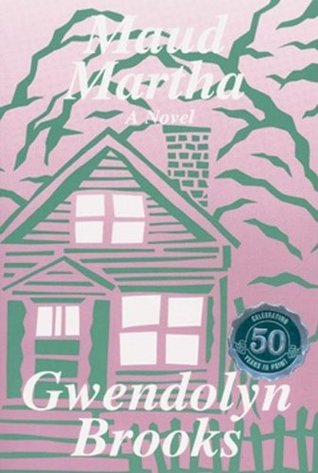
Maud Martha by Gwendolyn Brooks is her only novel, and despite being familiar with her poetry for a long time, I’ve never read it. Maud Martha is darker than her sister, and this is a shadow that follows her throughout the novel until she eventually learns that it is not about her outward appearance but the well of strength she has inside. As a child, she looks at the world around her and finds the beauty everywhere, like the dandelions she calls “yellow jewels for everyday.” (pg. 2) Maud is very observant, even as she enjoys every moment, she does note that things are not as merry as others make them seem. In her own family, she notes that everyone is “enslaved” by her sister’s beauty (Helen), but Maud is never bitter because she knows that they cannot help it.

Like many, New York City becomes a symbol of dreams and greater things, but like many symbols, they can be tarnished. Maud meets Paul, and she knows that he could have a prettier, lighter woman as his wife. Even as he marries her, she does not delude herself. Leaving her mother’s home for her own with her husband, Maud discovers that her dreams are much different.

“But she was learning to love moments. To love moments for themselves.” (pg. 78)

Brooks’ style is very different from the traditional novelist, where things happen but not necessarily on the page before the reader. She leaves a great many plot points unobserved, while at the same time, enabling the reader to hear directly from Maud. Her observations, her thoughts … providing readers with an inside look at how life of an urban black woman truly was. Through these observations, Brooks provides a window into the racial divide within even the black community, as well as how tough it was during the depression and the beginning of WWII. At the same time, Maud has opportunities to work outside the home, and these moments provide her with insight into how her husband is treated in the workplace.

“When they sat, their heights were equal, for his length was in the legs. But he thought he was looking down at her, and she was very willing to concede that that was what he was doing, for the immediate effect of the look was to make her sit straight as a stick.” (pg. 131)

Maud Martha by Gwendolyn Brooks paints a stark picture of urban life within the black community, the differences between how the community perceived the use of the n-word and how it was perceived by whites, and the plight of women in the community. Maud says, “What was unreal to you, you could deal with violently,” and isn’t that true of all of us. What is real to us is harder to deal with head on, but we must push aside our fears. “On the whole, she felt, life was more comedy than tragedy.” (pg. 165) Maud is a pillar of inner strength from whom other women could take lessons.

RATING: Cinquain

About the Author:

Although she was born in 1917 in Topeka, Kansas–the first child of David and Keziah Brooks–Gwendolyn Brooks is “a Chicagoan.” The family moved to Chicago shortly after her birth, and despite her extensive travels and periods in some of the major universities of the country, she has remained associated with the city’s South Side. What her strong family unit lacked in material wealth was made bearable by the wealth of human capital that resulted from warm interpersonal relationships. When she writes about families that–despite their daily adversities–are not dysfunctional, Gwendolyn Brooks writes from an intimate knowledge reinforced by her own life.

usbooks_il

Disinheritance by John Sibley Williams

Source: the poet
Paperback, 77 pgs.
I am an Amazon Affiliate

Disinheritance: Poems by John Sibley Williams seeks to address the natural privilege of passing down traits, memories, and more to another generation in light of recent deaths and miscarriages. But we can take solace in that things that happen to us now have happened before. Like the narrator says in “Salmon Run,” the salmon are moving upstream toward places that their great-grandfathers had gone, which he says is a “temporary holiness of knowing” that “all my mistakes have been made before.”

From "A Dead Boy Martyrs His Mother" (pg. 32)

With a sanctified blade
to behead or slip between
ribs like a love letter
returned to sender.

Many poems use elements of nature — animals in particular — to illustrate the absence of connection or connections that are denied. Williams’ verse will leave some readers agape, like in “I Sit My Grandfather by the Mouth of the Columbia River,” in which the narrator says, “I remember the cornfields as so far from here,// the flat, arid valley that drowned us/and for which we drew blood,/how full a silo feels when emptied of everything but our bodies.” It’s as if the flesh of bodies is inconsequential to what is locked inside them — the memories, the soul. To lose these at once or gradually is disheartening to say the least. In “A Room for Listening,” there are echoes reverberating throughout the stanzas, like the echoes of lives that almost were or that are no more. Williams’ lines are vastly haunting.

There is a sense of longing and deep sadness in these poems, and through this darkness, the narrators attempt to name what is missing even though it cannot be named. Disinheritance: Poems by John Sibley Williams is deeply affecting.

RATING: Quatrain

About the Poet:

John Sibley Williams is the editor of two Northwest poetry anthologies and the author of nine collections, including Controlled Hallucinations (2013) and Disinheritance (forthcoming 2016). A five-time Pushcart nominee and winner of the American Literary Review Poetry Contest and Vallum Award for Poetry, John serves as editor of The Inflectionist Review and works as a literary agent. Previous publishing credits include: The Midwest Quarterly, december, Third Coast, Baltimore Review, Nimrod International Journal, Hotel Amerika, Rio Grande Review, Inkwell, Cider Press Review, Bryant Literary Review, RHINO, and various anthologies. He lives in Portland, Oregon.

Austen’s Independence Day by Melissa Belle

Source: the author
Paperback, 333 pgs.
I am an Amazon Affiliate

Austen’s Independence Day by Melissa Belle is a modern take on Pride & Prejudice with a twist. Long ago, the town of Austen, Texas, had a founder whose wife demanded he trap the ghost of Jane Austen in the town jail until true love could be found and set her free. This was his punishment for cheating on her with another. While the tall tale is far-fetched at best, it becomes the basis for a whole industry in the town, keeping its residents afloat financially and some pre-occupied with curses and romance beyond reason.

Macey Henwood has had a tough life, caring for her siblings, her alcoholic father, and her romance-obsessed and co-dependent mother, but through it all Morgan Thornbrush has been her rock. He’s helped her through the tough moments and shared some her best, and like him, she’s done the same for him. Set in Texas, there is a rough and tumble way about the townsfolk that seemed at odds with the romantic ghost tale. Macey and Morgan made a pact as teenagers to never marry or marry anyone else, and their on-again, off-again romance is a bit tough to take when readers learn how long it has been going on. Commitment issues abound, as Macey says she was never meant to marry.

Can Macey really blame the guy for wanting to move beyond some silly pact made as a teenager? When is she going to grow up and stop caring for everyone else and do what she wants to do — become an author?! It’s tough to say, as she sees how much she’s done but continues to devalue herself. Meanwhile, she insists she doesn’t need a man to make her whole like her mother, but her whining about Morgan after his engagement to a Manhattan rich girl makes it appear that she does.

“I think I’m going to throw up. But it figures, really. Morgan always went for rich girls. Except when he was slumming around with little old redneck me.”

Despite many of these issues, once the history between these characters unfolds, it becomes less of a surface relationship about sex and more about their support of one another through rough patches. They are more than friends, they are lovers who support each other’s dreams. Belle has a unique story compared to many in the Austenesque world, and with a bit of editing to reduce the instances of diary reading and repeated comments between Morgan and Macey (which were unnecessary), this would have been stellar.

Reading from her diary to Morgan seemed a bit forced in some places as he tried to get over her and marry someone else, but what’s worse is she was writing these detailed entries as early as age six. Not possible, unless she’s a genius, and her actions and behaviors suggest otherwise. Overall, Austen’s Independence Day by Melissa Belle is a fun read with interesting characters in an oddball town.

RATING: Tercet

About the Author:

Melissa Belle loves to write steamy romance novels where the hero and heroine are passionate, independent, and good to each other. The first romance novel she read (and fell in love with) was Jane Austen’s Pride and Prejudice. Melissa wrote her first novel riding through Europe on the train, and she travels with her husband (her best friend and first reader of all her stories) as much as possible.

Melissa dances in a belly dance troupe. She is a professional tarot and oracle card reader. She also loves songwriting, hooping, and her two rescue kitties. And cupcakes.

A Moment Forever by Cat Gardiner

Source: the author
Paperback, 600 pgs.
I am an Amazon Affiliate

A Moment Forever by Cat Gardiner, which was on tour with Poetic Book Tours last month, is the first in the Liberty Victory series of books, and it is epic! Elizabeth and Lillian Renner are the daughters of a railroad magnate bent on more power and prestige, but their father holds his cards close to the vest in 1940s Long Island, New York. Even as Lillian becomes a disappointment by working with the American Red Cross, rather than acting the debutante she is, Elizabeth is his shining jewel, one he hopes to marry off to the highest bidder. Her life is easy, but her perceptions of the glistening world she lives in soon become tainted after she meets a dreamy flyboy, William Martel.

When America decided to enter WWII after Pearl Harbor, many men joined up to fight Hitler’s aggression and that of the Axis powers. This left many gaps in American society, with women eagerly filling empty roles. The Renner family, however, remained traditional in its expectations of its female members. Lillian, one of five sisters, consciously decided to embark on her own adventures, while Lizzy tries to straddle two worlds. The Renner fortune protected them and plans to unite the family with the neighboring elite, the owners of Robertson Aviation, would secure their position further.

Fast forward to 1992 when Juliana Martel is gifted Primrose, a home in Brooklyn owned by a great-uncle she never knew. The house is a time capsule, a shrine to true love, devotion, and loyalty. Her great-uncle, who disappeared in 1950, loved his “Pistol”, but the farther Juliana digs through the cobwebs of the past, the more she is sure that they were separated against their wishes. Her role as a journalist has given her the best instincts to uncover the past, and as she untangles the strands of his history, she becomes enchanted herself.

Gardiner has re-created the past in the dress, manner, and speech of her characters, and while loosely in homage to Jane Austen’s Pride & Prejudice, this WWII epic romance spans five decades. The heartbreak, the love, the devotion, and the regret leap from these pages. Did Lillian’s independence from the Renners leave her blind to her sisters’ dilemmas? Did Kitty, the younger sister plagued by polio, let emotion overtake her better judgement? Did Lizzy act too rashly when Will was shipped overseas? Readers should be prepared with their tissues. I have not cried this much since the epic read, Galway Bay by Mary Pat Kelly.

How would you pay homage to those you love? How far would you go to make reparations for the past and to make amends? When should you let the past lie where it is and move on? A Moment Forever by Cat Gardiner is like the smooth sounds of Doris Day singing “Again”. It pulls you into Gardiner’s world page by page, and it wraps you up in the passionate notes of Vera Lynn’s “Yours”. I cannot wait for the second book in this series.

(You can listen to the music.)

RATING: Cinquain

About the Author:

Born and bred in New York City, Cat Gardiner is a girl in love with the romance of an era once known as the Silent Generation, now referred to as the Greatest Generation. A member of the National League of American Pen Women, Romance Writers of America, and Tampa Area Romance Authors, she and her husband adore exploring the 1940s Home Front experience as living historians, wishing for a time machine to transport them back seventy years.

She loves to pull out her vintage frocks and attend U.S.O dances, swing clubs, and re-enactment camps as part of her research, believing that everyone should have an understanding of The 1940s Experience™. Inspired by those everyday young adults who changed the fate of the world, she writes about them, taking the reader on a romantic journey. Cat’s WWII-era novels always begin in her beloved Big Apple and surround you with the sights and sounds of a generation.

She is also the author of four Jane Austen-inspired contemporary novels, however, her greatest love is writing 20th Century Historical Fiction, WWII-era Romance. A Moment Forever is her debut novel in that genre.

For more on her book, visit A Moment Forever. Follow her on Twitter
On Facebook, and Follow her blog.

Night Ringing by Laura Foley

tlc tour hostSource: TLC Book Tours
Paperback, 108 pgs.
I am an Amazon Affiliate

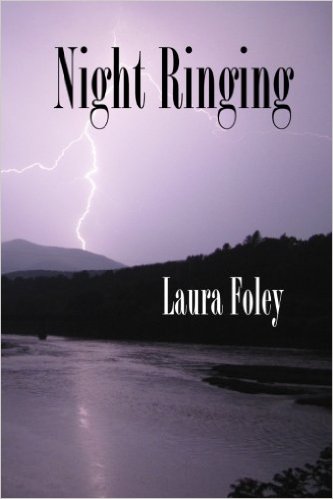
Night Ringing by Laura Foley speaks to the risks we take, no matter how small, and the reverberations they generate in our lives. Each action has a consequence, even if those results are not seen immediately. Her simple observations are similar in that they quietly call attention to a moment and decision, and the effects creep up on the reader. Even the organization of the poems in each section seems to build upon the last, creating louder echoes of the ringing throughout the narrator’s life.

In “Daddy’s Girls,” the narrator talks about a father who wanted boys but had four girls. His actions toward them taught them to shy away from his attentions, eventually leading to the collapse of their own self-esteem. “Quickly, we learned/to turn away, duck his gaze,/but still he broke us,/” Her poems are short, but that makes them no less powerful. The girls are not the only ones broken, so too is the returned Viet Nam soldier in “The Staff of Life” who wakes from a dream with his hands around his girlfriend’s neck. “Driving Route 95” is the worst nightmare of any mother, the loss of family — a family that abandons you, not one that you leave behind. But it is true of all of us — we all fear being left behind, alone. This is a poem that will sear that fear into the hearts of readers. These are frightening images, images that will call up readers’ own histories of traumas past. How do you suppress those images? Do you knead the muscles until the pain subsides? do you meet those images head on?

Many of our memories are filled with regret, and these regrets often haunt us if we let them “I’m stumbling through/the dark, winding down a circular stair, to the place where the/ringing doesn’t end.”, the narrator says in “Night Ringing.” It is how we react to these traumatic moments and regrets that defines who we are — are we the moaning and yelping animals in a panic in “The Sounds Oblivion Makes” or are we swimming along even as we appear to be drowning, like the narrator in “Not Drowning”?

Night Ringing by Laura Foley examines a life led on its own terms in spite of the disappointments and the obstacles. A life that may look as though it was faltering and a person who seemed to be drowning, but a life that was lived with as little regret as possible. Foley expresses a wide variety of emotion in these compact poems, and readers will feel the crescendo when it hits.

RATING: Quatrain

Other Reviews:

About the Poet:

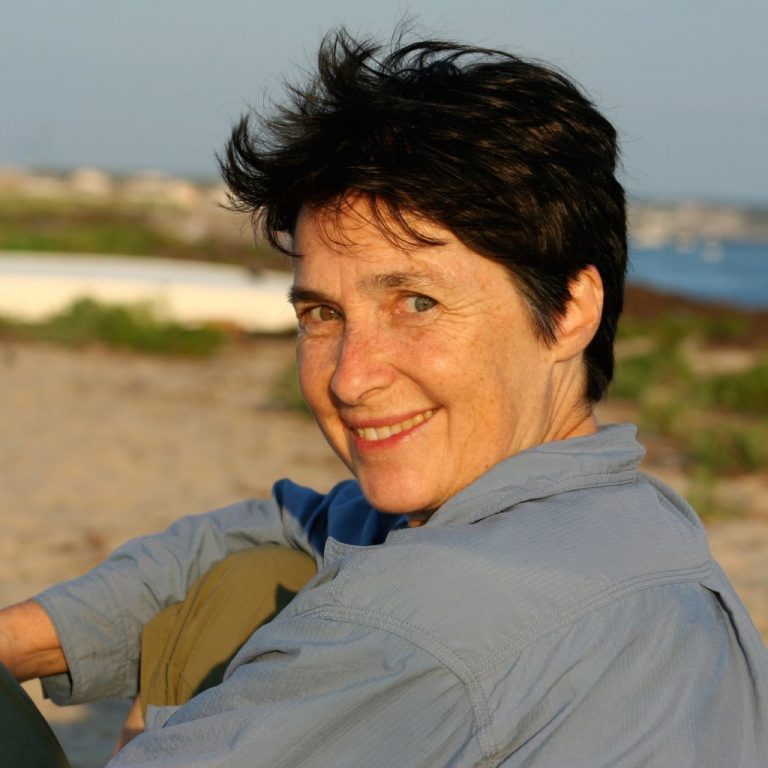
Laura Foley is an internationally published, award-winning poet, author of five collections. She won First Place in the Common Goods Poetry Contest, judged by Garrison Keillor, who read her poem on “A Prairie Home Companion”; and First Place in the National Outermost Poetry Prize, judged by Marge Piercy. Her poetry collections include: Night Ringing, The Glass Tree and Joy Street. The Glass Tree won a Foreword Book of the Year Award; Joy Street won the Bisexual-Writer’s Award. Her poems have appeared in The Writer’s Almanac, Valparaiso Poetry Review, Pulse Magazine, Lavender Review, The Mom Egg Review, in the British Aesthetica Creative Writing Anthology, and many other journals.

A certified Shri Yoga Instructor and creative arts facilitator in hospitals, she is the mother of three grown children and has just become a grandmother. She and her partner Clara Gimenez live among the hills of Vermont with their three big dogs.

The A.B.C. Murders by Agatha Christie

Source: Audible
Audiobook, 6 hrs.
I am an Amazon Affiliate

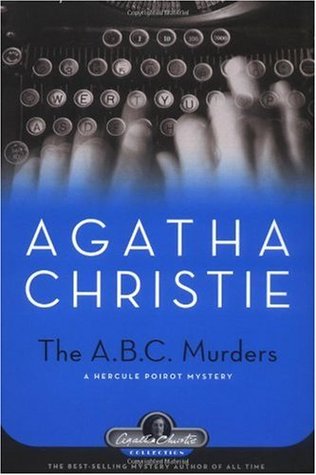
The A.B.C. Murders by Agatha Christie, our August book club selection, is narrated by Hugh Fraser and is the 13th book in the series.  Despite being so far into the series, it was refreshing to read a murder-mystery that was more intellectual in nature. Hercule Poirot is being taunted by the serial killer working his way through victims based on the alphabet, and beside his victims, he leaves the ABC Railway Guide open at the name of the town where the murder has taken place. Arthur Hastings, a longtime friend of Poirot, is excited to be working with his friend after a long time, and this book is told from Hastings’ point of view for the most part. The other narration is a third-person narrative created by Hastings’ reconstructions of other eye-witness accounts. Christie creates another mysterious layer this way because readers will always partially doubt the validity of those recollections.

The first three murders occur with little evidence of who the killer is, but once the killer decides to make an enemy of Poirot, he is bound to make mistakes. There also is a certain complexity of motive here, in which it is obscured again and again by other events and things that occur. While Hastings is in awe of his friend’s ability to solve cases, Inspector Crome is less than a fan. It’s interesting to see these two opinions face off, and it forces the reader to wonder is Poirot a super-detective or is he a man that gets lucky. Like many mysteries, the truth is somewhere in the middle.

The camaraderie between Poirot and Hastings is great, and the pace is spot on, even as the murders seem as though they will never be solved. A careful reader or listener can see the clues and figure out who the killer is, but Christie is adept at throwing in obstacles to obscure the truth. Hugh Fraser was a good narrator for Hastings, though at times some of the other characters got a bit muddled in the reading. The A.B.C. Murders by Agatha Christie is a well written mystery that will have readers guessing and re-assessing.

RATING: Quatrain

About the Author:

Agatha Christie is the best-selling author of all time. She wrote eighty crime novels and story collections, fourteen plays, and several other books. Her books have sold roughly four billion copies and have been translated into 45 languages. She is the creator of the two most enduring figures in crime literature-Hercule Poirot and Miss Jane Marple-and author of The Mousetrap, the longest-running play in the history of modern theatre.

Field Guide to the End of the World by Jeannine Hall Gailey

Source: Moon City Press
Paperback, 72 pgs.
I am an Amazon Affiliate

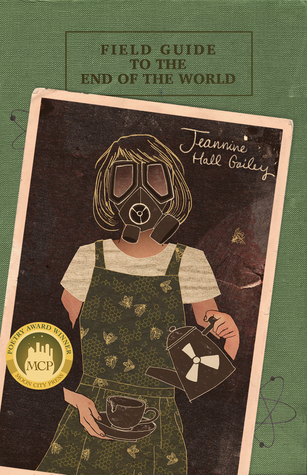
Field Guide to the End of the World by Jeannine Hall Gailey, which is the winner of the 2015 Moon City Poetry Award, is nothing short of phenomenal. While Gailey often puts herself in her poems, there are times when she adopts personas to create poems of female empowerment. This collection has a similar fantasy style (including a moment with Wile E. Coyote, Super Genius) to it with a post-apocalyptic setting, but it also is vastly more personal. While some of the poems may be a bit tongue-in-cheek about death (see “In Case”) and the end of the world and how duct tape is a miracle survival tool, underneath those quips is the seriousness that imminent danger and possible death bring.

She hints in “Introduction to Mutagenesis” that these genetic missteps could be changes we do not understand and that we may need them to survive in the evolving world. It is this kind of hope in the face of despair that is unexpected and inspiring.

Errors in replication — beyond our control — and yet sometimes the systemic destruction
of a certain cell might lead to a breakthrough, a land mass not yet discovered inside us,

clever adaptations that let us survive genetic drift in cases of plague or flood,
carriers of one disease not susceptible to another, …

In our own “black boxes”, our cells tell our history, the lives we’ve led, the deaths we’ve faced, and what finally takes us to the grave, she says in “Every Human Is a Black Box.” None of us have “turnkey solutions” and would we want to — would we want that kind of predictability? Even if the prospect of death or battling cancer is frightening, even paralyzing, would we want the solution to be simple? It would seem that kind of world would be less precious, less of a marvel.

From “Introduction to Spy Narrative as Love Story” (pg. 21)

When I look in a mirror all I see is you
written across my body like the shadow of a blackbird

Gailey’s verse is unique, haunting, and cheeky, but at its heart, her poems teach us that to live is to take the good and bad together and laugh, enjoy life, savor it. Even if the apocalypse is upon you, it is not the time for wallowing in sadness and self-pity, but a time for you to rise up beyond your circumstances and find a way to survive. From “Shorting Out” (which is just gorgeous in its use of white space) to “At the End of Time (Wish You Were Here)”, readers are reminded of the fragility of the mind, of memory, especially when “40 years of learning were leaking through the lesions.” (from “At the End of Time (Wish You Were Here)”).

Field Guide to the End of the World by Jeannine Hall Gailey, which is the winner of the 2015 Moon City Poetry Award, is a guidebook for living, for more than survival in a world about to end. She asks us to remember not to be lonely in the woods, not to be frightened of bears because “There’s the comfort of the knocking on hollow/branches, the scratching song of insects, and those tubes/of sunlight that show up on the path, lighting the way.” (from “Remnant”).

RATING: Cinquain

Other Reviews:

About the Poet:

Jeannine Hall Gailey served as second poet laureate of Redmond, Washington. She’s the author of four previous books of poetry: Becoming the Villainess, She Returns to the Floating World, Unexplained Fevers, and The Robot Scientist’s Daughter. Her work has been featured on Verse Daily and NPR’s The Writer’s Almanac, and included in The Year’s Best Fantasy and Horror.

Snow White and Rose Red by Patricia C. Wrede

Source: Purchased
Kindle, 288 pgs.
I am an Amazon Affiliate

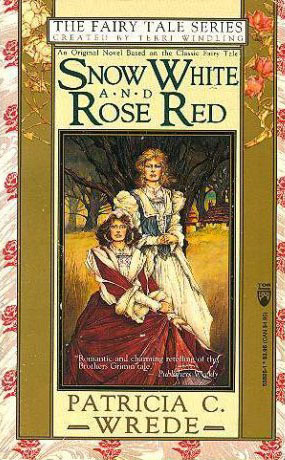
Snow White and Rose Red by Patricia C. Wrede, which was our July book club pick, is a retelling of a fairy tale.  In this rendition, the tale is set in England, and the characters are a bit modified.  Wrede says in the afterword that the original fairy tale had gaps and characters appeared and disappeared, leaving their motivations out of sight for the most part.  Here, Wrede contrives to make motivations fit the story, which mirrors the original very closely.

The language used here to mimic Elizabethan times but, in so doing, the dialogue was very stilted and hard to engage with for a good portion of the book.  While the language may have been to authenticate the time period, some of it was off in terms of usage and slowed the pace of the tale considerably.  However, her use of John Dee and Edward Kelly as the wizards in the town of Mortlak, who cause harm to the world of Faerie, was inspired, though even just Kelly would have been enough here.

Rosamund (Rose Red) and Blanche (Snow White) are the daughters of the Widow Arden (forest) who live on the outskirts of town near the land of Faerie, and while they tend to stay outside the forest and only use the herbs found within its borders for good, they have skills that other townsfolk only speculate about.  It is there in the woods that they find all manner of plants, including elecampane, which is native to central Asia.  Is this the work of the fay?  Or a miscalculation on Wrede’s part?  It’s unclear.

Wrede also relies on the continuation of “work” over several dayson more than one occasion without going into depth about the failed experiments, etc. This also slows the pace of the fairy tale down.  Snow White and Rose Red by Patricia C. Wrede is a satisfactory retelling of a well-known fairy tale, but what is unclear still is the motivations of one set of evildoers — the fay.  While the mortals clearly seek fame and fortune in their magic renderings, the fay involved in the spell-casting seem to have muddy reasoning for their part in it.

RATING: Tercet

About the Author:

Patricia C. Wrede was born in Chicago, Ill., and is the eldest of five children. She started writing in seventh grade. She attended Carleton College in Minnesota, where she majored in Biology and managed to avoid taking any English courses at all. She began work on her first novel, Shadow Magic, just after graduating from college in 1974. Patricia received her M.B.A. from the University of Minnesota in 1977.  Patricia finished her first novel in late 1978, and she has since published 12 books.