Quantcast

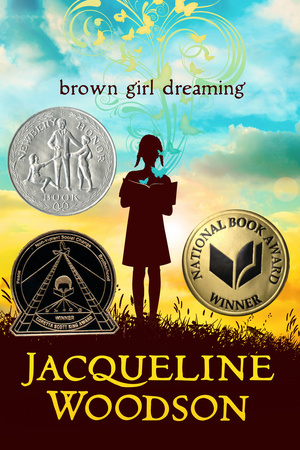
Brown Girl Dreaming by Jacqueline Woodson

Source: Public Library
Hardcover, 337 pgs.
I am an Amazon Affiliate

Brown Girl Dreaming by Jacqueline Woodson, a National Book Award Winner and Newbery Honor Book, is a coming-of-age novel in verse that is fresh and child-like in its perspective.  Jacqueline Woodson clearly bases her novel on her own experiences as a young black girl who grows up in a home with a single mother and older siblings.  Moving from Ohio and her father to Greenville, S.C., in the 1960s to live with her mother, siblings, and grandparents, Jackie is too young to understand the breakup of her family and remember her past.  Running in parallel to the Civil Rights Movement, young Jackie learning her letters and trying to keep up with her older siblings.  As she finds she doesn’t measure up to her smart sister in the classroom, she also learns that each sibling may have hidden talents, like her brother’s singing voice.

From "February 12, 1963" (pg.1-2)

I am born in Ohio but
the stories of South Carolina already run
like rivers
through my veins.

From "My Mother and Grace" (page 25-26)

Both know that southern way of talking
without words, remember when
the heat of summer
could melt the mouth,
so southerners stayed quiet

Jackie is a young girl finding her way, looking to be strong, but also learning to listen to her elders and to others influencing the civil rights movement. She hasn’t made up her mind, but she’s learning piece by piece what it means to be a young black woman in the south and how that differs from being black in New York.  Woodson’s style is frank, but firmly rooted in the point of view of a young girl who observes both the benefits of the movement and the drawbacks of fighting for what you believe in.  Along the way, she becomes friends with Maria whose mother cooks the best Hispanic food, and they do everything together, including swap dinners in the stairwell.

Brown Girl Dreaming by Jacqueline Woodson is a journey of a young black woman growing up in the 60s and 70s and serves as an excellent introduction to not only the time period, but also the struggles of black in the south and in the north for those ages 10 and up.  There are moments in which the author relies on a dream-like quality to present her narrator’s ideals, but at other points, it is very clear cut what has happened.  In many ways, this rendition is a mere outline of the harsher parts of life and it is reflected well through a child’s eyes.

About the Author:

Jacqueline Woodson is an American writer of books for children and adolescents. She is best known for Miracle’s Boys, which won the Coretta Scott King Award in 2001, and her Newbery Honor-winning titles Brown Girl Dreaming, After Tupac & D Foster, Feathers, and Show Way. Her work is filled with strong African-American themes, generally aimed at a young adult audience.

For her lifetime contribution as a children’s writer, Woodson won the Margaret Edwards Award in 2005 and she was the U.S. nominee for the biennial, international Hans Christian Andersen Award in 2014. IBBY named her one of six Andersen Award finalists on March 17, 2014. She won the National Book Award in 2014 in the category of “Young People’s Literature” for Brown Girl Dreaming.


Changes: A Child’s First Poetry Collection by Charlotte Zolotow, illustrated by Tiphanie Beeke

Source: Sourcebooks/Shelf Awareness
Hardcover, 40 pgs
I am an Amazon Affiliate

Changes: A Child’s First Poetry Collection by Charlotte Zolotow is gorgeously illustrated by Tiphanie Beeke, and the 28 poems are divided into seasons to reflect the title.  This collection is published posthumously, poems her daughter calls clean and clear about what changes and what stays the same.  The collection opens with “Changes” that talks about the differences between the seasons but that they always come around the same time each year, even though the narrator has changed through the years.  These verses are fantastic for little kids, projecting images that are complemented by the illustrations and allowing them to visual nature and the seasons.

These poems read as if told from the perspective of a child who stares in awe at the birds in the sky, the birds flying by, and all that surrounds them.  From the cool breezes of spring and the budding flowers to the salty wind of the sea in summer on vacation, children will see the fun and get absorbed in the costumes of Halloween, the beginning of school in the fall, and the winter wonders of snowmen and the first snow.  Beeke’s images are reminiscent of the whispy-ness of water color images and pastel smudges.  Zolotow clearly has a firm grasp of the wonder most children have when they are young; they are curious and inquisitive, but there also are some who are contemplative.  Read aloud these poems create a new world of rhyme and lyrical verse for children.

Changes: A Child’s First Poetry Collection by Charlotte Zolotow, illustrated by Tiphanie Beeke, is a great collection to start young readers with the wondrous world of poetry.  The illustrations are well matched with Zolotow’s lines.  My daughter and I have read this collection several times, and she often asks what season we are in when we read the poems.

About the Author:

Charlotte Zolotow—author, editor, publisher, and educator—had one of the most distinguished careers in the field of children’s literature. Born in Norfolk, Virginia in 1915, Changes: A Child’s First Collection of Poetry is published on the occasion of Charlotte Zolotow’s 100th birthday.

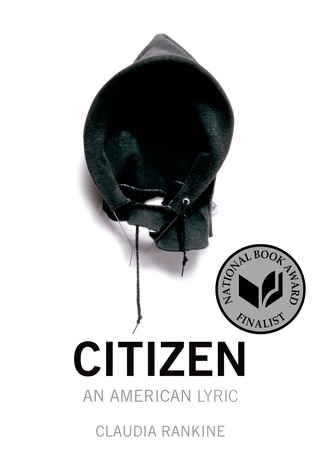
Citizen: An American Lyric by Claudia Rankine

Source: Purchased
Paperback, 169 pgs
I am an Amazon Affiliate

The power of Citizen: An American Lyric by Claudia Rankine makes me wonder what the winner of the National Book Award could have written to outshine Rankine’s words in 2014.  In her collection of essays, poems, and vignettes, Rankine points: “‘The purpose of art,’ James Baldwin wrote, ‘is to lay bare the questions hidden by the answers.'” (page 115)  She took this to heart when writing this collection because she raises up those questions about race in America and brandishes them like a flag.  That is not to say that racism is something that is wholly owned by just white people or white police, but that it is perpetuated by the actions, behaviors, and assumptions both races make about one another.  What does it mean to be American? Does it mean as citizens we brush aside these issues and move forward? Does it mean that we must embrace all of this darkness into ourselves and find solutions that may not work for everyone? Or does it mean that we must take a more internal approach and remedy that which we do to perpetuate those wrongs around us?

from page 135:

because white men can’t
police their imagination
black men are dying

What is engaging about Rankine’s work is that she blurs the lines between the you, the I, the she, the he, to make it less clear cut who is being discriminated against and who is suffering. In this way she takes the time to juxtapose the traditional black victim of white racism formula with a less black-and-white distinction, and it’s done with purpose.

“In any case, it is difficult not to think that if Serena lost context by abandoning all rules of civility, it could be because her body, trapped in a racial imaginary, trapped in disbelief — code for being black in America — is being governed not by the tennis match she is participating in but by a collapsed relationship that had promised to play by the rules.  Perhaps this is how racism feels no matter the context–” (page 30)

Lest you think this book is about racism only through the lens of the victim, it is not.  There a great deal to discuss about racism, its roots, its ignorance, and its pervasiveness in American society.  While many, if not all, the references are contemporary, they could have been pulled from many times throughout history.  Book clubs could discuss this collection of essays and poems for hours.  I cannot explain to you how deeply affected by the book I have been.  I will likely read and re-read this book many times.  I may even put it forth to my book club as a suggestion.

Citizen: An American Lyric by Claudia Rankine is essential reading for every American — young or old, black or white, Hispanic or Asian; it is the beginning of a dialogue that is desperately needed in this country where the presumption of ignorance or incivility is based upon a skin color rather than an individual’s actions and behaviors.  While discrimination against “other” continues, it is not merely one-sided, and until we are able to break down those walls to the truth of our humanity, discrimination and racism will always exist.

***Best of 2015 — not a contender, firmly on the list***

About the Author:

Claudia Rankine was born in Jamaica in 1963. She earned her B.A. in English from Williams College and her M.F.A. in poetry from Columbia University. She is the author of four collections of poetry, including Don’t Let Me Be Lonely (Graywolf, 2004); PLOT (2001); The End of the Alphabet (1998); and Nothing in Nature is Private (1995), which received the Cleveland State Poetry Prize.

Rankine has edited numerous anthologies including American Women Poets in the Twenty-First Century: Where Lyric Meets Language (Wesleyan, 2002) and American Poets in the Twenty-First Century: The New Poetics (2007). Her plays include Provenance of Beauty: A South Bronx Travelogue, commissioned by the Foundry Theatre and Existing Conditions, co-authored with Casey Llewellyn. She has also produced a number of videos in collaboration with John Lucas, including “Situation One.” A recipient of fellowships from the Academy of American Poetry, the National Endowments for the Arts, and the Lannan Foundation, she is currently the Henry G. Lee Professor of English at Pomona College.  (Photo credit: John Lucas)


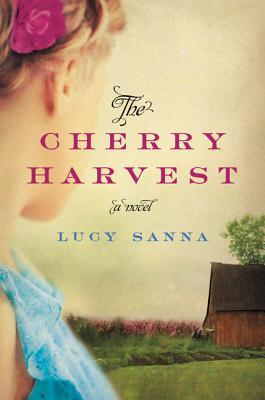
The Cherry Harvest by Lucy Sanna

tlc tour host

Source: TLC Book Tours
Hardcover, 336 pgs
I am an Amazon Affiliate

The Cherry Harvest by Lucy Sanna is a World War II novel set in the Wisconsin around the time of the cherry harvest, and for a novel focused on the home front of the war, the tension is still great.  As rationing affects the nation’s farmers, but not those like the lighthouse keeper, readers will get a sense of the tensions that wars bring for those at home and not just fighting the battles.  The narrative is split between Charlotte Christiansen and her daughter, Kate, and as two strong women, they struggle with what is right for their family, right for the town, and right for themselves.  Thomas Christiansen is a bookish man who gave up his university studies to take over the family farm, and he married a good woman from a local dairy farm who could make some award winning pies.  When the war begins to take the immigrant labor from the farm, his wife hatches a plan to save their upcoming harvest because without a plan of action, their son Ben may not have a home to come to when the war is over.

“Worry? In addition to all they had to do before, lighthouse keepers are now charged with protecting our shores from the enemy.  The shores of the Saint Lawrence Seaway and the Great Lakes.” She leaned in.  “And you think a few prison guards can protect us from that madman Hitler, who’s bent on controlling the world?” (pg. 30 ARC)

Kate is struggling, too.  Her dreams of attending university seem to be thwarted at nearly every turn as her mother takes the one possession she has to sell to pay for college and uses it to feed them, and as she learns she needs additional help with math in order to pass the entrance exam.  But beyond these trials, she realizes that life is moving forward without her in many ways, with her friend Josie already planning a wedding to Ben, even while he continues to fight overseas and his likelihood of coming home is slim.  As she finds out what kind of woman she wishes to become, Kate uncovers her own compass and learns that she needs to rely on her own courage to achieve her goals.  This self-reliance is something she learns from her mother, even as Kate comes to the realization that her mother is not perfect.

Sanna has created a dynamic cast of characters for this home front novel, but where it lacks strength is in the twists of plot.  Some situations come from left field or are simply there to check a box in what a WWII novel should have — including two star-crossed love affairs and battles between Americans and Nazis, though not on the battlefield.  Additionally, Charlotte’s character is a bit all over the place — one minute she wants the Nazis to be used as labor and in the next minute she wants them no where near her family.  Her hypocrisy is part of her undoing, but readers also may find that some things are left to unresolved to be satisfactory.  There are certain situations that did not jibe well with the character development, which made the fallout of those situations difficult to believe.

Where The Cherry Harvest by Lucy Sanna shined was in its depiction of troubled economic times because of the war, the tensions between those in the same town over those troubles, and the impact of war on soldiers and the uncertainty among family how to act or react to those soldiers coming home.  Had the novel a more refined focus, Sanna would have hit one out of the park with this one.  Due to the plot issues and other issues, this was a mixed read for me in the end.

About the Author:

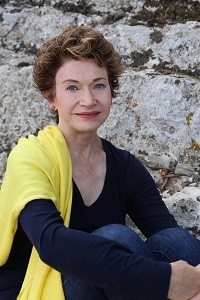
Lucy Sanna has published poetry, short stories, and nonfiction books, which have been translated into a number of languages. Born and raised in Wisconsin, Sanna now divides her time between Madison, Wisconsin, and San Francisco. The Cherry Harvest is her first novel.

Find out more about Lucy at her website and connect with her on Facebook. (Photo Credit: Hope Maxwell Snyder)


Firefly July: A Year of Very Short Poems selected by Paul B. Janeczko, illustrated by Melissa Sweet

Source: Public Library
Hardcover, 48 pgs
I am an Amazon Affiliate

Firefly July: A Year of Very Short Poems selected by Paul B. Janeczko, illustrated by Melissa Sweet, is a collection of some of the most recognizable poems, including William Carlos Williams’ The Red Wheelbarrow, for readers ages 6-9. Most of these poems are short and fit the theme of each season — winter, spring, summer, fall — but even younger readers will enjoy these poems as they are read aloud by their parents. The illustrations are colorful, and the vibrant images perfectly capture the mood of the season.

While some of the concepts in these poems are a little above where my own daughter may be cognitively, she still enjoyed listening to me read them aloud.  I also made sure to denote which season was depicted by each of the poems in the section, and had her point to images in the poems that she found in the illustrations, which kept her attention focused.  For instance, for Raymond Souster’s poem, “Spring,” the illustration depicts the roots of the flower and the beets on the page and the flower and leaves above.

Spring

Rain beats down,
roots stretch up.

They'll meet
in a flower.
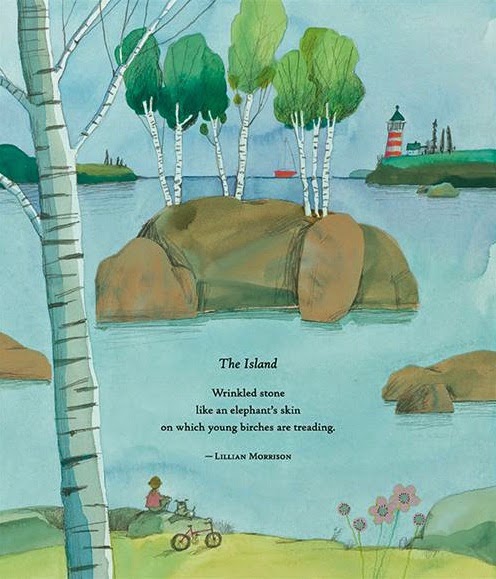
The Island

Wrinkled stone
like an elephant's skin
on which young birches are treading.

elephant


For “The Island” by Lillian Morrison, my daughter looked for the elephant talked about in the poem, and quickly found that he was the island with the trees on top. It became a word game for us, and while some poems don’t lend themselves easily to these kinds of games to keep a toddler’s interest, my daughter also loves the sounds of words, so she would often just sit and listen to me read the poems.

Firefly July: A Year of Very Short Poems selected by Paul B. Janeczko, illustrated by Melissa Sweet, contains not only those well-loved and classic poems from Williams, Dickinson, and Frost, but also poems from more contemporary poets, like Ted Kooser, Hughes, and Crapsey. Such a wide variety in a collection of poems about the seasons offer a great deal of teaching tools for young readers, from learning new words and how language works to what happens in each season scientifically.

***I first saw this book reviewed at Rhapsody in Books.***

About the Editor:

Paul Bryan Janeczko is an American poet and anthologist. He has published 40 books in the last 30 years, including poetry compilations, non-fiction guides for young writers, and books for teachers.

About the Illustrator:

Melissa Sweet has illustrated nearly 100 children’s books from board books to picture books and nonfiction titles. Her collages and paintings have appeared in the New York Times, Martha Stewart Living, Madison Park Greetings, Smilebox and for eeBoo Toys, which have garnered the Oppenheim and Parents Choice Awards.

Young Jane Austen: Becoming a Writer by Lisa Pliscou

Source: Author Lisa Pliscou
Paperback, 188 pgs
I am an Amazon Affiliate

Young Jane Austen: Becoming a Writer by Lisa Pliscou is an unusual biography in that it is written from the perspective of a young girl, the now famous Jane Austen.  In the introduction the author said she has created a “speculative biography” because there is so little known about Austen’s younger years.  She includes a time line for the biography and a list of sources, as well as a delightful annotated version of the biography in the back of the book.  Annotations help provide context to the well crafted narrative of young Jane’s early life.  An overarching theme in this biography is what makes a writer become a writer?  Are they born as such? Does it require simply a fondness for words or an observant nature and does it need to be nurtured just by the individual or by their own support system?

“But people aren’t born writers; they become writers.  They’re shaped by the circumstances of their lives — their personality, their interests, their experiences, their family and friends — and it’s never a certain thing that a talent with words, no matter how abundant, will find its full expression in both accomplishment and recognition.”  (pg. 141)

With this thesis in mind, Pliscou sets about illustrating how this may be true for Jane Austen, called Jenny by her family.  In many respects, she was not considered the writer of the family, and many in her family also wrote, including her mother.  And again, like most writers will tell you, reading can shape your craft as a writer, and as Jane read more and more, she began to use her knowledge to pick apart novels and other writing to learn how it functioned.

“Like Mama ripping apart an old gown of Cassy’s, only to put it together in a different way, creating a new gown for Jenny, Jenny was going to rip apart everything she had read.”  (pg 75)

Pliscou does touch upon the limited options available to women of Jane’s time, even in her transitions between different parts of the book.  At the heart of this biography is a strong young lady who sees an opportunity to become more and to be fulfilled in an unconventional way.  Had she different parents or siblings, perhaps there would have been no famous novelist.  But thankfully, that was not to be.  Young Jane Austen: Becoming a Writer by Lisa Pliscou is delightful, and would make a great introduction to young writers still toying with words on the page.  It demonstrates a young lady’s life as it is shaped by the world around her and the words on the page, and it also includes delightful illustrations.

About the Author:

Lisa Pliscou is an acclaimed author of both fiction and nonfiction — funny, thought-provoking, educational, inspiring — for adults and children, with a highlight on the coming-of-age experience.

Her work has been praised by the Wall Street Journal, the Los Angeles Times, the Chicago Sun-Times, Publishers Weekly, Booklist, the Associated Press, The Horn Book, and other media.


Ohio Violence by Alison Stine

Source: Poet Alison Stine
ebook, 80 pgs
I am an Amazon Affiliate


Vassar Miller Prize winner Ohio Violence by Alison Stine, which I received long ago from the poet (forgive my tardy review — as this was long before I had an e-reader and the file was lost in my inbox), juxtaposes the quiet, pastoral landscape of the Midwest United States with hinted at depravity, overt violence, and speculation.  Her narrator in “Ohio Violence” will tell you a story that is not hers to tell, and while this story begins with dismembered deer parts, but its really about the power of murderous jealousy and violence: “We measure our places in blood,/ bones in weeds, the buried well./ Each brick brought a message in her/ fifteen-year-old fist.” (pg. 18)

Stine’s lines often build from small pieces — whether tiny pieces of an image or situation or emotion — into a crescendo that will hammer the reader when they are least expecting it.  These surprising lines and poems will never be far from the reader’s mind, especially as they continue with the poems that follow.  Each of these poems looks at violence and the secrecy of violence in a new way.  There are missing women, there are violated women, there are those slight indications of inappropriate intimacy, but at the root is the unexpected nature of the violence and the cover-ups that fail to hide the damage done.

School

All winter we sat blind, I next to the girl   
who loved her scabs, the blood shields   
her head gave up, her face a sun of blank   
amazement. She drew. This means love:   
a circle with a line through it. More work:   
a cross. More crosses. Ice sloughed   
through fields. Ice river, the pages   
of our notebooks. Outside: limbs and roads   
and wires. Outside cracked with force   
and turning. Our poems filled with salt.   
He took me to his bed.   
The writer never speaks. The writer speaks   
in details, the sateen lining of my coat,   
the star point of tongue kissing. The winter   
speaks in the whip. Runoff nixed   
with ash. I spilt water on my notebook.   
Words went back to ink; paper back   
to ruffle, pulp. You smell like dog, the girl   
said. You will be left like the winter.   
Little sputter in the car’s craw. Little   
crevice in the pavement. Ice reminder.   
He took me to his bed, saying: Ali,   
Ali, tell no one. I told the girl, a sore   
gathering, another skin to pick and worry.

Ohio Violence by Alison Stine carries with a heavy burden, but it is a burden that is borne well and with tenderness and homage to those who have been victims.  But do not be fooled that these poems are all tender in content because there is a brutal-ness to the images presented, searing heartbreak and horror into the minds of the reader.  They shall never forget the tales Stine is telling.

About the Poet:

Alison Stine is a 2008 winner of a Ruth Lilly Fellowship. She was born in Indiana and grew up in Ohio. A former Wallace Stegner Fellow at Stanford University, she is the author of the chapbook Lot of My Sister, winner of the Wick Prize. Her poems have appeared in such journals as The Paris Review, Poetry, and The Kenyon Review. This is her first book. She lives in Athens, Ohio.  Her new novel, Supervision, was released April 2015.


How Tiger Says Thank You! and How Penguin Says Please! by Abigail Samoun, illustrated by Sarah Watts

Source: Sterling Children’s Books
Hardcover, 22-24 pgs
I am an Amazon Affiliate

How Penguin Says Please! and How Tiger Says Thank You! by Abigail Samoun, illustrated by Sarah Watts, are both part of the little traveler series of board books for ages 2-4. Kids love learning new words and why should learning a foreign language be any different.  At this age, kids are sponges ready to absorb anything they can get their hands or ears on, which also can spell trouble if you’re not careful when filtering your own behavior.  These little board books contain not only colorful illustrations of Penguin and Tiger’s travels, but also maps that illustrate the routes they took around the world.

Although there is no storyline per se, tiger and penguin are teaching kids and parents how to say Please and Thank You — which are some of the most important words in teaching children manners — in different languages, ranging from Chinese to Russian and Indian.  Tiger not only thanks a flight attendant, but also a balloon vendor, a market merchant, and others on her journey, while Penguin says please to an airline ticket agent, a bakery clerk, someone who takes her picture and others.

How Penguin Says Please! and How Tiger Says Thank You! by Abigail Samoun, illustrated by Sarah Watts, offer a great place to start learning new languages for kids.  They make travel to other countries less frightening, and make it easy for parents to pronounce the foreign words with the a key on each page for sounding out the words.  My daughter and I had fun with the travels and we talked about each country and what information I could provide in addition to the please and thank you word pronunciation aspect.  She loves books with maps and different cultures, soaking up all the information she can.  She is full of questions, and I cannot wait to hear her start trying to pronounce these words right alongside their English counterparts.

The Book of Goodbyes by Jillian Weise

Source: Academy of American Poets membership benefit
Paperback, 88 pgs
I am an Amazon Affiliate

The Book of Goodbyes by Jillian Weise, recipient of the Isabella Gardner Poetry Award in 2013 and the 2013 James Laughlin Award, is a collection of poems that highlights the power of goodbye and how it can free us from limitation.  Whether those limitations are self-imposed or imposed upon us by others or the outside distractions that keep us locked in place.

There are several poems in the collection about laws against the disabled being seen in public and the societal burdens that come with those medical miracles — prosthetic legs, for instance — and how those “norms” are meant to weigh down the potential of those human beings. While these “norms” must be recognized to be overcome, it is a big obstacle to overcome, especially when those limitations or “norms” become self-imposed limitations on the self. Saying goodbye to those can be a hard process to perform and a distance that can be difficult to maintain, but there is an inherent power in saying goodbye to those things.

Goodbyes (pg. 50)

begin long before you hear them
and gain speed and come out of 
the same place as other words.
They should have their own
place to come from, the elbow
perhaps, since elbows look
funny and never weep. Why
are you proud of me? I said
goodbye to you forty times.
I see your point. That is
an achievement unto itself.
My mom wants me to write
a goodbye poem. It should fit 
inside a card and use the phrase,
“You are one powerful lady.”
There is nothing powerful
about me though you might 
think so from the way I spit.
I don’t want to say goodbye
to you anymore. I heard
the first wave was an accident.
It happened in the Cave 
of the Hands in Santa Cruz.
The four of them were drinking
and someone killed
a wild boar and someone else
said, “Hey look, I put my hand
in it. Saying goodbye is like that.
You put your hand in it and then
you take your hand back.

Weise touches upon the hardships and the freedom of goodbye, but she also talks about its empowering nature. There is a willfulness to when we choose to make those breaks, and there are many of those moments in this collection.  The Book of Goodbyes by Jillian Weise, recipient of the Isabella Gardner Poetry Award in 2013 and the 2013 James Laughlin Award, offers a great deal to discuss, and would be an interesting selection for a book club discussion.

About the Poet: (Photo credit: Guillermo Morizot Hires)

Jillian Weise was born in Houston, Texas, in 1981. She studied at Florida State University; the University of North Carolina at Greensboro, where she was the Fred Chappell Fellow; and the University of Cincinnati.

Weise is the author of The Book of Goodbyes (BOA Editions, 2013), which received the 2013 James Laughlin Award from the Academy of American Poets, which recognizes a superior second book of poetry by an American poet. Her debut poetry collection, The Amputee’s Guide to Sex, was published by Soft Skull Press in 2007.


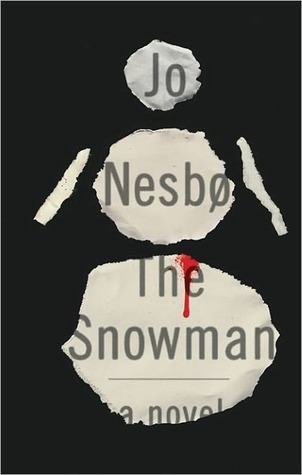
The Snowman by Jo Nesbø

Source: Public library
Hardcover, 383 pages
I am an Amazon Affiliate

The Snowman by Jo Nesbø, which was the May book club selection, is the 7th book in the Harry Hole detective series and translated by Don Bartlett.  The translation is wonderfully descriptive and never feels stilted, which is perfect when reading a mystery novel.  In fact, the clipped sentences read to me more like the pace of a mystery/thriller should be, while at the same time being descriptive, evocative, and creating an appropriate emphasis (if sometimes, over-emphasis) on the cold.

Oslo police investigator Harry Hole has solved a serial killer case before, and as his fame makes the rounds in Norway, he garners the attention of a young detective and a killer.  Mothers across the country are disappearing, and statistics reveal that about 20 percent of children are not related to the fathers they live with.  This story involves not only so called mommy issues, as one book club member stated, but also the power of genetics and survival of the fittest theories.

From the creepy snowmen that pop up after the disappearance of mothers across the city to the highly suspicious female detective Katrine Bratt, Hole has his work cut out for him in trying to solve these disappearances and murders.  As the mold is sought out in Hole’s apartment, the case has uncovered a series of ailments from Raynaud’s syndrome to scleroderma and noctambulism and other parasomnias.  These conditions play a significant role in how these characters act, react, and interact with one another, and they often lead to confusion of the facts in the snowman case.

Hole is a prototypical police detective consumed by his work, and like others, his obsession with solving his cases leads him to have a very solitary life in which alcohol plays a significant role.  What’s done really well here is the twists and turns in the case, hampered by the various ailments of the players, but also the dialogue.  It’s purposeful and witty, which can make the errors in judgment all the more ironic.

“‘I’m in the office and have had a look at what you’ve found.  You said all the missing women were married with children.  I think there could be something in that.’

‘What?’

‘I have no idea.  I just needed to hear myself say that to someone.  So that I could decide if it sounded idiotic.’

‘And how does it sound?’

‘Idiotic.  Good night.'” (page 113)

The Snowman by Jo Nesbø, translated by Don Bartlett, was a thrilling read and well written.  Hole may be an anti-hero, but he’s one you’ll want on your side to bring you justice, even if his own dysfunction can derail him.  Although this is a 7th book in the series, there was enough back story that readers would have no trouble following Hole.  Some readers may prefer to see the character’s evolution from start to finish, and for those, like myself, I recommend starting at the beginning.

What the Book Club Thought:

There were two members, including the one who nominated the book, who did not finish, and one member who skimmed through quite a bit of it.  Those who finished the book did have some issues with the set up of the narration, which shifted quite a bit between main and little used characters.  Overall, some of the crimes were intriguing, and downright gruesome, which some members enjoyed, but there was one scene in which a body was found in such a way that another member said it seemed cliche or recycled from his other book, The Son.  There were a few who rated the book 4 stars and several others rated it about three stars.  This one got mixed reviews, but for those who enjoyed it, they had no issues with the novel’s pacing or the narration.  One member found the narration to be choppy, which they thought might be due to translation, while another member thought it was the author’s style and the need to emphasize the cold.

About the Author:

Jo Nesbø is a Glass Key award-winning Norwegian author and musician. As of March 2014 more than 3 million copies of his novels have been sold in Norway, and his work has been translated into over 40 languages, selling 23 million copies.

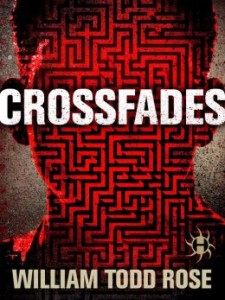
Crossfades by William Todd Rose & Giveaway

tlc tour host

Source: Hydra and TLC Book Tours
ebook, 129 pgs
I am an Amazon Affiliate

Crossfades by William Todd Rose is a novel that hovers on the borders of science fiction and horror, as Chuck Grainger navigates the Crossfades to usher souls out of a purgatory to where they should be.  This limbo is the moment when one’s life is ending and a fantasy reality take over before the soul moves on, but in some cases, souls can be tricked into believing the fantasy is reality.  Chuck is a Whisk who must guide these trapped souls through a maze of changing landscapes without becoming detached from reality himself.  Through the help of Sleepers, those who are in a coma, Chuck can remain tethered to reality as long as his emotions remain in check.

“Drawing a deep breath through his nostrils was like snorting a line of decayed flesh.  The stench watered his eyes and infected his sinuses, seeping into his saliva and immersing his mouth in the rancid tang of decomposition.  His diaphragm hitched in protest, expelling tainted oxygen through retches that left his throat lining feeling as though he’d belched fire.”  (From the eARC)

Chuck is a lonely man, and this loneliness is something that threatens to pull him over into the abyss even as he knows the Crossfades around him are not real.  Whether trying to convince a little girl that her reality is long gone and that she must move on or finding an emotional connection with a frightened young woman, Chuck is tested.  Rose clearly defines this ephemeral world and makes it real and mutable at the same time, and his characters are seeping with powerful emotion.  Some readers, however, may find that this format — the novella — is too short to really connect with Chuck and his plight.  In many respects, readers are kept at a distance because he does have to remain detached, at least until the last chapters.

Crossfades by William Todd Rose explores the notion of purgatory and limbo really well, and examines what it would be liked to be trapped by one’s own fantasies — good or bad.  Rose has created a world that can be manipulated by the individual soul and by a mastermind who seeks to take over the alternate world.

About the Author:

William Todd Rose writes dark, speculative fiction from his home in West Virginia. His short stories have been featured in numerous anthologies and magazines, and his work includes the novels Cry Havoc, The Dead & Dying, and The Seven Habits of Highly Infective People, and the novella Apocalyptic Organ Grinder. For more information on the author, including links to bonus content, please visit him online.

a Rafflecopter giveaway

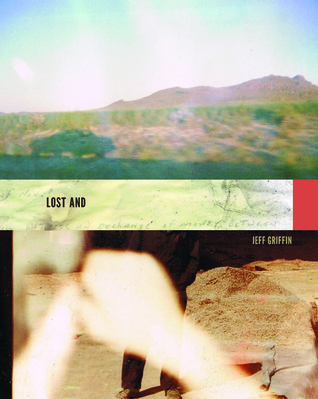
Lost and by Jeff Griffin

Source: NetGalley
eBook, 170 pgs
I am an Amazon Affiliate

Lost and by Jeff Griffin, published by University of Iowa Press, feels more like a scrapbook than a poetry collection, and while there were poems included, most everything in the book are scraps he gleaned from his travels into the desert. Some of these pieces are lists, photos, and other scraps, including a letter from a woman to her alcoholic partner. While these items may reflect communities that have once thrived in the desert and are now abandoned, the collection is not what most readers would expect and there is little to link these pieces together.

From GoodReads:

Ever since he was a child sitting in the back of his parents’ car, Jeff Griffin has been taking explorative journeys into the desert. In 2007, as an art student, he started wandering the back roads of the Mojave Desert with the purpose of looking for a place to reflect in the harshly beautiful surroundings. What he found were widely scattered postmodern ruins—abandoned trailers and campers and improvised structures—whose vanished occupants had left behind, in their trash, an archaeological record.

While Griffin’s efforts to create an artistic rendering of these emptied communities, trailers, and lives, the pieces could have been better tied to one another with some text, explanation, or other commentary from Griffin. In many ways, the collection could have benefited from a demonstration of how Griffin was influenced or inspired by these pieces to create his own art — though the book itself is his modern art from those journeys into the Mojave Desert. Lost and by Jeff Griffin, published by University of Iowa Press, just didn’t work for me, but perhaps I’m not the target audience for this one.

About the Poet:

Jeff Griffin is a graduate of the Iowa Writers’ Workshop and an associate at Griffin Moss Industries, Inc., and he operates the publishing house Slim Princess Holdings. He lives around Nevada.