Quantcast

Pride & Prejudice: Retold in Limericks by Seamus O’Leprechaun

Source: Borrowed from Diary of an Eccentric
eBook, 65 pgs
I am an Amazon Affiliate

Pride & Prejudice: Retold in Limericks by Seamus O’Leprechaun is a retelling of Jane Austen’s Pride & Prejudice in Limericks! Yes, you read that correctly.  When Anna told me she had something I could read for 24-hour Read-a-Thon, I was all over this one.  I LOVE Limericks!

O’Leprechaun, which clearly has to be a pen name, captures the wit and tension between the characters so easily in just a Limerick.  It was highly appropriate that I read it for the read-a-thon and National Poetry Month.

From "Chapter Six":

Now Darcy has altered his drive.
What haunts him? A pair of dark eyes.
     The girl he rejected
     Now leaves him affected
Liz Bennet - he years for this prize.

From "Chapter Seven"

Jane Bennet, meantime, has caught cold,
Through a rain-soaked contrivance most bold.
     Now she must stick around
     At the Bingley compound,
Where Liz waits as the symptoms unfold.

The machinations of Mrs. Bennet to ensure that her daughters are married off before her husband dies, and her anger at Lizzy for turning down Mr. Collins also come off as ridiculous as Austen intended.  O’Leprechaun uses his skills well in these poems to flesh out the novel in poetic form.  Many of these poems will make readers laugh out loud, giggle, and shake their heads in amusement.

From "Chapter Fifteen"

But this Collins has come for a wife -
Either Lizzy or Jane will suffice.
     And as Jane is bespoke,
     Looks like Lizzy's up, folks,
To be wed by a blockhead - that's life.

Pride & Prejudice: Retold in Limericks by Seamus O’Leprechaun is just so much fun, and totally worth the short time spent reading it, reliving the best moments of Austen’s book. Also, it’s a great way to celebrate poetry.
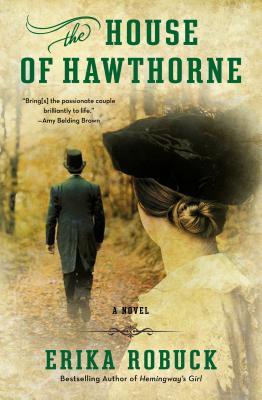
The House of Hawthorne by Erika Robuck

Source: Penguin Random House
Hardcover, 416 pgs
I am an Amazon Affiliate

The House of Hawthorne by Erika Robuck is word portrait of Sophia Peabody and Nathaniel Hawthorne’s courtship, marriage, and family, as well as the tensions that arise from two artists balancing their passions with their family.  Spoken in the voice of Sophia Peabody, readers are given a glimpse of her passionate painting and love of life despite her debilitating headaches before she meets Nathaniel, an aloof writer who feels the inadequacy of his words on paper.  From the 1830s to the U.S. Civil War, readers are taken through their early romance and their marriage.  While readers will find Sophia passionate about her work, she still finds joy and love in being a wife and mother, though she does miss her painting.  Despite the vacillation between poverty and moderate wealth, the Hawthornes are a family unit that loves deeply and remain loyal to their friends.

“One hand is open, overflowing with an abundance of joy and vitality; the other is a fist, clutching a void so desperately that the nails dig holes in the skin.” (pg. 247)

Like many artists there are period of abundance and times when the land is fallow, and this is true in terms of both writing and painting artistry as well as the funds they earn.  Sophia is a headstrong woman, but she quickly learns how to navigate her husband’s moods and comfort him in the best way she can for a reserved man.  Nathaniel is an enigma, but we get to see him through Sophia’s loving eyes, which can help soften some of his more anti-social behavior that others may see as mean or aloof.  It is wonderful to see the circle of friends the Hawthorne’s have and how those relationships evolve over time, particularly in light of the coming Civil War between the North and South.  From the drifting away from the Emersons to the effusive complements of Melville, the Hawthornes remain a tight knit family and rally around each other in times of loss and suffering.

“Our country simmers like a covered pot over the issue of slavery, and while Nathaniel and I do not approve of owning slaves, we cannot imagine what a division or even a war between the Northern and Southern states would do to our young nation.” (pg. 264)

The House of Hawthorne by Erika Robuck is a stunning narrative that illuminates the often overshadowed life of Sophia Hawthorne and demonstrates how two artists can live together and build a life despite their differences and their own need for solitude and succor.  The novel raises questions of self-identity, self-expression, compromise, and the desire to create and have it all.

About the Author:

Historical fiction writer, book blogger, voracious reader. Erika’s first novel, RECEIVE ME FALLING was self-published. Penguin Random House published HEMINGWAY’S GIRL, CALL ME ZELDA, FALLEN BEAUTY, and a short story anthology to which Erika contributed, GRAND CENTRAL: ORIGINAL STORIES OF POSTWAR LOVE AND REUNION. Her forthcoming novel THE HOUSE OF HAWTHORNE will release on May 5th, 2015.

Erika writes about and reviews historical fiction at her blog, Muse, and is a contributor to fiction blog, Writer Unboxed. She is also a member of the Historical Novel Society, the Hemingway Society, the Millay Society. and the Hawthorne Society.


Double Jinx by Nancy Reddy

Source: Milkweed Editions
Paperback, 96 pgs.
I am an Amazon Affiliate

Double Jinx by Nancy Reddy is a curious exploration of figurative and literal transformations from adolescence into adulthood, and it examines the malleability of our identities.  Many poetry readers have witnessed the retelling of fairy tales, like that of Cinderella, but not many poems — if any — deal with Nancy Drew and her identity, particularly in “The Case of the Double Jinx” (pg. 6) and the doppelgänger.  Nancy is hot on the case and observing this imposter has her doubting herself and her value.  Even though she knows that this imposter is not like her, she still fears she could lose Ned and her edge.

Reddy explores standing on the outside and the envy that can engender in “Understudy” (pg 10).  “You’re the other//woman, stranded just offstage,/mouthing the words you’ve learned/by heart.  At dress rehearsal you were costumed/as your better self.  Now she’s the critics’ darling and you’re//a cast-off prop,” the narrator says.  This persona takes on more and more of the starlight’s mannerisms, make-up rituals, and more until she mirrors that star in the hope that by becoming other than herself, she will be seen.

As the collection progresses, the poems seem to take on a less literary and artsy subject matter to look at the average person’s identity and how that changes over time.  “Big Valley’s Last Surviving Beauty Queen” (pg. 18) explores the effects of aging on a former beauty queen and how that effects her own perception of herself.  The accolades she sees and experiences are false to her when she returns home.

Genealogy (pg. 39)

My father's father was a woodstove.  He snapped and
  roared.

He crackled in the basement.  They fed him
so they wouldn't freeze.

While these perceptions of identity are explored again and again in a number of contexts, Reddy also explores the perceptions of men. But these perceptions of men also can affect how women identify themselves.  There are a number of these poems, which explore violence and addiction.  Double Jinx by Nancy Reddy is fascinating and multi-layered in its examination of identity and perception, particularly among young women and adult women.

About the Poet:

Nancy Reddy’s poetry has been published in 32 PoemsTupelo Quarterly, and Best New Poets of 2011(selected by D.A. Powell), with poems forthcoming in Post Road and New Poetry from the Midwest. She lives in Madison, where she is a doctoral candidate in composition and rhetoric at the University of Wisconsin.


Take a Peek with Peek-a-Bear by Jill Mangel Weisfeld

Source: STRATEGIES Literary Public Relations
Hardcover, 12 pgs
I am an Amazon Affiliate

Take a Peek with Peek-a-Bear by Jill Mangel Weisfeld, illustrated by Garry Thorburn, is one of the latest favorites in my house.  My daughter can just spend some quiet time with this one in her lap and experience what Peek-a-Bear experiences even without someone reading the text to her.  She knows the various modes of transportation the bear finds himself traveling on already, which probably helps with her own version of the narration.

Peek-a-Bear has some interactive parts that readers can pull, lift, open, and rotate to see the latest scene.  He rides all kinds of transportation vehicles from a Ferris Wheel to a boat and train.  He takes a number of trips in this book and sees some fascinating creatures, including an octopus who likes peanut butter.  Take a Peek with Peek-a-Bear by Jill Mangel Weisfeld, illustrated by Garry Thorburn, is fun and can be turned into a game of what do your kids see outside the window.  This game can be carried over into your own travels on vacation or just to the grocery store.

The History of Rock ‘n’ Roll in Ten Songs by Greil Marcus, Read by Henry Rollins

Source: Audible
Audio, 7 hrs
I am an Amazon Affiliate

The History of Rock ‘n’ Roll in Ten Songs by Greil Marcus, read by Henry Rollins, examines rock and roll history in a unique way, threading together not only U.S. history and the British invasion, but also the influences and changes that occur when new artists take on old songs and make them new.  The artists breathe new life into these songs based on their own experiences and influences, and while the songwriters are often in the background and not praised as much for their work writing them, they provide the backbone that sets these No. 1 hits on their paths to greatness.  Each chapter of the book is broken up to discuss a particular song, but Marcus’ writing style often seems like he’s just producing a name-dropping litany, rather than fleshing out the history of those songs.

The songs he selected were Shake Some Action; Transmission; In the Still of the Nite; All I Could Do Was Cry; Crying, Waiting, Hoping; Instrumental Break; Money (That’s What I Want) Money Changes Everything; This Magic Moment; Guitar Drag; and To Know Him Is To Love Him.  While the Beatles could not be ignored given their wide-ranging influence on rock and roll, Marcus does select songs and singers who were not necessarily as big, including Joy Division and others in Motown and other genres.  Rollins does a great job at pacing his reading of this book, but readers will still hear the run-on sentences and the excessive use of commas, as well as the tangential stream-of-conscious discussion that is all Marcus.

The History of Rock ‘n’ Roll in Ten Songs by Greil Marcus, read by Henry Rollins, is an experimental thesis that the genesis of music is the interplay of chords, song, voice, and other factors, but it also strives to demonstrate how music from all genres influences not only what is produced today, but what has been produced previously.  While many would say that there is nothing new in music, Marcus would disagree — as he does in the interview with Rollins — saying that each artist places their own flavor and influence on a song, making it into something new.  The possibilities are endless.  While readers can appreciate Marcus’ musical knowledge and experience, as well as his tracking of history, the execution of this book bogs down the pacing and will leaver readers’ minds wandering.  An experience that, perhaps, could have been improved by some audio snippets of the songs he discusses.

About the Author:

Greil Marcus is the author of Mystery Train (1975), Lipstick Traces (1989), The Shape of Things to Come (2006), When that Rough God Goes Riding and Bob Dylan by Greil Marcus (both 2010), and other books. With Werner Sollors he is the editor of A New Literary History of America (2009). In recent years he has taught at Berkeley, Princeton, Minnesota, NYU, and the New School in New York. He lives in Oakland, California.

The Antigone Poems by Marie Slaight with charcoal drawings from Terrence Tasker

Source: Altaire Productions & Publications & TLC Book Tours
Paperback, 104 pgs.
I am an Amazon Affiliate

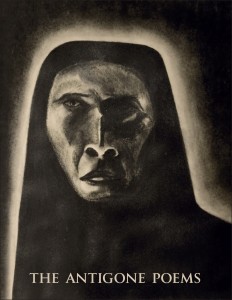
The Antigone Poems by Marie Slaight, with charcoal drawings by Terrence Tasker that resemble the one on the cover (who may be is Antigone), is unique in that it is inspired by the Sophocles play but that it is not explicit in its references.  Antigone is the third in the Theban plays written by Sophocles and she was a very stubborn character who fought for her familial duties.  She is not only stubborn but very passionate about her beliefs.  The Antigone we meet in these poems is very passionate and very torn, but there also is an underlying darkness to her actions.  Slaight brings out her inner fears of death, which she believes is imminent even as she continues to defy the authorities and the gods with her actions out of duty.

Slaight employs some fantastic imagery, like “If this perfume doesn’t burst/It will twist into venom.” (pg XVII) and “Silence and decline/And a veil of grey descending.” (pg. LXXIII)  Coupled with the stunning charcoal drawings from Tasker, which remind me of the Greek masks worn when the old plays were acted out, the collection evokes deep sadness, turmoil and concern.  One of my favorite images is a side profile in which just the face is shadowed on a cream background and the hair is left without definition.  There is a fierceness in the woman’s brow and chin, but sadness can be found in her down-turned mouth.

From pg. LVII

Carver
Twist
You mark
In flesh.

Sculptor

Smash
This stone
In death.

Your anguish sought this blackened veil.
Your anger wrought this iron hell.

The Antigone Poems by Marie Slaight, with charcoal drawings by Terrence Tasker, is a fascinating collection of passionate and terrifying poems depicting the inner turmoil of Antigone, who fought for what was morally right and what she thought of as her duty to her brother.  She gives up everything with her battle to bury her shamed brother, including her betrothal to the prince of Thebes.  Slaight has a deft poetic hand when it comes to this tortured and head-strong character.  Her poems are cryptic, but infused with strong emotion.  Some surface background on the character of Antigone may be needed to fully grasp these poems, but on the surface, they could be spoken by any such woman or man.

About the Poet:

MARIE SLAIGHT (1954-) has worked in Montreal, New Orleans, and Buenos Aires as a writer, producer, and performer. Now based in Sydney, Australia, her poetry has appeared in American Writing, Pittsburgh Quarterly, Poetry Salzburg, The Abiko Quarterly, New Orleans Review and elsewhere. Slaight is currently the director of Altaire Productions & Publications, a Sydney-based arts production company, which has been involved in such films as the award-winning documentary Bury the Hatchet, Kindred and Whoever Was Using This Bed.

About the Illustrator:

TERRENCE TASKER (1947-1992) was born in Saskatchewan, Canada. Raised in rural western Canada, he went on to become a self-taught artist and filmmaker. He co-founded and built the original Studio Altaire, a 90-seat theater and visual art gallery that also ran after hours jazz concerts in downtown Montreal. He worked as a set builder as well as working in construction, mining, finance, industrial installations, taxi driving and film projectionist. He created the artwork for The Antigone Poems in the 1970s, while living in Montreal and Toronto.

tlc tour host

ABC Universe by American Museum of Natural History

Source: Sterling Children’s Books
Hardcover, 18 pgs
I am an Amazon Affiliate

ABC Universe by American Museum of Natural History is not your typical book about the alphabet.  Whether you have daughters, sons, nieces, or nephews who are just starting to learn their letters, this board book presents vivid and interesting pictures for kids to associate with their new letters.  Young kids always find things they are unfamiliar with in their daily lives fascinating.  Outer space is a big wide and different world from that here on Earth.  My daughter LOVES outer space stories, and this combines learning new words with things she’s interested in.  I think since this book entered the house in March, my daughter and I have read it about 10 times or more.  She’s starting to know some of the words on her own by looking at the picture, like Astronaut, and she can tell me what letter the words start with.  Harder words, like Quasar, are more difficult, but she does recognize the Q at the beginning of the word.

ABC Universe by American Museum of Natural History is a fun introduction to not only the alphabet, but also things found in outer space.  It will get kids thinking about words that they are not readily familiar with and they will see outer space in a different way.  We have fun with this book, and we’ll probably read it another 10 times before the year is out.

Remember the Sun: Poems of Nature and Inspiration by Melanie Simms

Source: The poet
Ebook, 35 pgs
I am an amazon Affiliate

Remember the Sun: Poems of Nature and Inspiration by Melanie Simms, published by Sunbury Press, features poems and Lawrence Von Knorr’s photographs of Sunbury, Pa., and other local areas in the region.  In many cases, the photographs give additional life to the poems in Simms’s volume, but in others it is unclear how the poems and the photos connect.  Despite that, the photos are gorgeous, particularly the local shops and the pictures of the Susquehanna River.  Simms’s poems are chock full of imagery from ghosts harkening back to the past journey of Edison to the shadow puppets on the walls, but her verse examines not only the natural world, but the relationships between mothers and daughters, mothers and sons, and lovers.

From "Mother's Ashes" (pg. 7)

I love Emilio
for driving the long way
He doesn't have to do this.
"She's your mother," he says.
"We have to honor her spirit."
(I'd kept her ashes for years
in the cupboard in the kitchen).
I don't want to let go.  I wanted to
wake up each morning, knowing
some part of her remained.

Don’t we all want to keep a piece of our loved ones close, and we often very rarely realize how selfish that is. Is it better to honor their wishes or to keep them close? We all struggle with this dilemma at one point or another. Simms’s verse is historical and modern, and it is emotional and contemplative. There is something for every reader in this collection. Her collection also contains quite a few poems in which journeys are made — journeys to bury the dead, journeys away from and returning to loved ones, and journeys of emotion. When readers talk of place as a character in novels, there are moments like that in this collection as well, like in “Beauty and Magic at Barone,” about the Barone Beauty Academy in Sunbury.

From "The Suitcase" (pg. 3)

I watch you leave, but as the evening falls I imagine you
back in your chair.
I imagine that you have only stepped out for an evening walk.
How has it come to this?
All our dreams
packed away into one little suitcase
and carried off so easily?

Remember the Sun: Poems of Nature and Inspiration by Melanie Simms is a satisfying collection of poems and photographs that breathe life into the activities of a small town.  These people are no different than those that live in big cities; they still have dreams and big loves, and devastating losses.


About the Poet:

Melanie served as the Perry County Poet Laureate from 2005-2006 and has published in over 180 newspapers, magazines, and poetry journals; her poems have been featured on state and local television shows and over fifty poetry radio programs. She has been a featured artist at various Pennsylvania colleges, high schools, and landmarks including but not limited to National Poetry Month at the Degenstein Community Library with presentations by State Rep. Lynda Schlegel-Culver and Sunbury mayor David Persing.  Her awards include a Sophie Award, Finalist in the Richard Savage Poetry Award (Bloomsburg University), Perry County Poet Laureate (2005-2006), a Vermont Writers Studio Award, a Pushcart Prize Nomination, Marquis Who’s Who of The World, Cambridge Who’s Who of Women in Publication, Poet of the Week (Poetry Superhighway), and an Evvy Award nomination for Waking the Muse (best self-published book in the poetry category).

She is a President and Founder of the Association of Pennsylvania Poet’s Laureate (founded 2006) and a member of the World Poetry Society and The Daughters of the American Revolution.  To learn more, visit her Website.


Free Air: Poems by Joe Wenke

Source: Meryl L. Moss Media Relations
Paperback, 80 pgs
I am an Amazon Affiliate

Free Air: Poems by Joe Wenke is a satirical collection of poems that deftly plays with rhythm and rhyme.  These poems appear at first glance to be off-the-cuff statements and observations, but that’s if they are taken too seriously.  Take the “Lament of an Old Man” who is saddened by the passing of time and facing his own mortality where the narrator jokes about how he is just getting the hang of life and it is about to end.  There’s a self-deprecating humor at play here, but aren’t these many of the same observations we make as we age?

Readers will enjoy these playful pieces in which the narrator is tricked by his own brain in “I Think Without Thinking.”  Wenke is almost whimsical in his choice of words, ensuring that they rhyme or provide the necessary sing-song nature of these poems.  However, there are some beautiful poems as well that are less about being humorous, though they still may contain humor.  One of my favorites, “Star Stuff,” begins with a quote from Carl Sagan and how we are made of star stuff because our DNA is made of nitrogen, iron, calcium, and other elements found in collapsing stars.

From "Star Stuff" (pg. 33)

1

Billions of years ago,
millions of light years away,
we made a pact inside a star
to meet again.
Was it that distant memory,
a sweet explosion of wills,
that brightened your face
as you turned
to meet me again?

2

I've waited for you, my love,
in all the familiar, desolate places,
in train stations, bus stations, airports
and apartments.
I've waited for your return
from New York City, Hartford, Boston
and Rome.
I've waited across the vacuum of space,
across the emptiness of our former lives,
across distances beyond all
but our imaginations.

Free Air: Poems by Joe Wenke is a fine collection to pass a warm, spring day reading in the sun.  Stopping to chuckle at the lines or to reflect on the deeper meaning.  But there is much more beneath the surface of these lines, as Wenke seeks to raise awareness about how “free” we really are and how finite the time we have is.

About the Poet:

Joe Wenke is a writer, LGBTQ activist and the founder and publisher of Trans Über, a publishing company with a focus on promoting LGBTQ rights, free thought and equality for all people. Wenke received a B.A. in English from the University of Notre Dame, an M.A. in English from Penn State and a Ph.D. in English from the University of Connecticut.


Medic Against Bomb: A Doctor’s Poetry of War by Frederick Foote

Source: NetGalley & Grayson Books
eBook, 82 pgs
I am an Amazon Affiliate

Medic Against Bomb: A Doctor’s Poetry of War by Frederick Foote is a collection of poems from a retired U.S. Navy physician, who also is the director of the Warrior Poetry Project at Walter Reed National Military Medical Center.  Beneath the carnage depicted in many of these poems, there is a compassionate undercurrent.  Some of these poems are about the battle scars — physical and emotional — that shape today’s warriors, but they also are about sacrifice, discipline, and human comfort spawned from work on the hospital ship Comfort and the care of sick and wounded Americans.

From “Mountain Burial”

knowing we can’t retrieve
this well that’s now gone dry.
She lives in a field of green
whose thousand blades wave free,
scattered from us by war,
the ender of destinies.

From “Uncle Jim”

They say everything’s been written; it hasn’t.
Darkness and light are vast, and poets have barely begun.
Even when it hides, the hand knows when it’s writing a final death.

Foote’s narrator is a compassionate medic, but he is well aware of the carnage of war, facing it daily in surgeries and helping soldiers come to terms with the losses they have suffered. There is compassion for the soldiers as well as for the enemies, particularly those also marred by war. These poems are less trying to make sense of war, but geared toward demonstrating compassion and understanding. They pay homage to the dead, a way to honor their collective and individual sacrifices. Foote also includes some great notes about the different terms used, including Fedayeen, which refers to a generic fighter, and Mujahadeen, which refers to someone fighting for a religious cause. There also are great tidbits about events that occurred during the war that many may not know, including villagers who tossed unwanted children — particularly those with cognitive disabilities — onto Medevacs to get rid of them (“The War Child”).

Wife on the ICU

I watch at night and walk at dawn
forever in flight like the soul of a bird
the monitor shows a thin green line
I walk at night and watch at dawn
not knowing the end of the road I’m on
down which, possessed by a voice unheard
I watch at night and walk at dawn
forever in flight like the soul of a bird.

Medic Against Bomb: A Doctor’s Poetry of War by Frederick Foote is a collection of poems that is less focused on battles and who the enemy is and more on the compassion necessary to treat those men, women, and children who are scared by war — whether they are soldiers, bystanders, or the enemy. Some poems are better paced than others, but there are some gems that will have readers looking at war with a new perspective.

About the Author:

Frederick Foote is a poet and physician who lives in Bethesda, MD, USA. His work has appeared in Commonweal, JAMA, The Progressive, and many other journals. Click the tabs for a sample of these poems.


Vessel: Poems by Parneshia Jones

Source: Milkweed Editions
Paperback, 96 pgs
I am an Amazon Affiliate

Vessel: Poems by Parneshia Jones is a stunning collection that explores the vessels we are given to travel through the world in in a literal and figurative sense.  We are born and given a name, but what do those names come to mean to us and how is that different from the meaning of the name to our parents?  Jones explores the meaning of her own name in “Definition,” after the poetic narrator introduces the girl she believes herself to be at the beginning.  She effectively juxtaposes this carefree and fun-loving girl with the expectations of the name she is given.

From “Girl” (pg 3-4)

daydreaming, pretend out loud
Girl.

Singing off-key, flowing T-shirt hair,
microphone brush and missing front teeth.

From “Definition” (pg.7)

Parnassus …
2. (Literature/Poetry)
a. the world of poetry
b. a center of poetic or other creative activity

Parneshia …
I. 1980–daughter of high school sweethearts (prom queen and football captain).
2. (Woman/Poet)
a. rooted in her Midwest, in her poetry
b. growing up in Mama’s kitchen and stacks of dusty books
3. (Woman/Poet) twenty years later, the Poet searches the
definition of her name … who knew

While she is young, the narrator is content to just be, but as she grows older, she seeks a part of herself that she was unaware of, only to be surprised by how connected she already was.  And as the collection continues through its stages, so too does the evolution of the narrator from a child seeking a fair trade with her friend to switch names because her friend’s name is shorter, until she realizes that names often reflect who we are on the inside.  In this tale of growing up, the narrator becomes a young woman who fondly remembers those who helped her grow, like her grandmother who “lifts the quilt/sewn fifty years ago by her mother, signaling me to join her.”  And that girl slid “into the pocket of the quilt,/letting my grandmother’s hands/cradle me back to child,” ultimately “creating a human quilt.” (page 14-5)  These are the memories she can hold onto when the reality of life hits her hard, and she begins to realize that love and other things are not as they are in the movies.

Jones includes poems that explore what happens when we come of age, but also what we remember about our pasts and how important it is to keep the patchwork of our own family histories intact, just like those in a quilt.  While the larger world remembers the bigger stories of poets pushing the envelope and Blacks who became president, we have to be the ones to record our own histories and remember that we, as vessels, carry all of those stories inside of us and that they are part of who we were, are, and will be.  Vessel: Poems by Parneshia Jones is beautiful, nostalgic, questioning, and lyrical.  Like in “Legend of the Buffalo Poets,” “There is a rumble in his roaming./ Part bison, part thunder,/ he is a stampede of words,/ raising mountains from rooted earth.//” and we should “Love our delirious souls/running wild in this concrete jungle.”  (Litany: Chicago Summers, pg. 60-1)

One of the best poetry collections I’ve read in 2015.

About the Poet:

After studying creative writing at Chicago State University, earning an MFA from Spalding University, and studying publishing at Yale University, Parneshia Jones has been honored with the Gwendolyn Brooks Poetry Award, the Margaret Walker Short Story Award, and the Aquarius Press Legacy Award. Her work has also been anthologized in She Walks in Beauty: A Woman’s Journey Through Poems, edited by Caroline Kennedy and The Ringing Ear: Black Poets Lean South, edited by Nikky Finney. A member of the Affrilachian Poets, she serves on the board of Cave Canem and Global Writes. She currently holds positions as Sales and Subsidiary Rights Manager and Poetry Editor at Northwestern University Press. Parneshia Jones lives in Chicago.


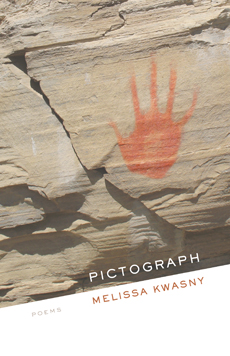
Pictograph: Poems by Melissa Kwasny

Source: Milkweed Editions
Paperback, 80 pgs
I am an Amazon Affiliate

Pictograph: Poems by Melissa Kwasny is a collection of prose poems in which cave drawings, pictographs, and petroglyphs the poet found in Montana come to life.  Readers are looking over her shoulder as she looks closely at these images while she wonders about the people who created them.  We begin near a cave in “Outside the Live Cave Spot” where we observe the opening as “lopsided, irregular dripping down like a lock of hair over someone’s eye.”  Things here are obscured from view, like the picture is not full.  It is just like the narrator of the poem, we get a glimpse of the life that was here, but something has been lost as humanity has moved away from pictorial communication to words on a page and online.  Many of these prose poems examine this sense of loss, a part of our culture that has disappeared into the ether, but it is still with us, as we can imagine and remind ourselves of what those lives must have been like.

From “Pictograph: Bird Site, Maze District” (pg 16)

“We recognize a figure, a brother, a twin, who is punished
for our disabilities, our own strangeness.  We are removed from
our families or we remove ourselves.”

From “Sign With Convergent Nested Elements” (pg 28)

“Sometimes things shine forth with their own
magnitude. Brushstroke of the mountain above the bank. As one ages,
it seems to me, one begins to separate from the body. One sees its frailties, it needs at a remove. Dimly lit, not important to return to.”

The narrator continues on this journey of discovery, which leads her to self-discovery. She examines not only the past, but also the faith it must have taken for those people to have lived and continue onward — a faith that she finds wobbles in herself.  The narrator is discovering more than she bargained for, making connections not only with the past but with the nature present before, like the mountain chickadee who wobbles before her in “The Wounded Bird.”  Here she is identifying with this bird’s struggle for life and noting her own inability to come to terms with god.

Pictograph: Poems by Melissa Kwasny contains some really stunning images and examinations of human evolution and struggle, but readers may connect with just a few poems in the collection at first.  “Kayak,” for instance, is the most removed from the idea of studying these ancient drawings in that the narrator is in the water surrounded by nature, but the effect is similar in that we have the power to blend in or to disturb or even to merely stand out by being ourselves, which can cause others to take flight.

About the Poet:

Melissa Kwasny is the author of the acclaimed poetry collections The Nine Senses (Milkweed Editions, 2011) Reading Novalis in Montana (Milkweed Editions, 2009), The Archival Birds (Bear Star Press, 2000), and Thistle (Lost Horse Press, 2006), which won the Idaho Prize in 2006. She is also the author of Pictograph, forthcoming in 2015. She is the editor of Toward the Open Field: Poets on the Art of Poetry 1800–1950 (Wesleyan University Press, 2004). Widely published in journals, including Willow Springs, Threepenny Review, Ploughshares, Poetry Northwest, Bellingham Review, Crab Orchard Review, and River Styx, she was recently the Richard Hugo Visiting Poet at the University of Montana and a Visiting Writer at the University of Wyoming. Kwasny received the Poetry Society of America’s 2009 Cecil Hemley Award for a series of poems that appears in The Nine Senses. She lives in Jefferson City, Montana.