Quantcast

Guest Post & Giveaway: Sarah Pekkanen Shares Poetry from John Pekkanen

Sarah Pekkanen is a best-selling author, whose work is very popular in the book blogging community and she’ll be attending the Gaithersburg Book Festival (I hope I get to see her there).

Her latest novel, These Girls, is about three women — Cate, Renee, and Abby — who come to New York City for very different reasons and end up as roommates struggling with their careers and life.  Check out some early reviews from S. Krishna’s Books, Devourer of Books, Life in the Thumb, and Raging Bibliomania.

Today, as part of her online tour and for the 2012 National Poetry Month Blog Tour, Sarah Pekkanen will share one of her favorite poets, her father John Pekkanen.

Without further ado, please give Sarah and her dad a warm welcome.

The poet who wrote this isn’t rich or famous. You never studied his work in a class textbook, or saw it inscribed on a greeting card. In fact, he just began writing poetry a couple of years ago. The reason this particular poem speaks to me? It’s one my Dad wrote for my mother. He gave me permission to reprint it here, so it’s the first time it’s being published.

When you ask my father how long he has been married to my Mother, he’ll say, “For forty-five wonderful years. And three so-so years. And two really horrible years!” So if you’ve done the math, you know my parents recently celebrated their 50th wedding anniversary. They dealt with a lot during their marriage: parents who didn’t support them, my father’s risky open-heart surgery, my mother’s complicated siblings. And sometimes I wonder if their golden years are sweeter now because of all they’ve been through. Sure, they fight – in fact, their fights remind me of the squabbles teenagers have. And their life isn’t perfect, by any means. But they say they’ve never been happier, and when I see them together, I know it’s true.

Early Awakenings by John Pekkanen

Red numbers blink to 3:25.
The hard bite of winter drifts
through an open bedroom window.
I sleep best in cold rooms, blankets
tucked tight under my chin.

Early morning awakenings lay open
what lies darkest in me, reopening
old wounds to replay a familiar narrative
of my fears and failures,
thoughts of my lost brother.  

In grainy half-light I watch her move,
listen to her cat-like murmurs.
I turn on my side to touch this woman
I’ve loved and desired
more than forty years, who centers me,
gave us children, makes me laugh.

I stroke the smooth arc of her back,
place my hand on her thigh’s warm skin,
her soft, sensual terrain more familiar than my own.
I fold my knees into her’s and our bodies
intertwine as if by muscle memory,
and I feel whole again.

Thanks, Sarah, for sharing your dad’s work with us.

If you’d like to win a copy of Pekkanen’s latest book, These Girls, please leave a comment here about what favorite non-famous poet you know.

Deadline for U.S. residents only is April 22, 2012.

About the Author:

Sarah Pekkanen is the internationally-bestselling author of the novels The Opposite of Me and Skipping a Beat and the upcoming These Girls, as well as the linked short stories available for e-readers titled “All Is Bright” and “Love, Accidentally.”

She has worked in journalism for Bethesda Magazine, Baltimore Sun, and Gannett New Service/USAToday.

Please follow her on Twitter, Facebook, and check out her Website.


Today’s National Poetry Month Blog Tour Stop is at Book Chatter; check it out!

Wild Place by Erica Goss

Wild Place by Erica Goss is a chapbook, published by Finishing Line Press, examining the wild places within ourselves and our interactions with nature.  Wild and untamed, the verse sings the beauty in the blame as humanity encroaches on nature, sometimes leading to its destruction and at other times unveiling the beauty beneath the scars.  Goss has a talent for using few words to create a powerful and vivid image that sends a message to the reader about the wildness of nature and ourselves.  From “This Is a Wild Place” (page 10), “The little junk birds peck at foil,//and I am called away from my body/to forage for my life/out in the open.//” and from “New Colors” (page 16), “in an anonymous/coffee shop/a child waved/to me from//his father’s arms/fingers opening/and closing like/pink fronds//of a sea anemone.//”

Some poems are haunting, like “The Redwoods,” in which she compares the trees to whales sifting krill and how they sing in the windy darkness.  She tackles the fears of aging and clinging to the the past in several poems, including “The Redwoods,” but rather focus on nostalgic rose-colored images of the past, she highlights the splinters that gnaw at our sensibilities and the scars they create and how they shape who we become.  There is a certain wisdom that we all garner as we age, and rather than celebrate it, many times we are too focused on what might have been.

Although the California landscape and other West coast settings play a significant role in her poems, Goss also takes us out of our American element with poems like “Strange Land” and “Woman in the Berlin Airport,” in which she tackles assumptions of Americans about how foreigners act and react and how they see us.  From “Strange Land” (page 24), “America takes practice/mother prepares/our daily lessons//each morning we emigrate/our fermenting lunchboxes/ripe with foreign stink//the war of two languages/leaves us mute in school/speak up, the teacher says//”  Goss tackles the hardships of fitting in when one comes to America from somewhere else and the expectations that places on them and their children, but within the same poem, there is a nod to the past — in this case, WWII — and how it is best left in the past and not brought into the new “shining” future.

Even as Goss uses nature imagery to pull out her themes of aging, fitting in, and moving onward, she also does an excellent job providing breathtaking verse about mechanical objects, such as the airplane in “Leaving Frankfurt.”  Readers will rise and fall with the aircraft as it leaves one city for another and the narrator immerses herself in the experience.  Wild Place by Erica Goss is stunning to the point where readers will not look at the world in the same way; they will be forced to look further, to think harder, to accept more — broadening their perspective and horizons so that they become more conscientious about themselves and the world around them.

Poet Erica Goss

About the Poet:

Erica Goss is the winner of the 2011 Many Mountains Moving Poetry Contest. Her chapbook, Wild Place, was published in 2012 by Finishing Line Press. Her poems, articles and reviews have appeared in many journals, most recently Connotation Press, Hotel Amerika, Pearl, Main Street Rag, Rattle, Eclectica, Blood Lotus, Café Review, Zoland Poetry, Comstock Review, Lake Effect, and Perigee.

She won the first Edwin Markham Poetry Prize in 2007, judged by California’s Poet Laureate Al Young, and was nominated for a Pushcart Prize in 2010. Erica teaches creative writing and humanities in the Bay Area and is a contributing editor for Cerise Press. She holds an MFA from San Jose State University.  If you live in California, please attend one of her local events near you.

***For today’s National Poetry Month blog tour stop, please visit Indie Reader Houston.***


This is the 8th book for my 2012 Fearless Poetry Exploration Reading Challenge.


This is my 26th book for the 2012 New Authors Challenge.

Mailbox Monday #173

Mailbox Mondays (click the icon to check out the new blog) has gone on tour since Marcia at A Girl and Her Books, formerly The Printed Page passed the torch. This month’s host is Cindy’s Love of Books.

Kristi of The Story Siren continues to sponsor her In My Mailbox meme.

Both of these memes allow bloggers to share what books they receive in the mail or through other means over the past week.

Just be warned that these posts can increase your TBR piles and wish lists.

Here’s what I received this week:

1.  The Disappearance of Georgiana Darcy by Regina Jeffers, which I received for review in May.

2. Every Possible Blue by Matthew Thorburn, whom I interviewed for 32 Poems.

From the library sale:

3. The Accompanist by Nina Berberova, which is a translated work from Russian.

4. An Irish Country Village by Patrick Taylore

5. City of Bones by Cassandra Clare

6. The Sense of an Ending by Julian Barnes

7. Reading in the Dark by Seamus Deane

8. A Tidewater Morning by William Styron

9. Band of Brothers by Stephen E. Ambrose

10. The Chronicles of Narnia: The Silver Chair by C.S. Lewis

11. The Chronicles of Narnia: Prince Caspian by C.S. Lewis

12. No, David! by David Shannon

13. Elmo’s ABC Book

14. Big Bird’s Color Game

15. Nighty, Night (the one we got at the library sale had Big Bird and Radar on it)

16. LeapFrog’s Monster Faces, which I’ve already read a dozen or so times to “Wiggles.”

What did you receive?

Curiosity Quills Press Interviews Savvy Verse & Wit, Nominated for IBBA

Curiosity Quills is a press that strives to create a community of writers, editors, illustrators, and others to create, develop, publish and promote each other’s work to the reading public.  Through collective action they seek to get books noticed by more readers and provide services to the writers that need them.

I first learned of the press when I was asked to join their blog tour as a host site and as a contributor where I talked about poetry and marketing.

In a surprising turn of events, I was recently interviewed for their new feature spotlighting book bloggers.  Naturally, as it is National Poetry Month, I got the chance to talk a little bit about reviewing poetry versus reviewing fiction.

Please stop by and check out the interview.

Stop by and see what blogs inspire me, which book caught me off guard as a 2011 “best of,” what my physical TBR looks like, and other tidbits you may not know.

***For today’s National Poetry Month Blog Tour post, visit Things Mean A Lot.***

Also, Vote now through April 23 for Savvy Verse & Wit on GoodReads in The Independent Book Blogger Awards, sponsored by Association of American Publishers and GoodReads. Savvy Verse & Wit is nominated in the Adult Fiction category.

There will be one winner per category and each will win a trip to Book Expo America. The first round of voting is open today and will stay open through April 23rd. Anyone who is a Goodreads member can vote.

The top fifteen blogs in each category will go on to a second round which will be judged by industry professionals.

Independent Book Blogger Awards

Vote for this blog for the Independent Book Blogger Awards!

Vote


145th Virtual Poetry Circle

Welcome to the 145th Virtual Poetry Circle!

Remember, this is just for fun and is not meant to be stressful.

Keep in mind what Molly Peacock’s books suggested. Look at a line, a stanza, sentences, and images; describe what you like or don’t like; and offer an opinion. If you missed my review of her book, check it out here.

Click for Schedule

Also, sign up for the 2012 Fearless Poetry Reading Challenge because its simple; you only need to read 1 book of poetry. Please visit the stops on the National Poetry Month Blog Tour from April 2011 and beginning again in April 2012.

Today’s poems is from Carole Bugge (aka C.E. Lawrence):

Meditation on an Ancient Widow

Her husband has just died
after sixty-two years of his stark, lean body next to hers
in their creaking, aged bed with the musty mattress and rusty springs
And now she listens from within this grey house with its peeling paint
weathered wicker chairs and faded sea green shutters
as the wind and the waves beat against the bellows of the bay
Her ancient voice, thin as paper,
dry as the brittle rushes growing along the side of the house
floats across the water to where the buoy floats
bobbing in the restless water with its swelling, roving tides
She sits under the yellow corner lamp, crossword on her lap,
listening to the seagulls run their hollow, falling scales
as they caw and cry and call to each other
the tea in her cup is cold
She draws her sweater close around her thin, sharp shoulders
the curve of her back bent with age
like the prow of a ship
all the more keenly to press through the waves
to cut cleanly through the wake of his leaving
Her body has stored each touch of his hands
sixty-two years of kisses and caresses
sixty-two years of his body next to hers
Self-pity is not in her nature
she is keen and sharp and unsentimental as the sun-bleached driftwood
gathering dust on the window sill
Still, at night she thinks she hears his footsteps along the floorboards
padding slowly down the hall to her room
As the old ship’s clock on the mantel strikes midnight
she turns her face toward the door
and opens her arms to him

What do you think?

About the Poet:

Carole Bugge ( C.E. Lawrence) has eight published novels, six novellas and a dozen or so short stories and poems. Her work has received glowing reviews from such publications as Kirkus, The Library Journal, Publisher’s Weekly, Booklist, The Boston Herald, Ellery Queen, and others. Her short fiction has appeared in numerous anthologies and magazines. Winner of both the Euphoria Poetry Competition and the Eve of St. Agnes Poetry Award, she is also a Pushcart Prize nominee and First Prize winner of the Maxim Mazumdar Playwriting Competition, the Chronogram Literary Fiction Prize, Jerry Jazz Musician Short Fiction Award, and the Jean Paiva Memorial Fiction award, which included an NEA grant to read her fiction and poetry at Lincoln Center.

A finalist in the McClaren, MSU and Henrico Playwriting Competitions, she has read her work at Barnes and Noble, The Knitting Factory, Mercy College, Merritt Books, the Colony Cafe and the Gryphon Bookstore. She has received grants from Poets and Writers, as well as the New York State Arts Council. Her story “A Day in the Life of Comrade Lenin” received an Honorable Mention in St. Martin’s Best Fantasy and Horror Stories, and she was a winner in the Writer’s Digest Competition in both the playwriting and essay categories.

More recently, “Chrysalis” will be appear in an anthology entitled Motherhood, very shortly, and she was nominated for a Pushcart Prize last month for her poem “In Other Words.”

Her latest book is Silent Kills; stay tuned in May for a guest post and giveaway.

***For Today’s National Poetry Month Blog Tour stop, visit Adventures of Cecelia Bedelia.***

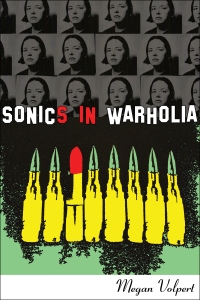
2011 Indie Lit Awards Short-Listed Poetry Review: Sonics in Warholia by Megan Volpert

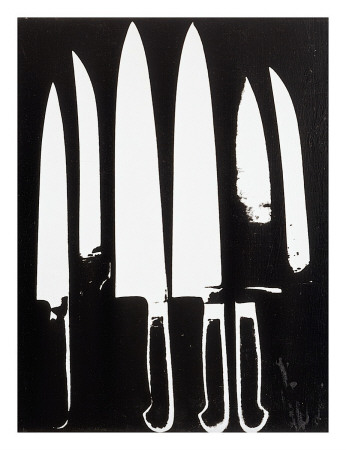
Indie Lit Awards 2011 short-listed poetry title, Sonics in Warholia by Megan Volpert is highly experimental with poetic form meshing together pop culture and prose with lines from songs and other elements many will recognize in a homage to the conundrum that was Andy Warhol (most famous for the Campbell’s Soup Can).  An interesting thing to note is the red “SIN” in the title, as well as the use of “Sonics,” which could be a reference to the garage band, The Sonics, from the 1960s.  The images of Volpert in the background remind readers of Warhol’s famous Marilyn Monroe paintings and the rows of knives.

The collection consists of eight long poems that play on musicality and surrealism, engaging readers in a back-and-forth, push-and-pull of ideas, much like Warhol himself, who remained cryptic about his process and his influences.  In many ways, Volpert’s work resembles that cryptic nature.

From “Portrait of a Mix Tape” (pages 7-12), “. . . Thus, Andy, please/enjoy your 58 years boiled down to fifty-seven minutes and fifty-/one seconds.//” the poem is homage to Andy through lyrics in popular music appearing from the time of his birth to beyond the time of his death to illustrate the influence he had on the narrator and the world, especially the world of pop culture.  In many of the poems, the narrator speaks directly to the ghost of Andy Warhol, but on some occasions readers will be left adrift if they are not as familiar with Warhol or the other images and pop culture events discussed.

“For the Love of Good Machines” (pages 13-19) begins with reference to Warhol’s relationship with Lou Reed as lead lyricist of The Velvet Underground, and again Volpert is combining music with her poetry as she speaks about the internal rhythms of songs vs. their external lack of speed and vice versa in the image of the stationary motorcycle, which she equates to the creativity of the mind — whether among poets, musicians, or artists.  Even though little may be produced outwardly, these creative spirits are always creating inwardly.  An ambitious collection of just eight poems oscillates between sublime and ridiculous, deftly providing a portrait of Warhol and all he gave to the world.  However, the style in which it is written could cause readers to take each poem in small chunks rather than as a whole and require some “googling.”

Sonics in Warholia by Megan Volpert has moments of sheer insanity and surrealism that many readers will either detest or love, and while the form is experimental, it does have poetic qualities of allusion, narration, and imagery that draw out themes and comparisons between all art forms and the often “hidden” quality that they all share — that which makes the affectations of that talent either succeed or fail in the eyes of the public.

Please check out other reviews from the Indie Lit Awards Panelists:

Necromancy Never Pays and her interview with Megan Volpert.

Poet Megan Volpert

About the Poet:

Megan Volpert is a poet and critic from Chicago who has settled in Atlanta with her wife, Mindy. Volpert holds an MFA in Creative Writing from Louisiana State University and is a high school English teacher.

Sonics in Warholia is her fourth collection of poems (Little Rock: Sibling Rivalry Press, 2011). The other three are The Desense of Nonfense and Face Blindness (Buffalo: BlazeVOX Books, 2009 & 2007), and Domestic Transmission (San Antonio: MetroMania Press, 2007). She is currently editing This assignment is so gay: LGBTIQ Poets on the Art of Teaching (Little Rock: Singling Rivalry Press, 2013).

***Today’s National Poetry Month Blog Tour stop is at The Indextrious Reader.***


This is the 7th book for my 2012 Fearless Poetry Exploration Reading Challenge.


This is my 25th book for the 2012 New Authors Challenge.

Guest Post: Author Beth Hoffman Shares Her Favorite Poem by Ted Kooser

Today, I’ve got a real treat.  Not only is one of my new favorite authors — Beth Hoffman, author of Saving CeeCee Honeycutt — visiting today, but she’s also sharing her love of a poem written by one of my favorite poets — Ted Kooser, a former U.S. Poet Laureate (2004 – 2006).

I adore both of these writers immensely, and I’m so glad that today for National Poetry Month, they’ll be sharing the same space.  Without further ado, please give Beth a warm welcome.

In a letter to George Bainton, dated 1/15/1888, Samuel Clemens (aka Mark Twain) wrote: “The difference between the almost right word and the right word is really a large matter—it’s the difference between the lightning bug and the lightning.”

I believe that statement to be true (and an ideal goal) in all writing, but especially in poetry. For an ill-chosen word that goes unnoticed or is forgivable in longer writings, surely is a disastrous bump in poetry.

Word selection, imagery, and variations of tone through word values and sounds are vital to a poet’s successful composition. It is with these thoughts that I have selected to highlight my favorite work by poet laureate Ted Kooser. Mr. Kooser ranks high among the nation’s most esteemed poets and served as the United States Poet Laureate Consultant in Poetry to the Library of Congress from 2004 – 2006. He also won the Pulitzer Prize for his book of poems, Delights & Shadows (Copper Canyon Press, 2004).

While countless poems have moved me to a state of wonder, it is a poem from Ted Kooser’s collection Flying at Night: Poems 1965-1985 (University of Pittsburgh Press) that evokes not only powerful imagery, but a delicacy of sadness and loss that is, in my opinion, visceral and genius. In a scant 126 perfectly selected words, he tells an entire story I never tire of reading, and I’d like to share it here.

A Room in the Past
by Ted Kooser

It’s a kitchen. Its curtains fill
with a morning light so bright
you can’t see beyond its windows
into the afternoon. A kitchen
falling through time with its things
in their places, the dishes jingling
up in the cupboard, the bucket
of drinking water rippled as if
a truck had just gone past, but that truck
was thirty years. No one’s at home
in this room. Its counter is wiped,
and the dishrag hangs from its nail,
a dry leaf. In housedresses of mist,
blue aprons of rain, my grandmother
moved through this life like a ghost,
and when she had finished her years,
she put them all back in their places
and wiped out the sink, turning her back
on the rest of us, forever.

Thanks so much, Beth.

Author Beth Hoffman

About the Author:

Beth Hoffman, a New York Times bestselling author, was the president and owner of a major interior design studio in Cincinnati, Ohio, before turning to writing full time. She lives with her husband and two cats in a quaint historic district in Newport, Kentucky. Saving CeeCee Honeycutt is her first novel.


Poet Ted Kooser

About the Poet:Ted Kooser was the United States Poet Laureate from 2004 to 2006 and won a Pulitzer Prize for his book of poems DELIGHTS AND SHADOWS. He is the author of twelve full-length volumes of poetry and several books of nonfiction, and his work has appeared in many periodicals. This is his first children’s book. He lives in Garland, Nebraska.Barry Root has illustrated many books for children, including THE CAT WHO LIKED POTATO SOUP by Terry Farish and THE BIRTHDAY TREE by Paul Fleischman. He lives in Quarryville, Pennsylvania.

***For today’s National Poetry Month Blog Tour, please visit with Read Handed.***

Listening to Africa by Diana M. Raab

Listening to Africa by Diana M. Raab are the poet’s thoughts on her trip to Africa in 2008.  The poems are not about Africa and the events that happen there, so much as the effect the trip had on Raab and her family.  A trip motivated by death and malignancy, Raab is seeking a spiritual renewal, a way to rejuvenate her flagging will to fight.  She finds what she needs as she watches the village people struggle to clothe and feed themselves by actively pushing their crafts onto tourists and selling themselves to tourist firms as entertainment for the pampered Americans.

From "Amplified Melancholy" (page 8):

. . . and all I can tell you is that
on the tenth anniversary of dad's
passing, the doctors removed

my right breast and five years later
stabbed by a second diagnosis,
bone marrow malignancy,

no cure, just treatment --
the holiday lights sharpened.
Past dripping menorah candles,  . . .

Emotions run the gamut in this collection from fear to nostalgia for the past, and a new understanding of how the past has shaped each of us.  She sees the grandfather in her son in “Your Camera” as he approaches the world behind the viewfinder of a camera.  There is fearsome beauty in Raab’s poems as she explores the wild with her family, even though her trip is controlled.  The beauty of the sunrises and sunsets, the hidden dangers of genteel looking hippos, and the fight for survival among all nature’s creatures.  For example:  “The forces of life and death/are at play like the day I found/my grandmother dead in her bed –//” (from “The Scent of Death” on page 19) and “We are snapped into silence, the comes the roar/of dragon breath and then silence again./The purple scarred panorama lingers//” (from “Balloon Rides” on page 21).

Readers will become steeped in the melancholy and the tentative observations of Africa from which the poet is seeking to draw strength and understanding.  Like the hippo in “Hippos” and in nature, the poet has a deep, hidden strength and history of survival from which to draw from as she fights what ails her, but also the cancers have their own hidden strengths and it is clear there will be a battle of wills.  “Our jeep arrived at sunset//at the edge of their swamp/as their big papa sat and stared/deep into our foreign eyes, long enough//to bring ten more in his company,/as if this army could infiltrate/our veins with fear.  They sat proudly//” (from “Hippos” on page 43) illustrates the duel going on within the poet between the cancer cells staring her down eager to win the battle, and her doing the same as she gathers her inner strength and support systems around her.

Listening to Africa by Diana M. Raab is a wonderful reminder that we each struggle for survival, though we all may not live in the wilds of the jungle.  Raab is a talented poet who takes her memorist talents and weaves them into imagery and verse that creates emotional tension and verse readers can reflect upon and apply to their own lives.

Poet Diana Raab

About the Poet:

Diana M. Raab is a memoirist, essayist and poet. She has a B.S. in Health Administration and Journalism, and an RN degree from Vanier College in Montreal, in addition to an MFA in Nonfiction Writing from Spalding University’s Low-Residency Program.

Diana has been writing from an early age. As a child of two working parents, she spent a lot of time crafting letters and keeping a daily journal. A journaling advocate and educator, Diana teaches creative journaling and memoir in workshops around the country. She frequently speaks and writes about the healing powers of writing.


This is the 6th book for my 2012 Fearless Poetry Exploration Reading Challenge.

***For today’s National Poetry Month blog tour stop, please visit Necromancy Never Pays.***

Guest Interview: Emma Eden Ramos Interviews Poet Lisa Maria Basile

You may remember Emma Eden Ramos from my earlier review of her poetry collection and Indie Lit Award short-listed title, Three Women.  Today, she’s come to celebrate National Poetry Month with an interview of a poet she adores, Lisa Marie Basile.

First, we wanted to share with you a poem from Basile’s latest collection Andalucia:

I Wear Short Dresses When I Visit Alejandro

I wear short dresses when I visit Alejandro. You
have legs for many miles, he says. So I show them.
If I take my legs away, would he still see me? Linger on his skin. I am the
mosquito, but he—he drinks
my blood. He sleeps on the floor, on his back. He
is covered in flies. I step over Alejandro, and his
fingers linger on my toes. He is wet from seas.
I step again over him, teasing, teasing. I cannot
seem to feed all the flowers. The red ones, the hard
ones. The fat ones. They grow. I cannot tame
them. I cannot groom them. I cannot control them.
I say hola and they grow and grow. The more we
talk the more they grow, and, oh, we talk, and we talk.
We talk about beauty and the way a body is
supposed to look. We talk about the way a woman
should be shaped and we talk about my hips, my
lips. Too round, too powerful, too godlike. You
cannot trust a woman who looks like a woman, he
says. She might destroy you. Look, I am
unribboning! My bones are peeling as petals. I am
hungry. I say I cannot seem to stop stepping over
and over him. You know that I look up your dress
every time, he tells me. I know that. I know that is
how I can keep him there, buzzing.

And now onto the interview; please give Emma and Lisa a warm welcome:

It was around this time last year that I discovered poet Lisa Marie Basile. I’d had a poem accepted for publication by one of my favorite online literary blogs, Calliope Nerve (the editor of which tragically passed away last August), and was excited for the piece to go live. Excited, that is, until I read the three poems that came out the day before. “SAILOR (BRIAN), 63,” “NEVADA, YOUNG,” and “LIPRARI (45) DIED IN ITALIAN,” all by Lisa Marie Basile, were three poems from a collection of obituaries. As I read Basile’s work in Calliope Nerve, I couldn’t help but feel that my piece would be a bit of a let-down.

It’s been a year since I first read Lisa Marie Basile’s work. So I thought, this year, it would make sense to interview and get to know one of the poets whose writing I have had the pleasure of exploring. Here is an interview with poet Lisa Marie Basile, followed by a poem from her most recent collection, Andalucia.

1. As a fiction writer who has also written poetry, I am very aware of the differences between the two mediums. You are a published short story writer and award winning poet. How would you compare writing poetry to writing fiction? Which comes more naturally to you?

Writing poetry certainly is the medium I tend to write in most often, because for me beauty is usually in snapshots in my mind. However, when the idea strikes, you go with what you think addresses the idea the best. The words are like their own entities; they need a space to live. We just give them that how we can. For more, poetry is more the default, because allows me to provide words with a place outside of the confines of structure and grammatical correctness. I love poetry’s natural fluidity. The more fiction I write, the more I realize how poetic it is for me; then, the more poetry I write lately, the more it is driven by prose I’ve written. I love prose-poetry, it’s something I’m gravitating toward.

2. How do you prepare yourself to write a poem? Do you have a ritual you do beforehand or are you more spontaneous?

I don’t have a ritual. Usually I’m intensely upset. Maybe a little drunk? I have to be honest. My latest collection —for my thesis—was written during times when my eye condition (Uveitis) flared up. Because of it, I had to be secluded in total dark, with no stimulation. No television. No music. My head was spinning in pain. I’d think and think and think, because there was nothing else to do. In these days, we need constant stimulation. In these situations, I just wrote, pieces of words, phrases, thoughts. Over time, I compiled these pieces. So there aren’t any real rituals. I don’t believe in ritual, because mostly if you force it, it won’t come.

3. How do you feel about spoken word poetry? Do you think it is more or less powerful than written poetry?

When spoken word is good, I really respect it. Other times, like any performative poetry, if the poet doesn’t understand how to trim, cut and emphasize the important parts of piece, it can really take away from the power of the performance. I think each poem has to be presented in the way it needs to be presented. Some poems are better as whispers; others as screams. If you do it well, you do it well, and I think the power is found in both the content of the poem and the treatment of it by the poet — no matter the form: spoken word or not. It has to be sincere.

Presenting your poetry doesn’t, for me, mean tacking on some theatrical spectacle if the poem doesn’t require that.

4. You have authored one full-length poetry book and three chapbooks. Along with being the Founding Editor of Patasola Press, you have edited for a number of renowned publications. Would you say that working as an editor has strengthened your own work?

My full-length, A Decent Voodoo, will be out with Cervena Barva Press this year. The editor, Gloria Mindock, is incredible. I’m so lucky. Also another chapbook, Triste, will be released by the badass Dancing Girl Press, this summer. Andalucia came out in December 2011 (Brothel Books) and it’s just my life; I love that I have that book. It really marked a time in my life. Working as an editor is important to me because as much as I love to write, I love to read and I love to help other people get their work out there. It’s super beautiful to hold your thoughts and dreams in your hand. Being an editor has made me more attentive to poetry’s power, for sure. I learn about the ebb and flow of a good or bad poem, and in turn, I learn from everything. There’s nothing I dislike more than a lazy poem, so I strive to keep away from that.

Later this year, some really inspiring poets will be released by Patasola Press. I’m happy to bring Kristina Marie Darling and Kiely Sweatt work to the world. Their books, Palimpsest and Origin Of, respectively, are the most beautiful works I’ve read in a long time. And this follows gorgeous work by J. A. Tyler and Rae Bryant—I’m lucky to work all these super talented and driven poets.

These are the people who will be canonized within our generation.

5. What is The Poetry Brothel and who is Luna Liprari?

The Poetry Brothel is a unique and immersive poetry experience that takes poetry outside classrooms and lecture halls and brings poetry to people in a lush and beautiful atmosphere. You spend so much time writing this beautiful work; it can be really disheartening to have to present your blood and work under a loud, flourescent light. Why not make the poetic experience gorgeous and welcoming. The Poetry Brothel presents poets as high courtesans who impart their work in public readings, spontaneous eruptions of poetry, and most distinctly, as purveyors of private poetry readings on couches, chaise lounges and in private rooms. Central to this experience is the creation of character —mine is Luna Liprari— which for poet and audience functions as disguise and as a freeing device, enabling The Poetry Brothel to be a place of uninhibited creative expression in which the poets and clients can be themselves in private. For a small fee, all of the resident poets are available for these sequestered readings at any time during the event. Of course, any true brothel need a good cover; The Poetry Brothel’s is part saloon and part salon, offering a full bar, musicians, painters, and fortune-tellers, with newly integrated themes, performances and installations at each event.

We’ve done events in New York (our home), Chicago, New Orleans, Barcelona, California, D.C., Massachusetts (actually I’m sitting at the Massachusetts Brothel right now). I’ve read in a lush speakeasy decorated with teacup globes and red lounges, an erotic soiree in a Catalonian side street and in a treehouse-like fort. I’ve read at private parties and in public events. We’ve presented as part of The Annual New York City Poetry Festival, which we present as The Poetry Society of New York.

Luna Liprari is my character. She presents poetry and interacts with people at The Poetry Brothel. The poetry is my own, and Luna Liprari is a part of me, whether she reads poetry or does burlesque.

Luna Liprari came from a Sicilian father and French mother, from whom she ran away when she turned 15 in 1925. She was to become the secret love of Hemingway and Anais Nin, living in a tiny room above a butcher shoppe in Paris. They helped her publish a book of her poems. When she grew up, she moved to Argentina and was said to be seen in Mexico, teaching poor women to dance for their husbands. She was a clairvoyant they said, always dreaming of explosions, always making men explode from the inside. Her lips brought rainfall to its knees, her hips were said to have been the inspiration for the holy design of Vesuvius. Years later, she was the first Pinup painted on the side of a World War II bomber plane, her black hair and long legs dropping like webbed-spiders into sleepy French streets and Japanese cities. She had predicted weapons, slapped Oppenheimer in the face, seduced (and poisoned) two-dozen Nazis, and finally became a Pinup girl and burlesque dancer, touring the world with the Poetry Brothel.

6. If you don’t mind talking about it, what is your latest project?

My latest project is my thesis work. I’m writing about the intersection between body and mind, how the body reveals our pains and feelings and desires through sickness. Someone recently said to me, “the most poetic thing is not being sick.” I wonder, though, because being sick forces you to really confront who you are and your limitations. So the project is a collection of work written during times of physical pain.

Thanks to both Emma and Lisa for sharing their thoughts about poetry with us.

Poet Lisa Marie Basile

About the Poet:

Lisa Marie Basile is an award winning poet from New York City. She is currently pursuing her M.F.A. at The New School and is a member of The Poetry Society of New York. Basile is the founding editor of Patasola Press, the company that published Rae Bryant’s The Indefinite State of Imaginary Morals: Stories by Rae Bryant and Comatose by J.A. Tyler.

***Also please visit Bermudaonion for today’s National Poetry Month Tour stop***

The Virgin Journals by Travis Laurence Naught

Imagine a life in which everything is viewed from a wheelchair or from the arms of someone moving you from the bed to the chair and back again.  The Virgin Journals by Travis Laurence Naught is that story and more.   Naught was diagnosed as an infant with incurable spinal muscular atrophy, and his poems and prose speak with a frankness that is not only raw but unsettling.  Do we want to truly know what he’s thinking as he sits in his wheelchair and cannot decide to go to war as a soldier or to even have a choice about what he does physically?  His collection reads much like the confessional poets of Sexton and Plath with its brash ambition to tell it like it is without sugar coating, but in many ways it is not as sophisticated in that there are no mysterious images to unravel.  He puts it all out there without pretense and the poems read more like journal entries.

From "All You Need is Touch" (Page 75):

Feeling like a pain in the ass
Is no fun for anyone
But I get by every day
By needing
Basic life functions
From "Big Mouth" (Page 50):

Do not treat me with distrust
For I have not lied
Only told the truth too much

The collection is broken into three sections:  Life, Love, and World.  It is likely to make readers uncomfortable in that the narrator of these poems is constantly frustrated, deprived of human touch/contact, and full of lust.  To truly understand the plight of someone stuck in a wheelchair, these poems can do just that, but the poems appear to be prose broken up into lines and stanzas arbitrarily.  Moreover, there are more poems here that read like stream of consciousness prose and late-night confessions that normally would not see the outside of a drawer.  They are raw and unflinching.

Some poems are more typically poetic than others, but it is clear that writing is an outlet for Naught as he struggles daily with his lack of physical freedom and desire for more out of life. From “Lack of Physicality” to “Movie in Mind,” Naught’s poetic talents shine as he weaves in images to display how we are all human and struggle with our own limitations.  These are the gems of the collection.  Readers may want to dip into the collection over a period of time rather than read it from beginning to end so that they can take in the heavy emotions put forth by the narrator.  The Virgin Journals by Travis Laurence Naught is a good debut from a writer who clearly has more to say and more to explore in terms of poetry and prose.

Poet Travis Laurence Naught

About the Poet:

Travis Laurence Naught is poetry/prose writer … college graduate … former Division 1 college men’s basketball assistant … quadriplegic wheelchair user.  Join him on Facebook and on Twitter.

***For today’s National Poetry Month blog tour stop, go to the bookworm.***


This is the 5th book for my 2012 Fearless Poetry Exploration Reading Challenge.


This is my 24th book for the 2012 New Authors Challenge.

Mailbox Monday #172

Mailbox Mondays (click the icon to check out the new blog) has gone on tour since Marcia at A Girl and Her Books, formerly The Printed Page passed the torch. This month’s host is Cindy’s Love of Books.

Kristi of The Story Siren continues to sponsor her In My Mailbox meme.

Both of these memes allow bloggers to share what books they receive in the mail or through other means over the past week.

Just be warned that these posts can increase your TBR piles and wish lists.

Here’s what I received this week:

1.  Night Road by Kristin Hannah, which I won from Jo-Jo Loves to Read!!!

2. Elegy for Eddie by Jacqueline Winspear from HarperCollins.

3. Wild Place by Erica Goss from the poet for review.

What did you receive?

***Scroll down for today’s National Poetry Month Tour stop.***

Real Courage by Michael Meyerhofer

Real Courage by Michael Meyerhofer is a chapbook that showcases a unique perspective and use of imagery and comparison.  Much like “BPM 37093” (Page 5), Meyerhofer takes often wildly different images and situations together in comparisons that generate an “aha” from the reader after a momentary question mark hovers over their heads.

A smoldering white dwarf
like our own pyrite-colored sun may be.
Proof that after a solar relationship
ends, like most relationships,
with a fiery, bloating rampage
followed by a crash diet
down to blistered, white-hot corestuff,
the leftover carbon crystallizes
into a two-septillion-ton rock

However, in “The Great Refrain” (Page 19), Meyerhofer plays with the notion of refrain in which lines are repeated in a song-like chorus. Rather, the refrain here is more of a repeated emotional response to how things have changed, seemingly more like a lament. “are the remnants of motor-skiffs/and sun-sails, bronze men hauling//titanium fishing lines, mothers/reading to their infants from books//filled with calculus and poetry./That ages before an ice-pole shifted//”  Readers also will appreciate how Meyerhofer explores ideas contrary to conventional wisdom, like comparisons of dogs to the uncivilized in “Ode to Dogs” (page 22).

Real Courage by Michael Meyerhofer is full of unconventional wisdom and unexpected images and comments that reaches beyond the typical rant or disillusionment with the modern world. There also are more personal poems here that strive to make sense of death and loss, but there are others that uncover the surprising reactions of those in society considered more reserved than the rest of us and those that shun technology. Meyerhofer explores the human condition from an unusual perspective and uses language that does not dare hide his meaning.

Poet Michael Meyerhofer

About the Poet:

Michael Meyerhofer‘s third book, Damnatio Memoriae, won the Brick Road Poetry Book Contest. His previous books are Leaving Iowa (winner of the Liam Rector First Book Award) and Blue Collar Eulogies (Steel Toe Books, finalist for the Grub Street Book Prize).

He has also published five chapbooks: Pure Elysium (winner of the Palettes and Quills Chapbook Contest), The Clay-Shaper’s Husband (winner of the Codhill Press Chapbook Award), Real Courage (winner of the Terminus Magazine and Jeanne Duval Editions Poetry Chapbook Prize), The Right Madness of Beggars (winner of the Uccelli Press 3rd Annual Chapbook Competition), and Cardboard Urn (winner of the Copperdome Chapbook Contest).

He received his BA from the University of Iowa and his MFA from Southern Illinois University Carbondale. He currently teaches poetry, creative writing, and composition at Ball State University in Muncie, IN.


This is my 23rd book for the 2012 New Authors Challenge.


This is the 4th book for my 2012 Fearless Poetry Exploration Reading Challenge.


***For Today’s National Poetry Month Blog Tour stop, hop over to Books, Thoughts, and a Few Adventures…***