Quantcast

You and Three Others Are Approaching a Lake by Anna Moschovakis

You and Three Others Are Approaching a Lake by Anna Moschovakis, which was awarded the James Laughlin Award by the Academy of American Poets, is a collection of four long poems with a prologue and epilogue poem that discusses and assesses four books — The Tragedy of Waste by Stuart Chase, Death as a Way of Life by Roger A. Caras, The Human Machine by Arnold Bennett, and In Search of Wealth by Cyril S. Belshaw — from the twentieth century that the poet discovered in a used bookshop in South Kortright, New York.  The poems share the same titles as the books, and the title of the collection makes its appearance in the first poem.

Moschovakis makes a great many assumptions about the readers knowledge of the industrial revolution and their understanding of economics.  First she compares the lake to supply and the men and women entering the wood and approaching the lake as demand, but later, the lake becomes more ambiguous.  From the cycles of supply and demand in the markets and the growth of the workforce to the incessant bombardment of advertising, the narrator of the poem is questioning the capitalistic ways of society and whether those are not wasteful in terms of time and energy spent.  She also postulates that we are no different from nature in how we react to available resources, which begs the question just how civilized are we when we succumb to our basest instincts to use everything around us?

From "The Tragedy of Waste (page 27)

Behind the desk there is a window

A woodpecker is attacking the house
The sun is attacking the snow on the pavement

Everything helping itself
to everything else
 From "The Tragedy of Waste" (page 30)

dwarfed and shadowed by mighty buildings
subway trains wild as elephants

One goes blindly back to one's desk

In the second poem, death as a way of life is broken down into how it affects “the Other” and not necessarily the surface theory that death is merely a part of the life cycle.  In many ways this poem is about the necessity to kill and the pleasure in killing, and where are the lines to be drawn between animals and humans being killed or something more refined.  There also is speculation about what rights we have as humans to kill and is naming the “Other” just as violent as not naming it?  “I want to know about the ‘other birds’//Were they species unknown to the hunters/or insignificant birds not worth noting by name/or mutilated/beyond recognition/”

“The Human Machine (Thirty Chances)” poem is a bit repetitive and generates a sci-fi-like quality as chatbots talk to human machines.  Readers are likely to find this poem the most puzzling, though ultimately a kernel of understanding will emerge about the “people” we believe we are and who we actually are — in that we all have failings and do fail ourselves and others.  But it also touches upon what makes us truly human — an ability to empathize, which could mean that should a robot be able to do so, we would have to consider it a person worthy of saving and no longer “Other.”

“In Search of Wealth” is the final poem before the epilogue.  In this poem there are digs at a variety of religions, including Scientology and its ties to Hollywood’s elite, and there are ramblings on pay inequality that seem to go on incessantly.  In the collection, this poem seems to be more of a rambling and a rant then a well crafted argument.  If it were issued forth in a debate on wealth and capitalism, listeners would likely begin throwing rotten tomatoes if they had any in their pockets for the occasion.  The prologue sets up the collection to be poems that take up certain positions on the topics at hand, and while by all accounts they do, some are more well crafted than others.  The epilogue goes further to explain that the reason to take a position is to generate disagreement, which is closely linked with desire and ensures that life is anything but boring.

You and Three Others Are Approaching a Lake by Anna Moschovakis touches on themes of wealth, “otherness,” conviction, and a host of other topics, but without having read the books mentioned in the acknowledgements, some of the references may be lost or misunderstood.

Poet Anna Moschovakis

About the Poet:

Anna Moschovakis is the author of two books of poems, I Have Not Been Able to Get Through to Everyone (Turtle Point Press 2006) and You and Three Others Are Approaching a Lake (Coffee House Press 2011) and of several chapbooks, including The Blue Book (Phylum Press), Dependence Day Parade (Sisyphus), No Medea (a Tinyside from Big Game Books), The Tragedy of Waste (Belladonna) and The Human Machine (Dusie). Her translations from the French include texts by Henri Michaux, Claude Cahun, Theophile Gauthier, Pierre Alféri, and Blaise Cendrars, as well as the books The Jokers by Albert Cossery (New York Review Books), The Possession by Annie Ernaux (Seven Stories Press), and The Engagement by Georges Simenon (New York Review Books).

Currently a freelance editor and a visiting professor in the Writing department at Pratt Institute, she splits her time between Brooklyn and Delaware County, NY. Anna has been working with UDP since 2002 as an editor, designer, administrator, and printer.
 

***For today’s National Poetry Month Blog Tour stop, visit Caribousmom.


This is my 32nd book for the 2012 New Authors Challenge.


This is the 14th book for my 2012 Fearless Poetry Exploration Reading Challenge.

Nostalgia for the Criminal Past by Kathleen Winter

Nostalgia for the Criminal Past by Kathleen Winter, whom I interviewed for 32 Poems in 2011, is a piece of art that should be hung on the wall.  And like all art, there are references to other artists and art types within her poems, but there is more here — the art of being human.  In the first three sections, Winter carefully tailors each poem to touch on the connections we have to our animal selves, from the mischievous prankster in Eve who entices the snake to eat Adam in the Garden of Eden merely because she is bored in “Escape from Eden” to razor sharp focus of a hawk eying its prey in “Edge of February.”

There is a telling epigraph from Virginia Woolf, “I do not believe in separation.  We are not single.” that establishes the direction of Winter’s work as a look at us being separate as well as connected.  However, the collection is not only about being separate and being connected, it is about “being naked” and reveling in the “silos of time” we create (“Nostalgia for the Criminal Past,” page 9).  There is the past of our relatives and how it reverberates through the younger generations’ lives and how the past they share may be incomplete or slightly altered from reality, like in “Jellyfish Elvis.”  The narrator even questions the validity of the past whether told by others or lived, which calls into question whether the past should be revered or remembered and that we should merely live in the moment.

Winter shows a maturity in her imagery and line break selection that breaks boundaries and draws comparisons to the impressionists and abstract painters who defied artistic convention in their paintings.  From ” Hamster Thrown From Monster Truck,” “rumbling above us at the stoplight/like a frisky two-story building.,” and like “The eight a.m. sun moved out from clouds/like a well-trained MBA/adjusting to changed conditions./” in “Snapshot of a Boxer.”  Beyond the animal references, memories, and looks into the past, Winter uses water imagery in traditional ways to show reflections of what we want to see and what we desire, but provides readers with the punch in the gut when they realize the folly of those dreams, like in “Country Club Fourth of July.”

And despite the theme of appearance versus reality, there are other moments in the collection where the narrator will sink beneath the surface of the water in a tub to find an inner peace, like in “The Bath” and “Bathing at the Museum”:  “Like Bonnard’s wife/incessantly I bathe, sensations of liquid/intervening between mind//& body, blurring animosities./In dim flux the mind begins to lift,/words shimmer,//” (page 64).

The cover photo for this collection is reflective of its contents as the young girl looks circumspect about everything she is seeing out of that window, assessing it carefully, but wary of it at the same time.

The final section of the collection is a breaking out from the bonds of the past, and the passion that consumes those poems burns and takes action.  However, these poems also are reflective and playful, like “Wrong Sonnet: Mystery” where the narrator speaks to ghosts in a tongue-in-cheek kind of way.  Nostalgia for the Criminal Past by Kathleen Winter is another for the best of lists from theme, quality of the poems, and the imagery that illustrates the world in new ways.

About the Poet:

Kathleen Winter’s poems are forthcoming in Anti- and recently have appeared in Field, The New Republic, Verse Daily, 32 Poems and The Cincinnati Review. Her chapbook Invisible Pictures was published in 2008 by Finishing Line Press. Kathleen received fellowships from Vermont Studio Center and the Piper Center at Arizona State University. She is an MFA student and composition teacher at ASU.

Check out today’s National Poetry Month Blog Tour stop from Unputdownables.

This is my 31st book for the 2012 New Authors Challenge.


This is the 13th book for my 2012 Fearless Poetry Exploration Reading Challenge.
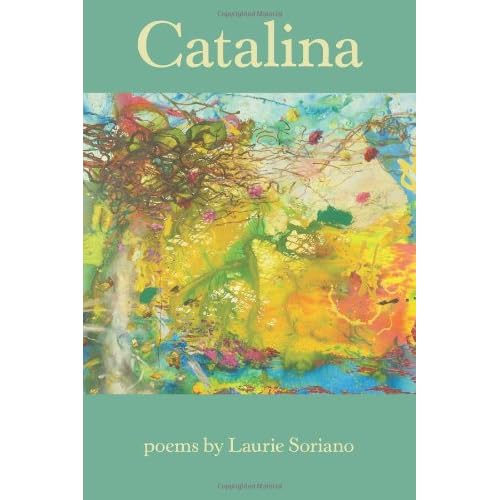
Indie Lit Award Poetry Winner: Catalina by Laurie Soriano

Indie Lit Award Poetry Winner Catalina by Laurie Soriano, which was selected unanimously as the winner and also is published by Lummox Press, is a cohesive collection that maintains more than one theme throughout and simultaneously.  The narrator travels from east to west coasts and from innocence to corruption and recovery; the journey is bumpy and fraught with obstacles and stumbles.  Soriano uses imagery that jolts readers to the heart of her themes; parts one and two focus on how the narrator grows up in an abusive home with an alcoholic parent, while the final two sections focus on parenthood and how the past can shape us, but should not rule our actions.

There are some satiric qualities to these poems as well, like in “Betty’s Dive,” where a young woman takes on a dare and pays the ultimate price, and those issuing the dare laugh at what they think is her mock “dead-man’s float” until realization slowly creeps over them.  There is a great sense of irony in some of Soriano’s poems as well, such as the “no dogs” sign that is clearly the subject of many dogs’ walks in “Venice After Work.”

In addition to the deft use of these literary devices, the poet also clearly ties her poems together as a story unfolds, and it is most prominent in the movement from “Red Wine” to “Crash.”  In “Red Wine” (pages 44-5), the narrator is descending into the alcoholic abyss of her father: “. . . My hands/grip the flesh of their waists as I stumble/further toward the land of my father,/the shifting land of regret and soggy laughter./” and “I ask daddy if we want win.  He fills/our glasses like love, daddy never loved me/like wine, and we start thinning our blood/with this red stuff, our words flow/like liquid, we laugh fit to bust, and/we walk home arm in arm,/like we never did.//”  In “Crash” (pages 46-7), the narrator has followed the path of her father with her drinking and now driving along, experiences the worst kind of regret and shock:  “the effect of all our causes,/you and I shuttle separately to the spot//where our masses would marry/and your blood would stain the street./For a moment, one of those out of time,/we hung in the air, as breathless as sweethearts,/before we came together, your motorcycle/tearing a path through my car,/as your body flew/three car-lengths forward.//”

Soriano’s poetry is highly emotional, leading readers into tumultuous memories and through happier times, and in many ways, her poetry reminds me of the poetic prose of Beth Kephart.  Each writer’s words are chosen carefully and it shows — quiet little powerhouses of emotion that grab the heart strings and do not let go, though they may release their stronger grip for a moment or two depending on the mood of the poem.  In Part three — “Being Here” — Soriano emphasizes the “in-the-moment” nature of experiencing new life and parenthood, which can include struggle and joy.

Catalina by Laurie Soriano is more than stunning; it’s luminescent.  It’s a collection that will stay with readers long after reading, and will share a space on the shelves with those books that you’ll want to re-read again and again.  One of the best collections of the year, and unconventionally, this review is going to end with my favorite lines:

From "To the Attacker" (page 42-3)

You've slashed apart the ripe
abandon of my trust, torn away
the quietude I wore like a dress.
I am left with what is in the box.

Other Indie Lit Award Poetry Panel Reviews:

Diary of an Eccentric
Necromancy Never Pays

Poet Laurie Soriano

About the Poet:

Laurie Soriano is the author of Catalina (Lummox Press 2011). Her writing has appeared in Orange Room Review, FutureCycle Poetry, Flutter Poetry Journal, Gloom Cupboard, Heavy Bear, and West/Word, among others. She is also a music attorney, representing recording artists and songwriters and others in the music industry. She lives in Palos Verdes, California with her family.

Please also check out her interview for the Indie Lit Awards.


***For Today’s National Poetry Month blog tour post, visit Mr. Watson.***


This is my 30th book for the 2012 New Authors Challenge.


This is the 12th book for my 2012 Fearless Poetry Exploration Reading Challenge.

The Day the World Ends by Ethan Coen

The Day the World Ends by Ethan Coen, one half of the Coen Brothers film making team with great films under their belt like Brother, Where Art Thou? and No Country for Old Men, is a twisted and unexpectedly thoughtful collection in places.  The limericks are bawdy and remind me of Christopher Moore’s humorous prose, but less in the smart and sassy humor and more in the low-class bathroom humor sense.  Necromancy Never Pays stated that the poetry in the volume is geared toward a male audience, and in most cases, that is true — particularly with the dirty limericks.

"Stone-age man, thawed from glacier, aghast:
'Was some snowman in my recent past?
And if so, who fucked who?
My dick's numb and quite blue
And there's freezer burn all up my ass.'" (Page 28)

Additionally, Coen appears to love rhyme, no matter how trite or over-stretched it might be.  Readers could find this collection amateur at best in how Coen chooses his rhymes, even when they have a tongue-in-cheek quality.  Like the “bathroom” humor, these rhymes can get tiresome.  Take for instance the rhymes in “Vine-Covered Verse” (page 53), “Lord, keep this farmer’s soul in peace,/For, though he dallied with his niece,/And cow, and nephew, none can claim/He, during, failed to praise Your name;/And how commit a lesser sin/When neighbors are but kine and kin?//”   However, even in this poem, there are moments of deeper thought in which the narrator is asking what sins are worse and should they all be forgiven or all be condemned.  It also questions how well we know our partners or other humans in general and what secrets they will take to their graves.

Coen’s poetry in this collection seems built for laughs among men mostly, though there are moments in which the poems are not trying so hard to be humorous.  There are some with an anachronistic quality to them, while others like “My Father’s Briefcase” are more serious and reflective.  “Therapy” uses humor and disdain to point out the inane struggle we have against aging and the depression that accompanies the process of aging, as the narrator talks of his depression to a less-than-helpful therapist.

The Day the World Ends by Ethan Coen is not for everyone and could be trying if read from cover to cover, but for those looking for a humorous romp on the underside of humanity, take a dip into these pages.

Poet Ethan Coen

About the Poet:

Ethan Jesse Coen is one half of the American film making duo the Coen brothers.  Their films include Blood Simple, Fargo, The Big Lebowski, O Brother, Where Art Thou?, No Country for Old Men, and True Grit. The brothers write, direct and produce their films jointly, although until recently Joel received sole credit for directing and Ethan for producing. They often alternate top billing for their screenplays while sharing film credits for editor under the alias Roderick Jaynes.

To enter to win one of 2 copies for US/Canada readers:

Leave a comment about what tour stop on the National Poetry Month Blog Tour you’ve enjoyed most, either here or on one of the participants’ blogs.

Blog, Tweet, or share the link on Facebook for up to 3 additional entries.

Deadline is April 30, 2012.

***Today’s tour stop is at Arisa White, so check it out!***


This is the 11th book for my 2012 Fearless Poetry Exploration Reading Challenge.


This is my 29th book for the 2012 New Authors Challenge.

Hurrah’s Nest by Arisa White

Hurrah’s Nest by Arisa White is an illustration of the “untidy heap” or “tangle of debris that can block a stream” that family can become, and it will remind readers how birds create their nests out of the most unwelcome or tossed aside elements of the world from hair to fabric strings and twigs.  There are scars here, deep ones rooted in absentee parents and relatives whose ways of doing things countered the practices the narrator was taught.  Minor acts of rebellion scream out in dreadlocks and boyish haircuts on girls.  There are other poems with child-like qualities in which panties become parachutes and beaded braids become like seaweed in “Last Bath,” which represent happier memories and playfulness shared by young siblings with great imaginations.

In “Portrait Painter” (page 19), White’s narrator ponders the evident differences between herself and her brothers, whom she is called out of childhood into adulthood at a moment’s notice to help raise.  “It’s different/how our mother looks at us/with sweet and brick/of romances gone,” she observes.  A deep sadness and resentment pervades the poems in this collection as the narrator looks back on the waffling of her mother who in turns cares for and gives up care of her children, and threatens them with foster care when they’ve not behaved as they should, particularly in “Chore.”

Ostracization happens inside and outside the family for the narrator as she experiences typical classroom jokes coupled with the laughing she endures from her mother, brother, and step-father.  Her mother even chastizes her for her sensitivity, saying that it is like a “broken leg” in “Helicopter, Heliocopter Please Come Down. If You Don’t Come Down, I’ll Shoot You Down.” (page 28).

In “An Albatross to Us Both” (page 41-3), the theme of protection and strength is strongest as the narrator and her siblings “wear each other like amulets.”   Hurrah’s Nest by Arisa White is a lesson to us all that despite all of the “mess” we create with our lives and the messes that we live through, there are nuggets of wisdom and strength that we carry with us and nurture.  Strong imagery combined with themes of loss, separation, and togetherness create a powerful collection about the beautiful mess that families are and how they shape us.

Poet Arisa White

ARISA WHITE is a Cave Canem fellow, an MFA graduate from the University of Massachusetts, Amherst, and author of the poetry chapbooks Disposition for Shininess and Post Pardon; she was selected by the San Francisco Bay Guardian for the 2010 Hot Pink List. Member of the PlayGround writers’ pool, her play Frigidare was staged for the 15th Annual Best of PlayGround Festival. Recipient of the inaugural Rose O’Neill Literary House summer residency at Washington College in Maryland, Arisa has also received residencies, fellowships, or scholarships from Squaw Valley Community of Writers, Hedgebrook, Atlantic Center for the Arts, Prague Summer Program, Fine Arts Work Center, and Bread Loaf Writers’ Conference. Nominated for a Pushcart Prize in 2005, her poetry has been published widely and is featured on the recording WORD with the Jessica Jones Quartet. A blog editor for HER KIND, and the editorial assistant at Dance Studio Life magazine, Arisa is a native New Yorker, living in Oakland, CA, with her partner. Her debut collection, Hurrah’s Nest, was published by virtual artists collective.

****Check out today’s National Poetry Month Blog Tour stop at Seer of Ghosts and Weaver of Stories.


This is the 10th book for my 2012 Fearless Poetry Exploration Reading Challenge.


This is my 28th book for the 2012 New Authors Challenge.

Mailbox Monday #174

Mailbox Mondays (click the icon to check out the new blog) has gone on tour since Marcia at A Girl and Her Books, formerly The Printed Page passed the torch. This month’s host is Cindy’s Love of Books.

Kristi of The Story Siren continues to sponsor her In My Mailbox meme.

Both of these memes allow bloggers to share what books they receive in the mail or through other means over the past week.

Just be warned that these posts can increase your TBR piles and wish lists.

Here’s what I received this week:

1.  The Paper Garden by Molly Peacock for a TLC Book Tour in May.

2.  A Wedding in Haiti by Julia Alvarez unrequested from Algonquin; it’s my second copy so, I’ll be finding this one a new home.

3. Silver Sparrow by Tayari Jones unrequested from Algonquin.

4. A Bitter Truth by Charles Todd from William Morrow.

5. An Unmarked Grave by Charles Todd from William Morrow.

6. An Impartial Witness by Charles Todd from William Morrow.

7. A Duty to the Dead by Charles Todd from William Morrow.

Check out the Bess Crawford Read-a-Long at Book Club Girl!

8. Then Again by Diane Keaton from Random House.

9. Walter’s Muse by Jean Davies Okimoto, which I won from Under My Apple Tree.

10. Perla by Carolina de Roberts for a TLC Book Tour in May.

11. Insatiable by Meg Cabot in the used book section at Novel Places.

What did you receive?

***Today’s National Poetry Month Tour stop is over at Seer of Ghosts and Weaver of Stories.

Guest Post: Poetry for Lawyers by Jacob Klein

National Poetry Month’s blog tour has seen a number of poetry book reviews, guest posts about favorite poets, talk of superstitions, giveaways, and Indie Lit Award nominees. 

As part of the continued effort to show a variety of poets, poetry, and poetry lovers, today’s guest post is from a man working at the law firm Morgan and Moran in Atlanta, Ga., Jacob Klein. 

Please give him a warm welcome as he tells us about the poetry and the law.

Poetry, at its best, is mastery of language. Combining meaning with rhythm, rhythm with cadence and cadence with meter allows the poet to imprint words onto consciousness in a way that mere prose cannot.

A certain mastery of language is demonstrated in this piece, a decision rendered as a result of a car accident between a car and a tree. Judge Gillis produced the opinion as a parody of Joyce Kilmer’s poem, “Trees.”

We thought that we would never see
A suit to compensate a tree.
A suit whose claim in tort is prest
Upon a mangled tree's behest;
A tree whose battered trunk was prest
Against a Chevy's crumpled crest;
A tree that faces each new day
With bark and limb in disarray;
A tree that may forever bear
A lasting need for tender care.
Flora lovers though we three,
We must uphold the court's decree.

The legal profession is not always loved and adored. Indeed some bards have chosen the doggerel form as a means of communicating negative feelings. One such is Brit performance poet, Alfred Lord Telecom, whose work “England’s Favorite Poem” is reproduced here. (Warning kids:contains a rude word.) The reader is referred to verse 8.

In antiquity no distinction was made between spoken and sung verse. It’s a fair point and allows us to consider Percy’s Song, written by Bob Dylan.

Law and language, hand in hand
To help us statute understand
Let speech be clear; coherent, please.
Let’s not baffle with legalese.

If it rhymes and it’s Dylan– it must be true.

Shakespeare, of course, is one of the great masters of the English language and it is to him we turn for our next example.

In this extract Hamlet considers a disinterred skull. To those asserting that the above is not poetry a poet might reply that everything that Shakespeare wrote is poetry.

“Why, may not that be the skull of a lawyer? Where be his quiddities now, his quillities, his cases, his tenures, and his tricks? Why does he suffer this mad knave now to knock him about the sconce with a dirty shovel, and will not tell him of his action of battery? Hum! This fellow might be in's time a great buyer of land, with his statutes, his recognizances, his fines, his double vouchers, his recoveries: is this the fine of his fines, and the recovery of his recoveries, to have his fine pate full of fine dirt? Will his vouchers vouch him no more of his purchases, and double ones too, than the length and breadth of a pair of indentures? The very conveyances of his lands will scarcely lie in this box; and must the inheritor himself have no more, ha?"

(Hamlet, 5.1.97), Hamlet to Horatio

So at the end of a long day of legal briefs, angry clients and injunction filings there may be no better remedy than a comfortable chair, a sip of your favorite beverage and a wonderful poem. As these wordsmiths hone your mind like a whetstone to a sword you may even become a better lawyer for it!

Jacob Klein

About the Guest Post Author:

Jacob works with Morgan & Morgan, a personal injury law firm in Atlanta. He lives just outside the city with his wife Lily and their Shiba Inu, Henry.

***Today’s NPM tour stop is over at Peeking Between the Pages with Nicole Luongo of Bare Your Naked Truth.***

146th Virtual Poetry Circle

Welcome to the 146th Virtual Poetry Circle!

Remember, this is just for fun and is not meant to be stressful.

Keep in mind what Molly Peacock’s books suggested. Look at a line, a stanza, sentences, and images; describe what you like or don’t like; and offer an opinion. If you missed my review of her book, check it out here.

Also, sign up for the 2012 Fearless Poetry Reading Challenge because its simple; you only need to read 1 book of poetry. Please visit the stops on the National Poetry Month Blog Tour from April 2011 and beginning again in April 2012.

Today’s poems is from Diana Raab’s Listening to Africa:

Tse Tse Paradise (page 55)

An early evening game ride
rolls us through high savannah grass,
to where sleeping sickness lurks
and a bug blanket forms
to burrow under
our glistening white skins
coated with toxic repellants
which my doctor says
are better than
the disease they protect against.

We relentlessly duck and swat them away,
those pregnant noiseless flies
smothering us with their bug shower,
my son with a woolen blanket suspended
over his twenty-year-old head,
as we all dart from what could be
the absolutely fatal bite.

What do you think?

About the Poet:

Diana M. Raab is a memoirist, essayist and poet. She has a B.S. in Health Administration and Journalism, and an RN degree from Vanier College in Montreal, in addition to an MFA in Nonfiction Writing from Spalding University’s Low-Residency Program.

Diana has been writing from an early age. As a child of two working parents, she spent a lot of time crafting letters and keeping a daily journal. A journaling advocate and educator, Diana teaches creative journaling and memoir in workshops around the country. She frequently speaks and writes about the healing powers of writing.

***For today’s National Poetry Month Tour stop, Solid Quarter‘s Megan Burns visits Savvy Verse & Wit.***

Guest Post: 17 Poets! Literary and Performance Series in New Orleans’ French Quarter by Megan Burns

Poetry readings and events can be found across America, and while poetry may seem like it only happens in April, that is not the case.  I also suspect that poetry events happen across the globe at many different times and months during the year.

Today’s guest post is from Megan Burns from Solid Quarter — where she blogs about poetry and the New Orleans Poetry Community — and independent poetry publisher Trembling Pillow Press, and she’s going to talk about a reading series in New Orleans.  Without further ado, please give her a warm welcome.

Co-host of 17 Poets! Dave Brinks reading with Beat poet Ruth Weiss (April, 2012)

To celebrate National Poetry month and Serena’s guest blog tour, I wanted to share a bit about running a reading series in New Orleans for the last nine years. My husband poet Dave Brinks and I started 17 Poets! Literary and Performance Series in 2003 shortly after our daughter Mina was born. We feature one to two poets every Thursday evening followed by an open mic with a limit of 17 sign ups, hence the 17 Poets! name. Over the last nine years, we’ve had a chance to bring to New Orleans and the writing community here a wide variety of poets from translators like Bill Zavatsky and Pierre Joris to performance poets like Anne Waldman and Nicole Peyrafitte. We’ve enjoyed Alice Notley, Jerome Rothenberg, and Bill Berkson as well as frequent visits from Bernadette Mayer, Simon Pettet, and Andrei Codrescu. One of the highlights over the last nine years was a two-night special event with a Romanian group of teachers and students who traveled to New Orleans to perform in conjunction with New Orleans poets, writers and puppeteers. We have staged multimedia collaborations, puppet shows, Butoh performances and most recently a Brass Band performance with Beat poet Ruth Weiss who returned to New Orleans for the first time in 51 years.

An archive of photographs from our events prior to 2006 can be found over at the Big Bridge New Orleans Anthology.

Poet John Sinclair reading at 17 Poets! (Sept. 2011)

In 2005, after Hurricane Katrina and the levee failures crippled New Orleans, 17 Poets! Literary and Performance Series was the first poetry event held in New Orleans in October of 2005. We had a packed house of writers and poets, and we suspended the open mic limit to let everyone come to the microphone and share their words. The recording for this event called “Still Standing” was excerpted in a 2010 AWP Panel about post-Katrina Poetry. In 2006, the Jim Lehrer show came to New Orleans to record a reprisal of that night, and once again poets of New Orleans came out in full force to speak about their experiences. The show planned on taping just enough to fill the 8-10 minutes needed for the production, but instead they taped the entire two hour event even knowing they couldn’t use it all.

Poet Bernadette Mayer reading at 17 Poets! (Nov. 2011)

Personally, the reading series and space has over the years provided an important resource for our community. Every year we are surprised and humbled by the number of international and national poets who request to read at our space. For the New Orleans community, we continue to see more collaborations and more experimentation with each passing year. We’ve witnessed countless growths of projects as well as the amazing growth of writers as they continue to hone their craft. Many times, poet have said they felt safe and supported in this space while trying something new to their work or simply just showing up to be inspired while listening or sharing a new piece. Every week, the series keeps me tuned into the fact that poetry is about people, first and foremost. If you’re in New Orleans, be sure to pass by.

Thanks, Megan, for sharing this poetry reading series with us. Now, we can say that New Orleans is much more than Jazz and Blues.

Please check out their Facebook Page, Twitter, and YouTube.  If you’re interested in winning a copy of the Trembling Pillow Press Journals, enter here.

Guest Post: Tabatha Yeatts Presents William Stanley Braithwaite

Tabatha Yeatts is a young adult author who also has written dozens of articles for magazines and newspapers from Cricket to Logic Puzzles and The Christian Science Monitor.

She grew up in Blacksburg, Va., and went to University of Mary Washington (undergraduate) and University of Iowa (graduate school) and also lived in Georgia.  Her current home is Maryland, where she lives with her husband, three children, and four pets. She is a member of the Society of Children’s Book Writers and Illustrators.  She blogs at Tabatha Yeatts: The Opposite of Indifference where she hosts Poetry Friday. She loves the intersection of poetry with other media streams and videos.

“Logic will get you from A to B. Imagination will take you everywhere.”
–Albert Einstein

Poetry can be a powerful force for inspiring children’s imaginations, especially if we give them multiple ways to experience it.

Here are ten ways I’ve shared on The Opposite of Indifference:

* Creating poetry hunts
* Holding March Madness Poetry Tournaments
* “Discovering” poems in books such as The Great Gatsby
* Picking favorite poems for fictional characters
* Making Artist Trading Cards (which can have favorite poems on them)
* Crafting poetry pictures with Tagxedo
* Putting together poetry Storybirds
* Playing poetry games
* Reading poems for two voices
* Finding intersections between poetry and other things

Another way to get kids involved on a new level with poetry is to let them make poetry videos. I’m sharing a poetry video today that was primarily made by my 10-year-old daughter. I found the poem and the photos, and she put it all together. The poem is Rhapsody by Harlem Renaissance poet William Stanley Braithwaite (1878–1962). In addition to the video, we have an audio reading of it by Katherine Rekkas.

Video: Rhapsody by William Stanley Braithwaite

Audio Reading: Rhapsody by William Stanley Braithwaite

Thanks, Tabatha, for sharing this poem with us in its many forms.

Poet William Stanley Braithwaite

About the Poet:

Poet William Stanley Braithwaite was born in Boston, Massachusetts. His father was from the West Indies, his maternal grandmother was a slave in North Carolina, and his mother may have been the daughter of the property owner. When he was young, Braithwaite was educated at home by his father. However, his father died in 1886, and Braithwaite did not finish his schooling. By the time he was 12, he was working to help support his family. He took jobs as an errand boy and then as an apprentice at a publishing company, where he learned typesetting and discovered his love of poetry.

During his lifetime, Braithwaite edited a number of influential poetry anthologies. He founded a publishing company and became a professor of creative writing at Atlanta University, authoring a biography of the Brontë family and several collections of poems. His admiration for the English Romantic poets John Keats, Percy Bysshe Shelley, and William Wordsworth influenced his own poetic style.

Braithwaite and his wife had seven children. After he retired from Atlanta University, he moved to Harlem in 1945. Braithwaite died in 1962.

Since Tabatha Yeatts is a local writer, this is another stop on The Literary Road Trip.

Interview With 2011 Indie Lit Awards Poetry Runner-Up Edward Nudelman

What Looks Like an Elephant by Edward Nudelman, published by Lummox Press, was the runner-up in the 2011 Indie Lit Awards Poetry category.  I reviewed the collection yesterday as part of the National Poetry Month Blog Tour, and today, I’ve got a special treat — an interview with the poet himself.

Please give Edward Nudelman a warm welcome.

1. Could you explain the process of selecting the poems for your collection and how it felt to be nominated and then to be the runner-up for the 2011 Indie Lit Award?

Selecting poems for a collection is an important process, dictated not only by the quality of the poem, but also its cohesiveness with respect to the book’s theme and tone. I started with about 100 poems and then tried to select those that fell into one of several criteria I had predetermined to be important. In What Looks Like an Elephant, I was interested in comparing elements of experience dealing with certainty and doubt, the often contradictory and counterintuitive process of both finding comfort in what we know (or feel) to be true versus the angst of coping with the fear (or dread) of what we don’t know. Also, for me, not only is the selection process important, but also the ordering and presentation of the poems so that a story is told with the unfolding of the poems.

It feels great to be nominated and then be runner-up for The Indie Lit Award. To be more specific, the feeling falls somewhere between having a root canal without Novocain and winning the Lotto for 250 million dollars.

2. What events, books, or teachers turned you on to writing and/or inspired your writing? Would you count Robert Frost as an influence (particularly given your poem “Something There Is That Doesn’t Love a Garage”)?

Although I read a good deal of Frost in my younger years, and one teacher said I was a “Frost-incarnate,” I can’t say that he has been a major influence on my development, though probably to some degree. The poem you cite does riff off of one of Frost’s great poems, but that’s about all it does in association with Frost. Of course, like everyone else, I love Frost’s storytelling and his deeply committed allegiance to locality; I suppose I draw on that by default.

3. Tell us a little about your career as a scientist and how it finds your way into your poetry?

I have been a scientist in the field of cancer biology for over 30 years. It’s been a wild and fun ride, both immensely rewarding as well as frustrating and often demoralizing. I have had the fortune of being mentored by a twice Nobel nominee and have been able to publish over 60 papers in top-tier cancer journals. I only mention this because it’s important for those reading my work to know that I’ve been immersed in the field, and, as a poet, I’m often trying to bring to the reader certain elements of this world (i.e. the scientific community, scientific method, etc.) in an accessible and hopefully alluring fashion. I’m interested in exploring topics of fear, separation, temporality, loneliness as well as triumph and exhilaration. I find fascinating parallels in what I do as a scientist, and what I struggle with experientially.

4. Poetry is often considered elitist or inaccessible by mainstream readers. Do poets have an obligation to dispel that myth and how do you think it could be accomplished?

Well, I come from the land of elitism (the science world), so I’m well versed in its rules and regulations. However, I think if you look for it, you can find examples of elitism in practically every vocation. In poetry, you can find enclaves of elitism, but I don’t think it’s as big problem as sometimes reported. How does one define elitism? Making oneself inaccessible? Do poets really do that intentionally? I doubt it, and if they did, they wouldn’t write very good poetry.

Interpreting or even enjoying poetry often takes considerable effort, and perhaps this is interpreted by some as being elitist (why don’t they just come out and say it!). But, I think the issue and the resolution more relates to education. And we’re getting better at explaining what poetry is, what it aims to do, and what it never purports to do (i.e. be self-defining). So, in short, I’m not too worried about whether a particular poem or poet is considered elitist. Actually, I’m more worried about the opposite: the dumbing-down of poetry and the resultant acceptance of mediocrity.

5. Poetry is often solitary, more so than other art forms on occasion, because it is deeply personal, but there are efforts like the Split This Rock Poetry Festival and others that attempt to bring poetry to the masses and to bring about a social connection and call attention to a particular cause. Do you feel the need to do the same in your work? If so, why or why not? What do you think of these poetic movements?

Poetry movements are fine and serve a purpose I suppose, to punctuate any particular time or place something that needs to be brought into focus, into awareness. Poetry can do this, I think, in a way in which no other written medium can accomplish. Poetry has had a long rich history in the halls of social referendum and the people’s cry for change either from the street, the pulpit or in the workplace.

However, poetry should never be railroaded into a certain raison d’etre. If you do that, you begin to etch away at its power, which is the explosiveness of a single voice. [see the latest uproar over Gunter Grass’ critique of Israel in poetic form]

For me, it is that personal expression that pleases, that keeps me going back through my mind and emotion to form words in a language I’m just beginning to understand.

6. What are you reading now in poetry and what poetry would you recommend others read and why?

Lately, I’ve been reading a good deal of Denise Levertov, a poet who interestingly (as per above), wrote poems early on in her career addressing political problems (Vietnam, women’s rights, etc.), calling forth public action over individual apathy. In her later years, however, her poetry evolved into a much calmer voice that I really love, dealing with more fundamental and universal issues in a refreshing way. I’m also reading Simic, Bishop, W.C. Williams, Wallace Stevens.  These are contemporary poets I read and like on a day to day basis and most are fairly well known:  David Yezzi, A.E. Stllings, Stephen Edgar, Jane Hirshfield, W.S. Di Piero, Daisy Fried, Ange Mlinko, D.A. Powell and Sasha Dugdale as well as a host of modern poets whose names you might not readily recognize.

Thanks, Edward, for answering these “probing” questions.

About the Poet:

Edward Nudelman is a poet, scientist and literary critic from Seattle.  He has two poetry books and his latest collection was runner-up for book of the year.  Check out his Website.

***Today’s NPM blog tour stop is at Bookalicious.***

2011 Indie Lit Awards Poetry Runner-Up Review: What Looks Like an Elephant by Edward Nudelman

What Looks Like an Elephant by Edward Nudelman, published by Lummox Press, was the 2011 Indie Lit Awards Poetry Runner-Up.  Initially, readers may fear the collection’s use of math and science, but Nudelman’s poetry makes these concepts accessible in most cases.  Broken down into four sections, the collection explores the known and the unknown, that which we fear and that which we do not.  There is a tension throughout the collection that will push and pull the reader with each poem’s exploration of the human condition steeped in nature imagery, math concepts, and scientific analysis.

In some instances, Nudelman uses the scientific method to carry readers through a series of images and questions about what we know to be true and what we think is true.  Like Socrates, the scientific method ensures that hypotheses are tested with experiments or examples and counter-examples to uncover the truth or guiding theory.  Beyond the use of math and science, Nudelman’s observation skills as a scientist still shine without them, like in “Arrival” (page 18),  “Outside, a dog wants in./Inside, a soul wears slippers and sips iced tea.//” and in “The Corners of Rooms” (page 35), “On sultry evenings while mosquitoes squeeze/through screens, you remain safe in the vertex/of walls.  Better to dazzle in a little gray light/than crisp-up in the middle of the oven./”

Beyond the science, the math, and the poetic observation, there are pieces of the great poets here, including Robert Frost in “Something There Is That Doesn’t Love a Garage.”  Nudelman is tackling the seen and unseen in his poems from what death looks like and how his touch affects us every day in “Trump Card” to “Gorilla Flower,” which revisits the old saying if a tree falls and no one is there to hear it, did it fall? — though in this case, it is the existence of a purple bloom in the midst of a white jungle, an anomaly that shouldn’t exist and yet does.  Themes and topics run the gamut here, and one of the gems is “Tracing Roots,” which is a tongue-and-cheek look at genealogy through the eyes of a scientist.

What Looks Like an Elephant by Edward Nudelman is looking into the heart of the matter, human matter.  He seeks the truth in poems through science, math, nature, and philosophical discourse, trying to make sense of the world and how it works.  While his narrations acknowledge finding the truth is often a futile endeavor, the journey . . . the experience is worth doing and sharing.

Poet Edward Nudelman

About the Poet:

Edward Nudelman is a poet, scientist and literary critic from Seattle.  He has two poetry books and his latest collection was runner-up for book of the year.  Check out his Website.

Stay Tuned for my interview with the poet on April 19. Also, here’s a video with Edward Nudelman reading from the book:

***For Today’s National Poetry Month Blog Tour Post, visit Diary of an Eccentric for The Girl’s post.***

Other Reviews of What Looks Like an Elephant from the Indie Lit Awards Panel:

Diary of an Eccentric


This is the 9th book for my 2012 Fearless Poetry Exploration Reading Challenge.


This is my 27th book for the 2012 New Authors Challenge.