Quantcast

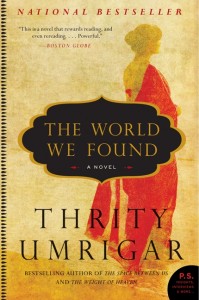
The World We Found by Thrity Umrigar

The World We Found by Thrity Umrigar focuses on four women — Laleh, Kavita, Armaiti, and Nishta — who were in college during the 1970s in India and were part of a socialist movement with their male friends Iqbal and Adish.  The students were caught in the midst of a nation’s struggle to improve its government and build a new identity as corruption had plagued the elections process and religious violence against Muslims and Hindus occurred relatively frequently.  In the late 1970s, The Emergency was declared in India, which gave the government extraordinary powers to restrict civil liberties, and led to a number of arrests and violence, among other things.

Laleh, Nishta, Armaiti, and Kavita were idealists looking to create a new world, and with their combined enthusiasm and wide-eyed innocence about a world that they could create for their futures and that of India, they dove headlong into the movement they thought best poised to help them achieve their goals.  However, the realities of social movements intervened, demonstrating the brutality on both sides and those realities forced them to choose the path that would lead them into adulthood.  Looking back on their college years, some of the group is filled with regret at what was not achieved and the friends lost, while others are glad to have had their delusions shattered and the truth revealed.  Umrigar’s characterizations demonstrate the ways in which poignant events in history can leave a lasting impression on idealists, forcing their perceptions to skew so much that they adopt the most radical of views or forcing them to realize that bodily and emotional harm are not endurable.  Although there is one member of the group who followed her ideals and made the tough choices, there are consequences of those hard decisions as well — the loss of friendships, family, and independence.

“Could time really alter things so much? If so, the devil that every religion taught people to fear and loathe was simply the passage of time.”  (page 113 ARC)

Following thirty years of silence, the women are called upon once again to come together, but this time for a friend in America who needs them.  One of them is dying and wishes to seem them all together again, but she cannot travel and they must come to her in America.  Reuniting is never easy, especially when each of them holds guilt about not keeping in touch, secrets from the past, and prejudices born of their not-so-shared history.  The world that each of them found may not be the world that they dreamed they would create together, but it is a world in which they all live now and must learn to either accept or make moves to change for themselves and one another.

“Color.  She was obsessed with color.  There was the read of the Shiraz that Richard had opened the night before.  The burnt orange of the handcrafted cherry table in the hallway.  The glitter of a computer chip, the history of human intelligence shrunk into a capsule.  The muted gold of this leather couch she was napping on.  It made you greedy, intoxicated, made you want to open your mouth and bite into the richness of the world.  It made you want to never leave it, never miss out on a day of this party, this wild carnival ride.”  (page 234 ARC)

Thrity Umrigar not only shares a bit of India’s history with her readers, but she shares some of the religious tensions that pervade Indian society and how it can color the perceptions of people who were once considered friends.  The World We Found is stunning, emotional, and heated in the issues it tackles from religious fanaticism to moral ambiguity and the tenuous bonds between friends and family.  The ties between Laleh, Kavita, Armaiti, and Nishta are unbreakable no matter what tore them apart after college, but the ties between Iqbal and Adish are no less strong, though they seem more complicated by the roles expected of men in their respective religions and Indian society.  Book clubs would have a great deal to discuss after reading this novel and are likely to come away from the discussion with a new perspective on religion and friendship.

About the Author:

Thrity Umrigar is the author of three other novels—The Space Between UsIf Today Be Sweet, and Bombay Time—and the memoir First Darling of the Morning. A journalist for 17 years, she is the winner of the Nieman Fellowship to Harvard University and a 2006 finalist for the PEN/Beyond Margins Award. An associate professor of English at Case Western Reserve University, Umrigar lives in Cleveland.  Please visit her Website.

Also check out my review of The Weight of Heaven.  Enter to win a copy at GoodReads before Sept. 10.

Some Local and Not So Local Events…

Washington, D.C., is a thriving literary community of poets, journalists, and authors, and there is never a dearth of writing events or readings for those looking for the next big book.  With that in mind, two great translated thrillers are coming out this month and both are translated by none other than K.E. Semmel, formerly the communications guru at The Writer’s Center in Bethesda, Md.

One More Page Bookstore in Arlington, Va., will be hosting him for a night of Scandinavian Noir in Translation on Aug. 23 at 7 p.m.

He’ll talk about his two translations and be interviewed by Art Taylor, who said The Caller was “chilling” and that it provided “a provocative portrait of a troubled mind.”  Between The Caller and The Absent One by Jussi Adler-Olsen, readers will be on the edges of their seats with excitement.

About The Caller:

One mild summer evening, a young couple are enjoying dinner while their daughter sleeps peacefully in her stroller under a tree. When her mother steps outside she is stunned: The child is covered in blood.  Inspector Sejer is called to the hospital to meet the family. Mercifully, the child is unharmed, but the parents are deeply shaken, and Sejer spends the evening trying to understand why anyone would carry out such a sinister prank. Then, just before midnight, somebody rings his doorbell.  No one is at the door, but the caller has left a small gray envelope on Sejer’s mat. From his living room window, the inspector watches a figure disappear into the darkness. Inside the envelope Sejer finds a postcard bearing a short message: Hell begins now.

About The Absent One:

Carl Mørck used to be one of Copenhagen’s best homicide detectives. Then a hail of bullets destroyed the lives of two fellow cops, and Carl—who didn’t draw his weapon—blames himself. So a promotion is the last thing he expects. But Department Q is a department of one, and Carl’s got only a stack of Copenhagen’s coldest cases for company. His colleagues snicker, but Carl may have the last laugh, because one file keeps nagging at him: a liberal politician vanished five years earlier and is presumed dead. But she isn’t dead … yet.

For those of you outside the D.C. area, Sarah McCoy, author of The Baker’s Daughter, and Gillian Flynn, author of Gone Girl, will be engaged in an Aug. 23 jamboree at the Crown Publishing Facebook page at 7 p.m.

Many of you have likely read Sarah’s book (check out my review) and loved it, so here’s your chance to chat with her for an hour. For those of you reading or hearing the buzz about Gillian’s book, this is a great opportunity to pick her brain.

For those of you that cannot get enough of short stories and reading, check out the third issue of The Coffin Factory, which is chock full of stories from greats like Joyce Carol Oates and James Franco. Oates has said the magazine is “a brilliantly imagined, highly readable, and important new literary magazine with the most incongruous title.”

The magazine has not only short stories, but also illustrations, and considers itself a “magazine for people who love books.” What more could book bloggers and readers ask for?

The first and second issues are available for PDF download, but why not check out a subscription or pick up a copy in your local indie bookstore?

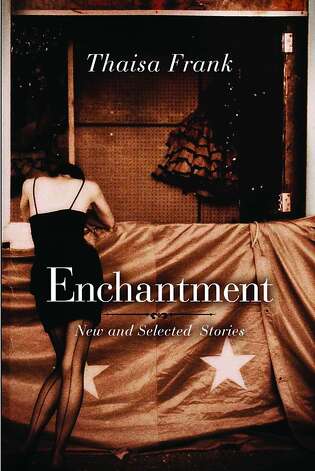
Also, there’s going to be a great short story discussion on Savvy Verse & Wit in September of “The Mapmaker” by Thaisa Frank, which is from her collection Enchantment.  If you haven’t entered to win one of 4 copies, you better get a move on.  Time is running out.

Winner of The Color of Tea

Out of 19 entrants or so, Random.org selected #7, who was Margaret who said, “Pasteis de nata (Portuguese custard pastry) Yum!  I remember eating them in Macau,” when leaving a comment about her favorite pastry or tea for The Color of Tea by Hannah Tunnicliffe.

There is still time to enter the giveaway for Enchantment by Thaisa Frank.

The Voice I Just Heard by Susan Dormady Eisenberg

Look at this book’s cover, as the woman walks out on the stage and sees the waterfalls before her, this is a perfect metaphor for the stage fright that grips Nora Costello when she sings, especially when her dismissive parents are in the audience. Imagine what singing is like for an artist, it is the air they breathe and the thrum of their soul, but imagine how it would be to recapture your flagging confidence in the presence of parents who disapprove of the theater as a career, particularly after one of your staunchest supporters, your brother Liam, dies in the Vietnam War dashing your father’s hopes of another brilliant doctor in the family.  The Voice I Just Heard by Susan Dormady Eisenberg is an operatic debut of epic proportions, with a story that takes readers behind the scenes of theater and opera through an emotional journey of losing a brother at one of the most controversial times in U.S. history — the Vietnam War.

“As Liam and I stood elbow to elbow at the fence, he said, ‘I should’ve memorized the whole poem, but I only recall the first four lines and the last four.’  His expression turned solemn.  ‘Here’s how it ends.  “Oh may my falls be bright as thine, may heaven’s forgiving rainbow shine, upon the mist that circles me, as soft as now it hangs o’er thee.”‘

‘That’s sweet,’ I said.  ‘But what does it mean?’

‘I asked Sister Perpetua.  She said we have the power of the falls in each of us.  When we screw up, heaven sends us a rainbow to tell us we’re forgiven.’  He shrugged.  ‘It’s weird.  I’ve come here three times and never seen a rainbow, so I wonder if Moore made it up.'”  (page 152)

Eisenberg, who has written profiles of singers, actors, and more, deftly weaves in the story of Liam and Nora’s childhood and the pressures they faced to be perfect for their upper crust parents — even if that meant tamping down their desires for a new direction and passion — with the present day family dynamics of losing a son to war.  Nora is set adrift without the anchoring relationship of her brother, who in a way was her buffer between her passions and dreams and her parents’ disapproval.  Her father is stoic in his response to his child’s death, and her mother withdraws from everything.  Eisenberg’s prose brings to life the grief of these characters as the mother goes to mass daily, the father buries himself in work, and Nora seeks solace in the theater where she runs public relations for the summer showing of Annie Get Your Gun in Cohoes, N.Y., alongside her gay boss Graham Chase.  A former mill town, Cohoes is a hot bed of hidden beauty in more ways than one, and it’s the perfect setting for two battered singers to meet — Nora Costello and Barton Wheeler, where they can come to terms with the right path for their artistry and their souls.

Eisenberg’s characters are deeply emotional, high strung, and respond before thinking, which gets them into a number of situations that can be misinterpreted and blown out of proportion, and in this way, her dramatic story resembles the missteps in Pride & Prejudice.  Nora must learn to see the courage within herself, repair her relationships with her parents and childhood friend Liz, and determine what path is best for her without the influence of others.  Bart, on the other hand, is balancing his true career with the need to support his two daughters from a previous marriage, while still holding onto the family business.  When they come together sparks fly.

The Voice I Just Heard by Susan Dormady Eisenberg is about finding the confidence in oneself to reach out passionately for the life you want to lead and to never let go of it, not matter what the detractors say.  Sage advice for any artist — whether singer or poet.  Nora is spunky, head strong, and passionate, while Bart is more restrained (probably due to his age and life experiences), but he’s equally adrift as he’s lost confidence in his abilities and the right path for himself.  From the stage in Cohoes to Washington, D.C., Nora and Bart grow into themselves and their voices — voices that are their own and remind them of where they belong.  When overture sounds and the cast steps on the stage, the voices in this novel will sweep the reader away into a operatic crescendo like no other.

There is some strong sexual language in this book, so beware.

About the Author:

Susan Dormady Eisenberg is a writer based in Maryland. She has published articles in Opera News and Classical Singer (such as a November 2011 cover profile of baritone Robert Orth), as well as The Hartford Courant and The Albany Times Union. On February 3, 2012, she released her first novel, The Voice I Just Heard, as an indie ebook.

As a freelancer Susan has written promotional publications for clients throughout Greater D.C. Prior to launching her business, she did publicity for Goodspeed Opera House and Syracuse Stage, and marketing for the Joffrey Ballet/New York.

Please also check out my interview with her for the D.C. Literature Examiner.

This is my 61st book for the New Authors Reading Challenge 2012.


Mailbox Monday #190

Mailbox Mondays (click the icon to check out the new blog) has gone on tour since Marcia at A Girl and Her Books, formerly The Printed Page passed the torch. This month’s host is 5 Minutes for Books.

The meme allows bloggers to share what books they receive in the mail or through other means over the past week.

Just be warned that these posts can increase your TBR piles and wish lists.

Here’s what I received:

1.  Skeleton Women by Mingmei Yip, for a TLC Book Tour in September.

2.  The Vampire Diaries Stefan’s Diaries Vol. 5 The Asylum, which I ordered with a gift certificate I had for my birthday from Barnes & Noble, though two other books I ordered have not arrive yet.

3.  I’m Just Sayin! by Kim Zimmer (Guiding Light’s Reva Shayne!) and Laura Morton for review from Penguin.

4. A Walk in the Park by Jill Mansell for review in November.

5. Ladybug Girl book and doll set by Jacky Davis and David Soman, which I ordered with my giftcard.

What did you receive?

163rd Virtual Poetry Circle

Welcome to the 163rd Virtual Poetry Circle!

Remember, this is just for fun and is not meant to be stressful.

Keep in mind what Molly Peacock’s books suggested. Look at a line, a stanza, sentences, and images; describe what you like or don’t like; and offer an opinion. If you missed my review of her book, check it out here.

Also, sign up for the 2012 Fearless Poetry Reading Challenge because its simple; you only need to read 1 book of poetry. Please visit the stops on the 2012 National Poetry Month Blog Tour.

Today’s poem is from Elana Bell‘s Eyes, Stones:

Flags  (page 41)

Everywhere, in the fertile soil of this land, 
we've planted flags. Flags sprout like the hair
from an old man's nostrils. Blue and white 
or red, black, green and white, they shroud 
windows, standing in for a family 
you can't see: a flag instead of the mother 
who hums and spices the lentils, a flag 
for Father, who runs the blade against his cheek
each morning with the rooster's kukuku. 
Later, in the dark, he holds his wife 
while the children sleep wrapped in flags. 
Flags grow in the garden, flags from the beaks
of muted birds. Shredded flags drape phone wires, 
flags hang from the pines like dead hands—

What do you think?

Happy Anniversary….

While we don’t always agree or get along, we still love each other after 10 years, and it never seemed that long to me.  Today we celebrate the day we married, but in truth I think we were married long before that since we lived together for two years before those vows were taken.

With the little “Wiggles” in our life, we’ve got fewer funds than usual, and what have we planned for this anniversary is not much, but at least Anna and her family will come over to watch our little one for a few hours so we can have some alone time.  Whether we go to dinner and a movie or dinner and bowling, it doesn’t matter as long as we are together.

I want to thank Anna and her family for watching “Wiggles” and my hubby for sticking with me through all the waffling and the angst.  You’re supportive when I need you to be and honest even when I don’t want you to be, and that’s just a few things I love about you.

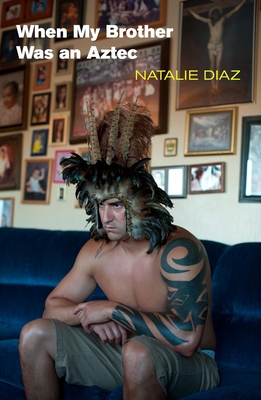
When My Brother Was an Aztec by Natalie Diaz

When My Brother Was an Aztec by Natalie Diaz, published by Copper Canyon Press and ordered for me by my local bookstore Novel Places, is a culture clash of Native Americans integrating into mainstream society and the struggles the children of these family have reconciling their home lives with the differences they find at school and among their new childhood friends and society.  The narrator battles with her mother about why she cannot have a sandwich like the white kids rather than raisins, and insinuates that she’d rather be like the white kids.  By the same token, the narrator experiences first hand the bullying of the white kids in her neighborhood because of her ethnicity — a dichotomy that resurfaces throughout the collection.

“The Red Blues” (page 11-13) is a creative look at a young girl’s blossoming into womanhood, getting down to the gritty reality of menstruation.

There is a dawn between my legs,
a rising of mad rouge birds, overflowing
and crazy-mean, bronze-tailed hawks,
a phoenix preening
sharp-hot wings, pretty pecking procession,
feathers flashing like flames

Diaz is creative and surprising in her imagery and frankness.  She tackles stereotypes, truths, and the history of her ancestors.  From the takeover of their lands by the whites to the current marginalization of her people, Diaz calls attention to the underhanded and sometimes overt discrimination that takes place.  At the same time, she is careful to demonstrate how even Native Americans are plagued by similar struggles with drugs and fitting in that other cultures face.  But there are poems that no matter the ethnicity of the narrator, readers can see the internal and external struggles fought with a loved one who is addicted to drugs.  In “How to Go to Dinner With a Brother on Drugs” (page 46-51), the narrator walks a fine line between telling her brother the truth about his appearance and behavior and avoiding the inevitable fight that would ensue should the conversation be too frank.  The reader gets a glimpse of how manipulative and careful the narrator has to be to get the brother to change his clothes before heading out to dinner, etc.

Your brother will come back down again,
this time dressed as a Judas effigy.
I know, I know, he’ll joke. It’s not Easter. So what?
Be straight with him. Tell him the truth.
Tell him, Judas had a rope around his neck.
When he asks if an old lamp cord will do, just shrug.
He’ll go back upstairs, and you will be there,
close enough to the door to leave, but you won’t.
You will wait, unsure of what you are waiting for.”

But it is more than that, it is the struggle of waiting for a loved one to smarten up, to become all that they can be before your eyes and not fall back into the same patterns over and over. There is a sense of loyalty in these lines, but also a sense of hopelessness.  Diaz speaks of her own pain, the anguish of watching a brother addicted to drugs and the heartbreak of watching parents who love both children struggle to save one from himself and fail.  Each poem’s surface meaning is easy to discern, but upon another read through readers can easily see the emotional torrent of each line and image.  Each poem is layered with multiple images and emotions demonstrating the tumult that infuses familial relationships, particularly those conflicted by cultural clashes and drug addiction.

When My Brother Was an Aztec by Natalie Diaz is a glimmering debut collection that hums in the back of the mind and generates an emotional aftermath that will leave readers speechless.  Following a brief pause, readers will want to pass this book onto others to read and discuss.  As far as book club selections go, this would be a welcome addition as the language is easy to follow, the emotions are raw, and the themes covered are modern and relevant in today’s world.

About the Poet:

Natalie Diaz, a member of the Mojave and Pima Indian tribes, attended Old Dominion University on a full athletic scholarship. After playing professional basketball in Austria, Portugal, Spain, Sweden, and Turkey she returned to ODU for an MFA in writing. Her publications include Prairie SchoonerIowa ReviewCrab Orchard Review, among others. Her work was selected by Natasha Trethewey for Best New Poets and she has received the Nimrod/Hardman Pablo Neruda Prize for Poetry. She lives in Surprise, Arizona.  Please check out this interview.

This is my 60th book for the New Authors Reading Challenge 2012.


This is the 19th book for my 2012 Fearless Poetry Exploration Reading Challenge.


The Disappearance of Georgiana Darcy by Regina Jeffers

The Disappearance of Georgiana Darcy by Regina Jeffers is a Pride & Prejudice mystery with heart and a devotion to Jane Austen’s characters as she envisioned them.  The beauty of this  novel is that it not only holds true to the original and what happened between the Bennets, the Darcys, and the Bingleys, but it also demonstrates that those characters can change and become more than Austen intended.

Georgiana has vanished among the moors in Scotland while she waits for her husband Major General Edward Fitzwilliam to return from fighting France at Waterloo, and her brother Mr. Darcy and his wife Elizabeth are preparing for the wedding of her younger sister Kitty.  The Darcys may be enjoying being new parents and building their small community of friends and family, but the Wickhams and Mrs. Bennet’s mischief are never too far away.

“For a brief second, Darcy’s brain told him that his vision had betrayed him.  It could not be George Wickham aiming one of the military’s best personal weapons at him, but he rejected that erroneous assumption immediately.  It was Wickham, and Darcy was the target.”  (Page 142)

Jeffers is true to the original characters, while intermingling the elements of gothic literature found in the prose of the Brontes.  She creates situations with new characters that generate serious suspense that will have readers on the edge of their seat about the safety of Georgiana.  Darcy is a loving husband, but he and his wife still have that back-and-forth banter that readers of Austen love.  But their relationship has matured, with an absence of misunderstandings and temper flare-ups that got them into hot water with one another in the first place.  Jeffers is at her best here with prose that keeps to the customs and diction of the past and mixes it seamlessly with modern sensibility.

“‘Elizabeth?’ Darcy asked eagerly as he stood mesmerized by his son’s antics.  ‘Have you seen what Bennet has accomplished?’

His wife joined him in his sitting room.  ‘What would that be?’ Her voice betrayed her amusement.

Darcy turned his head to glare at her.  ‘I suppose Bennet’s turning from his knees to his back is not a recent achievement?’

Although she attempted a sympathetic countenance, Elizabeth’s smile widened.  ‘If it is of any consequence, your son has only mastered the rotation in the last week.’

Darcy threw up his hands in frustration.  ‘That settles it! I refuse to be away from my family ever again.  Bennet grows too quickly as it is.  . . . ‘” (Page 394)

The novel pulls readers in easily, particularly with the mystery that leaves Georgiana’s captors and location a mystery until the latter quarter of the novel.  The technique of intermittently showing readers Georgiana’s thoughts and concerns about her location as her kin learn of the erroneous reports that reached her in Scotland and her subsequent disappearance are well done.  Jeffers also creates a set of villains that rival even Mr. Wickham, and the secrets revealed about the MacBethan family in Scotland will cause some readers to have nightmares or at least feel very uncomfortable.  The Disappearance of Georgiana Darcy shows that beloved characters can evolve, have adventures, and learn to forgive.

About the Author:

A teacher for nearly 40 years in the public school systems of three different states, Regina Jeffers is a Time Warner Star Teacher Award winner, a Martha Holden Jennings Scholar, a Columbus Educator Award winner, and a guest panelist for the Smithsonian. She served on various national educational committees and is often sought as a media literarcy consultant. Like many “snow birds,” Jeffers moved to the South several years ago. She is late to the publishing business, having written her first book on a dare from her students, who, literally said, “If you know all this, why do you not do it yourself?” On a whim, she self published her first book, and from there, everything happened at once. Now, writing for Ulysses Press in California, Jeffers is the author of several Jane Austen adaptations including Darcy’s Passions, Darcy’s Temptation, Vampire Darcy’s Desire, The Phantom of Pemberley, and Captain Wentworth’s Persuasion. She considers herself a Janeite – a member of the Jane Austen Society of North America and spends lots of her free time involved in such. Jeffers has now branched out into the Historical Romance genre. Her first book in the Realm series, The Scandal of Lady Eleanor, will be released in early 2011.

Mailbox Monday #189

Mailbox Mondays (click the icon to check out the new blog) has gone on tour since Marcia at A Girl and Her Books, formerly The Printed Page passed the torch. This month’s host is 5 Minutes for Books.

The meme allows bloggers to share what books they receive in the mail or through other means over the past week.

Just be warned that these posts can increase your TBR piles and wish lists.

Here’s what I received:

1.  The Language of Flowers by Vanessa Diffenbaugh, which I won ages ago and can’t seem to remember from where….forgive me.

The Victorian language of flowers was used to convey romantic expressions: honeysuckle for devotion, asters for patience, and red roses for love. But for Victoria Jones, it’s been more useful in communicating mistrust and solitude. After a childhood spent in the foster-care system, she is unable to get close to anybody, and her only connection to the world is through flowers and their meanings. Now eighteen and emancipated from the system with nowhere to go, Victoria realizes she has a gift for helping others through the flowers she chooses for them. But an unexpected encounter with a mysterious stranger has her questioning what’s been missing in her life. And when she’s forced to confront a painful secret from her past, she must decide whether it’s worth risking everything for a second chance at happiness.

2.  All the Truth by Laura Brodie for review from the author.

One night can alter a life forever…

Emma Greene enjoys living in rural solitude with her husband and five-year-old daughter, Maggie, far away from her college students in Jackson, Virginia. But late one night, with her husband away and her daughter upstairs in bed, some of Emma’s students trespass on her property. The ensuing confrontation changes Emma and Maggie’s life forever.

Nine years later, still plagued by nightmares from that evening, Maggie is living with her father in the same small town, and entering her first year of high school. She develops problems in class when her math teacher, a strange and lonely woman, begins to exhibit an odd interest in her.

In order to let go of the past, Maggie begins to piece together all the truth of what happened that night—and discovers a story of anger, guilt, and redemption.

3. The Pigeon Pie Mystery by Julia Stuart unsolicited from Doubleday.

When Indian Princess Alexandrina is left penniless by the sudden death of her father, the Maharaja of Brindor, Queen Victoria grants her a grace-and-favor home in Hampton Court Palace. Though rumored to be haunted, Alexandrina and her lady’s maid, Pooki, have no choice but to take the Queen up on her offer.
Aside from the ghost sightings, Hampton Court doesn’t seem so bad. The princess is soon befriended by three eccentric widows who invite her to a picnic with all the palace’s inhabitants, for which Pooki bakes a pigeon pie. But when General-Major Bagshot dies after eating said pie, and the coroner finds traces of arsenic in his body, Pooki becomes the #1 suspect in a murder investigation.
Princess Alexandrina isn’t about to let her faithful servant hang. She begins an investigation of her own, and discovers that Hampton Court isn’t such a safe place to live after all.
With her trademark wit and charm, Julia Stuart introduces us to an outstanding cast of lovable oddballs, from the palace maze-keeper to the unconventional Lady Beatrice (who likes to dress up as a toucan—don’t ask), as she guides us through the many delightful twists and turns in this fun and quirky murder mystery. Everyone is hiding a secret of the heart, and even Alexandrina may not realize when she’s caught in a maze of love.

4. Fireproof by Alex Kava unsolicited from Doubleday.

When a building bursts into flames on a cold winter night in D.C., investigators see a resemblance to a string of recent fires in the area. There is one difference, however: This one has a human casualty. The local team insists they’re looking for a young white male, suffering from an uncontrollable impulse to act out his anger or sexual aggression. But when special agent Maggie O’Dell is called in, everything she sees leads her to believe that this is the work of a calculating and controlled criminal.

Jeffery Cole, a reporter looking for his big break, is also at the scene of the crime and decides to make Maggie part of his news piece, digging up aspects of her past that she would rather forget. Maggie’s brother Patrick is also back in DC where he is working for a private firefighting company and is frequently called in as these fires continue to light up around the city.

As the acts of arson become more brazen, Maggie’s professional and personal worlds begin to collide dangerously. The killer may be closer than she imagines.

5. The Roots of the Olive Tree by Courtney Miller Santo unrequested from the publisher.

Meet the Keller family, five generations of firstborn women—an unbroken line of daughters—living together in the same house on a secluded olive grove in the Sacramento Valley of Northern California.

Anna, the family matriarch, is 112 and determined to become the oldest person in the world. An indomitable force, strong in mind and firm in body, she rules Hill House, the family home she shares with her daughter Bets, granddaughter Callie, great-granddaughter Deb, and great-great-granddaughter Erin. Though they lead ordinary lives, there is an element of the extraordinary to these women: the eldest two are defying longevity norms. Their unusual lifespans have caught the attention of a geneticist who believes they hold the key to breakthroughs that will revolutionize the aging process for everyone.

But Anna is not interested in unlocking secrets the Keller blood holds. She believes there are some truths that must stay hidden, including certain knowledge about her origins that she has carried for more than a century. Like Anna, each of the Keller women conceals her true self from the others. While they are bound by blood and the house they share, living together has not always been easy. And it is about to become more complicated now that Erin, the youngest, is back, alone and pregnant, after two years abroad with an opera company. Her return and the arrival of the geneticist who has come to study the Keller family ignites explosive emotions that these women have kept buried and uncovers revelations that will shake them all to their roots.

6. LBJ’s Hired Gun by John J. Gebhart, which Anna got me for my birthday!

Many Vietnam memoirs have appeared in recent years, but not a single one has the humor, pathos, poignancy, and often sheer hilarity of John J. Gebhart’s riveting LBJ’S Hired Gun. As Gebhart tells it, he was a “smart-mouthed college boy” who joined the Marines to see the world and “dust a few black pajamas for Uncle Sam.” Two grueling tours of duty later (1965-1967) he returned home as a sergeant after surviving 240 combat missions (12 air medals) and being shot down twice. On his chest was the Navy Commendation Award (with the combat V).

LBJ’s Hired Gun launches with Gebhart’s grim recollection of the intense old-school brutality that was Marine Corps training on Parris Island before transitioning to his difficult journey for Southeast Asia aboard a troop transport with 2,000 other nameless grunts. These hardships offered but a glimpse of the suffering he and his comrades were about to endure. PARA His candid account of life and death in Vietnam is written with a lively, infectious flair. But be forewarned: no attempt has been made to sanitize this memoir with politically-correct language. Gebhart tells his story exactly as he and his comrades spoke in the 1960s. The result is a gripping, no-holds-barred memoir of his “misadventures in-country.” He spares no detail and no one in his effort to convey exactly what he and his comrades experienced in Vietnam.

What did you receive?

162nd Virtual Poetry Circle

Welcome to the 162nd Virtual Poetry Circle!

Remember, this is just for fun and is not meant to be stressful.

Keep in mind what Molly Peacock’s books suggested. Look at a line, a stanza, sentences, and images; describe what you like or don’t like; and offer an opinion. If you missed my review of her book, check it out here.

Also, sign up for the 2012 Fearless Poetry Reading Challenge because its simple; you only need to read 1 book of poetry. Please visit the stops on the 2012 National Poetry Month Blog Tour.

Today’s poem is from Tracy K. Smith’s Life on Mars collection:

EVERYTHING THAT EVER WAS (Page 59-60)

Like a wide wake, rippling
Infinitely into the distance, everything
 
That ever was still is, somewhere,
Floating near the surface, nursing
Its hunger for you and me

And the now we’ve named
And made a place of.
 
Like groundswell sometimes
It surges up, claiming a little piece
Of where we stand.

Like the wind the rains ride in on,
It sweeps across the leaves,

Pushing in past the windows
We didn’t slam quickly enough.
Dark water it will take days to drain.

It surprised us last night in my sleep.
Brought food, a gift. Stood squarely

There between us, while your eyes
Danced toward mine, and my hands
Sat working a thread in my lap.

Up close, it was so thin. And when finally
You reached for me, it backed away,

Bereft, but not vanquished. Today,
Whatever it was seems slight, a trail
Of cloud rising up like smoke.

And the trees that watch as I write
Sway in the breeze, as if all that stirs

Under the soil is a little tickle of knowledge
The great blind roots will tease through
And push eventually past.

What do you think?

Enchantment Giveaway Extended

As summer has kept the heat upon us and many of us are busy with family events and other things, I’ve noticed a decline in readers and comments.  This is good news for me because I’ve been able to take Fridays off from blogging in addition to taking off Sundays during the week.

But what has been disheartening is the response to my giveaway of a really great short story collection, Enchantment by Thaisa Frank.

However, what is good about this is that its given me the impetus to extend the giveaway through Aug. 31.

There are 4 copies up for grabs for US/Canada residents who will participate in a short story discussion on Sept. 18 of “The Mapmaker” with the author!