Quantcast

Savvy’s Best of 2012 List

Of all the poetry I read in 2012, two books stayed with me the longest, and both were published in 2012. So while, I wanted to select one book for each genre I read, I opted to break the rule in the poetry category and highly recommend these two collections:

Both of these collections are powerful in the words and imagery the poets use to discuss not only family, but also the societal expectations and ethnic constraints their subjects face throughout history and int today’s world. These struggles continue to be present, real, and humbling. The poems in these collections strive to give readers pause — to collect their thoughts and to reform their own behavior.

In fiction, this is my top selection for the year:

Umrigar is an author who has yet to disappoint me with her work. She makes the Indian culture come alive for me. I loved this novel and its intricacies about social movements and idealism versus realities and cultural norms. And even when things can pull friends in different directions, there is often the pull of shared history that can hold them together.

In memoir — which I don’t often read a lot of because I don’t find it that enjoyable most of the time — this was my top selection and it shouldn’t be a surprise:

While this Vietnam War memoir is about Delmar Presley, it is also about the hardships that family members of war veterans often face given that violence and war has changed their loved ones into people they do not recognize or often understand. Christal’s experiment to engage with her father, his past in Vietnam, and their shared past is striking, engaging, and emotional. It’s a memoir that any war veteran, family member, or person dealing with PTSD should read.

In Young Adult Fiction, there is no one else’s book that could match Beth Kephart’s mastery of language, character, and setting for me. She tackles tough subject matter with a fine pen and a compassionate hand. So for me, the winner in this category was easily:

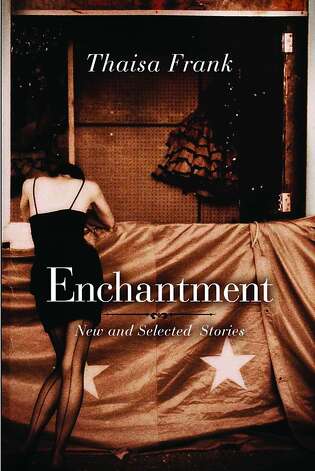
Finally, in the short story category, it was a tough choice for me as one of my favorite collections was finished earlier in the year, Tracks by Eric D. Goodman, and another later in the year, Enchantment by Thaisa Frank. But after a lot of thought, I chose Tracks because those characters just made me year to ride the rails with them and enjoy their journeys over again:

What books were on your best list for 2012?

2012 Savvy’s Honorable Mentions

Want the 2012 Best of Savvy Verse & Wit’s reads? Submit a $5 payment to savvyverseandwit at gmail via PayPal, and we’ll email you the password for the list and you can come back and access it.

However, for those of you interested in those that just missed the list, these are my honorable mentions:

Interview with Erica Bauermeister

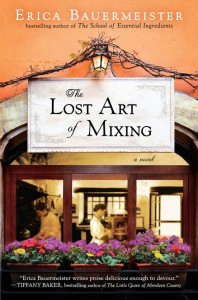
The Lost Art of Mixing by Erica Bauermeister was one of my favorite books from last year and continues where The School of Essential Ingredients left off.  I said in my review of The Lost Art of Mixing, “Bauermeister has created another set of deep characters with nuanced personalities and places them in unusual situations that are all at once odd and plausible, and readers will be swept up in the relationships within these pages and how the characters mingle and mesh with one another in different ways.”

Today, I’ve got a giveaway and a great interview for you.  Without further ado, here’s my interview with Ms. Bauermeister:

The role of food as a way to connect people to one another and their memories is strong in both The School of Essential Ingredients and The Lost Art of Mixing. What is your relationship with cooking and is there someone in your life that sparked your interest in the culinary arts?

My relationship with cooking is similar to Lillian’s. I am far less intuitive when it comes to matching people and food – but I do love playing with ingredients. Interestingly, the spark came from a place more than a person. I was brought up in a recipe-oriented household, and it was language I was never really comfortable with. In 1997, my husband was relocated to Italy and we took our children and lived there for two years. No one I met there used recipes – they cooked with their five senses. That approach was felt as natural as breathing. I haven’t looked back.

Lillian has a pretty good head on her shoulders when it comes to connecting people in her cooking classes to others and themselves but when it comes to her own life, she seems adrift. How did you come to create her as a character and what elements of her personality were strongest to you when you started writing her?

I think many of us know someone who has taken a gift or talent and hidden inside its beauty. We’re so in awe of the magic, we forget to look inside.

When it came to Lillian, I started with two images in The School of Essential Ingredients – a woman wise beyond her years, and a child who had been abandoned and had turned to cooking for solace. In The Lost Art of Mixing I wanted the chance to go deeper into her character, to explore Lillian as the flawed and wonderful human being that she is. Her strength becomes more complicated in Mixing, and that makes her even more interesting to me.

In terms of cooking, would you consider yourself a follower of recipes or someone who experiments in the kitchen with just a few guiding principles. Name one successful dish you’ve created and one that didn’t work as well.

If I am learning a new cuisine –Thai or Indian, for example – I’ll need to use recipes for a while to learn those guiding principles. But once I understand the basic grammar, I want to go play.

One of my favorite things to do is to open the refrigerator and see what I have left over, and then turn those ingredients into something new. One of my favorites was a butternut squash, pancetta, garlic, cream, and truffle oil sauce served over penne pasta. It tasted like autumn, but in a completely seductive way.

Less successful? I was trying to see just how little flour I could put in cookies. I went from one batch that was light and crispy and wonderful to a complete mess in the next. Yes, there is a tipping point.

The Lost Art of Mixing deals a lot less with the creation of food and there is less food imagery than the first book, but the title still calls to readers’ minds the idea of cooking. Why the absence of strong food imagery and elements in this book?

One of my main goals in writing is to get my readers to slow down and pay attention. Cooking provides a wonderful opportunity to do that, but it isn’t the only way. In my second novel, Joy For Beginners, I branched out into gardening and perfume and books and travel and pottery – all of them activities that are more rewarding when you slow down and use your five senses. In The Lost Art of Mixing I wanted to remind readers to pay attention to those around them.

So why the title? In my mind, the “mixing” refers to the characters and the situations they get themselves into. There are four pairs of characters in this novel, each pair in the midst of misunderstanding. My job was to present those conflicts from the viewpoint of each of the characters involved – allowing the reader to stand in the middle and become immersed in both sides of an argument, to mix, as it were. I think empathy is one of the most valuable qualities a human being can possess.

Finally, what are some of the best poems/poets you’ve read recently and do you prefer contemporary or classic poetry? Why or why not?

The creating of rhythms and the making of images are two of my favorite parts of writing. I probably spend more time on that than anything. And yet, I could never write poetry, and I am in awe of those who do.

Some of my favorite poets are those who take ordinary parts of a day and shine a new light on them. I love the way Billy Collins can be writing about losing your memories in a way that feels comfortable and familiar, until the last two lines, when the poem suddenly surges into beauty. Mary Oliver does the same thing with the natural world, observing closely and then making us see something new and brilliant. They cause me to slow down and pay attention to the day around me, and in doing so give it meaning.

Thanks, Erica Bauermeister for writing such great books with wonderful characters.

Giveaway is open to US/Canada readers through Jan. 11, 2013. To enter for a copy of The Lost Art of Mixing, please leave a comment with one of your favorite recipes.

Failed 2012 Challenge

I signed up to finish 2 series — Sookie Stackhouse and Alex Cross and failed!  I didn’t finish either series, but I almost finished the Melissa de la Cruz series of Blue Bloods.  I have just two books to go in that series…until the next one is published.

Maybe in 2013, I can finish at least one of these series.

Happy New Year 2013

We rung out 2012 with a 24-hour stomach bug here, and most of us were asleep or in the bathroom yesterday. But we all went to bed early and missed the ball drop, etc.

We seem to be a bit better today, so hopefully that is a good sign for 2013.

I hope you all had a great New Year’s celebration, and I want to apologize to Anna and our other guests with whom we had to cancel yesterday. I hope you all found alternate plans and fun. So sorry.

For those interested in the Savvy Verse & Wit best of list, it is coming soon at the same standard price of $5. Payment is accepted via PayPal and you’ll receive a password to access the list.

Not Young, Still Restless by Jeanne Cooper, Lindsay Harrison

Not Young, Still Restless by Jeanne Cooper and Lindsay Harrison is a great memoir for the fans of The Young and the Restless soap opera and Katherine Chancellor.  She was born in 1928 to part-Cherokee parents, and was the youngest of three children.  My mother has watched the show since before I was born, and I remember the fateful episode in which Mrs. C. drove her husband off a cliff in a drunken stupor — I was one.  Yes, this show has been in my life for a very long time.

Cooper infuses her memoir with honesty, but also refuses to tell stories that are not her to tell.  She may be harsh on her ex-husband, but once you read about his antics, it’s hard not to see why she’d still not be his biggest fan.  However, she does admit that her relationship with her husband did beget her some wonderful and talented children — Corbin Bernsen, Collin, and Caren.

“I don’t care who you are, you don’t get more than one chance to betray me, and as this book should make apparent, I have a very long memory.”  (page 13)

There is some kissing and telling, but it’s not graphic, and its touching for the most part.  Cooper also offers some great insights into the soap opera business and movie/TV business.  One touching moment in the book is when she talks of her dear friend, Raymond Burr — a WWII veteran who survived the Battle of Okinawa and was awarded a Purple Heart!  She and Ray had a great friendship and there is a fun story about the time she “borrowed” his trophy just before he headed to Japan to meet with troops at an army base.

Cooper is frank in her stories and her memories — or lack there of — about events, and yes, there are moments where she doesn’t explain how she met certain famous actors and actresses, like Grace Kelly, but her open heart and charitable spirit shine through in how she cares for her family and others.  I loved the story of how she and her young daughter witnessed a car accident and stopped to help.  Her daughter was scared, but Cooper explained to her that they had to help if someone was in need.  It was their duty to do so.  We need more parents like this and more citizens who care!

Not Young, Still Restless by Jeanne Cooper and Lindsay Harrison shows that no matter your age, you are not done living yet and that there is more love, devotion, and duty to give.  Cooper’s memoir offers some great insight about the Y&R, Hollywood, and family.  Highly recommended for fans of the show and for those who are interested in learning about old Hollywood.

About the Author:

Jeanne Cooper has earned the love of soap-opera fans for her long-running role as Katherine Chancellor on CBS’s The Young and the Restless. She received back-to-back Daytime Emmy Award nominations as Outstanding Leading Actress in a Drama Series in 1989, 1990, and 1991. In 1993, she was awarded a star on the Hollywood Walk of Fame, in recognition of her many years in show business.

This is my 89th book for the New Authors Reading Challenge in 2012.


Mailbox Monday #207

Mailbox Mondays (click the icon to check out the new blog) has gone on tour since Marcia at A Girl and Her Books, formerly The Printed Page passed the torch. This month’s host is Suko’s Notebook.

The meme allows bloggers to share what books they receive in the mail or through other means over the past week.

Just be warned that these posts can increase your TBR piles and wish lists.

Here’s what I received from Anna at Diary of an Eccentric and her family over the holidays:

 1.  The Night Watch by Sarah Waters

Moving back through the 1940s, through air raids, blacked-out streets, illicit partying, and sexual adventure, to end with its beginning in 1941, The Night Watch tells the story of four Londoners-three women and a young man with a past-whose lives, and those of their friends and lovers, connect in tragedy, stunning surprise and exquisite turns, only to change irreversibly in the shadow of a grand historical event.

2.  The House at Tyneford by Natasha Solomons

It’s the spring of 1938 and no longer safe to be a Jew in Vienna. Nineteen-year-old Elise Landau is forced to leave her glittering life of parties and champagne to become a parlor maid in England. She arrives at Tyneford, the great house on the bay, where servants polish silver and serve drinks on the lawn. But war is coming, and the world is changing. When the master of Tyneford’s young son, Kit, returns home, he and Elise strike up an unlikely friendship that will transform Tyneford-and Elise-forever.

3.  Red Army Red by Jehanne Dubrow

Displaying a sure sense of craft and a sharp facility for linking personal experience to the public realms of history and politics, Jehanne Dubrow’s Red Army Red chronicles the coming of age of a child of American diplomats in Eastern Europe in the 1980s. In the last moments of the Cold War, Poland—the setting for many of the poems—lurches fitfully from a society characterized by hardship and deprivation toward a free-market economy. The contradictions and turmoil generated by this transition are the context in which an adolescent girl awakens to her sexuality. With wit and subtlety, Dubrow makes apparent the parallels between the body and the body politic, between the fulfillment of individual and collective desires.

Here’s one other book I received to share with Wiggles from a family friend:

4. The Tall Book of Fairy Tales by Eleanor Graham Vance and William Sharp

This illustrated collection of classic fairy tales was first published in 1947. This edition was first issued in 1975, and preserves all the delightful illustrations of the original. The stories in this collection are: Snow White and Rose Red, Rumpelstiltskin, Tom Thumb, The Golden Goose, The Sleeping Beauty, The Bremen Town Musicians, Cinderella, Hansel and Gretel, Rapunzel, Puss in Boots, The Brave Little Tailor, Snow White and the Seven Dwarfs, Jack and the Beanstalk, Beauty and the Beast, The Golden Touch, and The Shoemaker and the Elves.

Here’s What I received for review:

5. The Tell by Hester Kaplan for a TLC Book Tour in mid-January 2013.

Mira and Owen’s marriage is less stable than they know when Wilton Deere, an aging, no longer famous TV star moves in to the grand house next door. With plenty of money and plenty of time to kill, Wilton is charming but ruthless as he inserts himself into the couple’s life in a quest for distraction, friendship—and most urgently—a connection with Anya, the daughter he abandoned years earlier. Facing stresses at home and work, Mira begins to accompany Wilton to a casino and is drawn to the slot machines. Escapism soon turns to full-on addiction and a growing tangle of lies and shame that threatens her fraying marriage and home. Betrayed and confused, Owen turns to the mysterious Anya, who is testing her own ability to trust her father after many years apart.

6. Heading Out to Wonderful by Robert Goolrick from Algonquin, unexpectedly.

It is the summer of 1948 when a handsome, charismatic stranger, Charlie Beale, recently back from the war in Europe, shows up in the town of Brownsburg, a sleepy village nestled in the valley of Virginia. All he has with him are two suitcases: One contains his few possessions, including a fine set of butcher knives; the other is full of money. A lot of money. Finding work at the local butcher shop, Charlie gradually meets all the townsfolk, including Boaty Glass, Brownsburg’s wealthiest citizen, and most significantly, Boaty’s beautiful teenage bride, Sylvan.

7. The Round House by Louisa Erdrich, which is the National Book Award Winner.

One Sunday in the spring of 1988, a woman living on a reservation in North Dakota is attacked. The details of the crime are slow to surface as Geraldine Coutts is traumatized and reluctant to relive or reveal what happened, either to the police or to her husband, Bazil, and thirteen-year-old son, Joe. In one day, Joe’s life is irrevocably transformed. He tries to heal his mother, but she will not leave her bed and slips into an abyss of solitude. Increasingly alone, Joe finds himself thrust prematurely into an adult world for which he is ill prepared.

What did you receive?

182nd Virtual Poetry Circle

Welcome to the 182nd Virtual Poetry Circle!

Remember, this is just for fun and is not meant to be stressful.

Keep in mind what Molly Peacock’s books suggested. Look at a line, a stanza, sentences, and images; describe what you like or don’t like; and offer an opinion. If you missed my review of her book, check it out here.

Also, sign up for the 2013 Dive Into Poetry Challenge because its simple; you only need to read 1 book of poetry. Please visit the stops on the 2012 National Poetry Month Blog Tour.

Today’s poem is from Kobayashi Issa:

New Year's Day--
everything is in blossom!
I feel about average.

What do you think about this haiku?

2013 Challenges

I’m joining this challenge again because there are some books I wanted to read in 2012, that I didn’t get to read yet. I’ll sign up for Shamrock level: 4 books
I really enjoy the different books i can find for this challenge from Irish characters to historical fiction and even young adult and poetry books.


For this challenge, which I co-host with Anna at Diary of an Eccentric, I plan to read Wade 4-10 books. And no, I don’t have a list of books for this beforehand.  I don’t read a lot about the American Revolution, but I do plan to read Treacherous Beauty.


I always enjoy this challenge, so I’m signing up again. I can’t wait to see which new authors I discover in 2013. I seem to always surpass my goal for this one, but I’m still sticking with the basic level of 25 for me.


I’m hosting a new poetry reading and participation challenge this year called Dive Into Poetry Challenge 2013.

I’ll likely be doing all of the options in the challenge, so click on the button for the rules and sign up!

Some other challenges I’m considering for 2013, but have not signed up for due to possible time constraints include:

Announcing Dive Into Poetry Challenge 2013

Dive Into Poetry Challenge 2013

Rules for the Dive Into Poetry Challenge 2013:

1. Create a post on your blog stating your intention to read poetry in 2013 and sign up in Mr. Linky. If you don’t have a blog, simply leave a comment about reading poetry in 2013.

2. Choose one of the following options to complete the challenge:

  • Read and review up to 2 books of poetry throughout 2013 and leave the full link to each review in Mr. Linky.
  • Participate in at least 3 Virtual Poetry Circles throughout the year.
  • Sign up to feature poetry on your blog for April’s National Poetry Month as part of Savvy Verse & Wit’s Blog Tour.
  • Feature one poet per month on your own blog.
  • Or some combination of the above.

3. Complete your goals between Jan. 1, 2013, and Dec. 31, 2013.


Hokey Pokey by Jerry Spinelli

Hokey Pokey by Jerry Spinelli (published in January 2013) is a modern day fable in which the maxim “Kids live in their own little worlds” comes to life.  Bicycles become wild mustangs or horses in the plains to be captured by boys who are not just boys but cowboys with rope.  Girls hate boys and boys hate girls — taunting each other with harmless names and petty pranks.  In many ways, they relate to the opposite sex no differently than they relate to their own, though rather than offer advice or imparting skills and knowledge to their gender enemies, they stand apart from them and deride them as inferior.  Spinelli’s tale takes a few chapters to develop into a full blown world, but once it does, look out.  Readers will be wandering around and playing games.

There are four basic rules in this world of Hokey Pokey:  never leave a puddle unstomped; never go to sleep until the last possible minute; never kiss a girl; and never go near the Forbidden Hut.  With a male protagonist, Jack, Spinelli obviously is gearing the book more toward male readers, but female readers who can remember their childhoods and the games they played, may still find something to hold their attention here.  Jack is flanked by his amigos, Dusty and LaJo, and his enemy, Jubilee, has just stolen his mustang — Scramjet — the most famous bike in all of the land.  Jack is pissed, he’s vengeful, he’s sad, but more than anything, he’s noticed that something has changed since he woke up in the morning.

“The world looked exactly the same as always — the places, the kids — but this time there was a slippery sense, like an uncatchable moth, that he himself was no longer part of the picture, was on the outside looking in, that the world he was seeing was no longer his.  For a scary instant he thought his end of the seesaw was going to keep on rising and catapult him clear out of Hokey Pokey.”  (page 76 ARC)

Spinelli weaves a tale of growing up and leaving childhood behind and that sense of things being the same as they always were, but different somehow.  Highly inventive and at times surreal, Spinelli’s world can be a bit topsy turvy at first, but readers will soon wonder what is wrong with Jack and where he’s going if he is leaving Hokey Pokey when there is no train.  In a world absent of adults, kids run amok, taunt each other and take out their traumatic frustrations on one another in the form of games and the dangerous click, click, click of the exploder, which renders other kids “dead.”  In a land of make-believe and where anything is possible, Jack and his friends are free to think and feel how they wish without consequence.  But even in this world, there are boundaries to how others are treated.

Hokey Pokey by Jerry Spinelli, which is my first experience with this author, is an adventure for young and old.  However, the age range is 10 and up, and readers on the younger end of that range may find the themes and some language challenging, especially as Spinelli often mashes words together or creates his own as part of Hokey Pokey’s world.

About the Author:

Jerry Spinelli is an American author of children’s novels on adolescence and early adulthood. He is best known for the novels Maniac Magee, for which he won the Newbury Medal, and Wringer.  After graduating from Gettysburg College with an English degree, Spinelli worked full time as a magazine editor.  Spinelli was born in Norristown, Pennsylvania and currently resides in Phoenixville, PA.

This is my 88th book for the New Authors Reading Challenge in 2012.

Merry Christmas and Happy Holidays

I just wanted to take a moment to wish everyone a happy holiday season!