Quantcast

Mailbox Monday #204

Mailbox Mondays (click the icon to check out the new blog) has gone on tour since Marcia at A Girl and Her Books, formerly The Printed Page passed the torch. This month’s host is Suko’s Notebook.

The meme allows bloggers to share what books they receive in the mail or through other means over the past week.

Just be warned that these posts can increase your TBR piles and wish lists.

Here’s what I received:

1.  Confessions of a Jane Austen Addict by Laurie Viera Rigler, which I got from the library sale for 50 cents.

After nursing a broken engagement with Jane Austen novels and Absolut, Courtney Stone wakes up to find herself not in her Los Angeles bedroom or even in her own body, but inside the bedchamber of a woman in Regency England. Who but an Austen addict like herself could concoct such a fantasy?

Not only is Courtney stuck inside another woman’s life, she is forced to pretend she actually is that woman; and despite knowing nothing about her, she manages to fool even the most astute observer. For her borrowed body knows how to speak without slaying the King’s English, dance without maiming her partner, and embroider as if possessed by actual domestic skill.

But not even Courtney’s level of Austen mania has prepared her for the chamber pots and filthy coaching inns of nineteenth-century England, let alone the realities of being a single woman who must fend off suffocating chaperones, condom-less seducers, and marriages of convenience. Enter the enigmatic Mr. Edgeworth, a suitor who may turn out not to be a familiar species of philanderer after all.

2.  The Music Lesson by Katharine Weber, which I got from the library sale for 50 cents.

“She’s beautiful,” writes Irish-American art historian Patricia Dolan in the first of the journal entries that form The Music Lesson. “I look at my face in the mirror and it seems far away, less real than hers.”

The woman she describes is the subject of the stolen Vermeer of the novel’s title. Patricia is alone with this exquisite painting in a remote Irish cottage by the sea. How she arrived in such an unlikely circumstance is one part of the story Patricia tells us: about her father, a policeman who raised her to believe deeply in the cause of a united Ireland; the art history career that has sustained her since the numbing loss of her daughter; and the arrival of Mickey O’Driscoll, her dangerously charming, young Irish cousin, which has led to her involvement in this high-stakes crime.

3.  The Secret Adventures of Charlotte Bronte by Laura Joh Rowland, which I got from the library sale for 50 cents.

Laura Joh Rowland’s samurai detective novels have enthralled tens of thousands of readers. Now the author turns her gifts for historical fiction to Victorian England and the famous and fascinating Bront‘ family with this critically acclaimed new thriller.

Upon learning that she has been falsely accused of plagiarism, the normally mild-mannered Charlotte Bront‘ sets off for London to clear her name. But when she unintentionally witnesses a murder, Charlotte finds herself embroiled in a dangerous chain of events that forces her to confront demons from her past. With the clandestine aid of the other Bront‘ sisters, Emily and Anne, and of the suspiciously well-informed but irresistibly attractive brother of the victim, Charlotte works to unravel a deadly web of intrigue that threatens not only her own safety but the very fabric of the British Empire. Will Charlotte be able to stop a devious, invisible villain whose schemes threaten her life, her family, and her country?

I did pick up some other books, but those are for gifts and will not appear in this mailbox.

What did you receive?
179th Virtual Poetry Circle

Welcome to the 179th Virtual Poetry Circle!

Remember, this is just for fun and is not meant to be stressful.

Keep in mind what Molly Peacock’s books suggested. Look at a line, a stanza, sentences, and images; describe what you like or don’t like; and offer an opinion. If you missed my review of her book, check it out here.

Also, sign up for the 2012 Fearless Poetry Reading Challenge because its simple; you only need to read 1 book of poetry. Please visit the stops on the 2012 National Poetry Month Blog Tour.

Today’s poem is my favorite winter poem from Robert Frost:

Stopping by Woods on a Snowy Evening

Whose woods these are I think I know.
His house is in the village though;
He will not see me stopping here
To watch his woods fill up with snow.

My little horse must think it queer
To stop without a farmhouse near
Between the woods and frozen lake
The darkest evening of the year.

He gives his harness bells a shake
To ask if there is some mistake.
The only other sound's the sweep
Of easy wind and downy flake.

The woods are lovely, dark, and deep.
But I have promises to keep,
And miles to go before I sleep,
And miles to go before I sleep.

What do you think? And what’s your favorite winter/holiday poem?

Poetry for Your 2012 Holiday Shopping List

Savvy Holidays!

I’m sure all of you have either completed or have nearly completed your holiday shopping, but I wanted to recommend a couple of poetry books for the readers on your lists.  These books are accessible and could widen the scope of reading of your loved ones and maybe even yourself.

Wild Place by Erica Goss is a stunning chapbook collection that visually renders the wildness within ourselves through a series of images stick with you long after you read the verse.  One look at that cover can tell you the kind of raw power Goss uses in her poetry to explore how humanity can impair nature, but she also talks a little bit about history, particularly in her poems about Berlin, and the hardships of emigrating to another country.  In my review, I said, “Wild and untamed, the verse sings the beauty in the blame as humanity encroaches on nature, sometimes leading to its destruction and at other times unveiling the beauty beneath the scars.”


When My Brother Was an Aztec by Natalie Diaz examines the often ignored struggles of Native Americans in the modern world, particularly as they try to integrate into mainstream society.  The kids who are around white students in school are looking to be like their peers, while at home, their parents trying to hold onto their cultural traditions.  Diaz has a frankness in her verse as she not only tackles drug addiction, but also Native American myths and ancestry.  While these poems are steeped in culture, there also is a universality to the lines that make them accessible to people of all cultures.  I consider Diaz’s book “a glimmering debut collection that hums in the back of the mind and generates an emotional aftermath that will leave readers speechless.”

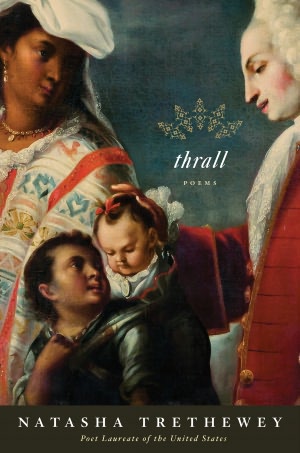
Of the two Natasha Trethewey books I’ve read this year (though one was a reread), this is the one that has impressed me the most and has caused me to reassess some things.  Thrall is an even more mature combination of the personal and historical than Native Guard is.  While her earlier collection examines the struggles of a mixed race child, the latest collection builds upon those insights to create a wider historical record of mixed race children and how they are viewed by their parents and history.  My review indicated, “While her reading can enthrall you and bring you near tears, her careful word selection in each poem will ensure that you reflect on the meaning of each line in each verse before you even think about the overarching themes of separation and connection as well as their juxtaposition.”

I hope that you’ll consider these collections as you do your holiday shopping and have a great holiday, everyone.

Native Guard by Natasha Trethewey

Native Guard by Natasha Trethewey, winner of the 2007 Pulitzer Prize, is sliced into three sections with the first section paying homage to a mother who has passed from this world into the next.  In “The Southern Crescent,” travel plays a particularly prominent role, with the train “humming like anticipation” as the narrator and her mother travel east and she sees her mother in the window clearly.  Trethewey’s poems are concise and filled with imagery that anyone can connect with on a visceral level.

“Graveyard Blues” screams loss and regret from the “stone pillow” for the narrator’s head at the end of the poem to the “hollow sound” of the mud as it sticks to mourners shoes during the funeral in the rain.  And “Myth” is a heart breaking poem, an elegy to the narrator’s mother — a hope that she can pull her from the other side into the real world through her dreams.  Many of us can relate to deep loss and the desire to change that loss and bring back loved ones from the dead — as if we could resurrect them.

In the second section, Trethewey tackles the oppressive memory of history in the deep South and how it is celebrated, feared, and hated for its bigotry and death.  From the prosperous hills of cotton harvested to the humps on the children’s backs from years of hard labor in the fields, the lines draw parallels in different segments of the poem to shed light on oppression — its costs and rewards.  The narration in these is a bit removed, more like an observer commenting on the events.  In the final section, Trethewey melds the personal stories with the historic events of the South and slavery to reveal a love-hate relationship with her native state Mississippi.  In many ways these poems reflect the tension between the white ancestry and the black ancestry of mulatto children from the south.

Even from the point of view of a child learning history and it is depicted as though slaves were well-treated and happy, it is hard to counter the widely held belief even if ancestry tells the student otherwise.  From “Monument” to “Elegy for the Native Guards,” there is a desire on the part of the narrator to pay homage to these pillars of the black community who stood up for what they believed in and made the best they could from the hands they were dealt.  At the same time, there is this reality that sinks in and mars any monument that can be resurrected, especially when made as an afterthought or belated gesture.  Native Guard by Natasha Trethewey tackles not only the sense of identity these biracial children struggle with, but also the struggle of Southerners to explain their pride in their history when it is so riddled with hatred.

About the Poet:

Natasha Trethewey was born in Gulfport, Mississippi, in 1966. She earned an M.A. in poetry from Hollins University and M.F.A. in poetry from the University of Massachusetts.

This is the 25th book for my 2012 Fearless Poetry Exploration Reading Challenge.

Cascade by Maryanne O’Hara

Cascade by Maryanne O’Hara is set in 1930s Massachusetts as the rest of the world is on the cusp of war with the Nazis and Boston is hoping to alleviate its water shortage by creating a new reservoir along the Cascade River.  Painter Desdemona Hart Spaulding lives in the sleepy little town of Cascade, which has been a target of lawmakers looking for water over the last decade.  Her life is nothing like she expected as her family falls on hard times, and she makes a life-altering decision to marry Asa to save her father and her home.  What she fails to realize is that some decisions are made for you by circumstance and fate in a cascade of changes that you can either fight or ride.

From the moment readers meet Dez, they know that she is conflicted about her new role as wife.  She makes her husband’s breakfast and tries to care for her father, but her mind wanders to her studio, her paints, and her canvases, making her lose track of time as she dives into the colors and scenes she creates.  Asa is hard to grasp as he seems to want to be oblivious to his wife’s struggles, but is forced to see reality when his wife makes decisions that place them both in the spotlight as the town looks for ways to save itself from drowning.

“Their once-fashionable resort town with its pleasant waters was looking more and more like the ghost valley that was invading dreams and even the pages of her sketchpad.”  (page 3)

O’Hara’s novel is not just about the cascade of decisions and twists in one’s life, but also the unexpected changes that face a country in a depression on the verge of a possible world war — at a time when sentiment against Jews is turning negative as many people lose their jobs and are thrust into poverty.  Things spiral out of control for the Spauldings and the town, but Dez is determined to follow her innate desire to pursue her art in spite of her duty to her husband and her father’s legacy as she hopes to turn public sentiment in favor of saving Cascade from the water department.  The parallels between the river and how it can shape a town and how events can shape people are deftly made in O’Hara’s lyrical prose.  She intertwines Shakespeare’s plays and famous quotations easily, tying Dez to her father’s legacy throughout the novel even when she has all but abandoned it in favor of an affair of art.

While Dez can seem immature in her clinging to Jacob, a traveling salesman, it is clear from her relationship with Asa that she’s never been in love with anything other than Shakespeare as seen through her father’s theater in Cascade and her own painting.  She is an artist that needs to feel substantial loss and pain before she can fully come into her art.  O’Hara has created a novel about the tensions between duty and desire and following one’s dream.  She has captured the struggle of artists, who unfortunately are too often misunderstood by non-artists, to achieve the time necessary to create without the guilt of failing to meet the obligations of family life and other relationships.

Through gorgeous descriptions and painting techniques, O’Hara plunges readers into the light-filled studios and landscapes of Dez, as well as into her nightmares, her guilt, and her nostalgia for things past.  Through quick brushstrokes and scraped canvases, the novel transports readers into muddied waters and into the bold color of an artist’s life.  Cascade by Maryanne O’Hara is a debut that shimmers like the rushing river over the rocks of the waterfall with its quiet power shaping Dez and what was once Cascade, Massachusetts.

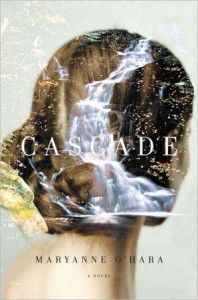
***On a completely different note, I was totally in LOVE with this cover.   It was so utterly distracting with its water shapes in the profile image and how the boulders blended in as the woman’s hair.  I was enamored.***

About the Author:

Maryanne O’Hara was the longtime associate fiction editor of Ploughshares, Boston’s award-winning literary journal. Her short fiction has been published in magazines like The North American ReviewFive PointsRedbook, and many anthologies. She has received grants from the St. Botolph Foundation and the Massachusetts Cultural Council, and her story collection was a finalist for 2010′s Flannery O’Connor Award for Short Fiction. She lives on a river near Boston.

Find out more about Maryanne at her Website, her blog, and connect with her on Facebook.

This is my 83rd book for the New Authors Reading Challenge in 2012.


Life on Mars by Tracy K. Smith

Life on Mars by Tracy K. Smith, published by Graywolf Press on 30 percent post-consumer wastepaper, is a collection sliced up into four parts, and it won this year’s Pulitzer Prize in Poetry.  In the first section there are two parallels that Smith draws — the one between poet and astronomer searching for meaning in vastness and the parallels between the physical and spiritual world.  Like in “Cathedral Kitsch,” the narrator speaks of the gleam of gold in the church and wonders if God is there shining back on himself, but by the end of the poem, the narrator remarks on man’s stamp on the church and on faith.  “I feel/Man here.  The same wish/That named the planets.//Man with his shoes and tools,/His insistence to prove we exist/Just like God, in the large/And the small, the great//”
Some of the best lines come in “My God, It’s Full of Stars” where the narrator talks about God and the great unknown alongside the physical world in which she lives.  Rather than compare the two in pros and cons, the narrator takes a third path:

"Not letting up, the frenzy of being.  I want it to be
wide open, so everything floods in at once.
And scaled tight, so nothing escapes.  Not even time,
Which should curl in on itself and loop around like smoke.
So that I might be sitting now beside my father" (page 10)

There is a sense of wide-eyed, childlike wonder about the world and the unknown space and world of God. Rather than shrink from either, the narrator embraces their possibilities and revels in the possibilities.  Part two speaks for itself and pays homage to a father lost and time with him too short.  The collection then gives way to more timely matters in the news from a young woman kept as a sex slave to her father in the basement of a home he shared with his wife to the Abu Ghraib prisoners who were savagely mistreated by soldiers under too much pressure.  In the final section of the collection, Smith opens up her verse at full throttle to explore the infinite energy and being of all in the universe and the pulse of that energy as it continues to churn.

Life on Mars by Tracy K. Smith is well worth the prize it has won.  Her verse is well paced and masterful in how it draws parallels and leaves larger issues open ended for readers to think more about on their own.  She’s taken larger than life issues and honed in on them with a sharp eye, boiling them down to what really matters through personal accounts and a satiric remixing of facts from the news and more.  Definitely a collection for book clubs and to return to again and again when readers are feeling a bit enamored of the great unknowns.

About the Poet:

Tracy K. Smith was raised in Falmouth, Massachusetts. She studied at Harvard, where she joined the Dark Room Collective, a reading series for writers of color. She went on to receive her MFA from Columbia University.

This is the 24th book for my 2012 Fearless Poetry Exploration Reading Challenge.

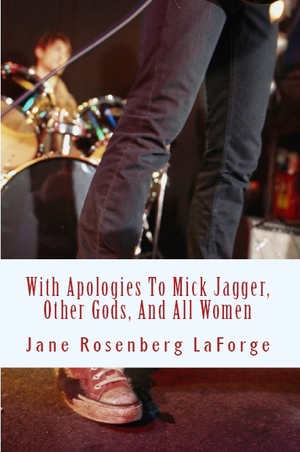
With Apologies to Mick Jagger, Other Gods, and All Women by Jane Rosenberg LaForge

With Apologies to Mick Jagger, Other Gods, and All Women by Jane Rosenberg LaForge takes a look at not only what it means to be young and full of dreams, aspirations, and confidence, but also the flip side of that — what it means to be older and confined by societal, professional, and personal constraints.  Her verse is topsy turvey with its own underground beat that shimmies out the fine-tuned truth that whether or not we are rock gods or ordinary people we are the same in how we are shaped and how we shape the world around us.  From hiding our wrinkles and our broken dreams to wearing them proudly, LaForge has crafted an unapologetic anthem about living, not merely surviving the world around us.

From "Prodigy":

It is youth that keeps you pale and concerned
about the smaller buzzing parts, the soil
and the pine cones there, and the grace
between fists and teacups.  You are a foil,
a reminiscence, a sobering glance forward
because nothing can be repeated, metric by 
metric; speaking the dream always changes it
irreparably, as if it weren't worth mentioning.
From "Apollo at 21st and 8th":

record we shed each day,
the accumulation of our pasts
that we deposit upon wood and 
polish, in the shafts and patterns
of directed sunlight.  Could gods
begin in dust and spit not as we have,

The collection is divided into two parts, and the first section, despite the title of the Mick Jagger poem, are hardly apologetic. From the crass way that age takes over the face to the abandonment of religion and faith in favor of the present and those rock stars before us on the television, LaForge chooses terse language clipped in the right places to give readers enough pause to encourage serious contemplation about aging and worship of the present. In “Runyon Canyon,” her narrator says, “It is not the soul that grows/in your bone, but a whistle;/as if a palpable friction between/lip and reed; a green-sweet taste/like hesitation and sympathy;” These images blend together to create a sound that hums.

In the second half of the collection, the poems are more personal, delving into the sorrowful images of disease and how the body can be ravaged even when the patient is in denial or at least trying to pretend they are not ill. LaForge takes a frank look at the grotesque found in the most beautiful relationships, including being sisters.  With Apologies to Mick Jagger, Other Gods, and All Women by Jane Rosenberg LaForge strikes a pose and has an opinion without apology, and don’t expect one.  The statements are bold and without explanation.  They just are.

About the Poet:

Jane Rosenberg LaForge’s poetry, fiction, critical and personal essays have appeared in numerous publications, including Poetry Quarterly, Wilderness House Literary Review, Ottawa Arts Review, Boston Literary Magazine, THRUSH, Ne’er-Do-Well Literary Magazine, and The Western Journal of Black Studies.


This is the 23rd book for my 2012 Fearless Poetry Exploration Reading Challenge.


This is my 82nd book for the New Authors Reading Challenge in 2012.

Mailbox Monday #203

Mailbox Mondays (click the icon to check out the new blog) has gone on tour since Marcia at A Girl and Her Books, formerly The Printed Page passed the torch. This month’s host is Suko’s Notebook.

The meme allows bloggers to share what books they receive in the mail or through other means over the past week.

Just be warned that these posts can increase your TBR piles and wish lists.

Here’s what I received:

1.  The Real Jane Austen by Paula Byrne, which I got for review from Harper in February 2013.

2. The Death of Fidel Perez by Elizabeth Huergo, which I received unexpectedly from Unbridled Books.

What did you receive?

178th Virtual Poetry Circle

Welcome to the 178th Virtual Poetry Circle!

Remember, this is just for fun and is not meant to be stressful.

Keep in mind what Molly Peacock’s books suggested. Look at a line, a stanza, sentences, and images; describe what you like or don’t like; and offer an opinion. If you missed my review of her book, check it out here.

Also, sign up for the 2012 Fearless Poetry Reading Challenge because its simple; you only need to read 1 book of poetry. Please visit the stops on the 2012 National Poetry Month Blog Tour.

Today’s poem, in honor of winter, is from Thomas Campion:

Now Winter Nights Enlarge

Now winter nights enlarge
    This number of their hours;
And clouds their storms discharge
    Upon the airy towers.
Let now the chimneys blaze
    And cups o'erflow with wine,
Let well-tuned words amaze
    With harmony divine.
Now yellow waxen lights 
    Shall wait on honey love
While youthful revels, masques, and courtly sights 
    Sleep's leaden spells remove.

This time doth well dispense
    With lovers' long discourse;
Much speech hath some defense,
    Though beauty no remorse.
All do not all things well:
    Some measures comely tread,
Some knotted riddles tell,
    Some poems smoothly read.
The summer hath his joys,
    And winter his delights;
Though love and all his pleasures are but toys
    They shorten tedious nights.

What do you think?

Misguided Angel by Melissa de la Cruz (Book 5)

Misguided Angel by Melissa de la Cruz (book 5 in Blue Bloods series) is divided between Jack and Schuyler on the run from the coven and Mimi and Oliver back in New York seeking to uncover the perpetrators of vampire kidnappings.  The New York coven is crumbling beneath the weight of the Silver Blood attacks and the absence of its celestial leader Michael, known as Charles Force in this century.  The deaths of Blue Bloods are scaring the elders and the younger generations, and some are talking about retreating underground.  Meanwhile, Schuyler and Jack have sought refuge in the European Coven only to find that the protection is more like being held prisoner, preventing them from being able to fulfill the Van Alen Legacy of protecting the paths to the underworld from Lucifer.

“Deming wondered how much of that fit in with the Vampire Code to enlighten the human race.  It seemed in the present, many of the vampires were not interested in helping humanity as much as they were interested in helping themselves to as much as possible.”  (page 197)

Cruz’s characters are stretching their wings and coming into their full powers.  Even the confident Mimi Force is flailing in her new position as Regent, and her vulnerability makes her seem a little less abrasive than her celestial “Angel of Death” persona.  Forced to rely on Oliver, Schuyler’s former familiar and conduit, Mimi must learn that she is not infallible and that she can misjudge the scope of her powers, particularly in the modern world.  She also becomes more resourceful in that she calls on the Chinese coven for a skilled Venator to uncover the kidnappers of vampires.

In the Mediterranean, Jack and Schuyler are learning to be comforted in their shared space and experiences, even under the protection of the European Coven.  But in an attempt to kick their mission to find the hidden paths and ensure their protection into high gear, a fiery escape from a yacht leads them deep into the mountains to uncover a 15th Century mystery.  Cruz is easing readers further into the devotion between these two characters and showing how well they work together, in spite of their doubts about how long they will have together given that they are basically outlaws of two covens.

Misguided Angel by Melissa de la Cruz is about how the past can trick us into thinking that the future path is set and that there are few choices, but really the future is wide open and can change easily once a new decision and path is chosen.  The series is kicking into high gear and there are newer mysteries to solve and mazes to run through for these characters, and they’ll have your rooting for each of them to look beyond “destiny” to find the future they want most and can make them happiest.

About the Author:

Melissa de la Cruz is the New York Times and USA Today best-selling author of many critically acclaimed and award-winning novels for teens including The Au Pairs series, the Blue Bloods series, the Ashleys series, the Angels on Sunset Boulevard series and the semi-autobiographical novel Fresh off the Boat.

Photo © Denise Bovee

Poetry for the Holidays

Today, I’m over at Lost in Books talking about poetry for the holidays as part of the 2012 Holiday Post Extravaganza.

I was pleased when Rebecca said she was “entranced from the first paragraph” of my guest post.  I hope that means everyone else will be.

Please check out my post for 9:00 am today and check out the other posts she has planned throughout the holidays.

For those of you who have participated in the 2012 Fearless Poetry Reading Challenge, I hope you’ll comment here and let me know how you liked the challenge and if you have any suggestions for the 2013 challenge.

Giveaway: Caught in the Cogs & ‘New York Rain’

Today, I have a giveaway and guest post from author Olivia M. Grey.  But first, let’s learn a little bit about the author and where you can learn more about her work.

Nestled in the mountains of Northern California, Olivia M. Grey lives in the cobwebbed corners of her mind writing paranormal romance with a Steampunk twist. She dreams of the dark streets of London and the decadent deeds that occur after sunset. As an author of Steamy Steampunk, as well as a poet, blogger, podcaster, and speaker, Olivia focuses both her poetry and prose on alternative relationship lifestyles and deliciously dark matters of the heart and soul. Her work has been published in various anthologies and magazines like Stories in the Ether, Steampunk Adventures, SNM Horror Magazine and How The West Was Wicked.

Please find out more about Olivia and her work, listen to free podcasts, read free short stories and poetry, and get author-signed books on her blog Caught in the Cogs, Facebook, Twitter, and GoodReads.

Without further ado, please check out her guest post and her poetry:

I’m not much of a poet, really. Although I’m happy to say more than a few readers disagree with that statement. But I’ve never considered myself a poet until recently. I only write poetry under very specific conditions: the agony of a broken heart. I envy poets who can create such lovely imagery around normal daily life, or a flower, or a grecian urn. I just don’t think that way.

But when the pain of a shattered heart screams through every fiber of my being, I start thinking in verse. It usually begins with one line, some form of iambic meter since my degrees are in English Lit with a focus on the Renaissance, and that one line repeats in my head over and over and over until I sit down and write. That one line haunts me, and it will not go away until I write a poem. Most of my poetry is in a sort of verse and rhyme, which I’ve noticed isn’t terribly popular among modern poets or fans of poetry. But it’s rare that I write something in free verse. It happens, obviously as “New York Rain” is in free verse, but most of my work has a specific rhyme scheme and meter. Old school, I suppose.

I find safely in meter and inspiration in rhyme and alliteration and repetition. The poem I’m most proud of is called “My Heart Still Wants to Believe,” and it was inspired by and patterned after Poe’s “Annabel Lee.” It chronicles the aftermath of an abusive relationship that ended in assault and cruelty, focusing on the struggle of conflicting emotions that follows a betrayal of that magnitude.

In addition to poetry, I also write dark fiction, usually with some romantic element, like the steampunk retelling of the “Briar Rose” (aka “Sleeping Beauty”) fairy tale. “The Tragic Tale of Doctor Fausset” also has elements from Doctor Faust in it as well. I podcast fiction every Monday on my site, short fiction like this as well as serialized novels, and I also podcast nonfiction sex & romance issues every Friday. Along with this short story, you will hear me read three poems, “All I See Is Your Absence,” “Oh, Endless Night,” and “Look Into My Eyes,” which is also printed below.

Enjoy listening!

Listen to “The Tragic Tale of Doctor Fausset” here!

You can listen to more podcasted fiction and nonfiction on my blog as well as iTunes and Feedburner.

“New York Rain,” below, is my most popular poem to date. It is still in the Bar None Group’s Hall of Fame over a year later and won an award, so that is the one I’m giving away along with a copy of Caught in the Cogs: An Eclectic Collection of short stories, poetry, and relationship essays. The second one I’m sharing, “Look Into My Eyes,” was featured on the SNM Horror Mag’s Dark Poetry selection. I hope you like them.

"New York Rain:

Warm summer night in New York City
Rain falling
Landing on my cheek
Foreshadowing the tears
That would be there tomorrow.

A gentleman, you said.
Friendship, you said.
Respect, you said.
And I believed.
The heat in your eyes convinced me.

Now silence.

Yet, New York. 
The beauty of New York
The intensity of a moment
The promise of magic
Lost. 

An illusion of the past,
For this moment is empty
Except for the tear
That echoes the rain
That framed the kiss.
There just yesterday.

-----

"Look Into My Eyes"

“Look into my eyes,”
He would say to me.
Exploring Sacred
Sexuality.

“Look into my eyes,”
As our bodies danced,
Mingling of our souls,
Put me in a trance.

“Look into my eyes,”
As he’d thrust inside,
Gazing down at me
Surging with the tide.

“Look into my eyes”
How I did believe,
When he spoke those words,
That he’d never leave.

“Look into my eyes.
You can trust in me.
Now release your soul;
Give your heart to me.”

“Look into my eyes,
Don’t see what’s truly there.
Believe these loving lies,
Not that I don’t care.”

“Look into my eyes.
Now I’m in control.
Look into my eyes,
While I rape your soul.”

Please enter to win the copy of Caught in the Cogs: An Eclectic Collection along with the handwritten, matted “New York Rain,” ready for framing. Just leave a comment below and/or ask me a question to enter. The contest will run until the end of the week.

Don’t just stop there! You can still enter to win a Kindle at Bitten By Books as well as the other prizes this week. Follow all the links and find the entire schedule.

Peace.

Thanks so much for sharing your poetry with us.

Buy The Zombies of Mesmer on Amazon in paperback or the Kindle. Buy Avalon Revisited on Amazon in paperback or on the Kindle, also available via Barnes & Noble and wherever books are sold. Buy Caught in the Cogs in paperback or on the Kindle.

To Enter for the giveaway of a paperback copy of Caught in the Cogs, leave a comment by Dec. 2 at 11:59 PM EST; Open Worldwide.