Quantcast

Happy Earth Day!

Today is a communal celebration of the Earth and the environment, and I know we’ve been celebrating poetry all month long here, but I couldn’t let today pass without calling attention to the Earth and the environment.  I hope everyone will take the time today to head outside, garden, pick up some trash, reassess their consumption and recycling habits, and look into ways to reduce their energy use.

We’ll be taking a look at a few poems that celebrate nature and the Earth, plus there’s some great information about an Ashland Creek Press giveaway.

Earth Day by Janet Yolen

I am the Earth
And the Earth is me.
Each blade of grass,
Each honey tree,
Each bit of mud,
And stick and stone
Is blood and muscle,
Skin and bone.

 And just as I
Need every bit
Of me to make
My body fit,
So Earth needs
Grass and stone and tree
And things that grow here
Naturally.

That’s why we
Celebrate this day.
That’s why across
The world we say:
As long as life,
As dear, as free,
I am the Earth
And the Earth is me.
Daffodils by William Wordsworth

I wandered lonely as a cloud
That floats on high o'er vales and hills,
When all at once I saw a crowd,
A host, of golden daffodils;
Beside the lake, beneath the trees,
Fluttering and dancing in the breeze.

Continuous as the stars that shine
And twinkle on the milky way,
They stretched in never-ending line
Along the margin of a bay:
Ten thousand saw I at a glance,
Tossing their heads in sprightly dance.

The waves beside them danced; but they
Out-did the sparkling waves in glee:
A poet could not but be gay,
In such a jocund company:
I gazed--and gazed--but little thought
What wealth the show to me had brought:

For oft, when on my couch I lie
In vacant or in pensive mood,
They flash upon that inward eye
Which is the bliss of solitude;
And then my heart with pleasure fills,
And dances with the daffodils.
From Emily Dickinson

A Light exists in Spring
Not present on the Year
At any other period —
When March is scarcely here

A Color stands abroad
On Solitary Fields
That Science cannot overtake
But Human Nature feels.

It waits upon the Lawn,
It shows the furthest Tree
Upon the furthest Slope you know
It almost speaks to you.

Then as Horizons step
Or Noons report away
Without the Formula of sound
It passes and we stay —

A quality of loss
Affecting our Content
As Trade had suddenly encroached
Upon a Sacrament.
Healing by Scott Edward Anderson

"Healing, not saving." ~ Gary Snyder

"Healing, not saving," for healing
indicates corrective, reclaiming

restoring the earth to its bounty,
to right placement and meaning--

Forward thinking, making things new
or better or, at least, bringing back

from the edge. The way
bulbs are nestled in earth,

starting to heal again--
the way a wound heals.

Keep warm. Sun following
rain; rain following drought.

Perhaps we have come far enough
along in this world to start

healing, protecting from harm,
from our disjunctive lives.

The way the skin repairs with a scab,
injury mediated by mindfulness.

The bark of the "tree of blood"
heals wounds we cannot see.

Deliver us from the time of trial
and save us from ourselves.

Finally, I wanted to call attention to a great giveaway over at Ashland Creek Press, an independent publisher that not only prints books sustainably but also chooses works that reflect nature in some way.  I’ve enjoyed several of their books, including Lithia’s eco-vamp series by Blair Richmond. I also enjoyed The Names of Things, which recently was named as a finalist for the 2013 Chautauqua Prize, and a recent short story collection, Survival Skills.

For Earth Day, Ashland Creek Press is offering an eco-sampler and book giveaway.

Simply email Ashland Creek Press at editors [at] ashlandcreekpress [dot] com, on or before April 22, using the subject line EARTH DAY, and you’ll receive a copy of our Eco-Fiction Sampler, which features excerpts of six works of environmental fiction.

You’ll also be entered to win a copy of one of these six eco-fiction titles — we’re giving away one environmentally friendly e-book and one paperback (printed on paper from Sustainable Forestry Initiative certified sourcing), so please mention your preference in your email.

When you enter the giveaway, you’ll be added to our mailing list, from which you can unsubscribe at any time (and your info will never be shared).

For more about Ashland Creek Press, click here. For more about our environmental literature, click here.

Happy Earth Day!

Do not miss out on this giveaway for some eco-fiction and do not miss out on the opportunity to spend time in nature and with your community making the Earth a better, healthier place to live.

Click the image below to check out today’s National Poetry Month tour stop!

PopCircle Is the Newest Recommendation Community; It’s More Than Just Books

While most readers turn to Good Reads and Library Thing, as well as book blogs, for their book recommendations these days, we often like more than just reading — think television, movies, and music.

As a member of PopCircle, you have an opportunity not only to check out what books people are recommending and reviewing, but also what their music, movie, and television tastes are.

I’ve been beta testing for a few months, and have really enjoyed creating lists of books I’m reading (which you can check out) and it will be the only place you’ll find my Best of Lists from Savvy Verse & Wit, without having to do too much scrolling and searching through blog pages.  Check out my profile.  I’m considered a Book Expert on the site, and I’m glad that they’ll be expanding the lists because I want to create a list of poetry books for beginning readers, intermediate readers, and expert readers.

I’ve already got some great book lists going for my best reads dating back to 2008, and I’ve started a list of to-read books, as well as started filling out my favorite TV, movies, and music. PopCircle generates recommendations based on the other members in your circles and who has similar tastes, and it is not just automated nonsense.

I hope you’ll pop over and join.  Signing up is easy.  Facebook logins carry over onto PopCircle.

Click here to sign up today:

You’ll also see I’ve added this icon to my “Connect Online” section at the top of the Webpage.  Now get started creating your own circles and building your circle connections.

And yes, if you sign up using my links, I will get a small referral fee.

Click below for today’s National Poetry Month Blog Tour Post!

Our Fibonacci Poem

Click the image to see today’s National Poetry Month tour post!

On Friday, the activity was to create our own Fibonacci Poem, which is a poem based on word count per line.  (1-1-2-3-5-8,) I wanted to share with everyone the result!

Rascals
Devoid
of feeling
of playfulness
pound their chest

If you have anything you’d like to add to fill out the additional lines, feel free to leave a comment.

198th Virtual Poetry Circle

Welcome to the 198th Virtual Poetry Circle!

Remember, this is just for fun and is not meant to be stressful.

Keep in mind what Molly Peacock’s books suggested. Look at a line, a stanza, sentences, and images; describe what you like or don’t like; and offer an opinion. If you missed my review of her book, check it out here.

Also, sign up for the 2013 Dive Into Poetry Challenge because its simple; you only need to read 1 book of poetry. Please sign up to be a stop on the 2013 National Poetry Month Blog Tour and visit the stops on the 2012 National Poetry Month Blog Tour.

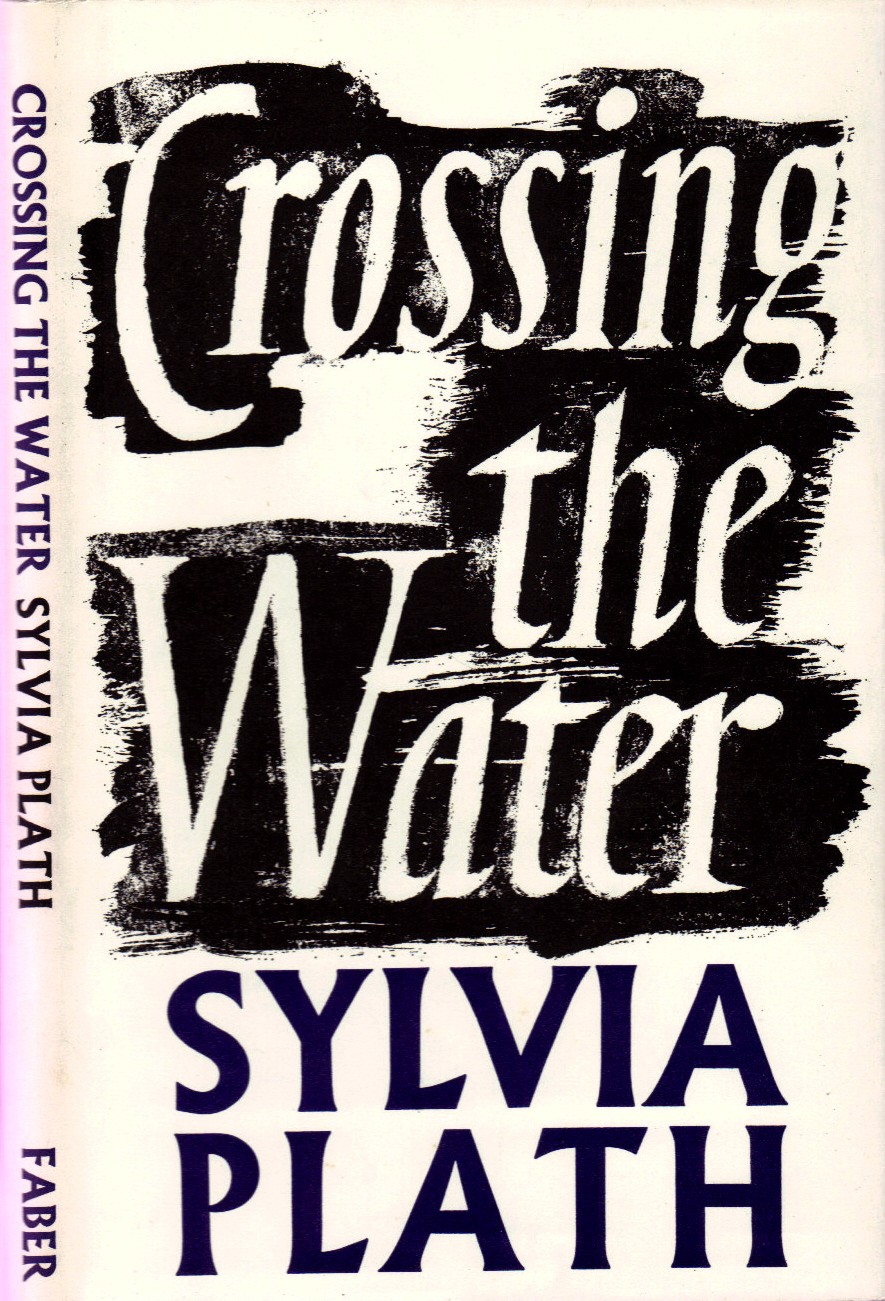
Today’s poem is from Sylvia Plath’s Crossing the Water:

Blackberrying (page 24-5)

Nobody in the lane, and nothing, nothing but blackberries,   
Blackberries on either side, though on the right mainly,
A blackberry alley, going down in hooks, and a sea
Somewhere at the end of it, heaving. Blackberries
Big as the ball of my thumb, and dumb as eyes
Ebon in the hedges, fat
With blue-red juices. These they squander on my fingers.
I had not asked for such a blood sisterhood; they must love me.
They accommodate themselves to my milkbottle, flattening their sides.

Overhead go the choughs in black, cacophonous flocks—
Bits of burnt paper wheeling in a blown sky.
Theirs is the only voice, protesting, protesting.
I do not think the sea will appear at all.
The high, green meadows are glowing, as if lit from within.
I come to one bush of berries so ripe it is a bush of flies,
Hanging their bluegreen bellies and their wing panes in a Chinese screen.
The honey-feast of the berries has stunned them; they believe in heaven.   
One more hook, and the berries and bushes end.

The only thing to come now is the sea.
From between two hills a sudden wind funnels at me,   
Slapping its phantom laundry in my face.
These hills are too green and sweet to have tasted salt.
I follow the sheep path between them. A last hook brings me   
To the hills’ northern face, and the face is orange rock   
That looks out on nothing, nothing but a great space   
Of white and pewter lights, and a din like silversmiths   
Beating and beating at an intractable metal.

What do you think?

Click on the image for today’s National Poetry Month tour post!

Creating Our Own Fibonacci Poem…


Click the image for today’s National Poetry Month blog tour post!

This month has been chock full of poetry from reviews of Neruda to a vlog reading of a poem by Maya Angelou, but some of my favorites have been the creation of poetry. A few Fridays ago, we created a taboo poem without using certain words, and that community project turned out so well, I thought we’d try another one.

So today, I turn to you for the creation of a Fibonacci poem. Tabatha Yeatts explained it best, and for this exercise, each one of you only needs to contribute a line of the appropriate word length.

Typically, the sequence involves adding the previous two numbers together so that the sequence looks like this 1-1-2-3-5-8, and it can go beyond these 6 lines.

I’ll start the poem with this word in line 1:

Rascals

So the next line should have one word, and then the following line should have 2 words, etc., down the line.

Ok, get to it and have fun!

The Scabbard of Her Throat by Bernadette Geyer

The Scabbard of Her Throat by Bernadette Geyer, published by The Word Works in Washington, D.C., is a beautifully lyric collection of poems that explore the fine line between imagination/hope and reality, and on many occasions, Geyer’s poems end with an unexpected result.  In the first section, she explores the wonders of childbirth and miracles, but these poems also hover on the edge of death and the power that comes with bringing about the end.  In “Without Warning,” the onset of death is wrought with many to-do lists, but never on the list is what can be done with the last breath.  But in “After Having Been Distracted,” the narrator’s attention is called to the struggle for life of a cicada only to find that she must be the one to end it.  In many ways, these are poems about miracles, but miracles that don’t exactly have happy endings.

From "Afternoon on Portland Harbor" (page 18-9):

... Gravity tugs
us along the tilted deck -- our braced thighs hum

to the heartbeat of keel against water.
The crew feathers the sails to lessen the heel.

Hush the harbor soothes as we slow
to a near-stall.  Buoy bells toll

Geyer’s poems are musical and the rhythm transports her readers to that place she’s describing, like the boat in the poem cited above.  In the third section of poems, illusions — many of them held since childhood — are broken down, like the superhero hands of a mother being scarred and gnarled.  There also are poems that touch on the healing, or maybe numbing, effects of time, particularly its ability to make the hurt of abandonment not as fresh as it could be, like in Geyer’s “The Door.”  But then there is the silence of widowhood, which calls to mind Plath’s version of this topic in her collection Crossing the Water.  While Plath talks of widowhood as a crushing state for women who are overshadowed by their husbands even after death, Geyer’s poem speaks to the silent pride of the state and the perseverance it takes to keep moving forward.  And while there is a sense of loss in many of these poems, this section also speaks of hope — the unexpected still to come with renewal, particularly in “New Porch.”

Geyer deftly combines fairy tales with nature imagery and more modern situations and sensibilities in a collection that strives to sing the praises of restraint and letting go.  The Scabbard of Her Throat by Bernadette Geyer explores the tipping point between expressing fear, anger, sadness, and other emotions at any moment and the decisions to remain silent and strong in the face of others and for others.  Like the scabbard that holds the sword from the fight or releases it, the throat becomes that scabbard to hold back or let loose the voice and emotion of these poems.  Another collection that has spoken and blow me away with its lyricism and poignancy.

This is my 12th book for the Dive Into Poetry Challenge 2013.


This is my 21st book for the 2013 New Authors Challenge.


About the Poet:

Bernadette Geyer is a poet and copy editor in the Washington, DC, area.  Geyer’s first full-length manuscript, The Scabbard of Her Throat, was selected by Cornelius Eady for publication in the Hilary Tham Capital Collection series of The Word Works. Geyer is the author of a poetry chapbook, What Remains, and recipient of a 2010 Strauss Fellowship from the Arts Council of Fairfax County. Her poetry has appeared in Oxford American, North American Review, The Midwest Quarterly, Verse Daily, and elsewhere.  Geyer’s non-fiction has appeared in WRITERS’ Journal, The Montserrat Review, Freelance Writer’s Report, World Energy Review, and Marco Polo Magazine. Photo by Emily Korff, Veralana Photography

Click the image below for today’s National Poetry Month Tour Post!

Crossing the Water by Sylvia Plath

Have you had enough Sylvia Plath this week? I hope note, because I’ve got another review for you today.

Crossing the Water by Sylvia Plath is the collection between The Colossus and before the publication of Ariel (my review), and it continues to push the envelop between dark and light.  Plath has come to represent the dichotomy of dark and light in all of us, with our deep passions and desires that lie in tension with our duty to family and society.  In this collection, the water becomes a metaphor for the surface veneer that many of us carry, but Plath examines how easily this surface can be shaken and disturbed.

In “Finisterre,” “Now it is only gloomy, a dump of rocks–/Leftover soldiers from old, messy wars./The sea cannons into their ear, but they don’t budge./Other rocks hide their grudges under the water.//”  (page 15)  Plath examines the aging process and the grudges carried from the past into the present and how that sullies the outside like the weathering of a rock face.  The poem further flourishes into a series of worshiping people looking to that which is beyond themselves, particularly the larger “Lady of the Shipwrecked” who admires the sea as the man worships her and the peasant worships the sailor.

Crossing the Water (page 14)

Black lake, black boat, two black, cut-paper people.
Where do the black trees go that drink here?
Their shadows must cover Canada.

A little light is filtering from the water flowers.
Their leaves do not wish us to hurry:
They are round and flat and full of dark advice.

Cold worlds shake from the oar.
The spirit of blackness is in us, it is in the fishes.
A snag is lifting a valedictory, pale hand;

Stars open among the lilies.
Are you not blinded by such expressionless sirens?
This is the silence of astounded souls.

Many of these poems are about the art of reflection or reflecting the outside world, becoming or acting as a mirror without judgment. Speaking in “Widow,” the narrator runs through the typical emotions of loneliness without the spouse, but later in the poem, Plath explores the weight of the lost spouse’s memory and how it still lies heavily on her life even as the man has died.  It is this shadow from which she cannot escape even in widowhood.  However, there also is a certain distance to these poems, like Plath is holding readers at arm’s length — each poem depicts a sense of control.  But her observances of mindless working zombies on city streets or the attempt to recapture youth through cosmetic surgery are spot on and raise an awareness of the foolhardy nature of hubris.

There is a disquietude in these poems, but yet a blissful communion with nature. It is as if she is recognizing the connection we have with nature, but at the same time calling attention to what separates us from it, like in “I Am Vertical.”  Crossing the Water by Sylvia Plath may be the smallest of her collections, but is no less powerful.  It looks at life through the lens of a woman at odds with herself and society.

This is my 11th book for the Dive Into Poetry Challenge 2013.


Click the image below for today’s National Poetry Month tour stop!
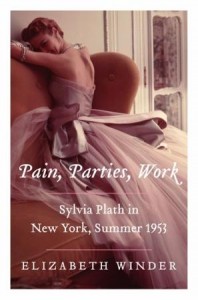
Pain, Parties, Work: Sylvia Plath in New York, Summer 1953 by Elizabeth Winder

Pain, Parties, Work: Sylvia Plath in New York, Summer 1953 by Elizabeth Winder is atmospheric and an indulgent retrospective of the lives of Mademoiselle‘s summer guest editors, who were hand picked from a bunch of college essays and pieces submitted by college women.  The magazine was not only known for its fashion and celebrities, but also for the writing it published from heavyweights like Dylan Thomas and Truman Capote.  Additionally, the magazine published its college issue.  “Sunday at the Mintons” by Sylvia Plath, a short story, earned her a guest editorship at the magazine, a summer that became the basis of her novel, The Bell Jar.  Winder bases her “loose” biography on interviews with those summer guest editors and others who had contact with Plath that summer, which are backed up by letters and journal entries from Plath herself as much as possible — though there is the pitfall that some memories may be nostalgic or missing certain truths about that time as memories fade.

From the moment she sets forth in New York, readers are introduced to a different Sylvia Plath from the moody and dark one they have come to know. This younger version of the writer is full of whimsy, loves fashion, and is eager to please.  Her Northeast upbringing probably instilled in her a deep sense of courteousness and decorum, but there were also inherent eccentricities already present in her character, especially during one luncheon in which she gobbles up all of the caviar appetizer without sharing.  A commune of young women was built at the Barbizon Hotel that summer, as many of the young women wanted careers and still to raise families in a period of history before the pill was available and before career women were considered part of the norm.

“A white enameled bowl bloomed out of one wall–useful for washing out white cotton gloves.  (Within days there would be little damp gloves hanging in each room like tiny white flags.)” (page 5 ARC)

While Winder provides a great many anecdotes about Sylvia from her fellow guest editors and roommates, there seems to be a disconnect between the Sylvia these women saw and the Sylvia that was.  At the outset, Winder tells the reader she wants to paint a different portrait of Sylvia Plath than the iconic one we all know of the suicidal poet.  And while she succeeds in showing a “good girl” that was Plath in her 20s, she also demonstrates how as a young woman free from the constraints of her own society, she was given more freedom to pursue men and other experiences, to which she might not otherwise have been exposed.  And like many young women — and even men — still finding their place in the world and how to accomplish their goals, they often suffer from the “grass is always greener” problem when the reality of their ideal opportunity is not as wonderful as it has seemed from afar.

There were some among the guest editors in 1953 who were given menial tasks and envied Plath’s work with Cyrilly Abels doing rejections and editorial work, but Plath languished in the role and her talents for graphics were cast aside in favor of her fiction-writing talents.  In many ways, those who believed in her talent had begun to stifle it.  While she may have looked the part of a professional interviewer and editor, Plath was chained to a makeshift desk that anchored down her spirit, while many of the other girls were enjoying their time as editors — meeting Plath’s hero writers and attending dinners and events.  It seems that this separation isolated her from the other guest editors, even though on the outside she was conversing with them and enjoying their company as well as the company of many strange men throughout New York.

It is too easy to suggest that Pain, Parties, Work: Sylvia Plath in New York, Summer 1953 by Elizabeth Winder aims to undo the iconic woman that is Sylvia Plath, but it does provide a wider view of her whole person.  Not just the mother, burdened artist, and ex-wife of Ted Hughes, but the spirited poet who was stifled by a dream job that she saw as a launching point who succumbed to her tendency to depression upon her return home after a series of unrelated rejections flooded in after that summer.  Plath was a woman plagued by her own dichotomies, who was unable to break free from the labels of society without the guilt that accompanied those actions, but she also was talented and burned brighter than many other women of her age.  What Winder succeeds in doing is providing an excellent look into 1950s New York and the pressures these young women faced as progressive ideals began to emerge.

About the Author:

Elizabeth Winder is also the author of a poetry collection. Her work has appeared in the Chicago Review, the Antioch Review, American Letters, and other publications. She is a graduate of the College of William and Mary and earned an MFA in creative writing from George Mason University.

This is my 20th book for the 2013 New Authors Challenge.


Please click the image below for today’s National Poetry Month Tour Post!

Ariel by Sylvia Plath


Click the image above for one National Poetry Month tour stop, and visit Life’s A Stage for a second today.

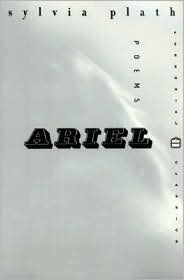
Ariel by Sylvia Plath is a collection that she crafted near the end of her life, before her suicide, according to the forward by Robert Lowell (Check out “Ariel“).  These poems are what Plath has been best know for, other than The Bell Jar, and these poems are by turns blunt and dark as she refers to death at nearly every turn and the fleeting nature of life.  Her poems are not only confessional in nature about her emotions and life, but they also examine the bittersweet nature of life and being a woman.

In “Elm,” the narrator speaks of having no fear, a fear of the unknown or a fear of loss, particularly in relation to love.  There is that fast movement forward, a moving onward to the next experience and next moment in time.  Many of her poems reflect this urgency to move forward and to stay in the moment — to enjoy it.  Her poetry, like many have said of her own personality, burns brightly and intensely, making no excuses for rawness there — like the predawn light on the horizon not marred by expectation or perception.

She talks of motherhood in a way that is unvarnished, speaking, “These children are after something, with hooks and cries,//And my heart too small to bandage their terrible faults./” in “Berck-Plage.”  In spite of the parasitic nature she ascribes to children, the title of the poem tells the tale of how joyous motherhood can be, with plage being a beach or a sunspot and the echo of France’s Berck-sur-Mer.  She also displays a bit of whimsy in her portrayal of “Gulliver” as he is over-run by the citizens of Lilliput.  Plath is hindered by the confines of society and expectation, and in these poems there is by turns the holding back or the tying down of narrators or images that dream of release or are released.  The push and pull of these images run throughout the book and probably echo the feelings Plath felt herself after her divorce and the onset of her single-motherhood.

Ariel by Sylvia Plath is a collection full of tension, explosions of release, and a search for balance between constraint and freedom.  Death is not necessarily death in the demise of the physical self, but a release and return to the freedom that is desired.

About the Poet:

Sylvia Plath was born in Boston, Massachusetts. Her mother, Aurelia Schober, was a master’s student at Boston University when she met Plath’s father, Otto Plath, who was her professor. They were married in January of 1932. Otto taught both German and biology, with a focus on apiology, the study of bees.

In 1940, when Sylvia was eight years old, her father died as a result of complications from diabetes. He had been a strict father, and both his authoritarian attitudes and his death drastically defined her relationships and her poems — especially “Daddy.” Photo Credit Rollie McKenna.

This is my 10th book for the Dive Into Poetry Challenge 2013.

My Blackout Poem

Click the image above for today’s National Poetry Month Tour stop!

On Friday, I posted an activity in which everyone could create their own poem using the Blackout Poem method. While I didn’t have time to find a paper article and take a photo, I did the next best thing and took the article I posted from The New York Times and crossed our the words I didn’t want and made the ones I wanted bold blue.

Here’s the result, and I hope you’ll share yours!

THE Chilean poet Pablo Neruda, known for his love poems and leftist ideals, died 40 years ago this September. One would hope he’d be at rest by now. But on Monday, as classical musicians played a Neruda work set to music by Vicente Bianchi, his remains were exhumed to determine whether he died from poison — instead of prostate cancer, the conventional account.

In recent years, other icons of the Hispanic world have suffered the same fate. In 2011, Salvador Allende, Chile’s democratically elected president-elect who was deposed by a military junta in 1973, was disinterred to verify that he’d fatally shot himself. (The finding — yes — is still disputed.) The late Venezuelan president Hugo Chávez ordered in 2010 that the tomb of his idol, Simón Bolívar, be opened to test his theory that the liberator died of poisoning, not tuberculosis. (The theory remains unproved.)

And in 2008, a Spanish judge authorized the unearthing of a mass grave in the southern town of Alfácar to see whether Federico García Lorca, the poet and dramatist who was assassinated by Fascists in 1936, at the outset of the Civil War, was buried there. (The results were inconclusive.)

There is something gothic, but also cathartic, about summoning artists like Neruda, and his close friend García Lorca, back into the realm of the living, making us wonder if death is really the end. A Chilean judge’s decision, in February, to allow an investigation into Neruda’s death, which led to this week’s exhumation, looks like an act of expiation.

Neruda used his pen to denote, to denounce, to decry. He was 69 when the junta took power. By then he had been an embassy attaché, a senator and an ambassador. In 1969, he initially ran for president as a Communist, but later backed Allende’s candidacy. However, passion for political change was only one side of his persona. The other was that of a bon vivant. Many people enjoy life plentifully, but few have been so eloquent about it. The Dionysian sensuality of Neruda’s odes is contagious, joyful and erotic. And also destructive: Neruda’s marriage to Matilde Urrutia, his third wife and the inspiration for “The Captain’s Verses” and “One Hundred Love Sonnets,” unraveled after she learned he was having an affair with her niece.

Neruda died in a clinic in Santiago on Sept. 23, 1973 — 12 days after the American-backed coup that overthrew Allende and brought Gen. Augusto Pinochet to power. Many Chileans have long been skeptical of the official cause of death. In 2011, Neruda’s former driver said the poet told him, on the eve of his death, that he’d been given a harmful injection by a doctor. Conspiracy theorists note that Neruda died in the same hospital where Eduardo Frei Montalva, a politician who had supported the junta before switching sides, died in 1982. A judge ruled in 2009 that Frei had been poisoned.

Could Neruda have suffered a similar fate? Allende had died on Sept. 11, 1973, and another opponent of the junta, the folk singer Víctor Jara, was assassinated on Sept. 16. Finishing off Neruda could have been the junta’s coup de grâce.

Exhuming icons is one way to deal with guilt. Elsewhere in Latin America, the past’s phantoms are resurfacing: in Guatemala, where the former dictator Efraín Ríos Montt is on trial for genocide; in Argentina, whose cities are dotted with memorials to those who were “disappeared” during the “dirty war”; and in Mexico, where a once-pliant media have challenged the former president Felipe Calderón’s handling of the war against drug cartels.

But Neruda holds a special place in this grim look backward. Gabriel García Márquez, the Colombian writer and a fellow Nobel laureate, has called him “the most important poet of the 20th century — in any language.”

Neruda left thousands of poems, a handful of which are of such inspired beauty as to justify the very existence of the Spanish language. Adolescents routinely give his “Twenty Love Poems and a Song of Despair” to their sweethearts. His ideological verses have been read aloud, often from memory, in one revolution after another, from the fall of the Berlin Wall to the embers of the Arab Spring. Some of Neruda’s poems — “I Ask for Silence,” “Walking Around,” “Ode to the Artichoke” — have been rendered into English repeatedly, each version another effort to make him current and vital to a new generation.

197th Virtual Poetry Circle

Welcome to the 197th Virtual Poetry Circle!

Remember, this is just for fun and is not meant to be stressful.

Keep in mind what Molly Peacock’s books suggested. Look at a line, a stanza, sentences, and images; describe what you like or don’t like; and offer an opinion. If you missed my review of her book, check it out here.

Also, sign up for the 2013 Dive Into Poetry Challenge because its simple; you only need to read 1 book of poetry. Please sign up to be a stop on the 2013 National Poetry Month Blog Tour and visit the stops on the 2012 National Poetry Month Blog Tour.

Today’s poem is from Jehanne Dubrow‘s The Hardship Post:

Third Generation

We dream of falling as we fall
               asleep, but wake to feel
the weight of quilts, our pillows chill

       as granite to the cheek.
What science calls the hypnic jerk---
               a heartbeat slows too quickly

in the body's cage, air ripped,
        lynched half between the lips
and ribs.  We know that memory skips

                some families like a stone
across a lake.  They sleep alone.
         But we, the chosen ones,

are chosen for a crowded sleep,
                        each night compelled to leap
the barbed wire ledge, a heap

                of limbs.  We somersault
to spill ourselves on basalt
         slabs below.  It's not our fault,

this twitch of muscles snapping us
         from rest, electric pulse
so like descent we drop weightless

         until we flinch awake,
so sure of death that we mistake
                 our nightmares for the ache

         of breaking bone.

What do you think?

For Today’s National Poetry Month Tour post, click the image below!

Make Your Own Blackout Poem…Activity for You

Please click the image above for today’s National Poetry Month Tour stop!

For today’s activity, I thought it would be fun to take a newspaper article and create a blackout poem.

What you do is get a newspaper article, and cross out the words that don’t move you in some way in each line of text with a sharpie.  You can leave behind one word, two words, none, if you wish.  The final result should be the lines for a poem.

For an idea of how this is executed, please refer to Picky Girl’s tour stop this week.

There are three ways to participate:

  1. Find a paper article and cut it out from the paper and blackout the words, come back to the blog and share your article title, newspaper source, and the poem you created.
  2. Find a newspaper article, blackout the words, create your own blog post and share an image of your blackout poem.
  3. Use the article I’m re-posting here from The New York Times, black out the words, and leave your poem in the comments.

Here’s the New York Times article:

THE Chilean poet Pablo Neruda, known for his love poems and leftist ideals, died 40 years ago this September. One would hope he’d be at rest by now. But on Monday, as classical musicians played a Neruda work set to music by Vicente Bianchi, his remains were exhumed to determine whether he died from poison — instead of prostate cancer, the conventional account.

In recent years, other icons of the Hispanic world have suffered the same fate. In 2011, Salvador Allende, Chile’s democratically elected president-elect who was deposed by a military junta in 1973, was disinterred to verify that he’d fatally shot himself. (The finding — yes — is still disputed.) The late Venezuelan president Hugo Chávez ordered in 2010 that the tomb of his idol, Simón Bolívar, be opened to test his theory that the liberator died of poisoning, not tuberculosis. (The theory remains unproved.)

And in 2008, a Spanish judge authorized the unearthing of a mass grave in the southern town of Alfácar to see whether Federico García Lorca, the poet and dramatist who was assassinated by Fascists in 1936, at the outset of the Civil War, was buried there. (The results were inconclusive.)

There is something gothic, but also cathartic, about summoning artists like Neruda, and his close friend García Lorca, back into the realm of the living, making us wonder if death is really the end. A Chilean judge’s decision, in February, to allow an investigation into Neruda’s death, which led to this week’s exhumation, looks like an act of expiation.

Neruda used his pen to denote, to denounce, to decry. He was 69 when the junta took power. By then he had been an embassy attaché, a senator and an ambassador. In 1969, he initially ran for president as a Communist, but later backed Allende’s candidacy. However, passion for political change was only one side of his persona. The other was that of a bon vivant. Many people enjoy life plentifully, but few have been so eloquent about it. The Dionysian sensuality of Neruda’s odes is contagious, joyful and erotic. And also destructive: Neruda’s marriage to Matilde Urrutia, his third wife and the inspiration for “The Captain’s Verses” and “One Hundred Love Sonnets,” unraveled after she learned he was having an affair with her niece.

Neruda died in a clinic in Santiago on Sept. 23, 1973 — 12 days after the American-backed coup that overthrew Allende and brought Gen. Augusto Pinochet to power. Many Chileans have long been skeptical of the official cause of death. In 2011, Neruda’s former driver said the poet told him, on the eve of his death, that he’d been given a harmful injection by a doctor. Conspiracy theorists note that Neruda died in the same hospital where Eduardo Frei Montalva, a politician who had supported the junta before switching sides, died in 1982. A judge ruled in 2009 that Frei had been poisoned.

Could Neruda have suffered a similar fate? Allende had died on Sept. 11, 1973, and another opponent of the junta, the folk singer Víctor Jara, was assassinated on Sept. 16. Finishing off Neruda could have been the junta’s coup de grâce.

Exhuming icons is one way to deal with guilt. Elsewhere in Latin America, the past’s phantoms are resurfacing: in Guatemala, where the former dictator Efraín Ríos Montt is on trial for genocide; in Argentina, whose cities are dotted with memorials to those who were “disappeared” during the “dirty war”; and in Mexico, where a once-pliant media have challenged the former president Felipe Calderón’s handling of the war against drug cartels.

But Neruda holds a special place in this grim look backward. Gabriel García Márquez, the Colombian writer and a fellow Nobel laureate, has called him “the most important poet of the 20th century — in any language.”

Neruda left thousands of poems, a handful of which are of such inspired beauty as to justify the very existence of the Spanish language. Adolescents routinely give his “Twenty Love Poems and a Song of Despair” to their sweethearts. His ideological verses have been read aloud, often from memory, in one revolution after another, from the fall of the Berlin Wall to the embers of the Arab Spring. Some of Neruda’s poems — “I Ask for Silence,” “Walking Around,” “Ode to the Artichoke” — have been rendered into English repeatedly, each version another effort to make him current and vital to a new generation.

A statute of limitations, along with the likelihood that culpable figures are dead, make an authoritative verdict on Neruda’s death improbable. The exhumation is creepy. The Pablo Neruda Foundation, the poet’s literary executor, initially did not support it, and his nephew and biographer remains skeptical. The decision, which followed a request by Chilean Communists, seems motivated more than anything by a present-day desire to bury the past by, paradoxically, digging it up. It’s largely pointless: The demonization of Pinochet is well under way — see, most recently, Pablo Larraín’s film “No,” about the 1988 plebiscite that helped end his rule.

Neruda, it seems to me, is beyond such trifles. He is the poet of the eternal present. He revealed to us the best antidote to oppression (and its most noxious companion, oblivion): poetry.

On its surface, a poem seems incapable of stopping a bullet. Yet Chile’s transition to democracy was facilitated by the poet’s survival in people’s minds, his lines repeated time and again, as a form of subversion. Life cannot be repressed, he whispered in everyone’s ears. It was a message for which he may have died, but that lives on in his verse.

The best thing to do is just have fun; don’t think about creating a poem!