Quantcast

Mailbox Monday #278

Mailbox Monday, created by Marcia at To Be Continued, formerly The Printed Page, has a permanent home at its own blog.

To check out what everyone has received over the last week, visit the blog and check out the links.  Leave yours too.

Also, each week, Leslie, Vicki, and I will share the Books that Caught Our Eye from everyone’s weekly links.

Here’s what I received:

1.  Women of Valor: Polish Resisters to the Third Reich by Joanne D. Gilbert for review from Gihon River Press in Sept./Oct.

Women of Valor: Polish Resisters to the Third Reich provides a unique and inspiring perspective on the extraordinary Jewish and non- Jewish women who risked everything to defy the Nazis. In this highly readable and educational collection of true stories, educator, public-speaker and author Joanne D. Gilbert celebrates the heroines of World War II who not only fought the horrors of the Holocaust, but survived well into their 80s and 90s living lives of commitment to the human spirit and human rights.

What did you receive?
261st Virtual Poetry Circle

Welcome to the 261st Virtual Poetry Circle!

Remember, this is just for fun and is not meant to be stressful.

Keep in mind what Molly Peacock’s book suggested.

Look at a line, a stanza, sentences, and images; describe what you like or don’t like; and offer an opinion. If you missed my review of her book, check it out here.

Today’s poem is from Hoa Nguyen’s As Long as Trees Last:

Independence Day 2010

Can be cracked or am that       you didn't
consider me or I thought so
recovering in a nap     You took the 4th
of July beers

   In the movie
she was Asian and playing an Asian
part   singing white on white in the white
room

      I want to strum
or mask this day

Ask a question
of the large “picture” window
like why and why and also why
to think of the napalmed girl
in the picture

What do you think?

Cooking With Amar’e: 100 Easy Recipes for Pros and Rookies in the Kitchen

Happy 4th of July, everyone!

Source: It Books
Hardcover, 272 pages
On Amazon and on Kobo

Cooking With Amar’e: 100 Easy Recipes for Pros and Rookies in the Kitchen by Amar’e Stoudemire and Chef Maxcel Hardy III is not only 100 easy recipes that are well balanced, but also the recipes are broken down from easiest to hardest.  Moreover, this is a journey — the journey of NBA pro basketball star Amar’e Stoudemire learning how to cook for his own family, from learning what basics he should have in his pantry to how he should hold a knife with his large hands and chop vegetables to meet the needs of a recipe.  Recipes are labeled with basketball terminology, with the easiest recipes called layups, those that require a little bit of skill are considered jump shots, and the most challenging recipes are called slam dunks.  Each recipe also includes tips on storage, serving suggestions, and how to streamline preparation.

This cookbook also outlines what equipment essentials are needed in the kitchen, but cautions that good equipment can be purchased within the household budget.  And Chef Hardy III cautions that fancy gadgets should be considered on an as-needed basis, such as a superb blender for those who have shakes and smoothies on a regular basis.  Another cool tidbit is the inclusion of a special blend of spices that the chef uses in quite a few recipes, allowing users to make a bunch ahead of time and store it for use in later recipes.

For my husband’s birthday, I made The Ultimate Burger recipe, with a few modifications.  The recipe was easy to gather ingredients for — scallions, onion, the special spice blend, 2 pounds of ground beef, egg, garlic, kaiser rolls, cheese, and pickle spears.  It calls for the ground beef to be mixed with onion and the spices thoroughly before making the patties that you can either grill or in the pan.  This recipe is considered a jump shot, perhaps because of the preparation it takes for the meat, but I found the recipe relatively easy.  Only modification I made was to use provolone and Swiss rather than the Muenster cheese the recipe called for — we also didn’t use the mayo for the buns, but these are all personal preferences.  Overall, everyone seemed to enjoy the burgers I made for my husband’s birthday dinner.  Anna’s husband said the burgers were “moist, flavorful, and delicious.”  He also said it was one of the best homemade burgers he’s had.  Anna and her daughter both liked the burger, calling it juicy.

Cooking With Amar’e: 100 Easy Recipes for Pros and Rookies in the Kitchen by Amar’e Stoudemire and Chef Maxcel Hardy III is an excellent cookbook for those looking for new twists on American staples like hamburgers, but also looking to get a little more adventurous in their cooking.  From homemade sweet potato fries to fried okra and baked brie.

About the Authors:

Amar’e Stoudemire is a power forward for the New York Knicks and a six-time NBA All-Star. A married father of four, Amar’e is dedicated to helping children learn. Along with his wife, he founded the Alexis and Amar’e Stoudemire Foundation to creatively inspire youth to get an education and avoid poverty, and he authored a semiautobiographical children’s series, STAT, to inspire young readers. Amar’e is also an actor, producer, motivational speaker, and co-owner of Hapoel Basketball Team of Jerusalem.

Chef Maxcel Hardy III is a chef to the stars and the personal chef for NBA All-Star Amar’e Stoudemire. With more than thirteen years of culinary experience, Chef Max has created for award-winning musicians, actors, athletes, and dignitaries. Outside of the kitchen, he created Chef Max Designs, his chef apparel line, and in 2011 he founded One Chef Can 86 Hunger. The foundation’s mission is to fight the hunger crisis in America and educate people on a healthy lifestyle cost-effectively; the foundation has also created culinary programs for inner-city communities.

41st book for 2014 New Author Challenge.

The Mix & Match Guide to Companion Planting by Josie Jeffery

Source: Blogging for Books
Hardcover, 104 pages
I am an Amazon Affiliate

The Mix & Match Guide to Companion Planting by Josie Jeffery is a reference guide that not only helps first-time gardeners understand the principals of companion planting, but also explains basic botany.  Included in the guide is information about the parts of plants — to help pair certain plants together in the most beneficial way — and soil elements so that gardeners know to test their soil and ensure the right nutrients are available for flowering and vegetable plants.  At the very beginning is an explanation on how to use the directory section of the book that helps gardeners pair their plants effectively.  However, this explanation would have been better served right before the directory to keep all of that information in one place and after all of the explanations and background on companion planting.

While planting season has for the most part already started in the Washington, D.C., area, this guide will come in handy for next season.  The information about composting and rainwater use were very insightful, and some of the companion plants talked about were new to me.  Marigolds are one plant that makes a good companion because bugs tend to stay away from plants in the same area.  The Mix & Match Guide to Companion Planting by Josie Jeffery is more than just a guide to companion planting.  It offers beginners some background information on the basics and provides some innovative ideas to recycle products that are no longer being used, including hanging CDs in the garden to scare away birds and using cans around seedlings to keep out pests.

40th book for 2014 New Author Challenge.

War Babies by Frederick Busch

Source: Public library
Paperback, 114 pages
I am an Amazon Affiliate

War Babies by Frederick Busch is a novel about two adult children whose lives connect long after their fathers have died in the Korean War and not by accident.  A thirty-plus year-old attorney decides he’s established enough in his career to seek out the answers he wants about his father’s role in the Korean War and how it landed him in jail.  Peter Santore has struggled with the loss of his father, who is said to be a traitor in a Korean War POW camp, and he decides it is time to travel to England to get some answers.  He discovers through his research in the United States that his father may have played a role in the death of Hilary Pennels’ father in the POW camp.  Traveling to Salisbury, he debates how he will find this woman and introduce himself, but clearly he decides that he will use her to get the information he wants if he has to.  Along the way, he also runs into Mr. Fox, a survivor of the Korean War POW camp.

“I had two canvas bags and a wrinkled blazer, and the sure sense, as I left London, that I didn’t know what I would do if I found Miss Hilary Pennels, or whatever her married name might be.  How do you do.  My father committed treason in Korea at about the same time your father, terribly wounded, was saving the lives of his men and distinguishing himself in the eyes of history forever.  I just wondered if my father might have done anything to, er, kill yours?”  (page 6-7)

Busch’s third person narrative, which also changes to first and second person randomly, distances the reader from these characters in a way that makes the instant connection between Hilary and Peter tough to believe.  Moreover, how they interact with one another is by turns sympathetic and hurtful, perhaps more so by Hilary who seems manipulative.  While Peter struggles with his feelings for this woman and the “relationship” they’ve started, he also wants to close a chapter in his life that has to do with the Korean War and his father.  How does he navigate this fragile relationship to get the information he needs?

Mr. Fox is a damaged war veteran, but the horrors of the Korean War are never far from his mind, and how he lurks in the corners of this “conversation” between Hilary and Peter is downright creepy.  His hatred of Peter’s father is evident and understandable, but the projection of that hatred by Mr. Fox demonstrates just how broken and lost the veteran is.  He’s brutal in describing the camps, but he’s also brutal in how he approaches the tale and other people he interacts with.  Busch even describes his rotting breath and fetid teeth and gums, which can only signify his moral depravity.  Fox’s issues go beyond the PTSD, and Busch relays his story of the camps in just the way a veteran who is bitter would, and these are the strongest parts of the story.  Some readers may find connecting with these characters difficult because their motivations are hidden and how they interact really has no context.

“Mind you, I don’t know how easy it might be.  But you should make the effort.  You should prosper in the wake of your past, not live a cripple.  England’s full of cripples.  It’s the country of cripples.  You see them all over the towns, in braces and wheelchairs and with no arms, wheezing and spitting blood and falling over in pubs.”  (page 62)

War Babies by Frederick Busch is complex and deals with the after effects of war on the children of veterans, POWs, and traitors.  It is ultimately about the choice that these families and their individual members must make for themselves — they need to learn to accept the past that cannot be changed and to move forward.  Connections can help strengthen the will to move on from the past, but those connections also must be bred in honesty and mutual respect.

About the Author:

Frederick Busch was an American writer. Busch was a master of the short story and one of America’s most prolific writers of fiction long and short.

Interested in the War Through the Generations discussion, see part 1 and part 2.

13th book for 2014 European Reading Challenge(Set in England)


23rd book for 2014 Historical Fiction Reading Challenge.


16th book (Korean War) for the 2014 War Challenge With a Twist.


39th book for 2014 New Author Challenge.

Grand Central: Original Stories of Postwar Love and Reunion

Source: Penguin
Paperback, 368 pages
On Amazon and on Kobo

Grand Central: Original Stories of Postwar Love and Reunion is a collection of short stories by a number of great authors from Karen White to Sarah McCoy and Pam Jenoff in which the linchpin is Grand Central Station in New York City.  What makes this collection a solid five stars (a designation I never use in reviews) is the connections — small as they may be — between the stories and characters.  You’ll find one character from a story early on is in the background and evokes an emotion in a character in a story later on.  This collection is so strong and examines that various aspects of reunion and love after World War II — whether that is love between father and daughter or an instant connection between strangers in a train station.

From “Going Home” by Alyson Richman

“But no matter the style, the clocks all gave a sense that one had to keep moving, and Liesel liked this.  It enabled her to focus on her responsibilities.  When she wasn’t dancing, she was sewing.  And when she wasn’t sewing, she was dancing, either at her ballet studies or performing at the supper clubs that helped pay her bills.” (page 14)

In these talented ladies’ hands, Grand Central comes to life with the bustling passengers on their way to trains and coming from trains and the subway, the people earning a living with their art in the hallways, and those waiting for their soldiers to return from war.  World War II was a pivotal time in history, but it also was the last time that the country was truly united behind a cause — the cause against a pervasive evil that must be vanquished.  These stories are about what happens when that cause is complete and those who fought and those left behind have to pick up what’s left of their lives.  What does it mean to be lucky, especially when you are all that’s left of your family — like Peter in “The Lucky One” by Jenna Blum?  Or what does a mother do after the Lebensborn program ends when her children are gone and the Nazis are vanquished in Sarah McCoy’s “The Branch of Hazel.”

From “The Harvest Season” by Karen White:

I glanced down at my ruined hands, thinking of Johnny and all the boys in the county who would never be coming home.  I wanted desperately to hold on to this moment for Will, to allow him to believe that while he’s been away we’d held on to the life he remembered so he could slip back into it like a familiar bed.  But time could not be fenced no matter how hard we tried.”  (page 336)

Some of these men and women face pivotal moments in their lives in Grand Central Station, while others are merely passing through onto that moment that will change their lives forever, but all together these are tales of strong people living beyond the hurt of the past to seek out the hope of the future.  Grand Central: Original Stories of Postwar Love and Reunion is stunning, an emotional collection tied together by love, sadness, loss, and Grand Central Station. No matter who passes through their lives, there is an indelible impression left behind.

22nd book for 2014 Historical Fiction Reading Challenge.


15th book (WWII) for the 2014 War Challenge With a Twist.

Mailbox Monday #277

Mailbox Monday, created by Marcia at To Be Continued, formerly The Printed Page, has a permanent home at its own blog.

To check out what everyone has received over the last week, visit the blog and check out the links.  Leave yours too.

Also, each week, Leslie, Vicki, and I will share the Books that Caught Our Eye from everyone’s weekly links.

Here’s what I received:

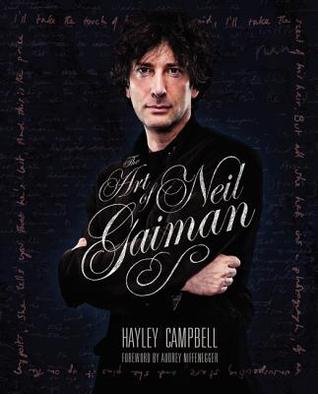
1. The Art of Neil Gaiman: The Visual Story of One of the World’s Most Vital Creative Forces by Hayley Campbell for review from Harper.

Novelist, comics writer, scriptwriter, poet, and occasional artist, there are few creative avenues Neil Gaiman hasn’t ventured down—from unforgettable books like The Ocean at the End of the Lane and American Gods to groundbreaking comics and graphic novels like The Sandman and Violent Cases; from big-screen fantasies like Coraline and Stardust to small-screen epics like Doctor Who and Neverwhere; and from short stories to songwriting, stage plays to radio plays, journalism to filmmaking, and all points in between.

The Art of Neil Gaiman is the first book to tell the full story of his amazing creative life. Never-before-seen manuscripts, notes, cartoons, drawings, and personal photographs from Neil’s own archive are complemented by artwork and sketches from all of his major works and his own intimate recollections. Each project is examined in turn, from genesis to fruition, and positioned in the wider narrative of Gaiman’s creative life, affording unparalleled access to the inner workings of the writer’s mind.

2. The Mix & Match Guide to Companion Planting by Josie Jeffrey for review from Blogging for Books.

Due to the revived interest in vegetable gardening, people are again turning to the age-old practice of companion planting as an effective way to avoid chemicals and reduce labor simply by placing the right plants next to each other in the garden. This book is designed to help gardeners mix and match various companion plant pairs and groups to create healthy, harmonious botanical communities. All you have to do is choose from the extensive plant directory to find the perfect plant pals. Each central crop has a row of colored dots along the top and bottom of the strip showing its “requirements”–that is, what it’s looking for in a companion plant, whether it be a support while growing and a pest deterrent or a soil conditioner and a nutrient accumulator. Turn the strips and match the dots to find your plants’ best friends. The more dots that match, the better the chance your plants will flourish

3. The Sea Garden by Deborah Lawrenson for review in July for TLC Book Tours.

On the lush Mediterranean island of Porquerolles off the French coast, Ellie Brooke, an award-winning British landscape designer, has been hired to restore a memorial garden. Unsettled by its haunted air and the bitterness of the garden’s owner, an elderly woman who seems intent on undermining her, Ellie finds that her only ally on the island is an elusive war historian.

4.  Molly’s Game by Molly Bloom, an unexpected surprise that will be passed along to another reader.

When Molly Bloom was a little girl growing up in a small Colorado town, she watched her brothers win medals, ace tests, and receive high praise from everyone they met. Molly wanted nothing more than to bask in that glow a little herself, so she pushed herself too—as a student, as an athlete. She was successful but felt like she was always coming from behind. She wanted to break free, to find a life without rules and limits, a life where she didn’t have to measure up to anyone or anything—where she could become whatever she wanted.

Molly wanted more, and she got more than she could have ever bargained for.

5.  Art From Dreams: My Jungian Journey in Collage, Assemblage, and Poetry by Susan Levin for review in September.

ART FROM DREAMS, MY JUNGIAN JOURNEY in COLLAGE, ASSEMBLAGE, and POETRY celebrates artistic expression as an exploration for self-awareness. Art-making and poetry reveal to ourselves and to others the images and feelings that arise within us in dreams. The very process of creation taps into the source of our inner wisdom. Poetry itself can be accessible as a collage of named images put together in various forms to communicate to and from our innermost selves.

What did you receive?

260th Virtual Poetry Circle

Welcome to the 260th Virtual Poetry Circle!

Remember, this is just for fun and is not meant to be stressful.

Keep in mind what Molly Peacock’s book suggested.

Look at a line, a stanza, sentences, and images; describe what you like or don’t like; and offer an opinion. If you missed my review of her book, check it out here.

Today’s poem is from Another World Instead: The Early Poems of William Stafford 1937-1947, edited by Fred Marchant:

Sub-urban (page 120)

In any town I must live near the rind,
where the animals come around nibbling.
Everything else inside may be designed,
but near is an edge, not confined.

They must be animals, that, though mild,
come straying in only by night-time.
They don't belong, but come anyway, beguiled
by light, but ready to bold for the wild.

That's how the wilds and I belong
around any kind of a city:
in front of us lights and all the glory and stir.
but back of us—country, as friendly as fur.

                 Berkeley, California
                 September 7, 1947

What do you think?


War Babies Read-a-Long and Happy Birthday

First, this message for my husband:

Secondly, Today, at War Through the Generations, Anna and I are holding our first discussion for the Korean War read-a-long pick, War Babies by Frederick Busch.

We hope that you’ll join us in a discussion of this short book. For this week, we’re focusing on pages 51-end of the book.

Check out the discussion here.

For the first part of the discussion, go here.

Guest Post: The Secret Language of Stamp Placement

We live in an age where communication is simply a matter of typing a few lines of text and hitting the ‘send’ button. It doesn’t matter where we are in the world, we can send our loved ones a few loving words whenever we want – in the knowledge that they will be received within just a few seconds. There was a time, however, when a message of love could take more than a week to arrive. The sending of letter may be a dying art these days, but it used to be a heartfelt, romantic gesture, and young lovers would often choose the placement of a stamp to convey a hidden message.

‘The language of stamps’ may now be consigned to the annals of history, but before the advent of digital communication, it was a used as a way of sending a clandestine message of love – or in some cases – rejection. In many ways, the placement of stamps on envelopes was one of the earliest forms of text speak, but instead of the now widespread use of LOL, LMAO and OMG, the orientation and location of a stamp told the story.

This mysterious cypher was developed in Victorian England, and for more than 100 years, the sight of oddly positioned stamps on letters and picture postcards was commonplace. The idea behind the secret language of stamps developed at a time when courtship and romance were subject to a strict code of conduct. Young men were expected to be respectful in their proclamations of affection, and it was incumbent on young ladies to act with chastity and dignity during the first throes of romance.

However, courting couples could send secret messages to one another through a series of stamp placements – which would usually evade the attention of suspicious parents. The secret language quickly caught on throughout the world, but the problem of seemingly arbitrarily placed stamps on letters and postcards became so bad, many national postal services introduced strict guidelines on where to position stamps. Indeed, some letters would simply be returned to the sender unless those guidelines were followed.

So, what were these mysterious stamp placements? And exactly what romantic messages did they stand for? Well, perhaps the most commonly used stamp placement was upside down at the top left corner of a postcard or envelope, which stood for: ‘I love you’. Any young lady receiving correspondence with a stamp positioned in this way would have either been giddy with excitement or filled with dread.

Unfortunately, the news conveyed by a stamp was not always positive. For instance, a stamp placed sideways at the top left corner of an envelope stood for: “My heart is another’s”. And many a broken heart has been caused by an upside down stamp placed at the top right corner, as this was the universally accepted stamp placement for: “Write no more”. While there were several secret messages that no smitten recipient ever wanted to receive, few would have been more heartbreaking than the “I hate you” placement, which was represented with a stamp placed at a right angle in the top left corner.

While there is undoubtedly an element of humour to be found in this quirky practice, there is also something charming and romantic about it. Illicit love has long been a subject of verse and play, and to know that young lovers communicated their feelings to one another in this way provokes images of romance during simpler times. If you are thinking of using the secret language of stamps to express your love for someone, a full list of the universally accepted stamp placements can be found at the Philatelic Database.

Company Profile:
Ace-Envelopes is one of UK’s leading suppliers of envelopes, over 25 million envelopes in different sizes, colours and shapes available for next day delivery services to meet your needs.

The Impossible Knife of Memory by Laurie Halse Anderson

Source: Public library
Hardcover, 391 pages
On Amazon and on Kobo

The Impossible Knife of Memory by Laurie Halse Anderson is set five years or more after Hayley Kincaid’s father came back from two tours each in Afghanistan and Iraq.  They had been on the road as he drove semi-trucks and home-schooled her, but they return to his home town to set down some roots and for her to attend senior year in a regular school.  She barely reconnects with her childhood friend Gracie and she is plunged head first into peer-pressure drama as she tries to hide her own past and home life struggles.  She meets mega-hottie Finn, who has stopped being the star swimmer for the high school team, and they strike up an unconventional relationship of him doing her favors she never asks for in exchange for articles for the nearly defunct school newspaper.

“My earbuds were in, but I wasn’t playing music.  I needed to hear the world but didn’t want the world to know I was listening.” (page 5)

As much as this story is about Hayley and her ability to connect with people her own age, it is also a story about the wide-ranging effects of PTSD.  Anderson sprinkles in what look like memories from Hayley’s father, which provide enough background on his experiences to demonstrate how real his nightmares had become.  These nightmares are so real that she loses sleep herself, and like most children of addicted parents, she teeters on the edge of caring for him and allowing herself to live her own life without worrying about him.

“A few days after we moved in, Daddy got unstuck from time again, like the Pilgrim guy in Slaughterhouse.  The past took over.  All he heard were exploding IEDs and incoming mortar rounds; all he saw were body fragments, like an unattached leg still wearing its boot, and shards of shiny bones, sharp as spears.  All he tasted was blood.”  (page 9)

Trauma is tricky, and while many veterans never speak of their experiences, family can glean from their nightmares the events that continue to plague their living hours.  Anderson writes for young adults with a seriousness that ensures young readers will feel at home in the worlds she creates, but she never sugarcoats the realities of war or PTSD.  Hayley is strong, but still teeters on the edge when her father takes a wrong turn or stops coming out of his room.  The only thing keeping her in the present and connected are her relationships with Gracie and Finn.  The Impossible Knife of Memory by Laurie Halse Anderson is highly emotional, could be considered a tearjerker, and will leave a lasting imprint on readers’ memories.

About the Author:

Laurie Halse Anderson is the New York Times-bestselling author who writes for kids of all ages. Known for tackling tough subjects with humor and sensitivity, her work has earned numerous American Library Association and state awards. Two of her books, Speak and Chains, were National Book Award finalists. Chains also made the Carnegie Medal Shortlist in the United Kingdom.

Laurie was the proud recipient of the 2009 Margaret A. Edwards Award given by YALSA division of the American Library Association for her “significant and lasting contribution to young adult literature…”. She was also honored with the ALAN Award from the National Council of Teachers of English and the St. Katharine Drexel Award from the Catholic Librarian Association.

Also Reviewed:

14th book (Gulf Wars — Operation Iraqi Freedom) for the 2014 War Challenge With a Twist.

Another World Instead: The Early Poems of William Stafford 1937-1947

Source: Gift (Published by Graywolf Press)
Hardcover, 128 pages
I am an Amazon Affiliate

Another World Instead: The Early Poems of William Stafford 1937-1947 edited and introduced by Fred Marchant, which was our June book club selection, is a collection of mostly never before published poems by William Stafford while he worked with the Civilian Public Service (CPS) after becoming a conscientious objector of WWII.  While it is a collection of poems by a young poet working in camps on civil service projects who felt exiled within his own country for being a pacifist, these poems also represent a poet searching for his own voice and style.  There are variations in tone, punctuation, and capitalization, as well as a wide use of the em dash.

The Prisoner (page 26)

Touched the walls on every side again—
Obsessed with prowling thoughts of free live men.
He heard when guards had slammed the outer gates,
How suddenly like wool the silence waits.
Resigned, he sat and thought of all the dead.
"I'll soon wake up from life," the prisoner said.
                      c. Magnolia, Arkansas
                      [1942]

While Stafford was a conscientious objector, life in the camps was not easy going — it was hard work, and many might even characterize it as a punishment for those who objected to doing their soldierly duty.  While he seemed to know that he was a pacifist, he continued to struggle with what it meant to be a pacifist, and this struggle is evident in his poems.  Another running theme through the poems is a deep sense of loneliness, a being apart from the whole of society, and wondering how he fits into not just his pacifist society at the camps, but in the greater society outside of those camps.  In this internal struggle, Stafford writes about listening and observation and in many ways he takes these “passive” activities and makes them active inspection and cause for action.

From "Their voices were stilled..." (page 24)

Their voices were stilled across the land.
I sought them. I listened.
The only voices were war voices.
Where are the others? I asked, lonely
      in the lush desert.
One voice told me secretly:
We do not speak now, lest we be misunderstood.
We cannot speak without awaking the dragon of anger
      to more anger still.
That is why you are lonely.
You must learn stillness now.

I looked into his eyes, and they were a dragon's eyes,
      and I could not speak,
And we were as grains of sand huddled under the wind,
Awaiting to be molded, waiting to persuade with yielding
      the feet of the dragon.

                        Magnolia, Arkansas
                        May 1, 1942

Another World Instead: The Early Poems of William Stafford 1937-1947 edited and introduced by Fred Marchant explores the early writings of a national poetic icon, who stood behind his convictions even if it meant he was separated from society at large and required to work so hard it seemed like a punishment.  Stafford’s “deep listening,” as Marchant says, requires active participation on his part, he evokes pacifism in a way that will leave readers re-examining their own convictions where war is concerned.

***Disclosure, Fred Marchant is my former poetry professor from my Alma Mater.***

What the Book Club Thought:

The book club seemed to enjoy the poems, though there were a few members who found the poems in the end section rather odd compared to the others.  Once we got Skype going with the editor of the collected poems, several members were engaged in the conversation, poems were read aloud and discussed, and afterward, several said they would go back and re-read some of the poems now that they had more background on the poet and his experiences.  Having Fred Marchant join us engaged more of the members in conversation and reading of poems, and the background information seemed to help put the poems in perspective.  The poems were dated, so we could follow the historical time line, such as one poem written about the bombings of Nagasaki and Hiroshima.  Members indicated they would be interested in another Skype session.

About the Editor:

Fred Marchant is an American poet, and Professor of English and Literature at Suffolk University. He is the director of both the Creative Writing program and The Poetry Center at Suffolk University. In 1970, he became one of the first officers of the US Marine Corps to be honorably discharged as a conscientious objectors in the Vietnam war.

38th book for 2014 New Author Challenge.


21st book for 2014 Historical Fiction Reading Challenge.


Book 19 for the Dive Into Poetry Reading Challenge 2014.

13th book (WWII) for the 2014 War Challenge With a Twist.