Quantcast

Pies & Peril by Janel Gradowski

Source: Janel Gradowski, the author
ebook, 192 pages
On Amazon and on Kobo

Pies & Peril: A Culinary Competition Mystery by Janel Gradowski is punchy and fun, a perfect read for kicking back on a rainy day or on the beach during the summer.  While “beach read” is often a looked down on term, these are the kinds of books readers crave when they want pure entertainment and to enjoy characters and their stories.  Gradowski’s characters are not like those in typical cozy mysteries; they have good heads on their shoulders, are professional, and are not throwing themselves in harm’s way without thinking things through first.  Amy Ridley is no dumb blonde. She’s focused to win every culinary baking contest she enters, but when things go awry for her former friend and now baking nemesis, Mandy Jo, she takes it upon herself to solve the mystery of her death.

“The physical side effects of becoming a triple champion made her feel like she had been caught in a stampede of tap dancers from Ms. Carrie’s Dance Academy.” (ARC)

“Okay.  Dirty dishes didn’t talk, but she couldn’t stand to see them sitting there, like batter coated chore devils perched on her shoulder.” (ARC)

Amy is spunky and determined to uncover the truth, but she’s also aware that there should be boundaries to her tenacious search for a killer.  She’s lurking in corners to eavesdrop and running into clues, but she’s also wise enough to know that she should be careful and scared of the killer who is writing her threatening notes.  Her friend Carla is a doll, and readers will enjoy their banter as they go over some of Amy’s theories about the murder and her even more outrageous theories behind the murder.  Gradowski’s style is filled with humor and characterization; readers will get to know these characters in such a short period of time, it will feel like they are friends known for much longer.  The author has a way of packing in a lot of background and characterization in a small space, making it easier to flow with the relationships and the story as it unfolds.

“… The Cookbook Nook.  Not a single auto repair or vampire book could be found on the shelves.  Just cookbooks.  Glorious, fascinating cookbooks.” (ARC)

Pies & Peril: A Culinary Competition Mystery by Janel Gradowski will have readers’ mouths watering, and it includes recipes at the end to keep those taste buds dreaming.  Cozy mysteries may drive some readers crazy for their dopey heroines that carry their infants into dangerous situations or just rush headlong into places they shouldn’t as they investigate mysteries, but Gradowski has found the perfect balance between the cozy mystery formula and strong heroines that leave the tough stuff up to the cops.

About the Author:

Janel Gradowski lives in a land that looks like a cold weather fashion accessory, the mitten­-shaped state of Michigan. She is a wife and mom to two kids and one Golden Retriever. Her journey to becoming an author is littered with odd jobs like renting apartments to college students and programming commercials for an AM radio station. Somewhere along the way she also became a beadwork designer and teacher. She enjoys cooking recipes found in her formidable cookbook and culinary fiction collection. Searching for unique treasures at art fairs, flea markets and thrift stores is also a favorite pastime. Coffee is an essential part of her life. She writes the Culinary Competition Mystery Series, along with The Bartonville Series (women’s fiction) and the 6:1 Series (flash fiction). She has also had many short stories published in both online and print publications.  Check her Website, on Facebook, and on Twitter.  Check out her books.

Other books by this author, reviewed here:

Interview with Janel Gradowski, Author of Pies & Peril

Pies & Peril, a Culinary Competition Mystery by Janel Gradowski is a fun cozy that will have readers laughing out loud, but this heroine, Amy Ridley, is no dumb blonde.  She’s got a good head on her shoulders, but she’s also focused to win every culinary baking contest she enters.  Here’s the description from GoodReads:

When Amy Ridley decided to compete in the Kellerton Summer Festival Pie Contest, the last thing she expected was to find the reigning pie queen, Mandy Jo, dead—a raspberry pie smashed on her face! Mandy Jo made fantastic pies, but she accumulated more enemies than baking trophies. But when Amy receives a note threatening her own life, she decides to do some investigating herself.

Today, I’ve got a great interview from Janel, whom I met through book blogging, and now as an author of full-length and flash fiction, she’s here to share with us her writing and publishing experiences. Please give her a warm welcome:

1. What are your first loves as a reader about novels? Do you prefer plot or characterization? Do you love mystery or literary fiction better?

I love characters with interesting backgrounds and traits. Plot is the undercurrent that keeps all good books flowing, but I want to fall in love with the characters first and really care about them. I also love richly detailed books where the author describes the literary world they’ve created with their own, unique lens.

I will read just about anything. Different genres for different moods. I love a cozy mystery when I’m hanging out at our cabin or just want something light to read in the evening. If I really want to sink my teeth into a book I often turn to women’s fiction by authors like Barbara O’Neal and Erica Bauermeister.

2. When deciding to carve out time for your own writing, what was the catalyst for you, especially being a mother and having little time to yourself?

To be honest, my commitment to writing fiction over the last several years was a bit of a mid­life crisis. I designed and published beadwork patterns when my kids were little, so I knew I could juggle being a mom and a writer. While I loved seeing my patterns in magazines, I still wanted to be a published author in my first writing love ­ fiction. Over the past four or five years I have transitioned from writing patterns to writing fiction and I couldn’t be happier with the change.

3. What are some tips you’d provide to mothers looking to continue creatively writing if they have young children, school-­age children, and older kids?

The younger children are the less time mothers have for themselves. You need to learn to write in bits and pieces in whatever time you can grab. Just make sure to also rest when you have the chance. Exhaustion is never a good thing for moms or writers. I find that it helps to tailor the length of your stories to the time that you have available. When my children were younger I wrote flash fiction, ultra­short stories that usually have less than 1,000 words. As my kids got older I moved up to short stories, novelettes and novellas. Now my kids are pretty independent at 15 and 13­ years old. I was easily able to write Pies & Peril, my first novel, last fall.

If you are having problems “turning on” your creativity in the time you do have, I would suggest trying prompts. There are countless books and websites dedicated to writing prompts. Give yourself permission to play and get messy with your writing. Don’t worry about making it perfect, a common creativity killer, and have fun. You may be surprised at what ends up on the page.

4. Pies & Peril is your latest, full­-length published work, how long did the process take from the initial idea to finish? And how did this process differ from your previous experience with the Bartonville Series of books?

It took me about a month and a half to write the first draft of Pies & Peril. I started with a 2,000 word short story then expanded it, using subplots, into a novel. I did much more planning with this than any of the stories I’ve written for my Bartonville Series. It’s roughly twice as long as the longest Bartonville story, a novella.

I write using a program called Scrivener. It is made specifically for writers and has a virtual corkboard with wonderful virtual index cards. Each scene can be an index card in the program. For the Bartonville series I just plotted the stories using those virtual index cards. For Pies & Peril I broke out a real corkboard and index cards. I took a few weeks to jot down scene ideas on cards. Then I sat down, color­coded the cards by subplot and arranged them on the board, filling in gaps as needed. I am definitely what is called a “plotter” in the world of writing. There’s no way I would try writing a novel without plotting it out first, although I have written many flash fiction stories off the top of my head from just a tiny seed of an idea. Longer word counts take more planning. A lot more planning.

5. How happy are you about your publishing career so far, and what do you hope will happen in the future? Any new books in the planning or near completion stages and will they be food-­related too?

A year ago I never thought I would have a publisher or be writing a culinary mystery series! I wrote a short story for a contest. It turns out my publisher, Gemma Halliday, was running the contest to look for authors for the boutique publishing company she was starting. I didn’t win the contest, but I did get a publishing contract and I am thrilled! The publishing world is kind of like a gold rush right now. Everybody is scrambling to find readers and fans. Having a publisher and the other authors at Gemma Halliday Publishing help promote the book has made a huge difference in the success of Pies & Peril compared to my other self-­published books.

I am currently writing the second book in the Culinary Competition Series. It will definitely be food­-related with lots of food described in the book and recipes for some of the treats at the end. I am also working on a short story from the series that will be in a holiday anthology. I plan on adding more volumes to both of my self­published series, 6:1 and Bartonville, but those are on the backburner for the moment. There are only so many hours in the day!

Thanks, Janel, for talking with us today, and you know I love your writing and your books.  Stay tuned for my review of Pies & Peril tomorrow!

JanelGAbout the Author:

Janel Gradowski lives in a land that looks like a cold weather fashion accessory, the mitten­-shaped state of Michigan. She is a wife and mom to two kids and one Golden Retriever. Her journey to becoming an author is littered with odd jobs like renting apartments to college students and programming commercials for an AM radio station. Somewhere along the way she also became a beadwork designer and teacher. She enjoys cooking recipes found in her formidable cookbook and culinary fiction collection. Searching for unique treasures at art fairs, flea markets and thrift stores is also a favorite pastime. Coffee is an essential part of her life. She writes the Culinary Competition Mystery Series, along with The Bartonville Series (women’s fiction) and the 6:1 Series (flash fiction). She has also had many short stories published in both online and print publications.  Check her Website, on Facebook, and on Twitter.  Check out her books.

Mailbox Monday #280

Mailbox Monday, created by Marcia at To Be Continued, formerly The Printed Page, has a permanent home at its own blog.

To check out what everyone has received over the last week, visit the blog and check out the links.  Leave yours too.

Also, each week, Leslie, Vicki, and I will share the Books that Caught Our Eye from everyone’s weekly links.

Here’s what I received:

1. Blackfin Sky by Kat Ellis for review in September.

Just like any other morning, Skylar Rousseau is late for school, but when she is greeted by a blanket of silent stares upon entering Blackfin High, she discovers that the whole town thought she fell from the pier and drowned on her sixteenth birthday three months earlier. However, Sky remembers the last three months living her life as normal, and since she is a full, living breathing human being, she has no idea whose body is buried underneath her tombstone. Everyone seems reluctant to help except her steadfast friend and crush, Sean . . . and a secretive man who draws her to a mysterious circus in the woods.

2.  Inamorata by Megan Chance for TLC Book Tours in August.

American artist Joseph Hannigan and his alluring sister, Sophie, have arrived in enchanting nineteenth-century Venice with a single-minded goal. The twins, who have fled scandal in New York, are determined to break into Venice’s expatriate set and find a wealthy patron to support Joseph’s work.

But the enigmatic Hannigans are not the only ones with a secret agenda. Joseph’s talent soon attracts the attention of the magnificent Odilé Leon, a celebrated courtesan and muse who has inspired many artists to greatness. But her inspiration comes with a devastatingly steep price.

3.  This Is How I’d Love You by Hazel Woods from the publisher for review in September.

As the Great War rages, an independent young woman struggles to sustain love—and life—through the power of words.

It’s 1917 and America is on the brink of World War I. After Hensley Dench’s father is forced to resign from the New York Times for his anti-war writings, she finds herself expelled from the life she loves and the future she thought she would have. Instead, Hensley is transplanted to New Mexico, where her father has taken a job overseeing a gold mine. Driven by loneliness, Hensley hijacks her father’s correspondence with Charles Reid, a young American medic with whom her father plays chess via post. Hensley secretly begins her own exchange with Charles, but looming tragedy threatens them both, and—when everything turns against them—will their words be enough to beat the odds?

4.  Tall, Dark, & Dead by Tate Hallaway, which I got from a book swap with friends.

A delightful new comedy about witches, vampires, and the search for the perfect man. Recovering witch Garnet Lacey manages Wisconsin’s premier occult bookstore. And a fringe benefit of the job is getting customers like Sebastian Von Traum–piercing brown eyes, a sexy accent, and a killer body. The only thing missing is an aura. Which means he’s dead. And that means trouble. So what’s a girl to do if she’s hot for a dead man walking? Run like hell-and take full advantage of the nights.

5.  Environmental Stewardship in the Judeo-Christian Tradition by Rev. Robert Sirico and Jay W. Richards also from the book swap.

A fair and honest debate about religious responses to environmental issues should always distinguish theological principles from prudential judgments.  The Cornwall Declaration and the accompanying essays in this volume were written to do just that.  They were not written to provide theological rationale for current environmentalist fashion.  Rather, they seek to articulate the broad Judeo-Christian theological principles concerning the environment, and to distinguish those principles from contrary ideas popular in the environmental movement.

6.  Summer Blowout by Claire Cook from the book swap.

A good makeup artist never panics. Bella Shaughnessy knows this. She’s the resident makeup maven in a family of Boston Irish hair salon owners; she has an artful solution to almost every problem. But Bella feels bruised beyond the reach of even the best concealer when her half-sister runs off with her husband. What could she come up with to cover a hurt like that? Plenty, it turns out. She conceives an invigorating new business idea, and soon meets a cute entrepreneur who can help out. Despite their bickering, they can’t seem to stay away from success–or from each other.


7.  Daemons Are Forever by Simon R. Green from the book swap.

Eddie Drood’s clan has been watching mankind’s back for ages. And now he’s in charge of the whole kit and caboodle. But it’s not going to be an easy gig…

During World War II, the Droods made a pact with some nasty buggers from another dimension known as the Loathly Ones, which they needed to fight the Nazis. But once the war was over, the Loathly Ones decided that they liked this world too much to leave. Now it’s up to Eddie to make things very uncomfortable for them or watch everything humanity holds dear go up in smoke.

What did you receive?

263rd Virtual Poetry Circle

Welcome to the 263rd Virtual Poetry Circle!

Remember, this is just for fun and is not meant to be stressful.

Keep in mind what Molly Peacock’s book suggested.

Look at a line, a stanza, sentences, and images; describe what you like or don’t like; and offer an opinion. If you missed my review of her book, check it out here.

Today’s poem is from Joshua Beckman’s Take It:

[Dark mornings shown thy mask]


Dark mornings shown thy mask
made well thy visage and voice
rolling over and hearing some perfect
sweetness that one broad soul poured forth
again in happy countenance and ancient word


                                     my city cold
                                        for me, my nature
                                                lost

                                        come back

                               sallow soft and colorless
                         thy dreams repent

        as:

The whole family
each with his own
 
                                          “Now, sweet child, we must
                                          kiss winter goodbye, and so too
                                          your furs.”

She clutched the puppy to her breast.
“Not little Bobby, father.”

“Yes, my darling, little Bobby as well.”

And this, as she ought, was how Gretel
remembered summer – a constant giving up
of things and people.

What do you think?

Guest Post: My Writing Space by Victoria Dougherty

The Bone Church_BlogTour Banner FINAL

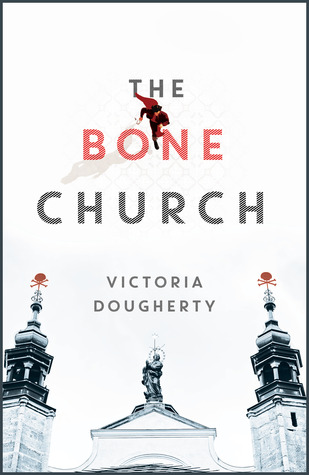
The Bone Church by Victoria Dougherty is the kind of historical fiction I love to read, and while I couldn’t fit it in my schedule, I just had to share it with my readers.  Check out this synopsis from GoodReads:

In the surreal and paranoid underworld of wartime Prague, fugitive lovers Felix Andel and Magdalena Ruza make some dubious alliances – with a mysterious Roman Catholic cardinal, a reckless sculptor intent on making a big political statement, and a gypsy with a risky sex life. As one by one their chances for fleeing the country collapse, the two join a plot to assassinate Hitler’s nefarious Minister of Public Enlightenment and Propaganda, Josef Goebbels. But the assassination attempt goes wildly wrong, propelling the lovers in separate directions.
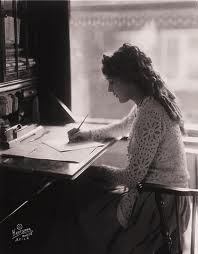

Felix’s destiny is sealed at the Bone Church, a mystical pilgrimage site on the outskirts of Prague, while Magdalena is thrust even deeper into the bowels of a city that betrayed her and a homeland soon to be swallowed by the Soviets. As they emerge from the shadowy fog of World War II, and stagger into the foul haze of the Cold War, Felix and Magdalena must confront the past, and a dangerous, uncertain future.

When you read as many books as I do about WWII and other eras that involve war, you often wonder what the writing spaces of the authors look like.  So without further ado, Victoria Dougherty has been kind enough to share with us her own writing space. Please give her a warm welcome.

Image 1

My home office is, I suppose, a bundle of contradictions.

First of all, it is small. It’s only half the size of my husband’s home office.

I’m kind of like the wife who drives a Chevy while her husband gets the Cadillac, but I wouldn’t have it any other way. It’s cozy in there and I feel safe.

Its walls are red – hardly a safe color, but it keeps me alert. My desk is a granite slab that used to serve as a bar in our old place, and there’s a fireplace with an antique wooden mantel showcasing two Byzantine icons (one of Christ, the other of Mary), a matching rosary, four family photos, a clay ballerina my middle daughter sculpted for me, an Indian flag (we’re not Indian, don’t ask), one dragon-themed baby shoe from Hong Kong, and a signed, framed World War II cartoon featuring Mussolini being led around on a leash by the Axis powers.

Image 2

On this framed cartoon hangs an authentic Mother’s Cross – a ribbon necklace with a metal Reich symbol that was given to women who’d born children for Nazi Germany. Nobody in my family did – we’re both Catholic and Jewish, so we wouldn’t have volunteered for such an honor (nor would we have been asked).

The thing is I like to surround myself with objects that inspire my work, and for good or ill, Nazi’s and Communists are part of my fiction universe.

Most of the mementos in my office are gifts, except for the Mother’s Cross. I bought that from a collector of Nazi memorabilia. He was selling his collection because he felt people wrongly assumed that he liked Nazis, when in fact, he was just a history buff. It had caused some uncomfortable moments at a few of his wife’s dinner parties.

Image 3

That, in and of itself, could inspire a couple of novels.

My desk, the former bar, sits on an old, Oriental rug fouled by various pet stains. My dog’s ashes (the dog responsible for most of the pet stains) sit in a wooden box on a little table in the corner next to my bookshelves. This box is lorded over by a framed faux New York Times obituary for the late canine (written by my husband) and titled,Milo Steven Dougherty, Asexual Glutton Canine, Is Dead. It goes on to describe our late beagle mix as “a single-minded ‘perfect eating machine’ who loved Snickers cheesecake, tacos, hollandaise sauce, White Castle microwaveable cheeseburgers, shrimp risotto, anything on the McDonalds breakfast menu and fecal-caked baby diapers.” Rest in Peace, my friend.

Image 4

Being writers, we have a predictable quantity of books in our house – about 7 floor-to-ceiling shelves’ worth, but the bookshelves in my office are mostly filled with my children’s various pictures and art projects: my daughter’s soccer team photo, my son’s first short story (about the Civil War), and my youngest child’s Kindergarten scrapbook.

There’s also a taxidermied baby alligator among my kids’ artifacts, but I can’t for the life of me tell you how it got there.

Image 5

On the wall at my left hangs a framed photo of my wedding, a large black and white print of an old woman walking through the streets of Prague, another old black and white – this one of the Tower of Silence in old Bombay, a newspaper clipping of my grandfather’s performance in the 1936 Winter Olympics – he played on the Czech National Hockey Team, a portrait taken of my husband on his first birthday and one taken of me and my first child, my son, when he was one. The rest of the walls are bare.

Image 6

But there are two hand-made Czech marionettes that flank my one picture window. This is my favorite of the two. I call him Vladimir the Great. He holds a violin in one hand and a beer in the other, and reminds me so much of my grandfather, Dede, who could play any instrument by ear. He could also drink you under the table, although Dede would have never, ever tolerated a five o’clock shadow like this fellow.

Image 7

Essentially, my home office holds my life. I care little for jewelry and other fancy things (don’t get me wrong, I don’t knock them and like a fine bauble as much as the next girl) so, if I had to flee my house in the middle of the night, the way my grandparents did, the only things I would take with me as I rushed my family out the door are in my office. Deeply personal relics that tell the story of my life and the stories that fill my imagination.

Thank you, Victoria, for sharing your space with us. Please check out the rest of the tour and pick up a copy of her book.

03_Victoria DoughertyAbout the Author:

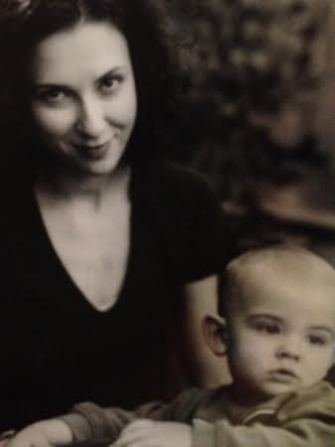
Victoria Dougherty writes fiction, drama, and essays that often revolve around spies, killers, curses and destinies. Her work has been published or profiled in The New York Times, USA Today, International Herald Tribune and elsewhere. Earlier in her career, while living in Prague, she co-founded Black Box Theater, translating, producing and acting in several Czech plays. She lives with her husband and children in Charlottesville, Virginia.

For more information, please visit Victoria Dougherty’s website and blog. You can also find her on Facebook, Twitter, Goodreads, and Pinterest.

Vietnam: The Real War with introduction by Pete Hamill

Source: Gift
Hardcover, 304 pages
I am an Amazon Affiliate

Vietnam: The Real War with introduction by Pete Hamill is a coffee table book that is heavy with photographic evidence of war, the burdens soldiers and civilians carry from those conflicts, and the moral ambiguity soldiers find themselves mired in when faced with unexpected death.  There are images in this collected visual and textual history that will haunt readers for years to come, but the story told in these pages through the eye-witness accounts of journalists who thrust themselves in combat alongside soldiers should make the harsh realities of war even more frightening for those of us who merely read history and have not lived it as a pawn in a larger strategic game of politics and nationalism.

“Most of the experienced correspondents in Saigon doubted that many Viet Cong hidden in their jungle spider holes were debating the Marxist theory of surplus value.  Nationalism was a much more powerful motivator.  They definitely wanted to get the foreigners the hell out of their country.”  (page 21)

Even with all that is known about the war and the inflated body counts made by the U.S. military during the war, there are still some great unknowns and even some smaller more poignant ones for the families of journalists and soldiers lost in Vietnam.  For instance, did the January 1952 bombings in Saigon really happen because of the Viet Minh, the predecessor to the Viet Cong, or was it U.S. intelligence agents?  And what really happened to Sean Flynn, a freelance photojournalist and son of the actor Errol Flynn, in the early 1970s — was he killed in action or captured?  Lest readers think that photojournalists and reporters were kept back at the barracks or the camps, this book sheds light on just how dedicated these journalists were and how close to the action they had been — some of them taking photos only to drop their cameras and help civilians, soldiers, or become wounded themselves.

There are, of course, the most famous images from the Vietnam war from the Associated Press, including the Buddhist Monk who set himself on fire in the streets, the young girl running naked after Napalm was dropped on her and other civilians by the U.S. military, or the shooting of an unarmed Viet Cong after capture in the Saigon street.  But there are other photos that show the beauty of Vietnam, including an aerial view of the newly plowed rice paddies and the pristine beaches, as well as the most mundane activities — watching a soldier shave while battle surrounds him or men on their way to bathe in towels while still carrying their weapons.  Sad photos stretch across these pages from the unknown soldier who looks too young to be in battle, wearing a helmet with the phrase “War Is Hell” written across it or the woman who pleads to be evacuated with her wounded husband, but is left behind.

Vietnam: The Real War is heavy in subject and content. It should give readers pause. The text accompanying the photos and the background on the war are to the point and provide enough detail without getting bogged down too heavily in the politics or the perspectives floating around in hindsight. An excellent starter for those looking to learn more about the war.

About the Author:

The Associated Press won an unprecedented six Pulitzer Prizes for its coverage of the Vietnam War. To create this book, the agency selected 300 photographs from the thousands filed during the conflict.

Pete Hamill is an American journalist, novelist, essayist, editor, and educator. The recipient of numerous awards, Hamill is currently a Distinguished Writer in Residence at the Arthur L. Carter Journalism Institute at New York University.

19th book (Vietnam War) for the 2014 War Challenge With a Twist.


44th book for 2014 New Author Challenge.

The Sea Garden by Deborah Lawrenson

Source: Harper and TLC Book Tours
Hardcover, 384 pages
On Amazon and on Kobo

The Sea Garden by Deborah Lawrenson is not your typical novel in that there are three distinct novellas inside with three distinct protagonists, who just happen to be connected.  The atmosphere and settings play a large role in the novel, setting the stage for the mystery and espionage that unravels, but the beginning of this novel is deeply mysterious, almost too mysterious.  It is like the author was unsure of whether this should be a ghost story or something less Gothic.  Readers meet Ellie Brooke at the beginning as she makes her way abroad to Porquerolles near France to meet with a potential client about reviving a memorial garden.  The landscape is lush and old world, almost as if it were stuck in time, and Ellie begins to sense that there is something not quite right with her client’s family and their intentions.

“Under close questioning, however, the picture in her mind did not seem as robust as it had been.  She judged it unwise to say so.  Best to go with her instincts that her memory was true.”  (page 25)

These women are searching for truth in the darkness, with Ellie searching for her client’s motivations and Marthe searching for the connections she had with the outside world before she lost her sight and Iris looking to reconcile the past.  The second section and third sections of the book are set in WWII, unraveling the background of the story in a winding fashion as if following a darkened path through the woods before reaching the vast openness of the sea.  There are clues along the way to help readers gauge where the story is headed and how it all connects back to the first third.  From the underground dealings of the French Resistance that relied upon deceit and subtle signals in the perfume worn by network members to the secret codes embedded in innocuous notes and wireless signals over radio waves, readers will learn about the precarious nature of these resistance fighters’ lives and the love that they shared across the boundaries that they crossed morally, emotionally, and physically.

“On the southwestern side of the island the path opened out into a small bay, reinforced by jagged rocks.  All seemed at peace.  It was too early in the year for tourist hordes; here was freedom from the modern world, for a while at least.  There was a timelessness about being on an island so small that it seemed closed in on itself; the sense of being adrift, not quite connected to the rest of the world.”  (page 31)

The Sea Garden by Deborah Lawrenson is as mysterious as the rundown memorial garden on the island, but as the crevices are scrutinized and the relics uncovered, they mystery begins to unravel a truth that has long been buried in secrets of the French Resistance and WWII.  These strong women must cope with what they uncover and reconnect with the past.  Being undercover in an enemy territory can be as lonely as living on an island disconnected from reality, but there is nothing more disconcerting than being unaware of your own past, only to uncover it when you least expect it.

Photo credit: Rebecca Eifion-Jones

About the Author:

Deborah Lawrenson studied English at Cambridge University and worked as a journalist in London. She is married with a daughter and lives in Kent, England. She and her family spend as much time as possible at a crumbling hamlet in Provence, France, the setting for her novel The Lantern and inspiration for The Sea Garden.  Find out more about Deborah at her website, read more at her blog, and connect with her on Facebook.


14th book for 2014 European Reading Challenge(Set in France and England)


24th book for 2014 Historical Fiction Reading Challenge.


18th book (WWII) for the 2014 War Challenge With a Twist.


43rd book for 2014 New Author Challenge.

Mailbox Monday #279

Mailbox Monday, created by Marcia at To Be Continued, formerly The Printed Page, has a permanent home at its own blog.

To check out what everyone has received over the last week, visit the blog and check out the links.  Leave yours too.

Also, each week, Leslie, Vicki, and I will share the Books that Caught Our Eye from everyone’s weekly links.

No books in the mail this week, but I did get these from the local library sale:

1.  The Last Time I Saw Paris by Lynn Sheene

May 1940. Fleeing a glamorous Manhattan life built on lies, Claire Harris arrives in Paris with a romantic vision of starting anew. But she didn’t anticipate the sight of Nazi soldiers marching under the Arc de Triomphe. Her plans smashed by the German occupation, the once- privileged socialite’s only option is to take a job in a flower shop under the tutelage of a sophisticated Parisian florist.

In exchange for false identity papers, Claire agrees to aid the French Resistance. Despite the ever-present danger, she comes to love the enduring beauty of the City of Light, exploring it in the company of Thomas Grey, a mysterious Englishman working with the Resistance. Claire’s bravery and intelligence make her a valuable operative, and slowly her values shift as she witnesses the courageous spirit of the Parisians.

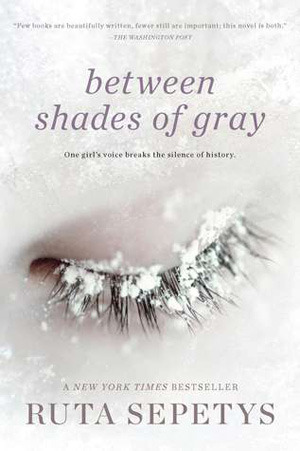
2. Between Shades of Gray by Ruta Sepetys

It’s 1941 and fifteen-year-old artist Lina Vilkas is on Stalin’s extermination list. Deported to a prison camp in Siberia, Lina fights for her life, fearless, risking everything to save her family. It’s a long and harrowing journey and it is only their incredible strength, love, and hope that pull Lina and her family through each day. But will love be enough to keep them alive?


3.  Who’s Making that Mess? illustrated by Stephen Cartwright

This lift-the-flap book features a young child trying to track down the culprit who is making a mess. It features a simple rhyming text for reading aloud, and should be suitable to be shared with children aged three and over.


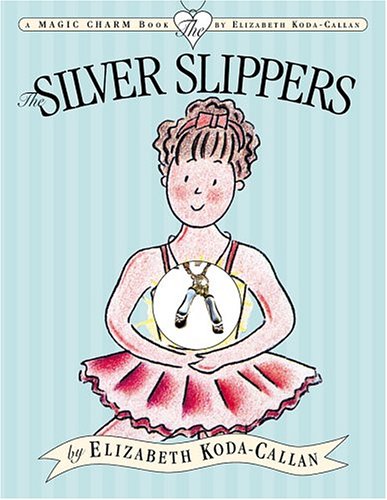
4. The Silver Slippers by Elizabeth Koda-Callan

The Silver Slippers takes a dramatic new turn with a fresh redesign featuring a new cover and an irresistible 5″ x 6 1³2″ trim size–a smaller book for smaller hands, and the perfect stocking stuffer. The look is contemporary, yet as classic as the story inside, with its ageless message of “Good things happen when you believe in yourself.” And, of course, nestled inside the cover is a charm on a matching gold or silver chain.


5.  The Dawn Fairy by Keith Falkner, illustrated by Helen Cann

A little girl loses her tiny silver necklace. Imagine her delight when it magically reappears the next morning — thanks to the helpful Dawn Fairy, who sparkles in the light.


6. Gotcha! by Gail Jorgensen, illustrated by Kerry Argent

Bertha Bear was about to cut the cake at her birthday party when a big, black beastly fly buzzed in her ear, flew up her nose, walked on her pie, and dive-bombed her seven-layer birthday cake. GOTCHA, cried Bertha.


What did you receive?

262nd Virtual Poetry Circle

Welcome to the 262nd Virtual Poetry Circle!

Remember, this is just for fun and is not meant to be stressful.

Keep in mind what Molly Peacock’s book suggested.

Look at a line, a stanza, sentences, and images; describe what you like or don’t like; and offer an opinion. If you missed my review of her book, check it out here.

Today’s poem is from Lucy Ives from Orange Roses:

Beastgardens


first garden

Beastgarden.


second garden

Bees go mad on late summer evenings, should
People stray from their jobs towards water

Beastgarden.


third garden

Who makes the rented red boat's
Oars turn

Who is the younger one always
Turning up

Who professes to be better because
He is just looking

Who says he is worse off as
He cannot look

Beastgarden.


fourth garden

The unicycle girl, thin
Like one with a sexual problem,
Goes through
The Schlosspark. This follows:
Father rolling his eyes

Beastgarden.


fifth garden

The man from Manchester
Has my breast in his hand

These are funny
They don't do anything do they

Being burnt by a fire I say

Beastgarden.


sixth garden

Similarly, if only
You grasped some
Titanic misery or a
Love like an old man's

Beastgarden.


seventh garden

Where were we

A ballroom competition goes on
A yellow satin bikini
A fuchsia floor-length are
Dancing; an audience is
Drinking, clapping 1 2 3 1 2 3

Beastgarden.

What do you think?

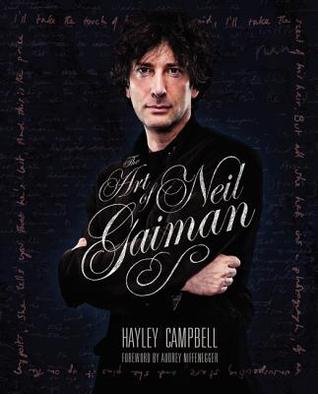
The Art of Neil Gaiman: The Visual Story of One of the World’s Most Vital Creative Forces by Hayley Campbell

Source: Harper Design
Hardcover, 320 pages
I am an Amazon Affiliate

The Art of Neil Gaiman: The Visual Story of One of the World’s Most Vital Creative Forces by Hayley Campbell is as comprehensive a look at one artist’s life as the notes, sketches, photos, and interviews with them can be, and whether those events and milestones are recorded in the proper order is irrelevant.  What is relevant here is the evolution of the artist, the development of art and man and the culmination of that in his work as a novelist, poet, and more.  Campbell has know the man since the age of 6, and she strives to not only provide insight into his work, but to share his passion about that work with the reader.

Complete with photos, scribbles, and more, Campbell’s book is an insider’s view of Neil Gaiman’s art as he created, as he remembers it, and even as he doesn’t remember what it is.  There are some interesting takeaways from the book, including what he thinks schools do not teach students about life and that making mistakes is important.  There are rare looks at notebooks and more in this one, and it will become every Neil Gaiman fans must-have.  The genesis of each story is wonderfully told, but the minor problems with the book detract from the content as the words are small and in close proximity to the margin, making it easier for the reader to be attracted to the visual fodder in the volume.  Supposing a reader looks at all the visual material first and then returns to the text, the book offers a great deal of information about the man and his art.

The Art of Neil Gaiman: The Visual Story of One of the World’s Most Vital Creative Forces by Hayley Campbell looks at the man’s multi-genre work thus far and is by no means the end of what Gaiman has in store for his fans.  While some of the reproductions could be larger and clearer and the binding could be improved upon to ensure that readers can actually read the text without getting frustrated, this is a phenomenal look at the ephemera collected and stored by Gaiman and more.  Many readers who are uber fans will want to look at these tidbits and savor them, some will just want to look at these once.

About the Author:

Hayley Campbell writes for the New Statesman, McSweeney’s, the Guardian, The Comics Journal, The Rumpus, Channel 4 News, Front, and Planet Notion. She’s written a book about Neil Gaiman (published spring 2014, Ilex/HarperCollins, scroll down for pre-order details) and if her face looks familiar it’s probably because she sold you comics once.

Find her on Twitter and her Website.

42nd book for 2014 New Author Challenge.

The House on Mermaid Point by Wendy Wax

Source: Berkley Books
Paperback, 416 pages
On Amazon and on Kobo

The House on Mermaid Point by Wendy Wax is like getting together with old friends — Nikki, Avery, Deidre, Kyra, and Maddie.  These renovation gurus are back shooting another season of their Lifetime television series, Do Over, but the next location is a surprise hidden in the Florida Keys.

(If you haven’t read the previous books in this series, this review could contain spoilers for previous books.)

Nikki and her man, Joe, seem to be on the right track, but she’s still got commitment issues after the brother she raised was sent to prison for his Ponzi scheme that took her money and those of her clients.  Meanwhile, Kyra and her son Dustin are adjusting to her mother’s new life as a 50+ single woman.  Maddie’s decided that its best to leave a sinking ship, and her ex-husband seems nonplussed about the break up.  Avery and Chase are still playing house and she’s still shutting out her mother, but the tensions are less on these pairings and more about Maddie and her search for a new life.  Like the name of their show implies, life is full of second chances, and many of these ladies have been given theirs in more ways than one.  Maddie is just the latest who needs to spread her wings.

“Close up, the house was far larger than they’d been able to discern from the water and in far worse shape.  The board-and-batten siding was not just devoid of paint but had been badly pummeled by the elements.  Like a boxer who’d gone one too many rounds, the house almost seemed to be standing upright from sheer force of will.  Of possibly from habit.” (page 51)

Mermaid Point, their next renovation project, is hidden on a private island, and private is how ex-rocker William Hightower would like to keep it.  Like the house, Hightower is a battered rocker who’s looking to redeem himself, just as some of these ladies have picked themselves out of the dumps and started new.  Hightower has a lot of repairing to do, from his relationship with his son to his ability to connect with people who want to get close to him.  There’s a lot of gentle nudging as they scrape the layers off the old wood to smooth it down, but as Hightower lets down his walls he’s struck by what’s been missing in his life — a sense of belonging and of family.  Like his home, he transforms little by little coming out from the jungle and the weathered walls to expose himself to scrutiny and relationships he never thought possible.

The House on Mermaid Point by Wendy Wax is a great summer beach read; these ladies will make you laugh, make you cry, but most of all want to hold all of your friends close.  Avery, Maddie, Deidre, Kyra, and Nikki all face their troubles head on, even if it is with a little push from their friends.  These ladies are ready to take on the next big challenge, and readers will be ready to go with them on their next adventure.

About the Author:

Award-winning author Wendy Wax has written eight novels, including Ocean Beach, Ten Beach Road, Magnolia Wednesdays, the Romance Writers of America RITA Award finalist The Accidental Bestseller, Leave It to Cleavage, Single in Suburbia and 7 Days and 7 Nights, which was honored with the Virginia Romance Writers Holt Medallion Award. Her work has sold to publishers in ten countries and to the Rhapsody Book Club, and her novel, Hostile Makeover, was excerpted in Cosmopolitan magazine.

A St. Pete Beach, Florida native, Wendy has lived in Atlanta for fifteen years. A voracious reader, her enjoyment of language and storytelling led her to study journalism at the University of Georgia. She also studied in Italy through Florida State University, is a graduate of the University of South Florida, and worked at WEDU-TV and WDAE-Radio in Tampa.

Also Reviewed:

Giveaway for 1 copy of The House on Mermaid Point by Wendy Wax for 1 U.S. resident.  Leave a comment below by July 16 by 11:59 PM EST.

China Dolls by Lisa See

Source: Random House
Hardcover, 400 pages
On Amazon and on Kobo

China Dolls by Lisa See spans pre-WWII, WWII, and after the war when Chinese immigrants and American-born Chinese were constantly stereotyped and pushed to the sidelines, and when America goes to war against Japan after the attack on Pearl Harbor, proving you’re American becomes even more important.  Grace Lee has left Ohio in a hurry and ends up in San Francisco with crushed dreams and no friends, until she meets Helen Fong, who is from a traditional Chinese family in Chinatown.  She’s uptight and traditional, harsh on Grace and later on Ruby Tom, but she’s also searching for her own path, wishing that her own dreams could be realized.  Hollywood is often considered the land where dreams come true, but in this case, these Asian women find their dreams in San Francisco, though those dreams are often marginalized by their own pettiness and the world that looks down on their culture and abilities.

“Helen and I sat on the floor a little apart from the other ponies, who massaged one another’s feet, stretched, and gossiped.  Every day Helen arrived at rehearsal in a dark wool skirt, long-sleeved black sweater, and charcoal-gray wool stockings, but she quickly changed out of them.  To my eyes, it seemed like she was shedding not just layers of clothing but layers of tradition.” (page 47 ARC)

Grace is a broken young woman of seventeen and very naive, and in many ways Helen and Ruby are all too happy to teach her lessons about the real world, but they often underestimate her resiliency, her willingness to forgive, and her determination to succeed.  Whether she is running from her past in Ohio, her failed attempt at stardom at the Golden Gate International Exposition, or the rumors that circulate around her during WWII, Grace must turn inward to find her strength and remain true to her dream.  She may take advantage of every opportunity around her when it presents itself, even if it comes as something tragic befalls her friends, but she never purposefully creates those opportunities.  Ruby and Helen, on the other hand, are downright Machiavellian, though in Helen’s case, her machinations come from an emotional devastation that she struggles to keep hidden daily.

“I don’t want to remind them”—and it didn’t take a brain surgeon to figure out I was talking about the FBI and the WRA—”I exist.  I don’t want to risk being sent to Leupp to join my parents.  I want to forget all that.  You left your mother behind.  Now I’ve left mine.” (page 262 ARC)

China Dolls by Lisa See is about chasing your dreams, making them come true, and all the petty jealousies and ups and downs that come with that, particularly in show business.  See masterfully weaves the history of the time period into these ladies’ lives.  It would be an excellent selection for book clubs as it raises questions about racial discrimination, inter-race relations, and prejudices within cultures based on socioeconomic and cultural differences, as well as what it means to be patriotic.

About the Author:

Lisa See, author of the critically-acclaimed international bestseller, Snow Flower and the Secret Fan (2005), has always been intrigued by stories that have been lost, forgotten, or deliberately covered up, whether in the past or happening right now in the world today. Ms. See’s new novel, Shanghai Girls, once again delves into forgotten history.  Visit her Website, Facebook, and Twitter.

17th book (WWII) for the 2014 War Challenge With a Twist.