Quantcast

391st Virtual Poetry Circle

Welcome to the 391st Virtual Poetry Circle!

Remember, this is just for fun and is not meant to be stressful.

Keep in mind what Molly Peacock’s book suggested.

Look at a line, a stanza, sentences, and images; describe what you like or don’t like; and offer an opinion. If you missed my review of her book, check it out here.

Today’s poem is from Mary Karr:

Requiem for the New Year

On this first dark day of the year
      my daddy was born lo
these eighty-six years ago who now
      has not drawn breath or held
bodily mass for some ten years and still   
      I have not got used to it.
My mind can still form to that chair him   
      whom no chair holds.
Each year on this night on the brink
      of new circumference I stand and gaze
towards him, while roads careen with drunks,   
      and my dad who drank himself
away cannot be found. Daddy, I’m halfway   
      to death myself. The millenium
hurtles towards me, and the boy I bore   
      who bears your fire in his limbs
follows in my wake. Why can you not be   
      reborn all tall to me? If I raise my arms
here in the blind dark, why can you not   
      reach down now to hoist me up?
This heavy carcass I derive from yours is   
      tutelage of love, and yet each year
though older another notch I still cannot stand   
      to reach you, or to emigrate
from the monolithic shadow you left.

What do you think?
Most Anticipated Poetry of 2017

Normally, I don’t have time to check out the upcoming books for the year, but I made a conscious effort to do so — at least for poetry.

Below are the books I’m looking forward to this year:

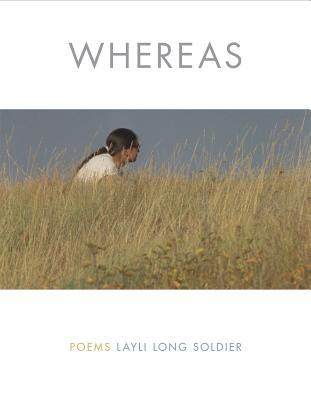
Whereas by Whiting Award winner Layli Long Soldier, published by Graywolf Press in March 2017.

WHEREAS her birth signaled the responsibility as mother to teach what it is to be Lakota therein the question: What did I know about being Lakota? Signaled panic, blood rush my embarrassment. What did I know of our language but pieces? Would I teach her to be pieces? Until a friend comforted, Don’t worry, you and your daughter will learn together. Today she stood sunlight on her shoulders lean and straight to share a song in Diné, her father’s language. To sing she motions simultaneously with her hands; I watch her be in multiple musics.

Afterland by Mai Der Vang, also published by Graywolf Press in April 2017.

Afterland is a powerful, essential collection of poetry that recounts with devastating detail the Hmong exodus from Laos and the fate of thousands of refugees seeking asylum. Mai Der Vang is telling the story of her own family, and by doing so, she also provides an essential history of the Hmong culture’s ongoing resilience in exile. Many of these poems are written in the voices of those fleeing unbearable violence after U.S. forces recruited Hmong fighters in Laos in the Secret War against communism, only to abandon them after that war went awry. That history is little known or understood, but the three hundred thousand Hmong now living in the United States are living proof of its aftermath. With poems of extraordinary force and grace, Afterland holds an original place in American poetry and lands with a sense of humanity saved, of outrage, of a deep tradition broken by war and ocean but still intact, remembered, and lived.

Said Not Said by Fred Marchant, from my mentor and friend who was recently honored by the city of Boston, and it is also from Graywolf Press in May 2017.

In this important and formally inventive new poetry collection, Fred Marchant brings us into realms of the intractable and the unacceptable, those places where words seem to fail us and yet are all we have. In the process he affirms lyric poetry’s central role in the contemporary moral imagination. As the National Book Award winner David Ferry writes, “The poems in this beautiful new book by Fred Marchant are autobiographical, but, as is always the case with his poems, autobiographical of how he has witnessed, with faithfully exact and pitying observation, the sufferings in the lives of other people, for example the heartbreaking series of poems about the fatal mental suffering of his sister, and the poems about other peoples, in Vietnam, in the Middle East, written about with the noble generosity of feeling that has always characterized his work, here more impressively even than before.”

Said Not Said is a poet’s taking stock of conscience, his country’s and his own, and of poetry’s capacity to speak to what matters most.

Incendiary Art: Poems by Patricia Smith, published by Triquarterly in February 2017.

ne of the most magnetic and esteemed poets in today’s literary landscape, Patricia Smith fearlessly confronts the tyranny against the black male body and the tenacious grief of mothers in her compelling new collection, Incendiary Art. She writes an exhaustive lament for mothers of the “dark magicians,” and revisits the devastating murder of Emmett Till. These dynamic sequences serve as a backdrop for present-day racial calamities and calls for resistance. Smith embraces elaborate and eloquent language— “her gorgeous fallen son a horrid hidden / rot. Her tiny hand starts crushing roses—one by one / by one she wrecks the casket’s spray. It’s how she / mourns—a mother, still, despite the roar of thorns”— as she sharpens her unerring focus on incidents of national mayhem and mourning. Smith envisions, reenvisions, and ultimately reinvents the role of witness with an incendiary fusion of forms, including prose poems, ghazals, sestinas, and sonnets. With poems impossible to turn away from, one of America’s most electrifying writers reveals what is frightening, and what is revelatory, about history.

Cold Pastoral: Poems by Rebecca Dunham from Milkweed Editions in March 2017.

A searing, urgent collection of poems that brings the lyric and documentary together in unparalleled ways—unmasking and examining the specter of manmade disaster.

The explosion on the Deepwater Horizon oil rig. Hurricane Katrina. The Flint water crisis. Thousands dead, lives destroyed, and a natural world imperiled by human choices. This is the litany of our time—and these are the events that Rebecca Dunham traces, passionately and brilliantly, in Cold Pastoral. In poems that incorporate interviews and excerpts from government documents and other sources—poems that adopt the pastoral and elegiac traditions in a landscape where “I can’t see the bugs; I don’t hear the birds”—Dunham finds the intersection between moral witness and shattering art.

Hard Child by Natalie Shapero from Copper Canyon Press in April 2017.

Thought-provoking and sardonically expressive, Shapero is a self-proclaimed “hard child”—unafraid of directly addressing bleakness as she continually asks what it means to be human and to bring new life into the world. Hard Child is musical and argumentative, deadly serious yet tinged with self-parody, evoking the spirit of Plath while remaining entirely its own.

My Mother Was a Freedom Fighter by Aja Monet from Haymarket Books in May 2017.

Textured with the sights and sounds of growing up in East New York in the nineties, to school on the South Side of Chicago, all the way to the olive groves of Palestine, My Mother Is a Freedom Fighter is Aja Monet’s ode to mothers, daughters, and sisters—the tiny gods who fight to change the world. Complemented by striking cover art from Carrie Mae Weems, these stunning poems tackle racism, sexism, genocide, displacement, heartbreak, and grief, but also love, motherhood, spirituality, and Black joy.

Eat This Poem: A Literary Feast of Recipes Inspired by Poetry by Nicole Gulotta from Roost Books in March 2017.

Inspired by her popular blog by the same name, the Eat This Poem cookbook features more than 75 new recipes paired alongside verse from 25 of America’s most beloved poets. Forage mushrooms with Mary Oliver, then wander into your kitchen to stir creamy truffle risotto. Study the skin of a pear with Billy Collins while you bake a warm vanilla-pear crumble. And honor the devoted work of farmers with Wendell Berry while snacking on popcorn dusted with rosemary and drizzled with brown butter.

Beating the Graves by Tsitsi Ella Jaji from University of Nebraska Press in March 2017.

The poems in Tsitsi Ella Jaji’s Beating the Graves meditate on the meaning of living in diaspora, an experience increasingly common among contemporary Zimbabweans. Vivid evocations of the landscape of Zimbabwe filter critiques of contemporary political conditions and ecological challenges, veiled in the multiple meanings of poetic metaphor. Many poems explore the genre of praise poetry, which in Shona culture is a form of social currency for greeting elders and peers with a recitation of the characteristics of one’s clan. Others reflect on how diasporic life shapes family relations.

The praise songs in this volume pay particular homage to the powerful women and gender-queer ancestors of the poet’s lineage and thought. Honoring influences ranging from Caribbean literature to classical music and engaging metaphors from rural Zimbabwe to the post-steel economy of Youngstown, Ohio, Jaji articulates her own ars poetica. These words revel in the utter ordinariness of living globally, of writing in the presence of all the languages of the world, at home everywhere, and never at rest.

The Thin Wall by Martha Rhodes from University of Pittsburgh Press in February 2017.

Past Praise for Mother Quiet:
“The aim of poetry (and the higher kind of thriller) is to be unexpected and memorable. So a poem about death might treat it in a way that combines the bizarre and the banal: the Other Side as some kind of institution—a creepy hospital, an officious hotel or retirement home. Martha Rhodes takes such an approach in ‘Ambassadors to the Dead,’ from her abrupt, unsettling, artfully distorted, indelible new book Mother Quiet. Blending the matter-of-fact with the surreal, as a way of comprehending the stunning, final reality, Rhodes is an inheritor of Emily Dickinson’s many poems on the same subject.”
—Robert Pinsky, Washington Post

Chiapas Maya Awakening: Contemporary Poems and Short Stories by Nicolás Huet Bautista (Editor), Sean S. Sell (Translator), Inés Hernández-Ávila (Introduction), Marceal Méndez (Foreword) from University of Oklahoma Press in January 2017.

Mexico s indigenous people speak a number of rich and complex languages today, as they did before the arrival of the Spanish. Yet a common misperception is that Mayas have no languages of their own, only dialectos, and therefore live in silence. In reality, contemporary Mayas are anything but voiceless. Chiapas Maya Awakening, a collection of poems and short stories by indigenous authors from Chiapas, Mexico, is an inspiring testimony to their literary achievements. A unique trilingual edition, it presents the contributors works in the living Chiapas Mayan languages of Tsotsil and Tseltal, along with English and Spanish translations.
As Sean S. Sell, Marceal Mendez, and Ines Hernandez-Avila explain in their thoughtful introductory pieces, the indigenous authors of this volume were born between the mid-1970s and the mid-1990s, a time of growing cultural awareness among the native communities of Chiapas.

Although the authors received a formal education, their language of instruction was Spanish, and they had to pursue independent paths to learn to read and write in their native tongues. In the book s first half, devoted to poetry, the writers consciously speak for their communities. Their verses evoke the quetzal, the moon, and the sea and reflect the identities of those who celebrate them. The short stories that follow address aspects of modern Maya life. In these stories, mistrust and desperation yield violence among a people whose connection to the land is powerful but still precarious.
Chiapas Maya Awakening demonstrates that Mayas are neither a vanished ancient civilization nor a remote, undeveloped people. Instead, through their memorable poems and stories, the indigenous writers of this volume claim a place of their own within the broader fields of national and global literature.”

What books are you looking forward to in 2017?

War Through the Generations Reading Challenge 2017

After our one-year hiatus, Anna and I have resurrected the War Through the Generations blog with the 2017 reading challenge.

We’ll be revisiting WWII books, and we’ll hold an end-of-challenge giveaway for the participants that read the most books — fiction, nonfiction, poetry, children’s books, etc.

We hope that you’ll join us, sign up in the comments and link your reviews in Mr. Linky throughout 2017.

We’ll also be announcing three read-a-longs for March, June, and September 2017 soon, so stay tuned for that as well.

Have a great year of reading!

The First Book of 2017 and One Word

Sheila at Book Journey has been doing this for a long time, and I always seem to jump on the bandwagon late.

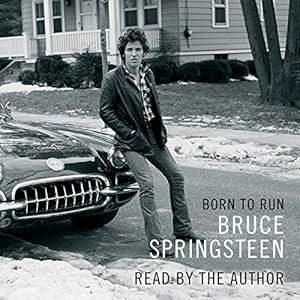
I had thought I would be absorbed in a short story collection, Sandlands by Rosy Thornton, but it turns out that I’m too absorbed in the audio of Bruce Springsteen’s Born to Run.

Sheila also has become a powerhouse supporter of the One Word resolution, and if you read her entries and how she comes up with her word, you’ll know why. There is a certain serendipity to her selection process.

I have tried to come up with a word before and failed to do so due to commitments and other issues that end up taking over. This year, however, my word is DELIBERATE.

  • Adjective: done consciously and intentionally
  • Verb: engage in long and careful consideration

I’ve had a rough year of over-committing myself, and it led to a lot of disappointments. I want to take more time to consider the opportunities before me before I commit to them. If I take too long to think and miss out on something, so be it. It was probably not right for me.

I love to help people. It’s part of who I am, but it shouldn’t be all I am. I need to do things that make me happy, too. One of those things is a renewed focus on finishing writing projects (I may not finish them all, but finishing one would be a huge step forward).

I also need to be more deliberate in my word choices and actions. I need to mean what I say and practice what I mean. I need to do this for myself and my family. It’s going to be a hard road this year, but I’m up for the challenge, so long as I carefully weigh all that is before me.

What’s your first book and one word this year?

United States of Books Project Wrap-Up

Even though I joined the United States of Books project later than many of the others, I really enjoyed the camaraderie and sharing reviews of others on my blog.

I hope you take a look at the wide variety of books we reviewed in 2016.

Among the ones I personally read and reviewed, my favorite book from the project was Maud Martha by Gwendolyn Brooks (I gave it 5 stars).

My 4 star books from the project were:

Drown by Junot Díaz

The Betsy-Tacy Treasury by Maud Hart Lovelace

Animal Dreams by Barbara Kingsolver

My 3 star books from the project were:

Independence Day by Richard Ford

The Awakening by Kate Chopin

Geek Love by Katherine Dunn

My 2 star books from the project were:

The Accidental Tourist by Anne Tyler

I would love to take part in another project like this.

Mailbox Monday #408

Mailbox Monday, created by Marcia at To Be Continued, formerly The Printed Page, has a permanent home at its own blog.

To check out what everyone has received over the last week, visit the blog and check out the links. Leave yours too.

Also, each week, Leslie, Martha, and I will share the Books that Caught Our Eye from everyone’s weekly links.

What I purchased:


Darcy’s Christmas Wish by Penelope Swan

Fitzwilliam Darcy never forgot the little girl, with the beautiful dark eyes, who saved his life fifteen years ago… though he never expected to meet her again. But when he comes to Rosings Park to spend the Advent season with his aunt and encounters the enchanting, spirited Miss Elizabeth Bennet again, he discovers that at Christmastime, wishes can come true…

Mr. Darcy Loves Elizabeth Bennet: 4 Variations of Jane Austen’s Pride & Prejudice by Elizabeth Ann West, Barbara Silkstone, Kristi Rose, and April Floyd

Join authors Elizabeth Ann West, Barbara Silkstone, Kristi Rose, and April Floyd as they each share an exclusive short novella reimagining our dear couple falling in love! We all know Mr. Darcy loves Elizabeth Bennet, but the question universally wondered is how many ways can they show that love? Two Regencies, Two Contemporaries, there is a perfect story for every Jane Austen Fan Fiction lover!

Here’s what my daughter received for Christmas:

Pete the Cat: Sir Pete the Brave by James Dean from her friend

When Lady Callie, the most awesome harpist in all the land, goes missing, it’s up to Sir Pete to save her. But when he ends up trapped in a dragon’s lair, Lady Callie might have to do the saving.

It’s Raining Bats & Frogs by Rebecca Colby, illustrated by Steven Henry, from her friend

Delia has been looking forward all year to flying in the annual Halloween Parade. But parade day brings heavy rain. So, Delia takes action. Using her best magic, Delia changes the rain to cats and dogs. But that doesn’t work too well! Then hats and clogs. That doesn’t work, either! Each new type of rain brings a new set of problems. How can Delia save the day?

What did you receive?

Save

Happy New Year, 2017!

In 2016, I pared down the number of reading challenges I joined. I was having reading challenge fatigue.

New Authors Challenge — Completed
Poetry Reading Challenge — Completed
2016 World at War Reading Challenge — Mostly Complete

Stats:

Books read: 180

  • Short Story Collections: 3
  • Young Adult Fiction: 8
  • Reference: 15
  • Poetry: 28
  • Nonfiction: 6
  • Memoir: 4
  • Graphic Memoir: 3
  • Comics: 1
  • Children’s Fiction: 26
  • Adult Fiction: 83

More information on the 2017 Poetry Reading Challenge to come, as well as an update on the War Through the Generations blog and reading challenges.

Poetry Reading Challenge 2017

  • Haiku Level: read 1 book of poetry or 20 poems
  • Cinquain Level: Read 2 books of poetry, 40 poems
  • Sonnet Level: Read 3 books of poetry, 60 poems
  • Rondeau Level: Read 4 books of poetry, 80 poems
  • Villanelle Level: Read 5-10 books of poetry, 100 poems

If you want to challenge yourself this year, feel free to try a new form of poetry — Sonnets, Haiku, Pastoral, Limerick, Elegy, Tanka, Ghazal, Epic, and others.

Please sign up and let me know what level, and leave your review links in the linky below:

Happy 2017!

390th Virtual Poetry Circle

Welcome to the 390th Virtual Poetry Circle!

Remember, this is just for fun and is not meant to be stressful.

Keep in mind what Molly Peacock’s book suggested.

Look at a line, a stanza, sentences, and images; describe what you like or don’t like; and offer an opinion. If you missed my review of her book, check it out here.

Today’s poem is from Conor O’Callaghan:

January Drought

It needn’t be tinder, this juncture of the year,
a cigarette second guessed from car to brush.

The woods’ parchment is given
to cracking asunder the first puff of wind.
Yesterday a big sycamore came across First
and Hawthorne and is there yet.

The papers say it has to happen,
if just as dribs and drabs on the asbestos siding.
But tonight is buckets of stars as hard and dry as dimes.

A month’s supper things stacks in the sink.
Tea brews from water stoppered in the bath
and any thirst carried forward is quenched thinking you,
piece by piece, an Xmas gift hidden
and found weeks after: the ribbon, the box.

I have reservoirs of want enough
to freeze many nights over.

What did you think?

2016 Honorable Mentions

Yes, the Best of 2016 list is out, but I would be remiss if I didn’t have a list of honorable mentions.

No words, just pictures! Click the pictures for the reviews.

What books were your favorites from 2016?

Best Books of 2016

2016 had a great many books that thrilled me, and others that delighted. The rest of the year I could have done without —  so many deaths and a horribly long election and a range of backlash to terrify anyone.

For those interested, these are the best books I read in 2016, though not all were published in 2016.

Best Series:

March by John Lewis, Andrew Aydin, and artist Nate Powell (March: Book One, March: Book Two, March: Book Three)

Best Photography:


Photographs from the Edge: A Master Photographer’s Insights on Capturing an Extraordinary World by Art Wolfe, Rob Sheppard

Best Memoir:

Bukowski in a Sundress by Kim Addonizio

Best Children’s Book:


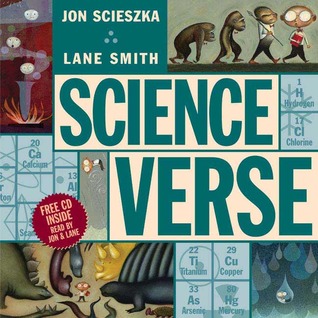
Science Verse by Jon Scieszka, illustrated by Lane Smith

Best Young Adult Fiction:


The Scorpio Races by Maggie Stiefvater

Best Short Story Collection: (I only read 3 and these 2 tied)


Heirlooms: Stories by Rachel Hall (this one has remained on my mind more than expected)


Fall of Poppies: Stories of Love and the Great War by Jessica Brockmole, Hazel Gaynor, Evangeline Holland, Marci Jefferson, Kate Kerrigan, Jennifer Robson, Heather Webb, Beatriz Williams, and Lauren Willig

Best Jane Austen Fiction: (this is a three-way tie)


A Moment Forever by Cat Gardiner


Darcy’s Hope: Beauty from Ashes by Ginger Monette


The Courtship of Edward Gardiner by Nicole Clarkston

Best Poetry: (another tie)


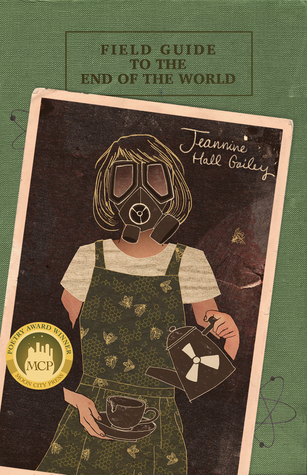
Field Guide to the End of the World by Jeannine Hall Gailey


Obliterations by Heather Aimee O’Neill and Jessica Piazza

Best Fiction: (a three-way tie)


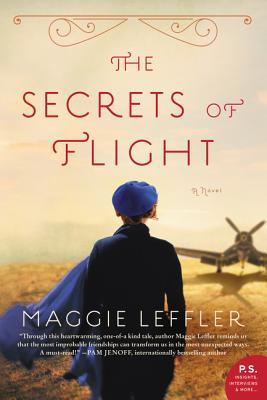
The Secrets of Flight by Maggie Leffler


My Last Continent by Midge Raymond


This is the Story of You by Beth Kephart

What books were your favorites this year?

Darcy’s Christmas Wish by Penelope Swan

Source: Purchased
ebook, 216 pgs.
I am an Amazon Affiliate

Darcy’s Christmas Wish by Penelope Swan imagine an early meeting between Lizzy and Darcy as children when Darcy takes a tumble into a frozen pond after disobeying his aunt Lady Catherine’s warning that the north side of Rosings is dangerous. Recovering from his near death experience and being told that the girl with deep brown eyes was not real, he makes a Christmas wish while stirring plum pudding in the kitchen at Rosings. If only he had known that he would have to wait fifteen years for it to come true.

“‘No, Mother, I did not imagine her! I am sure she was there. She helped me. Had she not been there, I would have surely drowned–‘”

“Those eyes. He could still see them. Bright and intelligent, fringed by beautiful dark lashes. He was sure he had not imagined those eyes…”

Lizzy has come to Hunsford parsonage to spend time with Mrs. Collins before joining her family in London for Christmas. She’s enjoying her time with her friend, but she’s also finding companionable moments with the insufferable Mr. Darcy. Swan has created a more outspoken Lizzy, which defies societal convention, but this characterization is also more open to seeing things that are more subtle, particularly where Darcy is concerned. The relationship between Darcy and Lizzy in Swan’s variation evolves gradually, and it is sweet to see their awkwardness as they navigate the new calm between them.

Darcy’s Christmas Wish by Penelope Swan is a delightful Christmas story that shows how societal norms can be circumvented for justice’s sake and to allow two people — one of higher class and one of a lower class — find one other and share mutual respect and even love.

RATING: Quatrain

About the Author:

Penelope Swan is the pen name of author, H.Y. Hanna, who writes bestselling British cozy mysteries and romantic mysteries under her other name. She has been an avid Jane Austen fan since her teens and is delighted that she can now live out her Regency fantasies through her books.