Quantcast

Darcy’s Hope at Donwell Abbey by Ginger Monette

Source: the author
Paperback, 413 pgs.
I am an Amazon Affiliate

Darcy’s Hope at Donwell Abbey by Ginger Monette is the second book in a series of Great War Romance novels, and while you could read this as a stand alone novel, I wouldn’t recommend missing the two-book experience. Set during WWI, Monette captures the uncertainty of war-time romance with Pride & Prejudice‘s most beloved characters. If Elizabeth Bennet and Fitzwilliam Darcy were able to overcome their preconceived notions about one another in a shorter period of time, but become separated by the war, would their love endure the miles and trauma of war?

With all of Darcy’s resources would he be able to find Elizabeth if she disappeared, even as he is stuck at the front in battle? Could spies and Germans keep them apart with their war efforts, or would love and chance find a way to keep them close? Without giving away the details of this book, readers will find that the hardened Darcy of book one has been softened by his love for Elizabeth. But in this one, Elizabeth is wary of discovery as she strives to hide and protect her loved ones from reputational harm.

Monette’s settings and characterizations are in line with the time period, when women were gaining ground in male-dominated roles and expectations of marriage as the only option beginning to wane. The tension between Lizzy and Darcy has dissipated somewhat as they face new challenges outside their control, and they must not only learn to make their own decisions but also bear in mind how those decisions could impact the ones that they love. Darcy’s Hope at Donwell Abbey by Ginger Monette is a solid follow-up to the first book, and I loved every minute of it. She has a strong sense of historical facts and the original Austen characters. This is by far one of my favorite P&P re-imaginings. Don’t hesitate, get books 1 and 2.

RATING: Cinquain

Other Reviews:

Darcy’s Hope: Beauty from Ashes

About the Author:

The teacher always learns the most. And in homeschooling her children, Ginger Monette learned all the history she missed in school. Now she’s hooked—on writing and World War I. When not writing, Ginger enjoys dancing on the treadmill, watching period dramas, public speaking, and reading—a full-length novel every Sunday afternoon.

Her WW1 flash fiction piece, Flanders Field of Grey, won Charlotte Mecklenburg Library’s 2015 Picture This grand prize.

Ginger lives in Charlotte, North Carolina, where she happily resides with her husband, three teenagers, and two loyal dogs.

Visit Ginger Monette on Facebook, on GoodReads, or on her website. Purchase the book here.

Giveaway- – Downton Abbey Tea!

Three lucky winners will each receive a tin of Downton Abbey Tea!
(Open to US residents only)

Mailbox Monday #413

Mailbox Monday, created by Marcia at To Be Continued, formerly The Printed Page, has a permanent home at its own blog.

To check out what everyone has received over the last week, visit the blog and check out the links. Leave yours too.

Also, each week, Leslie, Martha, and I will share the Books that Caught Our Eye from everyone’s weekly links.

Here’s what I received:

The Complete Persepolis by Marjane Satrapi, which I purchased for Book Club reading.

Persepolis is the story of Satrapi’s unforgettable childhood and coming of age within a large and loving family in Tehran during the Islamic Revolution; of the contradictions between private life and public life in a country plagued by political upheaval; of her high school years in Vienna facing the trials of adolescence far from her family; of her homecoming–both sweet and terrible; and, finally, of her self-imposed exile from her beloved homeland. It is the chronicle of a girlhood and adolescence at once outrageous and familiar, a young life entwined with the history of her country yet filled with the universal trials and joys of growing up.

Edgy, searingly observant, and candid, often heartbreaking but threaded throughout with raw humor and hard-earned wisdom–Persepolis is a stunning work from one of the most highly regarded, singularly talented graphic artists at work today.

The Night the Lights Went Out by Karen White, which is my first GoodReads giveaway win! This one comes out in April 2017.

Recently divorced, Merilee Talbot Dunlap moves with her two children to the Atlanta suburb of Sweet Apple, Georgia. It s not her first time starting over, but her efforts at a new beginning aren t helped by an anonymous local blog that dishes about the scandalous events that caused her marriage to fail.

Merilee finds some measure of peace in the cottage she is renting from town matriarch Sugar Prescott. Though stubborn and irascible, Sugar sees something of herself in Merilee something that allows her to open up about her own colorful past.

Sugar s stories give Merilee a different perspective on the town and its wealthy school moms in their tennis whites and shiny SUVs, and even on her new friendship with Heather Blackford. Merilee is charmed by the glamorous young mother s seemingly perfect life and finds herself drawn into Heather’s world.

In a town like Sweet Apple, where sins and secrets are as likely to be found behind the walls of gated mansions as in the dark woods surrounding Merilee s house, appearance is everything. But just how dangerous that deception can be will shock all three women….”

The Poetry of Weldon Kees: Vanishing as Presence by John T. Irwin for review in May.

Weldon Kees is one of those fascinating people you’ve likely never heard of. What is most captivating about Kees is that he disappeared without a trace on July 18, 1955. Police found his 1954 Plymouth Savoy abandoned on the north side of the Golden Gate Bridge one day later. The keys were still in the ignition. Though Kees had alluded days prior to picking up and moving to Mexico, none of his poetry, art, or criticism has since surfaced either north or south of the Rio Grande.

Kees’s apparent suicide has led critics to compare him to another American modernist poet who committed suicide two decades earlier–Hart Crane. In comparison to Crane, Kees is certainly now a more obscure figure. John T. Irwin, however, is not content to allow Kees to fall out of the twentieth-century literary canon. In The Poetry of Weldon Kees, Irwin ties together elements of biography and literary criticism, spurring renewed interest in Kees as both an individual and as a poet.

Irwin acts the part of literary detective, following clues left behind by the poet to make sense of Kees’s fascination with death, disappearance, and the interpretation of an artist’s work. Arguing that Kees’s apparent suicide was a carefully-plotted final aesthetic act, Irwin uses the poet’s death as a lens through which to detect and interpret the structures, motifs, and images throughout his poems–as the author intended. The first rigorous literary engagement with Weldon Kees’s poetry, this book is an astonishing reassessment of one of the twentieth century’s most gifted writers.

The Carbon Code: How You Can Become a Climate Change Hero by Brett Favaro for review in April.

Favaro’s Carbon Code of Conduct is based on the four R’s: Reduce, Replace, Refine, and Rehabilitate. After outlining the scientific basics of climate change and explaining the logic of the code he prescribes, the author describes carbon-friendly technologies and behaviors we can adopt in our daily lives. However, he acknowledges that individual action, while vital, is insufficient. To achieve global sustainability, he insists that we must make the fight against climate change “go viral” through conspicuous conservation.

The Carbon Code is a tool of empowerment. People don’t need to be climate change experts to be part of the solution! In this book, Brett Favaro shows you how to take ownership of your carbon footprint and adopt a lifestyle of conspicuous conservation that will spur governments and corporations to do the same. Climate-friendly action is the best decision on every dimension–economics, health and well-being, and social justice. Saving the planet is, after all, about saving ourselves. The Carbon Code provides a framework to do this, and helps you to become a hero in the fight against climate change.

What did you receive?

Breakup/Breakdown by Charles Jensen

Source: Purchased
Paperback, 42 pgs.
I am an Amazon Affiliate

Breakup/Breakdown by Charles Jensen is a slim and powerful chapbook of poems that not only examines the emotional side of breaking up but all of its practicalities in a way that’s fresh and modern.

In the opening poem, “How to Leave Things Behind Without Even Trying”, the speaker talks about leaving his laptop at an airport and is aghast at how this could be accomplished given its significance in his life. This is then juxtaposed with his boyfriend’s exit from his life and the way in which the apartment was cleaned and staged as if he had never been there at all. The speaker struggles with both losses, trying to interpret their meaning in an effort to understand their absence, but he rightly says, “you wait to learn//anything about what was lost./You wait for the phone call,//which only comes if you’ll be/happily reunited.//” (pg. 8)

There are several poems in which the speaker is taking selfies with beloved literary and pop culture icons from Miss Havisham in Great Expectations to Molly Jensen from Ghost. In each of these poems, Jensen unravels the inner mysteries of loss felt by each of these characters. Havisham’s sadness over lost love is really her belief in true love and that caged birds set free will return but, in the meantime, she’s left wondering who she is without that caged bird to love and protect. The loss of an affair leads Alex in Fatal Attraction to extremes, but even if you don’t go to those extremes after a break-up, you can certainly understand where they come from.

Jensen’s couplets are powerfully crafted so that readers will feel each gut-wrenching loss, like “Everything we’d placed//inside those years spilled out/like blood escaping from a vein.//” (pg. 13, “Disruption”) But lest you believe this collection is all sadness and woe, Jensen has a sense of humor about it all, which one might expect comes with a bit of distance from the actual breakup events.

From “On the Night Gays Across America Celebrate the Marriage Equality Ruling, You and I Divide Our Possessions” (pg. 17)

We shake loose our lives like a braid
untwirling at the end of a long day.

I want everything and nothing
that belongs to you, that holds

a memory of you like an urn
full of ash, the kind of thing

you never open but have to
keep on hand because it means

Yes, I’m leaving you hanging with the above quote from this poem, but it’s one I don’t want to ruin for you. What the selected quote shows you is the humor and the lightness that Jensen brings to his couplets even in the midst of a breakup moment. There’s something to be said about bringing a bit of levity to loss. Breakup/Breakdown by Charles Jensen is a commentary on the modern breakup and the swiftness of it, which can leave each of us stunned and empty. But what it teaches is resilience and growth, a move toward letting go, even if not complete. In order for new things to begin, the old must be broken down, and Jensen does that here with aplomb.

RATING: Cinquain

About the Author:

Charles Jensen is the author of The Nanopedia Quick-Reference Pocket Lexicon of Contemporary American Culture (2012 MiPOESIAS Chapbook Series) and The First Risk, which was published in 2009 by Lethe Press and was a finalist for the 2010 Lambda Literary Award. His previous chapbooks include Living Things, which won the 2006 Frank O’Hara Chapbook Award, and The Strange Case of Maribel Dixon (New Michigan Press, 2007). A past recipient of an Artist’s Project Grant from the Arizona Commission on the Arts, his poetry has appeared in Bloom, Columbia Poetry Review, Copper Nickel, Field, The Journal, New England Review, and Prairie Schooner. He holds an MFA in poetry from Arizona State University, where he also did graduate work in nonprofit leadership and management. He is the founding editor of the online poetry magazine LOCUSPOINT, which explores creative work on a city-by-city basis, and is active in the national arts community by serving on the Emerging Leader Council of Americans for the Arts. He lives in Los Angeles.

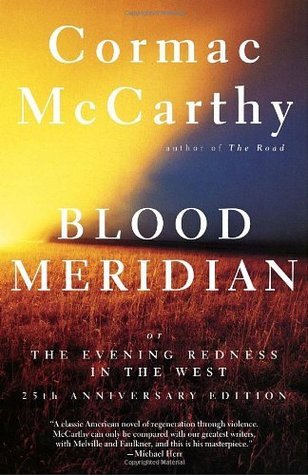
Blood Meridian, or the Evening Redness in the West by Cormac McCarthy

Source: Public Library
Paperback, 337 pgs.
I am an Amazon Affiliate

Blood Meridian, or the Evening Redness in the West by Cormac McCarthy, which was the January book club selection, is based on historical events along the Texas-Mexico border in the 1850s involving the Glanton Gang that scalped many, engaged in mercenary acts, and sought their fortunes. Led by John Glanton, who fought for Texas independence during the Mexican-American War, the gang murdered Indians and Mexicans alike. Readers should expect this book to be brutal and violent. There is no way around it with this subject matter, and much of the violence has little to no purpose other than to garner wealth and property for the gang members.

“The judge watched him. He began to point out various men in the room and to ask if these men were here for a good time or if inded they knew why they were here at all.

Everybody dont have to have a reason to be someplace.

That’s so, said the judge. They do not have to have a reason. But order is not set aside because of their indifference.” (pg. 341-2)

The kid is the main protagonist here, and he stumbles into the gang after wandering for some time. Readers will not view him as a hero, and in many ways he is an anti-hero because he is morally ambiguous like many characters in westerns. The focus on the bloodshed and the meanderings of this gang through the desert and mountains is a surface reading of the novel, the central character and theme is related to “God”, “destiny,” and the order of the universe, which the judge clearly says encompasses more than can be understood by the human mind. Some mysteries are perpetual, but he reminds us to never forget that there is an order and a reason behind even the most chaotic and mundane events.

Like the kid, the readers is forced into a world where violence is the norm and it just is, without any moments of morality or kindness present. In this world, how can the kid strive to understand a wider picture, learn to review his role in that violence, and come to any other conclusion than human kind is animal-like in its brutality?

While there are allusions to Christian traditions, such as the burning bush, there seems to be a subtext about relying too heavily on the stories/tales of “leaders” — whether they are religious or otherwise — because they oftentimes are lies (like the early tales told by the judge). The judge even keeps a ledger, which makes readers reflect on who is keeping that ledger and why? Is it God, Satan, or someone else, and does it really matter who? Moreover, the final scenes of the book call to mind Shiva’s Tandava, a violent and dangerous dance related to the destruction of the world in order for creation to flourish. It seems McCarthy is using a mesh of myths and religions to bring his points across about the violent birth of America.

The narrative is distant on purpose, but following the kid throughout gets difficult, and the number of bloody events could have been pared down significantly to demonstrate the points the author wanted to bring across. The strongest character in the novel is not the antihero but the judge, his antagonist. Blood Meridian, or the Evening Redness in the West by Cormac McCarthy could have been a much stronger novel with some editing.

Book Club Discussion:

As I was more than halfway through this one, I attended the discussion and planned to finish it after the meeting. Many liked the book well enough, though some said the narrative had their eyes/brains glazing over if read too quickly. Others found a bunch of theories to postulate on, including one where the Judge Holden appeared to be Satan or Satan-like because he was very good at a great many things.

Upon further discussion and review, it seems as though McCarthy took a lot of his events from those in My Confession by Samuel Chamberlain, who claimed to be a member of the Glanton Gang. Some scholars have said that the Kid in McCarthy’s book could be Chamberlain. Judge Holden is supposed to be a historical figure, but the only references to him are in Chamberlain’s book.

RATING: Tercet

Other Reviews:

The Road

About the Author:

Cormac McCarthy is an American novelist and playwright. He has written ten novels in the Southern Gothic, western, and post-apocalyptic genres and has also written plays and screenplays. He received the Pulitzer Prize in 2007 for The Road, and his 2005 novel No Country for Old Men was adapted as a 2007 film of the same name, which won four Academy Awards, including Best Picture.

His earlier Blood Meridian (1985) was among Time Magazine’s poll of 100 best English-language books published between 1925 and 2005 and he placed joint runner-up for a similar title in a poll taken in 2006 by The New York Times of the best American fiction published in the last 25 years. Literary critic Harold Bloom named him as one of the four major American novelists of his time, along with Thomas Pynchon, Don DeLillo, and Philip Roth. He is frequently compared by modern reviewers to William Faulkner.

In 2009, Cormac McCarthy won the PEN/Saul Bellow Award, a lifetime achievement award given by the PEN American Center.

Impertinent Strangers by P.O. Dixon (audio)

Source: the author
Audiobook, 5+ hrs.
I am an Amazon Affiliate

Impertinent Strangers by P.O. Dixon, narrated by Pearl Hewitt, revises the time line of Jane Austen’s Pride & Prejudice quite a bit. Elizabeth Bennet is visiting Charlotte Collins at Hunsford Parsonage when she meets Mr. Darcy, and both view the other’s behavior as impertinent. Through quick assessments, Darcy and Miss Bennet have decided the other is not worthy of notice, and Elizabeth takes particular dislike to being told to warn her family against Mr. Wickham, whom she still holds in high esteem even though he abandoned her in pursuit of Mary King. Despite overhearing Darcy speak of her as merely “tolerable”, Elizabeth vows to be civil to him. Over the course of time, both begin to admire the other, but how can they bridge the gap that their earlier perceptions have wrought?

Hewitt is a fantastic narrator for this type of fiction. She does an excellent job voicing different characters so that they do not get confused by the reader, and her accent is spot on. Dixon’s story is surprising in how the original timeline is played with, which made the story enjoyable. However, the only drawback here is that the story seems rushed at the end and the description of the romance between Darcy and Elizabeth could have been fleshed out more with body language cues, etc., particularly in mixed and restricted company.

However, these do not detract from the overall story in which Darcy and Elizabeth must come together, learn to see past their own per-conceived notions, and dare to dream for a marriage that society would deem inappropriate at best. Impertinent Strangers by P.O. Dixon, narrated by Pearl Hewitt, is lovely and unique, especially as Darcy and Elizabeth find themselves able to get to know one another in unusual circumstances — on long walks from Rosing to Hunsford and in the east library at Rosings.

RATING: Quatrain

About the Author:

P.O. Dixon has authored several Jane Austen “Pride and Prejudice” adaptations, all written with one overriding purpose in mind—falling in love with Darcy and Elizabeth. Sometimes provocative, but always entertaining, her stories have been read, commented on, and thoroughly enjoyed by thousands of readers worldwide.

Mailbox Monday #412

Mailbox Monday, created by Marcia at To Be Continued, formerly The Printed Page, has a permanent home at its own blog.

To check out what everyone has received over the last week, visit the blog and check out the links. Leave yours too.

Also, each week, Leslie, Martha, and I will share the Books that Caught Our Eye from everyone’s weekly links.

Here’s what I received:

50 States, 5,000 Ideas: Where to Go, When to Go, What to See, What to Do from National Geographic by Joe Yogerst for a TLC Book Tour.

This richly illustrated book from the travel experts at National Geographic showcases the best travel experiences in every state, from the obvious to the unexpected. Sites include national parks, beaches, hotels, Civil War battlefields, dude ranches, out-of-the-way museums, and more. You’ll discover the world’s longest yard sale in Tennessee, swamp tours in Louisiana, dinosaur trails in Colorado, America’s oldest street in NYC, and the best spot to watch for sea otters on the central California coast. Each entry provides detailed travel information as well as fascinating facts about each state that will help fuel your wanderlust and ensure the best vacation possible. In addition to 50 states in the U.S., the book includes a section on the Canadian provinces and territories.

An Unwavering Trust by L.L. Diamond, which I purchased.

Two strangers with no one to turn to but each other…

Fitzwilliam Darcy is in a difficult situation. His father is pressing him to propose marriage to the last woman in the world he would wish to take as his wife. With a fortnight to announce his betrothal, he makes the acquaintance of Elizabeth Bennet, who is in a predicament of her own.

Could Darcy be willing to consider Elizabeth as a solution to his problem and to hers? And can Elizabeth ascertain enough of Darcy’s character to trust him upon nothing but a first impression?

Contains scenes with adult content.

The Abominable Mr. Darcy: A Pride and Prejudice Variation by J Dawn King, which was a Kindle freebie.

Miss Elizabeth Bennet’s eyes are instantly drawn towards a handsome, mysterious guest who arrives at the Meryton Assembly with the Bingley party. The gentleman destroys her illusions by delivering an insult that turns him from Mr. Divinely Attractive to the Abominable Mr. Darcy.

While Elizabeth sets in motion her strategy for retaliation, Darcy plans to win the campaign being waged in the genteel drawing rooms of Hertfordshire. As more players from Jane Austen’s beloved cast of characters enter the fray, complications arise–some with irreversible consequences. Can a truce be called before their hearts become casualties as well? How many times can two people go from enemies to friends and back again before it’s too late?

The Last Casualty by Andrew Leatham, which was a Kindle freebie.

Belgium, 1917.

Wilf joined up at seventeen, wanting to do his bit.

But now he is broken by the death and human agony surrounding him. The smell of the rotting corpses, the vermin gnawing on the corpses in No Mans Land, has all been too much.

After a brief period of R and R, he knows he cannot return to the line, but off he is sent. When his courage falters, he’s charged with cowardice, court martialled, and shot at dawn.

Lancashire England, 1995.

Joanne Neally’s grandmother has died. While cleaning out her house, she finds the telegram that informed her family of the death of her great grandfather, simple and unpunctuated.

Regret to inform you Private 792163 Isherwood Wilfred 3rd Batt Pennine Fusiliers died of gunshot wounds Ypres August 22 1917

Joanne is moved to tears by the telegram, but it is the diary she finds next that will change her life forever, for Wilf Isherwood detailed his experiences at Passchendaele, one of the fiercest and bloodiest battles of the Great War. A battle that cost the lives of half a million men, and changed the landscape of Belgium forever.

Rich with detail of the life of a soldier during the Great War, the Last Casualty is an ode to a time that forever changed the world.

A Perpetual Estrangement: Jane Austen’s Persuasion Reimagined by Alice B. Ryder, Hilary Johnson, another Kindle freebie.

Anne has two wonderful friends and her own London bookshop, but she isn’t happy. Ten years ago she was put in an impossible position and had to let go of the only man she ever loved, and she’s regretted it ever since. She had to fight her way out of heartbreak and despair just to get this far. Now Freddie is back, and the wound is ripped open.

Freddie once loved Anne deeply, and she had even agreed to join him in his travels abroad. But her family and self-doubt made her back out, and to this day he still feels betrayed. Anne believes he’s determined to remind her of that every day, and it’s all the harder seeing the man he has become since then, stronger in spirit and even more attractive than before.

Whenever Anne is around him now, she sees only his disdain and bitterness. The only way for both of them to find happiness is to finally get over each other. Freddie seems to be trying; but Anne has tried before, and failed. What she fears most is falling back into the agony she felt all those years ago – a dark place she can’t bear to think about.

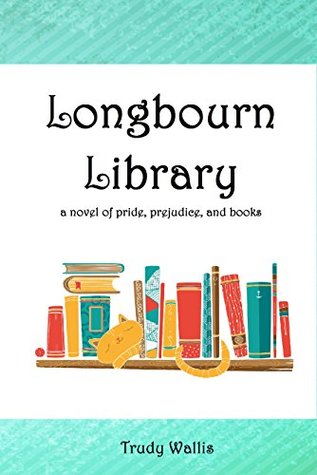
Longbourn Library: A Novel of Pride, Prejudice, and Books by Trudy Wallis, a Kindle freebie.

Liz always believed working as a librarian in Hertford, Idaho would give her opportunities to meet intelligent men. Lately, however, she is starting to think her theory was wrong. She finds herself hiding from Collin, that slimy blind date she wishes she could forget. Charlie is a nice fellow, but he is clearly taken with Jane. Then there is that Californian “aspiring writer” named Darcy. What a snob!

What are chances any man could answer the wishes of Liz’s heart? Is being fond of reading the first step toward falling in love?

GI Brides by Grace Livingston Hill, Amazon Kindle freebie.

Classic Grace Livingston Hill storytelling shines in three romances she wrote during the Second World War. In All Through the Night, Dale is grieving her grandmother and overrun by greedy relatives, but the love of a soldier gives her hope. In More than Conqueror, Charlie finally confesses his love for Bonnie just as he is leaving on a deadly mission and is surprised by her acceptance. In Through These Fires, Lexie is consumed by loneliness when an unexpected admirer sends her a letter from the warfront. Will letters across the sea give these men and women something to live for?

What did you receive?

Guest Post & Giveaway: The Power of Song by Anngela Schroeder

A Lie Universally Hidden by Anngela Schroeder envisions an Elizabeth Bennet and Fitzwilliam Darcy on parallel courses to marry out of duty and for money. Readers will wonder how these characters could ever come together for their happily ever after as Jane Austen prepared for them. I’m really looking forward to reading this one, and I wanted to share with you a little about the book and a guest post from Anngela Schroeder. And, there’s a giveaway!

Book Synopsis:

Fitzwilliam Darcy was raised to never stray from the path set before him: ensure the continued prosperity of his estate, Pemberley, protect and educate his sister to become an accomplished woman, and marry the woman his mother chose for him—his cousin Anne de Bourgh. With a letter bearing his late mother’s signature, Darcy presumes his fate is sealed and prepares to wed one he does not love. However, his destiny begins to unravel when he glimpses a pair of fine eyes on a quiet, country road.

Elizabeth Bennet is the second daughter of a respectable though insignificant gentleman. She is flattered to have captured the attention of a local squire, a childhood friend, and everyone believes her path is secure—until a handsome, rich gentleman arrives at a neighboring estate. Happenstance begets the unlikely pair together, bridging a forbidden love long past a mere friendship.

In A Lie Universally Hidden, two of literature’s most beloved romance characters are destined to marry for fortune and obligation rather than love. How will Darcy and Elizabeth fulfill their true destiny under such circumstances? Shall honor, decorum, prudence—nay, a signed letter from the grave—forbid it?

Please welcome Anngela Schroeder — who was recently interviewed on Good Day Sacramento — as she talks about the power of song in her new novel, A Lie Universally Hidden.

Serena, I’m so excited to join you and your readers today at Savvy Verse & Wit. My little book has been on a whirlwind journey these last two weeks, and I am grateful for such a hospitable stop to be its last.

I thought long and hard about what to pen for today, and decided I was going to focus on one aspect of my story which to some may be insignificant, yet it is actually a thread tying two characters together. These characters will never meet, but the song, “The Rose of Tralee,” sung by their lips, has a similar effect on Darcy.

We first hear the song in Chapter 1, when Lady Anne Darcy, on her deathbed, is singing it to her beloved son, Fitzwilliam. The words seem innocuous enough when we hear the lyrics from the first verse: “The pale moon was rising above the green mountain, the sun was declining beneath the blue sea, when I strayed with my love to the pure crystal fountain, that stands in the beautiful Vale of Tralee…” The song continues on about two young lovers who are destined to be apart and how the young man longs for Mary, his Rose of Tralee.

I took liberties by using this song in the novel, the main one that it was not written until roughly 1843, thirty years after my story takes place. However, once you hear the history of the piece, you’ll understand my need to incorporate it in my book.

Written by Irishman William Mulchinock, ‘The Rose of Tralee’ is an elegy of the life he briefly had, but then it was snatched away from him. Having been born into wealth, he was visiting his family’s estate, when he went up to the nursery to see his nieces, and he met the new nursemaid, Mary O’Keefe. He fell in love immediately with her. Unfortunately, his family objected to his feelings, and things became even more complicated when circumstances came about in his life and he was accused of murder. (I really couldn’t make this story up!) He was sent to India to avoid prosecution, and stayed there for six years. Upon his return to Ireland, he discovered that his love had died only days before his return. He then married and moved to America, before abandoning his wife and two children to return to his homeland and die alone.

In my novel, Lady Anne sung it as an old Irish folk melody, and that is how William had always recognized it. But, when he heard Elizabeth sing it in the emptiness of Ashby Park, the meaning became clear to him. It was not longer the sweet ballad of his youth. It now had even more significant meaning to him. Here she was before him; his own Rose of Tralee, Elizabeth Bennet: she who he loved, but could never have. They were destined to be apart because of their own social standings, as well as preexisting circumstances beyond, what they believed to be, their control.

The song itself also speaks of the depths of Darcy’s love: that it was not a superficial kind of feeling. “Yet 'twas not her beauty alone that won me; oh no, 'twas the truth in her eyes ever dawning, that made me love Mary the Rose of Tralee.” A pair of fine eyes, perhaps? Darcy’s love also was not based solely on Elizabeth’s physical appearance. We know that she had more accomplishments to recommend herself, yet painting tables and netting purses were things that were of little consequence to him. Darcy wanted a woman of substance, and that is what he found in Elizabeth Bennet, the one woman who he felt spoke to him like no one else, save his mother, the first love of all little boys.

I sprinkled this song throughout the story, always trying to connect Elizabeth and Darcy with Lady Anne, in an attempt to wreak havoc on Darcy’s understanding of himself and his mother. Whenever he thought things were under control, ­ BAM! There was the song, throwing off his equilibrium.

I do hope you have enjoyed this look into this meaningful aspect of my story, and I hope it helps you understand Darcy’s struggles a wee bit more.

About the Author:

She has a degree in English with a concentration in British Literature and a Masters in Education. She loves to travel, bake, and watch college football with her husband of 16 years and 3 rambunctious sons. She lives in California where Anngela dreams of Disney adventures and trips across the pond. Follow her on Facebook, Twitter, GoodReads, and on Amazon.

Giveaway:

Anngela is giving away two autographed hard copies (US mailing addresses only), 2 kindle versions (Open to international winners), an autographed copy of Then Comes Winter (US mailing address only) and an autographed 5×7 of the A Lie Universally Hidden book cover.

a Rafflecopter giveaway

Good luck!

Transforming the Virtual Poetry Circle

It has been a joy to share poems with everybody each week and to have discussions about them. The Virtual Poetry Circle has been a staple here on the blog for many years, but I’ve been looking for ways to change it and incorporate greater audience participation.

To that end, I’m no longer going to showcase work found across the web from published poets.

Instead, I want to put out a call to readers and their friends who write their own poems.

I would love for anyone interested to submit a poem about resistance (broad term and doesn’t have to be about the current administration, etc.) for posting on Saturday, Feb. 4. Send 1 poem per person to savvyverseandwit AT gmail [dot] com by Wednesday, Feb. 1.

Include a short 50 word bio with any social media links you want included.

I will choose one poem to feature. Happy writing.

The Princess Diarist by Carrie Fisher (audio)

Source: Purchased
Audible: 5+hrs.
I am an Amazon Affiliate

The Princess Diarist by Carrie Fisher, read by herself and her daughter Billie Lourd, is a memoir about her time during the filming of the first Star Wars movie and her rise to fame.  Based upon the diaries she found of her time on the set and during her tryst with her co-star (the Nerf herder), Fisher looks back on her teen self, who dropped out of drama school in London to be in the film, and how her time on the set revealed her insecurities.

Of the three memoirs I’ve read by Fisher, this is the best told by her with the fewest digressions and haphazard comments.  Like the previous two, there is a rehashing of information about her parents and their celebrity, etc., but it is not as bothersome as it may be reading the other two because the focus here is more on Fisher herself and her own experiences as a young actress on a movie set.  She was clearly young, and despite her celebrity family, had very little set experience and it showed.

Including her actual diary entries read by her daughter and Fisher’s recounting of her fan experiences, the memoir is funnier because it is closer to her real life experiences and less like a comedic sketch she created from her experiences.  The Princess Diarist by Carrie Fisher was fun, introspective, and endearing.  Readers will love that she keeps some things private and that she can find connections with complete strangers in autograph lines.  She was a woman who had deep empathy for others, which likely stems from her family and life experiences after her iconic performance.

RATING: Cinquain

Other Reviews:

About the Author:

Carrie Fisher (1956 – 2016) was an American actress, screenwriter and novelist, most famous for her portrayal of Princess Leia in the original Star Wars trilogy.

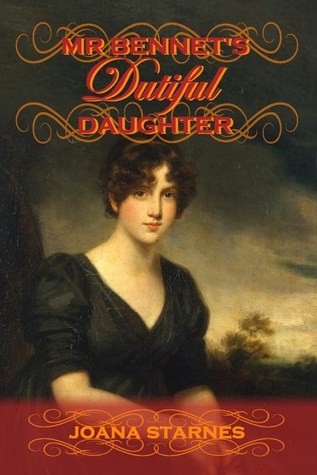
Mr. Bennet’s Dutiful Daughter by Joana Starnes

Source: the author
Kindle, 342 pgs.
I am an Amazon Affiliate

Mr. Bennet’s Dutiful Daughter by Joana Starnes re-imagines Pride & Prejudice in a way that places the Bennet family not in imagined, future peril but in imminent financial peril when Mr. Bennet is suddenly struck down by illness and unmoving.  Elizabeth is struck by the news, as her father is her dearest connection besides Jane.  However, as the circumstances of his illness are made known to Mr. Darcy without her knowledge, Elizabeth must weigh not only her father’s illness and recovery but also her own ability to save her family from being thrown out by Mr. Collins should the worst happen.

“It had been rather satisfying to see her cousin quailing before Mr. Darcy like the coward that he was.  Without a doubt, Mr. Darcy’s protection was worth something.”

Knowing that she has little choice, given the absence of Mr. Bingley from Netherfield, Elizabeth dutifully accepts the offer and hopes that her father will recover.  Elated as Darcy is, he has convinced himself wrongly about why she has accepted his hand — offered in the most unusual and less-than-flattering way.  As Elizabeth contends with her father’s care and her mother’s nerves, she has little time to contemplate the future, until it is too late.

“But you must be patient with predictable lapses.  For five years I have had to consult no will but my own.”

“The trouble without has very little power when there is peace and joy within.”

Starnes’ story is unique in that Elizabeth is forced into a marriage out of duty — a role reversal of sorts — and although she is grateful for his protection, she sees Darcy as a virtual unknown once she begins to get glimpses of his private nature.  He becomes not stern and proud, but mercurial — guarded one moment and open the next.  As she begins to get to know his true nature, her sense of duty to her family fades away, but when trouble rises again, can she convince Darcy that her heart is true to only him and their life together?

Mr. Bennet’s Dutiful Daughter by Joana Starnes is a roller coaster ride of emotion, and when Darcy and Elizabeth try your patience, you’ll still be cheering them on.  You want their happily ever after more than ever with all the obstacles and trauma they have endured.

RATING: Quatrain

About the Author:

Joana Starnes lives in the south of England with her family. A medical graduate, in more recent years she has developed an unrelated but enduring fascination with Georgian Britain in general and the works of Jane Austen in particular, as well as with the remarkable and flamboyant set of people who have given the Regency Period its charm and sparkle.

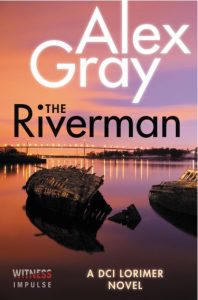
Spotlight & Giveaway: The Riverman by Alex Gray

Synopsis:

Fans of atmospheric police procedurals will love watching Glasgow vividly come to life with the shocking twists and turns that have made Alex Gray an international bestseller

When a dead body is fished out of Glasgow’s River Clyde the morning after an office celebration, it looks like a case of accidental death. But an anonymous telephone call and a forensic toxicology test give Detective Chief Inspector William Lorimer reason to think otherwise. Probing deeper into the life and business of the deceased accountant, a seemingly upright member of the community, Lorimer finds only more unanswered questions.

What is the secret his widow seems to be concealing? Was the international accounting firm facing financial difficulties? What has become of the dead man’s protégé who has disappeared in New York? And when another employee is found dead in her riverside flat these questions become much more disturbing. Lorimer must cope not only with deceptions from the firm, but also with suspicions from those far closer to home . . .

Genre: Police Procedurals
Published by: Witness Impulse
Publication Date: January 10th 2017
Number of Pages: 368
ISBN: 0062659138 (ISBN13: 9780062659132)
Series: A DCI Lorimer Novel, #4
Purchase Links: Amazon ? | Barnes & Noble ? | Goodreads ?

Excerpt | The Riverman by Alex Gray

PROLOGUE
April

THE RIVERMAN

The riverman knew all about the Clyde. Its tides and currents were part of his heritage. His father and others before him had launched countless small craft from the banks of the river in response to a cry for help. Nowadays that cry came in the form of a klaxon that could waken him from sleep, the mobile phone ringing with information about where and when. It wouldn’t be the first time that he’d pulled someone from the icy waters with only a hasty oilskin over his pajamas.

This morning, at least, he’d been up and doing when the call came. The body was over by Finnieston, past the weir, so he’d had to drive over the river towing a boat behind him on the trailer. He was always ready. That was what this job was all about: prompt and speedy response in the hope that some poor sod’s life could be saved. And he’d saved hundreds over the years, desperate people who were trying to make up their mind to jump off one of the many bridges that spanned the Clyde or those who had made that leap and been saved before the waters filled their lungs.

George Parsonage had been brought up to respect his river. Once it had been the artery of a great beating heart, traffic thronging its banks, masts thick as brush-wood. The tobacco trade with Virginia had made Glasgow flourish all right, with the preaching of com-merce and the praising of a New World that was ripe for plucking. The names of some city streets still recalled those far-off days. Even in his own memory, the Clyde had been a byword for ships. As a wee boy, George had been taken to the launch of some of the finer products of Glasgow’s shipbuilding industry. But even then the river’s grandeur was fading. He’d listened to stories about the grey hulks that grew like monsters from the deep, sliding along the water, destined for battle, and about the cruise liners sporting red funnels that were cheered off their slipways, folk bursting with pride to be part of this city with its great river.

The romance and nostalgia had persisted for decades after the demise of shipbuilding and cross-river ferries.Books written about the Clyde’s heyday still found readers hankering after a time that was long past. The Glasgow Garden Festival in the eighties had prompted some to stage a revival along the river and more recently there had been a flurry of activity as the cranes returned to erect luxury flats and offices on either side of its banks. Still, there was little regular traffic upon its sluggish dark waters: a few oarsmen, a private passenger cruiser and the occasional police launch. Few saw what the river was churning up on a daily basis.

As he pushed the oars against the brown water, the riverman sent up a silent prayer for guidance. He’d seen many victims of despair and violence, and constantly reminded himself that each one was a person like himself with hopes, dreams and duties in different measure. If he could help, he would. That was what the Glasgow Humane Society existed for, after all. The sound of morning traffic roared above him as he made his way downstream. The speed of response was tempered by a need to row slowly and carefully once the body was near. Even the smallest of eddies could tip the body, filling the air pocket with water and sending it down and down to the bottom of the river. So, as George Parsonage approached the spot where the body floated,his oars dipped as lightly as seabirds’ wings, his eyes fixed on the shape that seemed no more than a dirty smudge against the embankment.

The riverman could hear voices above but his eyes never left the half-submerged body as the boat crept nearer and nearer. At last he let the boat drift, oars resting on the rowlocks as he finally drew alongside the river’s latest victim. George stood up slowly and bent over, letting the gunwales of the boat dip towards the water. Resting one foot on the edge, he hauled the body by its shoulders and in one clean movement brought it in. Huge ripples eddied away from the side as the boat rocked upright, its cargo safely aboard.

The victim was a middle-aged man. He’d clearly been in the water for some hours so there was no question of trying to revive him. The riverman turned the head this way and that, but there was no sign of a bullet hole or any wound that might indicate a sudden, violent death. George touched the sodden coat lightly. Its original camel colour was smeared and streaked with the river’s detritus, the velvet collar an oily black. Whoever he had been, his clothes showed signs of wealth. The pale face shone wet against the pearly pink light of morning. For an instant George had the impression that the man would sit up and grasp his hand, expressing his thanks for taking him out of the water, as so many had done before him. But today no words would be spoken.There would be only a silent communion between the two men, one dead and one living, before other hands came to examine the corpse.

George grasped the oars and pulled away from the embankment. Only then did he glance upwards, nodding briefly as he identified the men whose voices had sounded across the water. DCI Lorimer caught his eye and nodded back. Up above the banking a couple of uniformed officers stood looking down. Even as he began rowing away from the shore, the riverman noticed a smaller figure join the others. Dr. Rosie Fergusson had arrived.

‘Meet you at the Finnieston steps, George,’ Lorimer called out.

The riverman nodded briefly, pulling hard on the oars, taking his charge on its final journey down the Clyde.

Excerpt from The Riverman by Alex Gray. Copyright © 2017 by Alex Gray. Reproduced with permission from HarperCollins | WitnessImpulse. All rights reserved.

About the Author:

Alex Gray was born and educated in Glasgow. After studying English and Philosophy at the University of Strathclyde, she worked as a visiting officer for the Department of Health, a time she looks upon as postgraduate education since it proved a rich source of character studies. She then trained as a secondary school teacher of English.

Alex began writing professionally in 1993 and had immediate success with short stories, articles, and commissions for BBC radio programs. She has been awarded the Scottish Association of Writers’ Constable and Pitlochry trophies for her crime writing.

A regular on the Scottish bestseller lists, she is the author of thirteen DCI Lorimer novels. She is the co-founder of the international Scottish crime writing festival, Bloody Scotland, which had its inaugural year in 2012. Connect with Alex Gray on her Website ? & on Twitter ?.

Giveaway!

This is a rafflecopter giveaway hosted by Partners In Crime Virtual Book Tours for Alex Gray and William Morrow. There will be 3 US winners of one (1) PRINT copy of The Riverman by Alex Gray. The giveaway begins on January 9th and runs through February 23rd, 2017.

a Rafflecopter giveaway

February-March Read-a-Long: Ulysses by James Joyce

I’ve read a great many classics, but Joyce was an author I never read in college. I’m not sure if I just didn’t pick the right classes or my teachers shied away from him. I’m eager to get to my bucket list classics, and Ulysses was at the top of the list, just ahead of Joyce’s Dubliners.

Ti from Book Chatter and I are hosting a read-a-long for James Joyce’s Ulysses Feb. 1, 2017, to March 17, 2017.

This is a big boy at about 800 pages, but we’re going to read it in three parts and discuss via Twitter using #ulyssesRAL2017. We’d love for you to join us!

The second part is the longest, so you’ll have a longer period of time to read that section!

If you’ve read it before, we’d love to have you join the discussion too!

Here’s the informal schedule:

Discussion of part 1 on Feb. 10
Discussion of part 2 on March 10
Discussion of part 3 on March 17

Grab the button and join us Feb. 10 for part one on Twitter #ulyssesRAL2017

Sign-up so we know who to look for: