Quantcast

Six Sisters’ Stuff: Family Recipes, Fun Crafts, and Much More & 4×4 Dinner Giveaway/Challenge

Six Sisters’ Stuff:  Family Recipes, Fun Crafts, and So Much More! is a flexible paperback cookbook that not only includes gorgeous photos of entrees, appetizers, and desserts, but also a variety of crafts to keep your kids occupied and to dress up the table.  Camille, Kristen, Elyse, Stephanie, Lauren, and Kendra are biological sisters and know what it means to have a busy life, but they still make time for family dinners and this book includes 100 easy-to-follow recipes using ingredients commonly found in your pantry.

The full-color photos in this cookbook will make your mouth water even if you’ve just eaten dinner.  From the main meals to the slow cooker meals, these women have made cooking for a family incredibly easy and simple with these recipes.  There are salads, sides, and breads, plus dessert — oh, the dessert.  (I made one for book club, see photos and reaction below)  But this book is not only about the food and having family meals together, but it also is about spending time with family whether it’s on a road trip or inside on a rainy day (I’ll be testing these out in the coming weeks).

There are projects ranging from creating simple decorations like a snowman out of blocks and felt bows to more complex projects like bookshelves made out of pallets.  These projects are sure to occupy family members and make the house look more beautiful.  The sisters also offer advice on spring cleaning, which may seem like common sense but for a first time homeowner with a new kid the task can be overwhelming.  There also are healthy snack ideas, fun date ideas to keep the romance alive, and a weekly breakdown on how to build a 72-hour emergency kit for the entire family.

Six Sisters’ Stuff:  Family Recipes, Fun Crafts, and So Much More! is appealing to look at, create from, and learn.  It’s not only about cooking a healthy meal in a short amount of time with the ingredients on hand, but it’s also focused on ensuring that family time becomes a priority.  Readers will have no choice but to dig in and start creating.  Delicious family recipes ready to fill watering mouths and simple crafts to spruce up any busy home.

My baking experience with Mom’s Chocolate Marshmallow Brownies:

As is usual with me, I was pulled in a hundred different directions and had to improvise the recipe, though I do plan to make this recipe the way it is written at some point.  I wanted to make these for book club in February, but with little time, I turned to my favorite box brownie mix, Ghirardelli Dark Chocolate Brownie mix, which never fails me.  And I quickly found the brownie pan I chose would require me to use 2 boxes, which met the hubby had to run out and get a second box.

But then I made the Chocolate frosting from the recipe for on top of the marshmallows.  The recipe called for 2-3 cups of powdered sugar, but I found out quickly that 2 cups was too little because the frosting was soupy, so I had to make it 3 cups for the right consistency.  Once I got the frosting made, i spread it on top of the marshmallows (which I really didn’t need the whole bag of).

The pan must have still been a bit warm because the frosting melted a little too much over the marshmallows, making it an even gooier mess than I expected, but it didn’t seem to matter to the book club members who were eager to try it.  I just had to have the first piece, and one of the corners, since those are my favorite!  I took a close up of one piece to share with everyone.  YUM!

Six Sisters photoAbout the Six Sisters:

In February 2011, we started our blog SixSistersStuff.com. After years of living close to one another, we were being pulled in many different directions- one sister moved to the West coast, another sister followed her husband to medical school, one moved away to college, and another sister had just lost a baby. We needed each other now more than ever and we used our blog as a way to stay in touch.

Before we started blogging, we were constantly calling each other for recipe ideas, craft projects, and ways to keep our children entertained during those long winter days. The blog was the perfect way for us to share those ideas with each other and we were having so much fun doing it. We are all busy, whether it’s with our kids, jobs, school, husbands, community involvement, or something else eating up our time, so all the recipes and projects you will find on this blog are quick and easy! Our recipes are family favorites that use ingredients that can commonly be found in your pantry and our crafts and home decor projects can be made with little or no money. We don’t claim to be amazing chefs- we just know the importance of feeding your family a home-cooked meal and sitting down to eat it together.
 

This is my 12th book for the 2013 New Authors Challenge.


About the 4×4 Dinner Challenge:

4X4 dinner challenge

  • Pledging to accept the 4×4 Dinner Challenge means the family will eat together at least four times per week for four weeks.
  • Families are encouraged to register online, and they will receive meal tips, ideas for family activities, and helpful recipes to make meeting the challenge easy.

To win a copy of this colorful cook book, do the following:

  1. Like the Six Sister’s STUFF Facebook page and join the 4×4 Dinner Challenge
  2. Click the 4×4 Family dinner banner on the Website (on the right sidebar) and leave a comment joining the challenge.
  3. Come back here and leave a comment on this post about what you’d like to check out in Six Sisters’ Stuff.

Deadline to enter is March 10, 2013, at 11:59 PM EST.
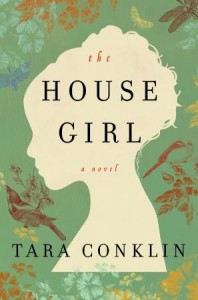
The House Girl by Tara Conklin

The House Girl by Tara Conklin is told mainly from two female points of view — Lina Sparrow and Josephine Bell — one is a white lawyer in New York City at a corporate law firm and the other is a slave/house girl in the southern Lynnhurst, Virginia.  Lina has lived with her artistic father most of her life as her artistic mother’s life was cut short.  Her story is compelling as she’s chosen the analytical and detached life of a lawyer over that of the emotional and less practical life of an artist.  Josephine, an equally if not more compelling story, is a slave on a tobacco farm caring for her dying mistress, who tries to sketch and paint in her upstairs studio.

“Mister hit Josephine with the palm of his hand across her left cheek and it was then she knew she would run.  She heard the whistle of the blow, felt the sting of skin against skin, her head spun and she was looking back over her right shoulder, down to the fields where the few men Mister had left were working the tobacco.”  (page 3 ARC)

Lina is a first-year associate at her law firm, and she works a mad number of hours as she tries to impress her boss and mentor, Dan, but at the same time, she seems to be beating her head against a wall.  There are some tenuous connections drawn between these two stories, the oppressive nature of working for a law firm and slavery, which may or may not be a fair comparison.  The narrative shifts from Josephine to Lina and between the past and present, and once Lina becomes involved with a slavery reparations case, she is wrapped up in innocuous research while all of her other cases are re-assigned.  She’s struggling with her role on the case, but also with the revelations about her mother and her father that have set her world askew.

“She couldn’t bear the thought of sharing.  This was where her mother had once slept, cooked, painted, breathed, and Lina’s memories of her seemed tethered to the physical space.  The way a wall curved away, a washboard of light thrown by the sun against the bare floor, the sharp clap of a kitchen drawer slamming shut — all these evoked flashes of her mother and early childhood that seemed cast in butter, soft and dreamy, lovely, rich.”  (page 21 ARC)

In the latter part of the novel, Lina comes across a biography of an abolitionist as she’s researching the life of Josephine Bell, but this section is overly long and could have been slimmed down a bit as Lina learns about the abolitionist’s connection to the Underground Railroad.  The strength of the novel is in Josephine’s story and her struggles with the Bell family, with her only release — the snatches of time she has to sketch and paint when her mistress is laid up in bed or asleep.  The mysterious life of Josephine is revealed in quick chapters, but early on these chapters are too focused on her desire to run and whether she should run.

In many ways, Lina’s story detracts from the whole, pulling readers into the present and into a case that seems more fantasy than reality.  However, Lina’s story with her father and mother — and the art world — is strong and could have been explored in a separate novel.  The artistic connection, more than the slavery reparations case, would have been a better angle for these stories, connecting the artists to one another through their craft and inspiration or something of that nature.

The House Girl by Tara Conklin showcases not only Conklin’s grasp of the Antebellum South, but also art and its craft.  The strongest parts of Lina’s story are those in her father’s art studio and in the galleries as the paintings are described and the ties between Josephine Bell and Lu Anne Bell are revealed.  Once the novel picks up speed, its tough to put down, and Conklin easily portrays the culture and atmosphere of the southern farm and the fear slaves felt daily.

About the Author:

Tara Conklin has worked as a litigator in the New York and London offices of a major corporate law firm but now devotes her time to writing fiction. She received a BA in history from Yale University, a JD from New York University School of Law, and a Master of Law and Diplomacy from the Fletcher School (Tufts University). Tara Conklin’s short fiction has appeared in the Bristol Prize Anthology and Pangea: An Anthology of Stories from Around the Globe. Born in St. Croix, she grew up in Massachusetts and now lives with her family in Seattle, Washington.  Check her out on Facebook and Twitter.  Also here’s a podcast about Conklin’s inspiration for the novel.  Photo credit Mary Grace Long.

tlc tour host

This is my 10th book for the 2013 New Authors Challenge.

Short Story Friday: The Witch Sisters by Alma Katsu

typewriter short story friday

In addition the occasional book news on Fridays, Savvy Verse & Wit would like to introduce Short Story Friday, on which I will highlight a recent short story I’ve read and enjoyed either on Kindle or in book form. Today’s is an e-short story by Alma Katsu.

The Witch Sisters by Alma Katsu is an e-short story spin-off from The Taker series that continues the Gothic feel of her previous novels.  Adair finds himself in England on a nervous steed as he gallops through fens wood, a forest of many superstitions and secrets.  He seems to be still be on his journey to acquire magical knowledge, but he’s also already begun collect his consorts.  In the darkest of evenings, Adair meets Penthy, a fair-haired young woman, who lures him back to her cottage that she shares with her more wily sister, Bronwyn.

Adair is intrigued by these women living alone together in the woods, but he also is aware of his own power and gives into his own vanity, remaining with them for several days as they dote on him.  Readers will find this story a departure from the character depicted in Katsu’s first book, The Taker, but Adair is similar to the man who evolves into in The Reckoning.

“The forest here was not like forests elsewhere. The salty soil had turned it into a nightmarish landscape. It made trees into stunted hunchbacks, gnarled and twisting in on themselves.” (page 1)

Penthy is the more pliable sister, but Katsu’s description of her resembles Lanore in terms of her attractiveness and damaged nature.  It is easy for readers of the series to see why Adair would be attracted to her, but she is less like Lanore in that she allows her sister to lead the way.  These sisters are resourceful medicine women, and they pride themselves on the good they do for the village women.  It is not until they look beyond the sexual object in their cottage do they realize the magic they have at the tip of their fingers.

Readers looking for more of The Taker and Katsu’s characters, The Witch Sisters is a great way to reduce the angst of waiting for the third and final book in the series, but the story could have been longer and included more magic.  Readers may want more spells, illusion, and displacement either on the part of Adair under the control of the sisters or from Adair as he decides how best to punish these women — in true Adair fashion.

AlmaKatsuAbout the Author:

Alma Katsu lives outside of Washington, DC with her husband, musician Bruce Katsu. Her debut, The Taker, a Gothic novel of suspense, has been compared to the early work of Anne Rice and Elizabeth Kostova’s The Historian.  The novel was named a Top Ten Debut Novel of 2011 by the American Library Association and has developed an international following.  The Reckoning, the second book in the trilogy, was published in June 2012.  The Taker Trilogy is published byGallery Books/Simon Schuster.

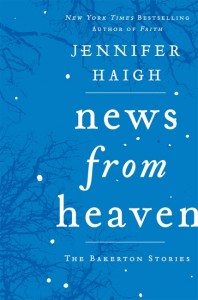
News From Heaven by Jennifer Haigh

News From Heaven by Jennifer Haigh is a collection of interconnected short stories about Bakerton, Pa., and while the characters in these stories all have roots in that former coal-mining town, the town itself is a character — matter of fact, it is the character — that holds these stories together.  Haigh has created a heartbreaking and hopeful story about the death and rebirth of a town and its people.  As the founding members, the Bakers, brought glory and industry to the town that ensured its prosperity, they also have a hand in its decline.

From WWI to the 1970s and 1990s, Haigh chronicles the rise and fall of a town tied closely to its founding family and the coal beneath its hills.  By the end, readers will be as connected to Bakerton as they are to their own hometowns and families.  From the coal hacked out of the mines to the black lungs carried by its resident miners, there is a deep sense of place and the people who inhabit it are as flawed and as memorable as the school teachers, mechanics, small business owners, and others of memory.

“The town lay before them in a deep valley, settled there like sediment:  the main street with its one traffic light, the rows of company houses, narrow and square — some brick-cased now, or disguised with porches and aluminum siding, but at this distance you could see how alike they all were.”  (page 166, “The Bottom of Things”)

Beautifully, each story builds upon the foundation of the last from the high flying days of the coal boom and the nepotism it wrought in the town to the ultimate crashing down of the town around the ears of the residents who relied too heavily on the Bakers to carry them through.  There are glimpses of how war can build up a town, while at the same time tear down its people, and there are other moments where the destruction of war is keenly felt at home when a soldier returns.  Haigh’s collection runs the emotional gamut, but the most striking passage comes in the final story, “Desiderata,” referencing the prose poem by Max Ehrmann.  She infuses the final story with a deep sadness of grief and the devastation of a secret revealed, but returns to the hopeful tone of rebirth and beginning anew amidst this unwanted baggage and knowledge.

In many ways, this collection depicts a slice of American history, with particular attention paid to how immigrant groups interacted with one another and to each other even in a new country.  Even as war is far away, many of the prejudices bred abroad continued in their new homes, and these interactions continued to reflect in future generations.  News From Heaven by Jennifer Haigh has a blasé title, but given the final moments of the collection and the reference to the prose poem, it is reflective of Haigh’s focus on faith.

About the Author:

Jennifer Haigh is the author of the New York Times bestseller Baker Towers, winner of the 2006 PEN/L. L. Winship Award for outstanding book by a New England author; Mrs. Kimble, which won the PEN/Hemingway Award for debut fiction and was a finalist for the Book Sense Book of the Year; and The Condition.

Her fiction has appeared in Granta, Ploughshares, Good Housekeeping, and elsewhere. She lives in the Boston area.

Find out more about Jennifer at her Website and connect with her on Facebook.  Also check out her Book Club Girl discussion.

This is my 7th book for the 2013 New Authors Challenge.

The Zombie Chasers by John Kloepfer, illustrated by Steve Wolfhard

The Zombie Chasers by John Kloepfer, illustrated by Steve Wolfhard is a graphic novel of sorts for kids age 8-12.  Zombies are flooding the quiet Arizona neighborhood while parents are at the school with teachers and Zack is being duct-taped to a chair by his big sister, Zoe, and her girlfriends, Madison, and Ryan.  Locked in his room, Zack scrambles for a way out and water to wash off the clown makeup his sister put on his face.  As he sneaks out into the kitchen to get the last piece of his his birthday cake, he spies his crush, Madison, forking bites of the cake into her own mouth.  As they argue about the cake, the zombies make their way into the house, forcing the two unlikely companions up into Zack’s room where they formulate an escape.

The illustrations are black and white and accompanying the events in the text as Zack, Madison, and Zack’s best friend, Rice, hack their way through town.  Rice thinks of himself as a zombie expert, and like typical kids, there’s arguing about who’s an ugly faced dork, and who’s a snotty brat.  There are funny moments, gross moments, and scary moments as the kids try to escape the zombies and find a solution.

“In the midst of her tantrum, she’d neglected to notice the huge pair of tighty-whities hanging around her neck.  She ripped them off her head quickly and threw them at Zack.”  (Page 58)

“Both his lips were gone, leaving a jagged bloodstained gash where the bottom half of his face should have been.  His gums had shriveled, exposing the roots of his teeth.  It looked like he had just won first place in a cherry pie-eating contest.”  (Page 101)

Kloepfer creates a group of kids that reminds me of the group in Steven King’s IT, a group of misfits banding together to fight or fly away from evil.  Only in this graphic novel, the kids are more comical than serious.  While there are moments of bullying and peer pressure, there is more zombie fun, grossness, and scrambling from place to place.  While the illustrations are fun, they are not necessary, but it would be better if they were more vivid with color.  The Zombie Chasers by John Kloepfer, illustrated by Steve Wolfhard is a fun start to a series of books, but be warned there is a major cliffhanger.

About the Author:

John Kloepfer first started writing at five with a short story of only one sentence. Now, he has authored many full length novels in The Zombie Chasers series. John is currently an official Zombie Chaser living in New York City.

About the Illustrator:

Steve Wolfhard is a Canadian with a knack for illustrations. His drawings can be seen in the Zombie Chaser series. Steve is also the creator of Cat Rackham and the beloved new cartoon character, Turtie.

This is my 6th book for the 2013 New Authors Challenge.

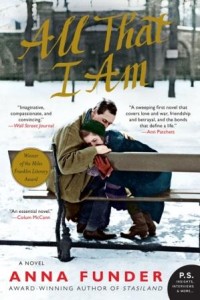
All That I Am by Anna Funder

All That I Am by Anna Funder is an unusual pre-WWII novel that takes into account not only the after effects of WWI, but also the politics that flooded Germany before the war.  Funder has crafted a psychological novel in some ways, but the characters who are most interesting and mysterious — Hans and Dora — also are the most distant.  Perhaps they are more interesting and mysterious because they are seen through the eyes of those who knew and loved them best — Ruth and Ernst Toller — which begs the question of whether we — ourselves — would be more interesting to others if seen through our closest connections.  Ruth, Ernst, Hans, and Dora, along with others, are forced to flee Germany for London after Hitler comes to power.  Funder admits that many of the elements of her novel are taken from history and from her friend Ruth’s actual life, but this novel is not just about the history and intrigue of German ex-pats seeking information from inside the regime about their friends and to warn other countries about Hitler’s expectations for war.

“Last week they loaded me into the MRI machine, horizontal in one of those verdammten gowns that do not close at the back: designed to remind one of the fragility of human dignity, to ensure obedience to instruction, and as a guarantee against last-minute flight.”  (page 7)

Ruth and Dora are cousins, and Ruth is easily swept up into the passion of the Socialist party Dora belongs to because she’s already fallen in love with the words of a young man, Hans.  Even at the beginning, there is a tension between Hans and Dora, and while Ruth first mistakes it for a lover’s intimacy, it is clear to the reader that the tension is born of jealousy and competition.  The beginnings of the movement hold close to their ideals for peace and workers’ rights — even equal rights for women — but those ideals are tested time and again.  These ideals are burdened and even broken, as seen through the eyes of the individuals tested.  Funder’s unraveling of the story in two perspectives — Toller and Ruth — can be frustrating, as Toller and Ruth tell their stories from different points in time, which calls into question whose memory is more reliable.  Both are looking to the past before WWII and their early days in exile, and Funder leaves enough clues along the way for readers to pick up on the essence of the outcome.

“From what Bev has told me, an addict can lose ten years of their life in a quest for exactly this:  the constant present tense.  Afterwards, those who do not die wake to a world that has moved on without them:  it is as if nothing happened to the fiend in those years, they did not age or grow and they must now pick up –”  (Page 201)

Whether the drug is an opiate, morphine, or memory, these activists, these friends, these compatriots become blind to the realities of their exile.  Rather than remember their past glories with fondness, Hans, in particular, and Toller become absorbed in the images of themselves — those they created or were created of them.  Funder is calling into question the image we have of ourselves and those that others have of us — are those perceptions mirrors of themselves or are they a bit distorted when compared.

All That I Am by Anna Funder sheds light on the lives of German ex-pats before WWII, and the secretive life some of them led as they tried to help those they left behind in Germany.  But at it’s heart, the novel is about how politics and ambitions can distort friendships or not matter at all.  It’s also about the enduring love for those we know and love, even those that are unworthy of that devotion and those who also offer more of themselves to the world and others than they do to themselves.  A novel of memory, love, devotion, and self-sacrifice worth reading.

About the Author:

Anna Funder’s international bestseller, Stasiland, won the Samuel Johnson Prize for nonfiction. Her debut novel, All That I Am, has won many prizes, including the prestigious Miles Franklin Literary Award. Anna Funder lives in Brooklyn, New York, with her husband and children.

Visit Anna at her Website and connect with her on Facebook.

This is my 5th book for the 2013 New Authors Challenge.

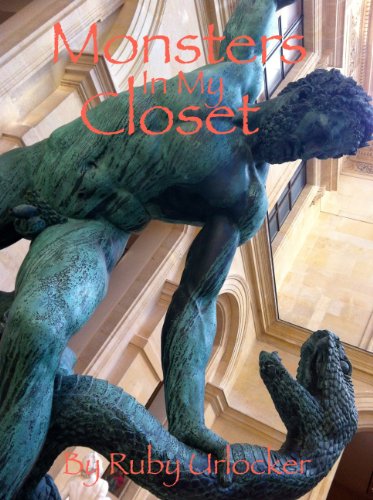
Monsters in My Closet by Ruby Urlocker

Ruby Urlocker’s Monsters in My Closet is a collection of poems and short stories by a talented young writer with a fresh voice who explores the uncertainty of her teenage years and the harsh realities of adolescence.  She explores themes of growing older, losing one’s innocence, and battling inner demons.  Even though she deals with harsh realities, her images are playful and sometimes whimsical, like her short story about a banana dreaming of becoming human — reminiscent of Kafka’s Metamorphosis but in reverse.

From "Walking Around the World":

I walked across the world today
in my old running shoes.
Because I was free on a Saturday
And wanted to beat my blues.
From "Fallen Angel":

My shadow, hanging onto the wall.
I watched it turn to meet my gaze,
My eyes, a desperate wish.
Those stares, those sugar coated liars
Stealing away who I am.
From "The Storm":

There's a gust of wind inside my throat,
Hands clutching it tightly so as not to hurt anyone.
But I grow sick and weary of choking myself

Urlocker has a childlike way of expressing emotions, but she also displays a mature grasp of the darkness that lurks within all of us. Alongside the shadows and ghosts her narrators chase around corners and into the darkness, religious verse and stories ground the reader in a belief that there is something more to this life — whether it is a reincarnation of the same soul until the goal is achieved or the passage of the soul into the afterlife. Unlike other teenage writings that are often full of angst and despair, Urlocker infuses her stories and poems with hope and color — a beacon in the darkness.

One of the most surprising and most developed pieces is “Hidden People,” which is more than a homage to Edgar Allan Poe’s The Cask of Amontillado. Urlocker talks about imaginary friends and growing up, which in some cases means leaving those beloved friends behind along with are more innocent selves. Even though this is a short piece, readers will become emotionally invested in the story the narrator weaves about her past and friends. There is a deep sense of regret and loss, but also the fondness of those memories.

Monsters in My Closet by Ruby Urlocker is a well crafted debut that explores themes of adolescence, lost innocence, and the hormonal battle that teens experience as they sort through friendships, memories, and love. The collection also includes illustrations, which merit a mention as they are unique and childlike, but also demonstrate a complexity that mirrors the work Urlocker does in prose and verse. She’s an up-and-comer with room to grow and surprise us.

If you’re interested in winning a copy of her book, enter the giveaway here.

About the Author:

Ruby Urlocker is a teenaged author, singer and songwriter. She has been writing and publishing stories since she was seven. Ruby lives with her family and dog, Rufus, a wheaten terrier.


This is my 1st book for the Dive Into Poetry Challenge 2013 and the 2013 New Authors Challenge.

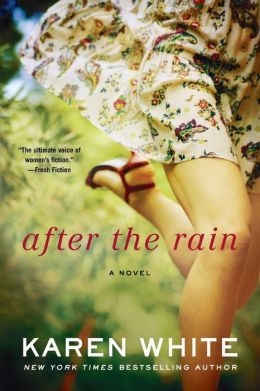
After the Rain by Karen White

After the Rain by Karen White is a republished and remastered novel that is full of twists and turns, touches lightly on the desolation of a broken family life and the darkness people can fall into as a result, and the hope that just might be around the corner.  Suzanne Paris is on a bus to Atlanta when she decides on a whim to get off in Walton, Ga., where she meets a large family and finds the home she’s been looking for all of her life.  But with the sun comes rain.  And there is a deluge of it in this book.

Suzanne has a past that is not far behind her, even as her freelance photography job takes her to many places.  She’s running from a life and for her life, and White has created a character who is both likeable and unlikeable.  She keeps secrets even from those know care for her, and her ability to trust others is very tenuous and easily broken by the wrong word or action, which White captures easily in her imagery.  From how she’s described by the muscular, hot mayor Joe Warner — who also teaches at the high school and coaches football — to how Suzanne pauses before answering questions about her past, readers will find a character who is taken in slowly by the small town and its residents but frightened of how her own past could harm them.

“Tides change.  So does the moon.  With the unfailing constancy of brittle autumn closing in on bright summer, things always changed.  If Suzanne had ever had faith in anything, it was in knowing that all things were fleeting.  And for good reason.  The highway of life was littered with the roadkill of those who didn’t know when to change lanes.”  (Page 1)

While things can be fleeting in life, there are things that are ever-lasting, and in this case, White talks about the support systems that we can have within our own families.  Whether those families are the ones we are born into or the ones we fall into or create out of friends and husbands and our own children, they are there to love and support us unconditionally.  Suzanne has a lot of lessons to learn, but the slow unraveling of her fears and her heart is endearing.  In many ways, though she’s an adult, she’s like a child being led into the life she’s always wanted.

“‘Amanda! You quit right now or I’m gonna jar your preserves!'”  (Page 5)

Photography plays a large role in the novel, and Suzanne not only takes photos of the people in Walton but also finds that she’s become a part of the town’s tapestry as she weaves parts of herself into the photos she takes.  Even more poignant, she connects with teenage Maddie when she shares with her the techniques a budding photographer needs to learn that are not necessarily taught in art classes.  After the Rain also offers readers that down-home southern feel that all of White’s novels have — from the caring strangers to the idioms that make the place its own.  There are moments when readers will want to strangle Suzanne for her decisions, and some events are easy to see coming, but the way White writes these characters and their story endears them to readers and ensures their love and struggles will never be forgotten.

Not Young, Still Restless by Jeanne Cooper, Lindsay Harrison

Not Young, Still Restless by Jeanne Cooper and Lindsay Harrison is a great memoir for the fans of The Young and the Restless soap opera and Katherine Chancellor.  She was born in 1928 to part-Cherokee parents, and was the youngest of three children.  My mother has watched the show since before I was born, and I remember the fateful episode in which Mrs. C. drove her husband off a cliff in a drunken stupor — I was one.  Yes, this show has been in my life for a very long time.

Cooper infuses her memoir with honesty, but also refuses to tell stories that are not her to tell.  She may be harsh on her ex-husband, but once you read about his antics, it’s hard not to see why she’d still not be his biggest fan.  However, she does admit that her relationship with her husband did beget her some wonderful and talented children — Corbin Bernsen, Collin, and Caren.

“I don’t care who you are, you don’t get more than one chance to betray me, and as this book should make apparent, I have a very long memory.”  (page 13)

There is some kissing and telling, but it’s not graphic, and its touching for the most part.  Cooper also offers some great insights into the soap opera business and movie/TV business.  One touching moment in the book is when she talks of her dear friend, Raymond Burr — a WWII veteran who survived the Battle of Okinawa and was awarded a Purple Heart!  She and Ray had a great friendship and there is a fun story about the time she “borrowed” his trophy just before he headed to Japan to meet with troops at an army base.

Cooper is frank in her stories and her memories — or lack there of — about events, and yes, there are moments where she doesn’t explain how she met certain famous actors and actresses, like Grace Kelly, but her open heart and charitable spirit shine through in how she cares for her family and others.  I loved the story of how she and her young daughter witnessed a car accident and stopped to help.  Her daughter was scared, but Cooper explained to her that they had to help if someone was in need.  It was their duty to do so.  We need more parents like this and more citizens who care!

Not Young, Still Restless by Jeanne Cooper and Lindsay Harrison shows that no matter your age, you are not done living yet and that there is more love, devotion, and duty to give.  Cooper’s memoir offers some great insight about the Y&R, Hollywood, and family.  Highly recommended for fans of the show and for those who are interested in learning about old Hollywood.

About the Author:

Jeanne Cooper has earned the love of soap-opera fans for her long-running role as Katherine Chancellor on CBS’s The Young and the Restless. She received back-to-back Daytime Emmy Award nominations as Outstanding Leading Actress in a Drama Series in 1989, 1990, and 1991. In 1993, she was awarded a star on the Hollywood Walk of Fame, in recognition of her many years in show business.

This is my 89th book for the New Authors Reading Challenge in 2012.


The New Arcana by John Amen and Daniel Y. Harris

The New Arcana by John Amen and Daniel Y. Harris is highly experimental and mixes poetry with photos and art, and much more.  It is broken down into five sections, preceded by a list of dramatic personas in a couple of instances, which in fact set the stage for what comes next.  While experimental in form, there are traditional elements as well, including references to Greek myths and the journey of Odysseus.  Through this experimentation, readers must pay closer attention to the words, phrases, fonts, and other elements in the collection to discern meaning or the story.  This is a thinking reader’s book, but it’s also a book of pure lunacy and fun as the personas take over and yell at one another in a banter that just generates smirks and laughs.

“‘You really need to figure out what’s next for you, Sadie.
Math, theology, whatever. Why don’t you put out a book?’ (Jughead)
‘Well, Jug, the truth is, you’re my first book.
I’ve been editing you since we met.’ (Sadie)” (page 17)

In many ways, looking at the verse on the page and the conversation often resemble the complex nature of compositions made by musicians.  When looked at in pieces, these compositions can befuddle casual viewers, but when put together and played in conjunction, the music soars and fills the soul.  In this piece, there seem to be elements of Jazz, a musicality that leaps off the page in a mixture of elements that like the collaboration of Amen and Harris works well.  However, the improvisation can be overwrought in some instances.

“The patio party:  I’m tired of these spoiled suburbanites.
I prefer back-river ingenues and trailer-park bullies
brimming with rage and remorse,
perhaps a seance staged at twilight,
blood on a pool deck,
blood on the geraniums and forsythia;
the runaway’s bones, buried beneath the mad-blossoming magnolia,
suddenly singing to my neighbors.
I prefer a final showdown with the cops,
the proverbial shootout in the cul de sac —
everything at stake, all the time.” (page 35)

Many of these vignettes are about seizing the moment, stopping the procrastinating, and relishing the exuberance and exhilaration. There are moments about the aftermath of love affairs and tales about strange personalities. Arcana is a well used word here for indeed some of these verses and tales are mysterious and hard to understand, but these lines and mixtures of text and art require additional discernment on the part of the reader. However, readers also must keep in mind that not all of these vignettes are true or to be taken seriously — there is a bit of dry wit and sarcasm here in these pages.  The New Arcana by John Amen and Daniel Y. Harris is unique, confusing, fun, and even mysterious; well worth reading for a challenge, but definitely something that will take more than one read through.

About the Authors:

John Amen is the author of three collections of poetry: Christening the Dancer (Uccelli Press 2003), More of Me Disappears (Cross-Cultural Communications 2005), and At the Threshold of Alchemy (Presa 2009), and has released two folk/folk rock CDs, All I’ll Never Need and Ridiculous Empire (Cool Midget 2004, 2008). His poetry has appeared in various journals and anthologies, including, most recently, Rattle, The New York Quarterly, The International Poetry Review, Gargoyle, and Blood to Remember. He is also an artist, working primarily with acrylics on canvas. Amen travels widely giving readings, doing musical performances, and conducting workshops. He founded and continues to edit the award-winning literary bimonthly, The Pedestal Magazine.

Photo by Charles Weinberg

Daniel Y. Harris holds a Master of Arts in Divinity from The University of Chicago, where he specialized in the history and hermeneutics of religion and wrote his dissertation on The Zohar. He is the author of Hyperlinks of Anxiety (Cervena Barva Press, 2013), The New Arcana (with John Amen, New York Quarterly Books, 2012), Paul Celan and the Messiah’s Broken Levered Tongue: An Exponential Dyad (with Adam Shechter, Cervena Barva Press, 2010; picked by The Jewish Forward as one of the 5 most important Jewish poetry books of 2010) and Unio Mystica (Cross-Cultural Communications, 2009). He is a three-time Pushcart Prize nominee.

For another perspective, check out Shiny Book Review.

This is the 29th book for my 2012 Fearless Poetry Exploration Reading Challenge.

Carnival by Jason Bredle

Carnival by Jason Bredle is weird.  In many ways it is like a grotesque and surreal little carnival with the fun house mirrors and the bearded lady — though in this case, the mirror is held by the narrator and the bearded lady is really a werewolf inside the narrator.  There is a self-deprecation and a dream-like quality to these prose poems, but in some cases, it seems like the poems are too weird just for the sake of it.  At other times, the poems are comments on pop culture.

“There’s a carnival in my skull and it’s driving me crazy.”  (page 32, from “The Killing”)

Readers will be taken on a ride in this volume of poems as Bredle creates a mood.  From confusion to frustration, readers will be inside the mind of a crazy person.  But in many ways, the craziness is just a mask for the discontent with the culture that has sprung up around the narrator.  And while some of these poems will take several reads before the meaning becomes clear, there are some great moments and lines that make an immediate impression on the reader.  From “Hole in My Heart,” “It looks like I’ll be cuddling up in the warm, soft arms of depression/against this winter.”  These lines set the stage for the tumbling feeling of loss and the mindlessness that accompanies a broken heart where you walk in a fog for days afterward.

A running image throughout the poems is the narrator’s cat, seemingly always providing comfort or just as distraction from the moment.  Traditionally, cats have symbolized independence or superiority, but it is unclear whether the cat is merely a cat in these poems or a symbol of something greater.  In many ways, this is a collection that should be dipped into from time to time when someone is in need of a good laugh or a bit of just fun, but reading it cover-to-cover it can become a bit tedious.  The cover should establish the mood for any reader who picks it up.  It’s busy, full of life and action, and complete chaos.  Carnival by Jason Bredle is just that, a carnival of busyness and bedlam.

About the Poet:

Jason Bredle is the author of four books of poetry, most recently Carnival, from University of Akron Press. He lives in Chicago.

This is the 28th book for my 2012 Fearless Poetry Exploration Reading Challenge.


This is my 87th book for the New Authors Reading Challenge in 2012.

Ardor: Poems of Life by Janine Canan

Ardor: Poems of Life by Janine Canan is a hefty and heavy set of poems and essays about life, the destruction of the earth, and the destruction of the planet wrought by men.  Broken down into eight sections from communing with God, homage to the strength of women, the sadness that comes from a destroyed planet, and a general awaking to the wonders of the world and moving into a full experience of life.  The second section, “Tears for the World,” and section three, “Indestructible Woman,” offer a no-holds-barred perspective on destruction caused by humanity or the oppression of women by men in societies across the world even today.  In many ways, some of these poems mirror the most radical forms of Ecofeminism, in which women are the closest to the Earth and should resume their position as leaders and teach men to cooperate with nature rather than dominate it — though some even espoused the dominion of women over men.  There is even one poem dedicated to the late Mary Daly, one of the main philosophical thinkers of the movement.

From Woman Is Space:

“Woman is space
the wind
the grass
the river
the peacock complaining
to the river
the word emerging like the river
the woman stepping out of the river.

Woman
emerges
like a rising river” (page 89)

There are lines and images and moments here that will make some angry, while others will nod their heads at the truth of it.  There is the destruction of nuclear bombs created by men, there are the women who are subservient to men, and there is even more.

“Boot”:

“The air writhes.
The water gags.
The rocks slide.
The mountains sweat.
Plants cringe.
Trees crash.
Animals glare.
Women bleed.

Man has his boot on every inch of the world.
His conquest is nearly complete.” (page 64)

While these are hymns and elegies to the earth and women, there are other poems that are less “abrasive” than others, but still offer a sense of what the reader is trying to convey about the harm that has come to the planet and to women. The less declarative poems are the most powerful, offering imagery that recalls in the mind the beauty of nature and the wonders that are yet unexplored. These poems call on readers to regain their childlike wonder and stand in awe of the world around them, not to tear it asunder in the thirst for fulfillment.

From “A Divine Meal”:

“I like my disheveled plate with a well-licked fork
sprawling satisfied across it, a pause
between each dish for emptying my mind
and manifesting a new one.

Conversation too I enjoy, voices harmonically arranged,
And food, the kind that tastes good.
I love my senses sublime, and a good cook
is one of the million gods I worship.” (page 23)

From “The Joy”:

“Along the hills of your body
I rooted in the fragrant earth.

Stretching my blooming arms
I heaved with offerings.

I was a peach dripping gold
and you drank me.” (page 104)

Ardor: Poems of Life by Janine Canan mixes philosophy, history, poetic imagery, and declarative statements to create a collection of poems and essays that examine the state of the modern world without sugar coating anything.  There are moments that will get under readers’ skins and maybe cause them to stop reading in disagreement, but Canan’s poems should not be ignored given the degradation that continues to happen from the oil spills in the Gulf of Mexico to the oppression of women that continues today.  These are issues that cannot be ignored if the planet and humanity are to survive beyond just a few generations.

About the Poet:

JANINE CANAN’s first book of poems, Of Your Seed, was published in 1977, thanks in part to the National Endowment for the Arts. Since that time, the poet has authored 18 books of poetry, translations, essays and stories.

This is the 27th book for my 2012 Fearless Poetry Exploration Reading Challenge.


This is my 85th book for the New Authors Reading Challenge in 2012.