Quantcast

Playing Basketball With the Viet Cong by Kevin Bowen

Kevin Bowen‘s Playing Basketball With the Viet Cong is his first collection of poems and they focus on his memories of the Vietnam War.  Although there are moments of brutality and horrifying images, many of these poems intend to infuse the enemy with humanity — whether that enemy is a U.S. soldier or a member of the Viet Cong.  In a way these poems diverge from other war veterans’ writings in that rather than attempt to sort through mere emotional trauma, Bowen seeks to draw parallels between two nations that were once at war with one another and highlight their similarities in a way that will generate peace and forgiveness.

From “Willie, Dancing” (page 27):

When we moved south
we found comfort
nights at base in new dug bunkers,
the womb hum of generators,
artillery thud and mortars
marking time.  And whiskey,

Bowen’s lines are sparse, but use each word to its fullest potential to provide a sensory overload, much like the one he may have experienced in Vietnam himself.  Readers will hear the bombs hit the ground and feel the anxiety of the soldiers as each poem unfolds.  How did these soldiers ever “feel at home” in the jungles surrounded by the enemy?  Did they live in constant fear as the adrenaline pumped through their veins?

Poetry often tries to convey more than the lines state on the surface.  Bowen often blurs the lines of his memories with reality and myths from Vietnamese lore.  But always there is a connection made between enemies through their humanity.  For example, the lines of “Missing:” (page 34-5)

I was there that day, felt the tug,
looked down and saw my own face
looking up to me from the paddy,
searching the sky where already you’d disappeared.

Everything, even in war is connected and on some level the soldiers killing the Viet Cong were in a way killing themselves — little by little.  Not all of Bowen’s poems are from a soldier’s perspective, with poems narrated by a female voice, perhaps a wife, dealing with the far off glances, the silence, and the nightmares her lover experiences.  Readers will enjoy the wide variety in Playing Basketball With the Viet Cong, which strives to pull to the forefront the humanity in everyone and find a common ground from which each side can begin anew.

Incoming (page 22)

Don’t let them kid you–
The mind no fool like the movies,
doesn’t wait for flash or screech,
but moves of its own accord,
even hears the slight
bump the mortars make
as they kiss the tubes good-bye.
Then the furious rain,
a fist driving home a message:
“Boy, you don’t belong here.”
On good nights they walk them in.
You wait for them to fall,
stomach pinned so tight to ground
you might feel a woman’s foot
pace a kitchen floor in Brownsville;
the hushed fall of a man lost
in a corn field in Michigan;
a young girl’s finger trace
a lover’s name on a beach along Cape Cod.
But then the air is sucked
straight up off the jungle
floor and the entire weight
of Jupiter and her moons
presses down on the back of a knee.
In a moment, it’s over.
But it takes a lifetime to recover,
let out the last breath
you took as you dove.
This is why you’ll see them sometimes,
in malls, men and women off in corners:
the ways they stare through the windows in silence.
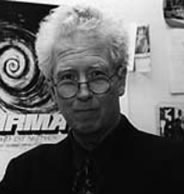
About the Poet:

Kevin Bowen was drafted at age 21 and served in the 1st Air Cavalry Division in the Quang Tri Province near the DMZ (demilitarized zone) and the Tay Ninh Province in Vietnam from 1968-1969. He is a 1973 graduate of the University of Massachusetts Boston. A former Danforth Fellow and Fulbright Fellow at New College, Oxford, he earned his Ph.D. in English Literature from the State University of New York at Buffalo. He worked as an aide and speechwriter for Lt. Governor Thomas P. O’Neill, III prior to becoming director of the Veterans’ Upward Bound Program at Umass Boston in 1984 . He was appointed co-director of the Joiner Center in 1984.

Playing Basketball with the Viet Cong, his first collection of poetry, was published by Curbstone Press in 1994. His poems have appeared in Agni, American Poetry Review, Boston Review, Ploughshares Press, Prairie Schooner, TriQuarterly, Witness and other places.

This is my 9th book for the 2010 Vietnam War Reading Challenge.
This is my 12th book for the Clover Bee & Reverie Poetry Challenge.

Twelve Moons by Mary Oliver

Twelve Moons by Mary Oliver is her fourth collection and as always nature is front and center.  But above all this collection is about transformation and by extension the journey of life.  Parallels are drawn between the grief humans feel and the changing seasons and the self-confidence of nature as it is seen in humans as mere glimpses or slivers of the moon.

“And sometimes, for a moment,/you feel it beginning — the sense/of escape sharp as a knife-blade/hangs over the dark field/of your body, and your soul/waits just under the skin/to leap away over the water./”  (From At Blackwater Pond, page 49)

Oliver’s love of nature and awe of it transcends her lines and these pages, tapping into readers’ sense of childlike wonder about the world.  It reminds us that there is a greater world beyond the meetings, the email, and the stress of our lives — a world where things can just be and live.  Beyond the sense of wonderment is an air of caution about how we interact with this natural world and how we are at times the enemy.

From Mussels (page 4), “In the riprap,/in the cool caves,/in the dim and salt-refreshed/recesses, they cling/in dark clusters,/in barnacled fistfuls,/in the dampness that never/leaves, in the deeps/of high tide, in the slow/washing away of the water/in which they feed,/ . . . Even before/I decide which to take,/which to twist from the wet rocks,/which to devour,/they, who have no eyes to see with,/see me, like a shadow,/bending forward.”

Like the mysterious phases of the moon, Oliver’s poems often take on a mystical quality, blurring the lines between reality and dreams.  Is her father the explorer he always dreamed he would be?  Do the fish feel the same way about children that humans do?

Twelve Moons is a collection dealing with immortality, nature, and our place in and against it.  Oliver’s poetry is enjoyable on the surface and as deeper meanings are sought upon multiple readings and even immediately.  Beginning readers of poetry would have little trouble understanding her lines and easily find correlations to their own lives.  An excellent collection, and one of the best I’ve read this year.

***I purchased my copy of Twelve Moons by Mary Oliver at a local library sale.***

This is my 11th book for the Clover Bee & Reverie Poetry Challenge.
Because All Is Not Lost by Sweta Srivastava Vikram

Sweta Srivastava Vikram‘s Because All Is Not Lost is a new chapbook of poems about grief and recovery.  While recovering from grief is never the same for everyone, these poems speak to the void that death can leave.

“One day she will stop/digging up maggots of loss/breeding in her memory.//” (From Convalescence, page 18)

Vikram uses simple imagery and encapsulated stories to illustrate grief and the possible reactions to loss.  In the introduction, the poets explains her inspiration for the collection, the deaths of her grandfather and her mother’s sister.  The collection is sad and weighs heavily on the reader, and readers should consider taking each poem in separately to absorb their meaning.  However, there are rays of hope within the poems.

From A permanent address, “Flood of affection is what I get from her -/jasmine flowers mixed with olive and a soft kiss// of assurance.  She whispers/that it was a recurring nightmare./That I was safe” (page 20)

Because All Is Not Lost is a chapbook that will affect readers like no other poetry collection. Readers will be absorbed by the grief and the glimmers of light as the narrators deal with emptiness and blame.

***Thanks to the poet Sweta Srivastava Vikram for sending me a copy for review***

Now for the global giveaway; 2 copies up for grabs:

1.  Leave a comment about a moment of loss you’ve felt and how you dealt with it.

2.  Blog, Facebook, or Tweet this giveaway and leave a link here.

Deadline Aug. 27, 2010, at 11:59 PM EST

This is my 10th book for the Clover Bee & Reverie Poetry Challenge.

This is my 41st book for the 2010 New Authors Reading Challenge.

Unincorporated Persons in the Late Honda Dynasty by Tony Hoagland

As part of the Graywolf Press — one of my favorite small presses that publishes poetry and fiction — Spotlight on Small Presses (click on the badge at the bottom of the post for the tour stops), I chose a poetry book to review, which I picked up at the 2010 Book Expo America.

Unincorporated Persons in the Late Honda Dynasty by Tony Hoagland is his first collection of poems in 10 years, according to the Graywolf representative at the expo.  The collection features poems that call into question the realities of the modern world from our dating rituals to our trips to the mall food court.

In “Big Grab,” Hoagland suggests language is taking on meanings that are less than they are.  “The Big Grab,/so the concept of Big is quietly modified/to mean More Or Less Large, or Only Slightly/Less Big than Before.// Confucius said this would happen –/that language would be hijacked and twisted/”  (page 5).  This collection not only tackles the language changes our society faces and what those changes mean, but it also looks carefully at the world of celebrity in “Poor Britney Spears.”

Expensive Hotel (page 24)

When the middle-class black family in the carpeted hall
passes the immigrant housekeeper from Belize, oh
that is an interesting moment.  One pair of eyes is lowered.

That’s how you know you are part
of a master race — where someone
humbles themselves without even having to be asked.

And in the moment trembling
from the stress of its creation,
we feel the illness underneath our skin —

the unquenchable wish to be thought well of
wilting and dying a little
while trying to squeeze by

the cart piled high with fresh towels and sheets,
small bars of soap and bottles
of bright green shampoo,

which are provided for guests to steal.

Hoagland’s crisp language and vivid imagery is deftly weaved with philosophical and societal questions we all should be answering or at least asking.  Has modern society twisted our culture into something worthwhile or is it something that should be tossed in the trash as a bad experiment.  However, there are moments of humor and deep sarcasm throughout the volume that offset one another to make readers ponder what the poet really desires from the modern world.  Readers will come away from the collection with a new focus on examining society and their part in it –whether they decide to continue assimilating is up to them.  Unincorporated Persons in the Late Honda Dynasty is a thought-provoking collection that urges readers to be unique and to think outside the box.

This is my 9th book for the Clover Bee & Reverie Poetry Challenge.

This is my 38th book for the 2010 New Authors Reading Challenge.

Dien Cai Dau by Yusef Komunyakaa

Yusef Komunyakaa‘s Dien Cai Dau is another collection of Vietnam War poetry.  The poet, who received the Bronze Star and edited The Southern Cross, dedicates this book to his brother Glenn, “who saw The Nam before” Komunyakaa did.  His poems put the reader in the soldiers’ shoes, allowing them to camouflage themselves and skulk around the jungles of Vietnam from the very first lines of “Camouflaging the Chimera.”  Beyond skulking in the jungle, hunting the Viet Cong, Komunyakaa discusses the weight of war as soldiers trudge through the landscape with their equipment and what they’ve done and seen.  Weaving through the tunnels looking for the enemy or searching the thick forest, soldiers are constantly reminded of their emotional and physical burdens, though they find joy in some of the smallest moments.

One of the beautiful aspects of Komunyakaa’s poetry is his vivid sense of how even the most beautiful elements of nature have a darker side.  In “Somewhere Near Phu Bai,” Komunyakaa writes “The moon cuts through/the night trees like a circular saw/white hot.  . . .” and in “Starlight Scope Myopia,” he suggests, “Viet Cong/move under our eyelids,/lords over loneliness/winding like coral vine through/sandalwood & lotus/.”

Beyond the nature imagery and the immediacy of the war, some of these poems have an analytical quality much like a general planning out the battle moves.  Each move of the soldiers is reflected in the carefully chosen words and lines, and the effect is genuine, creating a suspense and fear readers would expect soldiers to experience.

A Greenness Taller Than Gods (Page 11)

When we stop,
a green snake starts again
through deep branches.
Spiders mend webs we marched into.
Monkeys jabber in flame trees,
dancing on the limbs to make
fire-colored petals fall.  Torch birds
burn through the dark-green day.
The lieutenant puts on sunglasses
& points to a X circled
on his map.  When will we learn
to move like trees move?
The point man raises his hand Wait!
We’ve just crossed paths with VC,
branches left quivering.
The lieutenant’s right hand says what to do.
We walk into a clearing that blinds.
We move like a platoon of silhouettes
balancing sledge hammers on our heads,
unaware our shadows have untied
from us, wandered off
& gotten lost.

Dien Cai Dau by Yusef Komunyakaa is an excellent collection that will allow readers to join the fight in Vietnam, feel the fear and anxiety of soldiers, and see just how many enemies soldiers faced — the Viet Cong and the jungle.  Komunyakaa is a poet with incredible insight from propelling emotions off the page through images to using carefully chosen words and phrases to vividly paint the scene.  Dien Cai Dau is one of the best poetry books about the Vietnam War and often reads like prose.

This is my 6th book for the 2010 Vietnam War Reading Challenge

This is my 8th book for the Clover Bee & Reverie Poetry Challenge.

The Guilt Gene by Diana M. Raab

Diana M. Raab‘s The Guilt Gene is a collection steeped in nostalgia that fails to glorify the past.  The collection is broken down into six sections:  “Cherry Blossoms, Book Tour, Two Evils, The Devil Wears a Poem, Yad Vashem, and California Roll.”  Additionally, “guilt” is defined in the pages preceding the table of contents, although most readers are aware of its definition and uses.
In “Cherry Blossoms,” Raab revisits the bloom of her youth when she was just beginning to discover boys and realize that she wasn’t popular with her classmates.  Hindsight is 20-20 in these poems as she examines how the behavior of her mother impacted her adolescence, particularly in “Moth Balls.”

The “Book Tour” section of the book is amazing in its raw honesty about never taking advantage of friendships because they are incredibly loyal and the emotional toll writing books, publishing them, and marketing them to the general public.  Raab discusses how writing is a reflection of who authors and poets actually are, the depression that follows the completion of a book, and many other scenarios.

Author Blues (page 26)

If women after delivering a baby

suffer post-partum,

why can’t writers

after delivering a book

suffer post-ISBN?

Raab’s frank perspective is like a hammer hitting readers with a deep sense of loss in “Two Evils.”  Her personal struggle with breast cancer is vivid and pulsates with anger, but also with confusion and a child-like wonder about the world around her.  Like her previous collection, Dear Anais (my review), some of the poems take on the tone of a diarist, an observer of life.  The Guilt Gene covers a range of events and emotions, and Raab will draw in readers through her casual tone, witty turn of phrase, and images that anchor readers to a time and place.  One of the best collections I’ve read this year. 

Thanks to Bostick Communications and Shirley at Newman Communications for sending along The Guilt Gene by Diana M. Raab for review.

This is my 7th book for the Clover Bee & Reverie Poetry Challenge.

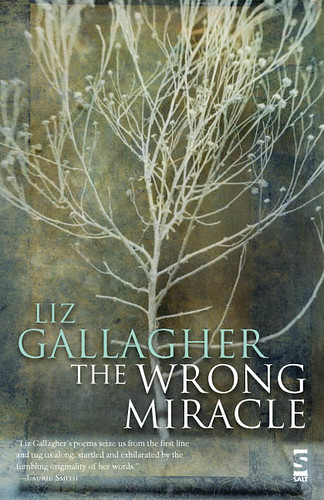
The Wrong Miracle by Liz Gallagher

The Wrong Miracle by Liz Gallagher uses tongue twisting phrases and juxtaposition to shed light on and deal with the expectations of family and society.  Wrong miracles occur everyday in Gallagher’s world from the cat that drags in a poem it found to a breeze that cracks the narrator open.  Gallagher’s playful phrases will have readers smiling in amusement, and she enjoys turning cliches upside down.

“I still have not

bought the doghouse — a real one, not

the metaphorical one where husbands some

times hang out while wives are belt loosening

or just simply giving things a twirl.”  (From “Prelude to Getting One’s Act Together,” Page 15)

In many cases, Gallagher is whimsical with her imagery even when her poems deal with serious events, such as paying for the best and getting something unexpected and disappointing.  In “Woman in a Redhead,” she seeks a new look, cappuccino hair that ends up being red and having to deal with the result.

“On my way home, I fake a swagger and ants

in my pants.  I am singularly impressed by the rife

humour that is making its way down the broad of my

back.  I will be back to get my cappuccino-chocolate hair,

I think.  Sometimes we don’t get what we pay for and blood

does curdle.”  (Page 3)

But beneath the whimsy of her verse lies a dark anger and disappointment that simmers and bursts forth. Can you talk yourself into doing anything?  Can you justify waterboarding like you can justify jumping out of an airplane with a parachute as a hobby?  Is the unthinkable a norm that we haven’t gotten used to yet?  Gallagher asks these questions and more, but she also examines fatherly love and forgiveness.

A Poem That Thinks It Has Joined a Circus (Page 10)

A handkerchief is not an emotional holdall.

A cup of tea does not eradicate all-smothering sensations.

A hands-on approach is not the same as a hand-on-a-shoulder

willing a chin to lift and an upper lip to stiffen.

A forehead resting on fingers does not imply that the grains

of sand in an hourglass have filtered through.

A set of eyes staring into space is not an indictment that the sun

came crashing down in the middle of the night.

A sigh that causes trembling and wobbly knees should be

henceforth and without warning trapped in a bell jar and retrained

to come out tinkling ivories with every gasp.

A poem trying to turn a sad feeling on its head does not constitute

a real poem, it is a cancan poem, dancing on a pinhead

and walking a tightrope with arms pressed tightly by its sides.

Readers just starting out with poetry will find this collection needs to be read aloud and more than once because some of the lines are dense with imagery, double-speak, and juxtapositions.  However, the poems do exude a song-like quality as tongue-twisters roll off the tongue, which will have readers repeating Gallagher’s lines over and over again.  The Wrong Miracle by Liz Gallagher is a buzz worthy collection.

***Please check out my previous two-part interview with Liz Gallagher.  Also, proceeds from the sale of her book, The Wrong Miracle, will go to support Sands, the stillbirth and neonatal death society.***

Thanks to Liz for sending me a copy of her book for review.

About the Poet: (Photo Credit: Vladi Valido)
Liz Gallagher was born and brought up in Donegal, Ireland. She has been living in Gran Canary Island for the past 14 years. She has an Education degree where she specialised in Irish language. She also has a Computer Science degree. She is at present doing research into online debating for her PhD. She began writing about 5 years ago and has won a variety of awards in both Ireland and the US: Best New Poet 2007 (Meridian Press, Virginia University) First Prize in The Listowel Writers’ Single Poem Competition 2009 and she was selected by Poetry Ireland for their 2009 Introductions Series in recognition of her status as an emerging poet.

This is my 6th book for the Clover Bee & Reverie Poetry Challenge.

This is my 35th book for the 2010 New Authors Reading Challenge.

Song of Napalm by Bruce Weigl

Bruce Weigl’s Song of Napalm is another collection of poems dealing with the impact of the Vietnam War.  Robert Stone says in the introduction, “Bruce Weigl’s poetry is a refusal to forget.  It is an angry assertion of the youth and life that was spent in Vietnam with such vast prodigality, as though youth and life were infinite.  Through his honesty and toughmindedness, he undertakes the traditional duty of the poet:  in the face of randomness and terror to subject things themselves to the power of art and thus bring them within the compass of moral comprehension.”

Weigl takes readers on a journey to Vietnam in the late 1960s and explores the anxiety he feels as a soldier in a strange nation.  Each poem’s narrator carefully observes his surroundings, detailing the corner laundry, the hotel, the jungle, and his fellow soldiers.

“Who would’ve thought the world stops
turning in the war, the tropical heat like hate
and your platoon moves out without you,
your wet clothes piled
at the feet of the girl at the laundry,
beautiful with her facts.”  (from “Girl at the Chu Lai Laundry,” page 4)

Song of Napalm chronicles the narrator’s transformation from boy to soldier to terrified man in the jungle and recovering killer.  In a way some of these poems contain a dark sense of humor about the war, which probably kept the narrator sane.

Temple Near Quang Tri, Not on the Map (page 7-8)

Dusk, the ivy thick with sparrows
squawking for more room
is all we hear; we see
birds move on the walls of the temple
shaping their calligraphy of wings.
Ivy is thick in the grottoes,
on the moon-watching platform
and ivy keeps the door from fully closing.

The point man leads us and we are
inside, lifting
the white washbowl, the smaller bowl
for rice, the stone lanterns
and carved stone heads that open
above the carved faces for incense.
But even the bamboo sleeping mat
rolled in the corner,
even the place of prayer, is clean.
And a small man

sits legs askew in the shadow
the farthest wall casts
halfway across the room.
He is bent over, his head
rests on the floor and he is speaking something
as though to us and not to us.
The CO wants to ignore him;
he locks and loads and fires a clip into the walls
which are not packed with rice this time
and tells us to move out.

But one of us moves towards the man,
curious about what he is saying.
We bend him to sit straight
and when he’s nearly peaked
at the top of his slow uncurling
his face becomes visible, his eyes
roll down to the charge
wired between his teeth and the floor.
The sparrows
burst off the walls into the jungle.

Weigl’s dark humor permeates these pages, but it is more than the humor that will engage readers.  It is his frank lines and how the narrator tells readers the truth about the situation.  From “Elegy,” Weigl says, “The words would not let themselves be spoken./ Some of them died./ Some of them were not allowed to.”  There are just unspeakable atrocities that happen in war, and soldiers who return home may not actually return home resembling who they were before they left.  Song of Napalm is a frank discussion about becoming a man in a time of war, dealing with the horrors of killing and worrying about being killed, and returning home to a world you don’t recognize and trying to reinsert yourself into the society that sent you to war in the first place.

This is my 3rd book for the 2010 Vietnam War Reading Challenge.

This is my 17th book for the contemporary poetry challenge.

This is my 5th book for the Clover Bee & Reverie Poetry Challenge.

***

Please also remember to check out the next stops on the National Poetry Month Blog Tour at Online Publicist and Boston Bibliophile.

TODAY is Poem in Your Pocket Day! What poem will you be reading?

Full Moon Boat by Fred Marchant

Fred Marchant’s Full Moon Boat, published by Graywolf Press, is a poetry collection from my shelves that has been dipped into on many occasions.  The collection not only contains original poems by Marchant, a Suffolk University professor, but also translations of Vietnamese poets.  Many of these poems not only examine deep emotional turmoil through nature, but also the theme of war, particularly the Vietnam War.

“In 1970, Georgette, Harry’s war bride,
wrote to me on Okinawa, pleading that
I not leave the service as a conscientious
objector.  She said Jesus could not approve,”  (From “The Return,” page 3)

“From the steps of the pagoda where Thich Quang Duc
left to burn himself in Sai Gon, I took a photograph

which centered on a dragon boat
drifting on the Perfume River, framed by a full-leafed
banana tree.  An image of mourning.
Another photograph:  this one in front of the Marine insignia,

my right hand raised, joining.  I am flanked
by my parents, their eyes odd and empty too.
It was 1968, and none of us knew what we were doing. (from “Thirty Obligatory Bows,” page 28)

Unlike other poetry collections with a focus on the Vietnam War, Marchant’s collection zeroes in on the deep emotional states of families sending their sons overseas to war, ranging from pride to shame and even confusion.  In many ways the lines of these poems are deceiving in their simplicity, releasing their power only after the reader has read the lines aloud or for the second time.  In “A Reading During Time of War,” readers may miss the turning point in the poem on the first read through, but sense that something has changed in the last lines, prompting another read and the realization that the realities of war will always rear their ugly heads.

A Reading During Time of War (page 54)

It is the moment just before,
with no intent to punish,

a wish for all to be air
and scrubbed by rain,

filled with eagerness to learn
and be if not a child

then openhearted, at ease,
never to have heard

of the bending river
that stretches to the delta

where a bloated corpse
bumps softly,

snags on a tree stump
and, waterlogged,

rolls slowly, just below.

Additionally, these poems touch upon the beauty and emotional anchor deep within the chests of the Vietnamese.  In “Letter,” by Tran Dang Khoa and translated by Marchant with Nguyen Ba Chung, readers will find that Vietnamese families and soldiers had the same trepidations as American soldiers and their families.

“Mother, I may well fall in this war,
fall in the line of duty–as will so many others–
just like straw for the village thatch.
And one morning you may–as many others–
hold in your hand apiece of paper,
a flimsy little sheaf of paper
heavier than a thousand-pound bomb,
one that will destroy the years you have left.”   (from “Letter,” page 36)

Overall, Full Moon Boat by Fred Marchant examines the nuances of the human condition during times of crisis, including The Vietnam War, and heartbreaking decisions that soldiers and families make when conflicts begin or continue to rage even in strange lands.  Through translations of Vietnamese poems, Marchant explores the similarities between each side of the conflict in how they react and deal with war.  Other poems in the collection examine the dynamics of families through natural imagery.  Both beginning readers of poetry and those who have read other poetry collections will find Marchant’s comments on the human condition and how that condition is altered by war poignant and true.

About the Poet:

Fred Marchant is the author of Tipping Point, which won the Washington Prize in poetry. He is a professor of English and the director of creative writing at Suffolk University in Boston, and he is a teaching affiliate of the William Joiner Center for the Study of War and Social Consequences at the University of Massachusetts, Boston.

This is my 2nd book for the 2010 Vietnam War Reading Challenge.

This is my 16th book for the contemporary poetry challenge.

This is my 4th book for the Clover Bee & Reverie Poetry Challenge.

***

Please also remember to check out the next stops on the National Poetry Month Blog Tour at Ooh Books and Estrella Azul.


Your Ten Favorite Words by Reb Livingston (That’s How I Blog)

When I was asked by Nicole at Linus’s Blanket to join her on That’s How I Blog on BlogTalk Radio, I knew I wanted my book club selection to be a volume of poetry, especially since I would be on the show during National Poetry Month.  So Nicole and I agreed on Your Ten Favorite Words by Reb Livingston.
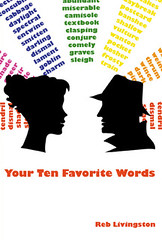
I hope everyone will join me and Nicole at 6:30 PM EST this evening in the chat room and on the phone for the show and the book club discussion. OK, this is me begging! 🙂

Reb Livingston’s Your Ten Favorite Words is a collection of poems that examines the battle between the sexes in a new way, creating caricatures of men and women.  Livingston has a way with imagery, alliteration, and riddles.  A number of poems roll into a rhythm, twist the tongue, and require readers to assess each line carefully.

The collection is broken down into three parts:  Our Rascal Asses; Unsweet and Looking for a Fix; Burgers and Pitchforks.  Readers are introduced to three caricatures Smitten Girl, The Man With the Pretty Chin, and The Heart Specter.  And each section begins with a mini-conversation or set of statements between the characters.  These set up each section, allowing them to unfold.

“The Smitten Girl [to The Man with the Pretty Chin]:  Will you be using your charm for good or injury?

The Heart Specter [murmuring]: (C)harm for G(o)od!” (Page 8 )

Livingston’s collection turns conventional expectations about female perspectives on relationships with men upside down.  Each narrator celebrates female sexuality and desire, but also questions the confusion that comes with that base emotion and need.  At the same time, there is a sense of the comedic in these lines, which pokes fun at the awkwardness of sex and interactions and expectations between men and women.

“He was dark brilliance and moans

(his moans, girlish and dusk, yet I gushed)”  (From Almost Took a Lover Once, page 12)

Livingston’s Your Ten Favorite Words is a collection with a title that will cause confusion among readers and leave them scratching their heads.  The title’s meaning and purpose to the collection could remain obscure for some time, but this is a collection readers will want to return to again and again to unravel the riddles and relish the inner truth of these frank discussions.

About the Poet:

Reb Livingston is a poet and editor of No Tell Books, a press devoted to poetry, and No Tell Motel, an online poetry magazine.  She also is the author of Your Ten Favorite Words (Coconut Books, October 2007) and Pterodactyls Soar Again (Whole Coconut Chapbook Series, 2006). Her poems have appeared in Best American Poetry 2006 and literary magazines.

This is my 26th book for the 2010 New Authors Challenge.

This is my 15th book for the contemporary poetry challenge.


This is my 3rd book for the Clover Bee & Reverie Poetry Challenge.

Since Reb Livingston is a local D.C. area poet, this is a great look at her work as part of The Literary Road Trip, which has moved to Jenn’s Bookshelves from GalleySmith.

***

Please don’t forget to check out the next stop on the National Poetry Month Blog Tour Life Is a Patchwork Quilt.

Reviewing Poetry

A recent article in Publishers Weekly examined the relevance of poetry reviews, especially in light of the dwindling review space in magazines and newspapers across the country.  (Thanks to Lisa at Online Publicist for pointing it out)   As more MFA graduates write poetry and review poetry, the article suggests that the subculture of poetry is blossoming, which I saw first hand at the Split This Rock Poetry Festival.  As poets gathered and protested the war in Iraq and the war and Afghanistan, among other things, workshops espoused the fervor surrounding new poets, their place in the canon, and their push to make waves.

Unlike book reviews, many wonder what the point of poetry reviews are.  Do they sell books or do they have another purpose — at least that’s what Craig Teicher asks in his Publishers Weekly article.  Unfortunately, I’m not attending the Association of Writers and Writing Programs (AWP) conference in Denver this year, but for those going, they are in for a treat since Teicher has helped craft a panel on “The Practice and Purpose of Poetry Reviewing.”

However, I wanted to address the larger issue at hand:  Why review poems and poetry?

I think like fiction, reviewing poetry can demonstrate the enjoyment those lines, stanzas, and verses gave the reader, how deeply the poems affected the reader and caused them to think about the issues at hand.  Will reviews of poetry sell books or do they sell books?  I’m not sure, but I’ve often thought reviewing was purely an exercise in muddling through the text and images to find the deeper meaning of poem or prose.

As a writer, I’ve discovered that reviewing books and poetry keeps me thinking critically and learning the elements of the craft.  I hope that by examining what works and does not work in poems and prose, I can hone my own craft and writing to reach readers.

Many of my readers know that I find poetry inspiring and entertaining, and that I want to entice more people to give it a try and love it as much as I do or at least like it.  While not every poet or poem is for everyone, the same can be said for prose and authors.  It takes time to find poets and poems that speak to you, but the journey is part of the experience.

I would love to hear everyone’s thoughts about this topic, and whether they’ve ever read a poetry review that enticed them to purchase a book of poetry?

***

On another note, check out these great videos of people reading poetry all month long.

***

Also check out the next stops on the National Poetry Month Blog Tour; Rhapsody in Books features W.B. Yeats, Literate Housewife will talk about Alan Ginsburg and one of his readings.

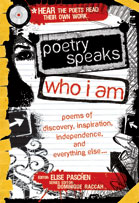
Poetry Speaks Who I Am by Elise Paschen

Elise Paschen’s Poetry Speaks Who I Am combines written verse with audio recitation of poetry by the poets themselves on CDs spark young readers’ love of poetry and verse.  Readers between the ages of 11 and 14 will find poems in this volume that speak to their struggles with love, family, growing into adulthood, and making friends.

“[Paschen says,] For me this poetry is life altering.  It’s gritty.  It’s difficult.  And it hurts in all the ways that growing hurts.  It’s meant to be visceral and immediate.  It’s meant to be experienced.”  (Page XI)

Gritty and real are the best terms to describe the struggles within these lines of verse, from being the only white kid in school to being a Black person at a time when political correctness suggests you are African-America.  But more than that, there are poems about bra shopping — the stepping stones of becoming a woman — and the realization that the world is not perfect and that wars do exist.

Bra Shopping by Parneshia Jones (Page 16)

Mama and I enter into no man’s, and I mean no man in sight, land
of frilly lace, night gowns, grandma panties, and support everything.

A wall covered with hundreds of white bras, some with lace, ribbons,
and frills like party favors, as if bras are a cause for celebration.

Some have these dainty ditsy bows in the middle.
That’s a nice accent don’t you think? Mama says.  Isn’t that cute?
Like a dumb bow in the middle of the bra will take away some of the
attention from two looking, bulging tissues.

Full of wit and sarcasm, this poem illustrates the angst and embarrassment of the narrator as she shops for bras with her mother under the watchful eye of the sales clerk. A number of poems illustrate these feelings of awkwardness and tenderness between friends and parents.

The audio CD that comes with the book is stunning as each poem is read with emphasis and care either by the poet themselves or a contemporary counterpart.  In some cases, the poems are accompanied by ambient noise and/or nature sounds.  Some poems will garner young readers’ attentions more than others, but overall the CD works.

Used Book Shop by X.J. Kennedy (Page 108)

Stashed in attics,
stuck in cellars,
forgotten books
once big best-sellers

now hopefully sit
where folks, like cows
in grassy meadows,
stand and browse.

In a yellowed old history
of Jesse James
two earlier owners
had scrawled their names.

I even found
a book my dad
when he was in high school
had once had,

and a book I found —
this is really odd —
was twice as much fun
as my new iPod.

I always get hooked
in this dusty shop.
Like eating popcorn,
it’s hard to stop.

Poetry Speaks Who I Am is a wonderful collection of classic and contemporary poems from the likes of Langston Hughes and Lucille Clifton to the contemporary works of Billy Collins and Molly Peacock.  Each poem will reach out to young adolescents in new and exciting ways, having them nod their heads in agreement as emotions, situations, and dilemmas are unleashed in verse.  Moreover, the poems selected in this volume will not have readers scratching their heads, wondering what it all means.  These poems are straight forward and get to the heart of the adolescent matter.

FTC Disclosure: Thanks to Sourcebooks for sending me a free copy of Poetry Speaks Who I Am for review.  Clicking on title and image links will lead you to my Amazon Affiliate page; No purchase necessary, though appreciated.

***

I hope that you will take a trip over to Books and Movies because she is featuring Billy Collins as part of the National Poetry Month Blog Tour.

This is my 24nd book for the 2010 New Authors Challenge.

Despite the mix of contemporary and classic sonnets, I think there is enough in here to count for the contemporary poetry challenge, and this makes book #14.

This is my 2nd book for the Clover Bee & Reverie Poetry Challenge.