Quantcast

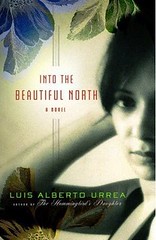
Into the Beautiful North by Luis Alberto Urrea (Audio)

Into the Beautiful North by Luis Alberto Urrea on audio was a delight, especially with the voice and passion of Susan Ericksen.  Nayeli is a young girl working in a taco shop in Tres Camarones, who continues to idolize her father that left her and her mother many years ago.

Her home is under attack from bandits and drug dealers, but many residents have been abandoned by other men seeking the opportunities found in America.  While watching The Magnificent Seven with Yul Brynner, Nayeli and her friends — Tacho, Yolo, and Vampi — decide they are going to make a trek to America to bring back the seven they need to save their town.

The audio brings to life the accents, the culture, the beauty of each scene and the playful sparring between these characters and their new surroundings.  Ericksen’s passion for these characters and this story is clear, illuminating the innocence of Nayeli and her friends and the hardships they face.

From the colorful personalities of Nayeli’s gay boss, Tacho, to her vampire/Goth girlfriend Vampi and perky and whiny Yolo to the matriarch of the village Nayeli’s Aunt Irma, Urrea paints a mosaic of Mexico and the struggles of illegal immigrants and those seeking a better life.  Readers will by far enjoy the quirky Atomico a warrior from the dump outside Tijuana the most as he seeks to defend the four from the ills of the world.

My husband and I were riveted when the audio rolled us to work every morning.  Atomico was my husband’s favorite character because he was like a comic book character; “I AM ATOMICO.”  While the border crossings were the most exciting aspects of the novel for my husband, the end of the novel fell flat; he considered it an open ending as if there were more to come — that the journey had not ended.  Urrea’s writing is passionate and tangible, capturing the reader instantly and weaving a tale that envelops them completely.

Into the Beautiful North is one of the best novels I’ve read in 2009, but I plan to read this in hard copy as well.  As an aside, Anna of Diary of an Eccentric and I were able to meet Luis Alberto Urrea and Susan Eriksen at Book Expo America in May, thanks to the kind dragging of Kathy of Bermudaonion, Julie of Booking Mama, Amy from My Friend Amy, Miriam of Hachette Book Group.  Thanks gals!
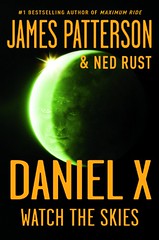
Daniel X: Watch the Skies by James Patterson & Ned Rust

I’ve been a bit busy reading, but I have some reviews from my mom, Pat, to share.  Today, my mom is going to share her thoughts on the latest young adult book from James Patterson.  Please give her a warm welcome.

James Patterson and Ned Rust’s Daniel X:  Watch the Skies is the next book in Patterson’s young adult series.  In this book, the aliens are taking over the town of Holliswood.  With the prevalence of televisions, computers, and portable devices, its easy to be in the face of every resident and document their downfall.

Daniel X, his sister Emma, and two brothers are still searching for who killed their parents.  This family must face the good and bad in this action-packed book.  Readers will speed through the drama to reach its conclusion.  It’s a page-turner and a five-star, must read.

Please check out the book podcast.

My mom would like to thank Hachette Book Group for sending her a free review copy.  Clicking on title links and coverage images will bring you to my Amazon Affiliate page; no purchase required.

We’ve since passed along this book to Anna at Diary of an Eccentric‘s girl and maybe she’ll come back and give us her perspective.

Green Books Campaign: Saffron Dreams by Shaila Abdullah


Welcome to the Green Books Review Campaign, sponsored by Eco-Libris — logo was created by the talented Susan Newman.  100 bloggers, 100 books, 100 reviews — today at 1 PM EST.

We’re here to shed light on the publishers and books available on the market using recycled products and “green” practices.  If you missed my initial post about the campaign, check it out now.  For updates on the campaign, visit Eco-Libris’ blog.

Saffron Dreams by Shaila Abdullah is printed on 30 percent post-consumer waste and Forest Stewardship Council (FSC) certified book paper.  It is also one of the best books I’ve read in 2009.  Stay tuned for giveaway information.

“Summer in Houston tastes like dirt, thick bellowing mounds of dust piling on and on until you can’t breathe anymore.  Sometimes a squalling wind arrives, pressing its puckered lips to the window panes.  Whooooo, it shrieks, whooooosh, and then it cavorts over the pile of dust, depositing it evenly in our miracle-less world.  The rain that follows washes it all away, leaving behind an acerbic mustiness that lingers until September brings in the moldiness that I associate with loss, the dull snicker of an autumn past.”  (Page 178)

A somber tone permeates Saffron Dreams from Arissa Illahi’s childhood to her present in 2006-2007, weaving in and out through her past and present.  Abdullah’s narrative technique will hook readers and carry them alongside Arissa on her journey from Pakistan to America as she matures, marries, gives birth, and reconciles her culture and her religion with her new homeland — a homeland that has grown wary of Muslims following the 2001 terrorist attacks.

“With every horn or commotion guilt-ridden with sins they did not commit.  They walked faster when alone.  Some women took down their hijabs, afraid of being targeted, and adopted a conservative but Western style of dressing.  Men cut their beards.  Many postponed plans to visit the country of their origin any time soon.  Those who did travel preferred to remain quiet during their journey and chose not to converse in their native language even among family members.”  (Page 60)

Saffron’s bitter taste is present throughout the novel as Arissa is steeped in grief and guilt, but the fragrance of hay often associated with saffron lulls her character with memories.  Ami, Arissa’s mother, was absent for much of her upbringing and her father allowed her to find love on her own terms.  It is this family life that shapes her ideas about love, marriage, and family.  Once married to Faizan Illahi, she finds happiness and revels in it, until her life is obliterated in 2001.

Abdullah delves deep into a wife’s guilt, particularly a wife who has adopted a nation as her home that would rather root her out and label her as the enemy.  The dichotomy between religion and culture, mother and daughter, grief and survival are tangible and heart-wrenching.  Some of the best elements in the story include parallels between art and writing and those two talents suffuse the narrative with a dreamlike quality.

Readers will get lost in Arissa’s grief and her confusion about starting anew.  They will cheer her on as her determination takes over.  Each chapter provides a date stamp to orient readers, but Arissa’s narrative shifts easily from past to present on more than one occasion as memories take over.  Saffron Dreams is more than just an emotional journey of perseverance amid the most trying circumstances and tragic events, it is an evolution of one Muslim woman into a whole self, strong enough to stand alone and blossom.

Please check out the rest of the stops in the Green Books Campaign blog tour; there are a wide range of books from fiction to nonfiction and poetry to sustainable living guides. 

I want to thank Shaila Abdullah and her publisher Modern History Press for sending along a free copy for me to review.  Clicking on book titles and covers will bring you to my Amazon Affiliate page; no purchases are necessary.

Photo by Galina Stepanova   

About the Author:

Shaila Abdullah was born in Karachi, Pakistan in 1971. She has a bachelors degree in English literature and a diploma in graphic design. She also has a diploma in freelance writing. She has written several short stories, articles, and personal essays for various publications, such as Maybe Quarterly, Damazine, Women’s Own, She, Fashion Collection, Dallas Child, Web Guru, About Families, Sulekha, Pakistaniaat, and a magazine of the Daily Dawn newspaper called Tuesday Review, etc. She is a member of the Writers’ League of Texas.

Also, please view her literature blog, her art blog, and her design blog.

Giveaway information:  1 copy, autographed for U.S. residents only

1.  Leave a comment about what books you’ve found during the Green Books Campaign that you would buy.

2.  Spread the word about the campaign and the giveaway via Twitter, Facebook, Blog, etc., and leave a comment with a link.

3.  Followers receive five additional entries and new followers receive three extra entries.

Deadline is Nov. 17, 2009, at 11:59 PM EST

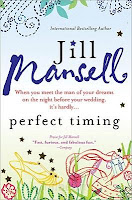
Perfect Timing by Jill Mansell

I’m now a Jill Mansell junkie!  Perfect Timing is an ironic title for this British chicklit novel because nothing is perfectly timed in this novel, from Poppy’s last minute decision to jilt her fiance hours before their wedding to finding her biological father after years of not knowing she wasn’t living with him.

“‘The thing is,’ Poppy prevaricated, ‘my room’s only tiny.’

‘And who am I, two-ton Tess? All I’m asking for is a bit of floor space.’  Dina was wheedling now.  ‘I’ll sleep under the bed if it makes you happier.  In the bath, even.'”  (Page 106 of ARC)

Poppy Dunbar is a twenty-something mess of a girl, who thinks she has her life figured out until she meets Tom at a bar during her bachelorette party.  After giving Rob the brush off, she packs up and moves from Bristol to London to start her life over and to find her biological father.  She works two jobs, lands a room in a house with a famous painter Caspar French and a haughty socialite Claudia Slade-Welch, but seems content.

“‘Try patches.  They worked for my agent and he was a twenty-a-dayman.’

Only a lifelong non-smoker, Rita thought affectionately, could think twenty-a-day was a lot.

‘I was a fifty-a-day woman.’  She looked depressed.  ‘Anyway, why d’you suppose I’m wearing long sleeves? I’ve already got a week’s supply slapped all over me.  Underneath this dress I look like Mr. Blobby.'”  (Page 391 of ARC)

Mansell’s writing style draws readers quickly into the drama as they watch Poppy grow, mature, and find her center.  The dialogue between Poppy, Caspar, Claudia, and Poppy’s boss, Jake, will have readers laughing out loud on their transit commutes, in their bedrooms, on their sofas, or wherever they happen to read.

Poppy is a disaster, but so are Caspar, Claudia, and Jake.  It’s a wonder they ever get it together in this book.  Some of the funniest scenes are when Jake leaves Poppy along to bid at auctions and estate sales.  Readers will enjoy how easily Poppy takes leaps into the unknown and how blind she is to the love and family she has in front of her.  Mansell has another winner with Perfect Timing.

Additionally, I would like to thank Jill Mansell and Sourcebooks for sending me a free copy of Perfect Timing for review.  Clicking on title links will bring you to my Amazon Affiliate page, no purchase necessary.

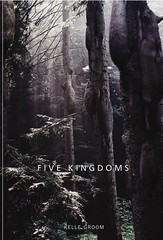
Interview With Poet Kelle Groom

Kelle Groom recently agreed to an interview with myself and 32 Poems. And here is what she had to say.

How would you introduce yourself to a crowded room eager to hang on your every word? Are you just a poet, what else should people know about you?

I also write personal essays/memoir. For the last year, I’ve been poetry editor for The Florida Review, and have now shifted into an advisory editor position. I work full-time as the Grants & Communications Manager for Atlantic Center for the Arts, an international artists-in-residence program in New Smyrna Beach, Florida. Prior to this, I was the Director of Grants Administration for the Coalition for the Homeless of Central Florida.

Do you have any obsessions that you would like to share?

Writing, of course. And books. Coffee. Oceans. Ireland. Prehistory.

When writing poetry, prose, essays, and other works do you listen to music, do you have a particular playlist for each genre you work in or does the playlist stay the same? What are the top 5 songs on that playlist? If you don’t listen to music while writing, do you have any other routines or habits?

I always listen to music when I write, but feel weirdly secretive about it. A few of the pieces are Antony and the Johnsons cover of Dylan’s, “Knockin’ on Heaven’s Door.” Gorecki’s Symphony # 3 with soprano Dawn Upshaw, especially the second movement (that should count for at least two…). Steve Earle’s Ft. Worth Blues, Jeff Buckley’s cover (and John Cale’s) of Leonard Cohen’s Hallelujah. It’s pretty much the same songs/pieces for a year or so, regardless of the genre I’m writing in.

LOUD HOUSE

Het up boys, skitter boys, muttonchop
go-go boys, gurgle music, kidney stone
music, muchachos party, rubicon sand fire
flaring party, thunderbird ski hats in summer
party, sweaty head party, pound & thump,
socket burning beach party, orange forklift
beach, orange moon ba-boom, hooch smoke,
ta-ta smoke, stonkered house, pandemonium
tetherballed, turtle orbitted, oriflamme ant
house, rust hilled, I know I’m violating
myself house, Maybe you’ll see me
on MTV house, No, dude (to a dog) house,
evening knock knock knock knock
house, evening anamatter clink: glass and tin,
goo food jars, chest hammer music, earthmover,
dog bark music, beep beep back-up
talk, rag and straw sleep, panic sleep, dart
sleep, rummage, rumple, canyon sleep,
sulky bunco, mittenheaded boys, saw-
voiced reclamation boys, fumarole,
radio pale, tar breathing boys
in the chewed grass, white sail an exhale.

(originally appeared in 32 Poems; forthcoming in Five Kingdoms, Anhinga Press, 2009)

If you’ve enjoyed Kelle’s answers so far, I suggest you check out the rest of my interview with her over at 32 Poems Blog. Once there, you can find out about her workspace, her inspirations, and much more. Feel free to leave me comments about her interview or your thoughts on poetry in general.

About the Poet:

Kelle Groom’s poems have appeared in The New Yorker, Ploughshares, and Poetry, among others. Her poetry collections are Five Kingdoms (Anhinga Press, 2009), Luckily, a 2006 Florida Book Award winner (Anhinga), and Underwater City (University Press of Florida).

She’s received awards from Atlantic Center for the Arts, The Millay Colony, Sewanee Writers’ Conference, Virginia Center for the Creative Arts, State of Florida Division of Cultural Affairs, Barbara Deming Memorial Fund, United Arts of Central Florida, Volusia County Cultural Council, and New Forms Florida.

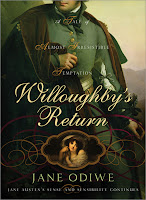
Willoughby’s Return by Jane Odiwe

Willoughby’s Return by Jane Odiwe reunites readers with Mr. and Mrs. Brandon and Marianne’s sisters Margaret and Elinor from Sense & Sensibility by Jane Austen. 

“But three years of married life had done little to really change her.  Marianne still had an impetuous nature, she still retained a desire for impulse and enterprises undertaken on the spur of the moment.”  (Page 3)

Truer words were never spoken about Marianne.  She is the same impetuous girl from Austen’s book, even though she is married to Colonel Brandon and has a son, James.  Her husband, however, has obligations to his ward, the daughter of his deceased first love, and her child–a child she had with Marianne’s first love, Mr. Willoughby.  Drama, drama, drama fills these pages, just as they filled Marianne’s life in Ausen’s work, but Odiwe adds her own flare to these characters.

Marianne continues to hide things from her husband no matter how innocent the situations may be and her jealousies drive her to make nearly scandalous decisions and snap judgments.  However, while this book is titled Willoughby’s Return, he is more of a minor character and his storyline with Marianne looms from the sidelines as her younger sister Margaret and her beau Henry Lawrence take center stage.

“She watched two raindrops slide down the glass, one chasing the other but never quite catching up.”  (Page 39)

Margaret is very like Marianne in that she is passionate, romantic, and impetuous.  She’s opposed to marriage and Marianne’s matchmaking until Margaret sets eyes on Henry Lawrence.  She falls head-over-heels for him, but Odiwe throws a number obstacles in their way.

Readers may soon notice some similarities between Henry Lawrence and Frank Churchill from Emma by Jane Austen, but the romance unravels differently for Henry and Margaret than it does from Frank and Emma.  Readers that enjoy Jane Austen’s books and the recent spin-offs will enjoy Willoughby’s Return — a fast-paced, regency novel with a modern flair.

This is the 5th item I’ve completed for the Everything Austen Challenge 2009.  I’m one item away from meeting my goal, which will be coming up either later this month or in December.

Don’t forget the Willoughby’s Return giveaway, here.

Additionally, I would like to thank Jane Odiwe and Sourcebooks for sending me a free copy of Willoughby’s Return for review.  Clicking on title links will bring you to my Amazon Affiliate page, not purchase necessary.

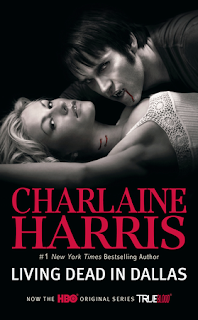
Living Dead in Dallas by Charlaine Harris

Charlaine Harris’ Living Dead in Dallas continues the Sookie Stackhouse series.  Sookie has agreed to use here telepathic powers to help the vampires when necessary so long as the interviewees go free.  The death of a co-worker and friend thrusts Sookie deep into the vampire world.

“‘Angelic Sookie, vision of love and beauty, I am prostrate that the wicked, evil maenad violated your smooth and voluptuous body, in an attempt to deliver a message to me.’

‘That’s more like it.'” (Page 40)

The Sookie Stackhouse series is full of vampires and other supernatural creatures, mystery, and witty dialogue.  Readers will find the vampire world created by Charlaine Harris dark, intricate, and mysterious.  As their world unravels to reveal its connections with other supernatural communities or its battles with other groups who wish vampires were back in the coffin, readers will be absorbed.

“I realized I’d been rented, like a chainsaw or backhoe.  I wondered if the vampires of Dallas had had to put down a deposit against damage.” (Page 47)

Sookie is soon sent to help vampires in Dallas where she is caught up in the community’s feud with the Fellowship of the Sun.  Some of the most interesting elements of this novel was learning about Anubis Air and its business of transporting vampires across state lines as cargo and offering them protection when they travel during the day.  Living Dead in Dallas is a quick read.

Living Dead in Dallas is a book I purchased from Borders and is in my personal library.  Also, clicking on images and text links to books will bring you to my Amazon Affiliate page.  No purchases are required.

This is the second book I’ve read for the Sookie Stackhouse Reading Challenge, which I read during the October 2009 24-Hour Read-a-Thon.  I’m hopeful I can read the rest and complete the challenge, though the deadline for this one escapes me at the moment.

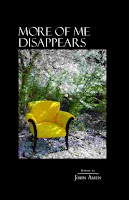
More of Me Disappears by John Amen

John Amen’s More of Me Disappears is broken down into three separate sections and each poem in each section is accessible, vivid, and explosive.  In a number of poems, Amen’s musical and song writing talents permeate the lines.  However, these are more than rhythmic dances, his work gradually moves toward a vanishing point. 

From Verboten (Page 17)

“They are drinking wine and speaking
of French-U.S. relations when the long
sleeve on her arm falls down.  Before
she can clutch it, I see the faded blue
tattoo on her flesh.  “What are those
numbers?” I ask.  A silence explodes
through the room like spores.”

Each poem in this collection tells a story, reflects on a bright memory, and picks these events apart to reveal the truth beneath.  There are times in this volume when the narrator is sure of his path and at other times ideas run contrary to one another.  Some of my favorite lines will leave readers squirming or gritting their teeth.

From Walking Unsure of Myself (Page 65)

“The fortune teller is battling a migraine.
Wind has swallowed my itinerary.

A man in blue goggles is on his knees outside the bank.
The rape victim is scrubbing herself with a steel brush.”

Readers will enjoy the music of these poems and how these poems pop off the pages, with an in your face quality.  Subtlety is not a prevalent style in Amen’s work, but readers will appreciate his frankness.  From poems where the narrator takes an active role to poems to observances from a distance, Amen draws the reader in with immediate and concrete details.  One of the best collections I’ve read in 2009.

New York Memory #3 (Page 36)

“When I get to my dead father’s apartment,
Liz emerges from ruptured planks and exploded plaster.
She is covered with soot, like some pagan baptized
in refuse.  The wrecking crew has come before
we had a chance to vacate the place, stripped the loft
to its skeleton.  My father’s furniture has been destroyed,
a lifetime buried beneath an avalanche of wood and iron.
Beds have been gutted, paintings raped by protruding nails.
A fast-food cup rises from the ruin like a conqueror’s flag.
The apartment is quickly remodeled, rent raised;
the revolving door of humanity spins.  Over the years,
I make a point of knowing who is living there.  I see tenants
come and go.  I accept that we’re not so unlike animals.
I mean, I have this friend who tells me all about bees,
how the queen is revered and protected, ultimately
replaced in a savage deposition, how the mad
hive continues, greater than any one member.
And everything he says sounds familiar, and stings.”

I want to thank John Amen for sending me a free copy of his book More of Me Disappears for review.   For additional examples from this book, visit John Amen’s Web site.

Also, clicking on images and text links to books will bring you to my Amazon Affiliate page.  No purchases are required.

This is my 6th book for the poetry review challenge.

Carta Marina by Ann Fisher-Wirth

Carta Marina was the first largely accurate map of the Northern Countries, completed by the Swedish historian Olaus Magnus in 1539.  Ann Fisher-Wirth has taken her inspiration from this map–complete with its lions, sea monsters, and warriors–for her poem in three parts–Olaus Magnus’ Carta Marina, The Coming of Winter, and Les Tres Riches Neures.

“When I was young, Yeats said, I wanted to take off my clothes,/
now I want to take off my body.” (From April 3. In the Restaurant, Page 61)

Each poem within the overarching three parts of the larger poem, Carta Marina, chart the story of the narrator as she travels through Sweden and the inner heart and soul.  The poems are dated so readers can follow the poet narrator’s progress as they deal with old age, finding a lost love, and incredible loss.

In section one of the poem, readers follow Olaus Magnus on his journey into the north interspersed with email from Paris between lovers.  Fisher-Wirth uses a combination of images and stylistic devices to create her own unique account of a cartographer’s journey, but in some cases, the use of the alphabet was a bit difficult to follow and at times distracting.  Readers may need to sit with these poems, allowing their meaning to simmer to the surface.

“But in the booth facing me the twenty-first child/
chews stolidly, gazing . . ./
lost in whatever dream, as her duckling-colored//

braids bob and her jaws revolve./
Above her pale blue jacket her eyes meet mine;/
I look away, look back, she is watching me./
In this season of coming winter she is my daughter.//”  ( From November 14, Page 33)

The second section of the poem, the narrator is reflecting on her existence and how she relates to those in in her life and life-changing events.  But there is also a reflective self-examination of who she once was and how to reconcile that person who is no longer present with the woman she has become.  From beautiful and mysterious phrases like “icy mercury blackness” to jarring images such as “Three skulls form the base of the table,” readers will transition from thoughtful to alert awe.

In the final third of the book, Fisher-Wirth incorporates some musical rhythm through repetition.  Carta Marina may resemble a cartography of life and aging, but the poem in three parts is a journey, like a journey through the northern lands of Sweden, wrought with harsh weather and rough terrain.  The background story behind the map inspiring these poems is intriguing, but readers could find that they will have to take their time with some of these poems, churning over their images like the Baltic Sea.

December 17, 4 a.m.

I know how to find you.
I go where your sleeping
is filled with the shadows
of leaves, where the leaves have
bled their green,
and all that remain are
their skeletons, nearly
transparent, translucent,
and tissue gone blurred as
the moon among clouds, as
the fur on a moth’s wing,
and tips as if trailing
through water . . .

Such leaves are not common.
In this snowy country
they cherish them, save them,
the white skelettbladen–
like us, they have died, to
become more enduring.

(From Page 47)

I’d like to thank Ann Fisher-Wirth (click her name for my interview) for sending me a free copy of her book, Carta Marina, for review.   Also, clicking on images and text links to books will bring you to my Amazon Affiliate page.  No purchases are required.

This is my 5th book for the poetry review challenge.

Interview With Poet Claudia Burbank

Claudia Burbank recently agreed to an interview with myself and 32 Poems. And here is what she had to say.


How would you introduce yourself to a crowded room eager to hang on your every word?  Are you just a poet, what else should people know about you?

I’ve come to writing after retiring from the corporate world (telecommunications).  I was one of those road warriors you see running through the airport.  I knew I was traveling too much when the airline crew celebrated my birthday.  Lacking a background in English or writing I had to start from scratch.  Reading has been a lifelong delight though. 

I’m a graduate of Vassar College and a 30 year subscriber to the Metropolitan Opera in NYC.  Few people know I’m proficient at wallpapering and installed a tub surround with sliding glass doors by myself.  

I received a Fellowship in poetry from the New Jersey State Council on the Arts, won the Inkwell Award (Alice Quinn, judge), and had my work featured on Verse Daily.  I’ve published about 90 poems so far, most recently in Subtropics, Hotel Amerika, and Passages North.

Do you see spoken word, performance, or written poetry as more powerful or powerful in different ways and why? Also, do you believe that writing can be an equalizer to help humanity become more tolerant or collaborative? Why or why not?

Most writers are better at writing than reading their work aloud which often tends to be dull, interminable, largely indistinguishable and unmemorable.

The written word tends to be more powerful and lasting and easier to grasp.  Studies show that the brain is actively engaged in creating the experience when you read as opposed to being a passive listener.  If your mind wanders you can simply start over. 

On the second question: if only.

Do you have any obsessions that you would like to share?

I tend to be obsessive about most things I do.  This month that includes Ken Ken puzzles, keeping my teeth extra clean, and the adagio from Beethoven’s “Emperor Concerto.”

If you’ve enjoyed Claudia’s answers so far, I suggest you check out the rest of my interview with her over at 32 Poems Blog. Once there, you can find out about her workspace, her inspirations, and much more. Feel free to leave me comments about her interview or your thoughts on poetry in general.

Free Verse: Edgar Allan Poe

Cara at Ooh…Books has started a new meme on Wednesdays called FreeVerse to introduce poetry to new and old readers in a variety of ways.

I took my cue from Cara today and decided to post a YouTube video in which Christopher Walken reads Edgar Allan Poe’s The Raven.

Check it out, feel free to leave your impressions, and please do check out Cara’s Edgar Allan Poe reading by one of my favorites Vincent Price.

Don’t forget Virtual Poetry Circle on Saturdays, every week. Check it out, come participate–no pressure, really!!  🙂

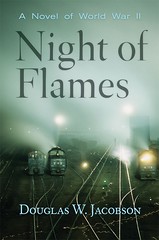
Night of Flames by Douglas Jacobson

Douglas Jacobson’s Night of Flames is a gritty “spy” novel set during World War II beginning in 1939 during the invasion of Poland by the Nazis.  The main protagonists Anna and Jan Kopernik are separated by war and face near misses with the wrath of the Germans.  Anna joins the resistance in Belgium reluctantly, while Jan jumps at the opportunity to help MI6 on a secret mission in Poland with the hope that he can find his wife.

“Anna’s eyes snapped open and she sat bolt upright.  The shrill sound blasted into her brain, penetrating through the fog of sleep like an icy wind.  She blinked and looked around the dark room, trying to focus on shadowy images as the sound wailed on and on.”  (Page 11)

Anna is in Poland with her friend, Irene, and her son when the bombings start in earnest, leaving them and their driver very few options on the way back to Krakow and her father, a professor at the local university.  Anna is hit by significant loss and constant worry about her husband, who’s career is with the Polish military.  Night of Flames is a fast-paced novel that pushed through the front lines and skulks in the shadows of the resistance.

“‘The best thing any of us can do is try and keep out of their way, and if you get stopped or challenged, be as cooperative as you can.’

‘So you’re telling us to act like house pets in our own city.'” (Page 65)

Jacobson’s no-nonsense writing style will place readers in the heart of the resistance, though some readers could get bogged down by the military strategy and direction, such as how the resistance used holes dug in the earth to hold lanterns that were lit to signal the Allies as to where to drop supplies.  Readers will either enjoy the detailed strategy or wish for a greater focus on the characters.  Anna is the most developed of the two protagonists, though Jacobson does give each nearly equal time through alternating chapters.  These chapters help build tension, leaving the reader in suspense as to whether they will ever be reunited.

Readers who enjoy learning about World War II and who enjoy spy novels will like this novel.  But Night of Flames is more than just a war novel; it is about how ordinary citizens can rise up to reclaim their homeland and their dignity in the face of adversity signifying an indelible human spirit.

Check out this video for Night of Flames:

I want to thank Douglas Jacobson, McBooks Press, and Pump Up Your Book Promotion for sending me a free copy of Night of Flames to review.  If you click on the title links, you’ll be taken to my Amazon Affiliate page, but there is no obligation to buy.

They’ve also kindly provided an additional copy for one reader of my blog from anywhere in the world.  To Enter:

1.  Leave a comment on this post.
2.  Check out the War Through the Generations blog and leave me a relevant comment here about something you read or learned.

3.  Blog, Tweet, and spread the word about the giveaway and leave a comment here.

Deadline is Nov. 4, 2009, at 11:59 PM EST

This marks the 7th book I’ve read for the WWII Reading Challenge.  Though I officially met my goal of reading 5 WWII-related books some time ago, I’ve continued to find them on my shelves and review them here.  I’m sure there will be more, stay tuned.