Quantcast

Interview With Poet Liz Gallagher, Part 2

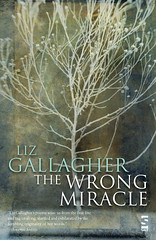
Liz Gallagher’s collection of poems, The Wrong Miracle, are not only love poems, but poems with a unique view on love.  Check out the synopsis at Salt Publishing.

If you missed the first part of my interview with Liz, please check it out here.

Most writers will read inspirational/how-to manuals, take workshops, or belong to writing groups. Did you subscribe to any of these aids and if so which did you find most helpful? Please feel free to name any “writing” books you enjoyed most (i.e. Bird by Bird by Anne Lamott).

I’ve never been a member of a ‘real-life’ writer’s group because of there not being any that I know of in existence here in the Canaries. I’ve only ever been to one or two workshops. My mainstay for writing has been online workshops, namely Inside the Writers´ Studio Forum that is run by Rachel Mallino.  I’ve had lots of inspiring experiences in there on the thirty poems in thirty days forum.  I’ve  also dipped into some writing manuals . . . one in particular that I found very useful at the beginning was “The Practice of Poetry” edited by Robin Behin & Chase Twichell.
When writing poetry, prose, essays, and other works do you listen to music, do you have a particular playlist for each genre you work in or does the playlist stay the same? What are the top 5 songs on that playlist? If you don’t listen to music while writing, do you have any other routines or habits?

I don’t listen to music when writing, I need complete silence, which means I can only really ‘write, write’ in my writing den at home. : ) I drink tea too. Most of the poems in The Wrong Miracle were written while my cat, Mr. Puss, sat alongside me purring and kneading the cushion, sadly, he is no longer with us, that may be why I am finding it very hard to find time and the will to sit down and write just now. I definitely miss him, he was my writing mascot. 

In terms of friendships, have your friendships changed since you began focusing on writing? Are there more writers among your friends or have your relationships remained the same?

My ‘real-life’ friends are mostly non-writers but great readers. Practically all of  my online friendships are with writers. I have met some online writer friends in person who have then become ‘real life’ writer friends. 

Do you have any favorite foods or foods that you find keep you inspired? What are the ways in which you pump yourself up to keep writing and overcome writer’s block?

No, no favourite foods.  I don’t really believe in the idea of having to wait for inspiration to hit. There may be times when I feel more in the humour for writing than others but in general, I think it is a case of just getting started and keeping with it for a set time to see what comes up.  Reading usually kick-starts me into wanting to write.  And a commitment to daily writing is really the ideal way for me to keep going.

Please describe your writing space and how it would differ from your ideal writing space. 

I love the writing space I have: futon, laptop, low-level lighting, quietness, a valley and vivid natural light on the doorstep.  I can’t think of anything else to add other than having a constant supply of tea at hand, and maybe the sound of the faint pull and sway of the sea outside.  : ) 

Please share with the Savvy Verse & Wit readers a little about your latest projects.

For the next 6 months, I’ll be involved in ‘non-creative writing’ writerly things, but come July 2010, I want to revise a load of poems that I have and begin writing more non-fiction. I am also toying with the idea of writing poems and stories for children. I’ll have to wait and see though;it seems very far off just now.

Plans for the immediate future include some readings of The Wrong Miracle that are coming up here in the Canaries. 

Thanks very much for having me here on your Blog, Serena, it has been a pleasure, I have enjoyed your thought-provoking questions. Have a great festive season and all the best for the New Year. 

If you’ve enjoyed this interview, please feel free to check out the next stop on her online tour today, Dec. 17:  South Africa-based Michelle’s Blog Peony Moon

Also, I wanted to let you all know that a portion of the proceeds from The Wrong Miracle will benefit SAND:  Stillbirth and Neo-natal Death Charity.
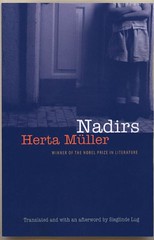
Nadirs by Herta Muller

Nadirs by Herta Muller, who recently won the the Nobel Prize for Literature (click for my article), is a collection of mostly autobiographical short stories about surviving a communist regime and personal drama.  This 120-page work is translated from her native German language, and is one of only a few of her works that have been translated into English.  Muller straddles the surreal and reality in her stories, and in some cases this balance is executed better than in others.  However, her concise and detailed language paints vivid pictures for readers of harsh conditions and deep sadness and other emotions.

“In all the pictures, Father was frozen in the middle of a gesture.  In all the pictures, Father looked as though he didn’t know what to do.  But Father always knew what to do.  That’s why all these pictures were wrong.  All those false pictures, all those false faces chilled the room.  I wanted to get up from my chair, but my dress was frozen to the wood.”  (from “The Funeral Sermon,” Page 2)

In many ways these short stories are more like long, narrative poems filled with imagery, metaphor, and illusion, but there are occasions when Muller clearly outlines what is happening in these families and how it impacts each narrator, who in many cases is a young girl.  In “Rotten Pears,” the young narrator travels with her father and her aunt to a village to sell their vegetables and fruit, but staying overnight in a strange village reveals dark family secrets and alludes to other possibilities.

“I walk through the cemetery gate and the bell is in front of my face.  The stroke of the bell is under my hair.  The stroke is in my pulse next to my eyes and in my weary wrists under the tangled fern.  The knot that dangles from the rope of the bell is in my throat.”  (From “Oppressive Tango,” Page 86)

With stories ranging from just a few pages to 60 pages or more, Nadirs has something for the quick trip on the subway or the long leisurely moments on the couch, though many of these stories deal with deep sadness and betrayal.  Muller also is clearly a poet, economizing her words to create images that will burn into readers minds and remain there for many hours, days, weeks, and months.  She uses repetition and juxtapositions of black and white, noise and silence, and other techniques to peak readers’ curiosity.

“Their velvety bulging bellies popped and sprinkled white milk on the floor.  Then loathing crawled up on me from my shoes and put its tentacles around my throat, and its hands were gaunt and cold like the hands of the old people I saw in those beds with lids in front of which people would sit in silence and prayer.”  (From “Nadirs,” Page 18)

Overall an excellent collection to get a sense of Muller’s style, and many of these stories resemble nightmares from a child’s point of view.  Unfortunately, the short story from which the collection’s name is taken was the least engaging and overly surreal.  With “Nadirs” (click the link for a definition) being the longest story in the collection, it was tough to get through and ultimately some readers (including me) may give up and skip to other stories in the collection.

FTC Disclosure:  I borrowed this copy of Nadirs from the library.   Clicking on title links will bring you to my Amazon Affiliate page, no purchase necessary. 

Dragon House by John Shors

“Iris felt as if a unique cultural experience occurred on the back of scooters.  She reflected that in America, people drove their cars and rarely even opened their windows.  Within cars people tended to be isolated, listening to the radio or maybe talking on the phone to a friend.  Cars were people’s places of refuge, highly personalized sanctuaries within which Americans often sought escape.  Driving a scooter in Vietnam was a completely different experience.  In addition to the ease of conversation, the lack of lanes and laws almost mandated that people acted in cooperation.  Drivers didn’t cut one another off or blast their horns.  Though they drove quickly, always looking for the fastest route, if an old woman was trying to cross an impossibly busy street, people braked and weaved around her without a second glance.”  (Page 184 of ARC)

Iris is just one of the main characters in John Shors’ Dragon House and she’s had a tough childhood with a mostly absent Vietnam veteran father.  Noah, her childhood friend and also a veteran but of the Iraq War, accompanies her to Vietnam as Iris strives to fulfill her father’s dream.  Through a shifting narrative, readers are shown glimpses of what it means to live on the streets of Vietnam as orphan children with Mia and Minh or as a grandmother Qui raising her leukemia-ridden granddaughter Tam by selling books to American tourists.  Dragon House examines how these cultures are misunderstood on both sides and how they clash with one another even in times of peace.  Shors deftly mixes sadness with hope to reveal the beauty beneath the grime and compassion inherent in humanity.

“Iris thought about her father, about how he also came home shattered from a war that wasn’t of his making.  A marriage and a daughter hadn’t saved him from his demons.  Why would Saigon save Noah? Though Iris was unsure, she knew what her father would say, knew he’d want her to bring Noah.”  (Page 13 of ARC)

Readers will be blown away by the vivid descriptions of Vietnam and the evolution of the novel’s main characters as they find themselves in a foreign land and repurpose their lives to meet the needs of others and fulfill a dream.  Shors uses description in a way that conveys deep emotional scarring and how that damage is repaired over time.  

“The city was a kaleidoscope of old versus new, memories versus ideas, stone versus chrome.”  (Page 15 of ARC) 

Mia and Minh, who sell fans and gamble with tourists over games of Connect Four, display strength amidst adversity, but like Noah, even the strongest of us have our breaking points.  Qui and Tam also display significant strength.  In a way these characters offset the deep desolation felt by Noah because they continue to survive and hope, while Noah is steeped in blackness and hopelessness, finding solace in whiskey and pain pills.  There is more going on in Dragon House than meets the eye with Iris and Noah preparing a children’s center for opening and these children living on the streets.  Readers will be absorbed in Shors’ world and turn the pages hoping for the best resolution possible.

If you missed my interview with John Shors and the giveaway for Dragon House, please check it out.

John Shors’ novel would make an excellent gift for the holidays for the readers among your family and friends, and a portion of the proceeds from book sales are shared with the Blue Dragon Children’s Foundation (click for more details).  Also, check out this write up in the Denver Post about the charity.

FTC Disclosure:  I want to thank John Shors for providing me with a free copy of Dragon House for review.  Also, thanks to Diane Saarinen of Book Blog Tour Guide for setting up the blog tour. Clicking on images or titles will bring you to my Amazon Affiliate page; No purchase required. 

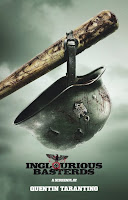
Inglourious Basterds by Quentin Tarantino

Quentin Tarantino’s Inglourious Basterds is the screenplay for the revenge war film of the same name.  Moviegoers love Tarantino’s films for a multitude of reasons or they hate them for a multitude of reasons, but the screenplay provides a whole new insight into the filmmaker and his work.

Author David L. Robbins says in the forward, “The script remembers, too, the classic propaganda films of Leni Riefenstahl and Joseph Goebbels.  It glimpses the faces of Hitler and Churchill and the interior of a wartime movie house in Paris, and zooms in on the horrors of close combat, the mania of vendetta.  . . . Inglourious Basterds does not indulge in lampoonery or mere cobbling.  It is reverently authentic as a war story, working the same tense, edge-of-the-seat magic as the best of the genre, book or movie.  At the same time, it’s Tarantino, its own thing.”

There are two main storylines in the film — one deals with the death and ultimate revenge plot of Shosanna Dreyfus and the other follows the basterds through Germany as they take on the Nazis and bumble around during secret missions to win the war.  In typical Tarantino fashion, the script bounces from each group and several moments in time, quilting together the larger arc of the story and conclusion of the war.

The script includes little tidbits about the characters that are never seen or talked about on screen.  Readers will be amazed by the depth of detail Tarantino provides in stage direction, the description of the scene, and explanation.

“Lt. Aldo [played by Brad Pitt] has one defining physical characteristic, a ROPE BURN around his neck — as if, once upon a time, he survived a LYNCHING.”  (Page 19)

“WE SEE all the pagentry below.  Tons of SPECTATORS.  Tons of guests dressed in Nazi uniforms, tuxedoes, and female finery, walking up the long red carpet (with a big swastika in the middle, naturally) leading into Shosanna’s cinema.  The German brass band omm-pa-pa-ing away.  German radio and film crews covering the event for the fatherland back home.  And, of course, MANY GERMAN SOLDIERS providing security for this joyous Germanic occasion.”  (Page 125)

Although the script does not depict the true conclusion of World War II, Tarantino illuminates the horrors of war and creates an atmosphere of the ridiculous in its revenge themes.  Watching the film is fast-paced, hilarious at moments, and gruesome, but reading the script plunges readers into their own personal version of the events and enables them to sink their teeth into Tarantino’s witty and poignant dialogue.  The basterds’ dialogue drips with disdain and self-righteousness, while Col. Hans Landa, or the Jew Hunter, uses language to demonstrate his superiority, even though his outward actions border on comedic.

Lt. Aldo:  Well, Werner, if you heard of us, you probably heard we ain’t in the prisoner-takin’ business.  We in the killin’ Nazi business.  And cousin, business is boomin’.  (Page 28)

FEMALE SGT. BEETHOVEN and STIGLITZ bring their guns toward each other and FIRE.  They BOTH TAKE and GIVE each other so many BULLETS it’s almost romantic when they collapse DEAD on the floor.  (Page 108)

Overall, Inglourious Basterds by Quentin Tarantino is an excellent specimen of a screenplay from its detailed stage direction and description to its witty and insightful dialogue, it will capture readers imaginations just as the film did on screen.  There are portions of the script that did not make it onto the big screen, but that’s to be expected with any film; there also are scenes in the movie that are not in the script.  The beauty of a screenplay is that it is not a stationary work of art, but one that evolves from page to screen under the guidance of its maker.

This is my 9th book for the WWII Reading Challenge 2009.  I can’t believe I’m still finding these on my shelves even now in December.  There may have to be a time when we revisit this war.

Additionally, I would like to thank Hachette Group for sending me a free copy of Inglourious Basterds for review.  Clicking on title links will bring you to my Amazon Affiliate page, no purchase necessary. 

Interview With Liz Gallagher, Author of The Wrong Miracle

Liz Gallagher’s collection of poems, The Wrong Miracle, are not only love poems, but poems with a unique view on love.  Check out the synopsis at Salt Publishing.  Here’s a selection from her collection:

Sun Over a Tree Line

I was buying a croissant when I saw
the execution photo. Sometimes we focus
on the explorer — the tangled weed inside

every Because they said so. Nerves can
be as frayed as a sofa. Faint hoof prints
take over and a last wish for a dictator

is a pedicure. Measures of change are
contained in names once held
in a cell phone — a baker missing,

a family, moved. A city under siege
is a Humpty Dumpty — its people grab
door handles and door frames collapse.

Moth-eaten fabric covers all wars.
A problem is dead bodies — blankets
waterlog, headlights turn off and it is

all about inching forward like thieves.
A mistake magnifies within its own
dimensions. Under the gaze of a camera,

there are epiphanies — God becomes
a ragged fellow who moves
from tree to tree in the back of the mind.

He pursues the living and the dead stay dead.

Liz Gallagher took time out of her busy schedule to answer some interview questions.  I hope you will give her a warm welcome.

Thanks for inviting me here. It’s a great looking Blog and I know I am going to feel very relaxed and at home here.

Could you describe a little bit about what inspired you to become a poet and how The Wrong Miracle came about?

Well, Serena, truthfully, I never set out to be a poet as such, it sort of ‘happened.’  I’ve always loved writing and after a spell of maybe 20 years without writing in a creative way, I found myself going back to writing creatively after I went through a rather long and disciplined time of studying and being very much in the academic world., that is up until about 4 years ago.  I remember being at a beach barbeque and thinking: ‘Freedom’ ‘I’m going to live for the moment, no more studying’ and actually saying to a friend that I was finished with studying and being all academic and I remember she said to me something in the line of ‘You’re so disciplined in your study, what do you think you will do with all that free time you are going to have?’ And I remember answering that that was exactly it . . . free-time was going to be free-time and nothing was going to take that away from me!  But before I knew it, I was seeking out online writing forums and writing poetry and getting ultra-involved and addicted.

So as not to bore any readers who have been lovely enough (and interested enough) to follow the tour from the beginning, and to answer the question for you, Serena, (and any new readers who might be following,) I spoke on TFE’s blog about how The Wrong Miracle came about….(at TFE’s we had a poetry poteen party and danced till dawn . . . The address is the following if you want to pop over there.   While approaching the answer, mind the poteen bottles and plead total ignorance of everything if Inspector Columbo or Inspector Clousseau approach to ask questions . . . ‘I know nothing’ is the preferred answer . . . . TFE will explain why . . . I truly know nothing ; ))

Poetry is often considered elitist or inaccessible by mainstream readers. Do poets have an obligation to dispel that myth and how do you think it could be accomplished?

I think that, yes, poetry up until recently had been hijacked (and consequently suffocated and quietened) by certain academics to the extent that it had become exclusive terrain. This is something which definitely has happened, however, poets are now, literally, re-claiming poetry for themselves and for their audiences.  They are metaphorically (and sometimes literally) climbing academic ladders and dusting down books and blowing dust off and saying ‘Listen, here!’  Poets, and consequently, people in general, through poetry readings and poetry performances and literary festivals are breathing life back into poetry and taking it on to the streets to show that, yeah, poetry does matter.  It is not just a subject for academic study.  The thing that I feel amazed by and very motivated by is that people are willing to give poetry a second chance, as most people (of my age, anyway) would have had awful classroom experiences of poetry been analysed to death in an excrutiatingly boring way . . . I remember my English teacher in secondary school saying something like: ‘None of you are going to appreciate any of this poetry that we are about to do now, but in 20 years time, you might want to re-pay all of this a visit . . . and in doing so, you might remember me and what I said to you regarding poetry.’  I remember thinking I am going to remember him saying this and I bet to myself then and there that it wouldn’t be true . . . that I wouldn’t be going within a hair’s breadth of poetry ever again . . . but here I am!  What a shame a teacher like that couldn’t have thought of a more creative way to get poetry to us, we were ripe for poetry with all our 16 and 17 year old emotions seeking some form of outlet . . . Poetry, with justice done to it, would have been ideal here.  

So, Serena, basically, with the live poetry scene taking off really well, especially in Ireland, and in a tiny way, here in the Canaries, I think that poetry is becoming relevant in people’s everyday life.  Hopefully, it will keep on happening and that more and more people will get involved.

Do you have any obsessions that you would like to share?

Well, let’s see, I love the dark and writing in and into the dark.  I love being up drinking tea on my own at dawn.  

When I find a new poet’s work that I love, I become easily obsessed by them and seek their work out, high and low, and think ‘I’ve got to read everything they have ever written!’

Also chocolate at around 5 pm!  And a glass of wine at 10 pm. ; ) And also Thai massage, Thailand . . . and planning getaways! : ) 

How do you stay fit and healthy as a writer?

I have got two very demanding (and very amusing) dogs who bark the house down if I don’t take them on daily treks into the valley.  We also own a tumble-down farm so most days I try to do something there to make it less tumble-down looking!  The farm has six terraces which are step-like land masses and going from one spot to another involves lots of climbing.  And I eat lots of oranges because we have about twenty orange trees on the farm so that means oranges the whole year round!  Oh and yes!  I’m a 2-litre-a-day water drinker . . . I am always to be seen with a bottle in my hand (not the TFE-poteen-party type bottle!) 

Thank you so much for having me here, Serena…looking forward to popping back next week to continue our chat.

About the Poet: (Photo Credit: Vladi Valido)

Liz Gallagher was born and brought up in Donegal, Ireland. She has been living in Gran Canary Island for the past 14 years. She has an Education degree where she specialised in Irish language. She also has a Computer Science degree. She is at present doing research into online debating for her PhD. She began writing about 5 years ago and has won a variety of awards in both Ireland and the US: Best New Poet 2007 (Meridian Press, Virginia University) First Prize in The Listowel Writers’ Single Poem Competition 2009 and she was selected by Poetry Ireland for their 2009 Introductions Series in recognition of her status as an emerging poet.

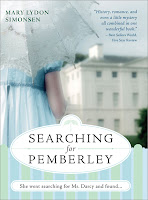
Searching for Pemberley by Mary Lydon Simonsen

Mary Lydon Simonsen’s Searching for Pemberley starts was a premise many interviewers often ask authors about their fiction:  “Are any of your characters based upon real people?”  Did Jane Austen use real people to write the great love story of Elizabeth Bennet and Fitzwilliam Darcy?  Simonsen’s book may not offer the truth behind Austen’s characters, but it does spin a unique mystery tale through which one possible reality of Mr. Darcy and Ms. Bennet are discovered.

“‘Mr. Crowell, you don’t know me.  I’m Maggie Joyce, but I was wondering if . . .’  But that was as far as I got.

‘You’re here about the Darcy’s right?  Don Caton rang me to let me know you might be coming ’round.  Come through.  Any friend of Jane Austen’s is a friend of mine.'”  (Page 12 of the ARC)

Maggie Joyce is the main protagonist and an American from a coal mining town in Pennsylvania.  She quickly leaves her hometown of Minooka for Washington, D.C., to help with the government with its World War II-related administrative work.  Eventually she is stationed in Germany and later in England following the end of the war.  She meets a fantastic family, the Crowells, who help her unravel the real family behind Jane Austen’s characters.

“Beth gestured for me to follow her into the parlor.  She had a way of carrying herself that was almost regal, especially when compared to her husband, who reminded me of a former football player who had taken a hit or two.”  (Page 25 of ARC)

Told from Maggie’s point of view, the novel grabs readers with its immediacy as Maggie moves through war-torn Europe and reads through a variety of diary entries and letters to uncover the origins of Pride & Prejudice.  Readers who have read Austen’s novel once or more than a dozen times will recognize echoes of Elizabeth Bennet and Fitzwilliam Darcy in the Crowells and may even find parts of the mystery obvious.  However, this story is more than a look at where Austen may have found inspiration, it is about a nation (England) and its people in the midst of rebuilding after the devastation of the German blitzkrieg and World War II.  There also a healthy dose of romance between Maggie and two beaus that add to the tension.

“‘Nightmares from the war that I hadn’t had in ten, fifteen years came back.  Jesus, they all came back,’ he said, massaging his temples as if the act would block out any unwanted images.  ‘Picking up bodies and having them fall apart in my hands.  Stepping on limbs.  Being scared shitless during barrages.'”  (Page 254 of ARC)

Simonsen does an excellent job examining the shell shock felt by airmen and other military personnel and how their war experiences could impact their relationships with family, friends, and lovers.  While there are some occasions in this nearly 500-page book that are bogged down by too much detail, Simonsen’s characters are well developed and the twists and turns as Maggie unravels the mystery of the Bennets and the Darcys are fun.  The aftermath of World War II is well done and rich in emotional and physical detail, showing Simonsen’s deft research and keen eye.  Searching for Pemberley is an excellent addition to the every growing market of Jane Austen spin-offs.

This is the 8th book I’ve read that qualifies for the 2009 WWII Reading Challenge.  Though I officially met my goal of reading 5 WWII-related books some time ago, I’ve continued to find them on my shelves and review them here.  I’m sure there will be more, stay tuned.

Searching for Pemberley is the 6th item and fulfills my obligations under the Everything Austen Challenge 2009.   I hope that everyone has been reading along for this challenge.  It has been fun to see the mix of books and movies that everyone has reviewed.  I may even read another book before this challenge ends, since my main goal in joining was to read Persuasion, one of the only Austen novels I haven’t read.

Have you missed the giveaway for Searching for Pemberley?  Don’t worry there’s still time to enter.  Go here, and comment on Mary Lydon Simonsen’s interview for an additional entry.  Deadline is Dec. 14, 2009 at 11:59PM EST.


THIS GIVEAWAY IS NOW CLOSED!!

Additionally, I would like to thank Mary Lydon Simonsen and Sourcebooks for sending me a free copy of Searching for Pemberley for review.  Clicking on title links will bring you to my Amazon Affiliate page, no purchase necessary. 

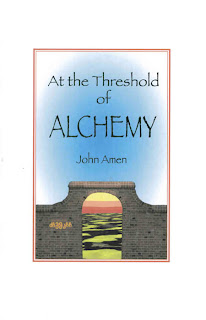
At the Threshold of Alchemy by John Amen

the woman in the shower (Page 36)

the woman in the shower washes herself constantly and never ages.  she
scrubs her nails, shampoos her hair, lathers her body.  she’s attractive, and
many serenade her, offering love songs in various languages.  newspapers
send interviewers to ascertain her greater mission.  she receives letters from
admirers around the world.  political and religious leaders pay a visit.  a few
crazies try to break into the shower stall and molest the woman, but guards
throw them out.  one man masturbates, shooting his seed onto the glass
before he is arrested.  nothing, though, distracts or fazes the woman in the
shower.  she keeps lathering and scrubbing and rinsing.  generations pass;
the woman is considered a saint of sorts, her shower stall a mecca.  it’s 
assumed, finally, that the woman in the shower, the woman who never 
stops washing, has always been, always will be.  she’s a timeless fact, like air
or war or hunger or god.

At the Threshold of Alchemy by John Amen conjures profound statements about the human condition often from unusual or incongruous elements in nature, pop culture, and religion.  Many of these poems comment on the darker side of humanity, and the narrator tends to seek out destruction and mischief.  There are some longer poems in the collection that could become tedious for certain readers, but taken in slowly — one section at a time — readers can delve deeper into the verse.

“. . . Mary plants clematis and bougainvillea.
I’m writing ballads on a ’71 Gibson.  We’re purchasing
mulch, two tons of soil.  We’re collecting ripe moments,”  (Portraits of Mary, Page 43)

Vivid images and situations permeate these pages, and Amen is a poet prepared to comment on the taboo or the elephant in the room.  Several poems titled “missive” address unknown recipients and offer harsh criticisms in which the sarcastic undertones is palpable.

“Had I known you were more concerned with baubles
than the outcomes of the election, I’d have planned
to craft a wreath for the occasion.  Bless tabloids
and puppet governments, I take my salvation as
I can get it.”  (Missive #12, Page 68)

Musical elements also weave their way into the poems, much like they did in Amen’s More of Me Disappears (click for my review).  Entwined with these musical lines, readers will note an atmosphere of self-deprecation created by the narrator’s repentance or observations.

“Forgive me for eating this bountiful meal.
Forgive me for sleeping beneath this roof.
Forgive me for making love to my wife.
Forgive me for everything I fail to see and do
and avenge.  Forgive me for this insular life.”  (Rampage, Page 24) 

At the Threshold of Alchemy by John Amen is a collection that readers will need to let simmer, breathing in each line like an exotic incense.  Readers can read each poem in this collection more than once and still uncover new layers of meaning.  From short poems to long poems, this collection has a variety to please a multitude of readers. 

***On a side note, At the Threshold of Alchemy is published on acid-free, recycled paper.***  Ever since the Green Books Campaign, I’ve been keeping a watchful eye on my books to see what their “green” properties may be.

FTC Disclosure:  I received a free copy of At the Threshold of Alchemy from the poet John Amen for review.  Additionally, title and image links will bring readers to my Amazon Affiliate page; no purchases are necessary, but are appreciated to cover the costs of international giveaway shipping.

I read this book as part of the recent Thankfully Reading Weekend Challenge.  Did you participate?  Which books did you read?  I only read two.

This also qualifies as my 8th book for the Poetry review challenge.

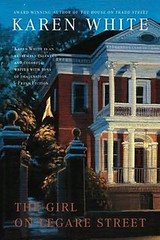
The Girl on Legare Street by Karen White

The Girl on Legare Street by Karen White pits Melanie Middleton, a Realtor who guards her emotions like most would protect buried treasure, against Jack Trenholm, a confident author and potential suitor, and elements of the supernatural.  Melanie must face her fears about her abilities and the truth behind the break-up of her family when her famous mother and opera singer returns to Charleston, South Carolina.

“We stood gaping at the marble-tiled floor with the faux-zebra shag area rug galloping down the middle of the hall.  The elegant egg-and-dart carved cornices had been painted black to offset the fuchsia hue of the walls.  Lime green beanbag chairs with legs offered seating to anybody with enough taste to make their knees go weak upon viewing the psychedelic colors of the hallway.  (Page 44-45)

White creates an intricate mystery that Melanie must unravel for herself without relying heavily on Jack, as she did in the previous book, The House on Tradd Street (click for my review).  White’s characters are vivid; so much so, that readers may want to smack Melanie through the pages and tell her to get a grip.  The beginning chapters spend a bit of time with Melanie as she attempts to sort out her feelings for Jack, her mother, and her abilities.  In some cases, Melanie’s whining may be a bit much for readers, but the action picks up and the knotted lives of Melanie’s ancestors will hook readers until the very last pages.

“I didn’t wait for a response, and was glad he didn’t show any resistance as I dragged him toward the back door.  . . .  I gave a brief wave and had pulled Jack through the door and closed it before my mother made it into the kitchen.

‘I think I like it when you’re rough,’ Jack said.”  (Page 143)

White introduces new characters, like Rebecca Eggerton, and resurrects some of the older characters, like Sophie and Chad, from the first book.  This provides readers with new relationship triangles to navigate, while trying to work through the paranormal mystery.  If readers have read and enjoyed The House on Tradd Street, they will enjoy this tale.

The Girl on Legare Street by Karen White is an entertaining and a good second book in this paranormal-gothic romance-mystery series.  At times, readers could find the repetitive elements in Melanie’s narration distracting, as she repeats her grudge against her mother and her indecision about letting go of her self control where Jack is concerned.  It is clear that this is a second book and that there is more to come given the final lines of the book.

Stay tuned tomorrow, Dec. 1., for a guest post from Karen White about her writing.

FTC Disclosure:  Clicking on images and title links will bring you to my Amazon Affiliate page; No purchases are necessary.  I received my free review copy of The Girl on Legare Street by Karen White from the author and Joan Schulhafer Publishing & Media Consulting.

I read this book as part of the recent Thankfully Reading Weekend Challenge.  Did you participate?  Which books did you read?  I only read two.

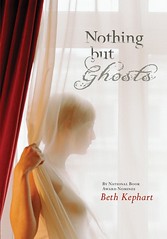
Nothing But Ghosts by Beth Kephart

Beth Kephart’s Nothing But Ghosts follows Katie D’Amore’s struggle to recover enough to live after the death of her mother, but her mother’s ghost is not the only spirit present in this novel.  Lost loves, mysterious socialites locked inside their estates, and other specters haunt these pages.  Kephart’s narration from the point of view of Katie is limiting, but an excellent choice as readers unravel the mystery of her town’s hermetic socialite alongside Katie.

“My dad has this knack for lighting the darkness, for uncracking all the cracks that break images apart, for returning the disappeared to the land of the living.”  (Page 5)

Katie must face her loss, her future, and the past, and she does it in the basement of a library and in a garden of Miss Martine’s estate as she and other kids work through the summer digging a hole for a gazebo foundation.  What Katie doesn’t expect is to find life in the past and the present, nor does she expect to see her father emerge from his own opaque painting to whisk broad, vivid paint across a new canvas.

“If you were looking down on me and my bike from a cloud above, you’d think we were a zipper.  That’s how fast we go, how straight down, all the way to Miss Martine’s.”  (Page 9)

“What if the glass breaks and the bird flies in? What if the whole upstairs shatters and crumbles? I imagine the finch making a nest inside my lamp shade — dropping the feathers into my shoes, over my breadspread, over my pillow, over me.  I imagine everything giving way to the finch.”  (Page 22)

Nothing but Ghosts is not simply a coming of age story, but a tale of how each of us deals with loss.  Kephart is a master of description, making each image vivid, each plot line significant, and she does it all in concise, poetic language.  In a way, readers may find that parts of this novel are simply a large narrative poem.  Very enjoyable, quick read, with deeper meaning and an even deeper sense of understanding.

Check out this book trailer too:

About the Author: (from author’s Website)

Beth Kephart is the author of five memoirs, an autobiography of a river, a young adult novel, and a newly released corporate fable called ZENOBIA: THE CURIOUS BOOK OF BUSINESS (co-authored with Matthew Emmens); four new books are forthcoming. A SLANT OF SUN was a 1998 National Book Award finalist, a Salon.com Best Book of the Year, and the winner of other honors. INTO THE TANGLE OF FRIENDSHIP was written with the support of an NEA grant; GHOSTS IN THE GARDEN was a Book Sense pick; FLOW: THE LIFE AND TIMES OF PHILADELPHIA’S SCHUYLKILL RIVER was supported by a Pew Fellowships in the Arts grant; and UNDERCOVER, released in September of 2007, was named a best young adult book of the year by School Library Journal, Kirkus, Amazon, and others. The winner of the 2005 Speakeasy Poetry Prize, a contributor to many anthologies, an occasional teacher and frequent reviewer, Kephart has written for publications ranging from the New York Times, Chicago Tribune, and Washington Post, to Family Circle, Philadelphia magazine, Salon.com, Real Simple, and Parenting. Kephart is the strategic writing partner in an award-winning, boutique marketing communications firm called Fusion.

FTC Disclosure:  All title links and images will bring you to an Amazon Affiliate page; No purchase required.  Additionally, my copy of Nothing But Ghosts was borrowed from my local library and recommended by Amy of My Friend Amy and Beth Fish Reads.  

It may take me a while to get to books recommended by bloggers, but I do get to them.  Thanks everyone.

Interview With Poet Temple Cone

Temple Cone recently agreed to an interview with myself and 32 Poems. And here is what he had to say.

How would you introduce yourself to a crowded room eager to hang on your every word? Are you just a poet, what else should people know about you?

I love telling people that I’m a poet. Just a poet. Not vaguing it up by saying that I’m a “writer” or qualifying it by adding that I’m a professor of English at the U.S. Naval Academy. I think that, deep down, people appreciate the uselessness of poetry, its lack of clear market value and profit potential. “For poetry makes nothing happen,” as Auden said in his elegy for Yeats, adding a little later that poetry is “A way of happening, a mouth.” For just a moment, they encounter something that can’t really be bought and sold, or at least not dearly.

Some people feel a bit threatened by that, or indifferent to it, but most are curious, and then a little amazed, as if they’d just met someone who could photosynthesize and therefore didn’t need to spend time working in order to buy food. Of course, the question “How can you live on that?” inevitably comes up, to which I always say, “Prize money.” That way they get the impression that they’ve met a really good poet. And who knows, maybe they’ll look me up.

Most writers will read inspirational/how-to manuals, take workshops, or belong to writing groups. Did you subscribe to any of these aids and if so which did you find most helpful? Please feel free to name any “writing” books you enjoyed most (i.e. Bird by Bird by Anne Lamott).

I completed two graduate degrees in creative writing (one at Hollins, one at UVA), and while I’d say I write quite differently from how I wrote back then, I think that those workshop experiences were crucial for me, because they allowed me to accelerate through many styles (and errors) that likely would have taken me a decade to reach, let alone write through.

Before that time, I was a bit isolated as a writer (I wasn’t even an English major in college), but I was lucky in the writing books I encountered, and a few have stuck with me. When I began writing poetry in college, a close professor friend of mine sent some of my poems to James Merrill, who was a good friend of his. Merrill sent me some very encouraging letters, along with a copy of John Hollander’s Rhyme’s Reason, which I read religiously for years. Richard Hugo’s The Triggering Town was a wonderful practical aid, and Hugo’s wry gruffness made him a good companion during less productive stretches. I’m also truly thankful for my copy of Walter Skeat’s Etymological Dictionary of the English Language, which I delve into constantly, stunned by the marvelous ways our words refer to ‘the things of this world.’ And these days, the book that’s most on my mind is Robert Bly’s Leaping Poetry; Bly is wonderful when one doesn’t take him too seriously.

How do you stay fit and healthy as a writer?

I run (rather slowly these days), and whenever I’m stalled on a line, I do push-ups. Eat well, etc. Try to stay away from booze, but coffee’s another story.  

A Psalm Before Healing

A bowl of noodles with oil and sesame on a drizzly night,
A mug of scalding coffee, a braid of chala from the neighbor,
These small services uphold the firmament of stars, selah.
Never forget that the dove grieves but won’t share her story.
The hunters never understand. When she bolts skyward,
She is the skiff the exile rows through morning rain, selah.
How lissom the homerun swing of the left-handed catcher,
As if his bat had caught a comet’s arc and made it shine.
He shall never read this poem or know his own grace, selah.
With its notched legs, the Jerusalem cricket can’t help but sing.
The Alps can’t help but storm. The corn can’t help but grow.
The world is a second language we can’t help but speak, selah.
Once healed, the blind must be taught the ways of vision.
Diamonds in a green cloud are sunlight showing through leaves.
They learn, but dream of seeing in the dark once more, selah.
Just when you think you’re coming to the end of these poems,
Of your life, of a bowl of noodles, there’s an unexpected sweetness,
A last trace of oil you can sop with a handful of bread, selah.

If you’ve enjoyed Temple’s answers so far, I suggest you check out the rest of my interview with him over at 32 Poems Blog. Once there, you can find out about his workspace, inspirations, and much more. Feel free to leave me comments about his interview or your thoughts on poetry in general.

About the Poet:

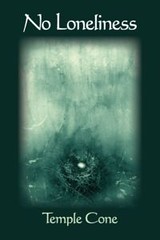
Temple Cone is an associate professor of English at the United States Naval Academy.  His first book of poems, No Loneliness, received the first annual Future Cycle Poetry Book Award in 2009.

Awards for his work include two Dorothy Sargent Rosenberg Prizes in 2007 and 2008, the Christian Publishers Poetry Prize in 2008, a Maryland State Arts Council (MSAC) Individual Artist Award in Poetry in 2007, and the John Lehman Award in Poetry from the Wisconsin Academy Review.

Cone holds a PhD in English from the University of Wisconsin, an MFA in creative writing from the University of Virginia, an MA in creative writing from Hollins University, and a BA in philosophy from Washington and Lee University.  He lives in Annapolis with his wife and daughter.

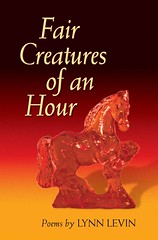
Fair Creatures of an Hour by Lynn Levin

Lynn Levin‘s Fair Creatures of an Hour is a collection of poetry that draws on current events — Smarty Jones in “Little Red Telegram” and skydivers Sara Loshe and Ron Samac in “Freefall” — imagery, and culture to draw in its readers.  Levin intertwines traditional Jewish rituals and stories into her poems, and interjects a fresh perspective.  Readers will intimately understand her and mimic her lines.

“What finer thing is there than to pour out
your thoughts and have someone drink
of your meaning?
It is better than being loved
I sometimes think
for love is not everything.”  (Page 61, “I Wanted to Tell You”)

Levin creates a wistful atmosphere in some of her poems, but easily turns that into something playful.  Even in her most serious poems, Levin cultivates an undercurrent of sarcasm, playfulness, and hope.  From “Peace Is the Blithe Distraction,” Levin repeats the word “peace” and uses each subsequent line to illustrate what peace can mean to even the worst of enemies and how hope plays an integral role.

On the other hand, her humor is ever present as she begins more than one poem with horoscope predictions and planet alignments.  Readers will enjoy the wit shown in these poems and will nod in agreement with many of them.  Levin has an eye for the human condition and the emotions, even those not most desirable. 

The White Puzzle (Page 42)

To love jigsaw puzzles, you have to love trouble —
the mad messing of a picture, the slow steps back to art.
Years ago, my brother and I spent hours
breaking up then piecing back
The Skating Pond by Currier & Ives,
Remington’s The Old Stage-Coach of the Plains
the cardboard pieces colonizing
the game table in the family room.
There was satisfaction in the fitting together
the doing of the definite task
then some days of admiration
of the solved thing before the sundering.
Once someone gave us a white puzzle,
a real head-breaker, the blank pieces
many and small like the counties of a state.
This was fitting for the sake of fitting.
No art in it that we could see, but we stuck to it,
and after a while the pieces began to clump together
like new snow on the lawn.
I remember the way our small talk
scribbled itself over the gathering page:
something about a math bee and Old Man Sprague
who kept sheep in his backyard and had a gun.
We nibbled popcorn, made Montana take shape
with its three sides and human profile,
the pieces knit like bone.
When the white puzzle was complete
we loved the way it lay like moonlight on the floor
then sat before our conquered space,
two Alexanders wanting more.

The poet includes references and explanations in the back of Fair Creatures of an Hour, of which the title is taken from a John Keats poem, “When I Have Fears That I May Cease to Be.”  Levin’s collection is about embracing the moment and being comfortable with oneself before fate steps in.  Well worth reading again and again, Levin’s collection will leave readers wanting more.

Please check out 20th Virtual Poetry Circle for a discussion of Levin’s “Helium.”  Also, for another review, please check out The Pedestal Magazine.  Stay tuned for an interview with Lynn Levin.

I want to thank the poet, Lynn Levin, and Arlene Ang for setting me up with a free copy for review. 

This is my 7th book for the poetry review challenge.

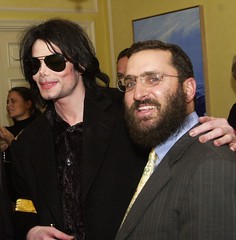
The Michael Jackson Tapes by Rabbi Shmuley Boteach

“MJ:  Everybody’s funny bone is the same color, isn’t it? We are all the same, really.  I have seen that a lot.”  (Page 258)

Rabbi Shmuley Boteach‘s The Michael Jackson Tapes is a unique look at a larger-than-life celebrity musician in an intimate setting, but portions of the book are written like a thesis or an examination of celebrity and its adverse impact on America and its stars.  This is not a book for those looking for pictorial depictions of the star in his home or seeking titillating details about his personal relationships with women, his children, or other family members.  While family is talked about, it is not the crux of this book nor of the taped conversations between Jackson and Boteach between 2000 and 2001.

“And it’s heady stuff to be needed by a global superstar.  It makes you feel important and special and soon you close your eyes to all you know to be righteous.  The glow of fame is too bright, the gravitational pull of celebrity too difficult to resist, until you have become nothing but a satellite in its orbit.  All resistance has been quelled by the superpowerful narcotic of superstardom.”  (Page 269)

Through these recorded conversations with his acquaintance and spiritual guide — at least for a time — Michael Jackson revealed some of his demons, his joys, and his fears.  But even for all the explanations by the author of his convictions about Jackson’s innocence and sincerity, there are times when readers will uncover something amiss with Jackson — whether from the drugs or other influences is anyone’s guess.  Answers to certain questions will start off coherent and then reach the absurd, leading readers to wonder how the Rabbi failed to see something wrong with Jackson (i.e. drug abuse).  Boteach knew Jackson for just a few years, and while readers may take issue with his assessments of the celebrity or the closeness of their relationship, readers will see a side of Jackson rarely shown to the public.

“MJ:  See, why can’t we be like the trees? That come, you know, they lose their leaves in the winter, and come back as beautiful all over again in the spring, you know? It’s a sense of immortality to them, and the Bible says man was meant for immortality.”  (Page 67)

Jackson and Boteach discussed religion, family, fame, celebrity, and many other topics, with the goal of creating a book.  Jackson at one point espouses the need for celebrities to be responsible for their public displays and shows to ensure they send an appropriate message to their fans, but in many ways acted contrary to that message (i.e. grabbing his crotch during concerts, which he says he did not do consciously).

However, there are times when this book grows tedious with the repetition of Boteach’s theories and assessments of Jackson’s actions and past; it is almost like he doesn’t trust the reader to make his or her own assessments about Jackson and his downfall, which is a major drawback.  Readers will absorb and get lost in the conversations between Boteach and Jackson and enjoy the snippet of conversation included with Jackson’s mother.  The Michael Jackson Tapes seeks to bring out the flaws and the good qualities in a wayward superstar lost in his own image.

About the Author:

Rabbi Shmuley Boteach is host of the award-winning national TV show, Shalom in the Home on TLC. He is also the international best-selling author of 20 books, including his most recent work, The Kosher Sutra: Eight Sacred Secrets for Reigniting Desire and Restoring Passion for Life (Harper One). His book Kosher Sex was an international blockbuster, published in 20 languages, and his recent books on the American family, Parenting With Fire and Ten Conversations You Need to Have With Your Children were both launched on The Oprah Winfrey Show.

I want to thank FSB Associates, Vanguard Press, and Author Rabbi Shmuley Boteach for sending me a free copy of The Michael Jackson Tapes for review.   Clicking on cover images and titles will bring you to my Amazon Affiliate page; no purchases required.

I have 1 copy for 1 lucky reader anywhere in the world.  To Enter:

1.  Leave a comment on this post about your fondest memory of Michael Jackson or The Jackson Five.

2.  Blog, tweet, Facebook, or otherwise spread the word about the giveaway and leave a comment here.

Deadline is Nov. 23, 2009, at 11:59 PM EST

THIS GIVEAWAY HAS ENDED! CHECK THE RIGHT SIDEBAR FOR NEW GIVEAWAYS!

An addiction recovery program could have helped save the lives of countless victims of drug abuse had they sought it.