Quantcast

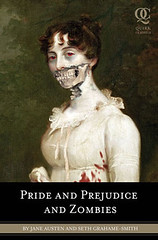
Pride & Prejudice & Zombies by Jane Austen and Seth Grahame-Smith

“Sadly, this action prevented her from saving the second musket man, who had been pulled from his perch.  He screamed as the dreadfuls held him down and began to tear organs from his living belly and feast upon them.”  (Page 117)

Jane Austen and Seth Grahame-Smith’s Pride and Prejudice and Zombies is a mash-up of Jane Austen’s classic, Pride and Prejudice, and a zombie conflict.  Grahame-Smith effectively weaves in the zombie attacks and how the Bennet clan dispatches them with skill.  A majority of this novel is Austen’s words, but the dialogue and descriptions that are modified to accommodate zombies are done with aplomb.

“‘My dear Miss Elizabeth, I have the highest opinion in the world in your excellent judgment in all matters within the scope of your understanding, particularly in the slaying of Satan’s armies, but permit me to say, that there must be a wide difference between the established forms of ceremony amongst the laity, and those which regulate the clergy.  After all you may wield God’s sword, but I wield His wisdom.  And it is wisdom, dear cousin, which will ultimately rid us of our present difficulties with the undead.'” (Page 77)

Fun and entertaining on a base level, Pride and Prejudice and Zombies is an exercise in revision and an examination of Austen’s characters in a new light.  Many readers will disagree with Grahame-Smith’s portrayal of Lizzy as a cutthroat assassin who is quickly turned by her own emotions or strict sense of duty and honor, particularly since she often talks of dispatching her peers for slighting her family, imagines beheading her own sister Lydia simply because she prattles on, and other unmentionable actions.

“‘Jane, no one who has ever seen you together can doubt his affection.  Miss Bingley, I am sure, cannot.  She may not be a warrior, but she has cunning enough.  Dearest sister, I implore you — this unhappiness is best remedied by the hasty application of a cutlass to her throat.'”  (Page 95)

However, one of the most perceptive and playfully done sequences in the novel is the sparring match between Mr. Darcy and Lizzy.  Some readers could find this sequence too forceful, but others may view the physical combat between the characters as just a manifestation of their verbal tete-a-tete in the original novel.  The elements of zombies and ninjas provide additional circumstances that further delineate the class differences Austen sought to examine in her novels, enabling readers to further investigate the social conventions and prejudices inherent in this society.

There are other instances, however, in which these revised scenes do not work as well, and many of the social conventions of the time are overlooked in favor of ensuring the Bennet sisters, who are of little means, were shipped to the Orient for training in the deadly arts — even if it was with the inferior Chinese Shaolin monks –and were prepared for combat, which is inevitable in a nation nearly overrun by the undead.  In Austen’s novel, it would be unconventional for Lizzy to converse so openly with Wickham about Darcy, and it would be outside convention for Darcy to write her a letter to explain himself.  Here, convention is defied even more so in that the Bennet women are trained to kill — even if it is only zombies — and Lizzy openly displays her talents and shuns marriage.

Austen purists will NOT enjoy this novel unless they loosen their reverence for the author’s work.  Overall, Pride and Prejudice and Zombies is a creative revision with an edge that modern readers may enjoy for its drama and action-packed zombie slayings.  There is a lot more to this rendition than simple entertainment.

This is my 3rd book for the 2010 New Authors Challenge, though should I consider it a new author if a majority of the book is written by Jane Austen, who is an old favorite.

This is my 2nd book for the Jane Austen Challenge 2010!

FTC Disclosure:  I received a free copy of Pride and Prejudice and Zombies from FSB Associates for review.  Clicking on titles or images can bring you to my Amazon Affiliate page; No purchase necessary, though appreciated. 
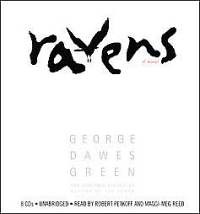
Ravens by George Dawes Green (audio)

Ravens by George Dawes Green on audio, which I received from a giveaway on Peeking Between the Pages, is action-packed, engaging, and unique.  Readers are first introduced to Shaw McBride and Romeo Zderko, two young gentlemen fed up with the “system” and anxious to leave Ohio for the great unknown and make their mark.  Unfortunately, Shaw has a dark side and Romeo can lose control of his emotions.

The young men are traveling south and end up in Brunswick, Georgia, where they learn the identity of the state lottery winners — the Boatwrights.  Shaw concocts a plan to garner the men at least half if not more of the $318 million prize.

The narrators shift between the Boatwrights, the local police officer, Romeo, and Shaw, with Maggi-Meg Reed’s Southern accent pretty close to the real thing and Robert Petkoff slightly dramatic in his portrayal.  However, each character’s voice was easily discernible, making it easy to follow the shifting narration.  Listeners will be drawn into the plight of the Boatwrights and may even sympathize with Romeo, but Shaw is another story.  The tension is palatable, and readers will be kept guessing as to how the extortion situation will be resolved.

Ravens on audio made the commute fly by, and those that love mysteries and thrillers will find this a satisfactory listen.  My husband and I often became absorbed in the story and had to wait for a chapter to end outside my office building in the mornings before I got out of the car.  He loved the ending the best, though it is graphic, because it resolves the situation in a satisfactory way.

This is my 2nd book for the 2010 New Authors Challenge.

I’m considering this for my 1st book in the psychological thriller category for the 2010 Thriller & Suspense Reading Challenge.

FTC Disclosure: I received my free copy of the Ravens audiobook from a fellow blogger.  Clicking on title and image links will lead you to my Amazon Affiliate page; No purchase necessary, though appreciated.

The Bum Magnet by K.L. Brady

K.L. Brady’s The Bum Magnet is local chicklit for Washington, D.C., residents and stars the bum magnet herself, Charisse.  She’s a real estate agent with a serial dating problem, always seeming to attract the wrong kind of man and hanging onto them.  Dwayne, Lamar, Sean, and Marcus are just some of the bums in this book, but are they all bums?  That’s what Charisse has to figure out, if she can get past her own hangups.

“‘Charisse, a good man is like Santa Claus, believing in him feels real good until you find out he doesn’t really exist.'”  (Page 1)

Brady’s debut novel uses a lot of colloquial language and delves into the wrong relationships of her characters through journal entries and flashbacks, but readers may not feel a connection to Charisse right off.  She’s a bristly, independent woman on the one hand, but a dependent, lonely woman on the other.  Like all of us, Charisse has her strengths and her weaknesses, but she seems to have a hard time recognizing the obvious and in many ways she goes off the deep end.

“No, to me, spying on a boyfriend was not only justified, it was a requirement.  Hey, I keep it real.  To ask me not to spy on a scheming boyfriend would be like asking a lion not to hunt, a dog not to bark, or babies not to throw up.  ‘Verification’ was an instinctive to me (and all womankind), as giving birth.”  (Page 61)

As she makes the decision to focus on herself and analyze her past relationship failures to improve her relationship capabilities, she stumbles upon the man of her “dreams,” Dwayne, shortly after breaking it off with Marcus.  Things are soon spiraling out of control for Charisse when past flames reappear and past mistakes rear their ugly heads.   

“I hoped she wasn’t crazy.  For some reason, I’d always attracted crazy people.  Not eccentric crazy, but wear aluminum foil as a fashion accessory crazy.  They always shared their life stories with me.  Did I have an inviting demeanor or a friendly face? Perhaps.  Although I had a deep-rooted fear that crazy people might just be naturally drawn to other crazy people, which would make me one of them.”  (Page 122)

The Bum Magnet has a lot of drama, and Charisse attracts it like wildfire.  Readers will either enjoy the roller coaster ride or wonder when they can get off.  Brady has an active imagination and the dialogue will have readers giggling.  Brady’s writing is entertaining and has great potential.

FTC Disclosure:  Thanks to K.L. Brady for providing me with a free copy of The Bum Magnet for review.  Clicking on title and image links will lead you to my Amazon Affiliate page; No purchase necessary, though appreciated.

K. L. Brady is a D.C. native but spent a number of her formative years in the Ohio Valley. She’s an alumnus of the University of the District of Columbia and University of Maryland University College, earning a B.A. in Economics and M.B.A., respectively. She works as an analyst for a major government contracting firm and is an active real estate agent with Exit Realty by day—and writes by night (often into the wee hours of the morning). She lives just outside of D.C. in Cheltenham, Maryland, with her son, William, and two pet Betta fish, Spongebob and Jerry, and lives to eat chocolate, shop, read, and write.

***International Giveaway Details*** 

1.  Leave a comment on this post about what new author you’ve found in the new year.
2.  Blog, Tweet, Facebook, or otherwise spread the word about the giveaway and leave a link on this post.

Deadline Jan. 14, 2010, 11:59PM EST

This is my 1st book for the 2010 New Authors Challenge.

Also, this another stop on the Literary Road Trip.

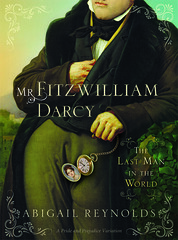
Mr. Fitzwilliam Darcy: The Last Man in the World by Abigail Reynolds

Abigail Reynolds’ Mr. Fitzwilliam Darcy:  The Last Man in the World examines what it would have happened in Pride & Prejudice by Jane Austen had Elizabeth Bennet not refused Mr. Darcy’s marriage proposal.  Lizzy is stuck in a situation in which she is forced to accept Darcy’s proposal, or at least she feels that is the case.  The marriage happens quickly and Lizzy is filled with anxiety about her role as Mrs. Darcy, what to expect from her husband, and how to overcome her prejudice against her him.

“Was his pride so great that it did not occur to him she might refuse him? Elizabeth opened her mouth to deny his allegation, but before any sound could emerge, she recognized the danger.”  (Page 6 of ARC)

Reynolds has a firm grasp of Austen’s work and her Pride & Prejudice characters, and that knowledge shines through as we follow Lizzy and Darcy into their alternate universe.  From misunderstandings to barbs, Darcy and Lizzy spar with one another and hide their true feelings as they fear the other’s reproach.  The servants and the housekeeper, Mrs. Reynolds, are just as they should be — hovering on the outskirts and ready to lend help when necessary.

“But when he turned his head sideways on the pillow, his eyes clouded with the drug, she leaned towards him to meet his lips with her own.  It was a gentle kiss, but his lips were hot against hers.  Elizabeth almost shook with the emotion of it.”  (Page 108 of ARC)

Mr. Fitzwilliam Darcy:  The Last Man in the World is a treat that will transport readers into regency England with a set of new and old characters.  Lizzy and Darcy may be one of the greatest classic love stories, and Reynoldsspin on the love story reads like a classic.  Lizzy is still strong-willed, but tentative in her new marriage and her new circumstances.  Darcy is a bit harsh at times, but readers will forgive him his transgressions.  Readers should be cautioned that there are some intimate scenes that give this novel a more contemporary feel.  All in all, this is a delightful variation.

***Giveaway Details***

Sourcebooks is offering 2 copies of Mr. Fitzwilliam Darcy:  The Last Man in the World to U.S./Canadian readers of this blog.

1.  Leave a comment on this interview about what you would like to ask Abigail Reynolds.
2.  Leave a comment on my review of Mr. Fitzwilliam Darcy.
3.  Blog, tweet, Facebook, etc. this giveaway and leave a link here.

Deadline is Jan. 11, 2010, 11:59PM EST

FTC Disclosure:  I received a free copy of Mr. Fitzwilliam Darcy from the Sourcebooks for review.  Clicking on titles or images can bring you to my Amazon Affiliate page; No purchase necessary, though appreciated. 

This is my 1st book for the Jane Austen Challenge 2010!

2009’s Best Books for Me

2009’s Best Books For Me:


I’m going to do my breakdown of best books I’ve read this year, though some of these may not necessarily have been published in 2009, but earlier in the decade.

I read 63 books in 2008, and my goal for 2009 as to read more than that.  I surprised myself by reading 100 books in 2009 and reviewing all of them! I also started including more poetry reviews and interviews here on the blog and at 32 Poems blog and the D.C. Literature Examiner.  

However, my personal writing goals of working each week toward a poetry or novel word count did not stick, and I stopped posting writing goal updates sometime during the year — heck, it was so long ago that I stopped I don’t even remember when.  I also did not finish editing my poetry manuscript!  Big FAIL!

OK, 2009, it’s time to say goodbye.  I’m going to start of with the books I think were the worst.  

You can click on the title links for my reviews or click Amazon.com images in the right sidebar widget for Best of 2009 if you want to purchase the books through my Amazon Affiliate page, which helps keep the blog running, though there is no requirement to buy.

Not Worth Checking Out of the Library (ending with the worst):

5.  Now Silence by Tori Warner Shepard
4.  The Traitor’s Wife by Susan Higginbotham
3.  The Michael Jackson Tapes by Rabbi Shmuley Boteach
2.  Follow Me by Joanna Scott 
1.  The Kingmaking by Helen Hollick 

Now that the nitty gritty is out of the way, lets get to the best books I’ve read this year:

Best Book I’ve Read for the Everything Austen Challenge:

A Match for Mary Bennet by Eucharista Ward

Best Book I’ve Read for the WWII Reading Challenge:

Inglourious Basterds by Quentin Tarantino

Best Humor Book of 2009 (I only read three, so take this with a grain of salt):

Best Photography Book of 2009 (I only read and looked through 2, take this with less than a grain of salt):

Visions of America by Joseph Sohm

Audiobooks to Die For out of 10 (no particular order):

Into the Beautiful North by Luis Alberto Urrea
Plum Lucky by Janet Evanovich
The Whole Truth by David Baldacci

Best Young Adult Fiction of 2009 (I only read 5 this year):

Nothing But Ghosts by Beth Kephart

Best Chicklit Book of 2009 (this is a tie for me):

Millie’s Fling by Jill Mansell
Deep Dish by Mary Kay Andrews

Best Poetry Books of 2009 (ending with the best):

6.  More of Me Disappears by John Amen
5.  Fair Creatures of an Hour by Lynn Levin
4.  Secret Love Poems by Arlene Ang
3.  Rubber Side Down edited by Jose Gouveia
2.  Apologies to an Apple by Maya Ganesan
1.  Becoming the Villainess by Jeannine Hall Gailey

Some honorable mentions for 2009 that I adored (no particular order):

The Last Dickens by Matthew Pearl
The Secret Keeper by Paul Harris
Dragon House by John Shors
The Lace Reader by Brunonia Barry
When She Flew by Jennie Shortridge
Keeper of Light and Dust by Natasha Mostert 
Catching Fire by Suzanne Collins

Best Books I Read in 2009 (to the top pick for the year):

10.  The Uncommon Reader by Alan Bennett
9.  The Day the Falls Stood Still by Cathy Marie Buchanan
8.  Breathing Out the Ghost by Kirk Curnutt
7.  Saffron Dreams by Shaila Abdullah
6.  The Hunger Games by Suzanne Collins
5.  The Last Queen by C.W. Gortner
4.  The Painter From Shanghai by Jennifer Cody Epstein
3.  Galway Bay by Mary Pat Kelly
2.  Rooftops of Tehran by Mahbod Seraji
1.  Words That Burn Within Me by Hilda Stern Cohen

Which were your favorites this year?

Have a Happy and Safe New Year!

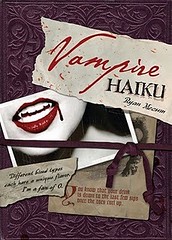
Vampire Haiku by Ryan Mecum

Ryan Mecum’s Vampire Haiku mixes humor and poetry in diary form for vampire William Butten, who was turned in 1620.  He falls in love with a beautiful woman on the Mayflower named Katherine, who turned him into a vampire.  Soon he’s parted from his love to roam America on his own and make his own friends.  There are tales of some well known historic figures from Davy Crockett to Amelia Earhart and famous events in history like the Civil War and Woodstock.

Readers may initialy be attracted to the cover haiku, which also appears on page 37:

“You know that your drink
is down to the last few sips
once the toes curl up.”

Butten has a twisted sense of humor, but readers will enjoy is little anecdotes about becoming a vampire and bumbling around learning how to feed, etc.  Mecum uses his linguistic and historic knowledge to create fun and witty haiku.  Although they are not precisely haiku in the traditional sense, they mostly adhere to the form’s syllable count.  It is fun to see Butten reveal insider knowledge about the deaths of Davy Crockett and other major historical figures.  In some cases, the poems will have readers cringing in disgust.

“Discarded band-aids
are rare unexpected treats.
My version of gum.”  (page 113)

There are even moments in the book where the vampire makes fun of the modern vampire crazes from the goth kids to the latest vampire movies.  One of the best haiku in the book is about the Twilight movie:

“Those were not vampires.
If sunlight makes you sparkle,
you’re a unicorn.”  (page 117)

Will Butten ever find his true love, Katherine, or will he stop searching for her and settle down? Overall, those interested in humor and vampires will find Vampire Haiku to be a treat.  I’m looking forward to reading Ryan Mecum’s Zombie Haiku next.

I’m counting this as my 11th book for the poetry reading challenge.

By the way, I unintentionally read 100 books this year and reviewed all 100!  This is quite an accomplishment for me, since I’m a slower reader than most.  Yipee!

FTC Disclosure:  I purchased my copy of Vampire Haiku by Ryan Mecum.  Clicking on title links or images will bring you to my Amazon Affiliate page; No purchase necessary.

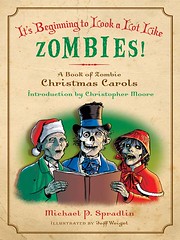
It’s Beginning to Look a Lot Like Zombies! by Michael P. Spradlin, Illus. Jeff Weigel

The holidays are a time for merriment and getting together with family and friends to celebrate and share.  Part of the holidays has always included caroling, at least for some people.  My husband and I love to sing, though we don’t sing well, but we like to make up lyrics from time to time.   It’s Beginning to Look a Lot Like Zombies! by Michael P. Spradlin and illustrated by Jeff Weigel is the perfect collection of remastered Christmas Carols to liven up the holidays.  There’s even an introduction by the witty and dark humored Christopher Moore.
First, can you tell what classic novel this line’s beginning resembles?

“It is universally acknowledged that there are very few literarypursuits which cannot be improved with the addition of zombies, which are to the written word as cheesy goldfish crackers are to life in general; those little cheesy goldfish crackers also improve nearly everything.”  (Page VII)

Christopher Moore certainly has a unique perspective on literature and how it can be improved, but in the case of the zombie Christmas carol book, he may be correct.  Spradlin’s lines are well placed and maintain the rhythm of the original carols.  Family members young and old will love to sing to these revised songs —  from It’s Beginning to Look a Lot Like Christmas, I mean, It’s Beginning to Look a Lot Like Zombies to Deck the Halls With Boughs of Holly, oops I mean, Deck the Halls With Parts of Wally.

Zombie, the Snowman (Page 39)

Zombie the Snowman was a jolly, happy ghoul,
With a corncob pipe and some boy’s nose
And two eyes he got at school.

Zombie the Snowman is a fairy tale, they say;
He was undead, it’s so,
But the children know how he came back to life one day.

There must have been a virus in
That old silk hat they found,
For when they placed it on his head,
He began to dance around.

Oh, Zombie the Snowman was alive as he could be,
And the children say he ate brains all day,
And they ran from that Zombie.

Thumpety, thump thump,
Look at Zombie go.
Thumpety, thump thump,
Thumpety, thump thump, 
Over the hills of snow.

Zombie the Snowman knew the brains were fresh that day,
So he said, “Please run, because it’s lots more fun when I eat your brain that way.”
Down through the village with a femur in his hand,
Running here and there all around the square,
Sayin’, “Decapitate me if you can!” 

He chased them through the streets of town 
And at a traffic cop,
And he barely paused a moment when he heard the cop’s brain pop!

Zombie the Snowman
Had to hurry on his way,
But he waved good-bye, sayin’, “Please do cry,
I’ll eat your brains someday!” 

At a short 81 pages, It’s Beginning to Look a Lot Like Zombies! is a fun read and will have you giggling and guffawing and singing.  Chock full of gruesome and surreal drawings of zombies in Santa Claus suits and other holiday outfits are eye-catching, and add additional verve to the carols.  This humorous Christmas carol book would make a great stocking stuffer and an after-holiday gift.  Heck, it would just be a fun gift for birthdays, anniversaries, and any other occasion.

FTC Disclosure:  My husband purchased this copy for me.  Clicking on title or image links will bring you to my Amazon Affiliate page; No purchase necessary.

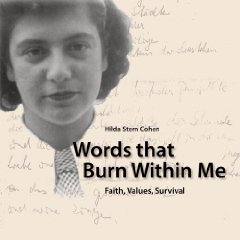
Words That Burn Within Me by Hilda Stern Cohen

Hilda Stern Cohen’s Words That Burn Within Me is a collection of photographs, essays, stories, snippets of interviews, and poems detailing Cohen’s experiences during WWII and the Holocaust as a German resident.  (Please check out a recent reading from the book at The Writer’s Center).  Cohen’s husband, whom she married in Baltimore, Md., in 1948 following her release, discovered her notebooks after her death and set about his journey to have his wife’s writing translated from German and published.  In some cases, the poems are included both in English and in German.

“Our physiognomies were ageless.  There were wild, unfocused eyes, silent, indrawn lips, and haggardness around the cheek and neck . . . only defined and exaggerated by hunger.” (Page 49)

This harrowing story follows Hilda through her early years in Nieder-Ohmen, Germany, and her transfer to schools in Frankfurt as the Nazis gained power.  From Frankfurt, she is transported with her family and young beau Horst to Lodz, Poland, only to face devastating circumstances, the loss of Horst, and more and be transported to Auschwitz.  In a series of essays and interviews, Hilda talks about happier times in her village and with her sister, the trials of childhood and being bullied, but soon the reality of politics sets in and her family is forced to leave their ancestral home.

Forced Labor (Page 54)

My numbed brow drops on the machine,
I fold my captive, tired hands.

A dangling yellow bulb sheds smoky light,
Dusk falls, the day grows pale.

The harried working hours are almost done,
The evening mist is waiting to embrace us.

What binds us in our common chains
Will only hold us while we work —
Night will find each of us in separate gloom.

Cohen’s writing is sparse but detailed in its observations of those around her in the ghetto and the concentration camps.  Her keen eye examines the impact of starvation on her fellow neighbors and on her family members, and it also sheds light on how well her family and herself cope with their situation.  She eventually teaches herself Yiddish after joining a literary group because she only speaks and writes German, which is not what the majority of the Lodz Ghetto understands.  Readers, however, will note a sense of detachment in her writing, almost as if she is reporting the events as she observed them rather than as she felt them.  On the other hand, they will hear the anger and disappointment in her voice, especially when she speaks of the last words her father utters about her mother upon her death.

“There was a strange role reversal that took place psychologically, as it did also later in the camps.  Adults who had lived a life from which they had gained certain expectations were suddenly confronted with an abyss.  There were no signs, no gateposts, none of the usual milestones that one could follow.  Everything had fallen away.”  (Page 33)

Words That Burn Within Me is well assembled mixture of interviews with Hilda Stern Cohen’s essays, stories and poems.  While the collection does illustrate one Jewish woman’s journey during WWII and the Holocaust, it stands as a testament — a record — of how inexcusably these humans were treated and how their debasement impacted their lives, their relationships, their faith, and their souls.  Through well tuned description and controlled emotions, Cohen takes the time to record everything she saw during the war and the Holocaust to ensure that it becomes a warning to others.  A powerful collection and a must read for anyone learning about this time period and the horrors that should never have happened.
This is my 10th book for the WWII Reading Challenge at War Through the Generations!

I’m not sure if this will qualify for the Poetry Review Challenge, but if it does, this will be book #10.

 FTC Disclosure:  I purchased my copy of Words That Burn Within Me from The Writer’s Center following a reading by Hilda Stern Cohen’s husband and her interviewer Gail Rosen.  Clicking on image and title links will bring you to my Amazon Affiliate page; No purchases necessary.

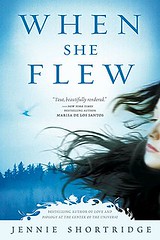
When She Flew by Jennie Shortridge

Jennie Shortridge’s When She Flew is a beautifully written novel about pivotal decisions and their unexpected consequences.  Told from the point of view of Officer Jessica Villareal and Melinda aka Lindy Wiggs, the novel shifts from the legal ramifications of Villareal’s decision not to split up Melinda from her family and Melinda’s experiences with her Iraq War veteran father, her drug addicted mother, and her new home.  The novel is peppered with beautiful imagery and a number of passages with birds, which emphasize flight and escape.

“Pater keeps looking out the windows, walking from on to the other, hitching up his pants.  he reminds me of a finch, all nervous and fidgety, eyes darting this way and that.”  (Page 255)

Lindy’s narration focuses mainly on the love of the forest in which she lives, of her father, and even of her mother whom she left behind, but there are glimpses into the terrible events of her life under the guardianship of her mother while her father served his country.  She misses her mother, but for the most part there is a sense of contentment until one day she follows a blue heron too far.

“The central library was my favorite building.  It’s like going to a palace full of books.  I feel like a princess or an important person when I walk up the steps toward that huge brick building with its pretty windows and a roof that looks like a steeple, and go inside the tall oak doors, and the man in uniform smiles and says, ‘Good afternoon.’  I feel even more like royalty when we glide across the shiny stone floor.  Everything is so elegant that I want to just stand and look but Pater always says to hurry along.”  (Page 14)

Officer Villareal is a mother who hasn’t exactly lived up to her own expectations as an officer or as a mother, but she copes with her circumstances by working and burying herself in memories of her daughter Nina, who escaped her mother’s tight supervision to live with her father and raise her own son.

“The dirt dwellers she dealt with were like subterranean worms and bugs:  drug dealers and pimps, abusive parents, gangsters and thieves.  She had tried for years not to notice them when off duty, but she couldn’t help it.”  (Page 5)

Shortridge’s prose is gorgeous and immediate, sucking readers into the world she’s created in the wilderness of Oregon and the small town outside the forest.  When She Flew is about finding one’s convictions to break the mold and follow the right path.  It is about striving to be better and to find the freedom to grow.  Shortridge’s writing will blow readers away.

As an additional treat, later today, Jennie Shortridge will visit with us and talk about her writing, so stay tuned.  Oh, and there will be a giveaway!

FTC Disclosure:  Thank you to Jennie Shortridge and Joan Schulhafer Publishing & Media Consulting fpr sending me a free copy of When She Flew for review.  Links to book images and titles will lead you to my Amazon Affiliate page; No purchases are necessary.

Examiner Interviews & Poetry Gift Ideas

It seems that I’m behind in alerting you to my latest interviews and articles at D.C. Literature Examiner.  Better late than never, I say.

First for all you last minute shoppers, I have a list of poetry books that will meet the needs of a variety of family members and friends in your social circles.  I cannot recommend these titles enough.

Here’s the latest interviews:

I’ve interviewed Karen White about her latest novel in the gothic, Southern, mystery series The Girl on Legare Street.  Check it out here and here.

We talk about her book and her reading and writing habits.

Beth Kephart, which I’m sure many of you have heard about from Amy at My Friend Amy and other blogs, graciously submitted to my questions.  We talk about Nothing But Ghosts, her writing, reading, and young adult fiction.  Check out the interview here and here.

I hope you’ll be checking them out in your down time.  Have a great holiday everyone!

Ivy + Bean: Doomed to Dance by Annie Barrows and Sophie Blackall (Illus.)

Normally, I don’t review children’s books here on the blog, but I’ve made an exception (yes, they do happen).  I remember buying a set of Ivy + Bean books for The Girl from Diary of an Eccentric because one of the books had to do with dinosaur fossils and I had read on someone’s blog (not sure who) that these books were fantastic.  The Girl, suffice to say, loved them and told me all about the straws up the nose (actually it’s the mouth) and other little tidbits from her books.  Before I dazzle you with my review, interview with The Girl, and the giveaway, let me show you a little video:

Ivy and Bean are typical second-grade girls who are willing to try just about anything, and they sometimes find themselves getting into trouble or at least over their heads.  In Doomed to Dance, the girls read a book about ballet and decide that they should take ballet, so they can become ballerinas in Giselle.  The only problem is that ballet is not as fun or easy as it seems.

“‘She doesn’t leap like a kitty.  She leaps like a frog,’ Bean whispered to Ivy.”  (Page 24)
 
“‘We can’t be squids if we break our arms,’ said Ivy.  ‘Remember what Madame Joy said? We’re supposed to wave our tentacles gently to the passing tide.  No way can we do that if we’ve got broken arms, Right?'”  (Page 40)

While Ivy and Bean get into trouble — and what kid doesn’t? — they always manage to find the positive in their situation or make amends.  Some of the funniest scenes in this book are when Ivy and Bean try to get sick on purpose, having other kids cough and sneeze all over them.  Young readers will laugh out loud at the antics of these young girls, and parents will enjoy these books because of the lessons they teach about responsibility and imagination.  Ivy + Bean:  Doomed to Dance is a fun read at nearly 130 pages, and these characters will worm their way into kids hearts easily.

Onto my interview with The Girl:

Which girl would you rather be, Ivy or Bean?  And why?

I would you like to be Bean because she is funniest.

Why do you think Bean packed salt in her backpack before they went to the aquarium?

Because you need salt to stay alive and helps the blood flow.

What would you have packed in your backpack for the aquarium trip?

I would pack clothes, food like sandwiches, water, juice, and ice pack.   If there is still room, I would take some small books.

Would you ever take ballet? Why or why not? What type of dancing would you take?

No, because I’m not into ballet.  I would take tap dancing because the noise from the shoes is cool, and it looks like fun.  You have to have skills for it, and I have skills.

Which of the Ivy + Bean books have you enjoyed most?

The book with the ghosts — The Ghost that Had to Go, Book 2.  Break the Fossil Record, Book 3.

To learn more about the series, check out the Website.  If you’re looking for crafts and fun activities, go here.

To enter the giveaway for 1 copy of Ivy + Bean:  Doomed to Dance (US/Canada):

1.  Leave a comment here about why you want to win the book.
2.  Become a follower and leave a comment here for another entry.
3.  Tweet, blog, spread the word and leave a comment here with a link.

Deadline Dec. 28, 2009, 11:59 PM EST.

FTC Disclosure:  I want to thank Chronicle Books for sending me a free copy of Doomed to Dance for review.  Clicking on title and image links will go to my Amazon.com Affiliate page; No purchase necessary.

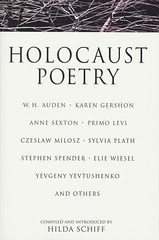
Holocaust Poetry Complied by Hilda Schiff

Holocaust Poetry compiled by and introduced by Hilda Schiff is a collection of poetry dealing with World War II and the Holocaust.  The compilation is divided into six sections:  Alienation; Persecution; Rescuers, Bystanders, Perpetrators; Afterwards; Second Generation; and Lessons.  There are well-known poems in this collection and poems from young children.  A few of the poems in this collection already have been featured on the blog as part of the Virtual Poetry Circle; check out “If” by Edward Bond and “The Butterfly” by Pavel Friedmann.

Each poem in the collection uses all-too-familiar images to demonstrate connections with family, friends, and strangers. and as each poem unfolds readers feel the devastation and hopelessness of each narrator.  Schiff says in the introduction, “The more or less contemporaneous literature of any period of history is not only an integral part of that period, but it also allows us to understand historical events and experiences better than the bare facts alone can do because they enable us to absorb them inwardly.”  More or less, readers of poetry will find these observations valid, as will readers of fiction.

However, there are moments of levity when narrators poke fun at the devastating events of Nazi Germany’s actions.

The Burning of the Books (Page 8)

When the Regime commanded that books with harmful knowledge
Should be publicly burned on all sides
Oxen were forced to drag cart loads of books
To the bonfires, a banished
Writer, one of the best, scanning the list of the
Burned, was shocked to find that his
Books had been passed over.  He rushed to his desk
On wings of wrath, and wrote a letter to those in power.
Burn me! he wrote with flying pen, burn me.  Haven’t my
  books
Always reported the truth? And here you are
Treating me like a liar! I command you:
Burn me!

Beyond the poems in the collection depicting the horrors and the losses of persecuted people in Germany, the poems of bystanders, perpetrators, and others are surprising.  They talk of how they stood by and did nothing, how they want to help even if they are too late.  Despite the time for help being long passed, these narrators express not guilt so much as regret — a deep regret at having been so paralyzed by fear that they did nothing or acted contrary to who they believed themselves to be.

I Did Not Manage to Save (page 86)

I did not manage to save
a single life

I did not know how to stop
a single bullet

and I wander round cemeteries
which are not there

I look for words
which are not there
I run

to help where no one called
to rescue after the event

I want to be on time
even if I am too late

The poems selected for the “Second Generation” section will tug at readers heart strings, deepening the sense of loss.  An emptiness is present in some of these poems.  Short biographies are included at the back of the book for readers interested in the poets’ lives and connections to WWII and the Holocaust.

Holocaust Poetry is a collection that should be read in chunks rather than all at once.  Readers may succumb to sorrow if they attempt to read the entire collection in once sitting, but even then, readers will fall into the darkness and emerge in the light.  Overall, the collection is a must have for anyone interested in this time period and learning more about how WWII and the Holocaust impacted individual lives and families.

This is the 9th book I’ve read that qualifies for the 2009 WWII Reading Challenge.  Though I officially met my goal of reading 5 WWII-related books some time ago, I’ve continued to find them on my shelves and review them here.

This also qualifies as my 9th book for the Poetry review challenge.

FTC Disclosure:  I purchased my copy of Holocaust Poetry compiled by Hilda Schiff at the local library sale.  Clicking on title links will bring you to my Amazon Affiliate page, no purchase necessary.