Quantcast

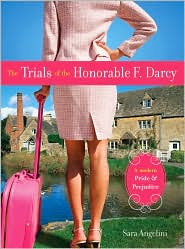
The Trials of the Honorable F. Darcy by Sara Angelini

The Trials of the Honorable F. Darcy by Sara Angelini is loosely based upon Jane Austen’s Pride & Prejudice. Fitzwilliam Darcy is the youngest judge appointed to the bench of San Francisco and Meryton is not a town in England, but a town outside of San Francisco, California. Elizabeth Bennet is an attorney with Gardiner & Associates, and the lead attorney is not her uncle Mr. Gardiner, but her boss. California has laws about fraternization between judges and attorneys who work on the same cases, and when sparks fly between Elizabeth and Will, it becomes a sticky situation.

“‘So, what are you doing during the first two weeks of June?’ Jane asked. Elizabeth switched the phone cradle to her other ear and spread the California Bar Journal in the desk before her.

‘Um, same thing as usual. Bill ten hours and work fourteen. Go home, eat Lean Cuisine over the sink, and go to bed convinced I’m never going to meet Mr. Right. I blame Mom. Oh, and I’ll probably have Lou give me a massage.'” (Page 63 of ARC)

Angelini has a brash style all her own in this modern take on these famous characters, but readers could find the explicit sex scenes and sometimes crass language tough to take if they are looking for the same Elizabeth and Fitzwilliam. However, The Trials of the Honorable F. Darcy exhibits the dynamics of modern relationships well, from the frenzied first glimpses of attraction to the obsessive first moments together and more.

Elizabeth and Darcy spar well in the courtroom before they realize their attraction, but attorneys, clients, and readers will cringe at the biting remarks they make to one another in the courtroom following a break from the realities of California.

“‘How did it go?’ he asked anxiously.

‘I’ve got competition,’ Elizabeth replied.

‘Lady Boobs-a-Lot?’ he asked, referring to Caroline.

‘Yep. She’s catty too.’

‘I know you. You can match her bitch-slap for bitch-slap.'” (Page 251 of ARC)

Readers will enjoy this retelling, though they should expect differences in the characters’ personalities from Elizabeth’s greater outspoken nature and stubbornness to Lou Hurst, Elizabeth’s gay friend and confidante. Jane is in the novel with Bingley–both work at the hospital in Meryton–but their love story is more of a sideline and is derailed less by Darcy and more by Jane’s need to defend her sister against Bingley’s sister, Caroline.

Overall, The Trials of the Honorable F. Darcy by Sara Angelini could have been its own stand-alone chicklit novel without the references to Pride & Prejudice, but the modern spin Angelini gives to the characters and the plot makes the novel a quick, fun read. A great way to spend a lazy afternoon.



Thanks to Sourcebooks for providing the advanced readers copy of The Trials of the Honorable F. Darcy. Stay tuned for a guest post from Sara Angelini on Sept. 28, 2009 with a giveaway.

This is the second book or third item I’ve completed for the Everything Austen Challenge 2009.


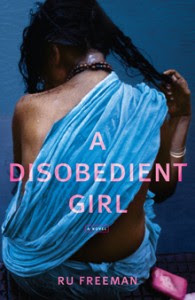
A Disobedient Girl by Ru Freeman


Ru Freeman’s A Disobedient Girl is set in Sri Lanka and is narrated by two women, Latha and Biso, in alternating chapters. Each of these women struggles with their station in society, the desires they have to improve their lot in life, and the journey they find themselves on after making pivotal decisions. Readers also catch a glimpse of Thara and Leela’s lives and struggles.

“Earrings are not decorations. They are a statement of legitimacy, of dignity, of self-worth. Ask any woman, and she would tell you that she would pawn everything she has before she gave up her earrings. Even her wedding band. For what is a wedding band worth except to say that a man coveted your children and wanted to claim them for his own? A wedding band can come from any man, just like children. Earrings, a real pair of earrings, come only with love.” (Page 121)

Sri Lanka is in the midst of civil unrest when we meet Biso for the first time, but when we meet Latha, she is in the prime of innocence. Biso has lived a hard life, though she is not jaded by the loss of her greatest love or the abuse of her husband. Latha, on the other hand, is resentful of her station as a servant girl in a high-class home and straddles precariously between the world of a upper class girl, like her mistress’ daughter Thara, and that of a servant. Class struggles, political unrest, and danger permeate the pages of A Disobedient Girl.

“No, I had lain there, my arms around his dying body, the blood from his wounds flowing into me along with his passion, his body shuddering until there was nothing left except the blood that came over his body and included me in its embrace. I had stayed like that until he slipped out of me, and then I had stood. I had walked into the ocean and let the salt water wash my skin, the churning sands scrubbing my exterior of his blood even as the night air hardened my pain into a fist inside my chest.” (Page 149)

The narration begins slowly and builds to a crescendo, though readers may have a tough time with the broken and interrupted thoughts because it can detract from the atmosphere that Freeman attempts to create. Latha’s chapters reflect her naivete and her impulsive nature, while Biso’s chapters reflect a mature woman who is methodical in her actions and chastises herself for self-indulgence when she must care for three children.

However, Freeman has a gift for dramatic language and situations, illustrating how each woman faces tragedy and overcomes the suppression they feel because of their caste and decisions. A Disobedient Girl is not about a specific girl or woman, but about the rebellious part of human nature that desires to be free and in control of its own destiny.

Here’s a list of the other TLC Tour stops and a photo gallery of Sri Lanka. Please also check out Ru Freeman’s blog and this Amazon.com video with Ru Freeman.

I also have a guest post over at Ru’s blog. Check out my post on writing and photography.

Also Reviewed By:
Caribousmom

FU, Penguin by Matthew Gasteier

FU, Penguin by Matthew Gasteier is not a book for those without a quirky sense of humor. FU, Penguin is a spinoff of the blog, which has about 900,000 unique visitors per day, and the brainchild of Watertown, Mass., resident Matthew Gasteier who views the attempts of animals to look cute as antithetical to their nature.

Chock full of photos of cute fuzzy animals in adorable poses accompanied by sarcasm, ridicule, and disdain, Gasteier has created what some would call a pop culture phenomenon. Some readers will chuckle at the accompanying essays, while others may shake their heads.

In some cases, readers could find that the photos stand on their own as ridiculous without the essays. Gasteier’s harsh language choices for the captions could put some readers off, but the captions are some of the funniest bits in this book. If calling moose the “biggest dorks ever” or stating “Is it me, or are baby animals really being dicks lately” are your thing, FU Penguin is for you. Gasteier has started the conversation, but the question is how will you finish it?

In honor of Book Blogger Appreciation Week, I’m offering one lucky reader anywhere in the world my gently used copy of this book, which I received from Random House. This giveaway is international.

1. Leave a comment on this post about why you want to read this or tell me if you’ve ever been to Gasteier’s Website prior to this review.
2. If you purchase any of the books, using my Amazon affiliate links this week (Sept. 15-19), that’s 5 extra entries (just send me an order #/invoice).
3. Tweet, blog, Facebook, etc. this post and get an extra entry, just come back and leave a comment.

Deadline for entries is Sept. 19, 2009, at 11:59 PM.

As an aside, all BBAW 2009 posts are easily accessible on my navigation bar. So never fear, all the BBAW 2009 contests will be at your fingertips!


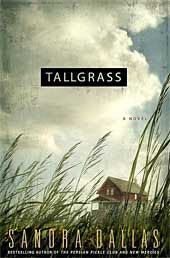
Tallgrass by Sandra Dallas

“I’d sneaked away from my parents and gone to the depot, too, because I’d never seen any Japanese. I expected them to look like the cartoons of Hirohito in the newspaper, with slanted eyes and buckteeth and skin like rancid butter. All these years later, I recall I was disappointed that they didn’t appear to be a ‘yellow peril’ at all. They were so ordinary.” (Page 2)

Sandra Dallas’ Tallgrass is set in Colorado in 1942 just after the bombing of Pearl Harbor in Hawaii. The book is narrated by Rennie Stroud, who was a 13-year-old girl when the Japanese are rounded up and placed into an internment camp–known as Tallgrass Ranch–in Ellis, Colorado. Many of the Japanese in the camp just up from the Stroud’s farm had been evacuated from their homes in California and their presence causes a major stir.

“They’d heard the sirens, too, and said it wasn’t anything, but I feared that somebody had gone under the bobwire surrounding the camp and was going to break into our house and kill us.” (Page 17)

Readers travel along with Rennie as she uncovers the truth about humanity regardless of color or creed and as she discovers the truth about her family. She grows into a woman more quickly than her parents would like, but given the rationing, the war effort, the harvest, and the increasing racial tension, Rennie has little choice but to mature.

“Things were tense even for the kids in the camp who never came in contact with people from Ellis. Little boys there played war games, just like the boys in Ellis. Daisy told us she’d watched a group of Tallgrass kids pretending they were fighting in the South Pacific and heard one complain, ‘How come I have to be the damn Jap all the time?'” (Page 238)

Readers will enjoy growing along with Rennie and getting into trouble with her and Betty Joyce. Dallas does an exceptional job of rounding out Rennie’s character from her naivete to her compassion and empathy for the plights of those less fortunate, like the Japanese and her friends. However, Tallgrass is more than a coming of age story; it also touches upon the harm caused by wrong-headed government policies, the fear that leads to prejudice and hatred, and the impact a war can have on everyone.

While readers may see some holes in how one of the main mysteries is resolved, Dallas’ resolution is in tune with the narrator she chose, a 13-year-old who is not privy to serious adult conversation. Overall, Tallgrass is a novel about WWII, family, growing up, and learning how to build a community even when differences exist.


This is my 6th book for the War Through the Generations: WWII Reading Challenge.

Thanks to Staci at Life in the Thumb for reviewing Tallgrass with several other WWII books that I had to pick up from the library and read all together.

Also Reviewed By:
Adventures in Reading
Jo-Jo Loves to Read!!!
Life in the Thumb


The Day the Falls Stood Still by Cathy Marie Buchanan

Cathy Marie Buchanan’s The Day the Falls Stood Still, like the Niagara River and the falls, flows powerfully with majestic danger. Elizabeth “Bess” Heath is a seventeen year-old woman on the brink of the falls contemplating the beauty of the river and feeling its power pushing her forward. Her family is well-positioned, but a turn of the current pushes them down river and leads to tragedy and redemption for Bess.

When she leaves her school life behind at Loretto Academy, she is thrust into adulthood and embarks upon a journey where she comes into her own, earning the pluck Tom Cole, grandson of the famous riverman Fergus Cole, sees in her during their brief encounters at the gates of Glenview.

“As he walks he holds his head in a way that makes it seem he is listening to the river. His intensity is such that to speak would be to interrupt. ‘It’s worked up tonight,’ he says.” (Page 15 of ARC)

Buchanan prose is calm, providing readers with an anchor amidst the rapids and whirlpools that threaten to toss Bess out on the streets and into the ditches emotionally and financially. Tom becomes her rock to which she anchors herself, and he provides her with focus, love, desire, and strength, just as the river does for him. However, with the outbreak of WWI and troops sent abroad to fight from Canada at the behest of Great Britain and the rise of hydroelectric power, Bess must find the strength on her own to survive without Tom’s guidance and to care for their budding family.

“My Dear Bess,

I am sorry I’ve taken so long to write, but I have been putting it off, waiting for my mood to change. I am not sick in any way, but I am feeling beaten down–by the smell, the smashed men twitching like squashed charred insects the upright corpses mistaken for living men, the landscape of barren, earth without so much as a blade of grass. I am feeling alone, lost, and I can’t figure out how to feel like myself again.” (Page 183 of ARC)

As much as The Day the Falls Stood Still is about the impact of industrialization on the Niagara River, the falls, and the community, it also touches upon the environmental impacts of development, the loss of family, the dangers of progress, and the commitment of a man and wife to their family and their principles. Buchanan has created an emotionally charged novel based upon a real legendary riverman, William “Red” Hill. Complete with mock newspaper articles and historical photos and drawings depicting a variety of major events along the river from Bellini tightrope walking across the falls to the collapse of Table Rock.

Buchanan’s debut novel is undeniably memorable for its historical references and emotional ties to Bess’ family and the Niagara River. The Day the Falls Stood Still will haunt readers after the final page is turned.

Also Reviewed By:
Presenting Lenore


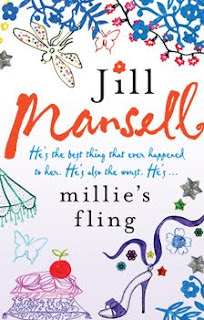
Millie’s Fling by Jill Mansell

Jill Mansell has surpassed herself once again in Millie’s Fling. Chicklit and women’s fiction readers will enjoy this spontaneous journey in Cornwall, England.

“Having ignored his plea, Millie promptly cannoned into the lamp-post behind her. Clutching her left shoulder and trying to pretend it hardly hurt at all–ow, ouch–she wondered why her life had to so closely resemble Mr. Bean’s. What she wouldn’t give to be sleek and chic and in control at all times.” (Page 108-9 of ARC)

Millie is a down-to-earth girl, whose life is a bit like Mr. Bean’s because she tends to fall into ridiculous situations unwittingly. Her roomie, Hester, is in a long-term relationship with an up-and-coming chef, Nat, but still has a flamethrower burning for an old love, Lucas Kemp. Millie’s Fling is the age-old search for love and happiness, but this serendipitous journey is rounded out with Orla Hart, a highly successful author with marital problems whom Millie befriends atop a cliff.

Happily single, Millie consistently tries to keep her roomie on the right relationship track since Hester’s boyfriend has taken a job in Glasgow to further his career as a chef. By chance, Millie stumbles upon a lost wallet in the bushes–a wallet that becomes the tie between her and Hugh Emerson, a young recently widowed computer specialist. Readers will giggle, tense up, and shake their heads as Hugh and Millie fumble through getting to know one another under impossible circumstances.

“‘Two more things I can’t stand,’ said Hugh. ‘Violent women. And girls who can’t take a joke.’

‘I hate men who wear nasty cheap aftershave.’

‘What really annoys me is getting phone calls from people putting on ridiculous accents, asking me the answer to crossword clues.’

‘That isn’t true!’ Millie exclaimed. ‘You asked me to give you the clues. You were bursting to show off how clever you were. And that’s something I really can’t stand in a man.'” (Page 398 of ARC)

Mansell’s dialogue between Millie and Hugh is fresh and witty; some of the best sequences involve them rattling off their favorite words or their most hated things about people, particularly at times when they are awkward with one another. Although there are some cliche moments in this novel, Mansell has well-developed characters on the edge of reality who bounce dialogue off one another in a way that makes the pages fly in Millie’s Fling.

If you missed Mansell’s guest post about writing, check it out and enter the giveaway for this fun book.


The Lace Reader by Brunonia Barry

Brunonia Barry’s The Lace Reader takes place in Salem, Mass., with a still point and a spiral of events that take place during Sophya “Towner” Whitney’s journey from childhood to adulthood and inside her mind. Readers know from the beginning that Towner lies and is an unreliable narrator.

“The perfect line of the first-floor windows gleams back at me from the winter porch, I catch my reflection in the wavy glass, and I’m surprised by it. When I left here, I was seventeen. I haven’t bee back for fifteen years. I knew my reflection in the glass when I was seventeen, but today I don’t recognize the woman I see there.” (Page 12 of the hardcover)

The death of her sister weighs heavily on Towner’s mind, sends her to a mental hospital, and forces her to move to the Pacific coast. She only returns to Salem when she learns her Aunt Eva is missing. Barry weaves a psychological mystery for readers, leading them into the dark alleyways of Towner’s memories, seeking the truth about her past and her family. Who is her mother? What happened to her sister? Where is her father? And why in a family of lace readers is she the one that has shunned the practice?

“Sometimes, when you look back, you can point to a time when your world shifts and heads in another direction. In lace reading this is called the ‘still point.’ Eva says it’s the point around which everything pivots and real patterns start to emerge.” (Page 24 of the hardcover)

May, Towner’s mother, refuses to leave her island in Salem Harbor, even for funerals, but she helps abused women and those in need, helping them learn how to make Ipswich lace. Aunt Emma lives on the island, but remains detached from reality following her abusive relationship with Cal Boynton.

Barry’s characters are human in their frailties, passions, and reactions to traumatizing events. Parts of the novel are narrated by Rafferty, the police officer in town, and parts of the novel are narrated by May, Towner’s mother, which can cause readers to pause. However, readers will love the how the tunnels beneath Salem resemble the crevices of Towner’s mind, and when each page turns, readers and Towner will emerge from the darkness into the light of the bay.

About the Author:

Brunonia Barry was born and raised in Massachusetts. She made her literary debut with the critically acclaimed New York Times bestselling novel The Lace Reader (William Morrow). The book landed on international bestseller lists.

Check out Brunonia Barry’s blog and The Lace Reader Website.

Also, in the September issue of Book Page, there will be a sweepstakes in which the grand prize is a trip for two to Salem, two nights at The Hawthorne Hotel, and a guided Lace Reader tour of Salem with Brunonia.

For my loyal readers, I’ve got one paperback copy to give away! This giveaway will be international as usual.

1. Leave a comment on this post about a time when you went or thought about having your fortune read.

2. Blog, tweet, or spread the word about this giveaway and leave a comment and link here.

Deadline is Sept. 7, 2009, at 11:59 PM

THE GIVEAWAY IS CLOSED!!!


Also Reviewed By:
Books Lists Life 
Trish’s Reading Nook
Sam’s Book Blog
The Literate Housewife Review
Shh… I’m Reading

Hey Lady! Whatcha Readin’?
books i done read


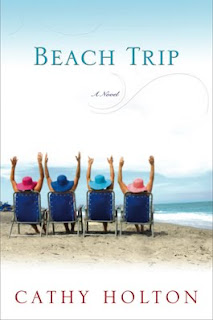
Beach Trip by Cathy Holton

“Writing wasn’t about telling the truth at all; it was about rearranging truth, stretching it, and warping it to fit some safe and less-chaotic world of the writer’s own making. And Mel has been doing that, in one way or another, all her life.” (Page 215)

Cathy Holton’s Beach Trip is Southern women’s fiction with a twist. Mel, Annie, Sara, and Lola were college roommates and reunite in this novel two decades later. Like the heavy surf churned up by an offshore hurricane, their relationships are wrought with tension, love, jealousy, and forgiveness. Each chapter shifts between the past and the present–the mid-1980s to the early 2000s.

“‘Twenty years from now,’ Annie said, looking thin and melancholy. ‘I don’t want to be sitting around regretting the past. I don’t want to be sitting around thinking about what I should have done.’

Mel gave her a heavy look. ‘Twenty years from now, none of us will remember any of this.'” (Page 5)

Each woman embarks upon their own path and makes her way in the world. Sara, Annie, and Lola each marry and have children, while Mel marries and divorces a few men and concentrates on her career as a novelist. Mel is the independent, strong-willed feminist, while Sara is a follower and tough attorney fighting for the rights of children caught in the middle of parental divorce. Lola is laid back and pushed around by her husband, friends, and mother, and Annie is obsessive compulsive and striving for perfection. Each of these characters juxtaposes the other, and these characteristics weigh heavily on their relationships in college and beyond.

“‘I’m so glad you’re here,’ Sara said, smiling at Annie. ‘We need someone to keep us in line.’

Mel swung her arm around her head like she was twirling a lasso. ‘Crack that whip,’ she said.

‘Crack it yourself,’ Annie said. ‘I’m on vacation.'” (Page 25)

Holton creates deep characters with simple flaws, placing them in situations of their own making. Readers just have to sit back and watch how they make their way out. The secrets revealed by these women as they reflect on the past are sometimes cliche, but the end of this novel will leave many readers agape. Overall, Beach Trip examines the complicated relationships of women with a flare of wit, humor, and sarcasm.

If you missed Cathy Holton’s guest post, you should check it out.

DON’T FORGET:

You have until Aug. 28 to vote for Charlee in the Dog Days of Summer Photo Contest. Help a Hot Dog out!

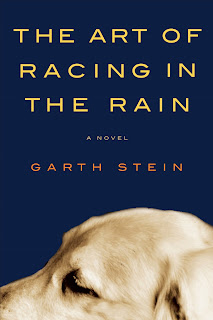
The Art of Racing in the Rain by Garth Stein

Garth Stein’s The Art of Racing in the Rain narrated by Enzo the dog shows us just how similar sentient beings can be in their emotions, connections, and reactions.

“I’ve always felt almost human. I’ve always known that there’s something about me that’s different than other dogs. Sure. I’m stuffed into a dog’s body, but that’s just the shell. It’s what’s inside that’s important. The soul. And my soul is very human.” (Page 3)

Enzo is just a pup when he meets his new owner and friend Denny, and his life is all about racing and being a companion. When Denny meets Eve, Enzo must make adjustments and learn to fit new people into his life. Denny and Eve have a daughter Zoe, and Denny makes his way in the racing world until things start to go awry.

Stein has a way with words that captures the essence of Enzo and his devotion to his family. Readers will enjoy Enzo’s theories about reincarnation, family life, human communication, and more. Enzo’s examination of why dogs do not have thumbs and how humans have bred them that way and why is humorous.

“George Clooney is my fourth favorite actor because he’s exceptionally clever at helping cure children of diseases on reruns of ER, and because he looks a little like me around the eyes.” (Page 125)

There is a great deal of racing jargon and discussion in the book, but readers will find these serve more to help Enzo explain his feelings about the events of his life and how his family dynamics work. Overall, The Art of Racing in the Rain is a fast-paced, enjoyable read, but be prepared for some tugging of the heart strings.


The Art of Racing in the Rain by Garth Stein was my selection for the Dog Days of Summer 2009, sponsored by The Literate Housewife.

DON’T FORGET:

You have until Aug. 28 to vote for Charlee in the Dog Days of Summer Photo Contest. Help a Hot Dog out!

Also Reviewed By:
Carolina Gal’s Literary Cafe
Books on the Brain
Jen’s Book Thoughts
The Literate Housewife
Fyrefly’s Blog

Dead Until Dark by Charlaine Harris

“I’d been waiting for the vampire for years when he walked into the bar.” (Page 1, sentence 1; yes, that’s my hook, how about you?)

In Dead Until Dark by Charlaine Harris, readers are introduced to Sookie Stackhouse, a resident telepath, waitress, and spunky young woman, her brother Jason who has a revolving door in his bedroom, her boss Sam Merlotte, and of course, her vampire, Bill Compton. They all live in Bon Temps, Louisiana.

(If you haven’t watched the HBO series True Blood based upon this series of books you better get watching. But I digress.)

“His voice was quiet and rustling, like feet through dry grass.” (Page 166)

Sookie and Bill meet at Merlotte’s and they quickly fall into bed after some initial posturing. Readers should know where this relationship was headed from the way Sookie looks at Bill and the way Bill reacts to her presence. The plot is thick with sexual tension and drama, from the way Bill silently stares at Sookie to the way she feels at ease because she cannot hear Bill’s thoughts and from the entrance of outrageous vampires from nearby Monroe to the murders of two fang-bangers.

“I got a tight feeling in my chest, a bitterness, at another thing I was denied. And I thought, Why not?

I stopped him by pulling gently on his hand. I stretched up and lay my lips on his shining cheek. I inhaled the scent of him, ordinary by faintly salty. He was wearing a trace of cologne.

I felt him shudder. He turned his head so his lips touched mine.” (Page 58)

Dead Until Dark will suck readers into the swampy, wooded south populated with vampires, telepaths, and more. Sookie is strong, hot tempered, loyal, and eager to help those in need, while Bill is her polar opposite, struggling to regain his humanity against his vampiric qualities. Like any good vampire story, there is a “love” triangle of sorts, murder, mayhem, and triumph. A good start to the series, which vampire/fantasy readers will love and other readers can enjoy as well.

Also Reviewed By:
Melancholy Musings
Well-Read Reviews
1morechapter.com
Bermudaonion
Rhapsody in Books 


Charlaine Harris’ Dead Until Dark is the first book in the Sookie Stackhouse series and my first book for the Sookie Stackhouse Reading Challenge.

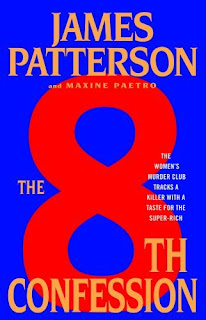
8th Confession by James Patterson and Maxine Paetro

James Patterson and Maxine Paetro’s 8th Confession is the latest installment of the Women’s Murder Club series.

Today’s review is from my mom, Pat. Let’s give her a warm welcome.

The Women’s Murder Club mystery continues in 8th Confession and is a suspenseful, fast moving story. In the beginning, a homeless man is found brutally murdered. Meanwhile, wealthy residents of San Francisco continue to have lavish parties, including Isa and Ethan Baily. Someone close to them watches their every move until they are murdered. However, it is unclear how they were killed and there is no apparent evidence of a crime.

Murders continue to happen throughout many locations in California and the Women’s Murder Club must solve these murders. The 8th Confession is not revealed until near the end of the book. Patterson has created another action-filled, five-star read.

Thanks, Mom, for another great review.

***Remember my Rooftops of Tehran giveaway***


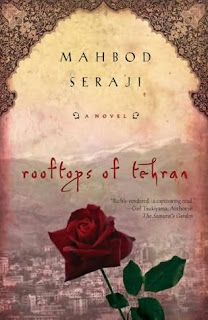
Rooftops of Tehran by Mahbod Seraji

Mahbod Seraji’s debut novel Rooftops of Tehran is a beautifully crafted journey set in Tehran, Iran, during the tumultuous 1970s. Pasha Shahed is a teenage boy who in the summer before his last year of high school faces the reality of his homeland, the despair of irrevocable change, and his first love.

With the secret police, the SAVAK, on their heels, Pasha and his friends must be careful how they act in public. Interspersing the narrative with chapters in the present and chapters in the past creates a palpable tension, and readers will speed through the pages to uncover the mystery of how Pasha ends up in a mental institution.

‘And your star guides you when you’re in trouble, right?’

‘Your star and the stars of the people you love.’

Ahmed closes one eye and lifts his thumb to block out one of the brighter stars. ‘I’m tired of looking at your big fat face.'” (Page 4)

Pasha and his friend Ahmed spend many nights on the rooftops discussing school, love, and life, but their simple lives soon become complicated. Ahmed declares his love for Faheemeh even though she is betrothed to another, and Pasha holds his secret love for his neighbor and friend’s fiancee, Zari, close to his heart. “Doctor” and Pasha have a genuine intellectual relationship, but the underlying tension stemming from Pasha’s secret love for Doctor’s fiancee Zari, lingers behind the surface.

“In order to cure my introversion, she insists I drink a dusky concoction that looks and smells like used motor oil. I complain that her remedy tastes horrible, and she tells me to be quiet and stop whining.” (Page 9)

“We’ll have chelo Kebob–a skewer of ground beef mixed with onions and domestic Persian herbs, and a skewer of filet, served over basmati rice that has been prepared with butter, the savory Persian herb somagh, and baked tomatoes.” (Page 244)

Seraji paints a clear picture of Iran’s people and the culture that dictates its people survive even the worst situations possible. Pasha is a strong character in spite of his doubt, but like any young person feels personally responsible for the major events in his life even if he was powerless to stop them. From the Iranian dishes to the crowded neighborhoods, readers will fall into Tehran and walk the streets with Pasha and his friends. The tyrannical government’s actions and dispensation of justice are infuriating and crushing, but in the midst of these heartaches, readers will laugh as Pasha and Ahmed poke fun at one another and Pasha regains hope.

“‘Deep in each knot of a Persian rug is a statement of the hands that patiently drove the needle and the thread,’ I once heard my father say.” (Page 165)

Seraji deftly creates memorable characters whose lives become fraught with tension and possible death. Readers are likely to become heavily invested emotionally in Pasha’s life, cheering him on, crying alongside him in his grief, and hoping that he will regain his center. Rooftops of Tehran is witty and emotionally charged; a novel that will leave readers wanting more of Pasha and his family and friends. This debut novel reads like a well-polished epic.

Rooftops of Tehran has made it to my growing list of top books for 2009; I was so emotionally involved that I found myself weeping on more than one occasion.

Also Reviewed By:
S. Krishna’s Books

Now, I have one copy to giveaway to my readers; the giveaway is open internationally.

All you need to leave a comment for one entry, and additional entries for tweeting the giveaway, blogging about it, or spreading the word in other ways.

Deadline is August 24, 2009 at 11:59 PM