Quantcast

The Keeper of Secrets by Julie Thomas

Source: William Morrow, HarperCollins
Paperback, 384 pages
I am an Amazon affiliate

The Keeper of Secrets by Julie Thomas is more than a debut World War II novel; it’s a novel about perseverance, passion, and the transcendent love of music that can overcome prejudice and hatred.  Simon Horowitz is a young violinist in Berlin in 1935 before the Nazi’s took full control.  His father is a prominent banker and his family enjoys special privileges, until one day they don’t.  Thomas weaves an age-old story of Nazi hatred and prejudice that takes everything from a single boy — his father, his mother, his siblings, and yes, his beloved 1742 Guarneri del Gesù violin.  Fast forward to 2008 and another young virtuoso, Daniel, who at fourteen wins a prestigious award for young violinists and catches the eye of a famed conductor.

“For a long second he blinked vigorously to adjust his eyes and steady his nerves.  All he could see were rows of mysterious shapes in the darkness, but somewhere out there his father sat, his heart beating as fast as Daniel’s.  A bead of sweat ran down his face, and he brushed it away with the cuff of his shirt as he took a few deep breaths to control the butterflies in the pit of his stomach.”  (page 9 ARC)

There are secrets kept in Daniel’s family, but he continues to have a deep loyalty to his family.  Rewind to the Nazi occupation of Berlin, and Simon is thrust into a camp — a camp he never knew existed but will never forget.  Even in the most dire situation, Simon remains tied to his music and the passion it raises within his bones and his heart.  Through this, he strives to survive and keep those he loves alive, even as the Nazis arbitrarily kill those around him.  As expected the images and horrors of Dachau will be seared into readers brains, but Thomas also hones the hope — the light — that shines on Simon in the camp.  He’s given the chance to reconnect with music in the most unexpected ways, and his reconnection ensures that the hope infiltrates the most unlikely of places.

“Routine only becomes dull when it’s safe; routine punctuated by terror remains as sharp as the first time you experience it.”  (page 159 ARC)

The Keeper of Secrets by Julie Thomas is a heart-wrenching debut novel, with a satisfying conclusion that will leave readers breathless.  Daniel, Simon, and their families’ experiences will weigh as heavily as the melancholy sounds underlying the music they play, but beyond that the music they play continues to touch the lives of even their most hated enemies and competition.

About the Author:

Julie Thomas is the New Zealand based author of The Keeper of Secrets published by William Morrow for HarperCollins USA.


This is my 82nd book for the 2013 New Authors Challenge.
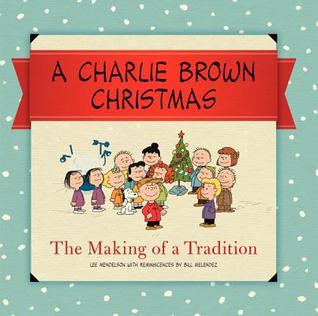
A Charlie Brown Christmas: The Making of a Tradition by Charles M. Schulz

Source: It Books, Harper Collins
Hardcover, 192 pages
I am an Amazon Affiliate

A Charlie Brown Christmas: The Making of a Tradition by Charles M. Schulz is an in-depth look at how the television special, A Charlie Brown Christmas, was conceived and made.  With the collaborative efforts of Charles M. Schulz, Lee Mendelson, and Bill Melendez, the cartoon special was put together in under four months from the green light to make it to the actual production film was screened.  It finally aired in December 1965, and for nearly 50 years, the special has been an American tradition in households across the United States.

“‘We realized that Charlie Brown’s voice had to be “blah”; Lucy’s had to be assertive and even crabby; Linus’s would have to combine intelligence with childlike simplicity, as he was someone who cherished his thumb and blanker,'” said Lee Mendelson. (Page 19)

Readers will love learning about what Schulz wanted to include in the special, and how he insisted that his characters be brought to life by children rather than adult actors acting like children.  Despite having felt that they’d accomplished what they set out to do with the special, they began to get nervous when the executives were less than enthusiastic about the final product and when the screening was met with silence and a handshake.  But once the review from the screener appeared in the newspaper, the team realized the special was more successful than expected.

“This sense of alienation, personified in Charlie Brown, is one of the deeply personal yet universally shared feelings that Charles Schulz infused into each of the Peanuts characters.  With simplicity and wit he pioneered new ground in comics with characters that reflect all the insecurity, anxiety, and joy of being human.” (page 37)

A Charlie Brown Christmas: The Making of a Tradition by Charles M. Schulz is a unique look at the behind the scenes making of not only the special, but also of how Schulz created his characters and worked with others.  The book not only includes reflections from his partners on the project, but also some of the storyboards, the music sheets, and production notes, as well as the complete script for the special.

About the Cartoonist:

Charles M. Schulz, nicknamed Sparky, was an American cartoonist, best known for the comic strip Peanuts. He is widely regarded as one of the most influential cartoonists of all time, cited as a major influence by many later cartoonists.

Robert Plant: A Life by Paul Rees

Sources: It Books, HarperCollins
Hardcover, 368 pages
I am an Amazon Affiliate

Robert Plant: A Life by Paul Rees is an unauthorized biography of one of Led Zeppelin‘s front men — the one some called a golden god.  Beginning with his early years in grade school, Plant was not destined to be the straight arrow his father wanted him to be.  His antics started as a young adolescent stealing small instruments from well-known musicians that visited local clubs.  He was initially influenced by the sway of Elvis, miming his records on the sofa with a hairbrush for a microphone.  But Rees also provides a background on the region and its hardships, which shaped his father and his older family members.  The hardships the family faced also shaped their attitudes toward a young man finding his love of music and barreling headlong into it.

Rees prose is engaging, like an old friends talking to one another, and the smattering of quotes from friends and family about the events that shaped not only Plant, but also the band, make readers feel like their watching a documentary unfold.  And like most documentaries with producers close to the subject, some of the more sordid details of drug use and sex are muted — though a salacious tale about the band and its members has likely been done before and does not need to be repeated.  Rees has a greater focus on the music Plant created in a series of defunct bands, his poor luck with bands when he started out, and his wild success as the lead singer of Led Zeppelin.

“He had felt fear gnawing away at him.  The dread of how he might appear to all the thousands out there in the dark.  Here he was, a man in his sixtieth year, desiring to roll back time and recapture all the wonders of youth.  Did that, would that, make him seem a fool? In those long minutes with himself he had looking in the mirror and asked over and over if he really could be all that he had once been; if it were truly possible for him to take his voice back up to the peaks it had once scaled.  He had so many questions but no answers.” (page 1)

As a young husband, he’d made a pact with his bride that if he had not made it by his twentieth birthday in a successful band, he’d give it up to support his family.  It was just before he was set to find a real job that he was asked to join Jimmy Page to create Led Zeppelin.  Plant soon finds himself separating his personalities in two directions — the devoted family man and the consummate rock star.  Several tragedies and the weight of drugs and violence lead to the band’s demise and Plant’s moving onward — creating more music.

Robert Plant: A Life by Paul Rees leaves analysis of the personalities behind and merely relies on outside sources, interviews, and other insights from those who were there to give shape to a tumultuous time of a rock star.  But beyond that, the biography offers up a human look at a rock god, though one with a limited view.  Readers will feel like its rehashed and glosses over the real man in favor of critiquing the music.  It seems like his early beginnings in music, Plant’s career after Zeppelin was up and down, but he never seemed to lose his love of music.  Just wish there was more fresh research.

About the Author:

Paul Rees has written about music for more than twenty years. In that time he has interviewed everyone from Paul McCartney, Bruce Springsteen, and Madonna to Bono, Take That, and AC/DC. His work has appeared in many publications, including the Sunday Times Culture, the Telegraph, the Independent, and the Evening Standard. He was also editor of two of the UK’s most successful and long-standing music publications, Q and Kerrang!, for a total of twelve years.

This is my 80th book for the 2013 New Authors Challenge.

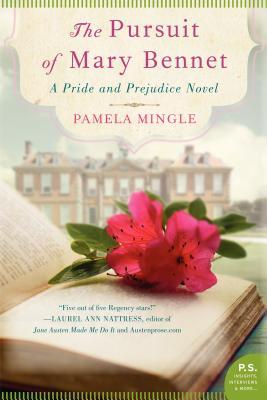
The Pursuit of Mary Bennet by Pamela Mingle

Source: William Morrow and TLC Book Tours
Paperback, 240 pages
I am an Amazon Affiliate

The Pursuit of Mary Bennet by Pamela Mingle is what could be considered a sequel Jane Austen’s Pride & Prejudice, but rather than focus on Elizabeth and Jane Bennet as the heroines, Mingle chooses the more pious and somewhat ridiculous sister Mary.  Mary Bennet has been the butt of the family’s jokes and jibes for much of her childhood, and for the most part Lydia and Kitty Bennet treat her in much the same way even though she is in her early twenties and has clearly changed.  Rather than sing to the detriment of society’s ears, she’s content with refining her pianoforte playing, leaving singing to others who are more gifted.  She once sat idly by and took the criticisms of her siblings and parents and held those resentments inside, but now she’s more inclined to speak her mind, while not being overly rude.  She’s a more matured woman, though still unsure of her feelings and her place in the family.

“I’d always believed I would remain a spinster.  I would disappoint as a wife.  I had not the easy compliance, the ability to defer to a husband, and worst of all, I lacked beauty, conduct, and, at times, even common sense.  But Jane said I had changed.  Truly, I valued her opinion above that of anyone else.”  (page 85)

Told from Mary’s point of view, readers are given an inside look into her growth as a young woman and a sister.  Rather than admonishing her sisters for their poor behavior aloud and in public, she’s taken to more tactful advice.  She’s a more well-rounded woman, though still naive when it comes to marriage, romance, and the bond between men and women.  While readers will enjoy this more evolved Mary and getting a glimpse into the lives of their favorite Bennets — Jane and Lizzy — the parallels between Lizzy and Darcy’s love story is reflected in Mary’s romance.  The close parallels from the quick prejudices and anger over easily explained moments lack an imagination one would expect, especially in this tale.  However, given Mary’s limited contact with men at Longbourn, it does stand to reason she would be unsure how to respond to male attentions.  Readers may have wanted a more inventive romance with trials different from those of Darcy and Lizzy.

The Pursuit of Mary Bennet by Pamela Mingle is a solid novel in the same vein as Austen’s work, and breathing life into the stern and bookish Mary is tough to pull off, but Mingle’s Mary is believable.  She’s a young woman of principle, and given her sisters’ love matches, it is no wonder that she would want to settle for nothing less.

About the Author:

Pamela Mingle is the author of Kissing Shakespeare, a time-travel romance for young adults set in Elizabethan England. She is a member of the Society of Children’s Book Writers and Illustrators, Pikes Peak Writers, Romance Writers of America, and the Jane Austen Society of North America.

Find out more about Pamela at her website, connect with her on Facebook, and follow her on Twitter.

This is my 79th book for the 2013 New Authors Challenge.

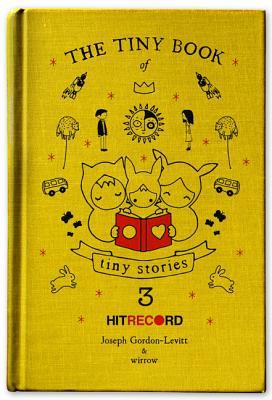
The Tiny Book of Tiny Stories: Vol. 3 by Joseph Gordon-Levitt

Source: It Books
Hardcover, 128 pages
I am an Amazon Affiliate

The Tiny Book of Tiny Stories: Vol. 3 by Joseph Gordon-Levitt is a collection of stories from 82 contributors out of the 35,905 contributions to the Tiny Stories collaboration on hitrecord.org — and the profits from the sale of the book will be split among the 82 contributors, which include writers and artists, and the Website.  Some of these stories are so small, they consist of just one sentence, while others are several sentences.  All of them are accompanied by an image, which is an interpretation of the words on the page or vice versa.  Some images and stories together will make readers laugh, but most of these stories are guaranteed to generate at least a smile.  Here are a few of my favorites:

10654259013_324cbc72a9_n10654026895_2caf4cc8a3

There are very few images with color, but those that do have color, do so for a purpose relevant to the story they portray.  The book is clearly a winner, especially for those that have very little time to read or even look at art — this book combines both, and there are some talented artists in these pages with varied imaginations.  The Tiny Book of Tiny Stories: Vol. 3 by Joseph Gordon-Levitt is a great diversion when there is little time between appointments or tasks.

About the Author:

HitRECord founder and director Joseph Gordon-Levitt’s acting career has managed to garner a massive popular appeal while maintaining a widely respected artistic integrity. He recently starred in Christopher Nolan’s Academy Award-nominated Inception and received Golden Globe, Independent Spirit and People’s Choice award nominations for his performance in (500) Days of Summer. Currently earning rave reviews for his performance in 50/50, also starring Seth Rogen, his upcoming films include David Koepp actioner Premium Rush and Rian Johnson’s sci-fi thriller Looper, with Bruce Willis.

Sense & Sensibiliy by Joanna Trollope

Source: TLC Book Tours and Harper
Hardcover, 368 pages
I am an Amazon Affiliate

Sense & Sensibility by Joanna Trollope is the first of the books in Harper’s Austen Project in which six bestselling contemporary authors use Jane Austen’s famous novels as a basis for their own modern versions.  With so many modern day versions, spin-offs, and continuations of Austen’s classic books, the expectations for the project are likely high, but this first rendition is a mixed bag.  While sticking very close to the original plots, Trollope’s main contribution to the original is an exaggeration of the characters — Elinor has too much sense (even more than Austen’s version) and Marianne is overly dramatic at every turn — and the introduction of modern technology, like Twitter, YouTube, iPods, and Facebook.  Although the exaggerated characters could be considered parody in a way, in some scenes they come off as merely annoying.

“It had been made plain to Sir John, from a young age, that the luxury of making choices in life simply did not exist without money.  Money was not an evil.” (page 42 ARC)

The social conventions of Austen’s time continue to play a role here, with characters motivated to find matches with money because without them, they will be destitute.  But in this modern society, it is hard to see that women would have just this option open to them, unless they are as shallow as Lucy Steele.  In fact, Elinor takes a job, at least part time until she completes her degree, but most everyone else seems content to sponge off their richer relatives, without much gratitude — though with relatives like these, it would be hard to muster gratitude.  Trollope clearly understands the foils that Marianne and Elinor play in the novel, and her exaggerations of their character in a modern society of social media may seem a bit much, but for young women constantly surrounded by their faults and mistakes, it might be believable.  Elinor, here, seems to represent a need in society for privacy, a greater need than society seems willing to allow unless people completely withdraw from society.  She’s strong, but at the same time, she’s vulnerable, as she pines for Edward.

Trollope has done a superb job with the youngest sister, Margaret, a young girl struggling with her emotions after her father’s death, being pushed out of the only home she’s ever known (Norland), and moving to a new school without her friends.  Bill Brandon is still reserved and quietly watching in the background, still considered boring by Marianne, and still caring, but there is a dynamic Trollope adds that will have readers cheering for something that was not in the original.  Meanwhile, John “Wills” Willoughby is even more dastardly in Trollope’s novel, yet he is still partially redeemable if you can buy that marrying for money is still a motivator in society, which it might still be among the more wealthy families.  Sense & Sensibility by Joanna Trollope is more focused on the excess in modern society as seen through her take on Marianne, Margaret, Elinor and the other characters, which can be extrapolated from their reactions to events and relationships.  Although readers would expect a more cohesive melding of the modern world with Austen, Trollope has created a new commentary on society that applies more easily to the modern world’s emphasis on excess and self-promotion.

About the Author:

Joanna Trollope is the #1 bestselling author of eighteen novels, including The Soldier’s Wife, Daughters-in-Law, Friday Nights, The Other Family, Marrying the Mistress, and The Rector’s Wife. Her works have been translated into more than twenty-five languages and several have been adapted for television. She was appointed to the Order of the British Empire in 1996 for her services to literature, and served as the Chair of Judges for the Orange Prize for Fiction 2012. She lives in London and Gloucestershire.  Find out more about Joanna on her website.  Photo credit: Barker Evans.

This is my 74th book for the 2013 New Authors Challenge.

Camelot’s Court by Robert Dallek

Source: Harper Collins
Hardcover, 512 pages
I am an Amazon Affiliate

Camelot’s Court by Robert Dallek (who was inspired to write the book after a poll similar to a recent one in Politico) is a highly detailed account of the Kennedy White House, but it also provides an inside look at the political machine the United States has become — from the bureaucrats with aspirations to rise above their stations to the military with its tunnel-vision to stop Communism at all costs.  One of the big takeaways from this book is JFK’s ambition to become president even when he won his first House seat — it was clear that he was bored with “small time” politics and merely cared about big picture issues, particularly foreign policy.  Dallek repeats most of what people already knew about Kennedy — that he liked the ladies, had an illness he hid from the press, and came from a rich family with some skeletons in the closet.  However, what Dallek provides is a comprehensive look at how dysfunctional an executive branch can be, particularly one with a young president at the helm who surrounds himself with the smartest of men (those that accepted the positions) and is forced to keep on less-than-desirable men for political reasons.  The interplay between the groups, the president, and even the brothers Kennedy is contentious, but it also becomes paralyzing.  However, it was not beneath Kennedy to use underhanded tricks or to dupe the press to get what he wanted.

“As Rusk sat in Kennedy’s living room, waiting to see the president-elect, he noticed a copy of the Washington Post sitting prominently on a coffee-table — it announced Rusk as secretary of state.  When Kennedy entered and saw the headline, he ‘blew his top,’ asking Rusk if he was the source of the leak.  Told no, Kennedy called Post publisher Philip Graham to chide him for printing the story.  After Graham explained that Kennedy was the one who had told him, Kennedy said, ‘But that was off the record.’  Hardly, since it was exactly what Kennedy wanted; Kennedy had no interest in giving Rusk a choice of accepting;”  (page 99 ARC)

Dallek carefully demonstrates his statements through dialogue from the men in the room with Kennedy when foreign policy issues were discussed, citing their own books, statements, diaries, and/or notes — not to mention the declassified government documents.  There are even quotes from Jackie Kennedy about private conversations she had with her husband or from conversations she overheard.  What’s telling about the situation when Kennedy was president is that he had the book knowledge from FDR and other presidents to guide him in building the best team, but that circumstances outside his control and his inability to ignore advice and go with his gut instinct often landed his administration in political hot water, like after the Bay of Pigs invasion of Cuba.  The defeat left a bad taste in the administration’s mouth, which may have fueled the military’s fire to win anywhere at any cost against Communism — hence the entry into the Vietnam War.

For those interested in Kennedy the man, this is not the book; but for those interested in how an idealist with big aspirations and big ideas about solving foreign policy issues gets caught up in the political machine and essentially worn down, this is the book for you.  Camelot’s Court by Robert Dallek is not a linear tale, but does touch upon the forces at work against the Kennedy Administration and how the administration pulled the wool over its own eyes when it came to foreign policy issues.  In many ways, the book chronicles a young president’s dream of greatness that fell short of its goals, not because of an assassination, but because of inexperience and failing to ask the right questions.

About the Author:

Robert Dallek is an American historian specializing in American presidents. He is a recently retired Professor of History at Boston University and has previously taught at Columbia University, UCLA, and Oxford.

These are my 68th book for the 2013 New Authors Challenge.

Origins (The Vampire Diaries: Stefan’s Diaries Vol. 1) by L.J. Smith, Kevin Williamson, Julie Plec

Source: Purchased from Borders ages ago
Paperback, 237 pages
I am an Amazon Affiliate

Origins (The Vampire Diaries: Stefan’s Diaries Vol. 1) by L.J. Smith, Kevin Williamson, Julie Plec is the first in the diaries series stemming from L.J. Smith’s original novels.  Stefan Salvatore is the younger of two brothers, and he’s the one that does as his father asks and rarely speaks out against him.  Damon, who is away during the Civil War, is the outspoken rebel.  Told from Stefan’s point of view, readers will get a sense of the tug between duty and desire, but as the second son and most responsible, his sense of duty often sways his choices.  When his father pushes him to pay his attentions to a local beauty from a powerful family, he does so, but it is clear that the match is one of convenience, not love.

“There was no mystery or intrigue in Mystic Falls.  Everyone knew everyone else.  If Rosalyn and I were to get married, our children would be dancing with Daisy’s children.  They would have the same conversations, the same jokes, the same fights.  And the cycle would continue for eternity.”  (Page 39)

In fact, a stranger in town, Katherine Pierce, has turned his head, and he cannot get her out of his mind.  A tug of war between his desires and his duty ensues, but other than Katherine’s beauty and mystery, you know little of her and why Stefan wants to be with her.  Is it mere animal lust, has she taken over his mind to make him feel that way?  These are questions that are left unanswered, but the infatuation he has with her leads to jealousy when his brother Damon returns from General Groom’s camp and spends a great deal of time with her.  She continues to be a mysterious figure even at the end of the novel, but as there are others in the series, she must be that way for a reason.

Although some of the chapters are written in diary form, the story is in prose, with Stefan’s inner thoughts sprinkled throughout as diary entries.  Despite wishing Stefan were more like Damon, unfettered, he sticks to his duties until the dam breaks for him emotionally.  He has little choice but to follow his desires when his duty has failed him.  The juxtaposition between the human and vampire Stefan is hinted at here, especially as he continues to compare himself to his brother and to find the life under his father’s thumb stifling.  Origins (The Vampire Diaries: Stefan’s Diaries Vol. 1) by L.J. Smith, Kevin Williamson, Julie Plec is a solid first book that introduces the town of Mystic Falls, the threat that faces the townsfolk as the Civil War brews outside their doors, and the unseen dangers that lie amongst them in wait.

About the Author:

L.J. SMITH has written over two dozen books for young adults, including The Vampire Diaries, now a hit TV show. She has also written the bestselling Night World series and The Forbidden Game, as well as the #1 New York Times bestselling Dark Visions. She loves to walk the trails and beaches in Point Reyes, California, daydreaming about her latest book. She also loves to hear from readers ([email protected]) and hopes they will visit her continually updated website, where information, new stories, and contests can be found.

This is my 55th book for the 2013 New Authors Challenge.

The Real Jane Austen by Paula Byrne

Source: Harper and Public Library
Hardcover, 361 pages
I am an Amazon Affiliate

The Real Jane Austen: A Life in Small Things by Paula Byrne (which I began reading as a review copy, but opted for a finished borrowed copy to finish because the photos and images were inserted after the ARCs were distributed) is expressive, carefully crafted, and incisive in how it sketches out the true Jane Austen.  In this non-linear biography, Byrne debunks a few of the myths around Austen, particularly about her alleged romantic encounters and her homebody persona.  Through careful analysis of her novels, characters, the correspondence she had with her family and others, and other tidbits from other documents at the time, Byrne demonstrates the careful and perfectionist nature that was Jane Austen, particularly as a novelist.  With that perfectionism also came a penchant for telling her family members exactly what she thought, knowing that they would not take her criticism lightly, especially if they were writing their own stories or poems.  But she also was critical of their life choices and worried about childbirth and the consequences of marriage, especially as a means of stifling a woman’s voice.

“Strikingly, Jane Austen’s heroines are rarely described as beautiful and accomplished.  Even Emma Woodhouse is ‘handsome’ rather than ‘beautiful.’  Physical descriptions of her heroines are rare.  Austen shows instead how they grow into loveliness or possess a particular fine feature, such as sparkling eyes.”  (page 82)

In addition to the importance of family — such as sisterly bonds — Austen seems to have drawn her characters and many of the situations in her novels from real life, things she herself may have experienced on her “expeditions” or to her family members.  Another parallel: the mysterious ways in which her heroines are described — with none being detailed as beautiful or their features particularly outlined to give readers an impression of the whole — and the mystery surrounding her surviving portrait, which may not be her, but a sketch drawn by her sister is most likely her, but she is turned away and her features are unknown.  Byrne also points out there is evidence to suggest that like modern-day Janeites, Austen thought of her characters as real people as well, and often scribbled out afterlives for characters from some of her contemporaries after reading those novels.

“The acknowledgement of the incompleteness of human disclosure [in Emma] strikes at the very heart of Jane Austen’s creative vision.”  (page 255)

Byrne uses her knowledge of the Regency period to better grasp Austen’s daily routines and jaunts, noting that the “turnpike system” was introduced during her lifetime and that while her mother may have suffered from travel sickness, Austen did not.  The author of so many great “domestic” novels traveled a fair share, including to the seaside, which became integral parts of her later novels.  And through her distant relations, her connections to royalty and those engaged in the plantation and slave ownership trade were not as far flung as one would expect for an impoverished woman.  These relationships and sources enabled her to maintain as close to truthfulness in her novels as she could without experiencing things first hand.

The Real Jane Austen: A Life in Small Things by Paula Byrne is a must have for those who have read Jane Austen’s novels and wish to get a better handle on the author and her influences, and while some of those influences may be small in comparison to the wars abroad during her lifetime, they shaped her writing and her expectations in countless ways.  There are moments in which the biographer takes some liberal turns in determining Austen’s character and motivations, and in some cases they may seem plausible, while in others they do not.  But with an absence of facts, thanks to Cassandra Austen’s burning of her sister’s letters, biographers are left with gaps in time that are hard to fill.  From whether Chatsworth or Stoneleigh Abbey is the model for Pemberley in Pride & Prejudice to how an unnamed lady came to be published first by a military publisher, Byrne handles each aspect of Austen’s life with care and consideration, but she never shies away from the more mischievous side of Austen, either.  For those looking for lost secrets, this is not the book for you, and many of us will have to be contented with what we do know about Austen and forget about what moments are lost to us forever.

About the Author:

Paula was born in Birkenhead in 1967, the third daughter in a large working-class Catholic family. She studied English and Theology at the college that is now Chichester University and then taught English and Drama at Wirral Grammar School for Boys and Wirral Metropolitan College. She then completed her MA and PhD in English Literature at the University of Liverpool. She is now a full-time writer, living with her husband, the Shakespeare scholar Jonathan Bate, and their three young children (Tom, Ellie and Harry) in an old farmhouse in a South Warwickshire village near Stratford-upon-Avon.

Paula is represented by The Wylie Agency. She is an Executive Trustee of the Shakespeare Birthplace Trust and a Royal Literary Fund Fellow at the University of Warwick.

Paula is the author of the top ten bestseller Perdita: The Life of Mary Robinson (HarperCollins UK, Random House USA).  Check out her Website and join her on Twitter.

This is my 54th book for the 2013 New Authors Challenge.

City of Hope by Kate Kerrigan

Source: William Morrow, Harper
Paperback, 400 pages
I am an Amazon Affiliate

City of Hope by Kate Kerrigan is the second novel in the life of Ellie Hogan (if you haven’t read Ellis Island, this review could contain spoilers), a young Irish woman who has traveled to New York City to help save her first love’s mobility and returned home to find her family torn by tragedy.  Beginning in the 1930s, Ellie has settled back into her Irish life without electricity and indoor plumbing, embarking on unconventional business ventures for a woman.  While her family may stand back and allow her to continue with her ambitions, the resentment and angst these businesses bring into their lives simmers beneath the surface.  Ellie is far from the conventional house wife and mother of Ireland, and she knows that she’s the star of her own small town’s gossip, but as long as her life is calm at home, that is all that matters to her.

“However, this morning his blue eyes shone wild with delight.  He looked the same as he had done when I had first fallen in love with him at sixteen.  Fresh and full of the heart of life, like the outdoors — a man made of earth and air.” (page 11 ARC)

While she’s bustling about with her businesses and her life outside the home, the trials of miscarriages and failed births weigh heavily on her and her husband.  Despite the passions she may feel for her husband, they are tainted by his failure to take joy in what she seeks to accomplish and her inability to mourn the losses of her children with her husband at her side.  The wall between them causes fissures in their marriage as they bitingly argue about the little things and the signs of things to come are ignored.  Her three years in New York changed her from the small town girl who wanted merely a husband and family into a woman who wanted the finer things and a better life.

With the lost children spurring her to make the dreams she had in New York a reality in Ireland, Ellie is able to better the lives of the town’s own daughters and wives, prompting these women to rethink their own roles.  Kerrigan takes the time to build up the changes seen in Ellie’s town of Kilmoy, and how those changes are tied to Ellie’s experiences in New York and her own personal devastation at home.  Tragedy strikes her home again, altering Ellie’s course once again and pushing her to run away to America.  In her grief, she reaches out and lifts those around her up, showing them the way to improve themselves, work for their own betterment, and to help others around them.  In many ways, this second book is about redemption and recovery.

City of Hope by Kate Kerrigan is a solid second book in a series, but without having read the first book, readers may find it hard to relate to Ellie’s past and her current situation, particularly her burning desire to run away from Ireland.  However, there are enough hints about the past to guide readers who have picked up the second book.  Ellie is a strong woman who can inspire others to rise above their own poverty and misfortune, but who continues to struggle internally with who she is and wants to be.  Kerrigan’s poise and pacing help readers come to know Ellie as a troubled friend who is still finding her way, even as tragedy strikes and good opportunities present themselves.  There is hope that her journey is nearing a conclusion, and readers will hope that comes with the third book.

About the Author:

Kate Kerrigan is an author living and working in Ireland. Her novels are Recipes for a Perfect Marriage which was shortlisted for Romantic Novel of the Year in 2008 and been translated into 20 languages, The Miracle of Grace, which has been adapted as a film script with funding from the Irish Film Board and Ellis Island, the first of a trilogy which was selected as a TV Book Club Summer Read in Britain and launched in the U.S. with Harper Collins in July 2011. Its sequel City of Hope is published by Pan Macmillan in Britain and scheduled for publication in America by Harper Collins in 2013

This is my 2nd book for the Ireland Reading Challenge 2013.

Ellis Island by Kate Kerrigan

Source: Harper
Paperback, 351 pages
I am an Amazon Affiliate

Ellis Island by Kate Kerrigan is a historical fiction novel set in the 1920s when Ireland is fighting for Home Rule, and Ellie Hogan makes a bold choice to accept a job in New York City to raise the money her husband needs for an operation.  Ellie is not like the other members of her school group; she dreams of fine things and a life outside her little village of Kilmoy.  Her childhood friend, John, and his family become like a surrogate family for her, showing her the kindness she lacks from her own parents who are so insulated that they forget to hug their daughter and encourage her.  Her friendship soon blossoms into love, a childhood love that becomes a motivation for her to impress, to move beyond the bounds of her family.

“I hated insects, but I wanted to feed the blue tit, and I wanted to impress him.  So I kicked back the rock, picked up a wood louse between my thumb and forefinger and carefully placed it into the bird’s open, hungry beak.  As it swallowed it back, I touched the top of its little head with my finger and felt how small and soft and precious it was.  I looked at John and my heart flooded through.  It was the first time I remember sharing love with somebody.”  (page 8)

Young love can be passionate and sometimes it can be ever-lasting.  Because Ellie has finally shared love with someone, she’s able to lock it away inside herself, stoking its growth even when hundreds of miles separate them.  She makes that hard but necessary choice to leave her Irish home to earn the money John needs after he’s injured while part of the Irish Republican Army.  It is this love she turns to when she worries about what lies ahead in a strange country, and it is what she holds onto when she makes frightening decisions that lead her out of servitude into the life of a career woman.  What had been a year commitment soon turns into something much more, but Ellie is ill-prepared for the challenges and temptations before her.

Kerrigan has done her homework, and it shines in the small town feel of Ellie’s Irish home where everyone knows everyone and their business, and where judgments of families’ past actions still haunt the newest generations.  The harsh realities of fighting for independence from British rule are present as John fights for what he believes.  Her trip to NYC and her experiences with Ellis Island and the immigration process feel real, and readers will be just as awestruck by the city as Ellie is.  More than anything, Kerrigan’s novel is about the search for something just over the horizon, obtaining it, and bringing it back to the family and friends who need it most.

“Ireland was in my heart, but under my feet was America.” (page 128)

Ellis Island by Kate Kerrigan is an immigrant story that requires the deepest of sacrifices and commitments but the growth Ellie experiences make her a better woman, capable of selfless generosity even when she has so little.  She’s grown into a woman her father and mother can be proud of, even though she didn’t go about the way that they would have preferred.

About the Author:

Kate Kerrigan is an author living and working in Ireland. Her novels are Recipes for a Perfect Marriage which was shortlisted for Romantic Novel of the Year in 2008 and been translated into 20 languages, The Miracle of Grace, which has been adapted as a film script with funding from the Irish Film Board and Ellis Island, the first of a trilogy which was selected as a TV Book Club Summer Read in Britain and launched in the U.S. with Harper Collins in July 2011. Its sequel City of Hope is published by Pan Macmillan in Britain and scheduled for publication in America by Harper Collins in 2013.


This is my 1st book for the Ireland Reading Challenge 2013.


This is my 51st book for the 2013 New Authors Challenge.

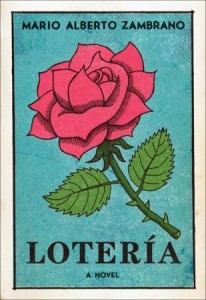
Lotería by Mario Alberto Zambrano

Source: TLC Book Tours and Harper
Hardcover, 288 pages
I am an Amazon Affiliate

Lotería by Mario Alberto Zambrano is an imaginative coming-of-age story for eleven-year-old Luz Castillo that uses the cards from a Mexican game that resembles American bingo.  Each card can be covered in the game once the riddle is called and the players know what card it is based on the riddle, and each card is placed in a tablas in any order or in a standard order.  Like the game, Luz unwinds her memories just before a tragic event lands her in a center and her father arrested.  As she turns the cards over, a memory is triggered, and she writes it down in her journal at the behest of her auntie Tencha.  Like any child traumatized by a startling event, Luz’s memories do not follow any kind of straightforward timeline, but they do reveal a great deal about her family’s immigration, ties to Mexico, and adjustment in America.

“And because quiero can mean either want or love, I asked if it meant “I want you” or “I love you.”  Come here, because I love you,or, come here, because I want you? If you were saying to someone, come to me, then the person you loved wasn’t there, and if you had to tell someone to come to you then maybe he didn’t love you.  And to want someone to come to you is like an order.  If you have to order someone to come to you, how much love is in that anyway?”  (page 13 ARC)

Like the journal entries, Luz’s family life is complex and multilayered with her older sister, Estrella, having been born in Mexico and knowing to smoothly speak Spanish, while Luz is a natural born American who is self-conscious about speaking Spanish aloud even though she knows what those around her say.  While there are moments in this novel when Luz has more adult thoughts, the experiences she has at home with her parents always fighting and her cousins taking advantage of her youth when she visits in Mexico, it is clear that she is mature beyond her years and has given a great deal of thought to her life experiences.

Peppering the story with Spanish words, the meaning of which can be mostly gleaned from the context of the story, Zambrano has crafted a puzzle that will spur readers to keep reading and take the journey with Luz as she uncovers the memories she’s tried to forget about her family.  While Luz has grown up in a typically male-oriented household, it is clear that America has had an influence on the family as her mother takes a job outside the home and never cowers behind her skirts when her husband is out of control with drink.  Despite the hardships, Luz has faced, she still remains optimistic and open to the possibilities of a better life, as she speaks to God in her journal entries about her past and her own confusion and feelings.

Lotería by Mario Alberto Zambrano is well-crafted, stunning, and highly recommended.  It brings to light the horrors of familial dysfunction, abuse, and general family discord through the eyes of a mature child, who strives to cope with it all in the best way possible.  Not only does it highlight the transition of a family from life in Mexico to one in America — with its opportunities and disappointments — but it also examines the dichotomy of family relationships that produce both love and hate.  Zambrano is an author to watch for.

About the Author:

Mario Alberto Zambrano was a Riggio Honors Fellow at the New School and recently completed his MFA at the Iowa Writers’ Workshop as an Iowa Arts Fellow. He is a recipient of the John C. Schupes Fellowship for Excellence in Fiction. Lotería is his first novel.

Find out more about Mario at his Website and connect with him on Facebook.

This is my 46th book for the 2013 New Authors Challenge.