Quantcast

BBAW: Profile of Poetry Book Blogger Regular Rumination

I was honored to win the poetry blogger award for BBAW in the past, but I also thought that any blog featuring poetry should be recognized since there are so few of us.  As part of that process, I looked to my network of blogs that I read and love, and thought it would be great fun to profile at least one poetry blogger this week in honor of Book Blogger Appreciation Week.

To that end, I sent over a few interview questions to one of my blogging and Indie Lit Award judging buddies, Lu from Regular Rumination.  She’s one of the first bloggers I noticed posting about poetry, so I think it’s appropriate that she’s the one I profile today.

When did you first read poetry and what drew you to it? Or if you were initially put off by poetry, what changed your mind?

I think I first read poetry seriously my freshman year of high school. My teacher passed out copies of Pablo Neruda’s “I could write the saddest lines” and I immediately fell in love. I remember inhaling poetry from then on, but my love for poetry also came from wanting to write it and wanting to write it well. In college, I took as many poetry workshops as I could and now I miss it.

I don’t know that I was ever put off by poetry, but I’m not sure I would have fallen in love with poetry if we didn’t have to focus on it in high school. We also were required to write it, which was when I discovered that I really enjoyed it. For me, I often don’t learn to appreciate something until I’ve tried to do it myself. After that project ended, I joined an old AOL message board called My Poetry and Writing, and not only continued to write poetry, but also found my first online community. Now that I’m older and write poetry a lot less than I would like, I read poetry because it is important to me. It is less about learning how to write and more about seeing the world in new, exciting, and beautiful ways.

About how many books of poems do you review each year on average? Do you have an established goal of how many you will read and/or review each year? Or is the process more organic?

My blog has slowly moved away from reviewing books and I often find myself discussing specific poems over specific books of poetry. I have reviewed several collections over the years, but I rarely have established goals of any sort for my blog. I find that makes me avoid doing them; really, if there’s anything I don’t want to do for my blog, I should just say I’m going to do it. I like my reading to be more organic. I have made a conscious effort, though, to read more poetry every week, whether it is an entire collection, the monthly issue of Poetry Magazine or the daily email from Poets.org.

Tell us a little bit about the Read More/Blog More Poetry project (click on the image to learn more) that you started at Regular Rumination and what inspired you to start it and how has participation been? What are some upcoming events associated with the project?

What started out as the Read More/Blog More Poetry event has turned into The Poetry Project, which was started by myself and Kelly, from The Written World. It all started as a request on Twitter from a few bloggers for a list of poems. I wrote a list of my favorite contemporary poems and Jason from Moored At Sea made a list of classic poems. Kelly and I started talking about wanting to share the lists and also to convince more people to blog about poetry. Kelly is a new reader of poetry and I think that’s what makes us a good team: we have two very different experiences with poetry, but we both want to read more of it. The Project isn’t really about reading a specific poem or posting at a certain time, though we do have monthly optional themes, it’s really just about getting your feet wet with poetry and with blogging about poetry, if you’re new to poetry, and about making poetry a more visible part of your blog if you’re already a regular poetry reader.

What I think has been most successful about The Poetry Project is that anyone can participate, whether you’ve just started reading and blogging about poetry or you’re a seasoned poetry reviewer. It’s turned into a small community of people who are blogging about poetry and how they relate to it. The only real requirement is that you blog about poetry and link back to the post. Kelly and I are committed to including a roundup of each participants posts at the end of the month, so there’s one place where everyone can go back and look to see what we’ve all read and talked about. Participants are even contributing original poetry! It’s been really amazing.

Recommend some poets for beginners. Recommend some poetry translations or poetry for those who’ve read more poetry than others.

If you’re new to reading poetry, I think Edna St. Vincent Millay, for an older poet, and Natasha Trethewey, for someone more contemporary, are excellent places to start.

If you’re looking for something that’s a bit of a challenge, I really recommend Derek Walcott and, in translation, Neruda’s Residence on Earth. In the US and around the world, Neruda is famous for his love poetry, but the poems in this book are a love poem of a different sort. They focus on the earth and our relationship with our physical surroundings. They are beautiful and sensual and sometimes difficult.

What are you reading now? How do you view the world of poetry and its future?

Right now, I am still reading some of the collections I have out from the library for last month’s Poetry Project theme of Pulitzer Prize-winning poetry, including Marianne Moore’s collected poems. I am also always reading the Poets.org Poem-A-Day emails.

As for the future of poetry… I’m not sure. I think there are enough dedicated readers of poetry in this world to keep it an active and thriving community, even if it is a very small one. I hope that there will be enough English teachers like mine who help foster young people’s passions about poetry.

About Regular Rumination from Lu:

Regular Rumination is my own corner of the web where I talk about books, poetry, crafts, and whatever else is on my mind. I started it back in 2008, while I was home from college on winter break, looking for a great book to check out from the library. My life has changed a lot since then, but my blog has been the constant.

Thanks so much, Lu, for participating in this week’s BBAW profile of poetry bloggers.

BBAW: Interview with Lit and Life

Welcome to day two of Book Blogger Appreciation Week (BBAW). Today is the interview swap with another blogger, which is always my favorite part. Lit and Life is a blog that I’ve read off and on, though not always commented on, for several years. She’s one of the participants in the WWI Reading Challenge this year at War Through the Generations, and she’s got some fun features.

Let’s get to the interview, shall we:

1. Lit and Life is your piece of the Internet where you talk about books and life. What have been some of your most popular blog posts? Which books have generated the most discussion? What life posts?

For my first year of blogging, I was obsessed with my stats. Then I came to realize that as long as I didn’t monetize my blog, I didn’t really care how many people read my blog each day since, first and foremost, I’m blogging for me. Along the way, I’m happy that other people do check in and comment but I can’t really tell you which posts were the most popular. I do always notice that I get a lot more discussion when I review non-fiction books and my Sunday Salon posts always seem to get some discussion going.

2. It says on the about me page that you love flea markets (me too!). Do you just go to browse or do you have specific lists of items you are looking for? What is the most unusual thing you’ve found at a flea market that you just love and why?

I always have some things I’m keeping an eye out for when I go to flea markets, “antique” malls and stores and auctions. Old children’s books, pieces of pressed glass that match the ones I collect, frames and architectural elements are always on my radar. But I love to just browse and keep my mind open to interesting new things. Twenty-five years ago, my husband and I found an old kitchen table at an auction that we picked up for five dollars. We refinished it but it’s a table that clearly has a history and I love that about it. I think it tells people a lot about the kind of household we have.

3. If I were to give you a book of poetry, would you read it? Why or why not? If you’ve read poetry in the past, which book or poet have you read and would recommend to others?

Absolutely I’d read it although I might have to check back in with you frequently to have you explain it. It’s probably cliche to say it but I do love Emily Dickinson. I must admit that I struggle to read some poetry – I’ve tried to read “Leave of Grass” several times but Whitman really makes you think and I can only read about one of his poems a day. That makes getting through the book endless and I usually end up setting it aside since it’s so long. I did read my kids a lot of poetry when they were growing up – Shel Silverstein and Jack Prelutsky were big favorites and we often did art projects based on their poems.

4. Fairy Tale Fridays is a unique part of your blog. Do you prefer new or old fairy tales? What draws you to these stories and which would you recommend as must reads?

I’m a sucker for the old fairy tales but I do love to read the new takes on them. I think the history and the darkness of fairy tales is what really draws me to them. I’m also fascinated by trying to figure out what it is about a tale that made it something that people passed on and how so many of the core stories are found in countries all over the world. There are a lot of great collections of fairy tales, although it is hard to find books that encompass tales from more than one source. There are some great books for children based on fairy tales including Rapunzel Illustrated by Paul Zelinsky and The Stinky Cheese Man and Other Fairly Stupid Tales by Jon Scieszka. Check out Goodreads list of the best fairy tales and retellings for some great adult and children’s books.

5. What are your top 3 go-to book blogs for recommendations and why?

It’s funny that my top book blogs have changed over the past three years. In the beginning, I really stuck with the big bloggers, but over the years, I’ve found the blogs that bring me opinions on the kinds of books I like but also expose me to books I might otherwise pass by. Three blogs that are my go-to’s right now are: Book Chatter, Rhapsody In Books Weblog, and Life In The Thumb. But, let’s be honest – after clearing my reader, I still have 75 blogs that I read and enjoy on a regular basis.

If you’re interested in the interview she did with me, check it out.

BBAW: Profile of Poetry Blogger Necromancy Never Pays

This year, I’m taking a different perspective with Book Blogger Appreciation Week (BBAW) in that I’ll be profiling some poetry book bloggers this year, in addition to my traditional participation in a blogger interview on Tuesday, Sept. 11.

For today’s post, I’m featuring Jeanne at Necromancy Never Pays, which is the home of Trivial Pursuit for Book Bloggers.  Jeanne has helped judge the inaugural Indie Lit Awards for Poetry winners last year, and I always look forward to her reviews of poetry/poetry collections.  She takes a nuanced approach to these reviews, often pulling out a favorite poem from a collection to discuss in depth.

Without further ado, please check out my interview with her and stop over at her blog for her BBAW posts this week.

When did you first read poetry and what drew you to it? Or if you were initially put off by poetry, what changed your mind?

My parents, especially my mother, read poetry out loud to me. I remember particularly hearing the poems from A Child’s Garden of Verses, Alice in Wonderland, and Through the Looking Glass out loud. She read Dr. Seuss’ Happy Birthday to You out loud every year (she and my brother and I all still recite it–being tall, I’ve always taken particular delight in “the tallest of all-est”). When I got older, she read me poems by Robert Service. Before I learned to think much about the sense of the words, she taught me to delight in the sound of the rhymes.

About how many books of poems do you review each year on average? Do you have an established goal of how many you will read and/or review each year? Or is the process more organic?

The process is organic. Sometimes I wake up with a certain poem going through my mind. Sometimes I look one up, because I know I’ve “felt” something like this before. Occasionally I look for a poem just because it will give me something to carry around in my head all day.

Recommend some poets for beginners. Recommend some poetry translations or poetry for those who’ve read more poetry than others.

I think narrative poems are great for beginners. Robert Service tells funny stories. C.S. Lewis tells good stories, too. Some of the Romantic and Victorian poets wrote narrative verse–The Lady of Shalott has always been a favorite of mine.

For people who already read poetry and want to branch out, I’d recommend comparing translations of something like Rilke’s Duino Elegies. I’ve done this all my life, searching for the one that first made me love them, and still haven’t found it. But I’ve found a lot of good phrases along the way. Who knows, at this point maybe I wouldn’t be as fond of that original translation as I was at the age of 14 or so.

I also recommend browsing. I have the luck to work in a college library, so each month I go and flip through the new volumes of poetry to see what I might like.

In terms of favorite and perhaps less-read poets, I think everybody should try more poems by Wallace Stevens.

Necromancy Never Pays is not strictly about poetry, but as someone who is in the academic world, how important do you think talking about poetry online is and why?

I am “of” the academic world, but not so much “in.” I think people in a liminal position notice more about their surroundings, and that’s part of what poetry does; it offers new perspectives.

Talking about poetry online is as essential as anything I’ve ever done in my life. Most people need more poetry, but they don’t often know it. Blogging about poems used to be an extension of teaching about them, for me, but now that I’m not teaching poetry in the classroom anymore, I’m re-discovering some of those poems in a more personal way, which I think is the only way to share a love of poetry. It works on emotions, so showing why you love it involves feelings.

What are you reading now? How do you view the world of poetry and its future?

I’m thinking about a way to make a John Donne poem accessible to readers of my blog (probably The Flea), still re-reading Todd Davis, sampling Katrina Vandenberg’s Atlas (this was a recommendation from another blogger), and making my way through Maureen McLane’s My Poets.

The world of poetry and its future? People will always be reading and writing poetry. I hope that my contribution to this world will be to help open it up and remind people of how to experience it for themselves. So many times when poetry is served up at the table, people push back and say, “I’m full already” when what they mean is more like the British sometimes describe their reaction to being offered a French gateau for dessert: “that’s much too rich for me.” A taste for poetry is as basic as a child’s longing for sweets. The trick is to keep developing your tastes, so you can appreciate the more subtle flavors.

Thanks for continuing to keep those of us who love poetry organized a bit, Serena. You’re always creating more community and enthusiasm.

You’re welcome, Jeanne, and thank you for answering these questions at the last minute.

The Voice I Just Heard by Susan Dormady Eisenberg

Look at this book’s cover, as the woman walks out on the stage and sees the waterfalls before her, this is a perfect metaphor for the stage fright that grips Nora Costello when she sings, especially when her dismissive parents are in the audience. Imagine what singing is like for an artist, it is the air they breathe and the thrum of their soul, but imagine how it would be to recapture your flagging confidence in the presence of parents who disapprove of the theater as a career, particularly after one of your staunchest supporters, your brother Liam, dies in the Vietnam War dashing your father’s hopes of another brilliant doctor in the family.  The Voice I Just Heard by Susan Dormady Eisenberg is an operatic debut of epic proportions, with a story that takes readers behind the scenes of theater and opera through an emotional journey of losing a brother at one of the most controversial times in U.S. history — the Vietnam War.

“As Liam and I stood elbow to elbow at the fence, he said, ‘I should’ve memorized the whole poem, but I only recall the first four lines and the last four.’  His expression turned solemn.  ‘Here’s how it ends.  “Oh may my falls be bright as thine, may heaven’s forgiving rainbow shine, upon the mist that circles me, as soft as now it hangs o’er thee.”‘

‘That’s sweet,’ I said.  ‘But what does it mean?’

‘I asked Sister Perpetua.  She said we have the power of the falls in each of us.  When we screw up, heaven sends us a rainbow to tell us we’re forgiven.’  He shrugged.  ‘It’s weird.  I’ve come here three times and never seen a rainbow, so I wonder if Moore made it up.'”  (page 152)

Eisenberg, who has written profiles of singers, actors, and more, deftly weaves in the story of Liam and Nora’s childhood and the pressures they faced to be perfect for their upper crust parents — even if that meant tamping down their desires for a new direction and passion — with the present day family dynamics of losing a son to war.  Nora is set adrift without the anchoring relationship of her brother, who in a way was her buffer between her passions and dreams and her parents’ disapproval.  Her father is stoic in his response to his child’s death, and her mother withdraws from everything.  Eisenberg’s prose brings to life the grief of these characters as the mother goes to mass daily, the father buries himself in work, and Nora seeks solace in the theater where she runs public relations for the summer showing of Annie Get Your Gun in Cohoes, N.Y., alongside her gay boss Graham Chase.  A former mill town, Cohoes is a hot bed of hidden beauty in more ways than one, and it’s the perfect setting for two battered singers to meet — Nora Costello and Barton Wheeler, where they can come to terms with the right path for their artistry and their souls.

Eisenberg’s characters are deeply emotional, high strung, and respond before thinking, which gets them into a number of situations that can be misinterpreted and blown out of proportion, and in this way, her dramatic story resembles the missteps in Pride & Prejudice.  Nora must learn to see the courage within herself, repair her relationships with her parents and childhood friend Liz, and determine what path is best for her without the influence of others.  Bart, on the other hand, is balancing his true career with the need to support his two daughters from a previous marriage, while still holding onto the family business.  When they come together sparks fly.

The Voice I Just Heard by Susan Dormady Eisenberg is about finding the confidence in oneself to reach out passionately for the life you want to lead and to never let go of it, not matter what the detractors say.  Sage advice for any artist — whether singer or poet.  Nora is spunky, head strong, and passionate, while Bart is more restrained (probably due to his age and life experiences), but he’s equally adrift as he’s lost confidence in his abilities and the right path for himself.  From the stage in Cohoes to Washington, D.C., Nora and Bart grow into themselves and their voices — voices that are their own and remind them of where they belong.  When overture sounds and the cast steps on the stage, the voices in this novel will sweep the reader away into a operatic crescendo like no other.

There is some strong sexual language in this book, so beware.

About the Author:

Susan Dormady Eisenberg is a writer based in Maryland. She has published articles in Opera News and Classical Singer (such as a November 2011 cover profile of baritone Robert Orth), as well as The Hartford Courant and The Albany Times Union. On February 3, 2012, she released her first novel, The Voice I Just Heard, as an indie ebook.

As a freelancer Susan has written promotional publications for clients throughout Greater D.C. Prior to launching her business, she did publicity for Goodspeed Opera House and Syracuse Stage, and marketing for the Joffrey Ballet/New York.

Please also check out my interview with her for the D.C. Literature Examiner.

This is my 61st book for the New Authors Reading Challenge 2012.


The Great Lenore by J.M. Tohline

The Great Lenore by J.M. Tohline, published by Maryland-based Atticus Books, is loosely based upon F. Scott Fitzgerald’s The Great Gatsby (my review — no, you don’t have to read Fitzgerald to enjoy Tohline’s novel), but it’s also part Edgar Allan Poe(m)-inspired.

Richard Parkland takes up his friend’s offer of using his summer home on Nantucket during the winter to write his next novel, and he soon comes in contact with the Montanas, who live in an ornate home much like that of Gatsby in Fitzgerald’s novel.  Richard parallels the narrator of Gatsby, Nick Carraway, while Lenore is the female lead here and is not as insipid or self-absorbed.  Many of the elements are similar in that the Montana’s are a rich family and that their members are embroiled in drama, particularly the brothers Maxwell and Chas.  There are great loves and there are mistresses, but there is much more in these pages than a replication of Fitzgerald or any other writer.

“We stopped looking at him, and he drifted through the house like an orange blob inside a lava lamp, with a cold glass of whiskey glued to his hands.”  (page 53 ARC)

The dialogue between the characters is reminiscent of Fitzgerald’s Gatsby as they tiptoe around what they really want to say to one another or shout uselessly in anger and frustration because of the situations in which they find themselves.  These characters are acting and reacting to one another in a vacuum in which no one else matters, not even Richard.  He’s a sounding board more than once, and he’s meant to just listen — he’s the outsider, the observer, the recordkeeper.  But one of the clear gems in the novel is the setting of Nantucket, which is a small, exclusive island.  It comes alive under Tohline’s talent creating a deep sense of other-worldliness and isolation.

“Clouds of frustration and anger and betrayal eddied off behind me, and the same clouds lay before me.  The same clouds wrapped their cold, iron claws around me, scraping over my veins and shuddering through my nerves.”  (page 116 ARC)

Tohline addresses the waffling nature of humanity, our fear of making decisions and our fear of the decisions we’ve made and the regret that comes with choosing the path we’re on.  In more ways than one, Lenore becomes mythical, she is no longer a real person until her untimely death.  At this point in the story, readers would expect the “prefect” Lenore to take on an even more ideal hue, but Tohline has a different experience in mind.  He breaks down her character through the eyes of others, and as secrets are revealed about her relationships with Chas, Maxwell, and others, Lenore becomes like the rest of us — fallible.  The narration allows the reveal to come gradually, providing the reader with a faster paced page-turner than expected from a piece of literary fiction.

The Great Lenore by J.M. Tohline is a literary debut from an author whose prose is at times poetic and suspenseful, but always hovering on the edge of the mysterious.  His novel is a testament to the inevitability of choices we make and the inability we have to change them even if we have the desire and opportunity to change them.  It’s about the idealizing the past and those we love and the journey it takes to realize that the reality of those times and people was not at all what our minds remember.  Tohline’s novel is one of regret and hope for a better future, but there also is a hopelessness reminiscent of Ernest Hemingway’s A Farewell to Arms.

About the Author:

JM Tohline grew up in a small town just north of Boston and lives in a quiet house on the edge of the Great Plains with his cat, The Old Man And The Sea. He is 26 years old. The Great Lenore is his first novel.  Check out his Website and this Atticus Books interview.


This is my 52nd book for the New Authors Reading Challenge 2012.

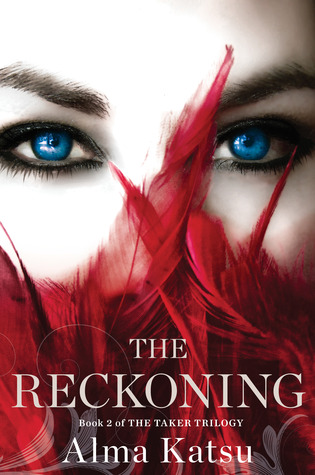
The Reckoning by Alma Katsu

There are some books that you read quickly through and there are those books are almost too seductive and you want to slow down and savor every moment with the characters, and The Reckoning by Alma Katsu — the second book in The Taker series (check out my review of The Taker) — is the latter.  Once plunged into this world of immortal, devilish, and sometimes wayward beings, readers will not want to leave and by the end of the book, they will be clamoring for more.

The novel picks up just where Lanny and Luke leave off in the previous novel, and just as he begins to settle into their new life together — helping her to purge her past — the unthinkable happens.  The terror Lanny feels is palpable and forces her to take action in a way that she never thought she would, leaving Luke devastated.  What makes this all work so well is the tables are turned not just on Lanny forcing her to react, but the tables turn on other characters as well, including the powerful and frightening Adair.

“Inside, he detected a scent that he associated with Lanore, her musk making a part of his brain fire excitedly, re-creating the feeling of being in her presence.  She felt so real, so present, that he expected her to walk around a corner or to hear her voice carry down the staircase, and when neither happened, he felt his loneliness more profoundly than before.”  (Page 236)

The Reckoning is not only about the revenge that Adair will take upon Lanore and the events that lead her back into his path, but also it is about the judgment we all must make of ourselves, our past deeds, and our future path.  Readers will uncover more of Adair’s secrets, learn about the great Lord Byron, and come to find out that Lanore is not as immune to the charms of the dark side as she’d like to think she is.  There is a great blurring of the line between good and bad, with each character playing along the edges in their actions and thoughts.  Lanore’s character grows stronger here, burning with fear, yet conviction, while Adair’s softer side is revealed without taking over.  Katsu does well to blur these lines and show us the reality of this surreal world — that not everything is as black and white as it seems  (dare I use the pun that there are more than 50 shades of gray?).

The Reckoning by Alma Katsu is an addictive world that readers will plunge into without looking and emerge from emotionally spent and eager for the next whirlwind with The Descent.  Katsu is a phenomenal writer who is adept at building worlds and atmospheres that will hold readers in their grip and never let go, and many of these worlds straddle reality and fantasy like no other.  History, even its alternate versions, come to life in her hands as her characters run through the pages, fearing the worst and never expecting redemption.

She’s made me into a believer, enticing me back into the world of fantasy, horror, and, dare I say, the Gothic, which I had given up as trite and overwrought long ago.  I’ve been seduced.  The Reckoning by Alma Katsu is one of the best books I’ve read this year, and I don’t say that about many sequels.

About the Author:

Alma Katsu is a 30-year DC veteran who lives in two worlds: on one hand, she’s a novelist and author of The Taker (Simon & Schuster/Gallery Books). On the other hand, she was a senior intelligence analyst for CIA and NSA, and former expert in multilateral affairs.  Check out this Interview With Alma.


This completes my first series for the Finishing the Series Reading Challenge 2012.

The Opposite of Me by Sarah Pekkanen

The Opposite of Me by Sarah Pekkanen is about an empty shell of a woman whose career is her life and nothing else matters, other than being smarter than her twin sister, Alex, who looks nothing like her and is a beautiful model.  Lindsey is in line for a vice president position at her advertising agency in New York City when she’s outmaneuvered by a competing colleague who is not afraid to use her sexuality to get what she wants.  Cheryl’s down-and-dirty tricks shatter Lindsey’s hopes, leaving her twisting in the wind and rudderless after the announcement that Cheryl is the new VP.

“He kept hold of my hands as he rubbed his thumbs along my palms.  Doug made Bill Clinton look like a nun wearing a chastity belt at a Victorian tea party.”  (page 67)

While this may sound like the crux of the novel, it isn’t.  Lindsey is tough to like from the first pages with her obsessive nature and her workaholic personality.  It’s almost like she’s forgotten how to be a human being and interact with people beyond work projects and business dealings.  Although she knows the ins and outs of her job and refuses to play dirty, she also lacks the social skills to really connect with her co-workers and fails to have friends outside of work.  Her only friend is her colleague Matt, who she jokes with about Cheryl and other work-related things.  Once forced to start over, she heads back to Washington, D.C., and rethinks more than her advertising job.

“I put on my new black bra and matching panties, then slipped into my Rock & Republic jeans and black turtleneck.  The turtleneck looked simple and classic from the front, which made the flash of bare skin in the back all the more unexpected.  And my jeans hadn’t gotten any looser since yesterday.  I squatted and squeezed and shimmied my way into them, working up a light sweat.  On the bright side, if I wore them often enough, I wouldn’t ever have to go to the gym.  (On the not-so-bright side, I might be developing multiple personalities.  But hey, at least one of my personalities would be skinny!)” (page 174)

Pekkanen has created a dynamic that any reader with siblings can relate to, a deep-seated jealousy of what the other sibling seems to have.  Whether it’s Lindsey’s jealousy of her sister Alex’s beauty or the nuanced envy of her sister Alex for what Lindsey has, Pekkanen has created a set of characters with stories interwoven in a way that keeps readers in a state of anticipation.  What’s even more ironic is the job Lindsey lands once back home living with her parents and how much in common she has with the desperate people she meets.

In many ways, the title of the book is ironic because her sister is no more different from Lindsey than the clients she meets.  Each searches for the human connection that’s missing from their lives, whether that means connecting with their soul mate or connecting with their sister.  Lindsey’s clients help teach her to seek out what’s been missing from her life.

The Opposite of Me by Sarah Pekkanen is fun and serious, with a deeper message about finding confidence in yourself and your skills so that you can grab everything that life has to offer, even if it isn’t exactly what you planned. To answer Lindsey’s question about how you know which life is the right one for you: You Feel It. And Sarah Pekkanen has definitely chosen the “write” life.

About the Author:

Sarah Pekkanen is the internationally-bestselling author of the novels The Opposite of Me and Skipping a Beat and the upcoming These Girls, as well as the linked short stories available for ereaders titled “All Is Bright” and “Love, Accidentally.” For more information please visit her Website, Facebook, and Twitter.


This is my 38th book for the 2012 New Authors Challenge.

National Poetry Month Winners….

Click for all the posts from the 2012 tour, including those from Savvy Verse & Wit

Even though National Poetry Month is over and the blog tour has ended, I’ve still got a couple poetry items to wrap up.

First, thanks to everyone who participated this year, and I hope to see you all again in 2013. I’d like to recruit more poets, academics, and poetry readers to provide guest posts to other tour stops and to offer up their own blog stops on the tour. So if you’re interested, feel free to email me at any time.

We had some great guest posts and reviews, and you can visit any of the posts or tour stops by clicking on the tour button.  All of the links have been added to the Mr. Linky.  If I missed a post from you, please feel free to add it.

Second, I want to congratulate the winners of the National Poetry Month Blog Tour giveaway.

Congrats to Liviania from In Bed With Books and Lilian of Circus Toybox

Congrats to Jill from Rhapsody in Books

Congrats to Lilian from Circus Toybox

Congrats to the five winners of the Trembling Pillow Press Journals: Elizabeth, Gerry, and Parrish Lantern.

Congrats to the nine winners of Real Courage by Michael Meyerhofer: Leslie from Under My Apple Tree, Anna from Diary of an Eccentric, Kathy of Bermudaonion, Diane, and Chris.

There are some winners I still have not received an address from, please send it along so I can mail out your prizes.

Every Possible Blue by Matthew Thorburn

Every Possible Blue by Matthew Thorburn, whom I interviewed for 32 Poems, will be published by CW Books in May.  His poems read like paintings that visually leap from the page to create vivid scenes in the readers mind, from moments in a Jazz club with trumpets blaring to mannequins in the stores down Fifth Avenue in New York.  Moreover, these poems have the feel of the 20s and 30s with references to Greta Garbo and Barbara Bel Geddes.  It is like stepping back and forth in time to experience what has past and what is still vivid and relevant today, while at the same time creating a “blue” mood, a longing for the simpler moments of the past.

From "Now is Always a Good Time":

. . . But Hoagy Carmichael does
a funny thing at the piano and my heart

swings open like a Murphy bed.  Now a hint
of stale Nag Champa tickles my nose, or is this
Chanel No. 5 letting go of someone's taut tan wrist?"
From "Self-Portrait in Secondhand Tuxedo"

. . . Now he's breathing a sweet
something in someone's ear (only her ear
makes it into the picture) and there's

hardly room for me to pull up a stool
in this last corner I'm shading in: my antsy hands,
my waistcoat pooching over my waist.

I'm keeping company tonight with the bust
of Charlie Darwin, that lush.  He sniffs
the pale bud in my button-hole.  . . .

Readers will like when Thorburn directly references the paintings described or referenced in his poems as they can search the internet and gaze at images while reading. Like many of the scenes in his poems, there are mundane situations afoot, but with at least one element that is surprisingly awkward, which can be the narrator himself or other scene stealers.

There is a great deal of upheaval here and yet there is a sense of hope that continues to propel the narrator forward, and some of that can be attributed to the alliteration in some of these poems that make them musical and continuously moving (i.e. “Upper West Side Toodle-oo”).  What readers will love most about Every Possible Blue by Matthew Thorburn is the tug-of-war that happens between the past and future, lost faith and renewed hope, and failure and new opportunity.  A very human collection that delves into the internal struggles we face daily at every turn and yet still find a way to move forward.

Author photo by Takako Kim

About the Poet:

Matthew Thorburn is the author of three book of poems, Every Possible Blue (CW Books, forthcoming 2012), This Time Tomorrow (Waywiser Press, forthcoming 2013) and Subject to Change (New Issues, 2004), and a chapbook, Disappears in the Rain (Parlor City, 2009). He is the recipient of a Witter Bynner Fellowship from the Library of Congress, as well as the Mississippi Review Prize, two Dorothy Sargent Rosenberg Poetry Prizes, and fellowships from the Bronx Council on the Arts and the Sewanee Writers’ Conference.

His poems have appeared in literary journals such as The Paris Review, American Poetry Review, Poetry, Prairie Schooner, Poet Lore, Michigan Quarterly Review and Pool. He is a regular contributor to the reviews section of Pleiades. His critical writing has also appeared in Jacket, The Laurel Review, Poetry Daily, Rowboat: Poetry in Translation and Rattle, among others.

A native of Michigan, Matthew Thorburn has lived in New York City for more than a decade. He is currently working on two new projects: a book-length poem that tells the story of one year, and a collection of poems about losing faith and possibly finding it again.


***For today’s National Poetry Month Blog Tour stop, visit Travis Laurence Naught on Facebook.


This is my 33rd book for the 2012 New Authors Challenge.


This is the 15th book for my 2012 Fearless Poetry Exploration Reading Challenge.

You and Three Others Are Approaching a Lake by Anna Moschovakis

You and Three Others Are Approaching a Lake by Anna Moschovakis, which was awarded the James Laughlin Award by the Academy of American Poets, is a collection of four long poems with a prologue and epilogue poem that discusses and assesses four books — The Tragedy of Waste by Stuart Chase, Death as a Way of Life by Roger A. Caras, The Human Machine by Arnold Bennett, and In Search of Wealth by Cyril S. Belshaw — from the twentieth century that the poet discovered in a used bookshop in South Kortright, New York.  The poems share the same titles as the books, and the title of the collection makes its appearance in the first poem.
Moschovakis makes a great many assumptions about the readers knowledge of the industrial revolution and their understanding of economics.  First she compares the lake to supply and the men and women entering the wood and approaching the lake as demand, but later, the lake becomes more ambiguous.  From the cycles of supply and demand in the markets and the growth of the workforce to the incessant bombardment of advertising, the narrator of the poem is questioning the capitalistic ways of society and whether those are not wasteful in terms of time and energy spent.  She also postulates that we are no different from nature in how we react to available resources, which begs the question just how civilized are we when we succumb to our basest instincts to use everything around us?

From "The Tragedy of Waste (page 27)

Behind the desk there is a window

A woodpecker is attacking the house
The sun is attacking the snow on the pavement

Everything helping itself
to everything else
 From "The Tragedy of Waste" (page 30)

dwarfed and shadowed by mighty buildings
subway trains wild as elephants

One goes blindly back to one's desk

In the second poem, death as a way of life is broken down into how it affects “the Other” and not necessarily the surface theory that death is merely a part of the life cycle.  In many ways this poem is about the necessity to kill and the pleasure in killing, and where are the lines to be drawn between animals and humans being killed or something more refined.  There also is speculation about what rights we have as humans to kill and is naming the “Other” just as violent as not naming it?  “I want to know about the ‘other birds’//Were they species unknown to the hunters/or insignificant birds not worth noting by name/or mutilated/beyond recognition/”

“The Human Machine (Thirty Chances)” poem is a bit repetitive and generates a sci-fi-like quality as chatbots talk to human machines.  Readers are likely to find this poem the most puzzling, though ultimately a kernel of understanding will emerge about the “people” we believe we are and who we actually are — in that we all have failings and do fail ourselves and others.  But it also touches upon what makes us truly human — an ability to empathize, which could mean that should a robot be able to do so, we would have to consider it a person worthy of saving and no longer “Other.”

“In Search of Wealth” is the final poem before the epilogue.  In this poem there are digs at a variety of religions, including Scientology and its ties to Hollywood’s elite, and there are ramblings on pay inequality that seem to go on incessantly.  In the collection, this poem seems to be more of a rambling and a rant then a well crafted argument.  If it were issued forth in a debate on wealth and capitalism, listeners would likely begin throwing rotten tomatoes if they had any in their pockets for the occasion.  The prologue sets up the collection to be poems that take up certain positions on the topics at hand, and while by all accounts they do, some are more well crafted than others.  The epilogue goes further to explain that the reason to take a position is to generate disagreement, which is closely linked with desire and ensures that life is anything but boring.

You and Three Others Are Approaching a Lake by Anna Moschovakis touches on themes of wealth, “otherness,” conviction, and a host of other topics, but without having read the books mentioned in the acknowledgements, some of the references may be lost or misunderstood.

Poet Anna Moschovakis

About the Poet:

Anna Moschovakis is the author of two books of poems, I Have Not Been Able to Get Through to Everyone (Turtle Point Press 2006) and You and Three Others Are Approaching a Lake (Coffee House Press 2011) and of several chapbooks, including The Blue Book (Phylum Press), Dependence Day Parade (Sisyphus), No Medea (a Tinyside from Big Game Books), The Tragedy of Waste (Belladonna) and The Human Machine (Dusie). Her translations from the French include texts by Henri Michaux, Claude Cahun, Theophile Gauthier, Pierre Alféri, and Blaise Cendrars, as well as the books The Jokers by Albert Cossery (New York Review Books), The Possession by Annie Ernaux (Seven Stories Press), and The Engagement by Georges Simenon (New York Review Books).

Currently a freelance editor and a visiting professor in the Writing department at Pratt Institute, she splits her time between Brooklyn and Delaware County, NY. Anna has been working with UDP since 2002 as an editor, designer, administrator, and printer.


***For today’s National Poetry Month Blog Tour stop, visit Caribousmom.


This is my 32nd book for the 2012 New Authors Challenge.


This is the 14th book for my 2012 Fearless Poetry Exploration Reading Challenge.

Nostalgia for the Criminal Past by Kathleen Winter

Nostalgia for the Criminal Past by Kathleen Winter, whom I interviewed for 32 Poems in 2011, is a piece of art that should be hung on the wall.  And like all art, there are references to other artists and art types within her poems, but there is more here — the art of being human.  In the first three sections, Winter carefully tailors each poem to touch on the connections we have to our animal selves, from the mischievous prankster in Eve who entices the snake to eat Adam in the Garden of Eden merely because she is bored in “Escape from Eden” to razor sharp focus of a hawk eying its prey in “Edge of February.”

There is a telling epigraph from Virginia Woolf, “I do not believe in separation.  We are not single.” that establishes the direction of Winter’s work as a look at us being separate as well as connected.  However, the collection is not only about being separate and being connected, it is about “being naked” and reveling in the “silos of time” we create (“Nostalgia for the Criminal Past,” page 9).  There is the past of our relatives and how it reverberates through the younger generations’ lives and how the past they share may be incomplete or slightly altered from reality, like in “Jellyfish Elvis.”  The narrator even questions the validity of the past whether told by others or lived, which calls into question whether the past should be revered or remembered and that we should merely live in the moment.

Winter shows a maturity in her imagery and line break selection that breaks boundaries and draws comparisons to the impressionists and abstract painters who defied artistic convention in their paintings.  From ” Hamster Thrown From Monster Truck,” “rumbling above us at the stoplight/like a frisky two-story building.,” and like “The eight a.m. sun moved out from clouds/like a well-trained MBA/adjusting to changed conditions./” in “Snapshot of a Boxer.”  Beyond the animal references, memories, and looks into the past, Winter uses water imagery in traditional ways to show reflections of what we want to see and what we desire, but provides readers with the punch in the gut when they realize the folly of those dreams, like in “Country Club Fourth of July.”

And despite the theme of appearance versus reality, there are other moments in the collection where the narrator will sink beneath the surface of the water in a tub to find an inner peace, like in “The Bath” and “Bathing at the Museum”:  “Like Bonnard’s wife/incessantly I bathe, sensations of liquid/intervening between mind//& body, blurring animosities./In dim flux the mind begins to lift,/words shimmer,//” (page 64).

The cover photo for this collection is reflective of its contents as the young girl looks circumspect about everything she is seeing out of that window, assessing it carefully, but wary of it at the same time.

The final section of the collection is a breaking out from the bonds of the past, and the passion that consumes those poems burns and takes action.  However, these poems also are reflective and playful, like “Wrong Sonnet: Mystery” where the narrator speaks to ghosts in a tongue-in-cheek kind of way.  Nostalgia for the Criminal Past by Kathleen Winter is another for the best of lists from theme, quality of the poems, and the imagery that illustrates the world in new ways.

About the Poet:

Kathleen Winter’s poems are forthcoming in Anti- and recently have appeared in Field, The New Republic, Verse Daily, 32 Poems and The Cincinnati Review. Her chapbook Invisible Pictures was published in 2008 by Finishing Line Press. Kathleen received fellowships from Vermont Studio Center and the Piper Center at Arizona State University. She is an MFA student and composition teacher at ASU.

Check out today’s National Poetry Month Blog Tour stop from Unputdownables.

This is my 31st book for the 2012 New Authors Challenge.


This is the 13th book for my 2012 Fearless Poetry Exploration Reading Challenge.

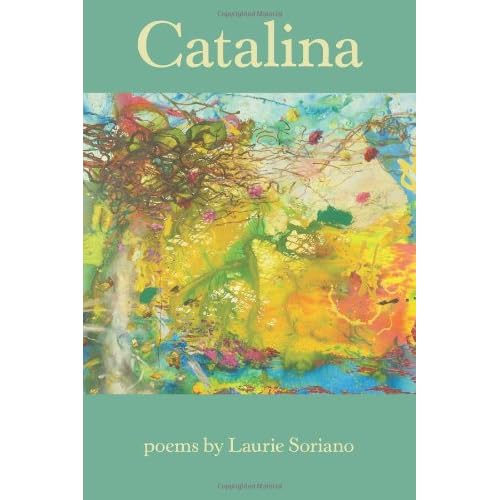
Indie Lit Award Poetry Winner: Catalina by Laurie Soriano

Indie Lit Award Poetry Winner Catalina by Laurie Soriano, which was selected unanimously as the winner and also is published by Lummox Press, is a cohesive collection that maintains more than one theme throughout and simultaneously.  The narrator travels from east to west coasts and from innocence to corruption and recovery; the journey is bumpy and fraught with obstacles and stumbles.  Soriano uses imagery that jolts readers to the heart of her themes; parts one and two focus on how the narrator grows up in an abusive home with an alcoholic parent, while the final two sections focus on parenthood and how the past can shape us, but should not rule our actions.

There are some satiric qualities to these poems as well, like in “Betty’s Dive,” where a young woman takes on a dare and pays the ultimate price, and those issuing the dare laugh at what they think is her mock “dead-man’s float” until realization slowly creeps over them.  There is a great sense of irony in some of Soriano’s poems as well, such as the “no dogs” sign that is clearly the subject of many dogs’ walks in “Venice After Work.”

In addition to the deft use of these literary devices, the poet also clearly ties her poems together as a story unfolds, and it is most prominent in the movement from “Red Wine” to “Crash.”  In “Red Wine” (pages 44-5), the narrator is descending into the alcoholic abyss of her father: “. . . My hands/grip the flesh of their waists as I stumble/further toward the land of my father,/the shifting land of regret and soggy laughter./” and “I ask daddy if we want win.  He fills/our glasses like love, daddy never loved me/like wine, and we start thinning our blood/with this red stuff, our words flow/like liquid, we laugh fit to bust, and/we walk home arm in arm,/like we never did.//”  In “Crash” (pages 46-7), the narrator has followed the path of her father with her drinking and now driving along, experiences the worst kind of regret and shock:  “the effect of all our causes,/you and I shuttle separately to the spot//where our masses would marry/and your blood would stain the street./For a moment, one of those out of time,/we hung in the air, as breathless as sweethearts,/before we came together, your motorcycle/tearing a path through my car,/as your body flew/three car-lengths forward.//”

Soriano’s poetry is highly emotional, leading readers into tumultuous memories and through happier times, and in many ways, her poetry reminds me of the poetic prose of Beth Kephart.  Each writer’s words are chosen carefully and it shows — quiet little powerhouses of emotion that grab the heart strings and do not let go, though they may release their stronger grip for a moment or two depending on the mood of the poem.  In Part three — “Being Here” — Soriano emphasizes the “in-the-moment” nature of experiencing new life and parenthood, which can include struggle and joy.

Catalina by Laurie Soriano is more than stunning; it’s luminescent.  It’s a collection that will stay with readers long after reading, and will share a space on the shelves with those books that you’ll want to re-read again and again.  One of the best collections of the year, and unconventionally, this review is going to end with my favorite lines:

From "To the Attacker" (page 42-3)

You've slashed apart the ripe
abandon of my trust, torn away
the quietude I wore like a dress.
I am left with what is in the box.

Other Indie Lit Award Poetry Panel Reviews:

Diary of an Eccentric
Necromancy Never Pays

Poet Laurie Soriano

About the Poet:

Laurie Soriano is the author of Catalina (Lummox Press 2011). Her writing has appeared in Orange Room Review, FutureCycle Poetry, Flutter Poetry Journal, Gloom Cupboard, Heavy Bear, and West/Word, among others. She is also a music attorney, representing recording artists and songwriters and others in the music industry. She lives in Palos Verdes, California with her family.

Please also check out her interview for the Indie Lit Awards.


***For Today’s National Poetry Month blog tour post, visit Mr. Watson.***


This is my 30th book for the 2012 New Authors Challenge.


This is the 12th book for my 2012 Fearless Poetry Exploration Reading Challenge.