Quantcast

Twelve Dancing Unicorns by Alissa Heyman

Source: Sterling Children’s Books
Hardcover, 32 pages
I am an Amazon Affiliate

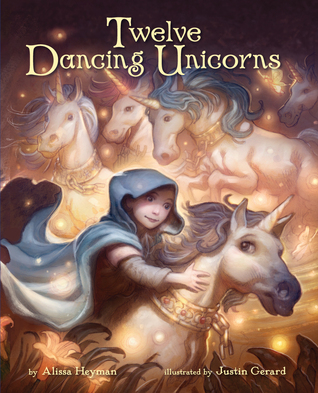
Twelve Dancing Unicorns by Alissa Heyman, illustrated by Justin Gerard, is gorgeously illustrated. Like paintings that leap off the page by some magical power, these unicorns will dance into the hearts and dreams of any little girl.  Heyman adapts her fairytale from Grimm’s “Twelve Dancing Princesses,” and here the little girl loves the unicorns so much that she is willing to help them in any way she can.  When the King says that he will grant any wish to the person who finds out how the chains are broken each night by the unicorns in his corral, she is determined to do just that.  While there are few obstacles in the girl’s way and the text can be in huge paragraphs for little kids, Heyman does a great job of showing the girl’s determination and love for the unicorns in a few pages.

The illustrations are fantastic; it’s like stepping into another world, but the unicorns look as if they could be real animals.  The book is clearly for older learning readers probably ages 6+, as some of the words will require assistance from parents and older readers and the paragraphs are longer than in other picture books.  While the story has little that’s new to offer and is not in the poetry-like prose my daughter enjoys most, the story will seem new to younger readers and engage them with its fantastic world popping off the pages.  Twelve Dancing Unicorns by Alissa Heyman, illustrated by Justin Gerard, is visually stunning and shows that young girls can not only solve problems but achieve their goals, no matter how overwhelming they may seem.

Follow the Twelve Dancing Unicorns blog tour tomorrow on Kindred Spirit Mommy.

About the Author:

Alissa Heyman is a freelance writer who edited The Best Poems of the English Language (Mud Puddle Books). Her poems have appeared in the St. Petersburg Review, Lyric, and Quarto, and she has adapted The Big Book of… series for Sterling Publishing, which includes The Big Book of Horror, The Big Book of Fairies, and The Big Book of Pirates. Alissa lives in New York City where she also curates the Perfect Sense poetry reading series at the Cornelia Street Café.

About the Illustrator:

Justin Gerard has done illustration for DreamWorks, Warner Brothers, Disney, HarperCollins, Penguin, Little, Brown, and others. The Society of Illustrators featured his illustration “Beowulf and Grendel” in the 50th Annual of American Illustration, from his IPPY Award-winning book, Beowulf, Book I: Grendel the Ghastly. Justin lives in Greenville, SC.
54th book for 2014 New Author Reading Challenge.

Art from Dreams: My Jungian Journey in Collage, Assemblage, and Poetry by Susan Levin

Source: MBM Book Publicity and Susan Levin
Paperback, 48 pages
Purchase on Levin’s Website.

Art from Dreams: My Jungian Journey in Collage, Assemblage, and Poetry by Susan Levin combines poetry, collage, and assemblage into two parts — “My Jungian Dreams” and “Nocturnes” — but the poetry only appears in the first section to accompany the dream-inspired collages.  When it comes to Jungian dream interpretation, there are several archetypes — including the persona, the shadow, the animus, the divine child, the wise one, the great mother, and the trickster — and the archetypal events like birth, death, separation from one’s parents, marriage, and the union of opposites.  The poems are very lyrical in the first half, though almost as enigmatic as some of the images produced from Levin’s dreams.  The collage or assemblage pieces came first, but the poems were written later.  In the foreword, Shana Nys Dambrot said that Levin embraces the role of the unconscious mind as a creative force in her work, which is clear.

Alchemy (page 14)

Nobody sees us-
the Archeologist and me-
as we excavate the night
searching for beginnings,
unearthing symbols, images.
Everything is held to the fire
We get close to truth,
to what is known and unknown.
We awaken to re-imagine our lives

Think about those dreams you remember and how we try to make sense of them, looking for symbols and hidden meanings; we’re much like the archeologists digging in the dirt, looking at bones to re-create the past and create a history that can be understood. Levin uses the poems to enhance her collage, and in many ways, she reminds us that art merely imitates life. In her poem, “Picasso Dream” and the accompanying collage is clearly inspired by the artist and his work. In the second session, Levin is exploring the darker underbelly of her dreams. There is a darkness inside us all, it nibbles just below the surface.

Art from Dreams: My Jungian Journey in Collage, Assemblage, and Poetry by Susan Levin is an exploration in art and dreamscapes, as well as everything that makes us human. These images she’s created through collage, sculpture and found objects will make a deep impression and stay with readers long after they have closed the last page.

About the Artist:

Susan Levin is a multi-media artist. She works in landscapes, portraits, works on paper, collage, collage/assemblage, found object, and sculptural art. For the past 2 years, she has focused on dream imagery and expressing the connections she has had with Carl Jung’s theories on dream imagery and how art therapy can help individuals express their own subconscious thoughts.

Book 21 for the Dive Into Poetry Reading Challenge 2014.


53rd book for 2014 New Author Challenge.

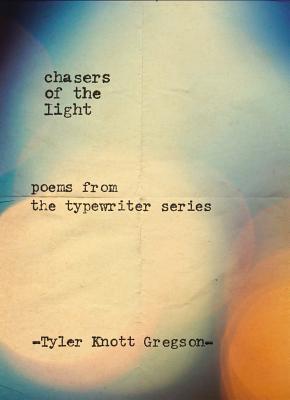
Chasers of the Light: Poems from the Typewriter Series by Tyler Knott Gregson

Source: Perigee/Penguin Random House
Hardcover, 144 pages
I am an Amazon Affiliate

Chasers of the Light: Poems from the Typewriter Series by Tyler Knott Gregson is a collection of poems written on a typewriter Gregson found in an antique store in Montana.  He wrote the first poem in this collection in the store on a page from a broken book he was buying for $2.  A chance find in a store turned into a mission to bring light to readers and viewers of photography alike.  In the introduction, he says, “In all I write and all I say, I am trying to chase the light that I cannot help but see around me.  This book, in the simplest of terms, is a map my wandering feet have taken in that pursuit.  It is simple words on random pieces of paper that snuck into my along the way.  There will always be light, and I will never stop chasing it.”

"The oars and the compass, the anchor and the wheel,
have long since abandoned me.
Can you hear what I've longed to tell you,
that I go where the waves wish to deliver me
and you, my love, are the tide."

Many of these poems are about love and love that is lost.  There are poems in which he asks to be haunted by his lost love and that he wishes to love every scrap of her that remains.  In a poem early in the collection, he compares himself to a ship without a rudder and the lover is compared to a hurricane.  In undulating rhythm, Gregson is a ship at sea carried away by waves — the waves of the tide, his lover.  It is an unnamed poem, like all of them, that is beautiful in its simplicity.  The love experienced in this poem is grand and overpowering.  Each of these poems are typed on scraps of paper, pieces of books, napkins, and receipts.   He also includes some gorgeous photographs, with accompanying poems.

In one gorgeous compilation piece, Gregson pairs a poem about being broken and healed with a photo of a dilapidated roof through which one shaft of bright light shines through.  Like many of the poems in this collection, they are beautiful in their simplicity.  He sheds light on the smallest of moments, like a flowering weed growing out of a bullet shell.  We carry our loves and losses inside each of us, and they become part of who we are.  What would we be without those past emotions and experiences.  Chasers of the Light: Poems from the Typewriter Series by Tyler Knott Gregson is gorgeous from cover to cover,

About the Poet:

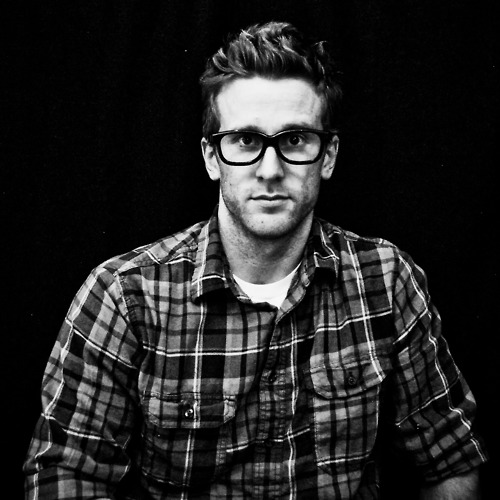
Tyler Knott Gregson is a poet, author, professional photographer, and artist who lives in the mountains of Helena, Montana. When he is not writing, he operates his photography company, Treehouse Photography, with his talented partner, Sarah Linden.  Visit him on Twitter, Facebook, Instagram, and Pinterest.  Check out his Website.


Book 20 for the Dive Into Poetry Reading Challenge 2014.


52nd book for 2014 New Author Challenge.

The Last Kabbalist of Lisbon by Richard Zimler

Source: Public Library
Paperback, 318 pages
On Amazon and on Kobo

The Last Kabbalist of Lisbon by Richard Zimler set during the 1500s at the time of the Lisbon Massacre of April 1506, in which about 2,000 Jews were killed.  Zimler breathes life into this time period and the Jewish Kabbalah, a time in which Jews were in hiding and many were converted to New Christians (Marranos) in 1497 — some after fleeing Spain — to remain safe from persecution. Even their conversion is not enough to satisfy Old Christians as they run rampant through the city killing Jews, putting their heads on spikes, throwing them on pyres, and more.  King Manuel I, while more tolerant of the Jewish community, allowed the massacre to rage on, and eventually, 30 years later, the inquisition was established in Portugal, just as it had been in Spain.  Berekiah Zarco, a young manuscript illuminator, becomes caught up in the search for a killer, after he discovers his uncle, the keeper of forbidden Hebrew texts, has been murdered.

“We are all of us deep and wide enough to welcome a river of paradoxes and riddles into our souls.” (page 21)

Berekiah, also known as Pedro as a New Christian, worked with his uncle illuminating texts for others that were hiding from the Christians and trying to keep their Jewish faith alive, but he is unaware of how his uncle smuggled precious texts out of the city and into Turkey so as to keep them from being lost.  Zimler demonstrates through Zarco’s search for his uncle’s killer how the Jews were forced to wear a great many masks to hide their religion, but at the same time, these masks could be false ones and even the most trustworthy in the community could be hiding nefarious deeds.  The tale is told as Zarco unravels the mystery of his uncle’s death, and while he becomes absorbed in vengeance and the search for justice, his Muslim friend, Farid, who cannot speak except with his hands, steers him in the right direction and reminding him of compassion and empathy along the way.

“Yet the wall tiles and window eyelets, desks and chairs returned my gaze without the slightest quiver of motion.  The room was empty, seemed hollow, like the rib cage of an animal whose heart had suddenly ceased beating.”  (page 57)

With a turncoat in the Jewish community, Zarco narrows the field to a few suspects and sets about finding the truth, even as the Old Christians continue to rage, pillage, and kill Jews in their wake.  While the dialogue is a bit comical after a time, with Zarco accusing elders in the community of being murderers and them immediately denying it and him accepting their answers, in the context of the time period in which elders were to be believed, the conversations make sense.  Zarco’s life is in endanger at every turn as he seeks the killer, but he relies on his Kabbalist faith to see him through and finds a strength through his uncle’s teachings.

The Last Kabbalist of Lisbon by Richard Zimler provides a window into the early 1500s when Jews were being pushed out of their homes, and much of the situations during this time mirrors the reasons reiterated during the time of the Nazis — that the Jews were taking all of the jobs and the money away from those who were true Portuguese.  Christian versus New Christian and Jew, Kabbalah was all the Jews had to cling to as a way to survive persecution and continue flourishing.  It is a harrowing story of evil, death, and perseverance, but it is also about the ties we have to our faith and family, even after much of our family has passed on.

About the Author:

Richard Zimler was born in Roslyn Heights, a suburb of New York City, in 1956. After earning a bachelor’s degree in comparative religion from Duke University (1977) and a master’s degree in journalism from Stanford University (1982), he worked for eight years as a journalist, mainly in the San Francisco Bay area. In 1990, he moved to Porto, Portugal, and he has taught journalism for the last sixteen years, first at the College of Journalism and now at the University of Porto. Richard has both American and Portuguese nationality.

1st book for the 2014 Portuguese HF Challenge.


16th book for 2014 European Reading Challenge(Set in Portugal)


26th book for 2014 Historical Fiction Reading Challenge.


51st book for 2014 New Author Challenge.

Giggle Poetry Reading Lessons by Amy Buswell and Bruce Lansky

Source: LibraryThing Early Reviewers
Paperback, 96 pages
On Amazon and on Kobo

Giggle Poetry Reading Lessons by Amy Buswell and Bruce Lansky, illustrated by Stephen Carpenter is a guide for educators and parents who have students in grades 2-5 who struggle with reading and comprehension.  In the introduction, the authors state that no matter how good a remedial program is, it cannot improve readers’ skills if they are disengaged.  Rather than require these struggling students to read text they find boring, why not create a program with texts that students don’t want to put down — the premise of this book.

Using the poems of Bruce Lansky, which Buswell says have been kid tested, she says that her program accompanied by illustrations from Stephen Carpenter enabled 95 percent of students to demonstrate marked improvement in their reading and 90 percent showed gains in comprehension.  There are a number of tips broken down for both teachers and parents to help their child improve their reading fluency.  There is a lesson plan overview and an explanation of how the lesson supports the goals of the Common Core State Standards, which have been adopted in more than 40 states.

A Brave Little Fellow Named Brian (page 16)

A brave little fellow named Brian
went for a ride on a lion.

When Brian got bit,
the lion got hit.

So now it's the lion
who's cryin'.

There are performance tips on each page where the poems are written out and illustrated, because parents and teachers know that younger readers prefer when you can gesture or demonstrate action beyond raising and lowering the pitch of your voice when reading aloud.  Anything to make the poem come alive can help the readers stay engaged.  While this is geared for readers older than my daughter, she and I have been reading along together for some time, and she’s beginning to recognize words in books we’ve read before.  As she continues on her reading and learning, this book will be an excellent supplement to what we already do and what she will begin doing when she gets to kindergarten in a couple of years.

Giggle Poetry Reading Lessons by Amy Buswell and Bruce Lansky, illustrated by Stephen Carpenter has engaging poems that are funny and unexpected, but it also has substantive lessons that can help students overcome not only their fears of reading but other troubles in their lives.  These poems will help them deal with embarrassing situations, other emotions, and situations that surprise them.

About the Authors:

Amy Buswell is a reading specialist who teaches in West Palm Beach, FL. Her entertaining “reading lessons” have dramatically raised the reading skills and scores of the students who attended schools at which she has taught.

Bruce Lansky has edited a number of poetry anthologies (including Rolling in the Aisles, Kids Pick the Funniest Poems, If Kids Ruled the School, A Bad Case of the Giggles, Miles of Smiles, and No More Homework! No More Tests!), and 3 silly songbook anthologies. Lansky created the popular GigglePoetry.com website for children and the PoetryTeachers.com website for teachers. He also created the Girls to the Rescue series, the New Fangled Fairy Tales series, and the Can You Solve the Mysteries series.

Stephen Carpenter is the illustrator who has helped 16 “Giggle Poetry” books come alive with hilarious illustrations. He lives just outside Kansas City with his wife, Becki, and their sheepdog, Lulu.

Once We Were Brothers by Ronald H. Balson

Source: Public Library
Hardcover, 389 pages
On Amazon and on Kobo

Once We Were Brothers by Ronald H. Balson, our August Book Club selection, is part legal thriller and part historical fiction, as Ben Solomon recognizes that one of Chicago’s elite was a former Nazi SS officer Otto Piatek, the butcher of Zamosc, and his one-time brother.  Solomon’s family always strove to help their neighbors whenever possible, and one day take in a German boy, Otto, as their parents face the struggles of lost jobs and opportunities.  On the cusp of Nazi expansion, Poland seems like it is protected from outside forces and immune to Nazi takeover, but suddenly, things change and the Solomons are faced with a variety of tough decisions.  In the present Ben Solomon has aged and is on a crusade to bring Piatek to justice no matter the cost.

“‘Maybe for some.  Not for me.  It is why we must remain diligent and relentlessly pursue men like Piatek.  Evil is contagious.  Much like a pathogen, it must be snuffed out at the source.'” (page 139)

Balson has a great story to tell, but it’s too bad that the modern-day character of Catherine Lockhart is too much of a pain, with her constant interruptions about billable hours and urging Ben to get to the point.  She’s constantly bombarding Ben with questions about property and the basis for his lawsuit and always denying her interest.  While her backstory about a horrible conniving husband gives credence to her lack of confidence as a lawyer and her concern about keeping her current job, her story is pale in comparison to Ben’s Holocaust story.  Moreover, there are times when Ben appears to be spouting off facts in an effort to educate the reader, coming off more as a lecture than a man who is telling his life story.  Despite these flaws, the story is engaging — even if everything that could have happened during the Holocaust happens to Ben and his family — and readers will be sucked into the past, just as Catherine is.

Once We Were Brothers by Ronald H. Balson is intriguing because of the Polish setting, and the story of Ben and his family is engaging, but the lawsuit portion is resolved very quickly and the relationship between Ben and Otto as children is only partially developed.  With that said, Balson knows his history and has created an engaging look into the past that will have readers examining the world today in a new light.  Are we beyond the evil the Nazi’s engaged in or is the potential still here among our own world leaders?

About the Author:

The author, Ronald H. Balson, is a Chicago trial attorney, an educator and writer. His practice has taken him to several international venues, including villages in Poland which have inspired the novel Once We Were Brothers.

What Book Club Thought:

Most of us were displeased with the attorney character and her sob story, which had not place in the book, especially in comparison to Ben Solomon’s holocaust story.  With that said, one member really enjoyed the legal maneuverings near the end of the book, though they were resolved very quickly.  While the novel was readable and went quickly, there seemed to be an abundance of bad things happening to Ben and his family, though like most of these stories there are many who die.  Otto also seemed to be “too” evil and there was little seen of his transformation, which could be because the story was told from Ben’s point of view for the most part.  One member suggested that the modern day characters be cut out or that they be only at the end when Ben makes it to modern day and begins his lawsuit, while another suggested the book be split between the “brothers'” points of view.  Overall, many thought this book could have presented the story in a better way.

20th book (WWII) for the 2014 War Challenge With a Twist.


49th book for 2014 New Author Challenge.


15th book for 2014 European Reading Challenge(Set in Poland)


25th book for 2014 Historical Fiction Reading Challenge.


Inamorata by Megan Chance

Source: Lake Union Publishing and TLC Book Tours
Paperback, 420 pages
I am an Amazon Affiliate

Inamorata by Megan Chance is dark, mysterious, and twisted.  Odile Leon is a former courtesan turned dark muse, and if you are as talented in the arts as your ego lets you believe, she will choose you.  But the bargain could cost you your soul.  Nicholas Dale knows this too well, and he’s made it his mission to stop her.  Add to the mix mysterious twins, Joseph and Sophie Hannigan, from New York.  These twins carry their own dark secrets and they intrigue not only the entire art community in Venice, but Dale and Odile.  These twins are not torn between the struggling forces of good and evil, but something darker, more singular — desired by both sides.

“That I was not always in his shadow, that there was something in the world that could belong just to me.  To truly be as special on my own terms as Joseph said I was — sometimes my yearning for it was so strong it took me by surprise.”  (page 109)

There is talk of ghosts, succubi, murders, suicides, and more, but Chance weaves artistry so well into the narrative readers will get lost in the canals, wondering how it all will turn out.  There are points in the narrative that drag a little, perhaps there are too many points of view shared, which slows the pace a bit, but many readers would not want to trade any of those points of view because they could lose the full scope of the story.  These points of view enrich the story, making it fuller, and the characters themselves are dynamic and well developed.  These characters are trapped by their yearning and desire to be bigger, recognized, and made whole.

Chance has created a heavy, twisted novel about romantic Venice, and the artists who are struggling to gain recognition. Inamorata by Megan Chance is enveloping, and readers will fall under its spell as each page is turned and more is revealed.  Will these characters achieve their darkest desires, will they be beholden and enslaved by them, or will they find the solace they are seeking?  Another contender for the 2014 Best Reads list!

About the Author:

Megan Chance is a critically acclaimed, award-winning author of historical fiction. Her novels have been chosen for the Borders Original Voices and IndieBound’s Booksense programs. A former television news photographer and graduate of Western Washington University, Chance lives in the Pacific Northwest with her husband and two daughters.  Connect on Facebook and Twitter, and visit her Website.

48th book for 2014 New Author Challenge.

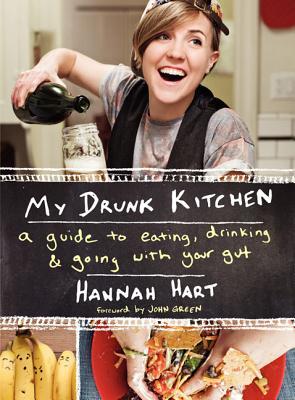
My Drunk Kitchen by Hannah Hart

Source: HarperCollins
Hardcover, 240 pages
On Amazon and on Kobo

My Drunk Kitchen: A Guide to Eating, Drinking, and Going With Your Gut by Hannah Hart is a more how-to guide for noncooks and those who have few resources on hand.  In many ways this is not your ordinary cookbook — yes there are ingredients listed but they are mostly suggestions, and there are few if any step-by-step instructions on how to recreate Hart’s creations.  “Unconventional” is one word to describe this cookbook, and another would be “fun.”  This is a cookbook about having fun in the kitchen, getting creative, and inviting your friends to join in the frenzy — and alcohol always helps.  Hart lets readers into her life and her kitchen — from her younger years in the lunchroom scrounging among friends to fill her belly with various concoctions of candy and crackers, etc.

From this cookbook, we selected Pizzadilla for my birthday party last weekend, which requires sauce, shredded cheese, and tortillas.  The recommended drink with this is cold beer of course, and we happened to have Sam Adams in the house.  You smear the sauce on the tortilla and then add the cheese before putting another tortilla on top — you can stack these on top of one another to make them taller — put them in the oven to cook.  It looks as though this requires some babysitting as there is no temperature listed for the oven, nor is there a time for cooking listed.  You’ll have to keep an eye out for the browning of the tortilla and the melting ooze of the cheese.  You can cut these into slices with a butter knife.  These all came out great within about 10 minutes or so on 350 degrees.  Everyone seemed to enjoy them, and we think they could be filled with other toppings, like peppers, mushrooms, pepperoni, and other meat.

My Drunk Kitchen: A Guide to Eating, Drinking, and Going With Your Gut by Hannah Hart is a fun cookbook for those not too worried about timing things and directions, who are interested in making creative dishes in the kitchen.  Beyond single people, bachelors, and drunk cooks, this book could be helpful in introducing kids to cooking.  It is humorous and fun.

***Silly me, we forgot to take photos of the creations, but perhaps we were too drunk.***

About the Author:

Hannah Hart, sometimes nicknamed Harto, is an American internet personality, comedian and author. She is best known for starring in My Drunk Kitchen, a weekly series on YouTube in which she cooks something while intoxicated. Apart from her main channel, she also runs a second channel where she talks about life in general and gives her opinions on various topics. She also has written a cooking book named My Drunk Kitchen – a guide to eating, drinking, and going with your gut.

47th book for 2014 New Author Challenge.

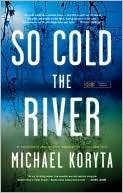
So Cold the River by Michael Koryta, Narrated by Robert Petkoff

Source: Complimentary BEA download
Audio, nearly 14 hours
On Amazon and on Kobo

So Cold the River by Michael Koryta, narrated by Robert Petkoff, is mysterious and dark, but at times, it is humorous.  Eric Shaw has lost his movie making career as a photographer/videographer in Los Angeles, forcing him to breathe life into those that have been lost or into inanimate objects for funerals, along with videos of weddings and more.  After crafting a video for a funeral or a woman with a secret that only one other person knows, Eric is sent on a job that makes him question reality.

Alyssa Bradford hires Eric to make a video of her father-in-law’s life, sending him to a once thriving vacation city that has only begun to rebound after the Great Depression when her father-in-law left to make his fortune elsewhere.  West Baden, Ind., is in the middle of nowhere, but it is the home of Pluto water, which was considered a miracle water from a mineral springCampbell Bradford, a 95 year-old billionaire, is a complete mystery … a mystery that Shaw is sent to unravel, but what he finds is not only a town being reborn but also a cast of townsfolk who are wound up tight or too relaxed.  Koryta’s dialogue could use a bit of sprucing up, as some of it is very repetitive with the use of “hell” and the like, but the descriptions of the characters, their interactions, and the mysterious experiences Shaw has are engaging.  The novel takes a great many twists and turns, but there are times when the changes are predictable.  

Robert Petkoff is a fantastic narrator, making sure that the voices and characters are easily discerned and the dialogue easy to follow.  His inflections are Midwestern, and he effectively effuses the emotions of these characters.  So Cold the River by Michael Koryta strikes a balance between suspense/thriller and the paranormal, as Eric Shaw finds himself pulled into the mysteries of Pluto water and a town that fell into financial ruin after the Great Depression.  It’s a satisfying novel to spend the summer with, full of adventure and intrigue.

About the Author:

Michael Koryta is an American author of contemporary crime and supernatural fiction. His novels have appeared on the The New York Times Best Seller list.  Visit his Website.


46th book for 2014 New Author Challenge.

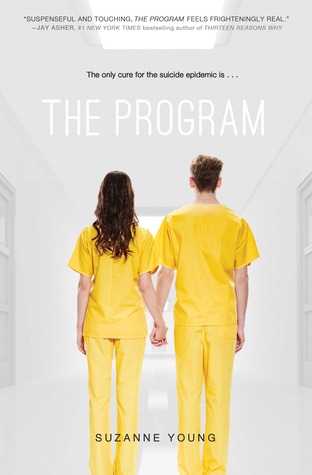
The Program by Suzanne Young

Source: Public Library
Hardcover, 405 pages
On Amazon and on Kobo

The Program by Suzanne Young, which was our book club selection for July, is a young adult novel in which young people are sent away to The Program if they show signs of suicidal thoughts before committing the act, and in this world, one can never be too careful because suicide is contagious.  At least that’s what the government would have parents and their teens believe.  Every teen lives under a microscope, and the pressure can be unbelievably intense for those who are friends or, especially, related to someone who has committed suicide.  Sloane Barstow is just one teen of many, but her brother committed suicide so she bottles up as much of her anguish and pain as she can so that her parents don’t think she’s suicidal too.  Her only comfort is in the arms of her friend, and her brother’s, James Murphy — a rough and tumble kind of guy who has mommy issues and doesn’t much like school or his dad.

“Teen suicide was declared a national epidemic — killing one in three teens — nearly four years ago.  It always existed before that, but seemingly overnight handfuls of my peers were jumping off buildings, slitting their wrists — most without any known reason.  Strangely enough, the rate of incidence among adults stayed about the same, adding to the mystery.”  (page 9)

The novel is told in first person point-of-view, so if Sloane doesn’t know the reasons or the actions behind the scenes, neither does the reader.  This leaves the reader and Sloane in the dark, especially when she begins to lose parts of herself.  Her relationship with James is hot and cold, mostly because James has a hard time being vulnerable, but her relationship with her parents is even harsher, with her moods constantly negative toward them and them trying to smother her as if that will protect her from getting sick.  There are a great number of issues to discuss, particularly about what it means to be us — do our memories make us who we are or is it something more? Should the government force teens into treatment for suicidal symptoms and their grief over lost loved ones or should they allow them to handle their own emotions?  Is there some other vast government conspiracy at work?

Young’s portrayal of rebellious teens is spot on in her portrayal of Sloane and James, but there is question that builds in the reader’s mind about whether Sloane and James are in love or merely thrown together by mutual loss.  While there are touching moment between the two and it does seem to be love, there relationship does not evolve beyond the mutual lust and desire for one another, and in many ways, it is based on mutual comfort.  Despite the questions about whether The Program is increasing thoughts of suicide among teens that want to avoid it, at its heart this novel is a love story in a dystopian world where kids have little control of their lives, except to run away.  The parents are not as hands on as one would presume them to be in a world where suicide is an epidemic, there is no real explanation of who runs the program or of why the program is so prevalent other than its 100% cure rate, and the last part of the book seems like it was thrown together to explain a subordinate character’s actions in The Program and outside of it.

The Program by Suzanne Young is a fast-paced romance for young adults that raises a number of questions for book clubs to discuss, and it is enjoyable.  For readers looking for a little more about the setting and The Program or other cures that could have been tried, etc., you’ll be left wondering.  The end opens more doors than closes, and its possible that there could be a sequel in the works.  Sloane and James are strong and rebellious, but even they are not immune from the disease or its cure.  Is it better to forget the past and move forward, or should you reclaim as many of your memories as you can?  That’s still the question.

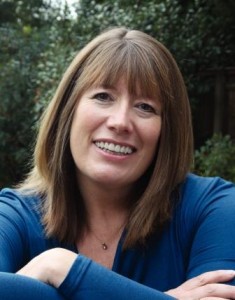
About the Author:

Originally from New York, Suzanne Young moved to Arizona to pursue her dream of not freezing to death. She currently resides in Tempe, where she teaches high school English. When not writing obsessively, Suzanne can be found searching her own tragic memories for inspiration.

Suzanne is the author of several books for teens, including THE PROGRAM, A NEED SO BEAUTIFUL, and A WANT SO WICKED.  Visit her on Facebook, her blog, and Twitter.


What the Book Club Thought:

Most members agreed that the book was an easy read, while one wanted more hope at the beginning at least for the reader.  Others thought that they were in the situation with Sloane (probably due to the first person point of view) and could understand how a teen girl would be so obsessed with a boy and only think about surviving, rather than what her future could be like once she hit 18.  At some length the book club talked about the lack of hope in the beginning, which some said was intentional.  Another aspect of the book that people discussed at length was Sloane’s seeming acceptance of the pills given to her by the psychiatrist, rather than fighting to keep her memories as she said she would early on.  The underground aspect of the book that shows up later in the book was examined as a possible conspiracy as well as The Program itself.  However, there is another book to this series, so we’re waiting to see what that brings (at least some of us are).  In terms of whether members would take the pill to bring back all of their memories, some said they would without hesitation, while others said they would think about it and one said he probably wouldn’t.  When asked about whether they would place their own kid in the program, a few said that they would not immediately do so, seeking out alternative means and others suggesting that they would immediately do so.

45th book for 2014 New Author Challenge.


Vietnam: The Real War with introduction by Pete Hamill

Source: Gift
Hardcover, 304 pages
I am an Amazon Affiliate

Vietnam: The Real War with introduction by Pete Hamill is a coffee table book that is heavy with photographic evidence of war, the burdens soldiers and civilians carry from those conflicts, and the moral ambiguity soldiers find themselves mired in when faced with unexpected death.  There are images in this collected visual and textual history that will haunt readers for years to come, but the story told in these pages through the eye-witness accounts of journalists who thrust themselves in combat alongside soldiers should make the harsh realities of war even more frightening for those of us who merely read history and have not lived it as a pawn in a larger strategic game of politics and nationalism.

“Most of the experienced correspondents in Saigon doubted that many Viet Cong hidden in their jungle spider holes were debating the Marxist theory of surplus value.  Nationalism was a much more powerful motivator.  They definitely wanted to get the foreigners the hell out of their country.”  (page 21)

Even with all that is known about the war and the inflated body counts made by the U.S. military during the war, there are still some great unknowns and even some smaller more poignant ones for the families of journalists and soldiers lost in Vietnam.  For instance, did the January 1952 bombings in Saigon really happen because of the Viet Minh, the predecessor to the Viet Cong, or was it U.S. intelligence agents?  And what really happened to Sean Flynn, a freelance photojournalist and son of the actor Errol Flynn, in the early 1970s — was he killed in action or captured?  Lest readers think that photojournalists and reporters were kept back at the barracks or the camps, this book sheds light on just how dedicated these journalists were and how close to the action they had been — some of them taking photos only to drop their cameras and help civilians, soldiers, or become wounded themselves.

There are, of course, the most famous images from the Vietnam war from the Associated Press, including the Buddhist Monk who set himself on fire in the streets, the young girl running naked after Napalm was dropped on her and other civilians by the U.S. military, or the shooting of an unarmed Viet Cong after capture in the Saigon street.  But there are other photos that show the beauty of Vietnam, including an aerial view of the newly plowed rice paddies and the pristine beaches, as well as the most mundane activities — watching a soldier shave while battle surrounds him or men on their way to bathe in towels while still carrying their weapons.  Sad photos stretch across these pages from the unknown soldier who looks too young to be in battle, wearing a helmet with the phrase “War Is Hell” written across it or the woman who pleads to be evacuated with her wounded husband, but is left behind.

Vietnam: The Real War is heavy in subject and content. It should give readers pause. The text accompanying the photos and the background on the war are to the point and provide enough detail without getting bogged down too heavily in the politics or the perspectives floating around in hindsight. An excellent starter for those looking to learn more about the war.

About the Author:

The Associated Press won an unprecedented six Pulitzer Prizes for its coverage of the Vietnam War. To create this book, the agency selected 300 photographs from the thousands filed during the conflict.

Pete Hamill is an American journalist, novelist, essayist, editor, and educator. The recipient of numerous awards, Hamill is currently a Distinguished Writer in Residence at the Arthur L. Carter Journalism Institute at New York University.

19th book (Vietnam War) for the 2014 War Challenge With a Twist.


44th book for 2014 New Author Challenge.

The Sea Garden by Deborah Lawrenson

Source: Harper and TLC Book Tours
Hardcover, 384 pages
On Amazon and on Kobo

The Sea Garden by Deborah Lawrenson is not your typical novel in that there are three distinct novellas inside with three distinct protagonists, who just happen to be connected.  The atmosphere and settings play a large role in the novel, setting the stage for the mystery and espionage that unravels, but the beginning of this novel is deeply mysterious, almost too mysterious.  It is like the author was unsure of whether this should be a ghost story or something less Gothic.  Readers meet Ellie Brooke at the beginning as she makes her way abroad to Porquerolles near France to meet with a potential client about reviving a memorial garden.  The landscape is lush and old world, almost as if it were stuck in time, and Ellie begins to sense that there is something not quite right with her client’s family and their intentions.

“Under close questioning, however, the picture in her mind did not seem as robust as it had been.  She judged it unwise to say so.  Best to go with her instincts that her memory was true.”  (page 25)

These women are searching for truth in the darkness, with Ellie searching for her client’s motivations and Marthe searching for the connections she had with the outside world before she lost her sight and Iris looking to reconcile the past.  The second section and third sections of the book are set in WWII, unraveling the background of the story in a winding fashion as if following a darkened path through the woods before reaching the vast openness of the sea.  There are clues along the way to help readers gauge where the story is headed and how it all connects back to the first third.  From the underground dealings of the French Resistance that relied upon deceit and subtle signals in the perfume worn by network members to the secret codes embedded in innocuous notes and wireless signals over radio waves, readers will learn about the precarious nature of these resistance fighters’ lives and the love that they shared across the boundaries that they crossed morally, emotionally, and physically.

“On the southwestern side of the island the path opened out into a small bay, reinforced by jagged rocks.  All seemed at peace.  It was too early in the year for tourist hordes; here was freedom from the modern world, for a while at least.  There was a timelessness about being on an island so small that it seemed closed in on itself; the sense of being adrift, not quite connected to the rest of the world.”  (page 31)

The Sea Garden by Deborah Lawrenson is as mysterious as the rundown memorial garden on the island, but as the crevices are scrutinized and the relics uncovered, they mystery begins to unravel a truth that has long been buried in secrets of the French Resistance and WWII.  These strong women must cope with what they uncover and reconnect with the past.  Being undercover in an enemy territory can be as lonely as living on an island disconnected from reality, but there is nothing more disconcerting than being unaware of your own past, only to uncover it when you least expect it.

Photo credit: Rebecca Eifion-Jones

About the Author:

Deborah Lawrenson studied English at Cambridge University and worked as a journalist in London. She is married with a daughter and lives in Kent, England. She and her family spend as much time as possible at a crumbling hamlet in Provence, France, the setting for her novel The Lantern and inspiration for The Sea Garden.  Find out more about Deborah at her website, read more at her blog, and connect with her on Facebook.


14th book for 2014 European Reading Challenge(Set in France and England)


24th book for 2014 Historical Fiction Reading Challenge.


18th book (WWII) for the 2014 War Challenge With a Twist.


43rd book for 2014 New Author Challenge.