Quantcast

There’s a Pig in My Class by Johanna Thydell, illustrated by Charlotte Ramel

Source: Holiday House
Hardcover, 26 pgs
I’m an Amazon Affiliate

There’s a Pig in my Class! by Johanna Thydell, illustrated by Charlotte Ramel and translated from Swedish by Helle Martens, is a cute book for kids in kindergarten and for parents to read to kids.  A lonely pig dreams of fun at the local school and one day gets his wish.  He is sneaked into the school and dressed up like a kid, so he can fit in.  While the students distract the teachers from the pig and his funny clothes, the other students make sure the pig can play the games and eat lunch with them.  He even gets to take a nap.  But eventually, the teacher becomes aware that this kid is a little bit different from the rest.

Nice pencil and ink drawings make these characters come alive from the honey-haired girl to the lively pig in human clothes.   My daughter adores books with animals and this one is no different, though the text is a bit too much for her, she did look at the pictures as I read it to her.  There’s a Pig in my Class! by Johanna Thydell, illustrated by Charlotte Ramel and translated from Swedish by Helle Martens, is a fun book about nature and how children can be brought out into the world and learn from it, and that nature can be fun.

About the Authors:

Johanna Thydell is a popular YA novelist in Europe, where her books have been published in thirteen different languages.  Her first novel won the prestigious August Award and was made into an award-winning film.  This is her first picture book and was inspired by her young son.  She lives in Stockholm, Sweden.

Charlotte Ramel grew up in Sweden with an American mother and a Swedish father.  Before becoming an illustrator she art directed food magazines.  The first children’s book she illustrated, The Cake Book by Marie Meijier, was an international hit.  She has since worked with Sweden’s most eminent children’s authors and now lives in Stockholm, Sweden.
66th book for 2014 New Author Reading Challenge.

The Paradise Tree by Elena Maria Vidal

Source: Historical Fiction Virtual Book Tours
Paperback, 252 pgs
I am an Amazon Affiliate

The Paradise Tree by Elena Marie Vidal recounts the real life of Daniel O’Connor, the author’s great-great-great-grandfather, based upon his own letters and writing and family lore and woven into a work of historical fiction.  Daniel O’Connor was a young man during the potato famine in Ireland, and watched as his parents struggled against starvation, political wills, and bigotry.  Even as he had dreams of becoming a doctor, laws in the land of his birth forbade his ascension in the profession, despite his skill in setting bones and working as an apprentice with other non-Catholic physicians.  After running out of the funds to attend medical school, he set his sights on a new life — one that would take him across the Atlantic into the harsh wilderness of Ontario, Canada, in the late 1880s.

Vidal has crafted a tale based on fact, and although it is fictionalized, the prose has a very non-fiction feel, which leaves readers at a distance from the characters.  The factual feel of the novel can fall flat for readers looking to connect with the characters, especially as the years pass along and the interactions are few in dialogue and often seem more like a recounting of the past.  Daniel and his family are separated from one another for a long time as he makes his way in a new country and builds his own family, but eventually, he is reunited with some of his kin as they follow him to the new world.  Vidal does an excellent job of demonstrating the lifeline that the Catholic faith becomes for the O’Connor family and how it binds them together in the toughest of circumstances.

The Paradise Tree by Elena Marie Vidal is about the perseverance of family and faith in the face of a number of struggles, though at times the prose is a bit too dry.  The O’Connor family not only faces hardships in Ireland, but in Ontario as they literally cut out a life for themselves from the wilderness.  They must battle against prejudices toward Catholics in both settings and strive to be their own guidance in their faith, as there are few churches close enough to them to tend to their religious needs.

About the Author:

Elena Maria Vidal grew up in the countryside outside of Frederick, Maryland, “fair as the garden of the Lord” as the poet Whittier said of it. As a child she read so many books that her mother had to put restrictions on her hours of reading. During her teenage years, she spent a great deal of her free time writing stories and short novels.

Elena graduated in 1984 from Hood College in Frederick with a BA in Psychology, and in 1985 from the State University of New York at Albany with an MA in Modern European History. In 1986, she joined the Secular Order of Our Lady of Mt. Carmel. Elena taught at the Frederick Visitation Academy and worked as a private tutor as well as teaching children’s etiquette classes. During a trip to Austria in 1995 she visited the tomb of Empress Maria Theresa in the Capuchin crypt in Vienna. Afterwords she decided to finish a novel about Marie-Antoinette she had started writing ten years before but had put aside. In 1997 her first historical novel TRIANON was published by St. Michaels Press. In 2000, the sequel MADAME ROYALE was published, as well as the second edition of TRIANON, by The Neumann Press. Both books quickly found an international following which continues to this day. In 2010, the third edition of TRIANON and the second edition of MADAME ROYALE were released.

In November 2009, THE NIGHT’S DARK SHADE: A NOVEL OF THE CATHARS was published by Mayapple Books. The new historical novel deals with the controversial Albigensian Crusade in thirteenth century France. Elena has been a contributor to Canticle Magazine, Touchstone Magazine, The National Observer, and The American Conservative. In April 2009 she was a speaker at the Eucharistic Convention in Auckland, New Zealand. In August 2010 Elena spoke at The Catholc Writers Conference in Valley Forge, PA. She is a member of the Catholic Writers Guild and the Eastern Shore Writers Association. She currently lives in Maryland with her family.  For more information please visit Elena’s website and blog.  You can also connect with her on Facebook, Twitter, and Goodreads.


23rd book for 2014 European Reading Challenge; (Set in Ireland)


33rd book for 2014 Historical Fiction Reading Challenge.


65th book for 2014 New Author Reading Challenge.


3rd book for the Ireland Reading Challenge.

Whiny Whiny Rhino by McBoop

Source: Blue Blanket Publishing and iRead Book Tours
Paperback, 34 pages
I am an Amazon Affiliate


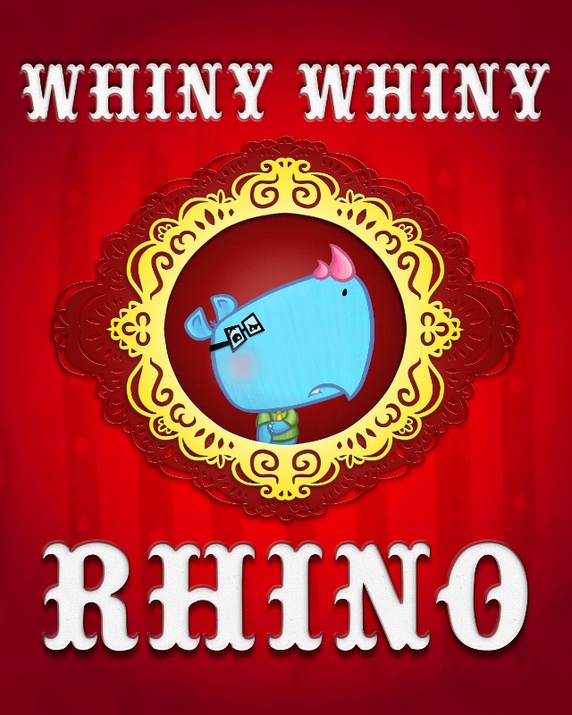
Whiny Whiny Rhino by McBoop, the father-daughter team of Carmin Iadonisi & Amanda Iadonisi-Word, is a vividly illustrated book about overcoming your fears by looking inside and taking a leap for fun.  Tiny Rhino has three older brothers, and they are rough and tough, often telling Tiny that he’s too whiny and scared all of the time.  They say that he needs to be tough to make it out in the world.  He would rather stay inside and read, but one day, he decides he’s had enough of his brothers’ teasing and leaves the house.  Rather than jump at the opportunities presented to him by his friends, Tiny stays away from all the fun.  When he’s in bed thinking about his day and how much fun he didn’t have, Tiny comes to a realization that he needs to be more adventurous.

My daughter was captivated by the vivid images and the fun Tiny encountered.  Her favorite pictures were Tiny’s injured foot and when he’s in bed dreaming about becoming a superhero with a cape.  With easy rhymes, my child followed the story with little confusion and she wasn’t easily distracted from the story as we read and looked at all the pictures.  Whiny Whiny Rhino by McBoop, the father-daughter team of Carmin Iadonisi & Amanda Iadonisi-Word, is about taking a chance, letting go of anxieties, and take life one experience at a time.  These are good lessons for kids to learn, especially as most everything they encounter is new to them.

About the Authors:

McBoop is the creative team of Carmin Iadonisi & Amanda Iadonisi-Word. This father-daughter duo co-wrote and illustrated Whiny Whiny Rhino. They currently live in New England where they enjoy making art, reading comics, playing board games, eating fancy chocolate and whining about the weather.  Connect with them on Facebook, Twitter, and through their Website.

64th book for 2014 New Author Reading Challenge.

This Is How I’d Love You by Hazel Woods

Source: Penguin
Paperback, 320 pages
On Amazon and on Kobo

This Is How I’d Love You by Hazel Woods is a WWI novel set in 1917 that demonstrates the power of the written word.  New York Times columnist Sacha Dench, who graciously agrees to be a pen-pal and chess opponent to Charles Reid, is forced to resign from his position as sentiment in the United States leans more toward entering the war than remaining isolated from it.  He and his daughter, Hensley, leave quickly for Hillsboro, New Mexico, to take up the residence of a former mine supervisor.  Dench’s letters to Reid are philosophical debates about the justice of the war and its final outcome, but they are also a test of wills on a chess board that mirror those tensions.  Hensley is intrigued by the letter and utterly infatuated with a play director in New York City, but when she’s forced to decide between staying in New York with her brother or go to New Mexico, she chooses to leave.  Like the notes in the margins of her father’s letters, her life is lived on the outskirts of the proper role she is meant to play as a young 17-year-old woman without a mother.

“Mr. Dench has taken one of Charles’s pawns in the third move of the game, their bishops facing one another and the next move of utter importance.  Charles must be wary of the temptation to play too aggressively, putting his own pieces at risk in the next turn, which, he senses, is probably his opponent’s strategy.  A classic lure.  But playing like this, without body language or eye contact, is a new challenge.” (page 5 ARC)

It is striking how Woods uses the game of chase to depict the art of war on many levels, from the war between Dench and Reid’s competing philosophies to the difficulties in playing chess without the social cues to guide him as they would in hand-to-hand combat.  Reid is not so much a soldier as an ambulance driver from the United States who signed up to make something of his life, rather than live the life expected of him by his rich parents.  While he finds his actions independent, he is also aware as the war goes on just how foolhardy the decision may have been.  Feeling adrift on foreign fronts, Reid holds onto Dench’s letters and later the secret correspondence he has with Hensley as a lifeline.  But her life is far from as simple as she would like him to believe in their forced exile.

“By the end, the lead had become so dull that his signature is hardly more than a thick looping smudge.  Even so, Hennie moves her index finger across the page, mimicking the script, slowing especially over his name, until she can trace his signature perfectly.  Inhabiting his body, exiting her own, she crouches down under the table, imaging the cramped feel of the cellar, the roughness of chapped lips, the stale smell of urine on her clothes, the sound of artillery just outside.”  (page 71 ARC)

Hensley is living in the world of their letters as much as he is, but soon she is forced to make a choice — not once, but twice — that could change the course of her life forever.  This Is How I’d Love You by Hazel Woods explores the power of letters, the devastation of war and grief, and the societal pressures to which we can succumb or fight against.  Woods has made WWI vivid and gruesome as it must have been, demonstrating the irreparable harm that soldiers may face but also the inner strength it requires for them to move forward and to continue doing so even when they return home.  Expectations should be their own and not imposed upon by others, and only through compassion and love can these men soldier onward.

About the Author:

HAZEL WOODS lives in New Mexico with her husband and two children.

30th book for 2014 Historical Fiction Reading Challenge.


20th book for 2014 European Reading Challenge; (Set in France)


25th book (WWI) for the 2014 War Challenge With a Twist.


63rd book for 2014 New Author Reading Challenge.

Blue Moon Rising by Simon R. Green

Source: Public Library
Paperback, 480 pages
On Amazon and on Kobo

Blue Moon Rising by Simon R. Green is an adventure story of kings, castles, dragons, and unicorns whose hero, Rupert, is a second son in line for the throne and dedicated to his duty to the Land even at the expense of his own safety.  On his first quest he is sent to slay a dragon, but what he encounters runs contrary to everything he’s ever heard about quests from the minstrels.  Knowing that he can never rule as king, Rupert is aware that he isn’t meant to return from his quest or if he does, he’s to return with something of value that his bankrupt kingdom can use to fight off the Barons who wish to take control.  Unfortunately, he and his unicorn return with a live dragon, not jewels, and a difficult Princess Julia.

In typical adventure fashion, but with humor, Green creates a world in which the darkness threatens to overtake the Forest Kingdom.  Rupert is a reluctant hero and Princess Julia is the antithesis of feminine royals who care more about dresses and balls.  Harald, the prince next in line for the throne, is charismatic and wily, and he has a reputation with the ladies.  He and his brother are often at odds, though readers will wonder if they would get along better if their father didn’t show preference for Harald over Rupert at every turn or if the kingdom was not in such turmoil politically that factions are vying for their own favorite son to ascend to the throne.  Green populates his novel with a few too many quests when one would have sufficed before the kingdom was threatened by the Darkwood and the Demon Prince.

“For a long while the Court stood silent, shaken by the Astrologer’s dark vision.
‘There must be something we can do,’ said Rupert haltingly.
‘There is,’ said the Astrologer.  ‘Prince Rupert; you must journey to the Dark Tower, and there summon the High Warlock.’
Rupert stared at the Astrologer.
‘I should have volunteered to lead an army against the Demon Prince,’ he said finally.  ‘It would have been safer.'” (page 87)

The dragon doesn’t play much of a role here, but the unicorn seems to be the comic relief for the most part.  The debate between the privilege in royalty and being a peasant is consistent throughout the book, as is the tension between duty and desire.  Despite its wordiness, Blue Moon Rising by Simon R. Green is a keen adventure with humor and plot twists, though some may be predictable and less satisfying than expected.

Unfortunately, the book club discussion for this one was postponed do to some illnesses and other conflicts.

About the Author:

Simon was born in Bradford-on-Avon, Wiltshire, England (where he still resides), in 1955. He has obtained an M.A. in Modern English and American Literature from Leicester University and he also studied history and has a combined Humanities degree. His writing career started in 1973, when he was a student in London. His first actual sale was a story titled Manslayer, back in 1976, but it didn’t appear till much later; Awake, Awake…. was his first sale to a professional editor, in 1979. Furthermore he sold some six or seven stories to semi-pro magazines before that market disappeared practically overnight.

After years of publishers’ rejection letters, he sold an incredible seven novels in 1988, just two days after he started working at Bilbo’s bookshop in Bath (this after three and a half years of being unemployed!). This was followed in 1989 by two more, and a commission to write the bestselling novelization of the Kevin Costner film Robin Hood: Prince of Thieves, which has sold more than 370.000 copies.

62nd book for 2014 New Author Reading Challenge.

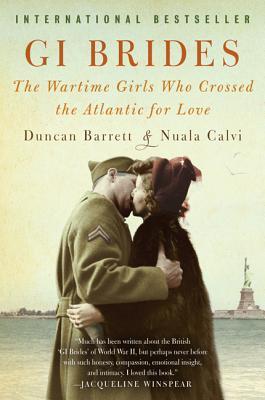
G.I. Brides by Duncan Barrett and Nuala Calvi

tlc tour host

Source: TLC Book Tours and William Morrow
Paperback, 368 pages
On Amazon and on Kobo

G.I. Brides: The Wartime Girls Who Crossed the Atlantic for Love by Duncan Barrett and Nuala Calvi is a biography-memoir hybrid in which the stories of four women who married American soldiers, known as G.I. brides, during WWII are told.  Sylvia Bradley is a bit young and naive but an optimist, while Gwendolyn Rowe is a determined woman.  Rae Brewer is the tomboy to Margaret Boyle’s beauty.  These stories are romantic as these ladies decide to leave the only home and family they have known to marry an American, only to find themselves facing more than just marital challenges.  Culture shock is just one aspect that is well depicted in these stories, especially as the women marry into not only American families, but families that still maintain their old world cultures and traditions — like the Italians big family dinners to the rowdy Irish parties.  As different as their lives had been from each other during WWII, they are vastly different when they reach America.

“During the day, Margaret did her best to get up on deck as much as possible to assuage her seasickness.  Starting out across the endless miles of ocean, she was reminded how cut adrift she had always felt in her life.  Some brides might feel the ache of homesickness, but she had never had a real home to miss.”  (page 98)

“As she packed her bag, she heard a chugging noise coming from outside and looked out of the window.  There in the distance was the menacing outline of a doodlebug passing over hoses opposite.  Then suddenly the noise stopped.  Rae knew what that meant — the flying bomb was about to fall.” (page 114)

Through extensive interviews with these women and their families, Barrett and Calvi have brought to life the home front in England, as these women struggled with rationing and the fear of bombs killing them on the way to work or in their sleep.  As their families struggled, brothers were sent off to fight the Germans, and they found work to support the war effort, these women were introduced to a whole new world outside the cocoon of their family units.  They went to dances with Yanks and volunteered in Red Cross-sponsored facilities, only to find that these Americans were not as crass as they were told by brothers and parents.

“For months Lyn had felt desperate to return home to England, but now she realized that the thing she had been looking for no longer existed.  It was her younger self — that confident, carefree girl who hadn’t had any knocks in life, who could stand on her own two feet …” (page 340)

Once in American, these women must fight another war — a war within themselves.  They feel like outsiders, they struggle to find their place with their new families, and many times they are met with failure.  But even though they long to return to England and walk away, they also realize that they must first stand on their own and learn what they want for themselves.  G.I. Brides: The Wartime Girls Who Crossed the Atlantic for Love by Duncan Barrett and Nuala Calvi may only breathe life into the lives of four G.I. brides from WWII, but it stands to reason that many of those 70,000 brides experienced similar hesitations, failures, and triumphs in their new lives.  Wonderfully told and executed.

About the Authors:

Duncan Barrett studied English at Cambridge and now works as writer and editor, specialising in biography and memoir. He most recently edited The Reluctant Tommy (Macmillan, 2010) a First World War memoir.


Nuala Calvi also studied English and has been a journalist for eight years with a strong interest in community history pieces. She took part in the Streatham Stories project to document the lives and memories of people in South London. They live in South London.

Connect with them through their website.

61st book for 2014 New Author Reading Challenge.


24th book (WWII) for the 2014 War Challenge With a Twist.


19th book for 2014 European Reading Challenge; (Set in England)

Feed by Mira Grant

Source: Book Expo America
Audiobook, 15+
On Amazon and on Kobo

Feed (Newsflesh #1) by Mira Grant (a pseudonym for Seanan McGuire), read by Paula Christensen and Jesse Bernstein, is a post-apocalyptic world in which the traditional news is no longer trusted and zombies have taken over the world, just after humanity created a cure for cancer and the common cold in 2014.  Bloggers Georgia Mason, Shaun Mason, Georgette “Buffy” Meissonier, and Richard Cousins run a semi-popular blog that reports the news about zombies and politics, with Georgia considered a newsy, Shaun an Irwin or zombie poker, and Georgette handling the fictional stories/poems and tech behind the blog, After the End Times.  When they are selected to follow the campaign of Republican senator Peter Ryman, who is running for the presidential nomination in 2040, the blog skyrockets to the top of the feed as the campaign trail is wrought with danger from zombie herds and more.  Once Ryman gains the nomination and selects Texas Gov. Tate as a running mate to balance the ticket, Richard Cousins joins the team as another newsy.

I never asked to be a hero. No one ever gave me the option to say I didn’t want to, that I was sorry, but that they had the wrong girl.

Grant’s zombie book is horrifying, but funny, as Shaun and Georgia banter back and forth as only siblings can.  Virology and the source of the virus that causes the zombies is well explained, as is how it is transmitted, but at no point is any of this information presented in a dry or uninteresting way.  The addition of blog posts from the bloggers is a nice touch as well.  However, there were points while listening that some information about the transmission of the virus is repeated throughout the book and probably could have been cut out, particularly the bit about mammals under 40 pounds not turning into zombies like animals of larger sizes.  The audio is well done, and the characters are easily discerned from one another.  The narrators did a great job making the emotions of the characters tangible.

Feed (Newsflesh #1) by Mira Grant, read by Paula Christensen and Jesse Bernstein is a journey into a world dominated by corrupt government, news, and zombies.  This is a tension-filled, thrilling novel that presents a believable world in which zombies exist and are mostly contained.  The political machinations mirror those of today’s society, as is the government protocols that constrain movement of humans through infected areas.  Grant meshes the horror of zombie apocalypses, blogging, news, and politics very well, and there are nods to previous zombie fiction and movies, which are viewed as helpful to the society’s reaction to the infection.  Blood, death, and tragedy are expected, but the ending could surprise some readers, though as it is a trilogy, it should be anticipated.

About the Author:

Born and raised in Northern California, Mira Grant has made a lifelong study of horror movies, horrible viruses, and the inevitable threat of the living dead. In college, she was voted Most Likely to Summon Something Horrible in the Cornfield, and was a founding member of the Horror Movie Sleep-Away Survival Camp, where her record for time survived in the Swamp Cannibals scenario remains unchallenged.

Mira lives in a crumbling farmhouse with an assortment of cats, horror movies, comics, and books about horrible diseases. When not writing, she splits her time between travel, auditing college virology courses, and watching more horror movies than is strictly good for you. Favorite vacation spots include Seattle, London, and a large haunted corn maze just outside of Huntsville, Alabama.

Mira sleeps with a machete under her bed, and highly suggests that you do the same.

60th book for 2014 New Author Reading Challenge.


This is my 2nd book for:

Peril the Second:

Read two books of any length that you believe fit within the R.I.P. categories:

  • Mystery.
  • Suspense.
  • Thriller.
  • Dark Fantasy.
  • Gothic.
  • Horror.
  • Supernatural.

Blackfin Sky by Kat Ellis

Source: Running Press
Paperback, 304 pages
On Amazon and on Kobo

Blackfin Sky by Kat Ellis is a roller coaster ride at the circus, complete with big top, illusions, and creepy mute-like clown/mime.  In a town named for the whales off the coast of an eccentric town where everyone is just a little bit odd.  Skylar Rousseau tells her story in the first person and as she unravels the mystery of her three-month disappearance, readers will be pulled into the underworld of a circus that thrived 16 years earlier.  Ellis’ novel is atmospheric, creepy, and foreboding, as Sky reconnects with the friends who thought she had died while she thought she went on with her normal daily routines of going to school, studying for tests, and hanging out with her friends in a town where a weathervane is haunted.

“Sky shook her head.  Madame Curio was well known in Blackfin, even though she was avoided by most.

‘How did you even get in there?’ The woods had been secured against intruders for as long as Sky could remember, the talk of roaming wolves and lightning trees that electrocuted passing children not being enough to keep out idle teenagers.”  (page 70 ARC)

Skylar sets on a path to uncover what actually happened to her and where she went for three months with the help of Sean, her friend that she wants to be more.  Along the way she uncovers secrets in Blood House, the family home, as it opens attic doors and pushes her in the right direction, learns things about her family and her mother that upend her world, and gets even closer to the truth through a series of unimaginable journeys.  Ellis’ ability to create a believable world in which the circus becomes a prison and gifted people are anxious to leave but unable to do so is fantastic for a debut novelist.  Beyond the darkness, however, Ellis sprinkles in the humor, making it easy for the reader to relate to these characters because they are not overly serious and the novel is not too dark.

“Sky joined him as he leaned against the back of the Jeep, looking out over the twisted townscape of Blackfin.  The houses looked like precariously stacked playing cards, balancing against the hillside while they waited for a gust of wind to carry them off into the sea.  From this height, Sky saw the thirteen black dots of the cemetery cats lazing on top of the tombstones lower down the mountain slope.  Further still, the school teetered at the seafront, with Silas’s iron form spinning crazily on the roof.”  (page 150 ARC)

Ellis balances characterization, atmosphere, and mystery well and Blackfin comes to life with all of its quirky characters.  She bends the light to reveal new dimensions and hues of the town, its residents, and its history, while maintaining readers’ interest and passion to find out how it all ends.  From the mundane routines of going to school and hanging out with friends to the traveling to the circus for answers, Sky must find the strength within herself to accept her new reality and find a way to save herself and everyone she loves.  Blackfin Sky by Kat Ellis is light refracted, speeding up and slowing down, as Sky uncovers her own truth.

About the Author:

Kat Ellis is a young adult writer from North Wales. Her debut novel, BLACKFIN SKY, is out now in the UK (Firefly Press) and the US (Running Press Teen).

Check out her Facebook, Twitter, GoodReads, and her Website.


59th book for 2014 New Author Reading Challenge.


My 1st book for Peril the Second!

My Mother’s Secret by J.L. Witterick and Giveaway

Source: Penguin Random House
Paperback, 180 pages
On Amazon and on Kobo

My Mother’s Secret by J.L. Witterick is inspired by the real-life story of Franciszka and Helena Halamajowa who in Nazi-occupied Poland were able to save several families and a German soldier from being killed by the Nazis.  Told in understated, spare prose, the novel travels through the perspectives of Helena who grows up in Poland with her mother and brother without a father; Bronek, the head of one of the Jewish families; Mikolaj, the son of a premiere Jewish doctor before the Nazi occupation; and Vilheim, the German soldier who is vegetarian and does not want to kill.

“In all of us, there is a child that exists while we have our parents.

With my mother gone, I feel a sadness for the loss of the child within myself.” (page 68)

Helena’s perspective is the most developed of the four, in that readers garner a deeper understanding of her family and the losses they endure. Despite those hardships, she admires her mother’s commitment to doing the right thing. Her relationship with her brother is heart-warming from the beginning as they struggle to keep their stomachs full and steer clear of their father’s rage. Her mother’s secret is not so much that she begins hiding families from the Nazis but that she has the strength and conviction to do so no matter how much it could cost her personally. And while Helena sees herself differently, she carries with her that same strength, especially when her way of life changes drastically under Nazi occupation.

My Mother’s Secret by J.L. Witterick covers the range of reasons people were in hiding during WWII, and examines the perseverance of those hiding them. But it also takes a look at how keeping up appearances and going unnoticed can be the key to survival, as is showing love to fellow man with no expectation of getting anything in return.

About the Author:

Originally from Taiwan, J.L. Witterick has been living in Canada since her family’s arrival in 1968. She attended the University of Western Ontario, graduating from the Richard Ivey School of Business. My Mother’s Secret is her debut novel. It is a bestseller in Canada and has been published in several countries around the world. Witterick lives in Toronto with her husband and son.

Giveaway:

U.S./Canada residents 18+ can leave a comment below to be entered; list a WWII book that you’ve loved. Deadline to enter is Sept. 22, 2014, 11:59 PM EST.

58th book for 2014 New Author Reading Challenge.


18th book for 2014 European Reading Challenge; (Set in Germany/Poland)


29th book for 2014 Historical Fiction Reading Challenge.


23rd book (WWII) for the 2014 War Challenge With a Twist.

The Rat by Elise Gravel

Source: Tundra Books
Hardcover, 32 pages
On Amazon and on Kobo

The Rat (Disgusting Creatures) by Elise Gravel packs a lot of information in its pages and includes colorful images and punchy commentary.  My daughter enjoys looking at the fun pictures of the Rat, and some of the large words are easier for her to notice, which makes a teachable moment for her to learn new words.  While some of the information may be too much for kids in one sitting, after a few reads, kids will learn more an more about rats.  Other books in the series focus on flies, head lice, slugs, spiders, and worms.  Most kids are fascinated with bugs and creepy crawly things, probably because they are smaller and often within their field of view and touch, unlike birds and other animals.

Gravel’s images are fun, and it allows young readers to learn about the rat, his habits, and his behavior, as well as how important rats are to human research.  When the rat picks her nose with her tail, kids will laugh or say its disgusting.  It’s just one example of how these books can entertain readers as well as help them learn.  The Rat (Disgusting Creatures) by Elise Gravel is fun and informative, allowing young readers to learn new words and spellings, while also having fun with life’s more creepy creatures.

About the Author/Illustrator:

Elise Gravel is an award-winning author/illustrator from Quebec. She was the winner of the 2013 Governor General’s Award for Children’s Illustration in French, and is well-known in Quebec for her original, wacky picture books. She has published a number of books with US publisher Blue Apple and is currently working on a graphic novel for Roaring Brook Press. Having completed her studies in graphic design, Elise found herself quickly swept up into the glamorous world of illustration. Her old design habits drive her to work a little text here and there into her drawings and she loves to handle the design of her assignments from start to finish. She is inspired by social causes and is likes projects that can handle a good dose of eccentricity.

57th book for 2014 New Author Reading Challenge.

The Vintner’s Daughter by Kristen Harnisch

Source: Caitlin Hamilton Marketing and She Writes Press
Paperback, 368 pgs
On Amazon and on Kobo

The Vintner’s Daughter by Kristen Harnisch is set in Loire, France, in 1895 on the Thibault vineyards, as a family struggles to revive their grapes after a blight rocked the industry.  Sara has dreams of becoming a vintner like her father, and he has cultivated those dreams, allowing her to work the vines and learn all that she can from Jacques, the foreman.  She keeps a seasonal notebook about each harvest and process for making the wine, but when a blight threatens their harvest once again and the set price for barrels offered by the Lemieux family is too low to pay the vineyard’s debts, her father makes a fateful decision that changes the course of the entire family’s lives.  Harnisch clearly knows wine, vineyards, and the trade itself; her research is in depth and adds layers to her narrative.  Her characters are dynamic and engaging, and readers will be drawn into the Thibault family and cheer for them to triumph over the rival Lemieux family.

“Upon Jacques’s return, Sara wished him adieu and lifted her skirts to trudge through the mud between the vines toward the other end of the field.  There she hunched over to examine one of the vines more closely.  She ran her fingers over the leaves’ withering edges, fearing the worst.  She took her knife from her belt and split the vine’s bark.  With the tip of her blade, she scraped out hundreds of translucent eggs that lined the interior of the vine.  Some had already hatched, producing the dreaded pale yellow insects that were now sucking the vine dry.”  (page 8 ARC)

Fleeing France with her sister, Lydia (who resembles the Lydia of Pride & Prejudice in some ways), Sara finds herself adrift in New York City and reliant on the kindness of a convent and the church.  In their highly regimented life, she learns of the lush land in California and its vineyards, and she finally begins to dream of a way in which she can reclaim her family’s lost fortune.  While she’s making plans, she’s swept up in a different life, assisting a midwife.  As she learns to hold her ground in this more modern world in which women are making their own way, Sara is even more confident that she can right the wrongs done to her family.  When tragedy strikes again, Sara is forced to remain strong and to do what she thinks is best as she runs from the specter of the guillotine.

The Vintner’s Daughter by Kristen Harnisch is a fascinating look at the business of vineyards right around the time of prohibition in the United States and during the suffrage movement for women.  Sara comes into her own in the New World, and she learns what it is she truly has lost when she is pushed back to France by her boss in California.  Harnisch has crafted a emotional journey of a young woman coming into her own in the modern world and learning to forgive and be forgiven.  Stunning debut.

About the Author:

Kristen Harnisch’s ancestors emigrated from Normandy, France, to Canada in the 1600s. She is a descendant of Louis Hebert, who came to New France from Paris with Samuel de Champlain and is considered the first Canadian apothecary. She has a degree in economics from Villanova University and now lives in Connecticut. The Vintner’s Daughter, her debut novel, is the first in a series about the changing world of vineyard life at the turn of the century.

29th book for 2014 Historical Fiction Reading Challenge.


56th book for 2014 New Author Reading Challenge.

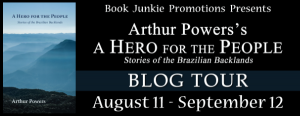
A Hero for the People by Arthur Powers

Source: Author and Book Junkie Promotions
Paperback, 190 pages
I am an Amazon Affiliate

A Hero for the People by Arthur Powers is a quiet collection of short stories about the Brazilian backlands that examine faith and perseverance among people who were downtrodden and beaten down by their richer brethren off and on between 1964 and the early 1990s.  In this crucible, men and women are either made stronger or they are broken by the land, the people, and the government.  Powers uses sparse language and thrusts the reader in the middle of situations, but there is enough background given so that the reader understand each character’s position in the towns they visit — from the Brother sent to help an older priest live out his final years before the parish is closed and finds himself becoming a people’s hero to the young wife and mother who dreams of escaping her life as a wife for a passionate love affair.

“She turned and walked inside.  She would miss this house.  The house where she had grown up had been made of wattle — mud and sticks — plastered over in parts where the plaster hadn’t worn through.  Its floor had been dirt, pressed hard enough so that you could sweep it almost clean, but turning muddy when rain leaked through the old tile roof.  In this house, when water leaked through the tiles in the hard rains, it could be swept off the floor.  And here there was a pump in the kitchen; she didn’t have to walk to the river for water.”  (from “The Moving”, page 96)

While Powers begins his collection with a note about the political and social environment during the time in which these stories are set; it is hardly necessary because it is clear that those factors influenced the lives of his characters.  At the heart of these stories are families trying to make their way in the world and keep what little they have, but there are the missionaries who come from the outside world to help them and there are the wealthy landowners and their gangs who try to take it all.  Powers’ style is reminiscent of the stories told by the fire before televisions were prevalent in homes, and these stories will transport readers outside of their own lives into the lives of these Brazilian farmers and ranchers.  As they struggle, readers will feel the tension grown, and when they fall, they will cheer them onward.

A Hero for the People by Arthur Powers is a powerful look at a less affluent society that is no less worthy of prosperity and happiness than the next.  Hearts will break, families will falter, but in the end faith and love hold them together through the toughest parts of their lives.  Powers has crafted harrowing stories that dig at the root of all human societies when they are beginning anew.

About the Author:

Arthur Powers went to Brazil in 1969 and lived most his adult life there. From 1985 to 1997, he and his wife served with the Franciscan Friars in the Amazon, doing pastoral work and organizing subsistence farmers and rural workers’ unions in a region of violent land conflicts. The Powers currently live in Raleigh North Carolina.

Arthur received a Fellowship in Fiction from the Massachusetts Artists Foundation, three annual awards for short fiction from the Catholic Press Association, and 2nd place in the 2008 Tom Howard Fiction Contest. His poetry, fiction, and essays have appeared in many magazines & anthologies. He is the author of A Hero For The People: Stories From The Brazilian Backlands (Press 53, 2013) and The Book of Jotham (Tuscany Press, 2013).

Website | Facebook | Twitter | Goodreads

heroforpeople


55th book for 2014 New Author Reading Challenge.


28th book for 2014 Historical Fiction Reading Challenge.