Quantcast

The Harlem Hellfighters: When Pride Met Courage by Walter Dean Myers and Bill Miles

The Harlem Hellfighters:  When Pride Met Courage by Walter Dean Myers and Bill Miles is a book for ages 9-12 and chronicles the exploits of the “Harlem Hellfighters,” who were African-American soldiers of the 369th Infantry Regiment of World War 1.  Miles writes the preface to the book and talks about his personal connection to the unit and Harlem, eventually becoming the unit historian.

“Hundreds of black men laid down their lives in France because they refused to believe that they were anything but men, worthy of being Americans and representing their country.” (Page IV)

Myers chronicles the presence of African Americans throughout military history starting from the French and Indian War through WWI.  It also discusses the politics in Europe at the time, especially the desire of European nations to colonize developing countries and those nations rich with resources.  Eventually, a division of partners arose, with Britain and France on one side and Germany and Austria-Hungary on the other.  There are detailed accounts of trenches — how they were dug and how many sets of trenches there were and why — and the rise of modern mechanized weapons and warfare.

Once the foundation is laid down, Myers begins to discuss the problem of race in the United States, beginning in 1896 with the Supreme Court decision in Plessy vs. Ferguson, which enabled companies, counties, states, etc. to segregate whites and blacks so long as the facilities are “equal.”  Not only was segregation a problem, but within the black community, men were reluctant to join the National Guard and possibly fight for the United States when they were unable to vote or have the same rights as their white counterparts.  This reluctance was only overcome when a famous black composer James Reese Europe agreed to volunteer for the 15th New York National Guard or 15th Infantry Regiment.  It took organizers in New York at least one year — between 1916 and 1917 — to reach peacetime size of 1,378 men to obtain federal recognition and additional funding.

The true gems of The Harlem Hellfighters:  When Pride Met Courage by Walter Dean Myers and Bill Miles are the historic photos of those volunteering for the regiment, tenement farmers, and more as well as copies of War Department letters, newspaper columns, telegrams, posters, and other documents.  Although some of the military background can be dry, the story Myers tells about the black soldiers and their struggle against segregation and the solidarity they found as part of the Harlem Hellfighters is inspiring.  The stories of Henry Johnson and Needham Roberts offer additional perspective on how black men became soldiers and how they fought once abroad.  There are other stories like theirs as well, and these personal accounts humanize these historical figures.  The struggle against racism and segregation and early war and political background takes up most of the book, with only the remaining third telling the story of the Hellfighters in WWI France.  For the younger age group that this book is aimed at, Myers does well to pinpoint individual soldiers’ stories, but readers of that age would likely pay closer attention to the historical aspects if there were more of these stories.

About the Author:

Walter Dean Myers is a New York Times bestselling and critically acclaimed author who has garnered much respect and admiration for his fiction, nonfiction, and poetry for young people. Winner of the first Michael L. Printz Award, he is considered one of the preeminent writers for children. He lives in Jersey City, New Jersey, with his family.

William Miles was born in Harlem, New York, and has used his deep knowledge and experience of that borough to produce films that tell unique and often inspiring stories of Harlem’s history. Based at Thirteen/WNET in New York City, William Miles produced many films dedicated to the African-American experience that have been broadcast nationwide.  Miles’ interest in creating historical documentaries was nurtured through 25 years of restoring archival films and early feature classics for Killiam Shows, Inc. and the Walter Reade Organization in New York City.
This is my 6th book for the WWI Reading Challenge.
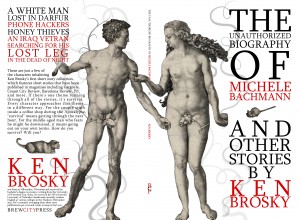
The Unauthorized Biography of Michele Bachmann and Other Stories by Ken Brosky

The Unauthorized Biography of Michele Bachmann and Other Stories by Ken Brosky is a collection of short stories prefaced by a bit of background about each story in the collection, including his trio of “Dodge County” stories.  While this kind of preface can be enlightening or amusing, this one just seems unnecessary given the powerful stories beyond this “prologue.”  From surviving a car accident that takes the life of your best friend to surviving the loss of a new friend in Darfur, these stories are poignant and threatening.  They serve to demonstrate that loss can happen unexpectedly and can tear at you emotionally and physically.

“When you see your best friend’s neck snap back with all the force of three thousand pounds behind it before everything goes black, there are other bruises, too.  They hide under the skin, just out of sight, and they take longer to heal.” (“The Third Pile,” page 50)

Some of these tales of survival border on the surreal, such as the arrival of the horseman of the apocalypse or a man deciding his future based on how many virtual deer are killed in a video game.  Beyond the theme of survival, the collection also touches upon the theme of carpe diem — to stop waiting for something to happen or your fortunes to change — and take a risk.  Each story is narrated by the first person, but the narrators are not the same, though they are similar in humor.  Some narrators are harsh in their machismo, while others are self-deprecating about their accomplishments and talents.  Brosky offers a variety of insecure male perspectives in these stories, which demonstrate how men cope with their insecurities. However, there are perspectives that are determined and secure in their convictions, no matter how unorthodox.  Another interesting aspect of these survival stories is the settings chosen from rural areas to urban Washington, D.C., and with a range of characters from artists to war veterans.

The Unauthorized Biography of Michele Bachmann and Other Stories by Ken Brosky brings to the fore the power of indecision and chaos in a way that forces each narrator to struggle and survive even when circumstances are not as they expect them to be nor as they want them to be.  Brosky’s prose is clipped at times, weaving stories in very few pages that leave a lasting impression.  In some cases the characters are not as well developed and appear to be mouthpieces talking to the reader, although there is one essay with a satiric bent in which that is to be expected.  Some stories leave their marks better than others, but overall, it is a satisfying look at survival in a number of different situations.

About the Author:

Ken Brosky was born in Milwaukee, Wisconsin and received his bachelor’s degree in creative writing from the University of Wisconsin-Eau Claire. He received his MFA from the University of Nebraska-Omaha and currently teaches English at various colleges in the Madison-Milwaukee area. He’s currently averaging 3 short story publications per year and wants to keep it that way.


Additionally, this is a stop on The Literary Road Trip since some of these stories take place in/near Washington, D.C.


This is my 14th book for the 2012 New Authors Challenge.

LGBT Poetry

Today’s monthly poetry event is sponsored by Kelly at The Written World, so go over there and link up your poetry post for February!

After reading and reviewing Resilience edited by Eric Nguyen last week, I started thinking about all the poetry I’ve read and how universal it is.  I really pay little to no attention to what poets are LGBT and which poets are not.  Most of us know that Walt Whitman was gay, as was Oscar Wilde.  But what other classic and contemporary poets are/were LGBT? And could you tell by reading their poetry or were the verse more cryptic about it or more universal in scope?

While I am curious about how many published LGBT poets there are in contemporary society compared to those from the past, I’m more interested in whether we should bother categorizing our artists in this way.  Do we really need to know the sexual orientation of our poets in order to enjoy their art form?  Does it affect how we see their work and whether or not we enjoy it?  And does their poetry have to focus on the struggles of their oppressed minority or can it be broader in focus?

Just some food for thought.  I’d like to hear what everyone has to say.

For now, I’ll leave you with one of my favorite poems from Resilience edited by Eric Nguyen:

The Straight Boys Kiss by Rene Cardona

so they sit
and stare into the air
the secrets texted
make them nervous
more each second
so they lean in--
the smiles stop,
and stares shoot
like evening stars
to the lips of the one across.

For those in NYC:

On March 17 at 3-5PM, an Open Mic night will be held for contributors to the collection at WordUP Books.

For more information about the Resilience project, visit the blog.

I hope you’ll consider joining the 2012 Fearless Poetry Reading Challenge.

For those in the challenge who already have reviewed poetry volumes in February, please put your full links in the Mr. Linky below:

Guest Post: Researching a Story by Ken Brosky

Ken Brosky’s book, The Unauthorized Biography of Michele Bachmann and Other Stories, is a collection of stories about survival whether it is a white man lost in Darfur or an Iraq war veteran with one leg.  The collection has a certain wit about it and the writing is expected to make readers think about survival and all that it entails.

Today, Ken is going to regale us with his expertise on researching a story.  So please give him a warm welcome.

When I was compiling my short stories for my first collection, I noticed that a number of them were examples of what I call “writing outside your box.” I’ve never been a phone hacker. I’ve never visited the region of Darfur. I’m not an Iraq War veteran. But regardless, the stories involving these various scenarios have all received a warm reception from readers and critics alike.

“Writing outside your box” isn’t anything new, but nowadays in literary fiction there really aren’t that many writers daring themselves to step away from their own lives and try something alien and unfamiliar. The old saying “write what you know” probably stops writers short when it comes to this. But there’s not a hypocrisy here, provided writers take the time to research the topic they’re going to incorporate into a story.

For example, my award-winning short story “I Can’t Just Turn it Off,” features an Iraq War Veteran who returns after losing a leg in an I.E.D. explosion. The story was originally published in Gargoyle Magazine and contains a fair bit of fiction given that I’ve never been to Iraq. So how did I put it together?

First, I talked to a veteran. His stories and experiences jump-started the writing process and sent my imagination into overdrive. After I’d established what I wanted out of the overall story, I began researching. I looked up I.E.D. details. I watched and read interviews with veterans. I research PTSD. I was also inspired by a very touching warts-and-all first-person account of a soldier who realized just how much the war had changed him and was disgusted by it.

All of this made for a better story, even though 99 percent of it wasn’t used in the final draft. The research became more of a guiding force, and it was all inspired by a single conversation with an Iraq War veteran.

I remember while in my MFA program, I’d accidentally convinced my workshop class that I’d worked in a video store. They were convinced, reading one of my short stories, that I had some experience renting out DVD’s and VHS tapes. I didn’t. What I’d done was fool them well enough that they were able to get lost in the story and accept the details I was providing them. I did it mainly through research: I spent time inside my favorite video store. I talked to the owner constantly. I wandered the aisles, picking up the smells and the sights. I even spied on the employees as they went out and restocked recently returned videos!

Here’s another example: “Gojira: King of the Monsters” by Jim Shepard is one of the best short stories I’ve read in a long time. It re-energized my writing habits and challenged me to dig even deeper while researching for stories. “Gojira” is a fictional story about the man who designed the Godzilla costume for the original movie. The details are amazing, right down to the director’s frustrations and the methods used to destroy the mini-Tokyo set. Beyond that, it’s also a story about the bombing of Hiroshima, and how important that all-too-familiar monster really was to an entire society.

Research like this takes practice. It takes patience. But one of the best gifts a writer can provide to readers is the gift of escape, and taking readers to new and exciting places is a fantastic thing … provided the writer does some research first.

Thanks, Ken. Stay tuned for my review of this collection.

Mailbox Monday #166

Mailbox Mondays (click the icon to check out the new blog) has gone on tour since Marcia at A Girl and Her Books, formerly The Printed Page passed the torch. This month’s host is the Metro Reader.

Kristi of The Story Siren continues to sponsor her In My Mailbox meme.

Both of these memes allow bloggers to share what books they receive in the mail or through other means over the past week.

Just be warned that these posts can increase your TBR piles and wish lists.

Here’s what I received this week:

1.  The Turning of Anne Merrick by Christine Blevins, which I won from Mailbox Monday.

She spies for General Washington, betrays the Redcoats and battles for America’s independence…

It’s 1777, and a fledgling country wages an almost hopeless struggle against the might of the British Empire. Brought together by a fateful kiss, Anne Merrick and Jack Hampton are devoted to each other and to their Patriot cause. As part of Washington’s daring network of spies, they are ready and willing to pay even the ultimate price for freedom.

From battlefields raging along the Hudson, to the desperate winter encampment at Valley Forge and through the dangerous intrigue of British-occupied Philadelphia, Anne and Jack brave the trials of separation, the ravages of war and an unyielding enemy growing ever more ruthless.

For love and for country, all is put at risk-and together the pair must call upon their every ounce of courage and cunning in order to survive.

2.  The Music in Her Mind by Robert Gilkes, which I received from the publisher Winged Lion.

In June 1945, Colonel Alexander Litchfield is an exhausted war-torn officer, tormented by nightmares of the inhuman acts he has committed. In the last days of the war he takes the surrender of a vast army of Cossacks escaping from the Russians.

Among them is Larisa Korsakova, a concert cellist with whom he had an idyllic love affair in Paris before the war. High in the Alpine forest above the POW camp they escape from the horrors they have endured into their irresistible passionate desire for each other… Until Lara is handed over to the Soviets.

3. You and Three Others Are Approaching a Lake by Anna Moschovakis, which I received from the Academy of American Poets and won the 2011 James Laughlin Award.

A sharp-witted investigation of love, work, and human responsibility in the age of consumption and hyperexposure.

“[Moschovakis’] poems illuminate, amuse, and provoke. Plato would have loved them.”—Ann Lauterbach

In a world where we find “everything helping itself / to everything else,” Anna Moschovakis incorporates Craigslist ads, technobabble, twentieth-century ethics texts, scientific research, autobiographical detail, and historical anecdote to present an engaging lyric analysis of the way we live now. “It’s your life,” she tells the reader, “and we have come to celebrate it.”

4. Nadia Knows Best by Jill Mansell, which I received for review from Sourcebooks in May.

Nadia Kinsella meets Jay Tiernan after plowing her car into a snowdrift. When they end up stranded for the night in a rural pub, the attraction between them flares. But Nadia already has a boyfriend, and she’s not a one-night-stand kind of girl. When Nadia and her boyfriend break up months later, she bumps into Jay again. They start working together on a joint venture, but now it’s Jay’s turn to be otherwise involved…

5. All Roads Lead to Austen by Amy Elizabeth Smith, which I received for review from Sourcebooks in June.

Armed with only a suitcase and dozens of copies of Austen’s novels, professor Amy Elizabeth Smith took to the road and organized book clubs in six different Central and South American countries. Along the way, she battled through a life-threatening illness, discovered friendship and love, and learned more about life-and the power of Austen-than she ever could have imagined. All Roads Lead to Austen celebrates the wisdom of letting go and becoming, no matter what our age.

What did you receive this week?

Bess Crawford Read-a-Long with Book Club Girl

Sometimes kismet happens and another event in the blogosphere happens to coincide with the war we’re covering here at War Through the Generations. In this case, a WWI-related mystery series written by Charles Todd — a mother-son writing team — is having a read-a-long at Book Club Girl. The series is those starring Bess Crawford.

If you’re interested in joining, here are some of the details:

The “Book Time with Bess Read Along” kicks off now and runs through the publication of the newest book in the series, An Unmarked Grave in June 2012.

As an added bonus to get you started, the e-book of A Duty to the Dead is just $1.99 for a limited time, so order up today and get reading!

The read-along officially kicks off today (but don’t worry, our first discussion won’t take place until March 26th) and it runs through the publication of the paperback of the most recent Bess Crawford novel, A Bitter Truth (on sale 5/1), as well as the new Bess Crawford hardcover, An Unmarked Grave (on sale 6/5). We’ll end the read-along in June with a Book Club Girl on Air Show with the Charles Todd writing team to discuss all the books in the series.

Here’s the schedule of when I’ll post questions about each book for us to discuss:

March 26thA Duty to the Dead discussion
April 30th
– An Impartial Witness discussion
May 1st – A Bitter Truth paperback goes on sale
May 29th
– A Bitter Truth discussion (May 28th is Memorial Day)
June 5th – An Unmarked Grave – the new hardcover goes on sale
June 25th
– An Unmarked Grave discussion
June 28th
Book Club Girl on Air Show with Charles Todd to Discuss the Entire Series

Look for updates along the way here, on Twitter (#besscrawford), and on the Book Club Girl and Charles Todd Facebook pages.

Please check out the rest of the details and sign up here.

138th Virtual Poetry Circle

Welcome to the 138th Virtual Poetry Circle!

Remember, this is just for fun and is not meant to be stressful.

Keep in mind what Molly Peacock’s books suggested. Look at a line, a stanza, sentences, and images; describe what you like or don’t like; and offer an opinion. If you missed my review of her book, check it out here.

Also, sign up for the 2012 Fearless Poetry Reading Challenge because its simple; you only need to read 1 book of poetry. Please visit the stops on the National Poetry Month Blog Tour from April 2011 and beginning again in April 2012.

Today’s poems is from Sara Teasdale:

The Look

Strephon kissed me in the spring,
      Robin in the fall,
But Colin only looked at me
      And never kissed at all.

Strephon's kiss was lost in jest,
      Robin's lost in play,
But the kiss in Colin's eyes
      Haunts me night and day.

What do you think?

Resilience Edited by Eric Nguyen

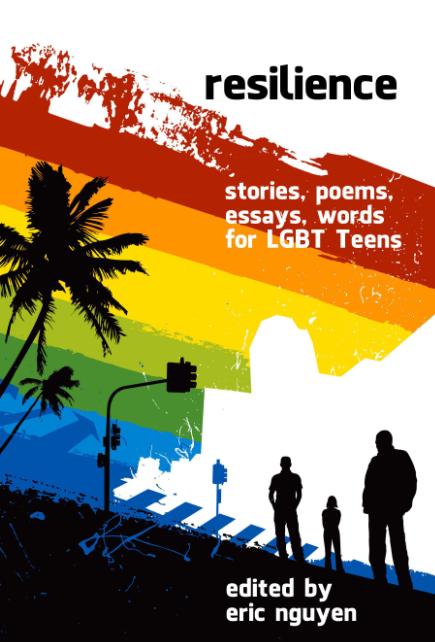
Resilience edited by Eric Nguyen is a collection of essays, poems, stories, and advice for young gay, lesbian, bi-sexual, and transgender teens and young adults, but there are lessons in these stories for everyone, including those that bully, talk down to, or otherwise belittle people.  The world would be a much better place if we were secure in ourselves and didn’t give others’ hate speech the credence that we do or given them the power over our own lives, but those of us who need support, deserve a system of people and community willing to stand up for others.

The collection has some powerful short stories and inspiring essays, and there are poems that demonstrate the pain, confusion, and bullying that LGBT teens experience daily.  It is both heartbreaking and inspiring.  There are letters to the younger self, plays, monologues, and more.  While some of these cry out the injustices experienced by the writers or their characters, others share the regret of not stepping forward to defend their friends and family from bigots and those narrow minded people who tortured and ostracized others because they were different.

From When the Bully Apologizes by J.J. Sheen(page 79):

“Something about the stillness of sitting there in the dark with Marie’s hand all wrapped up in mine made everything boiling inside me fall out and I started crying in a way that I had never allowed myself to.  I tucked my head into my hands and felt like I might be stuck that way forever.  I felt so embarrassed and exposed and wrong and sitting next to the only person who really knew me, I felt lonelier.”

Emma Eden Ramos, whose poetry collection Three Women: A Poetic Triptych and Selected Poems was nominated for the 2011 Indie Lit Awards, offers a genuine short story, “Where the Children Play,” that will have readers by turns anxious and hopeful.  These are the stories readers will cling to, hoping that the world will begin to emulate the acceptance and the unconditional love in these pages.  Readers may have a tough time reading the collection cover to cover, but its meant to unsettle conventional thoughts and open readers’ eyes to the struggles of LGBT teens as they struggle to find themselves and “come out” to their friends, parents, and loved ones.  Although they may accept themselves, telling someone who has a different perception of you is a conversation wrought with fear and longing.

Resilience edited by Eric Nguyen is a collection for not only the community it represents in its stories, poems, and essays, but also for those of us who need to be reminded that these teens are people struggling with issues that go beyond what clothes to wear and what activities to engage in at school and outside of it.  For those without role models or who live in cloistered families with traditional beliefs, this can be restrictive and even more difficult to overcome.

For those in NYC:

On March 17 at 3-5PM, an Open Mic night will be held for contributors to the collection at WordUP Books.

For more information about the Resilience project, visit the blog.


This is my 13th book for the 2012 New Authors Challenge.


This is the 1st book for my 2012 Fearless Poetry Exploration Reading Challenge.

The Odds by Stewart O’Nan

The Odds by Stewart O’Nan is a slim volume that begins each chapter with a probability that sets the tone for the following chapter — a gimmick that is extraneous to the story he’s telling about an older couple — Marion and Art Fowler — whose marriage in on the brink of complete failure as they face insolvency and an empty nest.  Rather than prefacing each chapter with the odds of a married couple having sex during the week or the odds of getting food poisoning while on vacation, O’Nan could have allowed the decision to gamble away their life savings while on vacation in Canada speak for itself about the couple’s dire financial situation and marriage.  But this is a minor quibble.

O’Nan does a good job of demonstrating the tentative way in which each maneuvers around the other in conversation and shared space, which demonstrates the unspoken pain between them and the tentative hope that they can find something to spark a passion they thought they once had and maybe even shared.  However, through the oscillating narration between Art and Marion, readers soon discover that they have very different takes on what this Valentine’s Day trip is about, with Art hoping to save his marriage and Marion waiting for it to end so she can move on.

“They weren’t good liars, they were just afraid of the truth and what it might say about them.  They were middle class, prey to the tyranny of appearances and what they could afford, or dare, which was part of the problem.”  (page 1)

More than anything, The Odds is about deception. Art is deceiving himself that he can erase his past transgressions and right the wrongs with a Valentine’s Day trip to Niagara Falls and can remedy their financial situation with gambling. Marion is deceiving herself that Art will accept that she wants a divorce and to move forward.  We deceive ourselves about our motivations, our emotions, and our dreams, but how long can we deceive ourselves and others before there are consequences?  Midway, there is a deeply ominous feel to the book as a horse-and-carriage ride brings with it a couple tales of daredevils who needed rescuing after going over the falls and lovers who were parted by a freak thaw in 1912 that washed them away on the American side of the falls.

The Odds by Stewart O’Nan is not a typical love story, but in a way it is similar to how love stories come about, through chance and taking a risk.  In the end, we all have regrets and at times those regrets eat away at us, but how many of us would completely change our decisions and lives, giving up our children or spouses, for the unknown after so many years together?  Then again, O’Nan’s prose clearly demonstrates that even if you have regrets, you can change your luck and your direction with the one you love at your side — even against the odds.


This is my 12th book for the 2012 New Authors Challenge.  I borrowed this one from the library after reading Ti’s review at Book Chatter.  Also check out the review from Literate Housewife.


Reading with Sarah McCoy, Author of The Baker’s Daughter, at Novel Places

The Baker’s Daughter by Sarah McCoy was published in January 2012 and already has received a number of praising reviews and even one blogger, Anna of Diary of an Eccentric, says that the book will be on her best of 2012 list.  With all of this praise, I’m looking forward to my TLC Book Tour stop in March, but I also wanted to see the author in person.  Who is this woman who has generated so much buzz in the blogosphere with her sophomore book?  (Her first book for those interested was The Time it Snowed in Puerto Rico)  Lucky for me, Novel Places in Clarksburg, Md., was hosting a reading with this author and I could make it with some finagling by me to have the hubby watch “Wiggles.”

I’ve loved the few readings I’ve been to at Novel Places because the store is cozy and the readings are intimate — more like a conversation with a book club and author than a formal reading.  People arrived early to get copies of the book and chat with the author before 7 p.m., and I just sat and listened.  What I learned from the event was that most authors have the same type of personality in that they love listening to their characters in their heads and garnering inspiration from the people and things around them.

The Baker’s Daughter is actually inspired by a German woman whom Sarah met at a farmer’s market once and who told her how she married an American soldier at the end of WWII before coming to the United States.  That was all that was said, and while Sarah has not seen the woman since, it was enough to send her off on a journey of history, relationships, and more, which is all housed in her second book.  Although she says that she will never hand the woman a copy of the book and tell her that she was the inspiration, I think the woman would be happy to know that she touched the author in that way.

Author Sarah McCoy at Novel Places

I love that Sarah brought the red hat from the cover and although she’s too young to be in the Red Hat Society, she agreed to become a Pink Lady.  She was asked about her writing and revision process, which she says is long with journaling about her characters at the start, rather than plot outlines, and about 10-12 rounds of revisions once the first draft is written. Her research process is narrowed by the characters she is inspired to write about, limiting research to a particular year in a particular region or city in Germany for example for The Baker’s Daughter.  She says that otherwise, she would just research too much, get overwhelmed or after 10 years still not have written a book.

Her younger brother also was in attendance and was apparently not only chauffeuring her around to each event while she’s in the area, but also taking photos.  It was obvious from the way she interacted and talked about him and her family that they are all close.  It’s wonderful to see those family connections in person, especially given that her novel touches upon family connections and interactions during some difficult periods in history.

Answering Questions at Novel Places

She talked about her MFA program and her teaching stints in Texas where she now lives with her husband, though she is a former Virginia resident (her parents still live in Fairfax County).  Overall, it was an engaging and conversational event.  She’s affable, delightful, and vivacious, and obviously very outgoing; I think I was in awe of her — too in awe to actually ask any questions, though there were many buzzing in my head.  Perhaps, I’ll get the chance to interview her once I’ve had the chance to read the book and review it here for the blog tour.

Hopefully, I didn’t miss much in the conversation, but that sickness is going around and I think it has finally reached me because my head was feeling awfully foggy.  I’m lucky I remembered my book and Anna’s for Sarah to sign and to talk to her about how much Anna loved the book — by the way, she remembered Anna from that blue cat tattoo icon she uses. . .how cute is that?!

Thanks to Patrick for hosting another AWESOME event!


Additionally, this is a stop on The Literary Road Trip since Sarah McCoy is a former resident of the area and her family still lives here.