Quantcast

Some Long Awaited Winner Announcements

Congrats to all of you. 

And there is still time to enter the National Poetry Month giveaways through the end of TODAY!
Winner is Anna of Diary of an Eccentric

Winner is Heather of The Maiden's Court

Winner is Sophia Rose

Winner is Dawn from She Is Too Fond of Books

Winner is Janel from Janel's Jumble

Winner of Dr. Seuss Giveaway is The Girl from Diary of an Eccentric; check out that hat.

Every Possible Blue by Matthew Thorburn

Every Possible Blue by Matthew Thorburn, whom I interviewed for 32 Poems, will be published by CW Books in May.  His poems read like paintings that visually leap from the page to create vivid scenes in the readers mind, from moments in a Jazz club with trumpets blaring to mannequins in the stores down Fifth Avenue in New York.  Moreover, these poems have the feel of the 20s and 30s with references to Greta Garbo and Barbara Bel Geddes.  It is like stepping back and forth in time to experience what has past and what is still vivid and relevant today, while at the same time creating a “blue” mood, a longing for the simpler moments of the past.

From "Now is Always a Good Time":

. . . But Hoagy Carmichael does
a funny thing at the piano and my heart

swings open like a Murphy bed.  Now a hint
of stale Nag Champa tickles my nose, or is this
Chanel No. 5 letting go of someone's taut tan wrist?"
From "Self-Portrait in Secondhand Tuxedo"

. . . Now he's breathing a sweet
something in someone's ear (only her ear
makes it into the picture) and there's

hardly room for me to pull up a stool
in this last corner I'm shading in: my antsy hands,
my waistcoat pooching over my waist.

I'm keeping company tonight with the bust
of Charlie Darwin, that lush.  He sniffs
the pale bud in my button-hole.  . . .

Readers will like when Thorburn directly references the paintings described or referenced in his poems as they can search the internet and gaze at images while reading. Like many of the scenes in his poems, there are mundane situations afoot, but with at least one element that is surprisingly awkward, which can be the narrator himself or other scene stealers.

There is a great deal of upheaval here and yet there is a sense of hope that continues to propel the narrator forward, and some of that can be attributed to the alliteration in some of these poems that make them musical and continuously moving (i.e. “Upper West Side Toodle-oo”).  What readers will love most about Every Possible Blue by Matthew Thorburn is the tug-of-war that happens between the past and future, lost faith and renewed hope, and failure and new opportunity.  A very human collection that delves into the internal struggles we face daily at every turn and yet still find a way to move forward.

Author photo by Takako Kim

About the Poet:

Matthew Thorburn is the author of three book of poems, Every Possible Blue (CW Books, forthcoming 2012), This Time Tomorrow (Waywiser Press, forthcoming 2013) and Subject to Change (New Issues, 2004), and a chapbook, Disappears in the Rain (Parlor City, 2009). He is the recipient of a Witter Bynner Fellowship from the Library of Congress, as well as the Mississippi Review Prize, two Dorothy Sargent Rosenberg Poetry Prizes, and fellowships from the Bronx Council on the Arts and the Sewanee Writers’ Conference.

His poems have appeared in literary journals such as The Paris Review, American Poetry Review, Poetry, Prairie Schooner, Poet Lore, Michigan Quarterly Review and Pool. He is a regular contributor to the reviews section of Pleiades. His critical writing has also appeared in Jacket, The Laurel Review, Poetry Daily, Rowboat: Poetry in Translation and Rattle, among others.

A native of Michigan, Matthew Thorburn has lived in New York City for more than a decade. He is currently working on two new projects: a book-length poem that tells the story of one year, and a collection of poems about losing faith and possibly finding it again.


***For today’s National Poetry Month Blog Tour stop, visit Travis Laurence Naught on Facebook.


This is my 33rd book for the 2012 New Authors Challenge.


This is the 15th book for my 2012 Fearless Poetry Exploration Reading Challenge.

Interview With Poet Arisa White

As National Poetry Month winds down with the month of April, I hope the tour was able to inspire you to read different poetry books and poets.  Today, I’ve got a special edition to the blog tour, an interview with poet Arisa White, author of Hurrah’s Nest, which I reviewed earlier last week.

I really enjoyed the variation in this collection, the imagery, and the personal story.  If you’re looking for poetry that makes you think, but is entertaining at the same time, White’s work is for you.

Without further ado, please welcome Arisa White:

1. What are your poetic roots? When did you begin reading and writing poetry and who has influenced you?

My family is an artistic bunch. There are poets, rappers, and writers, and dancers, and shit-talkers, which takes skill and craft as well! It’s in the blood and some of us have been fortunate to have the opportunity to pursue those dreams.

When my aunt, the oldest of seven, found out that I was writing and publishing poetry, she would call me on the phone and read me her poems and tell me her ideas for writing a memoir. It’s beautiful to be a source of inspiration for a woman I admire.  My paternal uncle Aubrey has a book of poetry published called Implantation. It’s funny how you look back on your life and can see that this has always been your path.

I began writing poetry in elementary school, really took a liking to limericks in junior high, and in high school I won a city-wide contest for a poem I wrote about women’s history month and I just kept going from there. I frequented the Brooklyn spoken word scene and was influenced by Jessica Care Moore, Mahogany, Saul Williams, Carl Hancock Rux, even the movie Love Jones had a positive impact.

My first book of poetry was an anthology of women poets, given to me by my global studies teacher. From that book, I memorized “Nikki Rosa” by Nikki Giovanni. Even at one point, I interned and was mentored by a local Brooklyn poet, India DuBois (I wonder how she’s doing?) who wrote Jazz and the Evening Sun. It is when I went off to Sarah Lawrence, I feel like the reading and delving into the craft of poetry began.

2. Hurrah’s Nest is a lot about the scars that shape us. How much of your poems are autobiographical?

Hurrah’s Nest is an autobiographical collection, rendered poetically. Mostly and lately, I have been writing from personal experiences–through the lens of self.  I’m making sense of what’s going around me, as well as to investigate what is going inside of me. Who am I? I feel that urgency to know, even more so, having relocated to the West six years ago and removed from the people, places, and things that I have defined myself with and by. The poems I’m writing now are an expression of my heroic journey.

3. As an MFA graduate, how do you feel the degree has helped you and/or hurt you? And what made you decide to obtain your MFA from UMass Amherst?

The MFA degree was what I wanted to get–I wanted to be skilled in my art. To be seen as an artist. I wasn’t really thinking about how I could use it. I don’t think I have consciously used my degree to get a job or a teaching gig–it’s been my writing and experiences I have relied so much on to open doors for me. In the end, it all works together.

I loved my MFA program at UMass, Amherst. It’s a three-year program and it’s a perfect amount of time. I received a three-year fellowship that covered my tuition, health care, and I gained valuable teaching experience. Also, the time to write was priceless. When deciding on MFA programs, this was my criterion, in order of importance: region, financial support, and faculty. At the time, I was living in NYC and I wanted to be somewhat close to my hometown. Also, I didn’t want to add to my debt. I really wanted to be financially supported so that I could concentrate on writing. UMass, Amherst, has a great faculty (Peter Gizzi, James Tate, Dara Wier) and is a part of the five-college system (Amherst College, Smith College, Hampshire, and Holyoke). In addition to my graduate course work, I took poetry and dance classes at Smith–I had a wonderful time during my graduate years. Because I did not have the distraction of NYC, I really focused in on my writing and point of view. Hurrah’s Nest is essentially my thesis (thank you, Dara!).

4. Poetry is often solitary, more so than other art forms on occasion, because it is deeply personal, but there are efforts like the Split This Rock Poetry Festival and others that attempt to bring poetry to the masses and to bring about a social connection and call attention to a particular cause. Do you feel the need to do the same in your work? If so, why or why not? What do you think of these poetic movements?

I totally feel the need to call attention to particular causes in my writing. As a poet, it is how I engage–by interrogating how we relate or are not relating to each other and the social, economic, and political ramifications that has on certain groups within our culture. Poetry can be humanizing and restorative and believing that gives my poetry purpose, gives me purpose.

In thinking about the work I’ve created and want to create, I’m moving from the personal and to a social “I”. Hurrah’s Nest looks closely at the family unit, where it all starts, where we form a sense of self and how that self relates to others and the world. Then we step outside of the home and often time are in the habit of repeating what we have been told about who we are and what we can do.

I think we have to know our particular stories, so we can take responsibility for how they shape and recreate experiences. My second collection, A Penny Saved, which will be published by Willow Books in 2013, is about a woman who was held captive in her home for 11 years. I loosely based the collection on Polly Mitchell, a Nebraskan woman who finally escaped from her home and husband, with her four kids, in 2003. It’s mind blowing what we do to each other!

I’m in the process of adapting Post Pardon, a chapbook length long poem that explores the post-partum experience, into a libretto. My composer friend Jessica Jones is writing the music. And then, I’m applying for grants and residencies to write a series of eclogues that depict the lives of four sexually-exploited minors and their pimp, in an urban setting. For me, I’m very much focused on writing about women in extreme situations, calling attention to those realities.

5. What are you reading now in poetry and what poetry would you recommend others read and why? Also feel free to share anything about your upcoming poetry collections and projects?

Right now, I’m reading me and Nina by Monica Hand and Ardency by Kevin Young.

I would recommend others read Bitters by Rebecca Seiferle, Cranial Guitar by Bob Kaufman, Sleeping with the Dictionary by Harryette Mullen, leadbelly by Tyehimba Jess, Brutal Imagination by Cornelius Eady, Don’t Let Me Be Lonely by Claudia Rankine, and anything by Medbh McGuckian, because these poets have these fresh ways of saying/seeing things, a charge that makes you love and appreciate poetry, and an intelligence that makes me jealous! There are so many more poets whom I’m discovering too–so I recommend: never stop reading.

Thanks Arisa for answering my questions. I look forward to reading A Penny Saved and your eclogues.

***For Today’s National Poetry Month Blog Tour stop, visit Reading Rendezvous.

147th Virtual Poetry Circle

Welcome to the 147th Virtual Poetry Circle!

Remember, this is just for fun and is not meant to be stressful.

Keep in mind what Molly Peacock’s books suggested. Look at a line, a stanza, sentences, and images; describe what you like or don’t like; and offer an opinion. If you missed my review of her book, check it out here.

Also, sign up for the 2012 Fearless Poetry Reading Challenge because its simple; you only need to read 1 book of poetry. Please visit the stops on the National Poetry Month Blog Tour from April 2011 and beginning again in April 2012.

Today’s poems is from William Stafford:

Once in the 40's

We were alone one night on a long
road in Montana. This was in winter, a big
night, far to the stars. We had hitched,
my wife and I, and left our ride at
a crossing to go on. Tired and cold--but
brave--we trudged along. This, we said,
was our life, watched over, allowed to go
where we wanted. We said we'd come back some time
when we got rich. We'd leave the others and find
a night like this, whatever we had to give,
and no matter how far, to be so happy again.

What do you think?

***For Today’s National Poetry Month post, go to Wordcoaster.

You and Three Others Are Approaching a Lake by Anna Moschovakis

You and Three Others Are Approaching a Lake by Anna Moschovakis, which was awarded the James Laughlin Award by the Academy of American Poets, is a collection of four long poems with a prologue and epilogue poem that discusses and assesses four books — The Tragedy of Waste by Stuart Chase, Death as a Way of Life by Roger A. Caras, The Human Machine by Arnold Bennett, and In Search of Wealth by Cyril S. Belshaw — from the twentieth century that the poet discovered in a used bookshop in South Kortright, New York.  The poems share the same titles as the books, and the title of the collection makes its appearance in the first poem.
Moschovakis makes a great many assumptions about the readers knowledge of the industrial revolution and their understanding of economics.  First she compares the lake to supply and the men and women entering the wood and approaching the lake as demand, but later, the lake becomes more ambiguous.  From the cycles of supply and demand in the markets and the growth of the workforce to the incessant bombardment of advertising, the narrator of the poem is questioning the capitalistic ways of society and whether those are not wasteful in terms of time and energy spent.  She also postulates that we are no different from nature in how we react to available resources, which begs the question just how civilized are we when we succumb to our basest instincts to use everything around us?

From "The Tragedy of Waste (page 27)

Behind the desk there is a window

A woodpecker is attacking the house
The sun is attacking the snow on the pavement

Everything helping itself
to everything else
 From "The Tragedy of Waste" (page 30)

dwarfed and shadowed by mighty buildings
subway trains wild as elephants

One goes blindly back to one's desk

In the second poem, death as a way of life is broken down into how it affects “the Other” and not necessarily the surface theory that death is merely a part of the life cycle.  In many ways this poem is about the necessity to kill and the pleasure in killing, and where are the lines to be drawn between animals and humans being killed or something more refined.  There also is speculation about what rights we have as humans to kill and is naming the “Other” just as violent as not naming it?  “I want to know about the ‘other birds’//Were they species unknown to the hunters/or insignificant birds not worth noting by name/or mutilated/beyond recognition/”

“The Human Machine (Thirty Chances)” poem is a bit repetitive and generates a sci-fi-like quality as chatbots talk to human machines.  Readers are likely to find this poem the most puzzling, though ultimately a kernel of understanding will emerge about the “people” we believe we are and who we actually are — in that we all have failings and do fail ourselves and others.  But it also touches upon what makes us truly human — an ability to empathize, which could mean that should a robot be able to do so, we would have to consider it a person worthy of saving and no longer “Other.”

“In Search of Wealth” is the final poem before the epilogue.  In this poem there are digs at a variety of religions, including Scientology and its ties to Hollywood’s elite, and there are ramblings on pay inequality that seem to go on incessantly.  In the collection, this poem seems to be more of a rambling and a rant then a well crafted argument.  If it were issued forth in a debate on wealth and capitalism, listeners would likely begin throwing rotten tomatoes if they had any in their pockets for the occasion.  The prologue sets up the collection to be poems that take up certain positions on the topics at hand, and while by all accounts they do, some are more well crafted than others.  The epilogue goes further to explain that the reason to take a position is to generate disagreement, which is closely linked with desire and ensures that life is anything but boring.

You and Three Others Are Approaching a Lake by Anna Moschovakis touches on themes of wealth, “otherness,” conviction, and a host of other topics, but without having read the books mentioned in the acknowledgements, some of the references may be lost or misunderstood.

Poet Anna Moschovakis

About the Poet:

Anna Moschovakis is the author of two books of poems, I Have Not Been Able to Get Through to Everyone (Turtle Point Press 2006) and You and Three Others Are Approaching a Lake (Coffee House Press 2011) and of several chapbooks, including The Blue Book (Phylum Press), Dependence Day Parade (Sisyphus), No Medea (a Tinyside from Big Game Books), The Tragedy of Waste (Belladonna) and The Human Machine (Dusie). Her translations from the French include texts by Henri Michaux, Claude Cahun, Theophile Gauthier, Pierre Alféri, and Blaise Cendrars, as well as the books The Jokers by Albert Cossery (New York Review Books), The Possession by Annie Ernaux (Seven Stories Press), and The Engagement by Georges Simenon (New York Review Books).

Currently a freelance editor and a visiting professor in the Writing department at Pratt Institute, she splits her time between Brooklyn and Delaware County, NY. Anna has been working with UDP since 2002 as an editor, designer, administrator, and printer.


***For today’s National Poetry Month Blog Tour stop, visit Caribousmom.


This is my 32nd book for the 2012 New Authors Challenge.


This is the 14th book for my 2012 Fearless Poetry Exploration Reading Challenge.

Nostalgia for the Criminal Past by Kathleen Winter

Nostalgia for the Criminal Past by Kathleen Winter, whom I interviewed for 32 Poems in 2011, is a piece of art that should be hung on the wall.  And like all art, there are references to other artists and art types within her poems, but there is more here — the art of being human.  In the first three sections, Winter carefully tailors each poem to touch on the connections we have to our animal selves, from the mischievous prankster in Eve who entices the snake to eat Adam in the Garden of Eden merely because she is bored in “Escape from Eden” to razor sharp focus of a hawk eying its prey in “Edge of February.”

There is a telling epigraph from Virginia Woolf, “I do not believe in separation.  We are not single.” that establishes the direction of Winter’s work as a look at us being separate as well as connected.  However, the collection is not only about being separate and being connected, it is about “being naked” and reveling in the “silos of time” we create (“Nostalgia for the Criminal Past,” page 9).  There is the past of our relatives and how it reverberates through the younger generations’ lives and how the past they share may be incomplete or slightly altered from reality, like in “Jellyfish Elvis.”  The narrator even questions the validity of the past whether told by others or lived, which calls into question whether the past should be revered or remembered and that we should merely live in the moment.

Winter shows a maturity in her imagery and line break selection that breaks boundaries and draws comparisons to the impressionists and abstract painters who defied artistic convention in their paintings.  From ” Hamster Thrown From Monster Truck,” “rumbling above us at the stoplight/like a frisky two-story building.,” and like “The eight a.m. sun moved out from clouds/like a well-trained MBA/adjusting to changed conditions./” in “Snapshot of a Boxer.”  Beyond the animal references, memories, and looks into the past, Winter uses water imagery in traditional ways to show reflections of what we want to see and what we desire, but provides readers with the punch in the gut when they realize the folly of those dreams, like in “Country Club Fourth of July.”

And despite the theme of appearance versus reality, there are other moments in the collection where the narrator will sink beneath the surface of the water in a tub to find an inner peace, like in “The Bath” and “Bathing at the Museum”:  “Like Bonnard’s wife/incessantly I bathe, sensations of liquid/intervening between mind//& body, blurring animosities./In dim flux the mind begins to lift,/words shimmer,//” (page 64).

The cover photo for this collection is reflective of its contents as the young girl looks circumspect about everything she is seeing out of that window, assessing it carefully, but wary of it at the same time.

The final section of the collection is a breaking out from the bonds of the past, and the passion that consumes those poems burns and takes action.  However, these poems also are reflective and playful, like “Wrong Sonnet: Mystery” where the narrator speaks to ghosts in a tongue-in-cheek kind of way.  Nostalgia for the Criminal Past by Kathleen Winter is another for the best of lists from theme, quality of the poems, and the imagery that illustrates the world in new ways.

About the Poet:

Kathleen Winter’s poems are forthcoming in Anti- and recently have appeared in Field, The New Republic, Verse Daily, 32 Poems and The Cincinnati Review. Her chapbook Invisible Pictures was published in 2008 by Finishing Line Press. Kathleen received fellowships from Vermont Studio Center and the Piper Center at Arizona State University. She is an MFA student and composition teacher at ASU.

Check out today’s National Poetry Month Blog Tour stop from Unputdownables.

This is my 31st book for the 2012 New Authors Challenge.


This is the 13th book for my 2012 Fearless Poetry Exploration Reading Challenge.

Indie Lit Award Poetry Winner: Catalina by Laurie Soriano

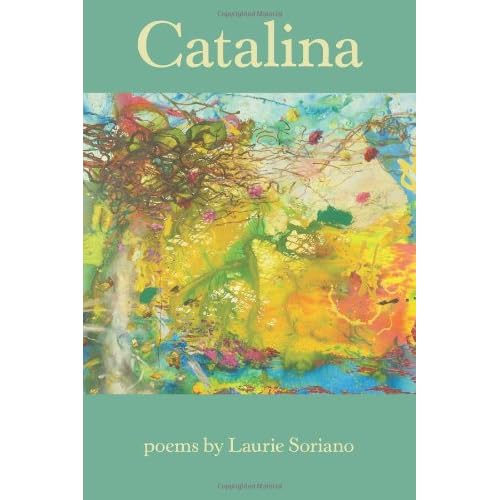
Indie Lit Award Poetry Winner Catalina by Laurie Soriano, which was selected unanimously as the winner and also is published by Lummox Press, is a cohesive collection that maintains more than one theme throughout and simultaneously.  The narrator travels from east to west coasts and from innocence to corruption and recovery; the journey is bumpy and fraught with obstacles and stumbles.  Soriano uses imagery that jolts readers to the heart of her themes; parts one and two focus on how the narrator grows up in an abusive home with an alcoholic parent, while the final two sections focus on parenthood and how the past can shape us, but should not rule our actions.

There are some satiric qualities to these poems as well, like in “Betty’s Dive,” where a young woman takes on a dare and pays the ultimate price, and those issuing the dare laugh at what they think is her mock “dead-man’s float” until realization slowly creeps over them.  There is a great sense of irony in some of Soriano’s poems as well, such as the “no dogs” sign that is clearly the subject of many dogs’ walks in “Venice After Work.”

In addition to the deft use of these literary devices, the poet also clearly ties her poems together as a story unfolds, and it is most prominent in the movement from “Red Wine” to “Crash.”  In “Red Wine” (pages 44-5), the narrator is descending into the alcoholic abyss of her father: “. . . My hands/grip the flesh of their waists as I stumble/further toward the land of my father,/the shifting land of regret and soggy laughter./” and “I ask daddy if we want win.  He fills/our glasses like love, daddy never loved me/like wine, and we start thinning our blood/with this red stuff, our words flow/like liquid, we laugh fit to bust, and/we walk home arm in arm,/like we never did.//”  In “Crash” (pages 46-7), the narrator has followed the path of her father with her drinking and now driving along, experiences the worst kind of regret and shock:  “the effect of all our causes,/you and I shuttle separately to the spot//where our masses would marry/and your blood would stain the street./For a moment, one of those out of time,/we hung in the air, as breathless as sweethearts,/before we came together, your motorcycle/tearing a path through my car,/as your body flew/three car-lengths forward.//”

Soriano’s poetry is highly emotional, leading readers into tumultuous memories and through happier times, and in many ways, her poetry reminds me of the poetic prose of Beth Kephart.  Each writer’s words are chosen carefully and it shows — quiet little powerhouses of emotion that grab the heart strings and do not let go, though they may release their stronger grip for a moment or two depending on the mood of the poem.  In Part three — “Being Here” — Soriano emphasizes the “in-the-moment” nature of experiencing new life and parenthood, which can include struggle and joy.

Catalina by Laurie Soriano is more than stunning; it’s luminescent.  It’s a collection that will stay with readers long after reading, and will share a space on the shelves with those books that you’ll want to re-read again and again.  One of the best collections of the year, and unconventionally, this review is going to end with my favorite lines:

From "To the Attacker" (page 42-3)

You've slashed apart the ripe
abandon of my trust, torn away
the quietude I wore like a dress.
I am left with what is in the box.

Other Indie Lit Award Poetry Panel Reviews:

Diary of an Eccentric
Necromancy Never Pays

Poet Laurie Soriano

About the Poet:

Laurie Soriano is the author of Catalina (Lummox Press 2011). Her writing has appeared in Orange Room Review, FutureCycle Poetry, Flutter Poetry Journal, Gloom Cupboard, Heavy Bear, and West/Word, among others. She is also a music attorney, representing recording artists and songwriters and others in the music industry. She lives in Palos Verdes, California with her family.

Please also check out her interview for the Indie Lit Awards.


***For Today’s National Poetry Month blog tour post, visit Mr. Watson.***


This is my 30th book for the 2012 New Authors Challenge.


This is the 12th book for my 2012 Fearless Poetry Exploration Reading Challenge.

The Day the World Ends by Ethan Coen

The Day the World Ends by Ethan Coen, one half of the Coen Brothers film making team with great films under their belt like Brother, Where Art Thou? and No Country for Old Men, is a twisted and unexpectedly thoughtful collection in places.  The limericks are bawdy and remind me of Christopher Moore’s humorous prose, but less in the smart and sassy humor and more in the low-class bathroom humor sense.  Necromancy Never Pays stated that the poetry in the volume is geared toward a male audience, and in most cases, that is true — particularly with the dirty limericks.
"Stone-age man, thawed from glacier, aghast:
'Was some snowman in my recent past?
And if so, who fucked who?
My dick's numb and quite blue
And there's freezer burn all up my ass.'" (Page 28)

Additionally, Coen appears to love rhyme, no matter how trite or over-stretched it might be.  Readers could find this collection amateur at best in how Coen chooses his rhymes, even when they have a tongue-in-cheek quality.  Like the “bathroom” humor, these rhymes can get tiresome.  Take for instance the rhymes in “Vine-Covered Verse” (page 53), “Lord, keep this farmer’s soul in peace,/For, though he dallied with his niece,/And cow, and nephew, none can claim/He, during, failed to praise Your name;/And how commit a lesser sin/When neighbors are but kine and kin?//”   However, even in this poem, there are moments of deeper thought in which the narrator is asking what sins are worse and should they all be forgiven or all be condemned.  It also questions how well we know our partners or other humans in general and what secrets they will take to their graves.

Coen’s poetry in this collection seems built for laughs among men mostly, though there are moments in which the poems are not trying so hard to be humorous.  There are some with an anachronistic quality to them, while others like “My Father’s Briefcase” are more serious and reflective.  “Therapy” uses humor and disdain to point out the inane struggle we have against aging and the depression that accompanies the process of aging, as the narrator talks of his depression to a less-than-helpful therapist.

The Day the World Ends by Ethan Coen is not for everyone and could be trying if read from cover to cover, but for those looking for a humorous romp on the underside of humanity, take a dip into these pages.

Poet Ethan Coen

About the Poet:

Ethan Jesse Coen is one half of the American film making duo the Coen brothers.  Their films include Blood Simple, Fargo, The Big Lebowski, O Brother, Where Art Thou?, No Country for Old Men, and True Grit. The brothers write, direct and produce their films jointly, although until recently Joel received sole credit for directing and Ethan for producing. They often alternate top billing for their screenplays while sharing film credits for editor under the alias Roderick Jaynes.

To enter to win one of 2 copies for US/Canada readers:

Leave a comment about what tour stop on the National Poetry Month Blog Tour you’ve enjoyed most, either here or on one of the participants’ blogs.

Blog, Tweet, or share the link on Facebook for up to 3 additional entries.

Deadline is April 30, 2012.

***Today’s tour stop is at Arisa White, so check it out!***


This is the 11th book for my 2012 Fearless Poetry Exploration Reading Challenge.


This is my 29th book for the 2012 New Authors Challenge.

Hurrah’s Nest by Arisa White

Hurrah’s Nest by Arisa White is an illustration of the “untidy heap” or “tangle of debris that can block a stream” that family can become, and it will remind readers how birds create their nests out of the most unwelcome or tossed aside elements of the world from hair to fabric strings and twigs.  There are scars here, deep ones rooted in absentee parents and relatives whose ways of doing things countered the practices the narrator was taught.  Minor acts of rebellion scream out in dreadlocks and boyish haircuts on girls.  There are other poems with child-like qualities in which panties become parachutes and beaded braids become like seaweed in “Last Bath,” which represent happier memories and playfulness shared by young siblings with great imaginations.

In “Portrait Painter” (page 19), White’s narrator ponders the evident differences between herself and her brothers, whom she is called out of childhood into adulthood at a moment’s notice to help raise.  “It’s different/how our mother looks at us/with sweet and brick/of romances gone,” she observes.  A deep sadness and resentment pervades the poems in this collection as the narrator looks back on the waffling of her mother who in turns cares for and gives up care of her children, and threatens them with foster care when they’ve not behaved as they should, particularly in “Chore.”

Ostracization happens inside and outside the family for the narrator as she experiences typical classroom jokes coupled with the laughing she endures from her mother, brother, and step-father.  Her mother even chastizes her for her sensitivity, saying that it is like a “broken leg” in “Helicopter, Heliocopter Please Come Down. If You Don’t Come Down, I’ll Shoot You Down.” (page 28).

In “An Albatross to Us Both” (page 41-3), the theme of protection and strength is strongest as the narrator and her siblings “wear each other like amulets.”   Hurrah’s Nest by Arisa White is a lesson to us all that despite all of the “mess” we create with our lives and the messes that we live through, there are nuggets of wisdom and strength that we carry with us and nurture.  Strong imagery combined with themes of loss, separation, and togetherness create a powerful collection about the beautiful mess that families are and how they shape us.

Poet Arisa White

ARISA WHITE is a Cave Canem fellow, an MFA graduate from the University of Massachusetts, Amherst, and author of the poetry chapbooks Disposition for Shininess and Post Pardon; she was selected by the San Francisco Bay Guardian for the 2010 Hot Pink List. Member of the PlayGround writers’ pool, her play Frigidare was staged for the 15th Annual Best of PlayGround Festival. Recipient of the inaugural Rose O’Neill Literary House summer residency at Washington College in Maryland, Arisa has also received residencies, fellowships, or scholarships from Squaw Valley Community of Writers, Hedgebrook, Atlantic Center for the Arts, Prague Summer Program, Fine Arts Work Center, and Bread Loaf Writers’ Conference. Nominated for a Pushcart Prize in 2005, her poetry has been published widely and is featured on the recording WORD with the Jessica Jones Quartet. A blog editor for HER KIND, and the editorial assistant at Dance Studio Life magazine, Arisa is a native New Yorker, living in Oakland, CA, with her partner. Her debut collection, Hurrah’s Nest, was published by virtual artists collective.

****Check out today’s National Poetry Month Blog Tour stop at Seer of Ghosts and Weaver of Stories.


This is the 10th book for my 2012 Fearless Poetry Exploration Reading Challenge.


This is my 28th book for the 2012 New Authors Challenge.

Mailbox Monday #174

Mailbox Mondays (click the icon to check out the new blog) has gone on tour since Marcia at A Girl and Her Books, formerly The Printed Page passed the torch. This month’s host is Cindy’s Love of Books.

Kristi of The Story Siren continues to sponsor her In My Mailbox meme.

Both of these memes allow bloggers to share what books they receive in the mail or through other means over the past week.

Just be warned that these posts can increase your TBR piles and wish lists.

Here’s what I received this week:

1.  The Paper Garden by Molly Peacock for a TLC Book Tour in May.

2.  A Wedding in Haiti by Julia Alvarez unrequested from Algonquin; it’s my second copy so, I’ll be finding this one a new home.

3. Silver Sparrow by Tayari Jones unrequested from Algonquin.

4. A Bitter Truth by Charles Todd from William Morrow.

5. An Unmarked Grave by Charles Todd from William Morrow.

6. An Impartial Witness by Charles Todd from William Morrow.

7. A Duty to the Dead by Charles Todd from William Morrow.

Check out the Bess Crawford Read-a-Long at Book Club Girl!

8. Then Again by Diane Keaton from Random House.

9. Walter’s Muse by Jean Davies Okimoto, which I won from Under My Apple Tree.

10. Perla by Carolina de Roberts for a TLC Book Tour in May.

11. Insatiable by Meg Cabot in the used book section at Novel Places.

What did you receive?

***Today’s National Poetry Month Tour stop is over at Seer of Ghosts and Weaver of Stories.