Quantcast

Happy Anniversary….

While we don’t always agree or get along, we still love each other after 10 years, and it never seemed that long to me.  Today we celebrate the day we married, but in truth I think we were married long before that since we lived together for two years before those vows were taken.

With the little “Wiggles” in our life, we’ve got fewer funds than usual, and what have we planned for this anniversary is not much, but at least Anna and her family will come over to watch our little one for a few hours so we can have some alone time.  Whether we go to dinner and a movie or dinner and bowling, it doesn’t matter as long as we are together.

I want to thank Anna and her family for watching “Wiggles” and my hubby for sticking with me through all the waffling and the angst.  You’re supportive when I need you to be and honest even when I don’t want you to be, and that’s just a few things I love about you.
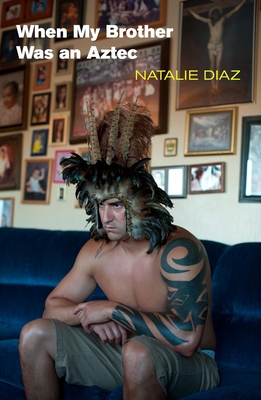
When My Brother Was an Aztec by Natalie Diaz

When My Brother Was an Aztec by Natalie Diaz, published by Copper Canyon Press and ordered for me by my local bookstore Novel Places, is a culture clash of Native Americans integrating into mainstream society and the struggles the children of these family have reconciling their home lives with the differences they find at school and among their new childhood friends and society.  The narrator battles with her mother about why she cannot have a sandwich like the white kids rather than raisins, and insinuates that she’d rather be like the white kids.  By the same token, the narrator experiences first hand the bullying of the white kids in her neighborhood because of her ethnicity — a dichotomy that resurfaces throughout the collection.

“The Red Blues” (page 11-13) is a creative look at a young girl’s blossoming into womanhood, getting down to the gritty reality of menstruation.

There is a dawn between my legs,
a rising of mad rouge birds, overflowing
and crazy-mean, bronze-tailed hawks,
a phoenix preening
sharp-hot wings, pretty pecking procession,
feathers flashing like flames

Diaz is creative and surprising in her imagery and frankness.  She tackles stereotypes, truths, and the history of her ancestors.  From the takeover of their lands by the whites to the current marginalization of her people, Diaz calls attention to the underhanded and sometimes overt discrimination that takes place.  At the same time, she is careful to demonstrate how even Native Americans are plagued by similar struggles with drugs and fitting in that other cultures face.  But there are poems that no matter the ethnicity of the narrator, readers can see the internal and external struggles fought with a loved one who is addicted to drugs.  In “How to Go to Dinner With a Brother on Drugs” (page 46-51), the narrator walks a fine line between telling her brother the truth about his appearance and behavior and avoiding the inevitable fight that would ensue should the conversation be too frank.  The reader gets a glimpse of how manipulative and careful the narrator has to be to get the brother to change his clothes before heading out to dinner, etc.

Your brother will come back down again,
this time dressed as a Judas effigy.
I know, I know, he’ll joke. It’s not Easter. So what?
Be straight with him. Tell him the truth.
Tell him, Judas had a rope around his neck.
When he asks if an old lamp cord will do, just shrug.
He’ll go back upstairs, and you will be there,
close enough to the door to leave, but you won’t.
You will wait, unsure of what you are waiting for.”

But it is more than that, it is the struggle of waiting for a loved one to smarten up, to become all that they can be before your eyes and not fall back into the same patterns over and over. There is a sense of loyalty in these lines, but also a sense of hopelessness.  Diaz speaks of her own pain, the anguish of watching a brother addicted to drugs and the heartbreak of watching parents who love both children struggle to save one from himself and fail.  Each poem’s surface meaning is easy to discern, but upon another read through readers can easily see the emotional torrent of each line and image.  Each poem is layered with multiple images and emotions demonstrating the tumult that infuses familial relationships, particularly those conflicted by cultural clashes and drug addiction.

When My Brother Was an Aztec by Natalie Diaz is a glimmering debut collection that hums in the back of the mind and generates an emotional aftermath that will leave readers speechless.  Following a brief pause, readers will want to pass this book onto others to read and discuss.  As far as book club selections go, this would be a welcome addition as the language is easy to follow, the emotions are raw, and the themes covered are modern and relevant in today’s world.

About the Poet:

Natalie Diaz, a member of the Mojave and Pima Indian tribes, attended Old Dominion University on a full athletic scholarship. After playing professional basketball in Austria, Portugal, Spain, Sweden, and Turkey she returned to ODU for an MFA in writing. Her publications include Prairie SchoonerIowa ReviewCrab Orchard Review, among others. Her work was selected by Natasha Trethewey for Best New Poets and she has received the Nimrod/Hardman Pablo Neruda Prize for Poetry. She lives in Surprise, Arizona.  Please check out this interview.

This is my 60th book for the New Authors Reading Challenge 2012.


This is the 19th book for my 2012 Fearless Poetry Exploration Reading Challenge.


The Disappearance of Georgiana Darcy by Regina Jeffers

The Disappearance of Georgiana Darcy by Regina Jeffers is a Pride & Prejudice mystery with heart and a devotion to Jane Austen’s characters as she envisioned them.  The beauty of this  novel is that it not only holds true to the original and what happened between the Bennets, the Darcys, and the Bingleys, but it also demonstrates that those characters can change and become more than Austen intended.

Georgiana has vanished among the moors in Scotland while she waits for her husband Major General Edward Fitzwilliam to return from fighting France at Waterloo, and her brother Mr. Darcy and his wife Elizabeth are preparing for the wedding of her younger sister Kitty.  The Darcys may be enjoying being new parents and building their small community of friends and family, but the Wickhams and Mrs. Bennet’s mischief are never too far away.

“For a brief second, Darcy’s brain told him that his vision had betrayed him.  It could not be George Wickham aiming one of the military’s best personal weapons at him, but he rejected that erroneous assumption immediately.  It was Wickham, and Darcy was the target.”  (Page 142)

Jeffers is true to the original characters, while intermingling the elements of gothic literature found in the prose of the Brontes.  She creates situations with new characters that generate serious suspense that will have readers on the edge of their seat about the safety of Georgiana.  Darcy is a loving husband, but he and his wife still have that back-and-forth banter that readers of Austen love.  But their relationship has matured, with an absence of misunderstandings and temper flare-ups that got them into hot water with one another in the first place.  Jeffers is at her best here with prose that keeps to the customs and diction of the past and mixes it seamlessly with modern sensibility.

“‘Elizabeth?’ Darcy asked eagerly as he stood mesmerized by his son’s antics.  ‘Have you seen what Bennet has accomplished?’

His wife joined him in his sitting room.  ‘What would that be?’ Her voice betrayed her amusement.

Darcy turned his head to glare at her.  ‘I suppose Bennet’s turning from his knees to his back is not a recent achievement?’

Although she attempted a sympathetic countenance, Elizabeth’s smile widened.  ‘If it is of any consequence, your son has only mastered the rotation in the last week.’

Darcy threw up his hands in frustration.  ‘That settles it! I refuse to be away from my family ever again.  Bennet grows too quickly as it is.  . . . ‘” (Page 394)

The novel pulls readers in easily, particularly with the mystery that leaves Georgiana’s captors and location a mystery until the latter quarter of the novel.  The technique of intermittently showing readers Georgiana’s thoughts and concerns about her location as her kin learn of the erroneous reports that reached her in Scotland and her subsequent disappearance are well done.  Jeffers also creates a set of villains that rival even Mr. Wickham, and the secrets revealed about the MacBethan family in Scotland will cause some readers to have nightmares or at least feel very uncomfortable.  The Disappearance of Georgiana Darcy shows that beloved characters can evolve, have adventures, and learn to forgive.

About the Author:

A teacher for nearly 40 years in the public school systems of three different states, Regina Jeffers is a Time Warner Star Teacher Award winner, a Martha Holden Jennings Scholar, a Columbus Educator Award winner, and a guest panelist for the Smithsonian. She served on various national educational committees and is often sought as a media literarcy consultant. Like many “snow birds,” Jeffers moved to the South several years ago. She is late to the publishing business, having written her first book on a dare from her students, who, literally said, “If you know all this, why do you not do it yourself?” On a whim, she self published her first book, and from there, everything happened at once. Now, writing for Ulysses Press in California, Jeffers is the author of several Jane Austen adaptations including Darcy’s Passions, Darcy’s Temptation, Vampire Darcy’s Desire, The Phantom of Pemberley, and Captain Wentworth’s Persuasion. She considers herself a Janeite – a member of the Jane Austen Society of North America and spends lots of her free time involved in such. Jeffers has now branched out into the Historical Romance genre. Her first book in the Realm series, The Scandal of Lady Eleanor, will be released in early 2011.

Mailbox Monday #189

Mailbox Mondays (click the icon to check out the new blog) has gone on tour since Marcia at A Girl and Her Books, formerly The Printed Page passed the torch. This month’s host is 5 Minutes for Books.

The meme allows bloggers to share what books they receive in the mail or through other means over the past week.

Just be warned that these posts can increase your TBR piles and wish lists.

Here’s what I received:

1.  The Language of Flowers by Vanessa Diffenbaugh, which I won ages ago and can’t seem to remember from where….forgive me.

The Victorian language of flowers was used to convey romantic expressions: honeysuckle for devotion, asters for patience, and red roses for love. But for Victoria Jones, it’s been more useful in communicating mistrust and solitude. After a childhood spent in the foster-care system, she is unable to get close to anybody, and her only connection to the world is through flowers and their meanings. Now eighteen and emancipated from the system with nowhere to go, Victoria realizes she has a gift for helping others through the flowers she chooses for them. But an unexpected encounter with a mysterious stranger has her questioning what’s been missing in her life. And when she’s forced to confront a painful secret from her past, she must decide whether it’s worth risking everything for a second chance at happiness.

2.  All the Truth by Laura Brodie for review from the author.

One night can alter a life forever…

Emma Greene enjoys living in rural solitude with her husband and five-year-old daughter, Maggie, far away from her college students in Jackson, Virginia. But late one night, with her husband away and her daughter upstairs in bed, some of Emma’s students trespass on her property. The ensuing confrontation changes Emma and Maggie’s life forever.

Nine years later, still plagued by nightmares from that evening, Maggie is living with her father in the same small town, and entering her first year of high school. She develops problems in class when her math teacher, a strange and lonely woman, begins to exhibit an odd interest in her.

In order to let go of the past, Maggie begins to piece together all the truth of what happened that night—and discovers a story of anger, guilt, and redemption.

3. The Pigeon Pie Mystery by Julia Stuart unsolicited from Doubleday.

When Indian Princess Alexandrina is left penniless by the sudden death of her father, the Maharaja of Brindor, Queen Victoria grants her a grace-and-favor home in Hampton Court Palace. Though rumored to be haunted, Alexandrina and her lady’s maid, Pooki, have no choice but to take the Queen up on her offer.
Aside from the ghost sightings, Hampton Court doesn’t seem so bad. The princess is soon befriended by three eccentric widows who invite her to a picnic with all the palace’s inhabitants, for which Pooki bakes a pigeon pie. But when General-Major Bagshot dies after eating said pie, and the coroner finds traces of arsenic in his body, Pooki becomes the #1 suspect in a murder investigation.
Princess Alexandrina isn’t about to let her faithful servant hang. She begins an investigation of her own, and discovers that Hampton Court isn’t such a safe place to live after all.
With her trademark wit and charm, Julia Stuart introduces us to an outstanding cast of lovable oddballs, from the palace maze-keeper to the unconventional Lady Beatrice (who likes to dress up as a toucan—don’t ask), as she guides us through the many delightful twists and turns in this fun and quirky murder mystery. Everyone is hiding a secret of the heart, and even Alexandrina may not realize when she’s caught in a maze of love.

4. Fireproof by Alex Kava unsolicited from Doubleday.

When a building bursts into flames on a cold winter night in D.C., investigators see a resemblance to a string of recent fires in the area. There is one difference, however: This one has a human casualty. The local team insists they’re looking for a young white male, suffering from an uncontrollable impulse to act out his anger or sexual aggression. But when special agent Maggie O’Dell is called in, everything she sees leads her to believe that this is the work of a calculating and controlled criminal.

Jeffery Cole, a reporter looking for his big break, is also at the scene of the crime and decides to make Maggie part of his news piece, digging up aspects of her past that she would rather forget. Maggie’s brother Patrick is also back in DC where he is working for a private firefighting company and is frequently called in as these fires continue to light up around the city.

As the acts of arson become more brazen, Maggie’s professional and personal worlds begin to collide dangerously. The killer may be closer than she imagines.

5. The Roots of the Olive Tree by Courtney Miller Santo unrequested from the publisher.

Meet the Keller family, five generations of firstborn women—an unbroken line of daughters—living together in the same house on a secluded olive grove in the Sacramento Valley of Northern California.

Anna, the family matriarch, is 112 and determined to become the oldest person in the world. An indomitable force, strong in mind and firm in body, she rules Hill House, the family home she shares with her daughter Bets, granddaughter Callie, great-granddaughter Deb, and great-great-granddaughter Erin. Though they lead ordinary lives, there is an element of the extraordinary to these women: the eldest two are defying longevity norms. Their unusual lifespans have caught the attention of a geneticist who believes they hold the key to breakthroughs that will revolutionize the aging process for everyone.

But Anna is not interested in unlocking secrets the Keller blood holds. She believes there are some truths that must stay hidden, including certain knowledge about her origins that she has carried for more than a century. Like Anna, each of the Keller women conceals her true self from the others. While they are bound by blood and the house they share, living together has not always been easy. And it is about to become more complicated now that Erin, the youngest, is back, alone and pregnant, after two years abroad with an opera company. Her return and the arrival of the geneticist who has come to study the Keller family ignites explosive emotions that these women have kept buried and uncovers revelations that will shake them all to their roots.

6. LBJ’s Hired Gun by John J. Gebhart, which Anna got me for my birthday!

Many Vietnam memoirs have appeared in recent years, but not a single one has the humor, pathos, poignancy, and often sheer hilarity of John J. Gebhart’s riveting LBJ’S Hired Gun. As Gebhart tells it, he was a “smart-mouthed college boy” who joined the Marines to see the world and “dust a few black pajamas for Uncle Sam.” Two grueling tours of duty later (1965-1967) he returned home as a sergeant after surviving 240 combat missions (12 air medals) and being shot down twice. On his chest was the Navy Commendation Award (with the combat V).

LBJ’s Hired Gun launches with Gebhart’s grim recollection of the intense old-school brutality that was Marine Corps training on Parris Island before transitioning to his difficult journey for Southeast Asia aboard a troop transport with 2,000 other nameless grunts. These hardships offered but a glimpse of the suffering he and his comrades were about to endure. PARA His candid account of life and death in Vietnam is written with a lively, infectious flair. But be forewarned: no attempt has been made to sanitize this memoir with politically-correct language. Gebhart tells his story exactly as he and his comrades spoke in the 1960s. The result is a gripping, no-holds-barred memoir of his “misadventures in-country.” He spares no detail and no one in his effort to convey exactly what he and his comrades experienced in Vietnam.

What did you receive?

162nd Virtual Poetry Circle

Welcome to the 162nd Virtual Poetry Circle!

Remember, this is just for fun and is not meant to be stressful.

Keep in mind what Molly Peacock’s books suggested. Look at a line, a stanza, sentences, and images; describe what you like or don’t like; and offer an opinion. If you missed my review of her book, check it out here.

Also, sign up for the 2012 Fearless Poetry Reading Challenge because its simple; you only need to read 1 book of poetry. Please visit the stops on the 2012 National Poetry Month Blog Tour.

Today’s poem is from Tracy K. Smith’s Life on Mars collection:

EVERYTHING THAT EVER WAS (Page 59-60)

Like a wide wake, rippling
Infinitely into the distance, everything
 
That ever was still is, somewhere,
Floating near the surface, nursing
Its hunger for you and me

And the now we’ve named
And made a place of.
 
Like groundswell sometimes
It surges up, claiming a little piece
Of where we stand.

Like the wind the rains ride in on,
It sweeps across the leaves,

Pushing in past the windows
We didn’t slam quickly enough.
Dark water it will take days to drain.

It surprised us last night in my sleep.
Brought food, a gift. Stood squarely

There between us, while your eyes
Danced toward mine, and my hands
Sat working a thread in my lap.

Up close, it was so thin. And when finally
You reached for me, it backed away,

Bereft, but not vanquished. Today,
Whatever it was seems slight, a trail
Of cloud rising up like smoke.

And the trees that watch as I write
Sway in the breeze, as if all that stirs

Under the soil is a little tickle of knowledge
The great blind roots will tease through
And push eventually past.

What do you think?

Enchantment Giveaway Extended

As summer has kept the heat upon us and many of us are busy with family events and other things, I’ve noticed a decline in readers and comments.  This is good news for me because I’ve been able to take Fridays off from blogging in addition to taking off Sundays during the week.

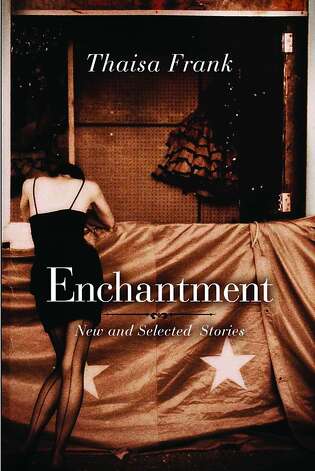
But what has been disheartening is the response to my giveaway of a really great short story collection, Enchantment by Thaisa Frank.

However, what is good about this is that its given me the impetus to extend the giveaway through Aug. 31.

There are 4 copies up for grabs for US/Canada residents who will participate in a short story discussion on Sept. 18 of “The Mapmaker” with the author!

The Marriage Price by Alma Katsu

The Marriage Price by Alma Katsu is another short story from The Taker series and it reunites readers with Jonathan’s hometown just before he marries child-like Evangeline.  Told from Evangeline’s point of view, readers will get a taste of her less than innocent side as she talks of the finery and the house that will be hers once she is married to Jonathan.  There’s is clearly not a love match in more ways than one as Jonathan’s family chose her for him, and she clearly has ulterior motives of her own.

She’s a naive girl who is chosen by his family to become his wife as Jonathan’s father declines in health. While Lanore from The Taker and The Reckoning does not appear in the short story, her presence is clearly felt by Evangeline, who — while naive about the sexual relationships between men and women — is not blind to the emotional connection between Jonathan and Lanore.

Evangeline’s character becomes more nuanced through this short story. Although she is portrayed as innocent in The Taker and even child-like, she is more of a strategist in The Marriage Price. She’s looking forward to the big house and the finery she can obtain through her marriage, and while Jonathan is preternaturally gorgeous, his behavior toward her is forward and aggressive by her standards. Their relationship is more student-teacher, though Evangeline’s eyes are more on the prize than on the “love” they can share together.

“Now, it was all she could think about, those shameful things Jonathan had coerced her into doing. That was why she was certain a woman would come forward on her wedding day: it would be a punishment for what she did with Jonathan before they were legally wed.” (Kindle short story)

Katsu creates a dynamic subordinate character that can stand on her own and gets a taste of what her married life will become.  Evangeline may have thought she would gain a great deal through her marriage, but she may have fooled herself into believing that what happened between them in the marriage bed would stay there.  The short story raises questions about arranged marriages, marrying for money and position, and the dark secrets that spouses can hide about not only their pasts, but also their passions.

About the Author:

Alma Katsu is a 30-year DC veteran who lives in two worlds: on one hand, she’s a novelist and author of The Taker (Simon & Schuster/Gallery Books). On the other hand, she was a senior intelligence analyst for CIA and NSA, and former expert in multilateral affairs.  Check out this Interview With Alma.

This completes my first series for the Finishing the Series Reading Challenge 2012.

Alma Katsu’s Short Story Free on Kindle…

Alma Katsu is at it again with more of her Taker series to tide us over until the final book in the trilogy hits stores next year.  She’s released another short story, The Marriage Price, for Kindle, and it is being offered free on Aug. 7-8.

Previously, she’s released The Devil’s Scribe in which Edgar Allan Poe meets Lanore McIlvrae.  If you’ve missed my reviews of this series, you can start with The Taker, and then move onto my review of The Reckoning and The Devil’s Scribe.

Today is the last day that you can download The Marriage Price by Alma Katsu for free.  If you’re interested in my thoughts on the short story, check out my mini review at D.C. Literature Examiner.

Wayne of Gotham by Tracy Hickman

Wayne of Gotham by Tracy Hickman is an exploration into the Wayne legacy and its role in Gotham’s early days and its current influence on the city as Bruce Wayne dons a cape and cowl and chases criminals as Batman.  Through a series of flashbacks to the 1950s, Bruce and the reader learn about his father, Dr. Thomas Wayne, and the family secrets.  Bruce is clearly not the only Wayne who has kept big secrets from the rest of the family and the outside world.

The parallels Hickman draws between Bruce and his grandfather, Patrick, are intriguing as both men tend toward the aggressive nature of their personalities and are not afraid to meet violence with violence.  Thomas, on the other hand, wants no part of that violent world, even though his father believes he should be able to defend himself.  However, in Hickman’s novel Bruce Wayne is middle-aged and feeling the impact of his year’s saving Gotham from criminals as Batman, and his reliance on technological advances in his suits and cars tells a far greater tale of this aging hero.

“The garden was dead.  The roses had gone wild and died during the succession of winters without care.  Their gnarled limbs reached up like claws from the edges of the footpaths, which were covered in dead leaves decomposing into dirt.  The prize lilacs his mother had been so proud of now reached up menacingly over the walls.  The garden had gone native, weeds choking and obscuring the careful planning that now lay buried ad barely recognizable.”  (Page 35)

What’s interesting about Hickman’s take on the comic character and his family is that Batman uncovers a past that is not as rosy as he expects about his father.  Dr. Thomas Wayne and his work with Dr. Richter are more than his son can digest in one sitting, but Batman is hardly given the chance to do so as he’s being drawn deeper and deeper into a spider’s trap as ghosts from the past seek to right the wrongs of the past.  Through a series of surprising turns connected to the German Nazis, eugenics, and more, Batman is confronted with a father who is not as perfect as he thought and he must reconcile what he has learned with what he thought he knew about the man.

The criminal mastermind here is slightly obvious from early on, but that is not as bothersome as the incessant talk early on about Batman’s vehicles and gadgets, which don’t necessarily add to the plot especially when the narration focuses on the evolution of the Batmobile from its early incarnations to the present.  However, that’s a minor drawback that fades away once the novel gets going.  Hickman has clearly done his research into several incarnations of the Batman myth, but the plot movement with the entrance of criminals, like The Joker, is abrupt on occasion as their motivations are unclear and the catalyst of their involvement is murky until the end.

Wayne of Gotham by Tracy Hickman is a satisfying read for those interested in the past of the Wayne family and its role in the rise and potentially the degradation of Gotham City.  Warring within each of these men is the duty to do good and the desire to just be free and follow their passions.  The relationship between Thomas Wayne and his father is clear from the beginning, but the relationship between Thomas and his son Bruce is less clear as Bruce himself is unsure how to view his father in light of the secrets revealed.  In many ways, this novel may have worked better as a graphic novel, but Hickman does a good job sticking to the origins of the character and bringing in unique story lines to fill out the ancestry of Wayne family.  By the end of the novel, it would also seem that more needs to be said and uncovered, especially when the second son of Thomas and Martha Wayne is alluded to, but not seen.

About the Author:

Tracy Hickman is a best-selling fantasy author, best known for his work on Dragonlance as a game designer and co-author with Margaret Weis, while he worked for TSR. He married Laura Curtis in 1977, and together they have four children.

This is my 59th book for the New Authors Reading Challenge 2012.

The Color of Tea by Hannah Tunnicliffe

Macau is a former Portuguese colony and is now a special administrative region of China and a hub of gambling and more.  The Color of Tea by Hannah Tunnicliffe is a woman’s journey into a strange land and the time of her life as she trails behind her husband, and their dreams of a new life change drastically.

“Macau: the bulbous nose of China, a peninsula and two islands strung together like a three-bead necklace, though by now the sand and silt have crept up and almost covered the silk of the ocean in between.  Gobbled up, like most everything in Macau, by Progress.  Progress and gambling.”  (Page 1)

Grace Miller is a woman who has lost her dream and builds another with tea and French pastries.  With the help of Leon, a French chef, Grace learns to make macarons and she opens a cafe, breathing new life into her days.  Although she doesn’t know Portuguese, Cantonese, or Mandarin, she finds the strength to become a businesswoman with little help from her husband, Pete.  She finds a new strength in her situation as she creates new kinds of macarons, serves coffee and tea, and provides a community with a little hope and connection.

“The day after the earthquake Lillian’s is packed to the rafters.  It is so crowded that those who can’t find their own tables join strangers and start to talk.  It is as if the catastrophe has brought out the community-minded side of people.  Conversations are hushed, and customers linger over their coffees.  Children are sent to the corner to play with our basket of toys, mutely constructing castles or ships out of LEGOs; even they must sense the need for regrouping and rebuilding.”  (Page 125)

It is the essence of Tunnicliffe’s novel — rebuilding and regrouping — to create something shiny and new out of the rubble . . . to begin again.  Lillian’s is a cafe born from the ashes of a Portuguese restaurant in a Chinese owned commonwealth by a British woman seeking a foothold in a spiraling out of control life, but what this cafe brings to her and to the community is more than she could have bargained for as cultures are bridged and friends are earned.

Grace is dedicated and strong, but she’s also naive about the cultural differences surrounding her, but those traits together make her more endearing.  Peter tries his best to cope with the loss of their dream, but throws himself more and more into his work when his wife withdraws.  His character is less well drawn, but the novel is told from Grace’s perspective, so that is to be expected.  Gigi, Leon, Celine, Rilla, Marjory, and Yok Lan are secondary characters who are full of life, teaching one another how to have patience with one another and grow.

Tunnicliffe’s debut novel is ripe with sugar and creamy pastry as each new relationship adds to the culinary masterpiece that is The Color of Tea.  It is Grace’s story.  Through her baking she comes alive, and subsequently comes into her own.  Tunnicliffe is talented and makes Macau come alive through food, relationships, and tea — creations that transcend sorrow and class.

About the Author:

Hannah Tunnicliffe was born in New Zealand but is a self-confessed nomad.  After finishing a degree in social sciences, she lived in Australia, England, and Macau.  A career in human resources temporarily put her dream of becoming a writer on the back burner.  The Color of Tea is her first novel.

This is my 58th book for the New Authors Reading Challenge 2012.


If you’d like to win a copy and live in the US or Canada, please leave a comment about your favorite tea or pastry.

Deadline is Aug. 16, 2012, at 11:59PM EST