Quantcast

BBAW: Profile of Poetry Blogger Necromancy Never Pays

This year, I’m taking a different perspective with Book Blogger Appreciation Week (BBAW) in that I’ll be profiling some poetry book bloggers this year, in addition to my traditional participation in a blogger interview on Tuesday, Sept. 11.

For today’s post, I’m featuring Jeanne at Necromancy Never Pays, which is the home of Trivial Pursuit for Book Bloggers.  Jeanne has helped judge the inaugural Indie Lit Awards for Poetry winners last year, and I always look forward to her reviews of poetry/poetry collections.  She takes a nuanced approach to these reviews, often pulling out a favorite poem from a collection to discuss in depth.

Without further ado, please check out my interview with her and stop over at her blog for her BBAW posts this week.

When did you first read poetry and what drew you to it? Or if you were initially put off by poetry, what changed your mind?

My parents, especially my mother, read poetry out loud to me. I remember particularly hearing the poems from A Child’s Garden of Verses, Alice in Wonderland, and Through the Looking Glass out loud. She read Dr. Seuss’ Happy Birthday to You out loud every year (she and my brother and I all still recite it–being tall, I’ve always taken particular delight in “the tallest of all-est”). When I got older, she read me poems by Robert Service. Before I learned to think much about the sense of the words, she taught me to delight in the sound of the rhymes.

About how many books of poems do you review each year on average? Do you have an established goal of how many you will read and/or review each year? Or is the process more organic?

The process is organic. Sometimes I wake up with a certain poem going through my mind. Sometimes I look one up, because I know I’ve “felt” something like this before. Occasionally I look for a poem just because it will give me something to carry around in my head all day.

Recommend some poets for beginners. Recommend some poetry translations or poetry for those who’ve read more poetry than others.

I think narrative poems are great for beginners. Robert Service tells funny stories. C.S. Lewis tells good stories, too. Some of the Romantic and Victorian poets wrote narrative verse–The Lady of Shalott has always been a favorite of mine.

For people who already read poetry and want to branch out, I’d recommend comparing translations of something like Rilke’s Duino Elegies. I’ve done this all my life, searching for the one that first made me love them, and still haven’t found it. But I’ve found a lot of good phrases along the way. Who knows, at this point maybe I wouldn’t be as fond of that original translation as I was at the age of 14 or so.

I also recommend browsing. I have the luck to work in a college library, so each month I go and flip through the new volumes of poetry to see what I might like.

In terms of favorite and perhaps less-read poets, I think everybody should try more poems by Wallace Stevens.

Necromancy Never Pays is not strictly about poetry, but as someone who is in the academic world, how important do you think talking about poetry online is and why?

I am “of” the academic world, but not so much “in.” I think people in a liminal position notice more about their surroundings, and that’s part of what poetry does; it offers new perspectives.

Talking about poetry online is as essential as anything I’ve ever done in my life. Most people need more poetry, but they don’t often know it. Blogging about poems used to be an extension of teaching about them, for me, but now that I’m not teaching poetry in the classroom anymore, I’m re-discovering some of those poems in a more personal way, which I think is the only way to share a love of poetry. It works on emotions, so showing why you love it involves feelings.

What are you reading now? How do you view the world of poetry and its future?

I’m thinking about a way to make a John Donne poem accessible to readers of my blog (probably The Flea), still re-reading Todd Davis, sampling Katrina Vandenberg’s Atlas (this was a recommendation from another blogger), and making my way through Maureen McLane’s My Poets.

The world of poetry and its future? People will always be reading and writing poetry. I hope that my contribution to this world will be to help open it up and remind people of how to experience it for themselves. So many times when poetry is served up at the table, people push back and say, “I’m full already” when what they mean is more like the British sometimes describe their reaction to being offered a French gateau for dessert: “that’s much too rich for me.” A taste for poetry is as basic as a child’s longing for sweets. The trick is to keep developing your tastes, so you can appreciate the more subtle flavors.

Thanks for continuing to keep those of us who love poetry organized a bit, Serena. You’re always creating more community and enthusiasm.

You’re welcome, Jeanne, and thank you for answering these questions at the last minute.
Mailbox Monday #193

Mailbox Mondays (click the icon to check out the new blog) has gone on tour since Marcia at A Girl and Her Books, formerly The Printed Page passed the torch. This month’s host is BookNAround.

The meme allows bloggers to share what books they receive in the mail or through other means over the past week.

Just be warned that these posts can increase your TBR piles and wish lists.

Here’s what I received:

1.  Edge of Oblivion: A Night Prowler Novel by J.T. Geissinger, which came unexpectedly from Wunderkind PR.

In a dark underground cell, Morgan Montgomery waits to die. A member of the Ikati, an ancient tribe of shape-shifters, Morgan stands convicted of treason. And Ikati law clearly spells out her fate: death to all who dare betray.

But there is a glimmer of hope. Thanks to her friendship with Jenna, the new queen of the Ikati, Morgan has one last chance to prove her loyalty. She must discover and infiltrate the headquarters of the Expurgari, the Ikati’s ancient enemy, so they can be destroyed once and for all. The catch? She has only a fortnight to complete her mission and will be accompanied by Xander Luna, the tribe’s most feared enforcer. If Morgan fails, her life is forfeit. Because Xander is as lethal as he is loyal, and no one—not even this beautiful, passionate renegade—will distract him from his mission. But as the pair races across Europe into the heart of Italy, the attraction blooming between them becomes undeniable. Suddenly more than justice is at stake: so is love.

2.  Bowling Avenue by Ann Shayne, which is from the author for review after a recommendation from Alma Katsu.

Welcome to 603 Bowling Avenue, a lush, empty Colonial Revival house tucked away in a leafy Nashville neighborhood. Who’s that in the ratty attic bedroom, holed up like a squirrel, writing real estate ads as fast as she can? Delia Ballenger, former Nashvillian. She’s back in town to sell the house that her tender-hearted big sister inexplicably left her after dying in a car crash. Delia needs to get back to Chicago as fast as possible. But uninvited people keep showing up at the front door: • Her mother, Grace Ballenger. Brilliant federal judge and the number-one reason Delia lives in another state. • A patrician and poorly socialized neighbor, Angus Donald. • Shelly Carpenter, the watchful housekeeper who raised Delia. • Brother-in-law Bennett Schwartz, a wretched surgeon, along with his girls Cassie and Amelia—the nieces she’s never known. • And, most vexing, a charming real estate agent, Henry Peek. Delia finds herself up to her eyeballs in a flood of mysteries, secrets, and the sort of love that sneaks up on you. For everyone who has muttered “You can’t go home again,” here’s what happens when you go anyway. You’ll laugh. You may cry, if you’re the weepy type. And you’ll cheer for Delia even as you wonder how she can eat a Pop-Tart as an entree. Like THE DESCENDANTS, BOWLING AVENUE is a story of learning how to let go, hold on–and bail water.

3.  The Painted Girls by Cathy Marie Buchanan for review from Riverhead Books in January.

1878 Paris. Following their father’s sudden death, the van Goethem sisters find their lives upended. Without his wages, and with the small amount their laundress mother earns disappearing into the absinthe bottle, eviction from their lodgings seems imminent. With few options for work, Marie is dispatched to the Paris Opéra, where for a scant seventeen francs a week, she will be trained to enter the famous ballet. Her older sister, Antoinette, finds work as an extra in a stage adaptation of Émile Zola’s naturalist masterpiece L’Assommoir.

Marie throws herself into dance and is soon modeling in the studio of Edgar Degas, where her image will forever be immortalized as Little Dancer Aged Fourteen. There she meets a wealthy male patron of the ballet, but might the assistance he offers come with strings attached? Meanwhile Antoinette, derailed by her love for the dangerous Émile Abadie, must choose between honest labor and the more profitable avenues open to a young woman of the Parisian demimonde.

4.  Beautiful Lies by Clare Clark for a TLC Book Tour this month.

London 1887. For Maribel Campbell Lowe, the beautiful bohemian wife of a maverick politician, it is the year to make something of herself. A self-proclaimed Chilean heiress educated in Paris, she is torn between poetry and the new art of photography. But it is soon plain that Maribel’s choices are not so simple. As her husband’s career hangs by a thread, her real past, and the family she abandoned, come back to haunt them both. When the notorious newspaper editor Alfred Webster begins to take an uncommon interest in Maribel, she fears he will not only destroy Edward’s career but both of their reputations.

Inspired by the true story of a politician’s wife who lived a double life for decades, Beautiful Lies is set in a time that, fraught with economic uncertainty and tabloid scandal-mongering, uncannily presages our own.

5.  Murder Most Austen by Tracy Kiely for review from Kaye Publicity.

A dedicated Anglophile and Janeite, Elizabeth Parker is hoping the trip to the annual Jane Austen Festival in Bath will distract her from her lack of a job and her uncertain future with her boyfriend, Peter.

On the plane ride to England, she and Aunt Winnie meet Professor Richard Baines, a self-proclaimed expert on all things Austen. His outlandish claims that within each Austen novel there is a sordid secondary story is second only to his odious theory on the true cause of Austen’s death. When Baines is found stabbed to death in his Mr. Darcy costume during the costume ball, it appears that Baines’s theories have finally pushed one Austen fan too far. But Aunt Winnie’s friend becomes the prime suspect, so Aunt Winnie enlists Elizabeth to find the professor’s real killer. With an ex-wife, a scheming daughter-in-law, and a trophy wife, not to mention a festival’s worth of die-hard Austen fans, there are no shortage of suspects.

6. Out of True by Amy Durant for review and giveaway in October.

The poems in Out of True flow through stories of life and love, deep feeling and light perspective, all with a foundation in the elemental core of the human spirit. Amy’s poems speak to all of us with a bruised heart still willing to embrace hope and joy.

7. King Solomon’s Ring by Konrad Lorenz, which I purchased at Wonderbook for out book club discussion in November.

Solomon, the legend goes, had a magic ring which enabled him to speak to the animals in their own language. Konrad Lorenz was gifted with a similar power of understanding the animal world. He was that rare beast, a brilliant scientist who could write (and indeed draw) beautifully. He did more than any other person to establish and popularize the study of how animals behave, receiving a Nobel Prize for his work. King Solomon’s Ring, the book which brought him worldwide recognition, is a delightful treasury of observations and insights into the lives of all sorts of creatures, from jackdaws and water-shrews to dogs, cats and even wolves. Charmingly illustrated by Lorenz himself, this book is a wonderfully written introduction to the world of our furred and feathered friends, a world which often provides an uncanny resemblance to our own. A must for any animal-lover!

8. The Absent One by Jussi Adler-Olsen, translated by K.E. Semmel, which I purchased at Novel Places.

In The Keeper of Lost Causes, Jussi Adler-Olsen introduced Detective Carl Mørck, a deeply flawed, brilliant detective newly assigned to run Department Q, the home of Copenhagen’s coldest cases. The result wasn’t what Mørck—or readers—expected, but by the opening of Adler-Olsen’s shocking, fast-paced follow-up, Mørck is satisfied with the notion of picking up long-cold leads. So he’s naturally intrigued when a closed case lands on his desk: A brother and sister were brutally murdered two decades earlier, and one of the suspects—part of a group of privileged boarding-school students—confessed and was convicted.

But once Mørck reopens the files, it becomes clear that all is not what it seems. Looking into the supposedly solved case leads him to Kimmie, a woman living on the streets, stealing to survive. Kimmie has mastered evading the police, but now they aren’t the only ones looking for her. Because Kimmie has secrets that certain influential individuals would kill to keep buried . . . as well as one of her own that could turn everything on its head.

Every bit as pulse-pounding as the book that launched the series, The Absent One delivers further proof that Jussi Adler-Olsen is one of the world’s premier thriller writers.

9. The Caller by Karin Fossum, translated by K.E. Semmel, which I also bought at Novel Places.

One mild summer evening, a young couple are enjoying dinner while their daughter sleeps peacefully in her stroller under a tree. When her mother steps outside she is stunned: The child is covered in blood.
Inspector Sejer is called to the hospital to meet the family. Mercifully, the child is unharmed, but the parents are deeply shaken, and Sejer spends the evening trying to understand why anyone would carry out such a sinister prank. Then, just before midnight, somebody rings his doorbell.
No one is at the door, but the caller has left a small gray envelope on Sejer’s mat. From his living room window, the inspector watches a figure disappear into the darkness. Inside the envelope Sejer finds a postcard bearing a short message: Hell begins now.

What did you receive?

166th Virtual Poetry Circle

Welcome to the 166th Virtual Poetry Circle!

Remember, this is just for fun and is not meant to be stressful.

Keep in mind what Molly Peacock’s books suggested. Look at a line, a stanza, sentences, and images; describe what you like or don’t like; and offer an opinion. If you missed my review of her book, check it out here.

Also, sign up for the 2012 Fearless Poetry Reading Challenge because its simple; you only need to read 1 book of poetry. Please visit the stops on the 2012 National Poetry Month Blog Tour.

I’m particularly interested in the use of parentheses in today’s poem from Lola Ridge:

Sun-Up

(Shadows over a cradle...
fire-light craning...,
A hand
throws something in the fire
and a smaller hand
runs into the flame and out again,
singed and empty...,
Shadows
settling over a cradle...
two hands
and a fire.)

What do you think?

Winners and September Event Announcement


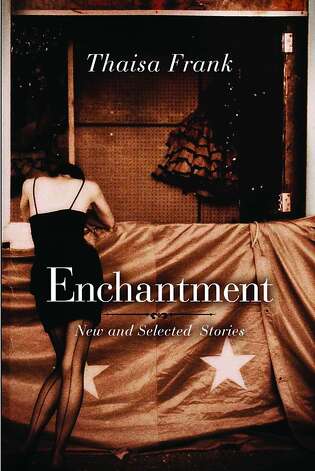
Some very special winners of Enchantment by Thaisa Frank are:

Audra of Unabridged Chick

Beth Hoffman

Ellie

Jessie of Ageless Pages Reviews

These winners, myself, Anna from Diary of an Eccentric, and Janel of Janel’s Jumble welcome you to join us in a special September 18th event!

We’ll be gathering here all day to discuss the short story “The Mapmaker” from Enchantment, and our special guest will be Thaisa Frank herself!

We hope that you’ll grab a copy of the book and come join us!

What It Is Like to Go to War by Karl Marlantes

What It Is Like to Go to War by Karl Marlantes (I reviewed his novel Matterhorn) reads less like a linear memoir than it does a measured stream of consciousness attempting to explain the role of a soldier, the best way to protect that soldier and his family from the guilt and trauma experienced in war, and the possible consequences of using more technology to wage war and remove ourselves from the actual acts of war.  As well as how that removal changes the psyche’s view of war — making it more impersonal and thus more damaging.

Marlantes goes back in forth in time and purpose, but the key is to follow the chapter headings, like “Guilt,” to understand what the focus of the chapter will be no matter what time period in his life he is speaking of.  He’s clearly studied Carl Jung and other philosophies, including those of eastern nations, on his journey to find out how to best deal with his conflicting emotions of triumph and horror as a Marine who fought in Vietnam, and he often warns that without guidance when soldiers come home, they can spiral out of control as they lose the boundaries between the war life and their normal life.

“Death becomes an abstraction, except for those at the receiving end.  We must come to grips with consciously trying to set straight this imbalance of modern warfare.  What is at stake is not only the psyche of each young fighter but our humanity.”  (page 19)

“To be effective and moral fighters, we must not lose our individuality, our ability to stand alone, and yet, at the same time, we must owe our allegiance not to ourselves alone but to an entity so large as to be incomprehensible, namely humanity or God.”  (page 144)

Using examples from his own combat experiences, which are eerily similar to those presented in Matterhorn‘s fictional account, Marlantes outlines possible differences in loyalty and how high that loyalty must be in order for “right” decisions to be made in war, but he also acknowledges that all humans lie and that lying can serve many purposes, especially in a war that applauds achievement only through body counts.  The dichotomy of humans is pronounced in war as they attempt to navigate through the jungle or the foreign terrain to complete missions without laying unnecessary waste to themselves or the enemy.  Ethical warriors are just one part of the discussion, but mostly Marlantes is concerned with preparing today’s soldiers for the psychic and emotional break they will experience with their spirituality and their ties to society.

Mixed with philosophical discussions and examples from such texts as The Odyssey and the Bhagavad Gita, Marlantes strives to pinpoint the natural inclination of the warrior spirit in men and women and the dire consequences of suppressing that spirit or denying its existence.  While he suggests that the spirit should be tempered and praised, it also should not be allowed to spiral out of control — with a focus on creating balance.  In many ways, there is a deep Buddhist sense in his memoir about creating balance and eliminating ego’s perspective on justice in favor of what is truly right for humanity not just a particular nation or belief system.

What It Is Like to Go to War by Karl Marlantes is one man’s perspective on his experiences in Vietnam and what those experiences taught him.  He talks about what he thinks could improve soldiers in the field as well as when the fighting is over, helping them to integrate back into society with less bumps along the way — less suicides, less drug and alcohol abuse, and less violence.  For those looking for a memoir that offers more than just war stories about missions and lost friends, Marlantes provides an introspective analysis of the pride he felt in killing the enemy as well as the deep sorrow.

About the Author:

A graduate of Yale University and a Rhodes Scholar at Oxford University, Karl Marlantes served as a Marine in Vietnam, where he was awarded the Navy Cross, the Bronze Star, two Navy Commendation Medals for valor, two Purple Hearts, and ten air medals. His debut novel, Matterhorn, will be published in April 2010 by Grove/Atlantic.

I’m Just Sayin’! by Kim Zimmer and Laura Morton

I’m Just Sayin’!: Three Deaths, Seven Husbands, and a Clone! My Life on Guiding Light and Beyond by Kim Zimmer and Laura Morton is as spontaneous as Reva Shayne was on Guiding Light, and while most of the memoir is linear in nature, there are moments where the flashbacks are a bit out of sequence — though never hard to follow.  Zimmer pulls no punches with her memoir and does not sugarcoat anything that happened in the latter years of Guiding Light, which experienced severe budget cuts and went downhill in terms of quality where production was concerned.  On the flip side, she’s also willing to admit her mistakes and allowed her temper to get the best of her when she should have tried a more diplomatic approach when story lines and production were falling by the wayside.

Even more interesting were the early years in which she made some tough decisions about college and acting, when she met her soul mate (A.C. Weary), and when she put her family first and left Guiding Light the first time.  She shares some acting techniques she learned, including substitution in which an actor uses real life images and memories as stand ins for the characters’ current situations.  Zimmer didn’t find this effective, and in fact, found it very distracting.  One of the most interesting things in the book was that she took the bus to the studio rather than have a car pick her up or driver herself to work in the early days, which some of her co-stars found odd.  (I applaud her for using public transportation!)

“A.C. and I joked about getting married any number of times, but one of us always managed to change the subject.  If memory serves me correctly, in the summer of 1980, we were in our teeny-tiny kitchen making dinner when we started talking about having a baby.  I believe I said I’d love to have a kid but I wanted to be married first.  Hint, hint, wink, wink!

A.C. said something like, ‘Are you asking me to marry you?’

I said, ‘If you want me to have your babies, then yes, I’m asking you to marry me!'”  (Page 42)

While some may think that Zimmer is a diva, she certainly is in the sense that she’s talented and passionate about her work.  She talks a lot about fighting for her characters and the show, which she thought of more like a family — and in many ways was more attached than probably some other actors would be to their roles and television shows.  Her resolve and determination helped Reva Shayne’s character grow, but unfortunately, the show itself was not something should could have saved on her own.  Becoming so attached to the show and her character ultimately weighed too heavily on Zimmer and caused her to make some choices she might not have otherwise.

I’m Just Sayin’!: Three Deaths, Seven Husbands, and a Clone! My Life on Guiding Light and Beyond by Kim Zimmer and Laura Morton is not only about acting and her family, but about a passion for her job that became all-consuming and led her astray for a while.  But lessons are always available when people make mistakes, even celebrities.  Zimmer’s memoir seems to have been cathartic for her in that it helped her assess herself and her role as wife, mother, and actress.  She’s candid and funny, but never overly apologetic.  A great memoir for those looking for behind-the-scenes shenanigans, serious acting business, and life-work balance decisions.

***On another note***

My husband and I watched Guiding Light together, and Jonathan and Reva’s story line was one that we loved watching unfold as he was the son she had left behind.  We loved the dynamic of these characters, and it was great to learn about the audition between Zimmer and Tom Pelphrey, which was too funny.  The chemistry between the characters was superb. Another of my favorite pairings was Reva with Jeffrey!  I loved their “What the hell” nature and the jokes and genuine fun time they seemed to be having.  It was so refreshing.  On the flip side, I loved Harley and Gus on the show, a relationship that was torn asunder by the writers and angered me beyond imagination.

It was hard for me to watch the production quality of this show decline, and my mother would call and ask me what the heck they were doing to our show.  The shaky cameras and the outside scenes in which you couldn’t hear the dialogue too well and the overpowering music.  Like Zimmer, I was very attached to these characters, and in many ways they were real….I was sad to see the characters of Springfield go.

About the author:

Four-time Emmy® award winner Kim Zimmer is a veteran television actress. In 1984, she joined the cast of Guiding Light, and stayed with the series for over two decades. She and her husband live mostly in New Jersey with their three children.


This is my 65th book for the New Authors Reading Challenge 2012.

Mailbox Monday #192

Mailbox Mondays (click the icon to check out the new blog) has gone on tour since Marcia at A Girl and Her Books, formerly The Printed Page passed the torch. This month’s host is BookNAround.

The meme allows bloggers to share what books they receive in the mail or through other means over the past week.

Just be warned that these posts can increase your TBR piles and wish lists.

Here’s what I received:

1.  The Second Empress by Michelle Moran, which is for review from the author.

After the bloody French Revolution, Emperor Napoleon’s power is absolute. When Marie-Louise, the eighteen year old daughter of the King of Austria, is told that the Emperor has demanded her hand in marriage, her father presents her with a terrible choice: marry the cruel, capricious Napoleon, leaving the man she loves and her home forever, or say no, and plunge her country into war.
Marie-Louise knows what she must do, and she travels to France, determined to be a good wife despite Napoleon’s reputation. But lavish parties greet her in Paris, and at the extravagant French court, she finds many rivals for her husband’s affection, including Napoleon’s first wife, Joséphine, and his sister Pauline, the only woman as ambitious as the emperor himself. Beloved by some and infamous to many, Pauline is fiercely loyal to her brother. She is also convinced that Napoleon is destined to become the modern Pharaoh of Egypt. Indeed, her greatest hope is to rule alongside him as his queen—a brother-sister marriage just as the ancient Egyptian royals practiced. Determined to see this dream come to pass, Pauline embarks on a campaign to undermine the new empress and convince Napoleon to divorce Marie-Louise.
As Pauline’s insightful Haitian servant, Paul, watches these two women clash, he is torn between his love for Pauline and his sympathy for Marie-Louise. But there are greater concerns than Pauline’s jealousy plaguing the court of France. While Napoleon becomes increasingly desperate for an heir, the empire’s peace looks increasingly unstable. When war once again sweeps the continent and bloodshed threatens Marie-Louise’s family in Austria, the second Empress is forced to make choices that will determine her place in history—and change the course of her life.

2. Searching for Captain Wentworth by Jane Odiwe from the author for review.

When aspiring writer, Sophie Elliot, receives the keys to the family townhouse in Bath, it’s an invitation she can’t turn down, especially when she learns that she will be living next door to the house Jane Austen lived in. On discovering that an ancient glove belonging to her mysterious neighbour, Josh Strafford, will transport her back in time to Regency Bath, she questions her sanity, but Sophie is soon caught up in two dimensions, each reality as certain as the other. Torn between her life in the modern world, and that of her ancestor who befriends Jane Austen and her fascinating brother Charles, Sophie’s story travels two hundred years across time, and back again, to unite this modern heroine with her own Captain Wentworth. Blending fact and fiction together, the tale of Jane Austen’s own quest for happiness weaves alongside, creating a believable world of new possibilities for the inspiration behind the beloved novel, Persuasion.

What did you receive?

165th Virtual Poetry Circle

Welcome to the 165th Virtual Poetry Circle!

Remember, this is just for fun and is not meant to be stressful.

Keep in mind what Molly Peacock’s books suggested. Look at a line, a stanza, sentences, and images; describe what you like or don’t like; and offer an opinion. If you missed my review of her book, check it out here.

Also, sign up for the 2012 Fearless Poetry Reading Challenge because its simple; you only need to read 1 book of poetry. Please visit the stops on the 2012 National Poetry Month Blog Tour.

Today’s poem is from Wislawa Szymborska from View With a Grain of Sand:

Miracle Fair (page 165-6)

The commonplace miracle: 
that so many common miracles take place. 

The usual miracle: 
invisible dogs barking
in the dead of night. 

One of many miracles: 
a small and airy cloud 
is able to upstage the massive moon. 

Several miracles in one: 
an alder is reflected in the water 
and is reversed from left to right 
and grows from crown to root 
and never hits bottom 
though the water isn't deep. 

A run-of-the-mill miracle: 
winds mild to moderate 
turning gusty in storms. 

A miracle in the first place: 
cows will be cows. 

Next but not least:
just this cherry orchard
from just this cherry pit.

A miracle minus top hat and tails: 
fluttering white doves.
 
A miracle (what else can you call it): 
the sun rose at three fourteen a.m.
and will set at one past eight.

A miracle that's lost on us: 
the hand actually has fewer than six fingers 
but still it's got more than four. 

A miracle, just take a look around: 
an inseparable earth. 

An extra miracle, extra and ordinary: 
the unthinkable 
can be thought.

What do you think?

Thoughts on Some Remarks by Neal Stephenson

Some Remarks by Neal Stephenson is a collection of essays, one sentence from a novel that he never finished, and a few short stories.  I’m not the typical audience for this book as I don’t read a lot of non-fiction, nor science-y essays.  As a result, I read a bit of the most recent essays in the collection, the introduction, and the short fiction pieces, plus the one sentence to the novel.  I can say that I see why he never went further with his novel; it wasn’t very attention grabbing for me, but hey, it might have been a sentence from a future chapter and not the book opener for all I know.

To say this collection is weird is an understatement; readers only need to check out “Spew” with its tech-babble and sci-fi tongue-in-cheek feel as Profile Auditor 1 skulks around the big brother system that watches everyone’s lives for a living, looking for anomalies.  I found the overwrought tech language and mysteriousness too much; I was kept too much in the dark for the beginning part of the short story.  However, by the end, I was intrigued by the hotel clerk and her suspicious profile and wondered what the profiler’s interest in her was, but it is clear by the end of the story that she’s got more gumption than he does.  While Stephenson brings up issues of big brother and what it could mean from a marketing perspective, the story also gave me pause about my own buying habits and whether I’m that gullible in my purchases — seeing it on television or the Internet is enough to make me buy it — but I also realized that is not all that he is highlighting, but also the factors that play into buying decisions from friends, recommendations, advertisements, and finances.

“Patch this baby into your HDTV, and you can cruise the Metaverse, wander the Web and choose from among several user-friendly operating systems, each one rife with automatic help systems, customer-service hot lines and intelligent agents.  The theater’s subwoofer causes our silverware to buzz around like sheet-metal hockey players, and amplified explosions knock swirling nebulas of tiny bubbles loose from the insides of our champagne glasses.”  (page 288, “The Great Simoleon Caper”)

The second short story, “The Great Simoleon Caper,” relies on a similar notion of a man behind the technology who looks in on customers through their set top boxes, but instead of profiling their likes and dislikes and buying habits, he is their customer service representative to iron out their problems.  In this scenario — which began with a “innocent” brother’s request for how many jelly beans would fill up Soldier Field — the customer service rep brother is suddenly thrust into an underground plan to circumvent government controls.  Investing in Simoleons, an e-money, is a campaign his brother wants to succeed, but how will his brother ensure that the deal goes off without a hitch.  Do you sense a bit of paranoia in these stories?  A bit too much over-the-shoulder watching?  Perhaps that’s a good thing — keeping people honest and on their toes.

Stephenson’s fiction was livelier and more inventive to me than the nonfiction essays about the dangers of sitting at a desk for your job and other topics, which seemed to try to hard to be humorous or witty.  Some Remarks is an interesting collection of essays, but for someone that reads mostly fiction and poetry, this is not a good fit.

About the Author:

Neal Stephenson is the author of the three-volume historical epic “The Baroque Cycle” (Quicksilver, The Confusion, and The System of the World) and the novels Cryptonomicon, The Diamond Age, Snow Crash, and Zodiac. He lives in Seattle, Washington.

This is my 64th book for the New Authors Reading Challenge 2012.

Across the Mekong River by Elaine Russell

Across the Mekong River by Elaine Russell is part PTSD (post-traumatic stress disorder) and part immigration story set just after the end of the Vietnam War.  Nou Lee and her family were forced to flee Laos following the Vietnam War after her father fought with the special forces alongside the Americans.  His life and that of his family were threatened by the succeeding communist government, forcing them to take flight in the middle of the night across the Mekong River.

Across the river that takes some of the lives in an explosion of gunfire and rapids, the family finds itself in a refugee camp in Thailand.  To be Hmong family means duty and hard work for the good of the entire family from grandparents to cousins and aunts and younger siblings, and above all respect for culture and ancestors.  The hard life this family has seen from their days in Laos and in Thailand where they struggle to feed their children makes the dream of freedom in America even more alluring.

“On another, taller mountain deep in the woods, we built small shelters, tying bamboo poles together against trees and covering them with thatch.  I think we were there six months, maybe longer.  We could only plant a small vegetable patch and search for food in the forest.  But somehow our husbands found us and brought whatever supplies they could carry.”  (Page 22)

“A barbed wire fence surrounded Nong Khai Camp.  Three Thai soldiers stood sentry at the gate, brandishing their rifles.  As we drove into the compound, I did not know if I should feel afraid.  Officials would explain that the guards were for our protection so no one from outside could take advantage of us.  Through the barbed wire, I watched the Thai farmer we had just passed driving his water buffalo into his field.  He never looked our way, as if we did not exist.”  (Page 36)

Her parents struggled to keep the rest of the family safe and together as they remained in camp in Thailand, and when the promise of America came, many were reluctant to go for it meant change and adjustment.  In 1982, the Lee family moves, taking with it their hopes for a new future and freedom, but hanging over this new adventure are the ghosts of the past, which threaten to pull them back into the abyss and keep them from finding their place.  Nou, a young girl in a strange land and with no knowledge of English, is thrust into an unknown school and unfamiliar culture that since the Vietnam War has bred prejudice against those from Asia.

Her adjustment into the new world is anything but seamless and she’s forced to bury her resentments of her mother and family deep as she navigates peer pressures and bullying, even from her own Hmong family members.  As the family moves to better opportunities, her previous experiences have colored her perception of Americans and adopts a new name and a new life.  Although her thrift store clothes and restrictive customs tell her true story, she is leading not only a double life, but a triple life when Dang Moua enters the picture and her mother begins to talk of marriage and children.

Elaine Russell has a gift for bringing out the nuances of the Laotian culture, particularly that of the Hmong people, in the multiple family points of view she uses.  In addition to the cultural norms, she easily weaves in the ravages of war and its effect not only on the fighting soldiers, but the families they leave behind who face torturers face-to-face.  Across the Mekong River, the Lee family finds freedom, but it comes with a price.  Struggling to maintain their cultural identity in a melting pot of America, the Lee family not only struggles with the secrets of their shared past, but the secrets they now keep from one another as they vacillate between being truthful and relying on age-old customs that elders are to be respected and never questioned.  Russell has created a tale that leaves a deep impression on the emotions of the reader and raises questions about what it means to be American as an immigrant.

About the Author:

Elaine Russell graduated with a BA in History at University of California, Davis, and an MA in Economics at California State University Sacramento. She worked as a Resource Economist/Environmental Consultant for 22 years before beginning to write fiction for adults and children. She became inspired and actively involved with the Hmong immigrant community after meeting Hmong children in her son’s school in Sacramento and reading Anne Fadiman’s The Spirit Catches You and You Fall Down. Since then she has been to Laos many times to research her book and as a member of the nongovernment organization Legacies of War.

This is my 63rd book for the New Authors Reading Challenge 2012.