Quantcast

Poetry as Gold. . .

Welcome to the Savvy Verse & Wit blog tour for National Poetry Month in the United States, but here on the blog, I consider it more of an international celebration.

If you have signed up to celebrate poetry this month, there are still some dates open, just check the schedule and let me know what date you’d prefer.

This past week I was reading Night Train to Lisbon by Pascal Mercier, translated by Barbara Harshav, and I came across a commentary about recreating the Portuguese language to make it clearer and truer to its origins: “The waiter, the barber, the conductor — they would be puzzled if they heard the newly set words and their amazement would refer to the beauty of the sentence, a beauty that would be nothing by the gleam of their clarity. … At the same time, they would be without exaggeration and without pomposity, precise and so laconic that you couldn’t take away one single word, one single comma. Thus they would be like a poem, plaited by a goldsmith of words.” (page 26) This passage reminded me of how poets — and fiction writers — often seek out ways through language to make images, characters, situations, emotions, and more clear to the reader — drawing connections between images that may, at first, seem to have nothing to do with one another, but through a juxtaposition or other means provide the reader with some insight or generate within him or her a deeper understanding or emotional response.

As I’m sure many of my faithful readers know, I read and write poetry, but they probably also know that I love Yusef Komunyakaa‘s work in particular.  “Facing It” is one of my all time favorites, and I think part of it is because I can picture exactly what he’s seeing as the Vietnam veteran in the poem describes his first experience with the Vietnam War Memorial.

Facing It

My black face fades,   
hiding inside the black granite.   
I said I wouldn't  
dammit: No tears.   
I'm stone. I'm flesh.   
My clouded reflection eyes me   
like a bird of prey, the profile of night   
slanted against morning. I turn   
this way—the stone lets me go.   
I turn that way—I'm inside   
the Vietnam Veterans Memorial
again, depending on the light   
to make a difference.   
I go down the 58,022 names,   
half-expecting to find   
my own in letters like smoke.   
I touch the name Andrew Johnson;   
I see the booby trap's white flash.   
Names shimmer on a woman's blouse   
but when she walks away   
the names stay on the wall.   
Brushstrokes flash, a red bird's   
wings cutting across my stare.   
The sky. A plane in the sky.   
A white vet's image floats   
closer to me, then his pale eyes   
look through mine. I'm a window.   
He's lost his right arm   
inside the stone. In the black mirror   
a woman’s trying to erase names:   
No, she's brushing a boy's hair.

In particular, I love the parts of the poem where he describes reflections in unique ways, especially when the reflection eyes him like a bird of prey and the names that “shimmer on a woman’s blouse” but remain on the wall as she walks away. In addition, the poem reflects on the practice of rubbing the names onto paper from the wall as a form of care and caress — “she’s brushing a boy’s hair.”

Sorrow 2 -- Vietnam Wall

In many ways, poetry not only tells stories, but creates them with their readers and generates an emotional response that can be carried over to friends, families, or even book clubs. These are the types of poems that I consider “gold.”

What makes a great poem for you?
Mailbox Monday #218

HAPPY EASTER to those who celebrate!

As tomorrow is the kick-off of National Poetry Month, I’m posting this meme early, and it may be on hiatus for the rest of the month until the blog tour is over.

Mailbox Mondays (click the icon to check out the new blog) has gone on tour since Marcia at A Girl and Her Books, formerly The Printed Page passed the torch. April’s host is Mari Reads.

The meme allows bloggers to share what books they receive in the mail or through other means over the past week.

Just be warned that these posts can increase your TBR piles and wish lists.

Here’s what I received for review:

1.  Writers on the Edge:  22 Writers Speak About Addiction and Dependency edited by Diana M. Raab and James Brown from Modern History Press for review.

Writers On The Edge offers a range of essays, memoirs and poetry written by major contemporary authors who bring fresh insight into the dark world of addiction, from drugs and alcohol, to sex, gambling and food. Editors Diana M. Raab and James Brown have assembled an array of talented and courageous writers who share their stories with heartbreaking honesty as they share their obsessions as well as the awe-inspiring power of hope and redemption.

CONTRIBUTORS: Frederick & Steven Barthelme, Kera Bolonik, Margaret Bullitt-Jonas, Maud Casey, Anna David, Denise Duhamel, B.H. Fairchild, Ruth Fowler, David Huddle Perie Longo, Gregory Orr, Victoria Patterson, Molly Peacock, Scott Russell Sanders, Stephen Jay Schwartz, Linda Gray Sexton, Sue William Silverman, Chase Twichell, and Rachel Yoder.

2.  Unexplained Fevers by Jeannine Hall Gailey for review from the poet.

“Unexplained Fevers plucks the familiar fairy tale heroines and drops them into alternate landscapes. Unlocking them from the old stories is a way to “rescue the other half of [their] souls.” And so Sleeping Beauty arrives at the emergency room, Red Riding Hood reaches the car dealership, and Rapunzel goes wandering in the desert – their journeys, re-imagined in this inventive collection of poems, produce other dangers, betrayals and nightmares, but also bring forth great surprise and wonder.” – Rigoberto González, author of Black Blossoms “Unexplained Fevers begins with that most familiar of phrases, “Once upon a time,” but the world we find inside these covers is deeply defamiliarized. Trapped by physical ills, cultural expectations, and the constraints of marriage, these heroines interrogate the world and propel themselves through it with cunning and sass. We follow, for example, Jack and Jill though a prose poem where they “somehow turned thirty without thunderous applause,” after having sworn they “would follow each other anywhere, but anywhere turned out to be a lot like Ohio.” At the center of these poems – urgent, mysterious, evocative – we find the great topic of all fairy tales, transformation. Read Unexplained Fevers, and be transformed.” – Beth Ann Fennelly, author of Unmentionables.

What did you receive?

195th Virtual Poetry Circle

Welcome to the 195th Virtual Poetry Circle!

Remember, this is just for fun and is not meant to be stressful.

Keep in mind what Molly Peacock’s books suggested. Look at a line, a stanza, sentences, and images; describe what you like or don’t like; and offer an opinion. If you missed my review of her book, check it out here.

Also, sign up for the 2013 Dive Into Poetry Challenge because its simple; you only need to read 1 book of poetry. Please sign up to be a stop on the 2013 National Poetry Month Blog Tour and visit the stops on the 2012 National Poetry Month Blog Tour.

Today’s poem is from Charles Martin’s Sleep: New and Selected Poems:

Happy Ending for the Lost Children

One of their picture books would no doubt show
The two lost children wandering in a maze
Of anthropomorphic tree limbs: the familiar crow

Swoops down upon the trail they leave of corn,
Tolerant of the error of their ways. 
Hand in hand they stumble onto the story,

Brighteyed with beginnings of fever, scared
Half to death, yet never for a moment
Doubting the outcome that had been prepared

Long in advance: Girl saves brother from oven,
Appalling witch dies in appropriate torment;
Her hoarded treasure buys them their parents' love.

              ***
"As happy an ending as any fable
Can provide," squawks the crow, who had expected more:
Delicate morsels from the witch's table.

It's an old story—in the modern version
The random children fall to random terror.
You see it nightly on the television:

Cameras focus on the lopeared bear
Beside the plastic ukulele, shattered
In a fit of rage—the lost children are

Found in the first place we now think to look:
Under the fallen leaves, under the scattered
Pages of a lost children's picture book.

              ***
But if we leave terror waiting in the rain
For the wrong bus, or if we have terror find,
At the very last moment the right train,

Only to get off at the wrong station—
If we for once imagine a happy ending,
Which is, as always, a continuation,

It's because the happy ending's a necessity,
It isn't just a sentimental ploy"
Without the happy ending there would be

No one to tell the story to but the witch,
And the story is clearly meant for the girl and boy
Just now about to step into her kitchen.

What do you think?

Book News: 2013 Gaithersburg Book Festival and More

The Gaithersburg Book Festival — this year on Saturday, May 18, 2013 — started out as a small gathering with local vendors and authors that has grown over the years to include some nationally recognized names.

The 12 finalists for the teen short story contest the festival holds have been selected, and their pieces will be judged this year by best-selling novelist, Caroline Leavitt.  If you want to check out the entries, go here.  But fear not, there are things for adults as well, including writing workshops sponsored by The Writer’s Center in Bethesda, Md., and those workshops will take up to 20 students beginning with sign-ups on the day of the festival.

I’m really looking forward to meeting Tara Conklin, author of The House Girl (my review), in person.  And everyone has been raving about The Crooked Branch by Jeanine Cummins, and she will be there … not to mention Tatjana Soli has a new book out, The Forgetting Tree, and I just loved her book The Lotus Eaters.  The list of authors is growing daily, and I really hope that Beth Kephart is one of them, but I haven’t heard one way or another and I know she’s incredibly busy.  In terms of poetry, Sarah Arvio will be there as well.  This year’s festival is shaping up to be another wonderful event, thanks to the hard-working volunteers and the city of Gaithersburg.

The 2013 National Poetry Month Blog Tour is upon us. I hope that everyone will take the chance to check out the schedule and offer up a favorite poem, poetry of their own, or poetry vlogs/vidoes and collection reviews during April.

I’m really looking forward to the tour stops that are already scheduled, but I would love to see some more blogs sign up. April 5, 7, 11, 13, 15 are free at the beginning of the tour and I would love to see some volunteers for those dates. Just drop me a comment or an email about what date you’d like.

Thanks to everyone who has signed up thus far. It is much appreciated.

I hope everyone has a great weekend, and please do share any book-related news you are excited about.

Survival Skills: Stories by Jean Ryan

Survival Skills: Stories by Jean Ryan is stunning, absorbing the reader into the lives of her characters — animal and human — and forcing them to contemplate wider questions of what it means to love, change, and grow.  The collection melds nature and human nature flawlessly as Ryan explores the parallels between the natural world and the human world.  For an example of this, please check out my short story spotlight of the story “Greyhound.”

There are moments when characters connect with animals in ways that are astonishing, like a goose that follows a human who never feeds it in “Migration,” and the love between a woman and an an octopus in “A Sea Change.”  But each of these stories is more than a moment in time, and in some cases, they examine a lifetime in just a dozen or so pages.  Ryan has a gift for creating characters and relationships that are realistic, without leaving the reader wondering what’s next by the end of the story.  Encapsulating the right moments and memories, she demonstrates her short story creating skills in a way that ensures readers remember her characters vividly.

“She had read that many Canada geese were no longer bothering to migrate, particularly those in populated areas.  The margins between people and wildlife were beginning to blur, and there was something unnerving about the intersection:  pigeons living on dropped French fries; raptors nesting on sooty skyscrapers; geese, sated and lazy staggering through city parks.  How many generations would pass before their wings grew stunted and useless?  Fly, she thought, staring at the flock.  Fly before it’s too late.”  (page 69 ARC)

There are so many well written and emotional stories in this collection, and it’s clear that Ryan is a observer of not only nature and how it operates, but also how humans have shown similar attributes and skills.  But these characters are more than just studies in how they interact and resemble other animals in the wild, they live and breath the calm experiences of the world around them, sometimes without even realizing its influence.  There are subtle messages about slowing down, enjoying the moment and loved ones while they are here, but there are also calls to action.  Act on that love or that need for change, do more than just survive, which is interesting given that one of the stories is called “Survival Skills.”

Survival Skills: Stories by Jean Ryan, which will be published in April 2013 by Ashland Creek Press on paper from Sustainable Forestry Initiative Certified sources, is a highly enjoyable collection that will get readers thinking about their own lives, the nature around them, and even their own pets, but most of all, readers will be entranced by these stories.

***If you haven’t read novels or short stories from Ashland Creek Press, you are missing out on some really great finds.  Might I suggest you start with Ryan’s collection?***

About the Author:

Jean Ryan, a native Vermonter, lives in Napa, California.  A horticultural enthusiast and chef of many years, Jean’s writing has always been her favorite pursuit. Her stories and essays have appeared in a variety of journals, including Other Voices, Pleiades, The Summerset Review, The Massachusetts Review, The Blue Lake Review, Damselfly, and Earthspeak. Nominated twice for a Pushcart Prize, she has also published a novel, Lost Sister.  Visit her Website.

This is my 17th book for the 2013 New Authors Challenge.

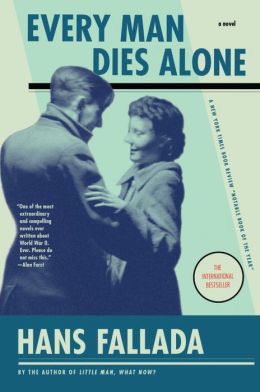
Every Man Dies Alone by Hans Fallada, translated by Michael Hofmann

Every Man Dies Alone by Hans Fallada, translated by Michael Hofmann, is not an epic love story of triumph over evil, but a psychologically and emotionally jarring, dramatized examination of German society as Hitler garnered more and more power, conquered more nations, and turned his own people against themselves.  Otto and Anna Quangel have one son and he was taken from them when he went to the front for the Fatherland.  This event changes everything for them, and their journey begins anew even as they strive to maintain some normalcy.

Meanwhile, Eva Kluge has made a decision to kick her husband out of her life for good and to sever all ties.  He’s a drunkard, a gambler, and a womanizer, and he deserves nothing less than to be kicked to the curb.  However, Enno Kluge only becomes more debased when he encounters Emil Borkhausen — another drunken criminal, but one with a focus on how to best screw the next person over for his own benefit.  There are the Nazi Party members, the Persicke’s and Judge Fromm, as well as Frau Rosenthal, and Inspector Escherich, who all come into contact with many of these characters at times when fates are decided.

“No, it wasn’t a letter, it was silly, useless chatter, and not even true at that.  She wasn’t safe at all.  Never in the last ghastly months had she felt herself in such danger as in this quiet room.  She knew she would have to change here, she wouldn’t be able to escape herself.  And she was afraid of who she might turn into.  Perhaps she would have to endure even more terrible things to come, she who had already changed from Lore to a Sara.”  (page 80)

Early on, readers will find Fallada’s style unusual, especially when the author interjects himself into the story to explain the fate’s of minor characters and because each chapter is given a heading, which are unnecessary and mostly give away the contents of those chapters — even those chapters that are a mere three pages and major plot points occur.  There also are moments in the narrative where points of view are switched without a break in the text or a new section beginning, which can leave some readers feeling a little lost or frustrated.  However, later on, these transitions smooth out a bit more and fade away as chapters begin to designate points of view switch.  With that said, Fallada has created a world as close to the real Germany under the Third Reich as can be fictionalized without readers having to read a nonfiction book or having to live through the torture and constant fear themselves.  Although some aspects are overly melodramatic on some occasions and some of the minor characters were a bit superfluous, readers will be swept up in the fear, the pain, and all of the other emotions tied to the Gestapo’s investigations, German residents’ spying, and death of loved ones and dreams.

“‘Who wants to die?’ he asked.  ‘Everyone wants to live, everyone–even the most miserable worm is screaming for life! I want to live, too.  But maybe it’s a good thing, Anna, even in the midst of life to think of a wretched death, and to get ready for it.  So that you know you’ll be able to die properly, without moaning and whimpering.  That would be disgusting to me…'” (page 294)

Fallada throws in hiding a Jewish woman, the spying neighbors, the conspirator cells against the Third Reich, and the high-and-mighty Nazi members.  What’s great is how well all of these subplots, characters, and themes mesh together to highlight the struggle of coping with loneliness, the possibility of death, and the hopelessness of fighting something bigger than oneself because it is right and decent.  While readers may not agree with everything that these characters do, the fear that pervades the German Reich effectively influences each character differently.  Every Man Dies Alone by Hans Fallada, translated by Michael Hofmann, is a wide ranging look at how small actions can lead to either small changes in others or spur wider change.  But it also demonstrates the strength of love that may not be as obvious on the surface or to outsiders.

This is my 16th book for the 2013 New Authors Challenge.


About the Author:

Born on July 21, 1893, Hans Fallada was one of the famous writers in the first half of the 20th century. Most of his novels were written in German and only 11 of them were translated in English, one of them was “Every Man Dies Alone.” The said novel was first published in 1947. But it was only in 2009 that it was translated in the English language by Michael Hoffman.

Shortly after Fallada completed it, he died in Berlin due to heart failure on the 5th of February 1947.

What the Book Club Thought: (Beware of spoilers)

Every Man Dies Alone by Hans Fallada was our March book club pick, thanks to our resident WWII expert Anna from Diary of an Eccentric.  Anna and one other member loved the book and planned to give it five stars, while one member was unsure whether he would rate it three or four stars.  As I had not finished the novel prior to discussion, I had not made up my mind, but was leaning toward four stars, which is where I finally landed.  Two other members did not read the book and one did not finish.  Our youngest member did not participate in this discussion or read due to the content of the novel.

Most of the members enjoyed Fallada’s characters Otto and Anna Quangel and their work with the postcards to open the eyes of fellow Germans to the atrocities of the Reich, while one member vehemently hated Enno Kluge and another member thought Borkhausen was comical.  I agree that Borkhausen was a bit comical, especially given his outrageous decision-making and the events that befell him.  Some members agreed that the writing style was tough to get used to, and that the beginning half was slower than the latter third of the book, which was a fast-paced wrap up of the events and more.  One member did not think the final chapter was necessary, while Anna said that maybe the final chapter was to end the novel on a good note.  I have to agree with Anna that I liked the final chapter in the novel because it wrapped up some loose ends and really ended the novel on a more hopeful note.

One aspect of the novel that was brought up was the role of the cyanide pill in providing solace to one character and torture to another.  It was interesting to see how someone could feel free knowing that the cyanide pill was available, while another character could only feel free once the pill was eliminated from the equation.  I was intrigued by Inspector Escherich, and found him to be one of the most dynamic and complex secondary characters in the book.  It almost would have been more interesting to have seen more of him, but not totally necessary.

Overall, there seemed to be a mixed reaction to the writing style, but overall about half of the members enjoyed the novel.  I did wonder about how prepared one could make himself or herself for death given the circumstances these characters find themselves in, and I also wonder how much of Fallada’s experiences with loneliness and persecution are infused in the novel as well, particularly in the case of Rosenthal and the Quangels.

Guest Post & Giveaway: Sweet Treats in The Union Street Bakery by Mary Ellen Taylor

The Union Street Bakery by Mary Ellen Taylor becomes the center of Daisy McCrae’s life, even though she feels out of place as an adopted child and out of sorts with the life she expected to lead after breaking up with her boyfriend and losing her job.

With my recent discoveries in foodie fiction, it should come as no surprise that I’d be interested in reading Taylor’s book, which includes recipes.  There will be a giveaway after the guest post for 1 copy to U.S./Canadian residents.  So stay tuned for that in a little bit.

Please give Taylor a warm welcome as she talks about her book, recipes, and more.

It seemed fitting that a book set in a bakery would include recipes. However, I knew when I was writing the novel, I couldn’t just include any recipe. I had to incorporate recipes that not only offered tempting flavors but also conveyed emotions and memories.

THE UNION STREET BAKERY is the story of Daisy and her two sisters Rachel and Margaret who are bound together by a failing family bakery they each want to save. Each has their own journey and favorite sweet treat that has special meaning to them.

The bakery’s sugar cookies are one of my heroine Daisy’s first memories. They were the last treat her birth mother bought her before she abandoned her at the bakery as a three year old in the bakery cafe. For years when Daisy baked the cookies she couldn’t help but taste the sweetness and the bitterness.

There’s also a taste of history with Hennie’s Freedom cakes. These savory crackers were a staple for many of the nineteenth century sailors who came and went from the port city of Old Town Alexandria. They were also the only source of income for a nineteenth century slave who made and sold the crackers during her very rare, precious free moments.

Even Mike’s Chocolate Espresso Torte is poignant. It’s delicious and quite decadent but it too carries sad memories. Daisy’s sister, Rachel, can’t make the beloved bakery favorite without remembering her late husband who created the cake.

I hope you get a chance to bake a few of the recipes I’ve included in the back of THE UNION STREET BAKERY. And just to give you a taste of things to come, I’ve included Mike’s Chocolate Espresso Torte. Enjoy!

Mike’s Chocolate Espresso Torte

¾ pound butter
¾ cup sugar
¾ cup strong coffee
¾ pound semisweet chocolate chopped up
6 eggs

Preheat oven to 350 degrees.

Melt the butter and chocolate together in a double boiler. Mix the eggs and sugar together but not to the point that they are frothy. Slowly mix the chocolate/butter mixture into the egg/sugar mixture. Add coffee and stir well. Pour this mixture into a greased 8-inch spring form pan. Bake the torte at 350 degrees for 15 minutes then turn the oven down to 300 degrees and bake for one hour.

There is no way to tell if the torte is done by looking at it or sticking a knife into it. Just take out of the oven after an hour. It will be high, like a soufflé at first but will sink down in a few minutes. Let it sit until it is completely cooled. Refrigerate overnight. Unmold, slice and serve.

If you try out the recipe, you’ll have to stop back and talk about how good it tasted. My mouth is watering already.  Thanks, Mary for joining us today.

For the giveaway, leave a comment here about your favorite “sweet treat” recipe.

Deadline for U.S./Canadian entrants is March 29, 2013 at 11:59 PM EST

National Poetry Month Blog Tour Calendar for April 2013

Welcome to the National Poetry Month Blog Tour Event Calendar as it currently stands.  I’d like to fill in all the dates, so please leave a comment or fill out the form to join the fun.

April 1:  Savvy Verse & Wit Kick-Off

April 2: Things Mean a Lot

April 3:  MaggieMaeIJustSayThis

April 4:  Necromancy Never Pays

April 5:  Regular Rumination

April 6:  Booking Mama

April 7: Rhapsody in Books

April 8:  Maximum Exposure

April 9:  The Picky Girl

April 10: Tabatha Yeatts

April 11:  Book Snob

April 12:  Peeking Between the Pages

April 13:  The Betty and Boo Chronicles

April 14:  Rhapsody in Books

April 15: My Juicy Little Universe and Life’s A Stage

April 16:  Lost In Books

April 17: Diary of an Eccentric

April 18:  Still Unfinished

April 19:  Wordy Evidence of the Fact

April 20:  Bermudaonion Weblog

April 21:  Insatiable Booksluts

April 22: Ad Astra (To the Stars)

April 23:  So Many Books

April 24:  Lit and Life

April 25:  A Bookish Way of Life

April 26: Life’s a Stage

April 27:  Insatiable Booksluts

April 28:  The Indextrious Reader

April 29:  Pen Paper Pad at Savvy Verse & Wit

April 30:  Worducopia


Mailbox Monday #217

Mailbox Mondays (click the icon to check out the new blog) has gone on tour since Marcia at A Girl and Her Books, formerly The Printed Page passed the torch. This month’s host is Chaotic Compendiums.

The meme allows bloggers to share what books they receive in the mail or through other means over the past week.

Just be warned that these posts can increase your TBR piles and wish lists.

Here’s what I received for review:

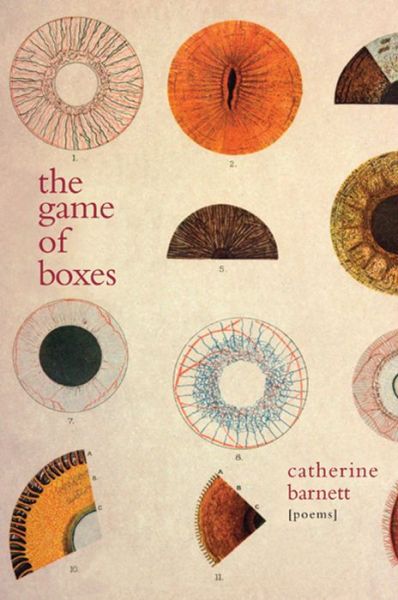
1.  The Game of Boxes by Catherine Barnett, which came from the Academy of American Poets and won the James Laughlin Award.

In Catherine Barnett’s The Game of Boxes, love stutters its way in and out of both family and erotic bonds. Whittled down to song and fragments of story, these poems teeter at the edge of dread. A gang of unchaperoned children, grappling with blame and forgiveness, speak with tenderness and disdain about “the mothers” and “the fathers,” absent figures they seek in “the faces of clouds” and in the cars that pass by. Other poems investigate the force of maternal love and its at-times misguided ferocities. The final poem, a long sequence of nocturnes, eschews almost everything but the ghostly erotic. These are bodies at the edge of experience, watchful and defamiliarized.

2.  Wet Welded Together by Louise Grassi Whitney from the poet for review.

From time-to-time a poet, unattached to academia, explodes onto the scene fully-clothed in truth and authority. Indomitable Louise Grassi Whitney writes about her fascinating and full life, in exquisite form reminiscent of Sylvia Plath and Adrienne Rich and other thought-provoking poets in intensity, form and beauty. Her diverse subjects are of horses, her ties to the Paleolithic (hence, the mammoths) and the Explorers Club, the natural world, partnership with women, exotic places, dissolution of privilege upon divorce, her single motherhood and love of her three sons and grandchildren, inheritance and hardship, her mute son’s autism and his ability to cast spells, and many, many other grand mysteries.

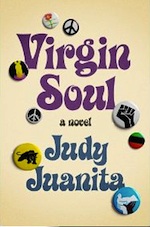
3.  Virgin Soul by Judy Juanita from Viking.

At first glance, Geniece’s story sounds like that of a typical young woman: she goes to college, has romantic entanglements, builds meaningful friendships, and juggles her schedule with a part-time job. However, she does all of these things in 1960s San Francisco while becoming a militant member of the Black Panther movement. When Huey Newton is jailed in October 1967 and the Panthers explode nationwide, Geniece enters the organization’s dark and dangerous world of guns, FBI agents, freewheeling sex, police repression, and fatal shoot-outs—all while balancing her other life as a college student.

A moving tale of one young woman’s life spinning out of the typical and into the extraordinary during one of the most politically and racially charged eras in America, Virgin Soul will resonate with readers of Monica Ali and Ntozake Shange.

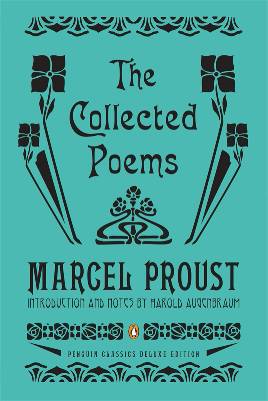
4.  The Collected Poems of Marcel Proust with introduction by Harold Augenbraum, and aid from Claude Francis and Fernande Gontier from Penguin.

As a young man, Proust wrote both poetry and prose. Even after he embarked on his masterful In Search of Lost Time at the age of thirty-eight, he never stopped writing poetry. His verse is often playful, filled with affection and satire, and is peppered with witty barbs at friends and people in his social circle of aristocrats, writers, musicians, and courtesans.
Few of the poems collected here under the editorship of Harold Augenbraum, founder of the Proust Society of America, have ever been published in book form or translated into English until now. In this dual-language edition of new translations, Augenbraum has brought together nineteen renowned poets and poetry translators to bring Proust’s exuberant verse back to life.

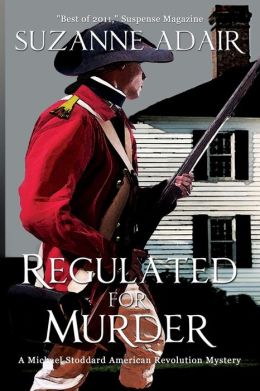
5.  Regulated for Murder by Suzanne Adair for review from the author.

Bearing a dispatch from his commander in coastal Wilmington, North Carolina, redcoat Lieutenant Michael Stoddard arrives in Hillsborough in February 1781 in civilian garb. He expects to hand a letter to a courier working for Lord Cornwallis, then ride back to Wilmington the next day. Instead, Michael is greeted by the courier’s freshly murdered corpse, a chilling trail of clues leading back to an execution ten years earlier, and a sheriff with a fondness for framing innocents–and plans to deliver Michael up to his nemesis, a psychopathic British officer.

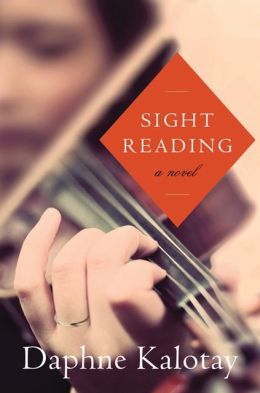
6.  Sight Reading by Daphne Kalotay for review.

On a warm spring day after a long New England winter, Hazel and Remy spot each other for the first time in years. Under ordinary circumstances, this meeting might seem insignificant. But Remy, a gifted violinist, is married to the Scottish composer Nicholas Elko–once the love of Hazel’ s life, now struggling with a masterwork he cannot realize. In the twenty years since Hazel’ s world was tipped on its axis, these three artists have faced unexpected joys, mysterious afflictions and other puzzles of life, their fates irrevocably interlaced.

As their story unfolds across two decades, moving from Europe to America and from conservatory life to the Boston Symphony Orchestra, this moving novel explores how the desire to create something real and true–be it a work of art or one’s own life–can lead to deeper personal revelations, including the secrets we keep, even from ourselves.  Lyrical and evocative, Sight Reading asks questions about what makes a family, about the importance of art and beauty in daily life, and about the role of intuition in both the creative process and the evolution of the self.

7.  Thievery by Seth Abramson for review.

“A few rare holdouts to the contrary, American culture is loud, unsubtle, insensitive, needy, exhausting, cheaply convenient, unreflective, and above all, distracted. What has been happening behind the scenes during all the years we haven’t been paying attention? What world have we given ourselves and what have we given up in that shallow exchange? Such observations are deeply implied by the poems in Seth Abramson’s Thievery. At the bottom of this book is the sense that we’ve been ripped off and don’t even know it yet. That we have allowed it has left us stunted, morally and spiritually, with no greater sense of wonder than a Styrofoam cup. Abramson is not preaching, however: he is telling the melancholy, lonely truth.” —Maurice Manning

8.  Reflections of a Mississippi Magnolia by Patricia Neely-Dorsey for review.

Reflections of a Mississippi Magnolia-A Life in Poems is a true celebration of the south and things southern. The author states, “There are so many negative connotations associated with Mississippi and the south in general. In my book, using childhood memories, personal thoughts and dreams, I attempt to give a positive glimpse into the southern way of life.” The book has been called, among other things, a poetic love letter to the south and a poetic autobiography. The author invites readers to Meet Mississippi Through Poetry Prose and The Written Word.

9.  I also received the Cajun Prize Pack of foodstuffs from Diary of an Eccentric’s giveaway in celebration of Acadian Waltz by Alexandrea Weis.  I had some great rice and beans from the prize pack this past weekend, and it was delicious.

What did you receive?

194th Virtual Poetry Circle

Welcome to the 194th Virtual Poetry Circle!

Remember, this is just for fun and is not meant to be stressful.

Keep in mind what Molly Peacock’s books suggested. Look at a line, a stanza, sentences, and images; describe what you like or don’t like; and offer an opinion. If you missed my review of her book, check it out here.

Also, sign up for the 2013 Dive Into Poetry Challenge because its simple; you only need to read 1 book of poetry. Please sign up to be a stop on the 2013 National Poetry Month Blog Tour and visit the stops on the 2012 National Poetry Month Blog Tour.

Today’s poem is from Claudia Reder:

Untranslatable Song

          "Everyone needs one untranslatable song." --Juarroz 

On hearing the striped contralto of guinea fowl, 
its mock opera quivers the parsley atop its head--

The song makes its imprint
in the air, making itself felt,
a felt world. Here, there, 
the stunned silence 
of knowing I will not remember 
what I heard;

futures
that will never happen,
a fluidity we cannot achieve 
except as a child 
creating possibility.

This is the untranslatable song
hidden in the earth.

What do you think?