Quantcast

192nd Virtual Poetry Circle

Welcome to the 192nd Virtual Poetry Circle!

Remember, this is just for fun and is not meant to be stressful.

Keep in mind what Molly Peacock’s books suggested. Look at a line, a stanza, sentences, and images; describe what you like or don’t like; and offer an opinion. If you missed my review of her book, check it out here.

Also, sign up for the 2013 Dive Into Poetry Challenge because its simple; you only need to read 1 book of poetry. Please visit the stops on the 2012 National Poetry Month Blog Tour.

Today’s poem is from Toi Derricotte:

Love Story in Black and White

What the hell am I doing
hugging a white man in an apron?
I said it to myself—but out loud! —so that
he pushed me away slightly:
What did you say?
This was the first white man I had dated—
though I was sixty!
It wasn't only that I was holding
a body close for the first time
in years; not only
that he was white.
Our mothers' fears and angers—
heirlooms of slavery—
had hardened my heart.
Perhaps it was the apron. I had never imagined
a white man (not a chef)
come down to that order. Perhaps
the way he met me, beaming,
opened wide,
confounded my expectations
and undid me.
How lovely his body
as he bends to the wise tomatoes.
What does black
and white have to do with it,
our love that's lasted ten years?
Each act of tenderness
amends the violence of history.

What do you think?
Short Story Friday: Rules for Virgins by Amy Tan

It’s Friday again, and as promised, here is one of the occasional Short Story Friday features. Today’s feature will focus on Amy Tan’s e-short story, Rules for Virgins.

Rules for Virgins by Amy Tan is a short story in which a virgin courtesan is being told the ins and outs of the profession.  Set in 1912 Shanghai, Magic Gourd is explaining the ways in which courtesans gain favor with the wealthiest of men.  Violet, a young woman whose mother owned a similar house of women, is being tutored in the ways of beguiling and pampering not only the men they want to attract, but the other women in the house so that competition does not become deadly.

“While you are still a virgin courtesan, you must know all the arts of enticement and master the balance of anticipation and reticence.”

The way in which the story is told is in the form of teacher-student, and while Magic Gourd is harsh at times and provides unabashed detail about the expectations of men.  She exposes the inner workings of the house and the other women’s jealousies, but she also explains the function of the “mosquito press” in spreading rumors that build the reputations of new girls and houses.

“Few men are capable of preserving their ideal self.  If he is a scholar, what philosophical principles were sacrificed to ambition?  If he is a banker, what oath of honesty was dirtied by favors?  If he his a politician, what civic-minded policies were destroyed by bribes?  You must cultivate his sentimentality for moral glory and help him treasure his myth of who he was.”

The narration is reminiscent of Tan’s earlier work, but in this case, the women are not related by birth, but by situation, and the older, wiser Magic Gourd is imparting her wisdom to the younger courtesan.  Rules for Virgins by Amy Tan is a great look into this mysterious world of entertainment and enticement, but it seems too short and would have been great to see Violet begin to navigate this world at the guiding hand of Magic Gourd.

About the Author:

Amy Tan is an American writer whose works explore mother-daughter relationships. Her most well-known work is The Joy Luck Club, which has been translated into 35 languages. In 1993, the book was adapted into a commercially successful film.

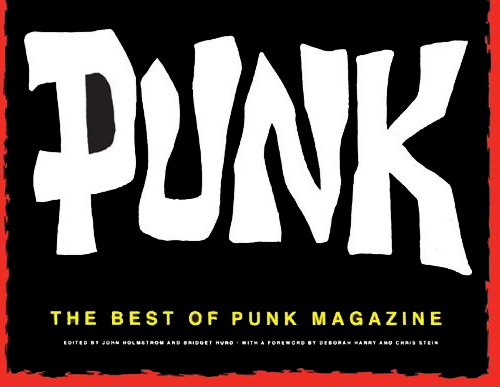
The Best of PUNK Magazine by John Holmstrom and Bridget Hurd

The Best of PUNK Magazine by John Holmstrom and Bridget Hurd, with a foreward from Deborah Harry (yes, the singer from Blondie) and Chris Stein (co-founder of Blondie), is a compilation of the best articles and artwork from the magazine, and it opens with a fun depiction of New York City — “The PUNK Map of N.Y.C.: For jerks who just don’t know their way around.”  The drawings of the rivers and the streets and the realistic, and yet, out there cartoons are likely to generate smirks, if not genuine smiles.

As someone born in the late 1970s, but in love with punk music and Blondie, this collection is something that provides not only more background about the emergence of punk, but also the  whimsical fun and sort of not-a-care-in-the-world feel of the genre.  PUNK magazine had a lot to live up to as the voice of 1970s New York, but it also had a lot to break away from in terms of what was expected of a music magazine.  Clearly, PUNK was a magazine dedicated to snarkiness in all its forms — visual and textual — and it worked well.  It was gritty, it was real, and the glamor was no where in its photos or its comics, but that seems to be why the magazine stood out.  There was a whole lot of youthful exuberance in the beginning of this magazine as nicknames were handed out and spaces were renamed — like the PUNK Dump.

The opening interview with Lou Reed is just the tip of the mosh pit with this magazine.  Reed is so candid, it’s almost like he forgot he was being interviewed by a magazine, and it is unlikely anyone told him the interview would be turned into a comic strip.  The comics are filled with typical masculine and bathroom humor at times, but the drawings are enough to carry the jokes beyond their static line.  A really cool moment in the collection is the results of the Patti Smith Graffiti Contest, where some are so tasteful and others are just outrageous.
By the third issue, the magazine’s editors knew they were a hit when the Ramones snagged a record contract in part because of the magazine’s coverage of their band.  One particular gem in the collection is Holmstrom’s explanation of punk:  “sound — faster and louder; humor — like the novelty songs of the 1950s and 1960s; fashion — no glam, just the classics: shades, blue jeans, t-shirt, sneakers; minimalism — less is more.  No bombast; attitude — similar to the hippie ethos “Do your own thing but let me do mine,” but more like: “F**k you! I don’t care what you do, just leave me alone!”; do it yourself — publish your own ‘zine, make your own record; retro rock/conservatism — mining the tradition of rock ‘n’ roll from the 1950s and early 1960s, while rejecting everything after the hippies took over in 1967.”

The Best of PUNK Magazine by John Holmstrom and Bridget Hurd is a great compilation, but you may not want to leave it on the coffee table with conservative parents or in-laws around.  It’s got some bawdy humor, creative ideas, fantastically candid photos and interviews with punk rock stars of the time, and so much more.  Reminiscent of MAD Magazine and the like, but it really has a garage feel about it — a passion of the listener, the true fans of PUNK.

About the Author:

John Holmstrom is a cartoonist and writer and co-founder (with Legs McNeil) of Punk magazine. He illustrated the covers of the Ramones albums Rocket to Russia and Road to Ruin, and created the characters Bosko and Joe, which were published in Scholastic’s Bananas magazine from 1975-1984, as well as in Stop! Magazine, Comical Funnies, Twist, and High Times. Holmstrom’s work and unmistakable artistic style has become the key visual representation of the Punk era.

This is my 13th book for the 2013 New Authors Challenge.

Guest Review: Every Seed of the Pomegranate by David Sullivan

Erica Goss is a talented poet, whose Wild Place poetry collection I loved (my review) and who is the current Poet Laureate for Los Gatos 2013-14, has offered up her talents today as a reviewer, while I’m attending a wonderful writer’s conference in Boston.

Today, she’ll be reviewing Every Seed of the Pomegranate by David Sullivan (Tebot Bach, San Diego, CA, 2012, ISBN: 978-1-893670-86-0, 118 pages).  Without further ado, please give her a warm welcome:

On September 11, 2001, I woke to the news that New York City had been attacked. From almost three thousand miles away in California, the events I watched on TV, in spite of their horror, didn’t seem real to me. They were happening in some faraway place.

That evening, I discovered that Mark Bingham was on United Airlines Flight 93, which crashed near Shanksville, Pennsylvania. Mark was the son of my neighbor, Alice Hoagland. The attack was no longer “over there.” It had arrived in my back yard.

David Sullivan’s latest collection of poems, Every Seed of the Pomegranate, brings the war in Iraq up close and personal in the same way. I had to close my eyes often, after reading lines such as “Pleasure and sorrow / are bound together – wheat sheaves / awaiting threshing” (Night Visions 1) or “No tears mark these days. / After Saddam’s soldiers left / she burned the bedsheets” (Kurdish House on Fire).

One of this collection’s many strengths is how the poems use the smallest details to authenticate frequent shifts in point of view. From the poem “Swirling Sand,” the voice of a soldier:

This sand infiltrates
every goddamn thing I wear.
Send lotion, pronto.

And the voice of a grieving father:

Allah knows my heart,
my son.  I do not want to
hear your voice on earth,

only in heaven,
perched by Allah’s ear, singing
inside a green bird.

War is a strange blend of the unthinkable and the practical. They both inform “Swirling Sand,” from graves that “look like / hastily plowed fields” to

Outgoing letters
catch helicopter downwash,
bust the ropes that hold 

them and cascade out
over the ocean.  Flurry
of never-heard birds.

The poem ends with this chilling image: “The eyeless sockets / fill with swirling sand,” describing the “black ash that was once a man.” From the irritation of sand on skin to the ghostly after-image of a dead man, these images crash into the reader’s mind with a precise, yet jumbled logic. War often appears this way to the powerless, to civilians, and anyone outside of the decision-making process, which is to say most of us.

Astute readers have probably noticed that these poems are in haiku stanzas. In his preface to the book, Sullivan writes that all of the poems “came in the same linked haiku form.” The choice of haiku, although not intuitive at first, works unexpectedly well with the topic of war. It imposes a structure on inconceivable violence and tragedy, containing them in manageable, bite-sized sections. Each stanza, controlled within haiku’s syllabic restraints, functions almost as a separate poem; the white space between the stanzas gives the reader a place to breathe before moving on. Using the haiku form “cut(s) down the poem to its sinewy essence,” to quote Denise Levertov from Light Up the Cave. That essence is vital to the voices represented in the book, giving each one a distinct diction and vocabulary.

Angels are among those many voices. They provide commentary, speaking in detached and eerie tones. From “Angel Jibril (Gabriel), The Messenger:”

Get out of the way,
I could have said, but you had
to believe someone
would be forgiven

and

you go out soothed
by the songs you’ve heard birds sing
and come back sobbing.

Sullivan’s skill as a poet is evident as he moves from the impartial voice of an angel to the voice in “Staff Sergeant Alex Lemons, From His Wheelchair:”

My dreams grow heavy
with daily fuck-ups.  I trudge
back up garage ramps

having forgotten
where I parked and what the damn
Impala looks like.

Again, the details make the poem real and vital: “I tried recovery, / but I’m not into talking / ‘bout what they can’t feel.” Most of us will never understand Alex Lemons’s suffering (in the notes to the poem, Sullivan writes that since returning to the US, Lemons has had fourteen operations on his damaged feet, which were “shredded due to an accident in Najaf”), nor the physical and emotional damage such an event has left him. Through the deep compassion of these poems, however, we have a place to enter.

“The Black Camel” evokes three distinct interpretations of the same event. Sullivan’s notes on the poem help explain the various sources for the story, but they are not necessary to fully enjoy it. The voices of an American soldier, an Iraqi Republican guard, and his heartbroken father, grow more anguished as the poem unfolds: “The IED hit / while I held his cigarette. / Where’s God, Tiffany?” and “Swore I saw my son, / but when they showed me, I cried / for a stranger boy.” Only the voice of Malak, the angel, stays consistent: “No one has been here / before you, no one will come / after you’re gone” and “Don’t cling to one form; / water continues to flow / after the pot breaks.”

These poems do not judge, nor are they therapy. They do not offer explanations. At the end of the book, I still didn’t know why men start wars, but I understood a more disturbing truth: that the capacities for violence and compassion live within every person, and quite often, comfortably side-by-side. As the Reverend Marilyn Sewell once wrote, “Most evil is done in the name of some greater good.” The poems in Every Seed of the Pomegranate recognize this paradox. They remind us that even though what happened in Iraq might seem far away, it’s as close as our backyard. We ignore it at our peril.

Every Seed of the Pomegranate by David Sullivan sounds like a collection that would have a deep emotional impact on the reader, particularly those who know soldiers — are related to them or friends with them — or who are even soldiers. Were these poems cathartic for the writer as they might be for a soldier? I’d like to think they would be, and Goss makes an excellent point about the capacity for violence and compassion living within every person and the paradox that it presents.

Six Sisters’ Stuff: Family Recipes, Fun Crafts, and Much More & 4×4 Dinner Giveaway/Challenge

Six Sisters’ Stuff:  Family Recipes, Fun Crafts, and So Much More! is a flexible paperback cookbook that not only includes gorgeous photos of entrees, appetizers, and desserts, but also a variety of crafts to keep your kids occupied and to dress up the table.  Camille, Kristen, Elyse, Stephanie, Lauren, and Kendra are biological sisters and know what it means to have a busy life, but they still make time for family dinners and this book includes 100 easy-to-follow recipes using ingredients commonly found in your pantry.

The full-color photos in this cookbook will make your mouth water even if you’ve just eaten dinner.  From the main meals to the slow cooker meals, these women have made cooking for a family incredibly easy and simple with these recipes.  There are salads, sides, and breads, plus dessert — oh, the dessert.  (I made one for book club, see photos and reaction below)  But this book is not only about the food and having family meals together, but it also is about spending time with family whether it’s on a road trip or inside on a rainy day (I’ll be testing these out in the coming weeks).

There are projects ranging from creating simple decorations like a snowman out of blocks and felt bows to more complex projects like bookshelves made out of pallets.  These projects are sure to occupy family members and make the house look more beautiful.  The sisters also offer advice on spring cleaning, which may seem like common sense but for a first time homeowner with a new kid the task can be overwhelming.  There also are healthy snack ideas, fun date ideas to keep the romance alive, and a weekly breakdown on how to build a 72-hour emergency kit for the entire family.

Six Sisters’ Stuff:  Family Recipes, Fun Crafts, and So Much More! is appealing to look at, create from, and learn.  It’s not only about cooking a healthy meal in a short amount of time with the ingredients on hand, but it’s also focused on ensuring that family time becomes a priority.  Readers will have no choice but to dig in and start creating.  Delicious family recipes ready to fill watering mouths and simple crafts to spruce up any busy home.

My baking experience with Mom’s Chocolate Marshmallow Brownies:

As is usual with me, I was pulled in a hundred different directions and had to improvise the recipe, though I do plan to make this recipe the way it is written at some point.  I wanted to make these for book club in February, but with little time, I turned to my favorite box brownie mix, Ghirardelli Dark Chocolate Brownie mix, which never fails me.  And I quickly found the brownie pan I chose would require me to use 2 boxes, which met the hubby had to run out and get a second box.

But then I made the Chocolate frosting from the recipe for on top of the marshmallows.  The recipe called for 2-3 cups of powdered sugar, but I found out quickly that 2 cups was too little because the frosting was soupy, so I had to make it 3 cups for the right consistency.  Once I got the frosting made, i spread it on top of the marshmallows (which I really didn’t need the whole bag of).

The pan must have still been a bit warm because the frosting melted a little too much over the marshmallows, making it an even gooier mess than I expected, but it didn’t seem to matter to the book club members who were eager to try it.  I just had to have the first piece, and one of the corners, since those are my favorite!  I took a close up of one piece to share with everyone.  YUM!

Six Sisters photoAbout the Six Sisters:

In February 2011, we started our blog SixSistersStuff.com. After years of living close to one another, we were being pulled in many different directions- one sister moved to the West coast, another sister followed her husband to medical school, one moved away to college, and another sister had just lost a baby. We needed each other now more than ever and we used our blog as a way to stay in touch.

Before we started blogging, we were constantly calling each other for recipe ideas, craft projects, and ways to keep our children entertained during those long winter days. The blog was the perfect way for us to share those ideas with each other and we were having so much fun doing it. We are all busy, whether it’s with our kids, jobs, school, husbands, community involvement, or something else eating up our time, so all the recipes and projects you will find on this blog are quick and easy! Our recipes are family favorites that use ingredients that can commonly be found in your pantry and our crafts and home decor projects can be made with little or no money. We don’t claim to be amazing chefs- we just know the importance of feeding your family a home-cooked meal and sitting down to eat it together.


This is my 12th book for the 2013 New Authors Challenge.


About the 4×4 Dinner Challenge:

4X4 dinner challenge

  • Pledging to accept the 4×4 Dinner Challenge means the family will eat together at least four times per week for four weeks.
  • Families are encouraged to register online, and they will receive meal tips, ideas for family activities, and helpful recipes to make meeting the challenge easy.

To win a copy of this colorful cook book, do the following:

  1. Like the Six Sister’s STUFF Facebook page and join the 4×4 Dinner Challenge
  2. Click the 4×4 Family dinner banner on the Website (on the right sidebar) and leave a comment joining the challenge.
  3. Come back here and leave a comment on this post about what you’d like to check out in Six Sisters’ Stuff.

Deadline to enter is March 10, 2013, at 11:59 PM EST.

Mailbox Monday #214

Mailbox Mondays (click the icon to check out the new blog) has gone on tour since Marcia at A Girl and Her Books, formerly The Printed Page passed the torch. This month’s host is Chaotic Compendiums.

The meme allows bloggers to share what books they receive in the mail or through other means over the past week.

Just be warned that these posts can increase your TBR piles and wish lists.


Here’s what I received:

1.  The Secretary by Kim Ghattas for review from Henry Holt.

In November 2008, Hillary Clinton agreed to work for her former rival. As President Barack Obama’s secretary of state, she set out to repair America’s image around the world—and her own. For the following four years, BBC foreign correspondent Kim Ghattas had unparalleled access to Clinton and her entourage, and she weaves a fast-paced, gripping account of life on the road with Clinton in The Secretary.

With the perspective of one who is both an insider and an outsider, Ghattas draws on extensive interviews with Clinton, administration officials, and players in Washington as well as overseas, to paint an intimate and candid portrait of one of the most powerful global politicians. Filled with fresh insights, The Secretary provides a captivating analysis of Clinton’s brand of diplomacy and the Obama administration’s efforts to redefine American power in the twenty-first century.

Populated with a cast of real-life characters, The Secretary tells the story of Clinton’s transformation from popular but polarizing politician to America’s envoy to the world in compelling detail and with all the tension of high stakes diplomacy. From her evolving relationship with President Obama to the drama of WikiLeaks and the turmoil of the Arab Spring, we see Clinton cheerfully boarding her plane at 3 a.m. after no sleep, reading the riot act to the Chinese, and going through her diplomatic checklist before signing on to war in Libya—all the while trying to restore American leadership in a rapidly changing world.

Viewed through Ghattas’s vantage point as a half-Dutch, half-Lebanese citizen who grew up in the crossfire of the Lebanese civil war, The Secretary is also the author’s own journey as she seeks to answer the questions that haunted her childhood. How powerful is America really? And, if it is in decline, who or what will replace it and what will it mean for America and the world?

2.  No Ocean Here by Sweta Srivastava Vikram for review from the poet.
No Ocean Here bears moving accounts of women and girls in certain developing and underdeveloped countries. The book raises concern, and chronicles the socio-cultural conditions of women in parts of Asia, Africa, and the Middle East. The stories, either based on personal interviews or inspired by true stories, are factual, visceral, haunting, and bold narratives, presented in the form of poems.

3.  Night Thoughts by Sarah Arvio, which I won.

In this remarkable and unique work, award-winning poet Sarah Arvio gives us a memoir about coming to terms with a life in crisis through the study of dreams.

As a young woman, threatened by disturbing visions, Arvio went into psychoanalysis to save herself. The result is a riveting sequence of dream poems, followed by “Notes.” The poems, in the form of irregular sonnets, describe her dreamworld:  a realm of beauty and terror emblazoned with recurring colors and images—gold, blood red, robin’s-egg blue, snakes, swarms of razors, suitcases, playing cards, a catwalk. The Notes, also exquisitely readable, unfold the meaning of the dreams—as told to her analyst—and recount the enlightening and sometimes harrowing process of unlocking memories, starting with the diaries she burned to make herself forget. Arvio’s explorations lead her back to her younger self—and to a life-changing understanding that will fascinate readers.

An utterly original work of art and a groundbreaking portrayal of the power of dream interpretation to resolve psychic distress, this stunning book illumines the poetic logic of the dreaming mind; it also shows us, with surpassing poignancy, how tender and fragile is the mind of an adolescent girl.

What did you receive?

Tesco Presents: Creative Inspiration for Your Writing

While I’m away from the computer for a writing conference and just generally taking a break from the blog in the next week, I’ve got some posts pre-scheduled.  I hope that you enjoy them and I will be back to reply to comments when I return.

For today, I’ve got an interesting guest post brought to you by Tesco.  Without further ado:

With creative writing courses, books on writing, and specialty magazines dedicated to the craft, there’s no shortage of advice on writing or finding inspiration. But as one who has leafed through the magazines, read the books, and even taken courses, here is the advice I’ve found most helpful when it comes to actually finding inspiration.

Create Time to Write Every Day

While walking through a world-class gallery or sitting in a Parisian cafe likely tugs at your heart-strings more than sitting at the kitchen table with your journal or computer, the kitchen table is the way forward (though do bring a notepad with you if you plan on visiting the Parisian cafe, or the gallery, as something interesting might occur to you).

Inspiration can come in a flash, however it is definitely more important to create the time and space every day for inspiration to happen, not just hoping genius pays you a visit on your European vacation.

Making time to write every day is sound advice. For those who have made writing their career, not just a side-project, their routine almost always involves writing every day, or nearly so, with a minimum word-count as a goal. Inspiration also involves graft: once you’ve written a few lines or paragraphs, there is room for creativity to take hold of the story or poem, even if what you started with is ultimately abandoned for something more absorbing. Writing leads to more writing.

Read Every Day, as Much as Possible

If anyone ever says, “I don’t read while I’m writing, I don’t want to be too influenced by any particular writer,” pat them on the head and do the opposite. It’s a misguided person who thinks he or she will be negatively influenced by John Steinbeck, Walt Whitman or some other master. We should all hope to be influenced by geniuses like these.

Just as you should make time to write every day, make time also to read every day, whether that’s on the train (a Kindle is the perfect companion for a daily commute on public transportation), for half an hour before bed, or during your lunch break.

A well-known writer once said that everything you need to know about writing can be found in great books. So read for both inspiration and instruction. While there is magic in great writing that cannot be fully understood, there is technique that can be. Observe how scenes are constructed, how a great writer builds tension, then releases it. Great books will inform your creative process and inspire you to write. Indeed, something about reading gives us the courage to begin writing again.

191st Virtual Poetry Circle

Welcome to the 191st Virtual Poetry Circle!

Remember, this is just for fun and is not meant to be stressful.

Keep in mind what Molly Peacock’s books suggested. Look at a line, a stanza, sentences, and images; describe what you like or don’t like; and offer an opinion. If you missed my review of her book, check it out here.

Also, sign up for the 2013 Dive Into Poetry Challenge because its simple; you only need to read 1 book of poetry. Please visit the stops on the 2012 National Poetry Month Blog Tour.

Today’s poem is from Todd Swift’s When All My Disappointments Came At Once:

Hunting Party (page 84)

A heart is sacred, a wounded hart;
Outrun the symbol in the wood.

Pluck out the arrows.  The head
Enters after having been shot through

The air, in order to hunt and halt
The glorious animal that will be eaten;

Flesh parts from pelt; horns rise on walls.
The hall hums with music's knowing.

This is the festival in the glade,
The pump-pump of the love brigade,

That process known as seasonal,
The turn from rose to worm, grass to spade.

What do you think?

The Heart of Haiku by Jane Hirshfield

The Heart of Haiku by Jane Hirshfield, which I first read about it on Beth Kephart’s blog, is lyrical, meandering, and informative not only about Haiku — the art, its origination, and its longevity — but also about one of the greatest poets, Bashō, who lived and breathed Haiku.  Knowing very little about this Japanese poet from the 17th century doesn’t mean you don’t know him because as Hirshfield points out, he infuses every Haiku with his soul and experiences.  Not only can readers live his moments alongside him, but they also can create their own experiences within the Haiku.

“To read a haiku is to become its co-author, to place yourself inside its words until they reveal one of the proteus-shapes of your own life.  The resulting experience may well differ widely between readers:  haiku’s image-based language invites an almost limitless freedom of interpretation.”

Like many poets, verse comes naturally and is less like a job or profession than it is like breathing.  With elements of Zen and Shinto’s spiritual traditions, the poet led a contemplative life focused on not only the natural world, but his experiences with it and as part of it.  At many points in his life, he is affected by events beyond his control, but his poetry never fails to account for these moments or to push him through those hardships — even though it doesn’t seem as though Bashō considered them hardships.  Hirshfield says, “He wanted to renovate human vision by putting what he saw into a bare handful of mostly ordinary words, and he wanted to renovate language by what he asked it to see.”

“Zen is less the study of doctrine than a set of tools for discovering what can be known when the world is looked at with open eyes.  Poetry can be thought of in much the same way, and the recognition of impermanence, ceaseless alteration, and interdependence–the connection of each person, creature, event, and object with every other–need not be “Buddhist.”  These elements permeate the poetry of every tradition. . .”

What is most beautiful about Hirshfield’s examination of Bashō is the reverence she pays to him and her passion for not only his work, but also his dedication to improving it even when near death.  And like many others, he remained focused on pushing his students to strive for more than even he could achieve, urging them not to be the “other half of the split melon” by mirroring his own work.  Hirshfield not only provides history and poetry in this essay, but she also pinpoints the evolution of Haiku and discusses its beauty and its endurance through the ages, even as a teaching tool.

The Heart of Haiku by Jane Hirshfield is a stunning examination of one Japanese poet’s work and his love of life and poetry.  Her narration provides a unique way of stepping into the life and thoughts of Bashō as writer, poet, teacher, and human being.

About the Author:

Jane Hirshfield was born in New York City in 1953. After receiving her B.A. from Princeton University in their first graduating class to include women, she went on to study at the San Francisco Zen Center. Her books of poetry include Come, Thief (Alfred A. Knopf, 2011), After (HarperCollins, 2006); Given Sugar, Given Salt (2001), which was a finalist for the National Book Critics Circle Award, The Lives of the Heart (1997), The October Palace (1994), Of Gravity & Angels (1988), and Alaya (1982).

This is my 11th book for the 2013 New Authors Challenge.

Red Army Red by Jehanne Dubrow

Red Army Red by Jehanne Dubrow is a collection that is broken down into three, clear sections — Cold War, Velvet Revolution, and Laissez-Faire — with a preface section — Red Army Red — and one poem, “Chernobyl Year.”  Dubrow’s narrator recalls the lives of American Diplomats in Communist-controlled Poland during the Cold War and pays homage to the Velvet Revolution in Czechoslovakia and the rebellion of youth before concluding in the commercialized freedom and excess of capitalism.  Her poems are all at once playful, somber, and achingly real.

From "Aubade": (page 9)

Often I lay awake to listen for
my parents returning from the embassy,
a key toothing the lock, the front door

opening to let them in, its rusty
hinges a metal warning.  Every
evening the same.  I drank the words cold war

from the water glass on my nightstand.

Her words echo even after the end of each line, and sometimes even in the middle of a line, leaving a haunting impression on the reader. In “Vinegar Aphrodisiac,” the narrator asks, “What’s sweet//without the wanting, the queue around the block/when even you are out of stock?” The lines for food in a communist society even when there is no more left, and the hope that there will be something there for them when they get to the front of the line. The wanting or the hope is palpable and heartbreaking. The poems in the first section eerily reflect the realities of the time, and there is a juxtaposition of the diplomat life with that of the Poles — “Each morning my mother’s velvet purse/wilted on a chair, empty of its midnight contents:/ruby lipstick, tiny lake of a pocket mirror./My father’s tie lay crumpled on the bed./The romance of objects–both their costumes/on hangers again, still clasping the scent/” (from “Fancy,” page 12)

There is unrest in the second section — the upheaval of adolescence marked by the rising up of workers and society against a communist society that fails to live up to expectation, a theme prominent in “Five-Year Plan.” A deep, unbidden want bursts forth in Dubrow’s lines as the communist Poles want release from their worker chains, so does the diplomat’s daughter want escape from the “crystal” world in which she lives just outside reality, yet feeling that reality keenly. Not entirely part of the communist world, but not completely outside of its empty promises. Always beneath the austere exterior in these poems, there is a burning passion waiting to explode onto the page, and while it may not happen in the same poem, explosions of light, sex, and want emerge of their own volition and when least expected.

Red Army Red by Jehanne Dubrow is a phenomenal collection that is bound to generate much discussion from book clubs, but it also speaks to the truths of ideals and realities and how they never meet expectations.  In many ways, the collection comments overall on the “grass is always greener” idiom, but it also highlights the separation felt by a young woman growing up in a foreign land and having the freedom her country provides, but at the same time feeling the constraints of her host nation.  Amazing use of imagery, politics, real events, and more.

About the Poet:

Jehanne Dubrow is the author of four poetry collections, including most recently Red Army Red and Stateside (Northwestern UP, 2012 and 2010). Her first book, The Hardship Post (2009), won the Three Candles Press Open Book Award, and her second collection From the Fever-World, won the Washington Writers’ Publishing House Poetry Competition (2009). Finishing Line Press published her chapbook, The Promised Bride, in 2007.

Her poetry, creative nonfiction, and book reviews have appeared in journals such as Southern Review, The New Republic, Poetry, Ploughshares, The Hudson Review, The New England Review, West Branch, Gulf Coast, Blackbird, Copper Nickel, Prairie Schooner, as well as on Poetry Daily and Verse Daily.

If you’re going to be in Boston for the AWP conference in March, you might catch Dubrow at a couple of panels.

This is my 5th book for the Dive Into Poetry Challenge 2013.