Quantcast

Free Air: Poems by Joe Wenke

Source: Meryl L. Moss Media Relations
Paperback, 80 pgs
I am an Amazon Affiliate

Free Air: Poems by Joe Wenke is a satirical collection of poems that deftly plays with rhythm and rhyme.  These poems appear at first glance to be off-the-cuff statements and observations, but that’s if they are taken too seriously.  Take the “Lament of an Old Man” who is saddened by the passing of time and facing his own mortality where the narrator jokes about how he is just getting the hang of life and it is about to end.  There’s a self-deprecating humor at play here, but aren’t these many of the same observations we make as we age?

Readers will enjoy these playful pieces in which the narrator is tricked by his own brain in “I Think Without Thinking.”  Wenke is almost whimsical in his choice of words, ensuring that they rhyme or provide the necessary sing-song nature of these poems.  However, there are some beautiful poems as well that are less about being humorous, though they still may contain humor.  One of my favorites, “Star Stuff,” begins with a quote from Carl Sagan and how we are made of star stuff because our DNA is made of nitrogen, iron, calcium, and other elements found in collapsing stars.

From "Star Stuff" (pg. 33)

1

Billions of years ago,
millions of light years away,
we made a pact inside a star
to meet again.
Was it that distant memory,
a sweet explosion of wills,
that brightened your face
as you turned
to meet me again?

2

I've waited for you, my love,
in all the familiar, desolate places,
in train stations, bus stations, airports
and apartments.
I've waited for your return
from New York City, Hartford, Boston
and Rome.
I've waited across the vacuum of space,
across the emptiness of our former lives,
across distances beyond all
but our imaginations.

Free Air: Poems by Joe Wenke is a fine collection to pass a warm, spring day reading in the sun.  Stopping to chuckle at the lines or to reflect on the deeper meaning.  But there is much more beneath the surface of these lines, as Wenke seeks to raise awareness about how “free” we really are and how finite the time we have is.

About the Poet:

Joe Wenke is a writer, LGBTQ activist and the founder and publisher of Trans Über, a publishing company with a focus on promoting LGBTQ rights, free thought and equality for all people. Wenke received a B.A. in English from the University of Notre Dame, an M.A. in English from Penn State and a Ph.D. in English from the University of Connecticut.


Banned for Life by Arlene Ang

Source: the poet
Paperback, 81 pgs
I am an Amazon Affiliate

Banned for Life by Arlene Ang is a collection of poems in which all is not as it seems.  She is an inventor of transforming verse in which death takes on a new life and ghosts are the living.  The collection begins with a quote from Anatole France that sets the tone: “All changes, even the most longed for, have their melancholy; for what we leave behind us is part of ourselves; we must die to one life before we can enter another.”  Whether we are looking at the crime scene and all the parts except for the dead girl at the center or considering the mass extinction of pigeons in Venice, Ang has caused us to pause and rethink our perceptions.

Death is a clear preoccupation in these poems, as the narrator examines what it means to be a dead woman floating down the river in “The Model Particular.”  She examines how that minutiae serves as a sign to a larger picture, like the bracelets that become scars on the girl floating in the river, revealing more about her past and how she may have ended up there.  “When a red shoe finds/the silt, it may take up to thirty years/before it reaches the ocean.//The girl is wearing bracelets/of scars. She is purpling under both eyes./She is all poise and dead leaves.”  (pg. 15)

Her poems speak to not only the temporary nature of life in the body, but also the temporary nature of the impressions we make while we live and interact in society.  Ang juxtaposes the beautiful and the horrifying, challenging her readers to see the gruesome allure of death, murder, and more.  In “Field Trip,” “The man under the bus was previously dead.  … The smell of rot became his speech and, towards the end, we were all talking about it … There was oil all over him and oil all over the dead man in the manner of really good excuses to start a war.”  Stories within stories unfold in these poems as the characters tell lies to themselves, to the narrator, and the reader.  It is up to the reader to uncover the truth.

From “Process of Forgetting” (pg. 19)

That’s how we knew mortality is all
about forgetting.  Even as we observed each other,
the holes were already in place: the skull is structured
around them, the senses merely tenants
who might suddenly choose to go for a swim
in something as absurd as ballet shoes and plastic gloves.

Banned for Life by Arlene Ang is filled with the beautiful moments of sitting by a dying mother in her last days to offer comfort in any way the narrator can (“To Sweat”), which are then juxtaposed with the deaths of women and men who may or may not have had the same comfort (“Pictures”).  Stunning in many ways, readers will want to read every last poem to reach “Rediscovering Paris Through Female Body Parts,” which is by turns exquisitely sensual and unsettling.

***Another contender for the best of 2015 list***

About the Poet:

Arlene Ang is the author of “The Desecration of Doves” (2005), “Secret Love Poems” (Rubicon Press, 2007), and a collaborative book with Valerie Fox, “Bundles of Letters Including A, V and Epsilon” (Texture Press, 2008). Her third full-length collection, “Seeing Birds in Church is a Kind of Adieu” was published by Cinnamon Press in 2010. Her poems have appeared in Ambit, Caketrain, Diagram, Poetry Ireland, Poet Lore, Rattle, Salt Hill as well as the Best of the Web anthologies 2008 and 2009 (Dzanc Books). She lives in Spinea, Italy, where she serves as staff editor for The Pedestal Magazine and Press 1.


The Mapmaker’s Children by Sarah McCoy

tlc tour host

Source:  TLC Book Tours
Hardcover, 320 pgs
I am an Amazon Affiliate

The Mapmaker’s Children by Sarah McCoy is a dual narrative in which Eden and Sarah both deal with a personal dilemma.  Sarah lives during a time of turmoil for the United States, when the Underground Railroad has flourished and ensured the escape of slaves to the North and civil unrest has taken something most dear to her.  Eden lives in the modern day and she and her husband have moved into New Charlestown to start a family and slow life down a bit.  Unfortunately, their plans are sidetracked and disappointment and self-loathing are Eden’s dominant emotions, until one day she finds the head of a porcelain doll in her root cellar.

“The Old House on Apple Hill Lane shuddered against the weighty snow that burdened its pitch.  The ancient beams moaned their secret pains to the wintering doves in the attic.  The nesting duo pushed feathered bosoms together, blinked, and nodded quickly, as if to say, Yes-yes, we hear, yes-yes, we know, while down deep in the cellar, the metal within the doll’s porcelain skull grew crystals along its ridges.  Sharp as a knife.  The skull did all it could to hold steady against the shattering temperature for just one more minute of one more hour.” (pg. 1)

McCoy is a gifted story-teller who immediately captures the attention of her readers with detail and mood.  Her books always transport readers to another time and/or place, and her characters are strong and flawed, like most of us.  Readers can connect with their struggles because they too have struggled similarly or know someone who has.  Eden’s modern problem and Sarah’s are the same, but how they deal with it is very different.  Eden shuts down and tries to cocoon herself against the pain and the disappointment, while Sarah takes her time and accepts it, giving up the one she loves in the process for a greater cause. Eden looks within herself for far too long and has alienated her life, but Sarah seeks an outward cause to turn her energy toward.  And the mystery that ties these women together is well woven and readers will enjoy unraveling it with Eden.

The Mapmaker’s Children by Sarah McCoy is wonderful, and beautifully written.  It had me reading into the late hours until I finished!  McCoy’s book is brilliantly told and chock full of research about the Underground Railroad.  But at its heart it’s about learning what family is and how much that one word can include, particularly outside of one’s immediate relations.

***Another contender for the Best of 2015 list!***

***If you are in Gaithersburg, Md., you’ll be able to catch Sarah McCoy live at the local book festival on May 16, 2015.


Giveaway:

To win a copy, please leave a comment below by April 30, 2015, at 11:59 p.m. EST.  U.S. and Canadian residents only.

About the Author:

SARAH McCOY is the  New York TimesUSA Today, and international bestselling author of The Baker’s Daughter, a 2012 Goodreads Choice Award Best Historical Fiction nominee; the novella “The Branch of Hazel” in Grand Central; The Time It Snowed in Puerto Ricoand The Mapmaker’s Children (Crown, May 5, 2015).

Her work has been featured in Real Simple, The Millions, Your Health Monthly, Huffington Post and other publications. She has taught English writing at Old Dominion University and at the University of Texas at El Paso. She calls Virginia home but presently lives with her husband, an Army physician, and their dog, Gilly, in El Paso, Texas. Sarah enjoys connecting with her readers on Twitter at @SarahMMcCoy, on her Facebook Fan Page or via her website, www.sarahmccoy.com.

Guest Post: Inspiration for Moonchild Dreams by Nadia Gerassimenko

Today, we have a guest post from Nadia Gerassimenko about what inspired her to write the poems in Moonchild Dreams.

About the collection:

“Let us immerse into five imaginary and yet quite believable and relatable mythologies narrated by very mesmerizing Muses. The first to get you plunging are vocal melodies about strength, wonderment, and hope. The second is a struggle between love and its mirrored-self – an inevitable discovery of what true love is and how imitation fails to grasp its pure essence. The third are tales chanted forlornly by Sirens about love and loss and the unattainable, all lost in the abysmal sea. The fourth, less melancholy but profound nonetheless, are words of wisdom to live by from our Mother Nature. And lastly, you come to meet the Moonchild…a part of her inner world and dreams she dared to share.”

Please give her a warm welcome.

Moonchild Dreams compiles some of my best poems from the period when I was an inexperienced fourteen year old girl either seeing everything as la vie en rose or as monochrome melancholy to the period when I matured into a young woman of twenty-five who hopefully, gained some invaluable insight and wisdom. But I still managed to hold onto my symbolic shades of pink. So naturally, there was not one particular muse that inspired me, but several distinct ones that managed to amalgamate together creating one harmonious fusion of poesy.

At fourteen, when I first started writing poetry, Spring was my initial muse. There is no other season that I love so much than spring when I see trees blooming in sweet-scented flowers; when grass is tall and green adorned with golden dandelions; when critters come out and play from dusk until dawn. The feeling of spring is rejuvenating, and you feel like you are in love with and see love in everything and everyone.  I always feel peak experiences of hope, joy, passion, and love during springtime. And so a few of my poems made it in Moonchild Dreams that speak of being hopeful and spreading hope; idealizing love and putting the adored ones on a pedestal; and being strong and unbreakable no matter what.

When I was in my late teens and started dating seriously, Love was an imperative inspiration for me to let out my fiery feelings of passion, love, sensuality, as well as anger, sorrow, and frustration. Love was only easy during the honeymoon phase and when it got tough and complicated is when I needed to let my feelings out the most. So that I wouldn’t internalize my feelings and let them burn me wholly. No matter how painful my experiences with love were sometimes, they taught me great lessons that I eventually learned and were a catalyst for my self-growth. One of the chapters in my chapbook is dedicated to love and its false reflection. That chapter begins with seeing love as pristine and perfect, continues with the realization that it can really jerk you around, and ends with a real understanding of what true love is; it is a committed and compassionate walk of forever togetherness as cheesy as it may sound. When I was able to finally acknowledge that is when I was finally blessed with my partner in life.

Nowadays, it’s Words that inspire me to write poems. My body is completely relaxed at moments of inspiration. I go into a state of complete openness in my heart, mind, and soul. I start pondering on my life from past to present to future from an objective point of view. Or I could be thinking on a grander scale or on a small yet meaningful subject. I let words come into me. Those words start shaping an idea, then a concept. And then I write. Either on impulse or I think things through a bit more without ever closing myself, so that inspiration keeps flowing in my veins. Spiritual teachers is a good example of such a poem that was born from just words floating in my head. And some life experience as well.

Sometimes, Prayers help me. Not only to bring me some kind of spiritual quietude, but also a revelation that could assist me in accomplishing something. As I was about to finalize Moonchild Dreams, all I needed was one last poem as the perfect climax of the book that would summarize me as a person and as a poetess, because the last chapter is about the author. I was mulling over an idea that failed to be born. And so the night before, I asked for God to grant me a muse to help me write my last poem. He was compassionate in my request. Moonchild Dreams was born. The same title as the poetry collection.

Inspiration comes in different manners and embodiments. Through meditation or thoughtful thinking.  Through life events or dreams. Through movies or music. Through a mythological muse or a real-life person. The key is to always keep an open heart for the flow to pour in.

Thank you so much for sharing this with my readers, Nadia.

Mailbox Monday #319

Mailbox Monday, created by Marcia at To Be Continued, formerly The Printed Page, has a permanent home at its own blog.

To check out what everyone has received over the last week, visit the blog and check out the links.  Leave yours too.

Also, each week, Leslie, Vicki, and I will share the Books that Caught Our Eye from everyone’s weekly links.

Here’s what I received:

1.  Young Jane Austen: Becoming a Writer by Lisa Pliscou from the author for review.

What was Jane Austen like as a child? What were her formative influences and experiences, her challenges and obstacles, that together set her on the path toward becoming a writer?

Drawing upon a wide array of sources, including Austen’s own books and correspondence, Lisa Pliscou has created a “speculative biography” that, along with 20 charming black-and-white illustrations, offers a fascinating glimpse into the world of young Jane Austen. Also included is a richly detailed, annotated version of the narrative and an overview of Austen’s life, legacy, and the era in which she lived, as well as a timeline of her key childhood events.

YOUNG JANE AUSTEN is sure to intrigue anyone interested in Jane Austen, in writing and the creative process, and in the triumph of the artistic spirit.

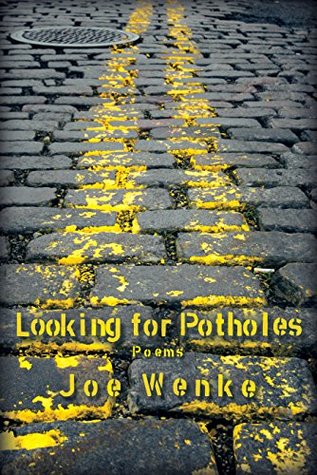
2.  Looking for Potholes by Joe Wenke from the publisher for review.

Poetry by Joe Wenke. Joe has written several books including: Human Agenda: Conversations about Sexual Orientation and Gender Identity (January 2015), The Talk Show: a Novel, Free Air: poems, Papal Bull: An Ex-Catholic Calls Out the Catholic Church, You Got Be Kidding! A Radical Satire of The Bible and Mailer’s America.


3.  The Sound of Glass by Karen White for review from the publisher.

It has been two years since the death of Merritt Heyward’s husband, Cal, when she receives unexpected news—Cal’s family home in Beaufort, South Carolina, bequeathed by Cal’s reclusive grandmother, now belongs to Merritt.

Charting the course of an uncertain life—and feeling guilt from her husband’s tragic death—Merritt travels from her home in Maine to Beaufort, where the secrets of Cal’s unspoken-of past reside among the pluff mud and jasmine of the ancestral Heyward home on the Bluff. This unknown legacy, now Merritt’s, will change and define her as she navigates her new life—a new life complicated by the arrival of her too young stepmother and ten-year-old half-brother.

Soon, in this house of strangers, Merritt is forced into unraveling the Heyward family past as she faces her own fears and finds the healing she needs in the salt air of the Low Country.

4.  The Mapmaker’s Children by Sarah McCoy for a TLC Book Tour.

When Sarah Brown, daughter of abolitionist John Brown, realizes that her artistic talents may be able to help save the lives of slaves fleeing north, she becomes one of the Underground Railroad’s leading mapmakers, taking her cues from the slave code quilts and hiding her maps within her paintings. She boldly embraces this calling after being told the shocking news that she can’t bear children, but as the country steers toward bloody civil war, Sarah faces difficult sacrifices that could put all she loves in peril.  Eden, a modern woman desperate to conceive a child with her husband, moves to an old house in the suburbs and discovers a porcelain head hidden in the root cellar—the remains of an Underground Railroad doll with an extraordinary past of secret messages, danger and deliverance.

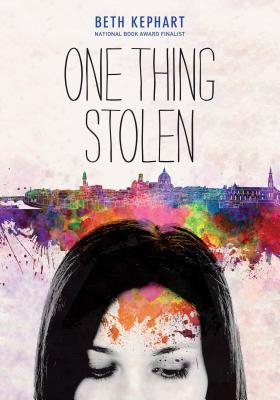
5.  One Thing Stolen by Beth Kephart, my pre-ordered hardcover finally arrived!
Set in Florence, Italy, One Thing Stolen follows Nadia Cara as she mysteriously begins to change. She’s become a thief, she has secrets she can’t tell, and when she tries to speak, the words seem far away.

What did you receive this week?

302nd Virtual Poetry Circle

Welcome to the 302nd Virtual Poetry Circle!

Remember, this is just for fun and is not meant to be stressful.

Keep in mind what Molly Peacock’s book suggested.

Look at a line, a stanza, sentences, and images; describe what you like or don’t like; and offer an opinion. If you missed my review of her book, check it out here.

Today’s poem is from Bruce Weigl:

Song of Napalm

After the storm, after the rain stopped pounding,
We stood in the doorway watching horses
Walk off lazily across the pasture’s hill.
We stared through the black screen,
Our vision altered by the distance
So I thought I saw a mist
Kicked up around their hooves when they faded
Like cut-out horses
Away from us.
The grass was never more blue in that light, more
Scarlet; beyond the pasture
Trees scraped their voices into the wind, branches
Crisscrossed the sky like barbed wire
But you said they were only branches.

Okay. The storm stopped pounding.
I am trying to say this straight: for once
I was sane enough to pause and breathe
Outside my wild plans and after the hard rain
I turned my back on the old curses. I believed
They swung finally away from me …

But still the branches are wire
And thunder is the pounding mortar,
Still I close my eyes and see the girl
Running from her village, napalm
Stuck to her dress like jelly,
Her hands reaching for the no one
Who waits in waves of heat before her.

So I can keep on living,
So I can stay here beside you,
I try to imagine she runs down the road and wings
Beat inside her until she rises
Above the stinking jungle and her pain
Eases, and your pain, and mine.

But the lie swings back again.
The lie works only as long as it takes to speak
And the girl runs only as far
As the napalm allows
Until her burning tendons and crackling
Muscles draw her up
into that final position

Burning bodies so perfectly assume. Nothing
Can change that; she is burned behind my eyes
And not your good love and not the rain-swept air
And not the jungle green
Pasture unfolding before us can deny it.

What do you think?

Haiku Friday #3

I’ve decided to write at least 30 haiku for National Poetry Month 2015.

I’ve been writing them if not daily, but in groups of three or more.  If you missed my first three haiku from this month, feel free to check them out.

For those of you who are wondering about haiku — beyond the 5-7-5 syllable count — please visit Parrish Lantern‘s post on the form.

Here’s Haiku Friday #1 and Haiku Friday #2.

If you’ve written or read any great poems this month, please feel free to share them in the comments.

Here are some of my most recent haiku pieces:

Long wait burns my legs
paused still, my video life
a curb of carbon.

Pushed aside, now.
Doors begin to close, sandwich —
I am the cheese.

Hyper-linked pic
shared widely out in space
echo, social media

Siren call, watch out
louder, softer, run away
toddle forward, fall

Cragged tripod feet
grown long, thick, gnarled
clutching tar and wire

Interview with Jeannine Hall Gailey, author of The Robot Scientist’s Daughter

2015PoetryMonthIn conjunction with Poetic Book Tours and the 2015 National Poetry Month Blog Tour, Jeannine Hall Gailey agreed to be interviewed about her poetry, including her new collection, The Robot Scientist’s Daughter.

I’ve read her poetry for several years, and I just cannot get enough.  I hope that you’ll not only check out her interview below, but also her April book tour.

A few of your collections — Becoming the Villainess and Unexplained Fevers — have reinvented and breathed new life into beloved heroines, myths, and fairy tales.  How do these stories inspire you to create the vivid and unusual narratives in your poems?  Which are some of your favorites?

At the time I was writing Becoming the Villainess, I was particularly interested in Ovid’s Metamorphoses and the story of Procne and Philomel, and more unusual fairy tales, such as the story of the French fairy Melusine, which I fell in love with after researching it after reading A.S. Byatt’s Possession, and the story of “the coat of thousand furs,” or Allerleirauh. I was not interested in the Disney versions of the fairy tales, as I knew even as a kid how much they differed from their Grimms’ origins, but I did enjoy sort of tweaking the clichés of those films.

Then of course I got really interested in Japanese folk tales a few years ago, when I was writing She Returns to the Floating World, and researched and found as many of them translated into English as I could. I loved the ones that focused on older sisters rescuing younger brothers, which is quite a common trope in Japanese folk tales, and of course the tales of transformations of women into foxes, cranes, peonies, etc. There are so many interesting tales out there. I also love Hans Christian Andersen’s “The Snow Queen” – it’s a fascinating, complicated, and unexpectedly feminist piece of work. I love re-working those characters.

Unexplained Fevers actually centers on the fairy tale characters I neglected in my first book, because I felt that they were too passive. But after reading the Snow White/Rose Red references in Haruki Murakami’s After Dark and the Rapunzel narratives in Osamu Dazai’s Blue Bamboo, I started thinking about how I could re-write characters like Sleeping Beauty, Rapunzel, and Snow White – and that’s how I started writing that book.

robotIn your new collection, The Robot Scientist’s Daughter, your subject matter is a little more concrete, including but not limited to the history of nuclear development, family, and nature. How did this collection come to be and did you find the process easier or more difficult compared to previous collections?

I think a seed for this collection was planted when I was working with Dorianne Laux at the Pacific University MFA program some years ago, and she encouraged me to write more about my own life. I considered my life too boring to write about. And Ilya Kaminsky, I remember, told me after reading my first couple of books that “now is the time for you to create your own fairy tale.” I held on to both of those things, but it took me a while to figure out how to incorporate my own experience into poetry.

The Robot Scientist’s Daughter was born in the series of “elemental” poems in the book—poems like “Cesium Burns Blue,” “Radon Daughters,” and “Elemental,” —and then I started thinking about ways to create a character that was like me but was not—and I came up with the Robot Scientist’s Daughter character. Those are more fantasy and sci-fi-based poems, and therefore more familiar to me and fun to write. The straight-up history/autobiography poems were probably the hardest to write—Oak Ridge’s history is fascinating—even the Wikipedia entry can sound like a weird prose poem—but making that history sound poetic was something I struggled with. I did include a series of poems about my childhood that were not as fun to write, but I wanted something that would give the reader sort of a child’s-eye view of the beautiful, mysterious nature of growing up on a farm in Tennessee, not just the “atomic history down the street” part.

Nuclear research, energy, and bombs are dangerous but yet humanity continues to engage in these activities despite the lasting risks. In “They Do Not Need Rescue”, the poem discusses the silence surrounding the consequences of these activities — that the people living nearby Oak Ridge National Laboratory signed away their family’s lives for a meager paycheck and a house — and it raises questions about why they would remain silent even years later and not speak out. Is it a question of fear vs. bravery, or something more?

I can’t really speak for the people who made those decisions, which are individual to each of them. But I do know that the contracts for people that work/worked at ORNL – a huge source of lucrative jobs in a region that even now doesn’t have a ton of great jobs – were pretty prohibitive and threatening, and people in that area signed a contract and stuck with that agreement. If they don’t feel comfortable speaking out today, it’s probably because of the wording of the contracts they signed. I don’t want anyone to get the impression that the people of Oak Ridge are victims – they certainly don’t think of themselves that way – and there’s a culture in Eastern Tennessee of individualism, hard work, patriotism, and a tendency towards the taciturn rather than the loquacious.

Also, the dangers of radiation were not really well known early on in the work of ORNL – as reading some of the memoir of one of Oak Ridge’s early “Safety Physicists”, The Angry Genie, would indicate. In the beginning, they were focused on winning World War II, getting the bomb before the Nazis, and not as worried about pollution and those kinds of “down the road” problems. There was a little bit about how they taped uranium to the wrists of some of the nurses there, to see the effect; I mean, they were very naive back then. The Chernobyl and Fukushima disasters, for instance, indicate that even today, how little prepared most companies and countries are for the kinds of problems that can happen with nuclear disaster, how little they understand the magnitude of something like nuclear pollution, how it stays around for multiple human lifetimes. It’s something to keep in mind as our nuclear power plants age here in the United States.

JeannineHighResHeadshotmediumWriting is a solitary endeavor for many authors. How do you maintain contact with the outside, and how does that differ from the experience of reading your work aloud for an audience?

I’ve belonged to a writing group for thirteen years, and that really helps. Also, Seattle and the surrounding cities have great writing communities. I volunteered with several terrific local journals for many years, which is also a great way to stay connected with the writing community—currently I’m on the Board at Crab Creek Review. Writing itself is work that must be done alone, but sharing it, getting it published, dealing with rejection, applying for grants or residencies—all those parts of the writing life really benefit from the help/encouragement of other writers. I also enjoying teaching, editing manuscripts, and a new venture—helping poets with PR for their books! I absolutely root for every single student and editing client to succeed!

I also think social media – Blogs, Facebook, Twitter, what have you – can really help you feel connected to the larger writing world in a way that just wasn’t possible when I was a younger writer. A lot of people hate them, but I absolutely think they are a gift (even if I haven’t exactly figured out how to be the greatest Twitter-er or anything yet.) You can see when different magazines have a call for submissions, or congratulate a friend on good publishing news, or follow writers you admire. I mean, you can’t spend all day on that stuff, but it’s great on a rainy Sunday to go to the Twitter #poetparty, for instance, and say hi to some writing friends and feel encouraged.

What poets you’ve read are making a difference with their poetry, either trying to influence societal, environmental, or political change? What other poets should we be reading?

For the first question: There are really so many! I think probably Carolyn Forché, Alicia Ostriker, Margaret Atwood, Pattiann Rogers, Sandra Alcosser, and llya Kaminsky have all been particularly influential in terms of the way they write their activism. But I am so excited about reading the younger generation’s take (do I sound super-old there? But it’s true!) on issues like racism, feminism, the environment, immigration—I feel that younger writers right now are unafraid of taking on big ambitious subjects than my generation was/is. Another few poets that I think tackle difficult and thought-provoking political subject matter with imagination and empathy: Jericho Brown, Eduardo C. Corral, Saeed Jones.

For the second question: There are so many good poets here in the Northwest that I think don’t get enough attention – in particular, I’d like to champion the first books by poets Annette Spaulding-Convy and Natasha K. Moni, which are both exceptional. And we have a wonderful group of female poets up here, people like Kelli Russell Agodon, Kathleen Flenniken, Kelly Davio, Elizabeth Austen, Martha Silano, Jenifer Lawrence, Marjorie Manwaring. They’re not just great poets, they’re great people who put time and energy into their poetry community. I love the work that my friends at local press Two Sylvias Press are putting out, too – definitely worth taking a look at. I discover great poets out here all the time, people I’ve never met that I’ll happen to hear at a reading. I try to highlight books I love in my reviews for places like The Rumpus, too. Reviewing is still something I try to do on a regular basis, especially for books that might otherwise get overlooked. Anything to bring more love to poetry!

Thanks, Jeannine, for sharing your thoughts with us and your poet recommendations.

Medic Against Bomb: A Doctor’s Poetry of War by Frederick Foote

Source: NetGalley & Grayson Books
eBook, 82 pgs
I am an Amazon Affiliate

Medic Against Bomb: A Doctor’s Poetry of War by Frederick Foote is a collection of poems from a retired U.S. Navy physician, who also is the director of the Warrior Poetry Project at Walter Reed National Military Medical Center.  Beneath the carnage depicted in many of these poems, there is a compassionate undercurrent.  Some of these poems are about the battle scars — physical and emotional — that shape today’s warriors, but they also are about sacrifice, discipline, and human comfort spawned from work on the hospital ship Comfort and the care of sick and wounded Americans.

From “Mountain Burial”

knowing we can’t retrieve
this well that’s now gone dry.
She lives in a field of green
whose thousand blades wave free,
scattered from us by war,
the ender of destinies.

From “Uncle Jim”

They say everything’s been written; it hasn’t.
Darkness and light are vast, and poets have barely begun.
Even when it hides, the hand knows when it’s writing a final death.

Foote’s narrator is a compassionate medic, but he is well aware of the carnage of war, facing it daily in surgeries and helping soldiers come to terms with the losses they have suffered. There is compassion for the soldiers as well as for the enemies, particularly those also marred by war. These poems are less trying to make sense of war, but geared toward demonstrating compassion and understanding. They pay homage to the dead, a way to honor their collective and individual sacrifices. Foote also includes some great notes about the different terms used, including Fedayeen, which refers to a generic fighter, and Mujahadeen, which refers to someone fighting for a religious cause. There also are great tidbits about events that occurred during the war that many may not know, including villagers who tossed unwanted children — particularly those with cognitive disabilities — onto Medevacs to get rid of them (“The War Child”).

Wife on the ICU

I watch at night and walk at dawn
forever in flight like the soul of a bird
the monitor shows a thin green line
I walk at night and watch at dawn
not knowing the end of the road I’m on
down which, possessed by a voice unheard
I watch at night and walk at dawn
forever in flight like the soul of a bird.

Medic Against Bomb: A Doctor’s Poetry of War by Frederick Foote is a collection of poems that is less focused on battles and who the enemy is and more on the compassion necessary to treat those men, women, and children who are scared by war — whether they are soldiers, bystanders, or the enemy. Some poems are better paced than others, but there are some gems that will have readers looking at war with a new perspective.

About the Author:

Frederick Foote is a poet and physician who lives in Bethesda, MD, USA. His work has appeared in Commonweal, JAMA, The Progressive, and many other journals. Click the tabs for a sample of these poems.


Vessel: Poems by Parneshia Jones

Source: Milkweed Editions
Paperback, 96 pgs
I am an Amazon Affiliate

Vessel: Poems by Parneshia Jones is a stunning collection that explores the vessels we are given to travel through the world in in a literal and figurative sense.  We are born and given a name, but what do those names come to mean to us and how is that different from the meaning of the name to our parents?  Jones explores the meaning of her own name in “Definition,” after the poetic narrator introduces the girl she believes herself to be at the beginning.  She effectively juxtaposes this carefree and fun-loving girl with the expectations of the name she is given.

From “Girl” (pg 3-4)

daydreaming, pretend out loud
Girl.

Singing off-key, flowing T-shirt hair,
microphone brush and missing front teeth.

From “Definition” (pg.7)

Parnassus …
2. (Literature/Poetry)
a. the world of poetry
b. a center of poetic or other creative activity

Parneshia …
I. 1980–daughter of high school sweethearts (prom queen and football captain).
2. (Woman/Poet)
a. rooted in her Midwest, in her poetry
b. growing up in Mama’s kitchen and stacks of dusty books
3. (Woman/Poet) twenty years later, the Poet searches the
definition of her name … who knew

While she is young, the narrator is content to just be, but as she grows older, she seeks a part of herself that she was unaware of, only to be surprised by how connected she already was.  And as the collection continues through its stages, so too does the evolution of the narrator from a child seeking a fair trade with her friend to switch names because her friend’s name is shorter, until she realizes that names often reflect who we are on the inside.  In this tale of growing up, the narrator becomes a young woman who fondly remembers those who helped her grow, like her grandmother who “lifts the quilt/sewn fifty years ago by her mother, signaling me to join her.”  And that girl slid “into the pocket of the quilt,/letting my grandmother’s hands/cradle me back to child,” ultimately “creating a human quilt.” (page 14-5)  These are the memories she can hold onto when the reality of life hits her hard, and she begins to realize that love and other things are not as they are in the movies.

Jones includes poems that explore what happens when we come of age, but also what we remember about our pasts and how important it is to keep the patchwork of our own family histories intact, just like those in a quilt.  While the larger world remembers the bigger stories of poets pushing the envelope and Blacks who became president, we have to be the ones to record our own histories and remember that we, as vessels, carry all of those stories inside of us and that they are part of who we were, are, and will be.  Vessel: Poems by Parneshia Jones is beautiful, nostalgic, questioning, and lyrical.  Like in “Legend of the Buffalo Poets,” “There is a rumble in his roaming./ Part bison, part thunder,/ he is a stampede of words,/ raising mountains from rooted earth.//” and we should “Love our delirious souls/running wild in this concrete jungle.”  (Litany: Chicago Summers, pg. 60-1)

One of the best poetry collections I’ve read in 2015.

About the Poet:

After studying creative writing at Chicago State University, earning an MFA from Spalding University, and studying publishing at Yale University, Parneshia Jones has been honored with the Gwendolyn Brooks Poetry Award, the Margaret Walker Short Story Award, and the Aquarius Press Legacy Award. Her work has also been anthologized in She Walks in Beauty: A Woman’s Journey Through Poems, edited by Caroline Kennedy and The Ringing Ear: Black Poets Lean South, edited by Nikky Finney. A member of the Affrilachian Poets, she serves on the board of Cave Canem and Global Writes. She currently holds positions as Sales and Subsidiary Rights Manager and Poetry Editor at Northwestern University Press. Parneshia Jones lives in Chicago.