Quantcast

Changes: A Child’s First Poetry Collection by Charlotte Zolotow, illustrated by Tiphanie Beeke

Source: Sourcebooks/Shelf Awareness
Hardcover, 40 pgs
I am an Amazon Affiliate

Changes: A Child’s First Poetry Collection by Charlotte Zolotow is gorgeously illustrated by Tiphanie Beeke, and the 28 poems are divided into seasons to reflect the title.  This collection is published posthumously, poems her daughter calls clean and clear about what changes and what stays the same.  The collection opens with “Changes” that talks about the differences between the seasons but that they always come around the same time each year, even though the narrator has changed through the years.  These verses are fantastic for little kids, projecting images that are complemented by the illustrations and allowing them to visual nature and the seasons.

These poems read as if told from the perspective of a child who stares in awe at the birds in the sky, the birds flying by, and all that surrounds them.  From the cool breezes of spring and the budding flowers to the salty wind of the sea in summer on vacation, children will see the fun and get absorbed in the costumes of Halloween, the beginning of school in the fall, and the winter wonders of snowmen and the first snow.  Beeke’s images are reminiscent of the whispy-ness of water color images and pastel smudges.  Zolotow clearly has a firm grasp of the wonder most children have when they are young; they are curious and inquisitive, but there also are some who are contemplative.  Read aloud these poems create a new world of rhyme and lyrical verse for children.

Changes: A Child’s First Poetry Collection by Charlotte Zolotow, illustrated by Tiphanie Beeke, is a great collection to start young readers with the wondrous world of poetry.  The illustrations are well matched with Zolotow’s lines.  My daughter and I have read this collection several times, and she often asks what season we are in when we read the poems.

About the Author:
Charlotte Zolotow—author, editor, publisher, and educator—had one of the most distinguished careers in the field of children’s literature. Born in Norfolk, Virginia in 1915, Changes: A Child’s First Collection of Poetry is published on the occasion of Charlotte Zolotow’s 100th birthday.

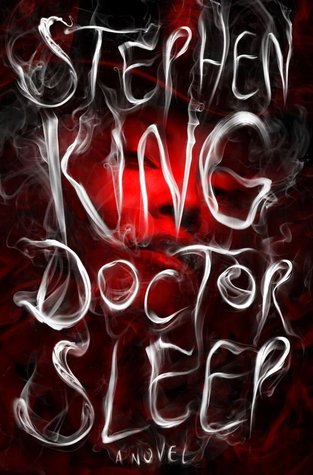
Doctor Sleep by Stephen King (audio)

Source: Public Library
Audio, 18 hrs
I am an Amazon Affiliate

Doctor Sleep by Stephen King is a sequel to The Shining, starring Dan Torrance who was just a young boy in the first book.  In this novel, we learn about the life Dan led after the infamous events at the Overlook Hotel.  Dan has struggle most of his adult life against addiction to alcohol, like his father, but in many ways, the alcohol became a way for him to hide from his gifts.  As he copes with his addiction, he finds solace in that he can help those leaving this world for the next go peacefully.  Eventually, he becomes known as Doctor Sleep in a small New Hampshire town at a nursing home.

Meanwhile, Abra Stone, a gifted twelve-year-old girl, has caught the eye of the members of the True Knot who are human and not-human.  The True Knot seems to be an unstoppable force that are sucking the life force out of those with special gifts, but they haven’t yet met their match.  This novel is a slow builder, but in true King style, the characters are varied and dynamic.  Blending not only the supernatural with small town creepiness, King creates an atmosphere that is at once familiar and other worldly.

Doctor Sleep by Stephen King is an adventure and otherworldly with interesting characters, but there were times during the audio that my mind wandered.  The narrator, Will Patton, does a great job of creating voices that are nuanced enough to be separate entities in the performance.  I enjoyed the audio performance, but felt as though Dan’s flaws lost their impact along they way — does that mean his character evolved or that they were forgotten? — and Abra has gone from a scared Shiner to a formidable foe awfully quickly.  There are some story arcs that are quickly wrapped up and others that seem glossed over, leaving readers to fill in the gaps.  However, in terms of a sequel, written so many years after the first book, King has created a book that could be read wholly on its own, but is richer if readers have read the first book.

About the Author:

Stephen King is the author of more than fifty books, all of them worldwide bestsellers. His recent work includes Doctor Sleep and Under the Dome, now a major TV miniseries on CBS. His novel 11/22/63 was named a top ten book of 2011 by The New York Times Book Review and won the Los Angeles Times Book Prize for Mystery/Thriller as well as the Best Hardcover Book Award from the International Thriller Writers Association. He is the recipient of the 2003 National Book Foundation Medal for Distinguished Contribution to American Letters. He lives in Bangor, Maine, with his wife, novelist Tabitha King.

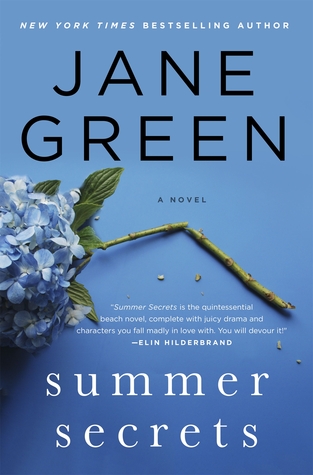
U.S. Only Giveaway: Summer Secrets by Jane Green

About the book from GoodReads:

June, 1998: At twenty seven, Catherine Coombs, also known as Cat, is struggling. She lives in London, works as a journalist, and parties hard. Her lunchtimes consist of several glasses of wine at the bar downstairs in the office, her evenings much the same, swigging the free booze and eating the free food at a different launch or party every night. When she discovers the identity of the father she never knew she had, it sends her into a spiral. She makes mistakes that cost her the budding friendship of the only women who have ever welcomed her. And nothing is ever the same after that.

June, 2014: Cat has finally come to the end of herself. She no longer drinks. She wants to make amends to those she has hurt. Her quest takes her to Nantucket, to the gorgeous summer community where the women she once called family still live. Despite her sins, will they welcome her again? What Cat doesn’t realize is that these women, her real father’s daughters, have secrets of their own. As the past collides with the present, Cat must confront the darkest things in her own life and uncover the depths of someone’s need for revenge.

Doesn’t this sound intriguing? 

If it does, and you are 18 or older living in the United States with a valid address, please leave a comment below about your summer plans.

Deadline to enter to win 1 copy is June 24, 2015, at 11 p.m. EST.

Doughnuts & Deadly Schemes by Janel Gradowski

Source: Author Janel Gradowski
eBook, 210 pgs
I am an Amazon Affiliate

Doughnuts & Deadly Schemes (Culinary Competition Mysteries #3) by Janel Gradowski is just what you expect from a cozy mystery — an amateur detective helping out her police friend, baking up some savory dishes, and enjoying the ride. These are the kinds of books that are perfect for summer because they are full of adventure, laughs, and fun. Carla and Amy are best friends, and you can tell that they genuinely love one another and act like sisters. While one is a planner, the other is more spontaneous; when it comes to having the wedding of her friend’s dreams, though, Amy is doesn’t take no for an answer.

“‘You are a brave woman to put together a wedding that quickly.  Heroically brave to spring this on the Over-Planning Queen.'”

“‘Believe me.  We thought of that, but I’m pretty sure you would kill us if we snuck away like that.  So, as my compromise, instead of leaving you completely out of the wedding by eloping … I’m giving you over two weeks to pull one out of thin air.'”

Challenge accepted!  Amy has a tough task on her hands planning her best friend’s wedding in less than a month, but she’s never one to shy away from a challenge — including those culinary contests.  Not only is she baking up culinary confections for local contests in Kellerton, but she’s also slinking around trying to uncover who the extortionist hacker and murderer plaguing local businesses might be.  She’s not on the police force, but Carla’s fiance, Bruce Shepler, is quick to accept her outrageous theories for new perspective on a perplexing case that has business owners’ mouths taped shut.

Doughnuts & Deadly Schemes (Culinary Competition Mysteries #3) by Janel Gradowski is a fun ride, and I loved every minute spent with these ladies.  They are quirky and fun, and the confections in these pages will make readers drool.  Don’t forget, Janel always includes some recipes in the back of the book, which you’ll want to try — I’m already dreaming about that Peach Pie Iced Tea!  But I digress.  If you haven’t read these cozy mysteries, what are you waiting for?!

About the Author:

Janel Gradowski lives in a land that looks like a cold weather fashion accessory, the mitten­-shaped state of Michigan. She is a wife and mom to two kids and one Golden Retriever. Her journey to becoming an author is littered with odd jobs like renting apartments to college students and programming commercials for an AM radio station. Somewhere along the way she also became a beadwork designer and teacher. She enjoys cooking recipes found in her formidable cookbook and culinary fiction collection. Searching for unique treasures at art fairs, flea markets and thrift stores is also a favorite pastime. Coffee is an essential part of her life. She writes the Culinary Competition Mystery Series, along with The Bartonville Series (women’s fiction) and the 6:1 Series (flash fiction). She has also had many short stories published in both online and print publications. Check her Website, on Facebook, and on Twitter.

Other books by this author, reviewed here:

Mailbox Monday #327

Mailbox Monday, created by Marcia at To Be Continued, formerly The Printed Page, has a permanent home at its own blog.

To check out what everyone has received over the last week, visit the blog and check out the links.  Leave yours too.

Also, each week, Leslie, Vicki, and I will share the Books that Caught Our Eye from everyone’s weekly links.

Here’s what I received:

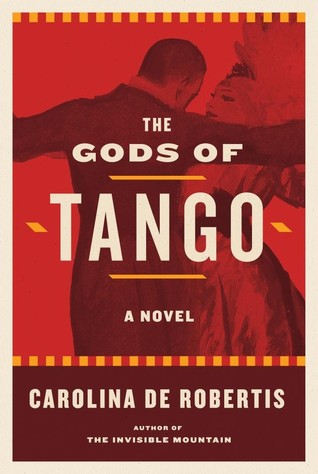
1. The Gods of Tango by Carolina de Robertis for review.

February 1913: seventeen-year-old Leda, carrying only a small trunk and her father’s cherished violin, leaves her Italian village for a new home, and a new husband, in Argentina. Arriving in Buenos Aires, she discovers that he has been killed, but she remains: living in a tenement, without friends or family, on the brink of destitution. Still, she is seduced by the music that underscores life in the city: tango, born from lower-class immigrant voices, now the illicit, scandalous dance of brothels and cabarets. Leda eventually acts on a long-held desire to master the violin, knowing that she can never play in public as a woman. She cuts off her hair, binds her breasts, and becomes “Dante,” a young man who joins a troupe of tango musicians bent on conquering the salons of high society. Now, gradually, the lines between Leda and Dante begin to blur, and feelings that she has long kept suppressed reveal themselves, jeopardizing not only her musical career, but her life.

2.  Summer Secrets by Jane Green, a surprise from Tandem Literary.

June, 1998: At twenty seven, Catherine Coombs, also known as Cat, is struggling. She lives in London, works as a journalist, and parties hard. Her lunchtimes consist of several glasses of wine at the bar downstairs in the office, her evenings much the same, swigging the free booze and eating the free food at a different launch or party every night. When she discovers the identity of the father she never knew she had, it sends her into a spiral. She makes mistakes that cost her the budding friendship of the only women who have ever welcomed her. And nothing is ever the same after that.

June, 2014: Cat has finally come to the end of herself. She no longer drinks. She wants to make amends to those she has hurt. Her quest takes her to Nantucket, to the gorgeous summer community where the women she once called family still live. Despite her sins, will they welcome her again? What Cat doesn’t realize is that these women, her real father’s daughters, have secrets of their own. As the past collides with the present, Cat must confront the darkest things in her own life and uncover the depths of someone’s need for revenge.

3.  Uglies by Scott Westerfeld from the library sale.

Tally is about to turn sixteen, and she can’t wait. Not for her license – for turning pretty. In Tally’s world, your sixteenth birthday brings an operation that turns you from a repellent ugly into a stunningly attractive pretty and catapults you into a high-tech paradise where your only job is to have a really great time. In just a few weeks Tally will be there.

But Tally’s new friend Shay isn’t sure she wants to be pretty. She’d rather risk life on the outside. When Shay runs away, Tally learns about a whole new side of the pretty world and it isn’t very pretty. The authorities offer Tally the worst choice she can imagine: find her friend and turn her in, or never turn pretty at all.

4.  Sharp Objects by Gillian Flynn from the library sale, which is great since its the August Book Club pick.

Fresh from a brief stay at a psych hospital, reporter Camille Preaker faces a troubling assignment: she must return to her tiny hometown to cover the murders of two preteen girls. For years, Camille has hardly spoken to her neurotic, hypochondriac mother or to the half-sister she barely knows: a beautiful thirteen-year-old with an eerie grip on the town. Now, installed in her old bedroom in her family’s Victorian mansion, Camille finds herself identifying with the young victims—a bit too strongly. Dogged by her own demons, she must unravel the psychological puzzle of her own past if she wants to get the story—and survive this homecoming.

5.  Dragon Bones by Lisa See from the library sale, which is one I don’t have by this author.

In a magnificent land where myth mixes treacherously with truth, one woman is in charge of telling them apart. Liu Hulan is the Inspector in China’s Ministry of Public Security whose tough style rousts wrongdoers and rubs her superiors the wrong way. Now her latest case finds her trapped between her country’s distant past and her own recent history.

The case starts at a rally for a controversial cult that ends suddenly in bloodshed, and leads to the apparent murder of an American archaeologist, which officials want to keep quiet. And haunting Hulan’s investigation is the possible theft of ancient dragon bones that might alter the history of civilization itself.

Getting to the bottom of ever-spiraling events, Hulan unearths more scandals, confronts more murderers, and revives tragic memories that shake her tormented marriage to its core. In the end, she solves a mystery as big, unruly, and complex as China itself.

6.  The Yellow House by Martin Gayford from the library sale, which is about painters I love.

This chronicle of the two months in 1888 when Paul Gauguin shared a house in France with Vincent Van Gogh describes not only how these two hallowed artists painted and exchanged ideas, but also the texture of their everyday lives. Includes 60 B&W reproductions of the artists’ paintings and drawings from the period.

My daughter got a ton of awesome DVDs at the library sale, including a set of Strawberry Shortcake videos, which she’s been running around the house smelling because they smell just like strawberry shortcake!

She also got a box set of Dora the Explorer books, and some other fun reads.

Sipping Spiders Through a Straw: Campfire Songs for Monsters by Kelly Dipucchio and illustrated by Gris Grimly

A delightfully chilling musical romp through the gross and gory world of campfire songs!

In this howlishly fun collection of campfire songs, little monsters everywhere will love singing along to their favorite campfire tunes which have been altered for optimal gross-out effect by the ghoulish Kelly DiPucchio and illustrated by the Master of Creep, Gris Grimly.

Disgusting highlights include “If You’re Scary and You Know It,” “99 Bottles of Blood on the Wall,” and the classic in the making, “Do Your Guts Hang Low?” Gather your creepy, crawly friends and get ready to slither and slink and howl and stink!

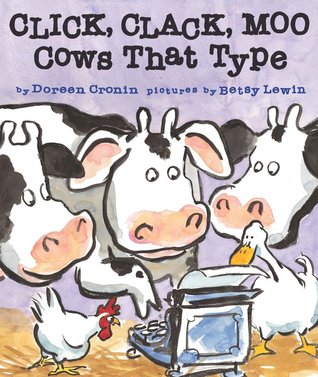
Click, Clack, Moo: Cows That Type by Doreen Cronin and illustrated by Betsy Lewin

Farmer Brown has a problem.

His cows like to type.

All day long he hears

Click, clack, MOO.

Click, clack, MOO.

Clickety, clack, MOO.

But Farmer Brown’s problems REALLY begin when his cows start leaving him notes….

Doreen Cronin’s understated text and Betsy Lewin’s expressive illustrations make the most of this hilarious situation. Come join the fun as a bunch of literate cows turn Farmer Brown’s farm upside down.

Peter Pan Fairy Tale Favorites A Pop-Up Book by John Patience

What did you receive?

309th Virtual Poetry Circle

Welcome to the 309th Virtual Poetry Circle!

Remember, this is just for fun and is not meant to be stressful.

Keep in mind what Molly Peacock’s book suggested.

Look at a line, a stanza, sentences, and images; describe what you like or don’t like; and offer an opinion. If you missed my review of her book, check it out here.

Today’s poem is from Kim Addonizio:

The Matter

“Some men break your heart in two,
Some men fawn and flatter,
Some men never look at you;
And that cleans up the matter.”
—Dorothy Parker, “Enough Rope”

Some men carry you to bed with your boots on.

Some men say your name like a verbal tic.

Some men slap on an emotional surcharge for every erotic encounter.

Some men are slightly mentally ill, and thinking of joining a gym.

Some men have moved on and can’t be seduced, even in the dream bars you meet them in.

Some men who were younger are now the age you were then.

Some men aren’t content with mere breakage, they’ve got to burn you to the ground.

Some men you’ve reduced to ashes are finally dusting themselves off.

Some men are made of fiberglass.

Some men have deep holes drilled in by war, you can’t fill them.

Some men are delicate and torn.

Some men will steal your bracelet if you let them spend the night.

Some men will want to fuck your poems, and instead they find you.

Some men will say, “I’d like to see how you look when you come,” and then hail a cab.

Some men are a list of ingredients with no recipe.

Some men never see you.

Some men will blindfold you during sex, then secretly put on heels.

Some men will try on your black fishnet stockings in a hotel in Rome, or Saran Wrap you

to a bedpost in New Orleans.

Some of these men will be worth trying to keep.

Some men will write smugly condescending reviews of you work, making you remember

these lines by Frank O’hara:

I cannot possibly think of you/other than you: the assassin/of my orchards.

Some men, let’s face it, really are too small.

Some men are too large, but it’s not usually a deal breaker.

Some men don’t have one at all.

Some men will slap you in a way you’ll like.

Some men will want to crawl inside you to die.

Some men never clean up the matter.

Some men hand you their hearts like leaflets

and some men’s hearts seem to circle forever: you catch sight of them on clear nights,

bright dots among the stars, and wait for their orbits to decay, for them to fall to earth.

What do you think?

Something fun for my grammar loving friends

Anatomy of a Grammar Nerd Infographic

From our friends at Grammarly.

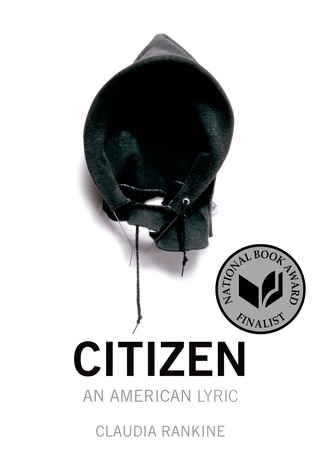
Citizen: An American Lyric by Claudia Rankine

Source: Purchased
Paperback, 169 pgs
I am an Amazon Affiliate

The power of Citizen: An American Lyric by Claudia Rankine makes me wonder what the winner of the National Book Award could have written to outshine Rankine’s words in 2014.  In her collection of essays, poems, and vignettes, Rankine points: “‘The purpose of art,’ James Baldwin wrote, ‘is to lay bare the questions hidden by the answers.'” (page 115)  She took this to heart when writing this collection because she raises up those questions about race in America and brandishes them like a flag.  That is not to say that racism is something that is wholly owned by just white people or white police, but that it is perpetuated by the actions, behaviors, and assumptions both races make about one another.  What does it mean to be American? Does it mean as citizens we brush aside these issues and move forward? Does it mean that we must embrace all of this darkness into ourselves and find solutions that may not work for everyone? Or does it mean that we must take a more internal approach and remedy that which we do to perpetuate those wrongs around us?

from page 135:

because white men can’t
police their imagination
black men are dying

What is engaging about Rankine’s work is that she blurs the lines between the you, the I, the she, the he, to make it less clear cut who is being discriminated against and who is suffering. In this way she takes the time to juxtapose the traditional black victim of white racism formula with a less black-and-white distinction, and it’s done with purpose.

“In any case, it is difficult not to think that if Serena lost context by abandoning all rules of civility, it could be because her body, trapped in a racial imaginary, trapped in disbelief — code for being black in America — is being governed not by the tennis match she is participating in but by a collapsed relationship that had promised to play by the rules.  Perhaps this is how racism feels no matter the context–” (page 30)

Lest you think this book is about racism only through the lens of the victim, it is not.  There a great deal to discuss about racism, its roots, its ignorance, and its pervasiveness in American society.  While many, if not all, the references are contemporary, they could have been pulled from many times throughout history.  Book clubs could discuss this collection of essays and poems for hours.  I cannot explain to you how deeply affected by the book I have been.  I will likely read and re-read this book many times.  I may even put it forth to my book club as a suggestion.

Citizen: An American Lyric by Claudia Rankine is essential reading for every American — young or old, black or white, Hispanic or Asian; it is the beginning of a dialogue that is desperately needed in this country where the presumption of ignorance or incivility is based upon a skin color rather than an individual’s actions and behaviors.  While discrimination against “other” continues, it is not merely one-sided, and until we are able to break down those walls to the truth of our humanity, discrimination and racism will always exist.

***Best of 2015 — not a contender, firmly on the list***

About the Author:

Claudia Rankine was born in Jamaica in 1963. She earned her B.A. in English from Williams College and her M.F.A. in poetry from Columbia University. She is the author of four collections of poetry, including Don’t Let Me Be Lonely (Graywolf, 2004); PLOT (2001); The End of the Alphabet (1998); and Nothing in Nature is Private (1995), which received the Cleveland State Poetry Prize.

Rankine has edited numerous anthologies including American Women Poets in the Twenty-First Century: Where Lyric Meets Language (Wesleyan, 2002) and American Poets in the Twenty-First Century: The New Poetics (2007). Her plays include Provenance of Beauty: A South Bronx Travelogue, commissioned by the Foundry Theatre and Existing Conditions, co-authored with Casey Llewellyn. She has also produced a number of videos in collaboration with John Lucas, including “Situation One.” A recipient of fellowships from the Academy of American Poetry, the National Endowments for the Arts, and the Lannan Foundation, she is currently the Henry G. Lee Professor of English at Pomona College.  (Photo credit: John Lucas)


William Shakespeare’s The Phantom of Menace by Ian Doescher

Source: Quirk Books
Hardcover, 176 pgs
I am an Amazon Affiliate

William Shakespeare’s The Phantom of Menace by Ian Doescher is just what it espouses to be, a Shakespearean rendition of Star Wars.  Doescher has clearly studied enough Shakespeare and is creative enough to pull this off, and as an avid reader and lover of Shakespeare and Star Wars, this one was a perfect fit.  In fact, I was chuckling to myself as I heard the movie version of Jar Jar Binks in my head speaking in near iambic pentameter.  It was hilarious.  If I could see this one filmed, I would.  There are people who hate Jar Jar, and there are people like me who just adore him.  What I loved about Doescher’s rendition of him is that there is more to the character than appears outwardly to the other characters.  The re-imagining of this polarizing character was fascinating, and I couldn’t wait to see what happened next – even though I know the story.

Amidala: “A youth is no more frail than older folk,
No less intelligent, no less sublime.
Our steps are newer, yet we are no jewel
To be protected and encas’d by them.” (pg. 20)

Anakin: “Why do we worship at the shrine of change?
Hath change e’er put a meal upon our board?
Is change betoken to something positive?
Or may it be that change for changing’s sake
But changes good to evil, bad to worse?” (pg. 99)

This rendition can be read for its homage to Shakespeare and Star Wars, and it can be read for its humor, but it also is multi-layered with meaning. What does it mean to accept change so easily, and does it mean that youth is unequal to older people with experience? Doescher also speaks of the hidden commentary in Star Wars about perception and the “locals” of Naboo, in that the Jedi believe them to be primitive and less worldly. Fans of the movie franchise and its many incarnations have debated many things like these, as they have been debated in the study of Shakespeare and other literature, why not do it in a modern and fun mash-up like William Shakespeare’s The Phantom of Menace by Ian Doescher.

ianAbout the Author:

Ian Doescher is a Portland native, and lives in Portland with his spouse and two children. He has a B.A. in Music from Yale University, a Master of Divinity from Yale Divinity School, and a Ph.D. from Union Theological Seminary. He is currently the Director of Nonprofit Marketing at Pivot Group LLC, a full service marketing, research and web agency in Portland, Oregon.

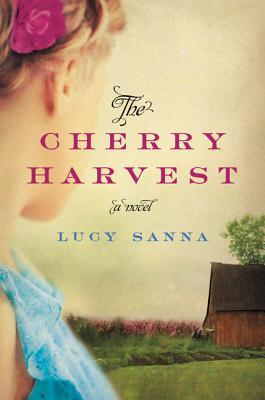
The Cherry Harvest by Lucy Sanna

tlc tour host

Source: TLC Book Tours
Hardcover, 336 pgs
I am an Amazon Affiliate

The Cherry Harvest by Lucy Sanna is a World War II novel set in the Wisconsin around the time of the cherry harvest, and for a novel focused on the home front of the war, the tension is still great.  As rationing affects the nation’s farmers, but not those like the lighthouse keeper, readers will get a sense of the tensions that wars bring for those at home and not just fighting the battles.  The narrative is split between Charlotte Christiansen and her daughter, Kate, and as two strong women, they struggle with what is right for their family, right for the town, and right for themselves.  Thomas Christiansen is a bookish man who gave up his university studies to take over the family farm, and he married a good woman from a local dairy farm who could make some award winning pies.  When the war begins to take the immigrant labor from the farm, his wife hatches a plan to save their upcoming harvest because without a plan of action, their son Ben may not have a home to come to when the war is over.

“Worry? In addition to all they had to do before, lighthouse keepers are now charged with protecting our shores from the enemy.  The shores of the Saint Lawrence Seaway and the Great Lakes.” She leaned in.  “And you think a few prison guards can protect us from that madman Hitler, who’s bent on controlling the world?” (pg. 30 ARC)

Kate is struggling, too.  Her dreams of attending university seem to be thwarted at nearly every turn as her mother takes the one possession she has to sell to pay for college and uses it to feed them, and as she learns she needs additional help with math in order to pass the entrance exam.  But beyond these trials, she realizes that life is moving forward without her in many ways, with her friend Josie already planning a wedding to Ben, even while he continues to fight overseas and his likelihood of coming home is slim.  As she finds out what kind of woman she wishes to become, Kate uncovers her own compass and learns that she needs to rely on her own courage to achieve her goals.  This self-reliance is something she learns from her mother, even as Kate comes to the realization that her mother is not perfect.

Sanna has created a dynamic cast of characters for this home front novel, but where it lacks strength is in the twists of plot.  Some situations come from left field or are simply there to check a box in what a WWII novel should have — including two star-crossed love affairs and battles between Americans and Nazis, though not on the battlefield.  Additionally, Charlotte’s character is a bit all over the place — one minute she wants the Nazis to be used as labor and in the next minute she wants them no where near her family.  Her hypocrisy is part of her undoing, but readers also may find that some things are left to unresolved to be satisfactory.  There are certain situations that did not jibe well with the character development, which made the fallout of those situations difficult to believe.

Where The Cherry Harvest by Lucy Sanna shined was in its depiction of troubled economic times because of the war, the tensions between those in the same town over those troubles, and the impact of war on soldiers and the uncertainty among family how to act or react to those soldiers coming home.  Had the novel a more refined focus, Sanna would have hit one out of the park with this one.  Due to the plot issues and other issues, this was a mixed read for me in the end.

About the Author:

Lucy Sanna has published poetry, short stories, and nonfiction books, which have been translated into a number of languages. Born and raised in Wisconsin, Sanna now divides her time between Madison, Wisconsin, and San Francisco. The Cherry Harvest is her first novel.

Find out more about Lucy at her website and connect with her on Facebook. (Photo Credit: Hope Maxwell Snyder)