Quantcast

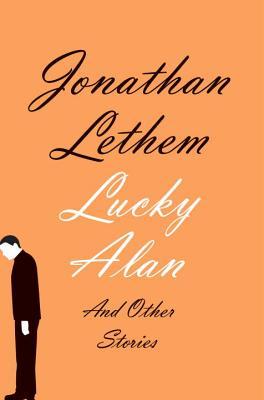
Lucky Alan and Other Stories by Jonathan Lethem

Source: Random House
Hardcover, 157 pgs
I am an Amazon Affiliate

Lucky Alan and Other Stories by Jonathan Lethem is an eclectic collection of short stories that range from the experimental to the surreal and traditional, but many of these stories lack the final punch readers make expect from short stories. While characters in these stories may experience smaller revelations, they often fall a little flat in the telling as the prose tends to be overly flowery or down-right boring. Of the collections that should be engaging to the reader given the title alone, they often lack the glitter readers will expect, such as “The Porn Critic.” And even these stories with catchy titles are some of the best in the collection, despite their flaws.

The first story, “Lucky Alan,” chronicles a neighbor who is obsessed with a reclusive Alan in his building and upon his marriage and later his growing family, the neighbor feels less important and pushed aside. In reality, he learns that this friend he tried so hard to win, was not who he thought him to be at all. And after the entire building sides with Alan, it is hard for him to continue living in a place that is unaware of Alan’s true nature. There are more nuances in the story, but they often get lost in the strange dialogue between friends and the situations that seem outlandish even in a large city of eclectic people.

In “The King of Sentences,” Lethem takes a look at the other side of fame, not so much the emphasis on the crazed fan, though there are some here, but on the perceptions we have of these famous people and how they may be very far from reality. In fact, the reality presented here is very scary for those of us who wish to meet those famous stars and writers we love. Meanwhile, “Their Back Pages,” seemed to be riffing off of Survivor and Lord of the Flies, but there are some pieces within the story that worked better than others, which made the overall effect of the story muted and confused.

Lucky Alan and Other Stories by Jonathan Lethem was a collection of stories with a lot to recommend it, but unfortunately, I can’t. I was disappointed with the individual stories and those that worked for the most part just didn’t wow me. Others might have a different view, but when reading short stories, I shouldn’t be falling asleep.

About the Author:

Jonathan Allen Lethem is an American novelist, essayist and short story writer. His first novel, Gun, with Occasional Music, a genre work that mixed elements of science fiction and detective fiction, was published in 1994. It was followed by three more science fiction novels. In 1999, Lethem published Motherless Brooklyn, a National Book Critics Circle Award-winning novel that achieved mainstream success. In 2003, he published The Fortress of Solitude, which became a New York Times Best Seller. In 2005, he received a MacArthur Fellowship.
Ally-Saurus & the First Day of School by Richard Torrey

Source: Sterling Children’s Books
Hardcover, 32 pgs.
I am an Amazon Affiliate

Ally-Saurus & the First Day of School by Richard Torrey is a carefully crafted story about an imaginative young lady who leaves home to attend school for the first time.  Her mother assures her that she will make friends once she gets there, buoyed by this, Ally heads off to school.  She loves dinosaurs and imagines herself as one not only at home but at her new classroom as well.  She greets her teacher as a dinosaur would and eats her lunch as a dino would.  She’s not as odd as adults might think because the other students in her class act in similar ways, though none act as dinos.  From princesses to lions and astronauts, these kids have vivid imaginations.  Initially, they are wary of those who are different from one another, but eventually, their perceptions of one another are broken down and they learn to play with one another.  There is even one classmate who does not have an over-active imagination, and he’s accepted too.

My daughter and I loved this book and roared with Ally as she entered the classroom and played with her new friends.  We loved the adventures she took with her friends on the playground and hope that there are more books with Ally to come.  The illustrations are reminiscent of chalk drawings for the most part, which goes well with the theme — the first day of school.  Parents can use this tale to help ease the fears of their own kids before they enter school for the first time.

Ally-Saurus & the First Day of School by Richard Torrey is fantastic, inventive, and we loved it.  We’ll likely read this many more times before my daughter enters Kindergarten, so may by by then, she’ll be ready for her own new adventure.

About the Author:

Richard Torrey is the author and illustrator of a number of well-loved children’s books, including Almost, Why?, and the popular Beans Baker series. Mr. Torrey lives in Shoreham, New York.

Mailbox Monday #329

Mailbox Monday, created by Marcia at To Be Continued, formerly The Printed Page, has a permanent home at its own blog.

To check out what everyone has received over the last week, visit the blog and check out the links.  Leave yours too.

Also, each week, Leslie, Vicki, and I will share the Books that Caught Our Eye from everyone’s weekly links.

Here’s what I received:

1.  The Cake Therapist by Judith Fertig, which I received for review in July from Tandem Literary.

Claire “Neely” O’Neil is a pastry chef of extraordinary talent. Every great chef can taste shimmering, elusive flavors that most of us miss, but Neely can “taste” feelings—cinnamon makes you remember; plum is pleased with itself; orange is a wake-up call. When flavor and feeling give Neely a glimpse of someone’s inner self, she can customize her creations to help that person celebrate love, overcome fear, even mourn a devastating loss.

Maybe that’s why she feels the need to go home to Millcreek Valley at a time when her life seems about to fall apart. The bakery she opens in her hometown is perfect, intimate, just what she’s always dreamed of—and yet, as she meets her new customers, Neely has a sense of secrets, some dark, some perhaps with tempting possibilities. A recurring flavor of alarming intensity signals to her perfect palate a long-ago story that must be told.

Neely has always been able to help everyone else. Getting to the end of this story may be just what she needs to help herself.

2.  Crooked Heart by Lissa Evans from Harper Collins for review for TLC Book Tours.

When Noel Bostock – aged ten, no family – is evacuated from London to escape the Blitz, he ends up living in St Albans with Vera Sedge – thirty-six and drowning in debts and dependents. Always desperate for money, she’s unscrupulous about how she gets it.

Noel’s mourning his godmother, Mattie, a former suffragette. Brought up to share her disdain for authority and eclectic approach to education, he has little in common with other children and even less with Vee, who hurtles impulsively from one self-made crisis to the next. The war’s thrown up new opportunities for making money but what Vee needs (and what she’s never had) is a cool head and the ability to make a plan.

On her own, she’s a disaster. With Noel, she’s a team.

Together they cook up an idea. Criss-crossing the bombed suburbs of London, Vee starts to make a profit and Noel begins to regain his interest in life.

But there are plenty of other people making money out of the war and some of them are dangerous. Noel may have been moved to safety, but he isn’t actually safe at all…

What did you receive?

311th Virtual Poetry Circle

Welcome to the 311th Virtual Poetry Circle!

Remember, this is just for fun and is not meant to be stressful.

Keep in mind what Molly Peacock’s book suggested.

Look at a line, a stanza, sentences, and images; describe what you like or don’t like; and offer an opinion. If you missed my review of her book, check it out here.

Today’s poem is from Dylan Thomas:

Poem on His Birthday

In the mustardseed sun,
By full tilt river and switchback sea
Where the cormorants scud,
In his house on stilts high among beaks
And palavers of birds
This sandgrain day in the bent bay's grave
He celebrates and spurns
His driftwood thirty-fifth wind turned age;
Herons spire and spear.

Under and round him go
Flounders, gulls, on their cold, dying trails,
Doing what they are told,
Curlews aloud in the congered waves
Work at their ways to death,
And the rhymer in the long tongued room,
Who tolls his birthday bell,
Toesl towards the ambush of his wounds;
Herons, stepple stemmed, bless.

In the thistledown fall,
He sings towards anguish; finches fly
In the claw tracks of hawks
On a seizing sky; small fishes glide
Through wynds and shells of drowned
Ship towns to pastures of otters. He
In his slant, racking house
And the hewn coils of his trade perceives
Herons walk in their shroud,

The livelong river's robe
Of minnows wreathing around their prayer;
And far at sea he knows,
Who slaves to his crouched, eternal end
Under a serpent cloud,
Dolphins dyive in their turnturtle dust,
The rippled seals streak down
To kill and their own tide daubing blood
Slides good in the sleek mouth.

In a cavernous, swung
Wave's silence, wept white angelus knells.
Thirty-five bells sing struck
On skull and scar where his lovews lie wrecked,
Steered by the falling stars.
And to-morrow weeps in a blind cage
Terror will rage apart
Before chains break to a hammer flame
And love unbolts the dark

And freely he goes lost
In the unknown, famous light of great
And fabulous, dear God.
Dark is a way and light is a place,
Heaven that never was
Nor will be ever is alwas true,
And, in that brambled void,
Plenty as blackberries in the woods
The dead grow for His joy.

There he might wander bare
With the spirits of the horseshoe bay
Or the stars' seashore dead,
Marrow of eagles, the roots of whales
And wishbones of wild geese,
With blessed, unborn God and His Ghost,
And every soul His priest,
Gulled and chanter in youg Heaven's fold
Be at cloud quaking peace,

But dark is a long way.
He, on the earth of the night, alone
With all the living, prays,
Who knows the rocketing wind will blow
The bones out of the hills,
And the scythed boulders bleed, and the last
Rage shattered waters kick
Masts and fishes to the still quick stars,
Faithlessly unto Him

Who is the light of old
And air shaped Heaven where souls grow wild
As horses in the foam:
Oh, let me midlife mourn by the shrined
And druid herons' vows
The voyage to ruin I must run,
Dawn ships clouted aground,
Yet, though I cry with tumbledown tongue,
Count my blessings aloud:

Four elements and five
Senses, and man a spirit in love
Thangling through this spun slime
To his nimbus bell cool kingdom come
And the lost, moonshine domes,
And the sea that hides his secret selves
Deep in its black, base bones,
Lulling of spheres in the seashell flesh,
And this last blessing most,

That the closer I move
To death, one man through his sundered hulks,
The louder the sun blooms
And the tusked, ramshackling sea exults;
And every wave of the way
And gale I tackle, the whole world then,
With more triumphant faith
That ever was since the world was said,
Spins its morning of praise,

I hear the bouncing hills
Grow larked and greener at berry brown
Fall and the dew larks sing
Taller this thuderclap spring, and how
More spanned with angles ride
The mansouled fiery islands! Oh,
Holier then their eyes,
And my shining men no more alone
As I sail out to die

What do you think?

Gorillas in Our Midst by Richard Fairgray and Terry Jones

Source: Sky Horse Press
Hardcover, 32 pages
I am an Amazon Affiliate

Gorillas in Our Midst by Richard Fairgray and Terry Jones, is titled in a way that will remind adult readers of that movie, Gorillas in the Mist, but this is not that movie and this boy is not Diane Fossey.  He’s been told from a young age that he should always carry a banana with him because a gorilla could show up at any time and anywhere.  In fact, they often get jobs in which they wear masks, like surgeons or scuba divers, but they also disguise themselves with funny masks and t-shirts that say they are not gorillas.  This book contains fun plays on names, like Gorilliam Shakespeare and Apebraham Lincoln, but it also is fun to read with children and ask them to spot the hidden gorillas in the background.

Our narrator also is quick to explain how gorillas are adept at hiding but not other types of primates.  The surprise ending will have kids laughing as well.  My daughter and I were giggling at its conclusion after trying spot all of the gorillas throughout the book.  As you can tell, we make reading a game sometimes.  It’s always good to make reading as fun as it can be.

Gorillas in Our Midst by Richard Fairgray and Terry Jones is a cute book that can become a game for parents and kids reading together, and there isn’t a whole lot of text, so it can be easily used to help children begin the stages of word recognition.  The illustrations here have an old comic strip feel to them, like those that used to be in the newspaper and that every kid and adult loved to share over the breakfast table.

About the Authors:

Richard Fairgray is also an active Podcaster, blogger, and writer/illustrator of picture books. His Morgan series has sold well throughout New Zealand and overseas and his new title Gorillas In Our Midst was released in April worldwide.

Longbourn by Jo Baker (audio)

Source: Public Library
Audio, 13.5 hrs.
I am an Amazon Affiliate

Longbourn by Jo Baker, narrated by Emma Fielding, is a look at the servants behind the scenes of Pride & Prejudice by Jane Austen.  Sarah is an orphaned, hard-working housemaid in the Bennet household at Longbourn, but even as she keeps within the confines of her role, she begins to wish for something more.  Baker clearly delineates the roles of the household servants, and depicts the realities of that life with a frankness that cannot be ignored.  While readers may be cheering Sarah on in her dreams of something more, they also realize that dreaming for too much can become a devastating blow when it does not come to pass.  With the arrival of a new footman, Sarah finds herself torn between her feelings for him and that of Ptolemy Bingley, a mulatto servant of the Bingley family.  What readers will find here is that the servants interactions with the main characters of Austen’s work reinforce their flaws for the most part, which is to be expected when writing from the perspective of those in the lower class.

Fielding is a great narrator and does really well with the prose that closely mirrors that of Austen, ensuring that readers get wrapped up in the story.  The only drawback in this story is Ptolemy because he is a character who is under-developed and whose back story becomes a mere catalyst for Sarah’s evolution beyond her current status in the household.  It is almost as if he could have been someone that was talked about among the servants, rather than actually met by Sarah, as she’s only superficially tempted by him and what he represents tangentially.

It is almost as if the naive housemaid believes Ptolemy represents a greater freedom than he actually does, especially given that he was a former slave on a plantation owned by the Bingleys.  To another point, would the Bingleys actually have been plantation owners?  Perhaps not, given that most newly rich families earned their money in business dealings, not that plantation ownership could not be a business dealing.  This part of the story is not fully fleshed out, leaving readers with a very superficial view of his life and current situation.

Austen’s main story is not disrupted by Baker’s novel in any major way, with the girls being married off and some more favorably than others.  What’s strong here is the steady hand of Mrs. Hill and her ability to not only see past her own misfortunes but to also offer hope within her sage advice to Sarah.  Longbourn by Jo Baker, narrated by Emma Fielding, is engaging and captivating, while never putting window dressing on the lives of servants.

About the Author:

Jo Baker was born in Lancashire. She was educated at Oxford and at Queen’s University, Belfast, where she completed a PhD on the work of the Anglo-Irish writer Elizabeth Bowen. Her first novel, Offcomer, was published by William Heinemann in 2001. Her second book, The Mermaid’s Child, is was published in August 2004. Jo Baker has also written for BBC Radio 4, and her short stories have been included in a number of anthologies. From 2001-2003 she was the Artistic Director of the Belfast Literary Festival. She lives in Belfast with her husband, the playwright and screenwriter Daragh Carville, and their son Daniel. The Telling is her third novel.

Brown Girl Dreaming by Jacqueline Woodson

Source: Public Library
Hardcover, 337 pgs.
I am an Amazon Affiliate

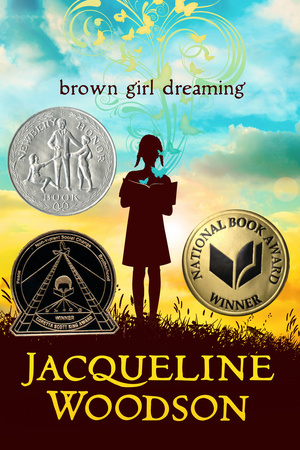
Brown Girl Dreaming by Jacqueline Woodson, a National Book Award Winner and Newbery Honor Book, is a coming-of-age novel in verse that is fresh and child-like in its perspective.  Jacqueline Woodson clearly bases her novel on her own experiences as a young black girl who grows up in a home with a single mother and older siblings.  Moving from Ohio and her father to Greenville, S.C., in the 1960s to live with her mother, siblings, and grandparents, Jackie is too young to understand the breakup of her family and remember her past.  Running in parallel to the Civil Rights Movement, young Jackie learning her letters and trying to keep up with her older siblings.  As she finds she doesn’t measure up to her smart sister in the classroom, she also learns that each sibling may have hidden talents, like her brother’s singing voice.

From "February 12, 1963" (pg.1-2)

I am born in Ohio but
the stories of South Carolina already run
like rivers
through my veins.

From "My Mother and Grace" (page 25-26)

Both know that southern way of talking
without words, remember when
the heat of summer
could melt the mouth,
so southerners stayed quiet

Jackie is a young girl finding her way, looking to be strong, but also learning to listen to her elders and to others influencing the civil rights movement. She hasn’t made up her mind, but she’s learning piece by piece what it means to be a young black woman in the south and how that differs from being black in New York.  Woodson’s style is frank, but firmly rooted in the point of view of a young girl who observes both the benefits of the movement and the drawbacks of fighting for what you believe in.  Along the way, she becomes friends with Maria whose mother cooks the best Hispanic food, and they do everything together, including swap dinners in the stairwell.

Brown Girl Dreaming by Jacqueline Woodson is a journey of a young black woman growing up in the 60s and 70s and serves as an excellent introduction to not only the time period, but also the struggles of black in the south and in the north for those ages 10 and up.  There are moments in which the author relies on a dream-like quality to present her narrator’s ideals, but at other points, it is very clear cut what has happened.  In many ways, this rendition is a mere outline of the harsher parts of life and it is reflected well through a child’s eyes.

About the Author:

Jacqueline Woodson is an American writer of books for children and adolescents. She is best known for Miracle’s Boys, which won the Coretta Scott King Award in 2001, and her Newbery Honor-winning titles Brown Girl Dreaming, After Tupac & D Foster, Feathers, and Show Way. Her work is filled with strong African-American themes, generally aimed at a young adult audience.

For her lifetime contribution as a children’s writer, Woodson won the Margaret Edwards Award in 2005 and she was the U.S. nominee for the biennial, international Hans Christian Andersen Award in 2014. IBBY named her one of six Andersen Award finalists on March 17, 2014. She won the National Book Award in 2014 in the category of “Young People’s Literature” for Brown Girl Dreaming.


The Prince by Niccolò Machiavelli

Source: Public Library
Paperback, 85 pgs
I am an Amazon Affiliate

The Prince by Niccolò Machiavelli, which was our June book club selection and my second reading (I haven’t read this since college), is a nonfiction analysis of different types of principalities and how a prince can keep them when factions or people move against him.  The work is considered a classic and it is an examination of what traits make principalities hard to maintain or easy to keep, as well as what characteristics a prince should foster in himself to hold onto his principality.  Although this is a slim volume, the economy of the language makes it quite dense and oftentimes dry.  Many often attribute the sayings of “the ends justify the means” and “might makes right” to Machiavelli, though they are not necessarily accurate interpretations of what he espoused.

It is clear that his life experiences as a civil servant in Italy, which had been far from unified under one government and was operated more through a balance of various factions and the strength of the truth.  It is clear that Machiavelli viewed political success from a practical standpoint, without an emphasis on morality.  More accurate attributions of wisdom to him might be that you can gauge the intelligence of a prince by those he has around them or that it is better to be feared than loved.

“The main foundations of every state, new states as well as ancient or composite one, are good laws and good arms; and because you cannot have good laws without good arms, and where there are good arms, good laws inevitably follow … ” (page 40)

The Prince by Niccolò Machiavelli has become a guidebook for many leaders, and has been perverted by others, including Hitler and Stalin.  Whatever readers may take away from his advice on principalities, Machiavelli is clearly a keen observer of human behavior, especially among rulers.  It is highly humorous that he would give this book as a gift to a new ruler of the Medici family in the hope of gaining favor with the new government, especially since the book tends to provide a framework for governing as if the reader would need pointers.  How many rulers would take to that kindly?

What the book club thought:

Everyone seemed to agree that this was almost like a how-to guide on how to become a prince and maintain the power they gain, regardless of the political or geographical situation.  One member expressed the opinion that Machiavelli seemed to focus on his own ambitions, despite his couching of his advice as something to help Medici, who was currently in power at the time the book was written.  Others did not see that, and I mentioned that he was incredibly disappointed that his political and civilian government life had come to an end too quickly and that he was motivated to ensure his return to that life.  Overall, most people found the book interesting and though that it would be interesting to see what Machiavelli would have written about the U.S. presidency or if his guide would work in today’s modern world.  The book generated a great deal of discussion, and most were surprised that it was not more evil than they expected.

About the Author:

Niccolò di Bernardo dei Machiavelli was an Italian political philosopher, musician, poet, and romantic comedic playwright. He is a figure of the Italian Renaissance and a central figure of its political component, most widely known for his treatises on realist political theory (The Prince) on the one hand and republicanism (Discourses on Livy) on the other.

Mailbox Monday #328

Mailbox Monday, created by Marcia at To Be Continued, formerly The Printed Page, has a permanent home at its own blog.

To check out what everyone has received over the last week, visit the blog and check out the links.  Leave yours too.

Also, each week, Leslie, Vicki, and I will share the Books that Caught Our Eye from everyone’s weekly links.

Here’s what I received:

1.  Animal Gas by Bryan Ballinger for review from Sterling Children’s Books, and it came with a whoopee cushion.

Every kid knows that nothing’s funnier than a fart joke. And it’s also a universal truth (and mysterious fact) that people don’t mind the smell of their own farts. Animal Gas explores this hilarious concept through a parade of animals who describe why they don’t think their own farts stink—against the truth about how they REALLY smell!

2.  Stencil Craft by Margaret Peot for a TLC Book Tour in July.

The art and craft world is in love with the versatility, creativity and endless possibilities stencils provide. And right here is your all-access pass to learn how to create and use all types of stencils–from carefully cut Mylar to lace, leaves and other found objects. Using original, and even pre-made designs, you can create unique pillowcases, tote bags, business cards, portraits and more.


3.  Urban Art Berlin: Version 2.0 by Kai Jakob, a gift from Emma Eden Ramos.

A collection of Berlin street art photographs by the freelance photographer Kai Jakob.


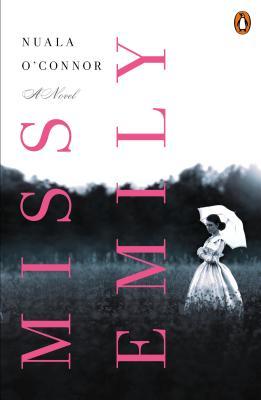
4.  Miss Emily by Nuala O’Connor for review from the publisher in July.

Eighteen-year-old Ada Concannon has just been hired by the respected but eccentric Dickinson family of Amherst, Massachusetts. Despite their difference in age and the upstairs-downstairs divide, Ada strikes up a deep friendship with Miss Emily, the gifted elder daughter living a spinster’s life at home. But Emily’s passion for words begins to dominate her life. She will wear only white and avoids the world outside the Dickinson homestead. When Ada’s safety and reputation are threatened, however, Emily must face down her own demons in order to help her friend, with shocking consequences.

What did you receive?

310th Virtual Poetry Circle

Welcome to the 310th Virtual Poetry Circle!

Remember, this is just for fun and is not meant to be stressful.

Keep in mind what Molly Peacock’s book suggested.

Look at a line, a stanza, sentences, and images; describe what you like or don’t like; and offer an opinion. If you missed my review of her book, check it out here.

Today’s poem is from Jehanne Dubrow:

Much Tattooed Sailor Aboard USS New Jersey

Squint a little, and that’s my husband
           in the photograph, the sailor on the left—
the one wearing a rose composed of ink
           and the Little Bo Peep who stands
before a tiny setting sun and the blur
           on his forearm which might be a boat—
while the sailor on the right is leaning in,
           his fingers touching the other man’s skin,
tracing what looks like the top of an anchor
           or the intricate hilt of a sword, perhaps
wiping blood from the artful laceration,
           in his other hand something crumpled,
his cap I think or a cloth to shine brass,
           lights on a bulkhead, fittings and fixtures,
because let’s not forget this picture
           must be posed, the men interrupted—
mops laid down, ropes left uncoiled, or else
           on a smoke break, Zippo and Lucky Strikes
put aside—the men shirtless on a deck,
           legs bent at beautiful angles,
a classical composition this contrast
           of bodies and dungarees, denim gone black
and their shoulders full of shadow—
           although on second thought how effortless
this scene, both of them gazing toward
           a half-seen tattoo so that we too lean in
trying to make out the design on the bicep,
           close enough we can almost smell the salt
of them and the oil of machinery,
           which is of course the point, as when in a poem
I call the cruiser’s engine a pulse inside my palm
           or describe my husband’s uniform,
ask him to repeat the litany of ships and billets,
           how one deployment he sliced himself
on a piece of pipe and how the cut refused
           to shut for months—Hold still, I tell him,
I need to get the exquisite outline of your scar.

What do you think?