Quantcast

Rational Creatures edited by Christina Boyd

Source: Publisher
Ebook, 486 pgs
I am an Amazon Affiliate

Rational Creatures edited by Christina Boyd is a collection of stories that explore the rational side of Jane Austen’s characters, delving deep into what makes them tick. From Louisa Musgrove who leaps from the Cobb and is severely injured to Hetty Bates, the spinster who chatters away. Sixteen Austen-inspired stories are within the covers of this anthology, and each one will shed light on some of Austen’s most modern thinking characters. But don’t be fooled by the title because this collection also has the romance many Austen readers desire.

Imagine Elinor Dashwood sketching her beloved knowing he belongs to another, pouring her deep passion and melancholy into his visage with such care. “He has found it, she thought, not daring (not wanting) to break the intensity of his gaze. Could he see, in that drawing and in her face, all she wanted of him? What would he do if she were to reach out and touch him — to feel for herself the line of his jaw, the arch of his brow, the fullness of his bottom lip?” (from “Self-Composed” by Christina Morland)

Readers also get a glimpse into Charlotte Lucas and her thoughts on marriage and her longing for a life like her friend Elizabeth Bennet — a life filled with love. We find that Hetty Bates may be more like Elizabeth Bennet than we’d think, having spurned a marriage proposal. Perhaps Ms. Bates is Ms. Bennet’s alter ego, had Mr. Darcy not strove to improve himself and hope she’d accept him. Even Fanny Price, who many see as weak, is brought into a new light in “The Meaning of Wife” by Brooke West. “Edmund did not truly know her at all, choosing only to see the young woman he expected her to be. It struck her as darkly amusing that for years she had longed for Edmund to look upon her with desire but, now that his heart had found his way to her, she could find none of the expected joy.”

Rational Creatures edited by Christina Boyd offers so much in these short stories but at it’s heart is about women who are searching for their own love stories, even if they are ridiculed, hated, and ignored by others. Isn’t love the most redeeming for us all. Each of these characters is given new life by these authors and their stories are as beautifully engaging as the originals written by Jane Austen herself.

Rating: Quatrain

Cloud Hopper by Beth Kephart

Source: Purchased
Hardcover, 332 pgs.
I am an Amazon Affiliate

Cloud Hopper by Beth Kephart is a novel of adventure in the eyes of three teens who have found their own family among one another. K, Wyatt, and Sophie look to the skies as Sophie’s Grandma Aubrey wove tales of her namesake, Sophie Blanchard, aeronaut extraordinaire. A cloud hopper comes to life in a young migrant girl who falls from the sky one summer as the trio are watching. When they scramble to save her from the wreckage, the trio begin a journey of self-discovery and shared secrets that has little to do with the hopper herself. Sophie must become more at ease in the air, like her namesake, if she is to come terms with all that happens in this novel.

Kephart’s lyrical prose creates a sense of urgency to find the migrant girl’s family without them being caught by ICE or worse, as the hospital will only keep her so long as she heals. Sophie’s grandmother’s multiple sclerosis is progressing at the same time. Sophie is pulled between her friends and the mission and the love of her grandmother who needs her most. What Kephart does so well is create a vivid scene in each moment, making the reader feel they are there on the forest floor searching, in the Cessna circling, at the hospital appeasing, and striving for a resolution and a happy ending, even if they know not all endings are happy.

“You pick the best people for your life, Grandma Aubrey always says. And you stick with them.” (pg.78)

“‘Nothing that is not to be expected,’ she says, but it takes her way too long to say it, and my thoughts are worries, and my worries are like the black storm in the sky that came upon the hopper and threw her to the ground.” (pg. 129)

Like many other Beth Kephart books, readers will be swept into a new world — a world that is both real and fantastical. It’s poetic, it bends the rules, and it soars. Cloud Hopper by Beth Kephart is like the hopper, flying perilously toward danger without a safety net, but the journey is well worth the unpredictability.

RATING: Cinquain

Other Reviews:

About the Author:

Beth Kephart is the author of twenty-two books, publishing memoir, young adult literature, a corporate fairytale, an autobiography of a river, and an essay/photography collection.

Handling the Truth: On the Writing of Memoir (Gotham), based in part on Kephart’s teaching at Penn (where she won the 2015 Beltran Teaching Award), won the 2013 Books for a Better Life Award (Motivational Category), was featured as a top writing book by O Magazine, and was named a Best Writing Book by Poets and Writers. Small Damages (Philomel) was named a 2013 Carolyn W. Field Honor Book and a best book of the year by many publications. Going Over (Chronicle) was the 2014 Parents’ Choice, Gold Medal Winner/Historical Fiction and a Booklist Editor’s Choice. One Thing Stolen (Chronicle) was a 2015 Parents’ Choice Gold Medal winner. Kephart’s 2014 Shebooks e-memoir is Nest. Flight. Sky.: On Love and Loss One Wing at a Time. Her 2013 middle grade historical novel, Dr. Radway’s Sarsaparilla Resolvent (Temple University Press), was named a top book of the year by Kirkus.

Kephart is a National Book Award nominee and a winner of the Pennsylvania Council on the Arts fiction grant, a National Endowment for the Arts grant, a Leeway grant, a Pew Fellowships in the Arts grant, and the Speakeasy Poetry Prize. She writes a monthly column for the Philadelphia Inquirer, is a frequent contributor to the Chicago Tribune, has given keynote addresses on the state of literature and teaching, and served as a judge for the National Book Awards, the National Endowment for the Arts, and PEN. 

Kephart was one of 50 Philadelphia writers chosen for the year-long Philadelphia’s Literary Legacy, exhibited at the Philadelphia International Airport. Excerpts from her Love: A Philadelphia Affair were the subject of a six-month Airport exhibit. She is a Radnor High Hall of Fame.

Kephart is the co-founder of Juncture Workshops, offering memoir workshops and resources to writers across the country.

Daughter of Black Lake by Cathy Marie Buchanan

Source: publisher
Hardcover, 320 pgs.
I am an Amazon Affiliate

Daughter of Black Lake by Cathy Marie Buchanan is like the oral tales of old where facts are distorted by the story teller from ear to ear. During the Roman invasion of Britannia, we meet the Smith family in which Hobble is a runt because of her gait issues, her mother is a healer for the tribe at Black Lake, and her father is the blacksmith. Like the lake with its dark, unknowable depths, much of the nature-based religion and philosophy of the Druids leaves the village’s families tentative in their dealings. With certain families currying favor with hunted meat and others who are too meek to stand up to a dying religion, there are mysteries lurking.

The Smith family was once considered among the best and most generous, but their fall from First Family has left Devout, Hobble, and Young Smith doing their best to appease the lone druid who comes to Black Lake and the Hunter family, who now holds that coveted place in society, are just waiting to pounce and reclaim their place.

Hobble has been training with her father to run fast despite her disability. Weak members or runts are considered possible sacrifices to appease the gods if needed. Devout, her mother, has a secret, and like the Black Lake she is impenetrable, at least in Hobble’s eyes. Their relationship is muddied by the secrets she holds, even as Hobble displays a gift of foresight and an ability to “see” the truth. She is unique compared to the other bog dwellers, but her vision of the invading Romans becomes a serious concern for her family, the village, and the lone druid who comes to seek brave men to join his rebellion.

“Though we do not speak of my birth, I can describe the deep blue veins webbing my mother’s breasts, the slight tremble of my father’s hand as he clenched his knife, and above all, the way she hid the crescent from his view. The finer points of the scene glinted before me with the exactness of a sharpened blade, same as they had for that vision of R0mans at Black Lake.” (pg. 3)

This mystical tale is woven like a tapestry with each strand hard to hold onto until it comes together with the other colors to create a full scene of village life under the druids and the change that hovers on the horizon under Roman rule. In the backdrop the struggle for power plays out just as it does in the foreground between the Smiths and Hunters where the power shifts from one to the other. Buchanan’s story unfolds in a deliberate way to immerse the reader in this ancient time when even writing was not done and knowledge was passed from person to person. Daughter of Black Lake by Cathy Marie Buchanan is a struggle for survival amid a world of secrets and lies, political gains and losses, and magic.

RATING: Cinquain

Other Reviews:

Photo Credit: Heather Pollack

About the Author:

Cathy Marie Buchanan is the author of the nationally bestselling novels The Day the Falls Stood Still and The Painted Girls. She lives in Toronto. Find out more about Cathy at her website, and connect with her on Facebook and Instagram.


EXCERPT:

Join us for a fun tour with reviews accompanied by progressive excerpts on the blogs and a game of finding out your “Black Lake name” on Instagram beginning Oct. 8!

Please use the hashtag #daughterofblacklake, and tag @tlcbooktours, @riverheadbooks, and @cathymbuchanan.

Devout was once a maiden of thirteen, wandering the woodland at the northern boundary of the clearing at Black Lake. She felt the sun reaching through her skin cape and her woolen dressas she walked, gaze sweeping the curled leaves, twigs, and fallen branches of the woodland floor. She bristled with anticipation. Now that she had begun to bleed, that very evening she would join the rest of the youths eligible to take mates in celebrating the Feast of Purification. Together they would mark the advent of a new season, and in doing so leave behind the cold, bitter season called Fallow and welcome the slow thaw of the season called Hope. At such a promising juncture, Black Lake’s boys offered trinkets to the maidens. With a polished stone or an opalescent shell, a boy made known his desire to take a particular maiden as his mate, and with that gift accepted and then a witnessed declaration, a maiden cast her lot.

Devout told herself not to beselfish, not to set her heart on holding in her cupped palms evidence of a boy’s yearning. It was her first Feast of Purification, and the possibility of a mate remained as unfathomable as the distant sea. Still, the idea of a trinket, of being singled out, of wide eyes and maidens gushing that she had drawn affection—all of it glinted like a lure before a fish.

She stooped to peer beneath a bush, looking for the bluish‑purple petals of the sweet violet she had come into the woodland to collect. The flowerheld strong magic: A draft strained from a stew of its boiled flowers brought sleep to those who lay awake. A syrup of that draft mixed with honey soothed a sore throat. A poultice of the leaves relieved swellings and drew the redness from an eye. She touched her lips, then the earth. “Blessings of Mother Earth,” she said.

Mother Earth would come that night, and in Devout’s mind’s eye, she pictured her arrival, imagining it much like the mist rolling in from the bog. Mother Earth would glide into the clearing, permeate the clutch of roundhouses, and in doing so chase away vermin, dis‑ ease, wickedness. The cleansing put the bog dwellers at ease. Though the Feast of Purification came at a time when the days were growing longer, still night ruled. After a daythat was too short for the bog dwellers to have grown tired, they tossed amid tangles of woven blan‑ kets, furs, and skins, worry creeping into their minds. Would the stores of salted meat, hard cheese, and grain last? Was there enough fodder left for thesheep? Had slaughtering all but a single cock been a mistake? Were the ewes’ bellies hanging sufficiently low? Were their teats adequately plump?

Check out the next stop on the blog tour and the next excerpt at Lit and Life.

Mailbox Monday #599

Mailbox Monday has become a tradition in the blogging world, and many of us thank Marcia of The Printed Page for creating it.

It now has it’s own blog where book bloggers can link up their own mailbox posts and share which books they bought or which they received for review from publishers, authors, and more.

Leslie, Martha, and I also will share our picks from everyone’s links in the new feature Books that Caught Our Eye. We hope you’ll join us.

Here’s what we received:

Cloud Hopper by Beth Kephart, which I purchased from Main Point Books.

When a girl in a homemade hot air balloon falls out of the sky in rural Gilbertine, there are questions: Who is this girl, where exactly did she come from, why won’t she talk, and what has she risked to live in a country that does not seem to want her?

And what can Sophie, Wyatt, and K―three misfit best friends with complex and harrowing stories of their own―do to help the girl who can’t trust those who want to help her? What should they do? As seen through the eyes of 14-year-old Sophie, who lives with her terminally ill grandmother, Cloud Hopper by National Book Award finalist Beth Kephart is a poignant, high-flying adventure set among the old planes, Vietnam vets, and majestic hot air balloons of a run-down municipal airport. It’s about the rules we’ll break and the dangers we’ll face to do the most-right thing we can imagine, even when we’re feeling long past brave.

Weird But True Halloween: 300 Spooky Facts to Scare You Silly by Julie Beer and Michelle Harris for review from Media Masters Publicity.

The wildly popular Weird But True! line is all dressed up for Halloween with 300 all-new spooky facts about candy, costumes, pumpkin carving, and more! Calling all boys and ghouls: You’re in for a treat of freaky facts, stats, tidbits, and trivia about one of the most popular holidays! Did you know that there is an underwater pumpkin carving contest? Or that the U.S. Defense Department has a zombie apocalypse plan? Maybe you’d be amazed to discover that there are more Halloween emojis than there are U.S. states? It’s all weird–and it’s all true–in this latest and greatest edition, packed with hilarious and terrifying tidbits on Halloween!

What did you receive?

National Geographic Kids: Beginner’s United States Atlas and United States Atlas

Source: Media Masters Publicity
Paperbacks, 128 pgs and 176 pgs.
I am an Amazon Affiliate

National Geographic Kids has a new 2020 edition of both the Beginner’s United States Atlas (3rd edition) and the United States Atlas (6th edition). The Beginner’s atlas includes the basics about what a map is, the land, the people, and the national capital, as well as individual maps and facts about each states. The atlas divides the country into 5 regions designated by different colors, and the back of the book contains a glossary, postal codes, and metric conversion chart. We love the full color topographical maps in this volume and the large text that makes the information easy to read.

My daughter and I will spend a great deal of time learning about maps and what features on the map signify, as well as the importance of the scale and compass. The full color photos in the atlas are gorgeous and vivid. They include natural features and animals, historical elements, and the state birds and flowers, among other things. The beginner’s atlas is a great place to start with elementary school students to help them learn about the different states in our country. We’ve already checked out our home state of Maryland.

The United States Atlas is a smaller paperback atlas that also includes full color photos and is chock full of information. This atlas includes information about the physical aspects of our country, including its climate and natural hazards, and information about our population, energy, the national capital, and people on the move. Again the atlas is broken up into 6 regions (one of which includes the U.S. Territories) that are color coded. There are facts and figures, postal abbreviations, map abbreviations, place names in an index, and more. This one has more in-depth information than the beginner’s atlas.

We love that both of these provide text and facts, but that they also provide photos that bring each state to life. National Geographic Kids’s new 2020 edition of both the Beginner’s United States Atlas and the United States Atlas will be a great addition to homeschooling and virtual schooling this year. With the topsy-turvy COVID-19 pandemic still underway, this will give us a needed break from Zoom classes and allow her to explore the country — at least in a book.

RATING: Cinquain

Guest Post: Do Writing Habits Change When Switching Genres? by Eric D. Goodman, author of The Color of Jadeite

As you can see from the book trailer, The Color of Jadeite by Eric D. Goodman would likely be considered a thriller. Today, Mr. Goodman is going to talk about what it was like to write in a different genre after writing short stories, a literary novel, and a children’s book. But first, read a little bit about The Color of Jadeite.

Book Synopsis:

Clive Allan, a suave private eye, ventures throughout China in search of an ancient jadeite tablet from the Ming dynasty. Along the way, he delves into the mysteries of China’s art, history, and culture.

Every bit as captivating as the treasure Clive seeks is the mysterious Wei Wei, an expert on Chinese artifacts who helps the droll detective navigate the most perilous pockets of Beijing, Shanghai, Xi’an, Hangzhou, Suzhou, and beyond.

With sidekicks Salvador and Mackenzie, Clive sets out to find the priceless artifact, outwitting their rivals at almost every turn. But between the fistfights and rickshaw chases, gunfights and betrayals, Clive’s deep connection with the treasure he seeks and his romance with Wei Wei force him to confront truths about his past and himself.

Doesn’t this sound intriguing? My mom loves a good PI novel and so do I. This sounds like a thrilling ride.

Please give Eric Goodman a warm welcome:

Aside from one published storybook for children, most of my published fiction, both long-form and short stories, falls rather firmly into the “literary fiction” genre—perhaps spilling over into “contemporary fiction” or “mainstream fiction” the way a pop song might break into country or a country ballad may sway into rock and roll.

So I’ve been asked more than a few times: what made me decide to cross the tracks into genre fiction? Why write a thriller?

The truth is, I think a good story is a good story, regardless of what genre label gets slapped onto the cover. I’ve been interested in adventures and thrillers for as long as I’ve been writing—since childhood. I’ve also always been fascinated with characters, interaction between them, and perspective. It turns out most of the work I’ve had published in my career has been focused on people and their relationships and everyday life. But even as a child and teen, I was writing adventure stories. So it was inevitable that I eventually write an adventure thriller.

The “how” of this particular book relates to the setting. I love to travel, and I make it a habit to visit multiple countries each year—when we’re not in pandemic lockdown.

Sometimes I travel with the purpose of writing a travel story or scouting out potential settings for novels and stories. Sometimes, just for the unique experience.

All of the locations featured in The Color of Jadeite are real paces that I visited during my recent trip to China. I found the places to be exotic and knew that I would want to use them as settings in a novel or series of stories. From the twisting side streets of Shanghai to the Imperial architecture of Beijing, even when I was there I could see that
these would be interesting places to set scenes. Knowing that I also wanted to try my hand at a thriller, I realized that these colorful and exotic locales would be the perfect settings.

Another thing I’ve been asked is whether my writing habits changed when switching genres. I really don’t think so—writing a story with good characters in interesting places and situations is more or less the same whether you’re writing historic fiction or science fiction.

My writing habits for Jadeite were much the same as with past novels. I tend to write in long spurts, and when I’m writing I submerge myself in the process and subject matter.

So when I began working on The Color of Jadeite, I read a lot about Chinese culture and Emperor Xuande and the Forbidden City and such. I also read thrillers and old gumshoe detective novels. And I watched a good number of documentaries and classic films, from noir detective to glob-trotting adventure.

After writing a first draft, I put it aside for a few months before revisiting it: reviewing and rewriting the novel. Again and again.

The one difference for this novel is that I needed to spend more time plotting it out. With literary fiction, I usually know where I’m headed and some pivotal scenes from point A to B, but I don’t tend to outline beyond having several pages of notes and scenes.

For The Color of Jadeite, it was important to outline in detail, not only because of the action that needed to take place and the locations I needed them to visit, but also because of the larger cast of intertwining characters—some of whom don’t make it to the end of the novel.

Before I began writing Jadeite, I already had both a full outline and a “beat sheet” that described every scene I knew needed to be included.

I’ve done this in the past, but for most of my recent writing I have not used outlines or beat sheets. So this made it a very different process in that way.

The other way the writing process changed was that in addition to fitting in plot points, I needed to fit in all of the interesting places I wanted to take the characters. In some ways, I think of Jadeite as a “novel in settings.” The list of interesting places I wanted to take my characters came early in the process, and part of the plot was driven by how to
take them there.

In the end, the most important part of the writing process is character development—trying to make the characters real, honest, and relatable. And offering them an opportunity to change.

Whether driven by dynamic action scenes or engaging dialogue, my goal is to make the reader have feelings for the characters—whether it’s country, rock and roll, or K-pop.

Thanks, Eric. I always find the writing process intriguing.

Pick up a copy of The Color of Jadeite at your local independent bookstore or Amazon.

You can find other interviews, reviews and guest posts by Eric D. Goodman, here.

About the Author:

Eric D. Goodman is a full-time writer who lives in Baltimore, Maryland with his wife, son, daughter, and Weimaraner. His most recent novel is the literary thriller, The Color of Jadeite (Apprentice House Press, October 2020). He is author of Setting the Family Free (Apprentice House Press, 2019), Womb: a novel in utero, (Merge Publishing, 2017), Tracks: A Novel in Stories, (Atticus Books, 2011) and Flightless Goose, a storybook for children (Writer’s Lair Books, 2008). More than a hundred of his works of short fiction, travel stories, and articles about writing have been published in literary journals and periodicals. When he’s not writing, Eric loves traveling, and most of the settings in The Color of Jadeite are places he has visited. Founder and curator of Baltimore’s popular Lit and Art Reading Series, Eric can be found at Facebook, Twitter, and his website.

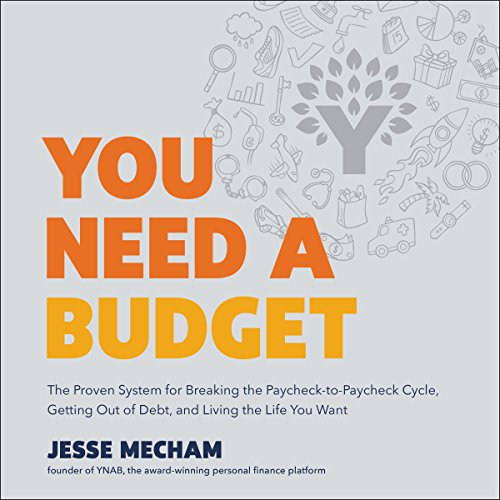
You Need a Budget by Jesse Mecham (audio)

Source: Audible
Audiobook, 5 hrs
I am an Amazon Affiliate

You Need a Budget by Jesse Mecham, narrated by the author, is a hard and fast look at budgeting. The first big takeaway for me was that budgets are not rigid tools, but are meant to be flexible. You can visit the website and signup for the software and more too.

Here are your four rules for budgeting:

  • Rule One: Give Every Dollar a Job.
  • Rule Two: Embrace Your True Expenses.
  • Rule Three: Roll With The Punches.
  • Rule Four: Age Your Money.

For couples, this means you have to also embrace the goals and expenses of yourself and your spouse and some goals and expenses may belong to both people in the relationship. No one goal or expense (that are necessary or desired expenses) supersede another.

The biggest rule for me that made me rethink budgeting is rule two because it shouldn’t just include the mortgage or the utilities and food, but also large, less-frequent expenses like holiday gifts, car repairs, etc. I need to break them into manageable, monthly “bills” that we assign dollars to — giving them a job.

One of the hardest lessons will be this: commit to the process of planning. You can stop timing bills to a specific paycheck — this is probably a foreign concept for many people, especially those not taught about finances. Much of what I’ve learned about finance is on the fly and with many failures. For couples, the biggest lesson will be communicating about spending on a regular basis, which can mean a monthly meeting.

One of the best parts of the book is the chapter on teaching children about money and how to talk to them about money without freaking them out. My one issue is that it talks about how he plans to not save for his kids’ college education and that he expects them not to take out student loans. I found this section a bit “pie in the sky” given the high cost of tuition in America. I did like the allowance portion of the book, however, because it enables kids to be kids and spend their money how they want and learn that they might have wanted to save that money they spent for something else. This turns into practical lessons.

You Need a Budget by Jesse Mecham is an intriguing listen with real-world examples of people paying off debts, learning how to budget as a couple, and more. But I think I would have preferred a print version that I could mark up. It’ hard to mark up and audio. Good thing there’s a website with free tools and more.

Mailbox Monday #598

Mailbox Monday has become a tradition in the blogging world, and many of us thank Marcia of The Printed Page for creating it.

It now has it’s own blog where book bloggers can link up their own mailbox posts and share which books they bought or which they received for review from publishers, authors, and more.

Leslie, Martha, and I also will share our picks from everyone’s links in the new feature Books that Caught Our Eye. We hope you’ll join us.

Here’s what we received:

National Geographic Beginner’s United States Atlas

This fun, easy-to-use atlas takes kids on a journey around the U.S. to showcase what’s unique about each state and territory. Every profile starts with a colorful map and a lively essay and includes capital cities; population; important land and water features; state birds, flowers, and flags; and more. It’s all packaged in a bigger format, with a refreshed design, and bold, bright photos and illustrations.

National Geographic–known for its authoritative data, expert cartography, and beautiful photography–is the number one provider of atlases for people of all ages.

National Geographic United States Atlas 2020 edition

Kids will have fun learning about each and every U.S. state in this amazing 6th edition atlas, packed with maps, stats, facts, and pictures. National Geographic’s world-renowned cartographers have paired up with education experts to create maps of all 50 states, U.S. territories, and Washington, D.C., that pinpoint the physical features, capitals, and other towns and cities. Discover the latest data along with colorful photography of each state and the people who live there. Key points reflect the latest information about land and water, people, and places. Lively essays cover each region of the country. Eight specially themed maps on nature, population, economy, energy, climate, and more delve deeper into key issues. State birds and state flags add to the high visual interest. This is a great reference for home and school with all the basics kids need to know to succeed in middle school, high school, and beyond.

National Geographic Little Kids First Big Book of Science

Make sure kids’ first experience of the wonders of science is a thrilling eye-opener with this fun reference book. Fun activities, games, and simple experiments encourage interactive learning, showing kids that anyone can use scientific observation and experimentation to be a scientist and discover new things. With bright images and age-appropriate text, this book inspires kids to be curious, ask questions, and explore the world around them and maybe even grow up to be a scientist one day, too! Topics include astronomy, botany, paleontology, malacology (that’s the science of clams, snails, and other animals with shells!), zoology, and more.

National Geographic Kids 5,000 Awesome Facts

Presenting the next must-have, fun-filled gift book from the team that created Ultimate Weird But True, 5,000 Cool Facts About Everything treats kids to brain candy and eye candy all rolled into one treasure trove of high-interest fascinating facts.

Lively and information-packed, this book is literally busting its covers with fascinating, fun-tastic facts on super, sensational topics that kids love. Who knew that there were so many sweet things to learn about chocolate or that a dozen delicious details about peanut butter would show up on a page with a few splotches of jelly to whet our appetites? Keep turning and a terrifyingly toothy shark tells you all about himself, while other spreads lay out tons of tips on toys and games, mysteries of history, robots and reptiles, sports and spies, wacky words, and so much more! A visual feast of colorful photographs surrounded by swirling, tipping, expanding, and climbing bits of information in a high-energy design, this book will satisfy both the casual browser and the truly fact obsessed.

Izzy Newton and the S.M.A.R.T. Squad: Absolute Hero by Valerie Tripp

Science reigns supreme with this squad of young brainiacs. Join Izzy Newton and her friends in the first adventure of this fun new middle-grade fiction series from National Geographic Kids.

A crowded new school and a crazy class schedule is enough to make Izzy feel dizzy. It may be the first day of middle school, but as long as her best friends Allie Einstein and Charlie Darwin are by her side, Izzy knows it’ll all be okay. However, first-day jitters take an icy turn when Izzy’s old pal Marie Curie comes back to town. Instead of a warm welcome, Marie gives her former pal the cold shoulder. The problems pile up when the school’s air-conditioning goes on the fritz and the temperature suddenly drops to near freezing. The adults don’t seem to have a clue how to thaw out the school. Cold temperatures and a frigid friendship? Izzy has had enough of feeling like an absolute zero. She rallies the girls to use their brainpower and science smarts to tackle the school’s chilly mystery … and hopefully to fix a certain frozen friendship along the way. Will the girls succeed and become the heroes of Atom Middle School?

What did you receive?

The Engagement Gift by Lauren Blakely (audio)

Source: Audible freebie
Audiobook, 2+ hrs.
I am an Amazon Affiliate

The Engagement Gift by Laura Blakely, narrated by Elena Wolfe and Teddy Hamilton, is a short, erotic novella in which a young engaged woman debates in her head and with her friend whether she should ask her intended for a secret fantasy. Lily is adventurous in the bedroom and so is her fiance, Finn, but there’s one thing she struggles to ask her mate to do because it could ruin the intimacy they’ve created.

For me, this novella was steamy and erotic, but the characters felt a little flat and the relationship between Lily and Finn was one dimensional. I understood that they were hot for each other and obsessed with adventure in the bedroom, but it felt like that was all there was between these characters and for a marriage, I think you’d need more than that.

The Engagement Gift by Laura Blakely, narrated by Elena Wolfe and Teddy Hamilton, is a short read and I think that was part of the problem if you’re looking for character development. If you’re looking for a quick “romp in the hay,” however, this might be for you.

RATING: Epitaph

Mailbox Monday #597

Mailbox Monday has become a tradition in the blogging world, and many of us thank Marcia of The Printed Page for creating it.

It now has it’s own blog where book bloggers can link up their own mailbox posts and share which books they bought or which they received for review from publishers, authors, and more.

Leslie, Martha, and I also will share our picks from everyone’s links in the new feature Books that Caught Our Eye. We hope you’ll join us.

Here’s what we received:

Eunice and Kate by Mariana Llanos, illustrated by Elena Napoli from Penny Candy Books.

The girls live with their moms next door to each other in the heart of the city and have a lot in common―even though they have different dreams for the future: Kate wants to be an astronaut and Eunice wants to be a ballet dancer. But when they draw portraits of each other in art class, things get mixed up. Eunice draws Kate as a ballet dancer and Kate draws Eunice as an astronaut, and they both get more than a little annoyed. Can their friendship survive? With a little help from their moms, the girls come to learn the value of respecting each other’s different dreams. Eunice and Kate is a heartfelt new book by Mariana Llanos, illustrated by Elena Napoli, about how honoring our differences can strengthen our bonds.

Luca’s Bridge by Mariana Llanos, illustrated by Anna Lopez Real from Penny Candy Books.

Together in their car, Luca, his brother Paco, and their parents head across the border to Mexico where his parents were born. Luca doesn’t understand why he must leave the only home he’s ever known, his friends, and his school. He struggles through lonely and disorienting times―reflected both in Real’s delicate, symbolic illustrations and through Llanos’ description of his dreams―and leans on music, memory, and familial love for support. Luca’s Bridge / El puente de Luca is a story for everyone about immigration, deportation, home, and identity.

Trini’s Big Leap by Alexander de Wit and Beth Kephart, illustrated by William Sulit from Penny Candy Books.

She easily masters any gymnastic move her teachers show her, and always says, “I can do that.” But when she tries to construct buildings out of blocks like her friends do, she discovers that some things don’t come as easily for her. Through the encouragement of her friends, Trini learns the value of collaboration and trying new things, even when they aren’t so easy. An afterword by the founder and CEO of The Little Gym Europe, outlines why it’s important to encourage children to try new and difficult things.

The Yellow Suitcase by Meera Sriram, illustrated by Meera Sethi from Penny Candy Books.

When they arrive at her grandmother’s house, it’s filled with strangers―and no Grandma. Asha’s grief and anger are compounded by the empty yellow suitcase usually reserved for gifts to and from Grandma, but when she discovers a gift left behind just for her, Asha realizes that the memory of her grandmother will live on inside her, no matter where she lives.

Henry the Boy by Molly Felder, illustrated by Nate Christopherson and Tara Sweeney from Penny Candy Books.
This is not a story about a heron or a robot or a chicken but an ordinary boy with daily struggles, triumphs, and an extraordinary imagination. Henry uses forearm crutches decorated with animal stickers. He sometimes feels out of place at school, especially when he gets made fun of, but through his own rich imagination and his friendship with Joel, Henry learns to define himself on his own terms.

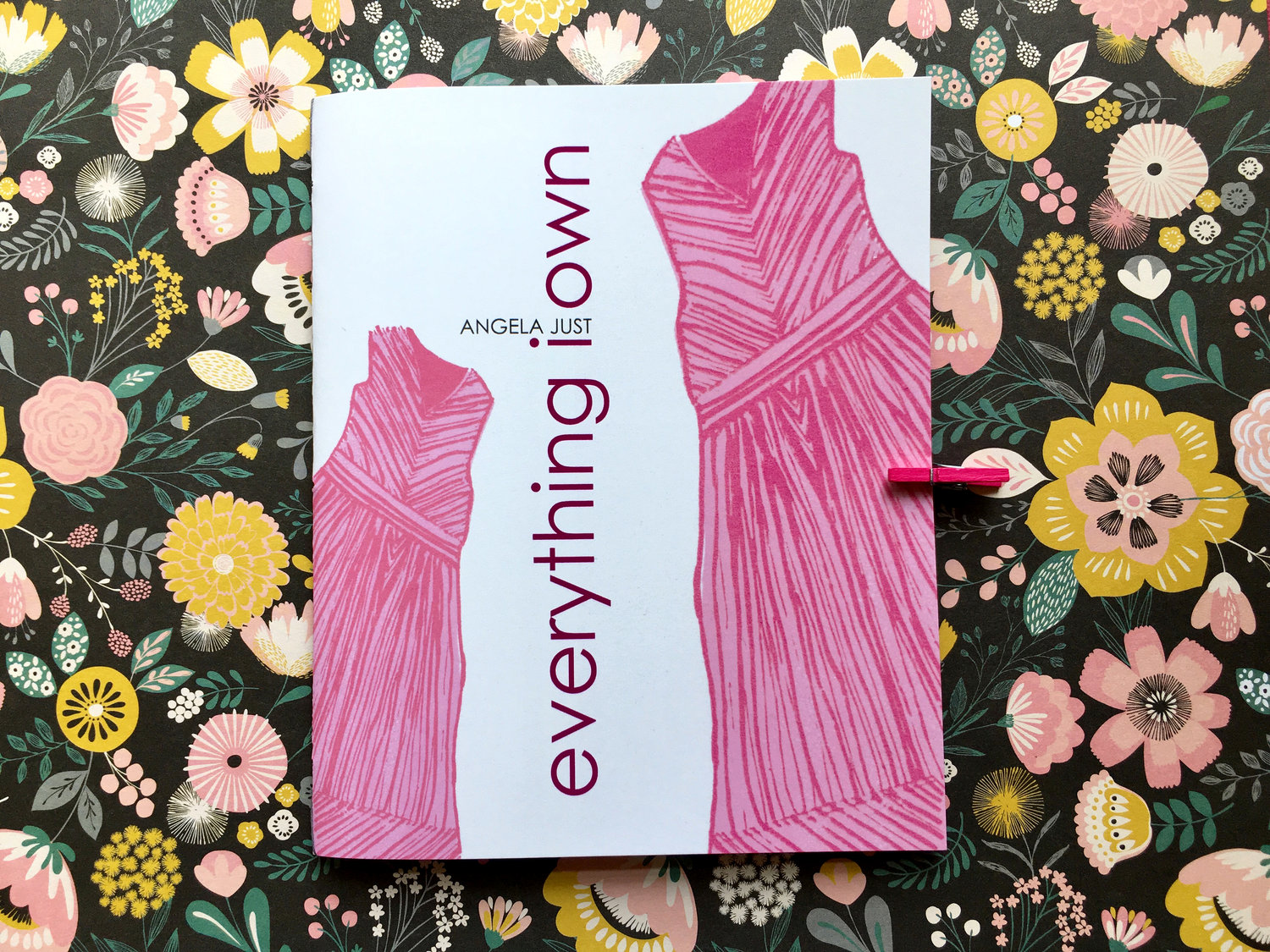
Everything I Own by Angela Just from Pork Belly Press.

These poems are about storytelling, things handed down and examined, from the gifts a mother might give to her daughter to the embrace of two Neolithic skeletons. This micro is intimate and brave—a little wicked, a bit bruised. Ultimately, Just’s poems are darn intriguing.


Sap Rising by Christine Lincoln, which I purchased.

In this spare and mesmerizing debut, Christine Lincoln takes us inside the hearts and minds of African Americans whose lives unfold against a vividly evoked rural community. As they navigate between old and new, between youth and responsibility, they find themselves choosing between the comforts of what they trust without question and the fearsome excitements of what they might come to know.

One young man’s world is both expanded and contracted by stories he hears from a beautiful stranger. Another stumbles across his mother having an affair with his uncle. An intense friendship forms between one woman afraid she will turn out like everyone else and one afraid she won’t. Lincoln’s down-to-earth voice, saturated with the manner and details of the South, brings her characters to life with a remarkably light touch and an extraordinary depth of emotion. In Sap Rising, she proves herself one of those writers whose work transcends its own rich particularity to speak with clarity to the most fundamental elements of the human experience.

What did you receive?

COVID Chronicle #1

Since the start of the pandemic and the lockdown in our state that began with sending kids home from school in March, I knew life would not be normal for a long time. I remember writing journal entries every day as a teenager and probably even before that, but I haven’t done any of that since college. Getting married, having children, and moving your parents and disabled brother into a single home will take a lot of time and energy. So I dropped the journaling habit.

This current public health crisis, however, has me wondering if I should return to the habit as a way to order my thoughts and release some of my stress, but I often fear that someone in my household will read it and take it too personally when really it’s just about me releasing emotions of the moment. So why write any entries that are on a blog for all to see? I ask this of myself. Perhaps because I know that my family doesn’t read my blog at all?

Some things I’ve noticed during this time, at least for myself, has been a ball of stress carried on my shoulders that I can’t seem to release even with yoga and meditation. Whether it’s the bills, the school work with distance learning (or maybe not learning) while I’m simultaneously trying to do my full-time job or it’s the stress of having six people in the same house day after day with little downtime for myself to be alone and think, I’m not sure. Perhaps it is a culmination of all those things.

What am I hoping to say or accomplish with these posts, which I doubt will be a regular affair? I’m not sure. But I thought I would give this a try and see if others were feeling the same bottled up, ready to explode feeling I have lately or maybe there’s some advice…I’m honestly not sure.

Feel free to chime in….


Afterland by Mai Der Vang

Source: Purchased
Paperback, 96 pgs.
I am an Amazon Affiliate

Afterland by Mai Der Vang, whom I was lucky enough to hear read at a virtual event for Pedestal Magazine, explores the after effects of the Secret War in Laos, during which the Hmong people became a surrogate army of the CIA. The war and its effort to disrupt traffic on the Ho Chi Minh Trail caused the significant displacement of numerous villagers over a nine year period. Der Vang opens her collection with “Another Heaven,” which sets the stage for her song of the Hmong people: “When funeral recites/The supper gardens of my forefathers,/Cross-stitch from my mother kin,// Then I will come to you/” Der Vang is stepping into the shoes of the Hmong, trying to make sense of a secret war and its consequences.

This initial poem sets the tone for the entire collection, an ethereal, out-of-body reminiscence of a people displaced from their homeland and they must learn to rebuild and grow again. “It’s when the banyan must leave/Relearn to cathedral its roots//” (“Dear Exile, pg. 22) Der Vang’s vision of the world will have readers imaging a world through new eyes. How do you regrow your roots in a new land? Readers will step inside the imagined journey and emotional roller coaster of being displaced. What is this “afterland” — is it a return to the old ways in a new country, the return to an old country, or the adoption of a new country and new ways?

One of my favorites in the collection is “Cipher Song”:

It's come to this. We hide the stories
on our sleeves, patchwork of cotton veins.

Scribe them on carriers for sleeping
babies, weave our ballads to the sash.

Forge paper from our aprons, and our
bodies will be books. Learn the language

of jackets: the way a pleat commands
a line, the way collars unfold as page,

sign our names in thread. The footprint
of an elephant. Snail's shell. Ram's horn.

When the words burn, all that's left is ash.

The poem reminds me of the family stories that are sometimes hidden because relatives aren’t asked or they are unwilling to share them, especially if they are painful. I recalled a time when my grandfather told us tales of the “old country” when he was willing to speak about WWII, but peppering him with questions would shut his mouth and the stories would stop. Der Vang is an archeologist bringing the Hmong back into the light, breathing life into their stories, like the “Phantom Talker” “with creosote mouth//hiding behind/your silent head/in the vermilion portrait.//”

Afterland by Mai Der Vang is full of haunted lines and ghosts, and her poems are beautiful like “a cello slinks/From every strand.//Vineyards ribbon/Inside the intimate air.” (To the Longhorn Hmong, pg. 59) Der Vang circles back to her own ancestral history in the penultimate, title poem. Readers get the sense they are coming full circle.

RATING: Cinquain

About the Poet:

Mai Der Vang is an editorial member of the Hmong American Writers’ Circle. Her poetry has appeared in the New Republic, Poetry, and the Virginia Quarterly Review, and her essays have been published in the New York Times, San Francisco Chronicle, and the Washington Post. Her debut collection, Afterland, received the Walt Whitman Award from the Academy of American Poets. She lives in California.