Quantcast

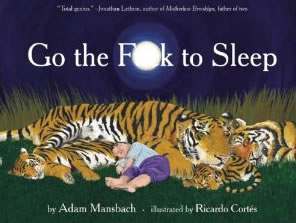
Go the F**k to Sleep by Adam Mansbach, Illustrated by Ricardo Cortes, Read by Samuel L. Jackson

Adam Mansbach’s Go the F**k to Sleep, illustrated by Ricardo Cortes and read by Samuel L. Jackson, is a “children’s book for adults” that will have most parents nodding, “YES!”  As a new parent, this book made me agree wholeheartedly with its sentiments about how hard it is to get kids to go to sleep.

They are often too wired to sleep or simply too worried that they will miss something important by going to bed.

THIS IS NOT a book for children; it is for adults and would be considered humor.  This is not a review of the book’s illustrations because I listened to this book via audio from Audible.

Samuel L. Jackson is a natural narrator for this book because of his brash attitude in his movies and the reputation he’s garnered as a result.  His narration gains momentum as he continues reading through the rhymed story, and the frustration escalates.  It is this movement and cadence that will amuse readers as they shudder with understanding — kids that need a drink or want one more story read to them before sleeping.

“The wind whispers soft through the grass, hon.  The field mice, they make not a peep.  It’s been 38 minutes already.  Jesus Christ, what the f**k! Go to sleep!”

One drawback is that the word “f**k” is used from the very first lines throughout the book, but it may have been more effective to save its use for later on as the frustration gains ground.  One of the best moments of the book is when the narrator realizes that his child will not be sleeping and has given up saying, “No,” and simply acquiesces to whatever the latest request is.  What makes the narration even more poignant is the light, lullaby music in the background.

Go the F**k to Sleep is a hilarious look at parenthood, and the introduction by Jackson about his own struggles with getting his daughter to sleep further drives home the point that we are not alone.

About the Author:

Adam Mansbach is an American author and professor of fiction[1] at Rutgers University[2] who wrote the “children’s book for adults” Go the Fuck to Sleep.[3] Other books Mansbach has written include Angry Black White Boy and The End of the Jews[4] (for which he won the California Book Award for fiction in 2008)
 

This is my 36th book for the 2011 New Authors Reading Challenge.


This is my 1st book for the 2011 Audio Book Challenge and the 1st I listened to on my Kindle.

Mockingjay by Suzanne Collins

Mockingjay by Suzanne Collins is the third book in the young adult Hunger Games trilogy featuring Katniss Everdeen, Peeta, and Gale.  Readers have been raving about the series, and many are obsessed with the Peeta-Katniss-Gale love triangle.  (You can read my reviews of the previous two books, The Hunger Games and Catching Fire — IF you have not read the previous two books, be warned that this review will be full of spoilers).

Katniss has been rescued by the rebel alliance of District 13 — thought to have been destroyed by the Capitol — but Peeta was left behind to be captured by President Snow’s forces.  Beyond deciding whether or not to become the symbol — the MOCKINGJAY — of the rebellion, Katniss must further realize that she needs to make adult decisions, decisions that could impact the fate not only of the rebels, but of the human race.  Along the way, she will reconnect with Gale, her family, Finnick, and others from the Games, but she also will be hit hard by the tragedy of loss, even those losses she was too numb or too blind to notice when they occurred.  As part of her evolution, Katniss must learn to discern for herself the best course of action and how her actions impact others, as well as how each side is manipulating every move she makes.

“After about twenty minutes, Johanna comes in and throws herself across the foot of my bed.  ‘You missed the best part.  Delly lost her temper with Peeta over how he treated you.  She got very squeaky.  It was like someone stabbing a mouse with a fork repeatedly.  The whole dining hall was riveted.'” (page 244)

Collins has a firm grasp of how a young teenage girl would react to high levels of danger, betrayal, and dystopian heartbreak.  Her no-nonsense prose keeps the plot moving quickly and easily paints a picture that young and adult readers become lost in.  Time flies quickly as readers get absorbed in the rebellion, cheering on Katniss and her struggle to find her rightful place.  However, there are moments when the reader will want the plot to move more quickly or will want more action or will wonder why Collins is beating them over the head with the references to the oppressive nature and rigidity found in District 13.  At one point, it seems that the narration takes on a preachy tone as the benefits of democracy are heralded above the current, rationing-and-sharing government of District 13 and the power wielded by the dictatorship of the Capitol.  However, readers will easily forgive this digression as the action picks up once again.

What’s ironic about this third book is that Prim, Katiniss’ younger sister, seems more mature, while Katniss is still childlike and impulsive.  Prim seems to have matured in a way that Katniss, who has seen more violence, could not — perhaps because Katniss’ childhood was a place she could retreat to and feel safe.  Prim’s character development is not spelled out, but readers are likely to enjoy the new dynamic between her and her sister.  A number of secrets about the Capitol and what happened in District 13 are revealed, rounding out the trilogy.  Compared to the other books in the series, Mockingjay does not have as much action, but overall, it is a satisfactory end to this dystopian trilogy.

This is my 9th book for the 2011 Wish I’d Read That Challenge.  I’ve wanted to read this since I pre-ordered the book from Amazon.  It’s about time I read this one.

The Baghdad Blues by Sinan Antoon

Published in 2007 by small press Harbor Mountain Press, The Baghdad Blues by Sinan Antoon is a collection of poems that straddles the line between war and peace with war.  The narrator uncovers the emptiness of loss beneath the hard exterior of those consumed by the act of war, while at the same time drawing line in the sand to call out the enemy.  Each line is carefully selected for its subtle power, which can only be unleashed by an unexpected turn in the poem or in a stanza.

From “Wrinkles; on the wind’s forehead” (page 23-8)

3

the wind was tired
from carrying the coffins
and leaned
against a palm tree . . .

6

My heart is a stork
perched on a distant dome
in Baghdad
it’s nest made of bones . . .

12

the Tigris and Euphrates
are two strings
in death’s lute
and we are songs
or fingers strumming

The collection is divided into four parts, with Phantasmagoria II containing the most poems. Phantasmagoria, according to Wikipedia, “was a form of theater which used a modified magic lantern to project frightening images such as skeletons, demons, and ghosts onto walls, smoke, or semi-transparent screens, frequently using rear projection. The projector was mobile, allowing the projected image to move and change size on the screen, and multiple projecting devices allowed for quick switching of different images.”  “A Photograph” is the most illustrative of phantasmagoria in that as the narrator unfolds the image of a photograph seen in the New York Times of a young boy in Baghdad, the true horror of the event comes to life and leaps off the page through the carefully chosen, yet sparse language used by Antoon.

Unlike other poets who discuss war in vivid and disturbing imagery, Antoon focuses on the impact of war on mothers, sons, and lovers as well as an entire nation and culture.  His use of slanted images and subtle transitions sets his verse apart from other “war” poets in that it creates an ironic atmosphere as the narrator speaks of blind bravery and courage, while at the same time stripping away worries of death by setting up orderly ways in which people will be taken care of once they have died.  There is a great sense of loss in many of these poems, but there is that faint hope that love will conquer all — whether it is the love of a mother for her son or the romantic love between men and women or the love of culture.

The Baghdad Blues by Sinan Antoon is a slim volume at 42 pages that will stick with readers long after they have read each poem.  Returning to these poems, readers will uncover the irony of Antoon’s words, but also the truth behind them.  Coping with the horrible sights and sounds that surround them, Iraqis must learn to preserve their sense of self amid chaos and find direction within the confines of their circumstances.

About the Poet:

Sinan Antoon is an Iraqi-born poet, novelist, filmmaker and assistant professor at New York University. His novel I’jaam: An Iraqi Rhapsody and his collection of poems The Baghdad Blues are written with great sophistication and a haunting sense of irony, according to The Electronic Intifada.

Read more about him at NYU Gallatin.


This is my 10th book for the Fearless Poetry Exploration Reading Challenge.


This is my 17th book for the 2011 New Authors Reading Challenge.


This is my 8th book for the 2011 Wish I’d Read That Challenge. I’ve wanted to read this volume ever since I picked it up at the last Split This Rock Poetry Festival in March 2010.

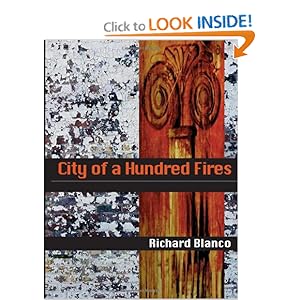
City of a Hundred Fires by Richard Blanco

Richard Blanco‘s City of a Hundred Fires is a collection published by the University of Pittsburgh Press about the Cuban-American experience, which won the 1997 Agnes Lynch Starrett Poetry Prize.  (You can check out one of his poems in the 40th Virtual Poetry Circle and my take on a reading he did at the local Writer’s Center in 2009.)  The collection is broken down into two sections and each poem contains not only English, but also Spanish phrases, which readers may or may not know offhand.  Readers who are bilingual will have little trouble, though those who have a working knowledge of Spanish or don’t will be able to gather what Blanco is getting at from context clues.  Poems are either in traditional short narrative lines or in longer, more paragraph-like lines, but each tells a story, reveals a memory, and explores a bit of the Cuban-American experience.

“Crayons for Elena” on page 13 is one of the most poignant poems in the collection as it uses the box of 64 crayons to illustrate the differences in skin tones and cultures of the people the narrator encounters and the colors that represent elements from the narrator’s own culture, including pinatas and mangoes.  “. . . All these we wore down to/stubs, peeling the paper coating further and further, peeling and sharpening/until eventually we removed the color’s name.  This is for leaving the box in/the back seat of my father’s new copper Malibu, the melted collage, the butter/”  It seems that though these differences confuse the narrator and cause discomfort, eventually, these differences are forgotten and life moves beyond those variations and instead absorbs the similarities, “melting them into a collage.”

Blanco continues to straddle the Cuban culture — kept alive in family traditions such as Quinces balls — and his new home in American culture.  In a way, his traditional family culture seems foreign to the narrator as he assimilates to American traditions of turkey at Thanksgiving and peanut butter and jelly sandwiches.  Unlike the older relatives talked about in the poems, the narrator does not kid himself that he will be returning to Cuba after the revolution; he knows that the dream of returning to the old country is just that — a dream.

At times, however, the narrator does experience moments of nostalgia, in which he remembers family events or moments.  There are other moments in which the voids left by an American culture that does not feel exactly like home are filled with reminders of a culture left behind whether those voids are filled with sake by a Japanese immigrant or by dark rum with lemon for a Cuban-immigrant.

Unlike in part one where the narrator delves into familial memories and the confusion of bridging two cultures, in the second part, the narrator has become more observant of how his home culture is mutilated and warped by the American idea of capitalism to create a caricature of Cuban life and culture, like in “El Jagua Resort” (page 43):  “where Canadians and Italians step out/drunk congas from megaphone instructions –/side-to-side, kick-then-kick, hand-to-hip;/caught in spells of tabaco, dark rum,/brown sugar, and the young mulatas/”  In a way, the little Havana created in America by the narrator’s parents’ generation is fading and being replaced, but the second part also illustrates more historical details of Cuba, the revolution, and other events.

For a slim volume of poems at 74 pages, City of a Hundred Fires by Richard Blanco will knock you on your butt with its passion, anger, and disbelief.  But it also will drag you to your feet as it clings to hope and harmony.  Overall, Blanco has crafted a diverse collection of poems on the Cuban-American experience that delves below the surface struggles of bias and loneliness to the internal struggle of one narrator and how he copes with those struggles and more.

This is my 6th book for the Fearless Poetry Exploration Reading Challenge.


This is my 12th book for the 2011 New Authors Reading Challenge.


***This is a part of the National Poetry Month 2011 Blog Tour.


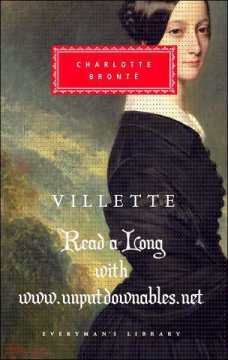
Villette Read-a-Long

I’m sure you’ve heard of UnputdownablesVillette by Charlotte Bronte read-a-long, which begins next month.

I have not officially signed up, only because my due date for the baby is fast approaching.  However, I do plan to participate as much as possible before she’s born and afterward, so some posts may not meet the current schedule:

Beginning Tuesday, February 1st and ending Thursday, March 31st

Week #/ dates :: Chapters to Read

Week One/ February 1st-7th :: ch. 1-5 (i.e. read chapters 1, 2, 3, 4, & 5)
Week Two/ February 8th-14th :: ch. 6-11
Week Three/ February 15th-21st :: ch. 12-17
Week Four/ February 22nd-28th :: ch. 18-22
Week Five/ March 1st-March 7th :: ch. 23-27
Week Six/ March 8th-March 14th :: ch. 28-32
Week Seven/ March 15th-March 21st :: ch. 33-37
Week Eight/ March 22-March 28th :: ch. 38-42

Catch up days, and extra days to process book before final review :: March 29th-31st.

It looks like the Thursday discussion post dates are as follows: (from what I’ve deduced)

Week 1: February 10
Week 2: February 17
Week 3: February 24
Week 4: March 3
Week 5: March 10
Week 6: March 17
Week 7: March 24
Week 8: March 31

If I don’t participate in all the discussions or postings, I will for sure continue reading along and post my final review at the end of March.

I hope others will join the read-a-long challenge; this is one book that I’ve wanted to read for a long time, along with some others from the Brontes.

If you want more information about the Villette Read-a-Long, please visit Unputdownables.

Matterhorn by Karl Marlantes

Matterhorn by Karl Marlantes is bound to be an instant classic among Vietnam War literature.  Drawing from his experiences as a Marine Lieutenant, much like many of the other authors’ novels, Marlantes’s perspective is not only of Marines on the ground in the depths of the jungle, but of a lieutenant who experienced first hand the political battles and horrifying decisions made by other officers and politicians.  Weaving in political dilemmas and screw-ups into the narrative can be burdensome for many writers — dragging down the plot and characterization — but this is not the case with Marlantes’ Matterhorn.

Mellas, the main protagonist, enters Vietnam as a lieutenant with a variety of ambitions for advancement and medals.  He’s been to Ivy League schools, he’s had a charmed life compared to the others in the bush, but he likes to feel like one of the ordinary guys in the bush, though at the same time, he wants to fit in with the officers and to prove his worth.  He’s a dichotomy in himself, displaying openly the struggle between the grunts and the officers within one man.

“Mellas was amazed and ashamed.  He realized part of him would wish anything, and maybe even do anything, if it meant getting ahead or saving his own skin.  He fought that part down.”  (page 7)

Mellas is thrown into Bravo Company and told to take hold of Matterhorn, only to abandon it when the political forces deem Cam Lo a bigger priority.  But by not having the support necessary from the base camps, his company runs out of water and other supplies, forced to hump through the jungle dehydrated and shot up.  There is more than one instance in which this company is thrown into battle with impossible odds, which will remind many readers of the movies that glorify the marines and their victories.  However, this novel shows readers the true nature of those “hollow” victories.  While these men remain dedicated to their missions and each other, without proper strategy and backing their victories become senseless in the eyes of loss and terror.  Even victories become jokes once the reports are made to the command posts and the reports of confirmed and probable dead are doctored — something that was common during the war.

“The records had to show two dead NVA.  So they did.  But at regiment it looked odd — two kills with no probables.  So a probable got added.  It was a conservative estimate.  It only made sense that if you killed two, with the way the NVA pulled out bodies, you had to have some probables.  It made the same sense to the commander of the artillery battalion:  four confirmed, two probables, which is what the staff would report to Colonel Mulvaney, the commanding officer of Twenty-Fourth Marines, at the regiment briefing.”  (page 91-2)

Mellas finds his place within the company and even becomes respected, but his continued ambition clouds much of his judgment and often forces him into situations that are more dangerous than they need to be.  Beyond Mellas, the company is hampered by continued racial tensions between the “brothers” and their white counterparts, with some elements on both sides more violent and outspoken than others.  Others are aware of the increased tension and racial hatred, but attempt to brush it under the rug or ignore it.  The tension builds within the “brothers” camp, pitting China against Henry, in such a way that it can only be released in one way.

“Jackson folded his arms. ‘You think someone’s going to understand how you feel about being in the bush? I mean even if they’re like you in every way, you really think they’re going to understand what it’s like out here? Really understand?’

‘Probably not.’

‘Well, it’s like that being black. Unless you’ve been there, ain’t no way.'” (page 429)

As for the officers back at the base camp, readers will find in Lieutenant Colonel Simpson a possible mirror image for Mellas, depending on how well he reacts to combat situations and political decisions beyond his control.  Simpson is often drunk, quick to anger, and makes rash decisions just with a few promptings from peers and underlings.

There are so many layers to Matterhorn, it is impossible to discuss them all in a review.  Mellas is a troubled hero, but in a way the hero is not any individual Marine, but the jungle that surrounds them.  It beats them down; it disguises the enemy; and it leaves them begging for mercy, but it also can provide them shelter; offer them food; and improve their chances of success.  Psychological effects of war, loss, and camaraderie in highly intense situations can be devastating and enlightening.  One of the best books I’ve read all year and easily one of the best books of the last decade.  Readers interested in drama, tension, war-related literature, and human interactions and societal contexts will be as captivated by Matterhorn as any other book that has come onto the shelves.

This is my 63rd book for this challenge.

This is my 15th book for this challenge.

The Brontës by Pamela Norris

The Brontës by Pamela Norris is a collection of selected poems from not only the Bronte sisters, but also certain poems from their brother Patrick Branwell Brontë.  According to the introduction, Patrick Bronte was a good poet, but did not reach the level of sophistication of his sisters.  Emily Brontë, according to Norris, is the most accomplished of the poets in terms of grasping meter and other components of poetry.  Anne Brontë is the most accessible, and readers often find it easier to emotionally connect with the poet.  Charlotte Brontë‘s poems often resemble her novels with their passionate women and abrasive men, but Norris says her narrative style can often overwhelm the poem and obscure its meaning.

The collection begins with a selection of poems from Charlotte, and many of these poems are bogged down in narrative, poetic prose, but the meaning of the poems are not completely obscured.  In fact, the selection of poems offer a sense of longing and despair topped with a current of optimism and rays of hope.  In “Mementos,”  Charlotte alludes to the precious nature of material objects, which even though tied to loved ones, are now moldy and dusty — long forgotten.

“Once, doubtless, deemed such precious things;
Keepsakes bestowed by Love on Faith,
And worn till the receiver’s death,
Now stored with cameos, china, shells,
In this old closet’s dusty cells.

I scarcely think.  for ten long years.
A hand has touched these relics old;
And, coating each, slow-formed, appears,
The growth of green and antique mould.”  (page 7, “Mementos”)

However, while Charlotte tells a unique story in each poem there is an emotional detachment even though the images and story tackle harsh topics and delve into questions of mortality and loss.  Charlotte’s poems about her deceased sisters, Anne and Emily, are more emotionally present, though the loss of Anne seems more substantial to her.

The next set of poems are from Patrick Brontë.  His poems weave a sense of loneliness, and not just a passing sadness and solitude, but a loneliness that weighs down the narrator.  From “Memory,” “Winds have blown, but all unknown;/ Nothing could arouse a tone/ In that heart which like a stone/ Senselessly has lain.” to “Oh, All Our Cares,” “But here this lonely little spot,/ Retires among its trees,/ By all unknown and noticed not,/” there is an emptiness in Patrick’s poems that is deeper than that in expressed by his sisters.  Camaraderie between the sisters must have been tough for a brother to penetrate, and to seek help from his sisters with his writing may have been a bridge he was unwilling to cross.  Regardless, his poems are no more poignant and enlightening about the human condition than those of his sisters.

Emily Brontë’s poetry is possibly the most well known of the siblings work, and her poems tend to be well crafted, adhering to style elements known for the forms she has chosen.  Her rhyme schemes are cleaner than her siblings, but her style is often dense and fantastical.  She blurs the lines between reality and a fantasy world she creates.  In some ways, readers may find that her poems are hard to decipher if they get too bogged down in the details she throws into each line.

“Will the day be bright or cloudy?” (page 39)

Will the day be bright or cloudy?
Sweetly has its dawn begun,
But the heaven may shake with thunder
Ere the setting of the sun.

Lady, watch Apollo’s journey,
Thus thy firstborn’s course shall be —
If his beams through summer vapours
Warm the earth all placidly,
Her days shall pass like a pleasant dream in sweet tranquility.

If it darken, if a shadow
Quench his rays and summon rain,
Flowers may open, buds may blossom,
Bud and flower alike are vain;
Her days shall pass like a mournful story in care and tears and pain.

If the wind be fresh and free,
The wide skies clear and cloudless blue,
The woods and fields and golden flowers
Sparkling in sunshine and in dew,
Her days shall pass in Glory’s light the world’s drear desert through.

Anne Brontë’s poetry is more childlike in its reverie with nature and the memories and emotions those things can arouse in the narrator.  Her poems are immediate and easy to comprehend; readers can connect with her more easily than her siblings’ poems.  However, her poems do not differ from theirs in subject matter; she tackles not only loneliness, longing, and emptiness, but also happy moments encapsulated in time and memories.  From “The Bluebell,” “Yet I recall, not long ago,/ A bright and sunny day:/ ‘Twas when I led a toilsome life/ So many leagues away.”  (page 74), and from “The Captive Dove,” “Poor restless dove, I pity thee;/ And when I hear thy plaintive moan,/ I mourn for thy captivity,/ And in thy woes I forget mine own.”  (page 80).

Overall, The Brontës by Pamela Norris is an excellent selection of poems that displays the diversity of the Brontës and their similarities.  Norris’ introduction can help readers understand the dynamics of the family, but the poems often speak for themselves about the depths of their loneliness and desolation.  However, some members of the family were more desolate than others and others coped by relying on fantasy and memories of happier times.

This is my 1st, and probably, only book for the 2010 All About the Brontës Challenge.

This is my 60th book for the 2010 New Authors Reading Challenge.

This is my 15th book for the Clover Bee & Reverie Poetry Challenge.

The History of England by Jane Austen

The History of England by Jane Austen is the final story in the Love and Freindship collection, and the author warns you from the beginning that there are very few dates in this history.  For readers unfamiliar with most of English history, some of these obscured events may be harder to decipher.  However, this story is not to be taken as truth given that it is mainly a commentary on history, rather than a unbiased account of past events.

She begins the narrative with Henry the 4th, of whom she says, “Be this as it may, he did not live forever, but falling ill, his son the Prince of Wales came and took away the crown; whereupon the King made a long speech, for which I must refer the Reader to Shakespear’s Plays, and the Prince made a still longer.”  (page 63)

Throughout her history, Austen often refers to other writers and plays.  Items that may color the perspective of society on certain historic events, which Austen readily talks about in reference to herself.  In fact, she often refers to her own religious proclivities and the biases those entail.  Many times throughout the narrative, her wit will have readers scratching their heads or giggling.

With regard to Richard the 3rd, she writes, “It has indeed been confidently asserted that he killed his two Nephew and his Wife, but it has also been declared that he did not kill his two Nephews, which I am inclined to believe true; and if this is the case, it may also be affirmed that he did not kill his Wife, for if Perkin Warbeck was really the Duke of York, why might not Lambert Simnel be the Widow of Richard.”  (page 65)

The History of England is another piece by Austen from her earlier years, and she took true events to highlight the follies of others and the ridiculous nature of royal society.  Effectively, she shows how these royals are no better or different from others in society, complete with love, hate, and secrets.  For another look at her earlier writing, readers will be able to see how her love of societal commentary began.

Also within this volume from Barnes & Noble’s Library of Essential Reading is A Collection of Letters, which comes with an introductory note from the author that alliteratively describes the letters wherein.  These letters are equally witty and fun and should not be missed.

This is my 13th book for the Jane Austen Challenge 2010.

This is my 9th book for the Everything Austen II Challenge.

Lesley Castle: An Unfinished Novel in Letters by Jane Austen

Lesley Castle: An Unfinished Novel in Letters by Jane Austen is part of the Love and Freindship collection and is written in letters mostly between Margaret Lesley and her friend Charlotte Lutterell.  Readers will see a little bit of Emma in Charlotte as she talks about her matchmaking work and her failures at it.  In each letter, Austen uses societal norms of the time to poke fun at traditions and exaggerate the reactions of women in highly emotional situations.

“And now what provokes me more than anything else is that the Match is broke off, and all my Labour thrown away.  Imagine how great the Disappointment must be to me, when you consider that after having laboured both by Night and by Day, in order to get the Wedding dinner ready by the time appointed . . . ” (page 37)

Again, Austen shows adept understanding and mastery of the time period and traditions, turning them over and exaggerating their dramatic side.  In typical Austen style, the characters become connected in unusual and unexpected ways. Some of the best scenes involve societal gossip, and the dialogue that impugns the reputation of the Lesley women spoken by their latest stepmother.

While this story is not as over the top or outrageous as Love and Freindship, Lesley Castle shows the darker sides of friendship but also the ability of friends to be frank with one another even if it is hurtful or causes disagreement.  Austen’s early attempts at writing novels are indeed full of entertainment, and readers will instantly see why they captured her family’s attention.

This is my 12th book for the Jane Austen Challenge 2010.


This is my 8th book for the Everything Austen II Challenge.

Love & Freindship by Jane Austen

Love and Freindship by Jane Austen is among her earliest stories written for her family’s entertainment, and she’s said to have written it sometime between ages 14 and 17.  Yes, it is complete with misspellings in the title and throughout the short story, which unfolds in letters mostly from Laura to Marianne.  Laura tells a tale of misfortune and love to an apparently young and impressionable Marianne, her friend Isabel’s daughter.

The story begins with a plea from Isabel to Laura to discuss her misfortunes with Marianne, perhaps as a way to warn Isabel’s daughter away from similar hassles and heartache.  It is clear that Laura and Isabel’s relationship has been long given the frankness of the letters, which in some instances clearly illustrate flaws they find in one another.  In a letter from Isabel to Laura, “Surely that time is now at hand.  You are this day fifty-five.  If a woman may ever be said to be in safety from the determined Perseverance of disagreable Lovers and the cruel Persecutions of obstinate Fathers, surely it must be at such a time of Life.”  (page 3)

Much of this story is comical in that Laura is always fainting with her friend Sophia or she is running around madly because of one misfortune or other.  Otherwise, there are chance meetings with unknown and lost relatives that send Laura into dramatic action.

“She was all sensibility and Feeling.  We flew into each others arms and after having exchanged vows of mutual Freindship for the rest of our Lives, instantly unfolded to each other the most inward secrets of our Hearts–.”  (page 11)

Love and Freindship shows some signs of the writer Austen became, but it also showcases her novice writing skills.  Entertaining as this short story is, readers may find it too short to fully grasp the depth of these characters.  Marianne and Isabel are merely on the periphery and their characters are only seen through Laura’s eyes, who has her own biases.  Laura’s explanation of her marriage and other events often includes highly dramatic, even soap opera-ish, description and commentary.

This is my 11th book for the Jane Austen Challenge 2010.

This is my 7th book for the Everything Austen II Challenge.

Tipping Point by Fred Marchant

Tipping Point by Fred Marchant is a collection of poetry broken down into five parts and published by Word Works after winning the 1993 Washington Prize.  Readers may wonder what a former Marine Corps Lieutenant and one of the first honorably discharged conscientious objectors would have to say about the Vietnam War, especially having only served two years.  This collection is a journey through the memories of childhood, adulthood, and military service, and beyond.

From Vietnam Era:

“. . . The papers
+++++ you heaved you imagined
grenades, and that the porches they
+++++ landed on the burst into flame,” (page 21)

Hard slaps and punches to his mother’s face from his father, feeling outcast in school being overweight, and a number of other adolescent anxieties scream from the pages.  But the most poignant lines of loss and anguish and even anger occur in his poems of the Vietnam War.  However, many of these poems are about inner turmoil and dealing with that struggle on a daily basis.

From Elephants Walking:

“On the news there was the familiar footage:
+++++ a Phantom run
ending in a hypnotic burst of lit yellow napalm.
+++++ I knew the war
was wrong, but that was why, I claimed, I should go,
+++++ to sing the song
of high lament, to get it into the books.”  (page 28)

From Tipping Point:

“and trousers which were not
+++++ supposed to rip, but breathe,
+++++++++++ and breathe they do — not so much
of death — but rather the long
++++++ living with it, sleeping in it,
+++++++++++ not ever washing your body free of it.”  (page 35-6)

Whether Marchant is discussing family history, struggles with illness, or his service in the Vietnam War, images leap off the page, billowing the smells of sweat into readers noses and making them squirm in discomfort. It is this discomfort the poet wishes for readers to feel as the narrators struggle with their own moral discomfort and struggle to come to terms with their decisions and situations beyond their control. Overall, Tipping Point by Fred Marchant reveals the dilemmas each of us deals with regarding personal, social, and political events, but it also teaches that individuals have a “tipping point” when principles must be take precedence or be set aside.

© Leslie Bowen

About the Author:

Fred Marchant is the author of Tipping Point, which won the Washington Prize in poetry. He is a professor of English and the director of creative writing at Suffolk University in Boston, and he is a teaching affiliate of the William Joiner Center for the Study of War and Social Consequences at the University of Massachusetts, Boston.

This is my 14th book for the Clover Bee & Reverie Poetry Challenge.

This is my 12th book for the 2010 Vietnam War Reading Challenge.

Fatal Light by Richard Currey

Richard Currey‘s Fatal Light is an unusual novel in which an unnamed narrator provides readers with an inside view of what it is like to be a draftee before, during, and after the war.  Beyond the bullets, the Viet Cong, the mines, and the brutality of war, soldiers had to navigate a culture they didn’t understand, malaria, injury, and unexpected relationships.  The prose is sparse and the chapters are small, but each line, each chapter can knock readers over or back into their seats after putting them on the edge.

The unnamed narrator’s family is dispersed between West Virginia, Maryland, and Ohio, and the tranquility of the Ohio River and its surrounding landscape acts as the backdrop for the later contrasts of Vietnam’s jungles and the war.

“The festival queen and her court rode into view on a float garlanded with tissue flowers, gliding across the horizon of Main Street like a mirage, small-town madonnas sliding past waving their downy arms dreamily, their eyes the eyes of soft animals turned heavenward from thrones of blossoms and crepe, their faces all a magnificent promise, the romance at the end of the world passing so slowly in those long moments of perfect quiet, like the air over the river, the light and stillness inside the world at daybreak, like a held breath.”  (page 12)

There is a deep sadness in Currey’s prose as the narrator spirals further into the darkness of the jungle and of his memories as he recovers from injury and malaria.  But beyond the sadness and memory, the soldier lives on in grief, denial, and anger.  His anger rises at the military establishment, but his connection to his grandfather and those war stories still grounds him in reality.

“Mist filtered, smoke and constant drip. In the distance, the hoarse choke of approaching helicopters.

‘Choppers coming,’ I said. ‘We’re on the way.’

‘Gonna bleed the rest of my life,’ he hissed. ‘Gonna be coming right out of my bones all the rest of my life. You hear what I’m saying?’

I looked at him and the sound of the helicopters grew closer. ‘I hear what you’re saying,’ I whispered.” (page 80)

Unlike other war novels, Fatal Light is less graphic in describing wounds, battle, and recovery but the emotional connection between the narrator’s feelings and the readers are intertwined as they are drawn into each immediate, vivid observation.  While the observations are descriptive, they are not journalistic or clinical.  Currey’s prose is captivating, but realistic and gritty.  Overall, Currey’s slim novel is a memorable, twisted tale of a Vietnam soldier.

***If you missed my earlier recap of Currey’s reading in Bethesda, Md., check it out.  I purchased my copy of the book at the reading.***

Photo by Vivian Ronay

About the Author:

Richard Currey was born in West Virginia in 1949, was raised there and in Ohio, Virginia, Washington, D.C., and Canada. Drafted in 1968, he enlisted in the U.S. Navy and was detached to the Marine Corps, trained as a combat medic, and assigned to various infantry and reconnaissance units. He began publishing poetry after his discharge in 1972, and he drew upon his military experiences in Crossing Over: The Vietnam Stories. His first novel, Fatal Light, became an international bestseller published in 11 languages. Fatal Light received the Special Citation of the Hemingway Foundation as well as the Vietnam Veterans of America’s Excellence in the Arts Award. Currey’s second novel, Lost Highway, looks at the impact of the Vietnam War on an American family and was called “a rich, incisive American fable” by the Boston Globe. Currey’s short stories have received O. Henry and Pushcart Prizes and have been widely anthologized. A former military book reviewer for Newsday, he is now a contributing editor for The Veteran. A recipient of National Endowment for the Arts Fellowships in both poetry and fiction, Currey has also received the D. H. Lawrence Fellowship in Literature and the State of West Virginia’s Daugherty Award in the Humanities.

This is my 11th book for the 2010 Vietnam War Reading Challenge.


This is my 56th book for the 2010 New Authors Reading Challenge.


I hope you enjoyed this latest Literary Road Trip with Washington, D.C., author Richard Currey.