Quantcast

Flies by Michael Dickman

Michael Dickman‘s Flies, published in 2011 and a possible candidate for the Indie Lit Awards if it is nominated in September, won the Academy of American Poets James Laughlin Award, which is the only award for a second book of poetry.  The collection is a dark look at family, but also takes a stark look at death and loss.  However, there are lighter moments in the book, like in “Emily Dickinson to the Rescue” (page 21) that was highlighted in the Virtual Poetry Circle.

Beneath the whimsical wordplay and imagery of playgrounds and imaginary friends, there is a deep sense of unrest and yet acceptance of how things have turned out, though the narrator has many regrets.  In “Imaginary Playground” (page 27), the narrator is playing alone with his imaginary friends, but as the scene fills in, it is clear that where there once were trees and places to play, there is concrete and change.  The narrator is nostalgic for those moments, even if they were solitary moments with imaginary friends — wishing there was a way to return to the innocence of childhood and the creativity that period imbued.  “The swing sets/aren’t really/there// . . . On the blacktop/we lie down in each other’s arms/and outline our bodies/in chalk// . . . There are no hiding places anymore//” (page 27-9)

The reading of “Flies” (page 50-4) is slightly different from the printed version in Flies.

Each poem strives to revisit a memory or a loved one and shine a light on their current state, whether that is rotting beneath the ground or in the sky as a star, but these juxtapositions serve to show readers that it is not crystal clear what happens after we die.   The flies come and haunt those that remain behind with memories, regrets, and happiness, but those that die . . . vanish, never to be haunted by the past or present again. The recurring image of flies transforms from something that is friendly to something that is annoying and horrifying.

Translations (page 64-6)

My mother was led into the world
by her teeth

Pulled
like a bull
into the 
heather

She only ever wanted to be a mother her whole life and nothing else
      not even a human being!

One body turned into 
another body

Pulled by the golden voices of children

A bull 
out of hell

Called out
her teeth out in front of her
her children
pulling


*


First I walk my mother out
into the field
by a leash
by a lifetime
she walks me out
our coats
shimmering

I brush her hair

Wave the flies away from her eyes

They are my eyes

Who will ride my mother
when we aren't around
anymore?

Turned from one thing into another until you are a bull standing in
     a field

The field
just beginning
to whistle us


*


I am led by the mouth
out into the 
yellow

Light turning
to water in the early evening
the insects dying
in the cold and 
returning
in the morning

I put on my horse-head

Led by a bit

A lead

My leader is tall and the hair on her forearms is gold

We lower your eyes
into the tall grass
and eat

Dickman is relentless in his long poems with their ever-changing images that repeat and twist. Readers are exposed to the ways in which memories are recalled bit-by-bit and slapped together and rearranged until a full, clear image is presented. At first these lines are confusing, and some readers may step back from the lines, but only by pressing onward will they see the full impact of the memories he taps. Flies by Michael Dickman is a captivating collection that may require greater attention, but the sharp imagery and twists-and-turns will keep readers riveted even as the poems and memories expand over several pages. On a side note, the book cover is very indicative of the memory recall the poet experiences — it is haphazard and vivid.

About the Poet:

Michael Dickman was born and raised in the working-class neighborhood of Lents in Portland, Oregon. His first book, The End of the West, was published by Copper Canyon Press in 2009. His poems have appeared in The New Yorker, American Poetry Review, The New Republic, and Field, among others. Dickman is the recipient of fellowships and residencies from the Fine Arts Work Center in Provincetown, the Lewis Center for the Arts at Princeton University, and the Lannan Foundation. He has worked for years as a cook and has been active recently in the Writers in the Schools program.

This is my 20th book for the Fearless Poetry Exploration Reading Challenge.
This is my 37th book for the 2011 New Authors Reading Challenge.
Never Knowing by Chevy Stevens

Never Knowing by Chevy Stevens follows the success of her debut Still Missing (my review).  Again, Stevens uses therapy sessions with Nadine to tell a terrifying story that leaves readers anxious and biting their nails.  In her second novel, Sara Gallagher — resident of Victoria, British Columbia, Canada, who restores furniture for a living — walks her therapist through the search for her birth mother and how it led to her discovery that her birth father has committed some heinous acts.

Recapitalizing on the “waiting” in Still Missing, where the Annie waited for her captor to return and waited for her moment of escape, Sara Gallagher is waiting for the phone to ring, waiting for the other shoe to drop with her fiance, and waiting for her birth father to come out of hiding.

“When I first told you I found my mother, I said it was like standing on cracking ice.  This is like falling straight through into the freezing water.  You struggle back to the surface, your lungs burning, everything focused on that patch of light above you.  And you finally make it there, but the hole’s frozen over.”  (page 164 of ARC)

The sessions between Sara and her therapist ramp up the tension even further, keeping readers anxiously turning the pages.  Like other thrillers, the situations are surreal, but not to the point that they are unbelievable.  The police officers are running Sara ragged with their demands, veiled disappointments, and outright guilt trips.  Moreover, the entire situation has caused problems with her adoptive family and her fiance.  Readers will want to slap the cops in this one, while at the same time become suspicious of her fiance and the cops throughout the story and shake Sara.

“This last week I went through the motions, but I felt flat, disconnected — angry.  I didn’t know what to do with this new reality, the horror of my conception.  I wanted to bury it in the backyard, far away from anyone’s eyes.  My skin crawled with knowledge, with the evil that I’d looked into, that had created me.  I took long showers.  Nothing helped.  The dirt was on the inside.”  (page 31)

Stevens creates tension and builds sympathy easily.  The main protagonist, Sara, transforms from a woman with abandonment issues to a woman exhibiting the symptoms of a rape victim and to a strong mother bent on saving her own child from danger.  While some of the plot is predictable for avid mystery readers, there are revelations at the end of the novel that will make it worthwhile.  The story is tied up neatly at the end and is satisfying, though bittersweet.  Overall, Never Knowing is a fast-paced, thriller for the summer, and it begs the question would it be better to know or not to know about your birth parents or your own past if you were adopted.

About the Author:

Chevy Stevens grew up on a ranch on Vancouver Island and still calls the island home. For most of her adult life she worked in sales, first as a rep for a giftware company and then as a Realtor. At open houses, waiting between potential buyers, she spent hours scaring herself with thoughts of horrible things that could happen to her. Her most terrifying scenario, which began with being abducted, was the inspiration for STILL MISSING. After six months Chevy sold her house and left real estate so she could finish the book.

Chevy enjoys writing thrillers that allow her to blend her interest in family dynamics with her love of the west coast lifestyle. When she’s not working on her next book, she’s hiking with her husband and dog in the local mountains.  Please also check out her blog, follow her on Twitter, and on Facebook.

This is my 17th book for the 2011 Wish I’d Read That Challenge.  I’ve wanted to read this book since finishing Still Missing and listening to Chevy Stevens talk about her books live on BookTrib.

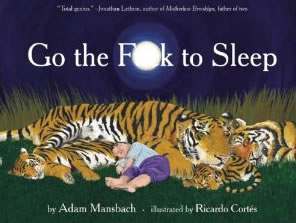
Go the F**k to Sleep by Adam Mansbach, Illustrated by Ricardo Cortes, Read by Samuel L. Jackson

Adam Mansbach’s Go the F**k to Sleep, illustrated by Ricardo Cortes and read by Samuel L. Jackson, is a “children’s book for adults” that will have most parents nodding, “YES!”  As a new parent, this book made me agree wholeheartedly with its sentiments about how hard it is to get kids to go to sleep.

They are often too wired to sleep or simply too worried that they will miss something important by going to bed.

THIS IS NOT a book for children; it is for adults and would be considered humor.  This is not a review of the book’s illustrations because I listened to this book via audio from Audible.

Samuel L. Jackson is a natural narrator for this book because of his brash attitude in his movies and the reputation he’s garnered as a result.  His narration gains momentum as he continues reading through the rhymed story, and the frustration escalates.  It is this movement and cadence that will amuse readers as they shudder with understanding — kids that need a drink or want one more story read to them before sleeping.

“The wind whispers soft through the grass, hon.  The field mice, they make not a peep.  It’s been 38 minutes already.  Jesus Christ, what the f**k! Go to sleep!”

One drawback is that the word “f**k” is used from the very first lines throughout the book, but it may have been more effective to save its use for later on as the frustration gains ground.  One of the best moments of the book is when the narrator realizes that his child will not be sleeping and has given up saying, “No,” and simply acquiesces to whatever the latest request is.  What makes the narration even more poignant is the light, lullaby music in the background.

Go the F**k to Sleep is a hilarious look at parenthood, and the introduction by Jackson about his own struggles with getting his daughter to sleep further drives home the point that we are not alone.

About the Author:

Adam Mansbach is an American author and professor of fiction[1] at Rutgers University[2] who wrote the “children’s book for adults” Go the Fuck to Sleep.[3] Other books Mansbach has written include Angry Black White Boy and The End of the Jews[4] (for which he won the California Book Award for fiction in 2008)


This is my 36th book for the 2011 New Authors Reading Challenge.


This is my 1st book for the 2011 Audio Book Challenge and the 1st I listened to on my Kindle.

The Tree It Was by Sandra Fuhringer

Sandra of Fresh Ink Books told me in 2009 that she would send me a copy of her poetry book, and it finally arrived this week.  It didn’t make the previous Mailbox Monday, but it will be in next week’s edition.  I was so happy to see my copy, which she signed to me, that I decided to read it right away.

The Tree It Was by Sandra Fuhringer is the 15th book in Marco Fraticelli’s Hexagram Series based on the ideographs of the I Ching and is published by King’s Road Press.  Her hexagram is The Source or The Well, “which represents the deep, inexhaustible, divinely centered source of nourishment and meaning for humanity.”  The Book of Changes is a divination system or later a cosmology system that espouses the dynamics of balance (i.e. yin and yang) and the inevitability of change.  Furhinger’s haiku certainly reflect change and the struggle with maintaining balance.

First, the expansive white space surrounding each haiku provides readers a moment of pause between haiku, allowing them to visualize each one’s images and absorb its meaning.   The collection begins with a haiku demonstrating the hidden strength in even those of us who are perceived as weak, pushing through even the most difficult circumstances.  In a way, the first haiku demonstrates that each of us has a well of strength from which we can draw at any time.

Fuhringer’s poems bring to light our embarrassments, our fears, and our pain with the shrill sounds of ambulances and the coloring of pictures by children.  Others have a surreal quality to them, like a patient on morphine or under other treatments that leave them dissociated from their bodies.  Not all of these poems worked as traditional haiku with surprising last lines, but a majority of the collection is near perfect.  About midway through the collection, the traditional form of haiku is modified as the poet seeks to draw immediate attention to juxtapositions within her words  — such as Hiroshima pulled downward from the “h” in kittyhawk.

From page 3 (one of my favorites for its startling imagery):

five tries to get a vein
the leaf’s purple
underside

The poet’s narrator is The Tree It Was, and you can’t help but think that the narrator is Sandra Fuhringer in her most raw moments.  Many poets have personal connections to their poems, but how many can say that their poems are an embodiment of their daily struggles while simultaneously providing the strength they need to continue fighting?  This slim chapbook is a testament to The Well of the I Ching, and Fuhringer should be applauded for broadening the spirit of the Book of Changes into Western culture.

Also reviewed by one of my favorite short form online literary magazines, LYNX (please scroll down the page in the link).

This is my 19th book for the Fearless Poetry Exploration Reading Challenge.


This is my 35th book for the 2011 New Authors Reading Challenge.


A Weekend With Mr. Darcy by Victoria Connelly

A Weekend With Mr. Darcy by Victoria Connelly is a summer read for Austenites and those who want to have fun.  Set in modern day England, Dr. Katherine Roberts works too hard as a professor at St. Bridget’s College in Oxford and sees her role as lecturer at the Jane Austen Conference as a way for her to get away and relax.  She befriends regency romance author Lorna Warwick through letters and hopes that the conference will put a face to the name she’s begun to call friend.  Meanwhile, Robyn is stuck in a relationship with Jace (Jason Collins) and is too worried about his feelings to express her own or to end their relationship.  She decides that she’s not going to think about her life while at the Austen conference, but just enjoy herself before dealing with her fading relationship with her childhood friend.

“She thought of the secret bookshelves in her study at home and ho they groaned deliciously under the weight of Miss Warwick’s work.  How her colleagues would frown and fret at such horrors as popular fiction!  How quickly would she be marched from her Oxford office and escorted from St. Bridget’s College if they knew of her wicked passion?”  (page 2 of ARC)

Women and their passion for Jane Austen’s characters seems never-ending, but does this passion for Austen sometimes prevent these women from living their own lives?  And does it ensure that the men in their lives will never measure up to Mr. Darcy or Captain Wentworth?  Connelly has created a cast of characters that have flaws and find themselves in situations they never expected.  Dr. Roberts is a strong woman with a passion for sexy Regency romances, but her own love life is a disaster until she finds herself in situation much like Captain Wentworth, while Robyn is trapped by obligation in a life much like Edward Ferrars.  It is an interesting correlation between Austen’s characters and Connelly’s female leads, as it demonstrates a new perspective on how these situations would be handled.

Connelly also creates a cast of characters that are fun and outrageous from Dame Pamela to Higgins the butler.  And of course, what Austen spinoff doesn’t have its own Lady Catherine de Bourgh — in this case, it’s Mrs. Soames.  A Weekend With Mr. Darcy by Victoria Connelly is a great romp in the English countryside with some gal pals and hot men that will make you giggle, squirm, and sit on the edge of your seat.  A quick summer read that will have readers wondering if an Austen-filled weekend should be their next vacation.

About the Author:

Victoria Connelly grew up in Norfolk before attending Worcester University where she studied English Literature. After graduating, she worked her way through a number of jobs before becoming a teacher in North Yorkshire.  In 2000, she got married in a medieval castle in the Yorkshire Dales and moved to London.  She is currently working on a trilogy about Jane Austen addicts.  The first, A Weekend with Mr Darcy, was published in the UK by Avon, HarperCollins, and will be published in the US by Sourcebooks in July 2011.   The second in the trilogy, The Perfect Hero, was published in the UK in April 2011.  She lives in London with her artist husband, a springer spaniel and four ex-battery hens.


This is my 34th book for the 2011 New Authors Reading Challenge.

Curses and Wishes by Carl Adamshick

Curses and Wishes by Carl Adamshick uses an economy of words to address the harrowing moments of life and the happier moments.  His images are unique and playful, but his subjects are sometimes dark and eerie, like the barren tree with its barely there spinal column of vertebrae on the cover.  From “Even Though” (page 1-3), “I felt the deep bruise of a sentence/and wanted to eat/at the banquet of silence.”  Which are the curses and which are the wishes is left up to the reader, but some poems are clearly laments for those dying in the Holocaust (like the poem “The book of Nelly Sachs“) or lost by other means.

Adamshick clings to the moment, a snatch of time and draws out the undercurrent of meaning, creating a story from the unknown.  Unlike, Whitman, who used nature in his poems to extrapolate wider philosophical realities of transcendentalism, Adamshick’s poems combine industrial elements from street lights to chessboard pieces and cameras to evoke emotion and recognition in the reader, creating an Aha moment.  “The corner utility pole/holds a cone of light/to its mouth// and is screaming/at the pavement.// We are almost here/”  (page 38 from “Almost”)  However, like Whitman, there is a sense of moving beyond, gaining insight into humanity and stretching ourselves further.

Junkyard (page 7)

I never visit my younger self.
Any change I elicit
would be just that: change.
Something different in a world
of differences. A shifting
from memory to dream. Snow
falling in a barrel of rusted
engine parts becoming a day
of lightning and old fallen oak:
one life or another, mine or yours.
This is the last outpost before
things become what they are.
I was eleven when an older self,
the lord of my childhood, appeared
above the chair in my room
splendid and silent like a planet
rotating, spinning in its ellipses,
but, also, unmoving by the headboard
and the one pillow full of feathers.

There is a quiet power in these poems and this slim volume, which leave readers waiting to devour more from Adamshick.  Many of the poems are about change and what it means to be changed and keep moving onward and upward.  However, “Junkyard” raises another question about change — is change always beneficial and new or is it just a reincarnation of something that came before?  Can we really transcend the present and these bodies we inhabit?  Curses and Wishes by Carl Adamshick is a clear winner and would be an excellent candidate for the Indie Lit Awards.  Another one for the Best of List of 2011.

Copyright Jessie Sue Hibbs

About the Poet:

Born in Toledo, Ohio, Carl Adamshick grew up primarily in Harvard, Illinois.

Adamshick currently lives in Portland, Oregon, with his partner of many years, Jessie Sue Hibbs.

Curses and Wishes by Carl Adamshick won the Walt Whitman Award from the Academy of American Poets and was published by independent press Louisiana State University Press.  It is Adamshick’s first poetry collection; please check out this Oregonian article about his win.  (I received this book as a member of the Academy of American Poets, but not for review.)


This is my 33rd book for the 2011 New Authors Reading Challenge.


This is my 18th book for the Fearless Poetry Exploration Reading Challenge.

Where She Went by Gayle Forman

“But the end, when it finally came, was quiet.” (page 109)

Where She Went by Gayle Forman is the follow-up to If I Stay (my review — please do not read this review of Where She Went until you’ve read the first in the series because this will contain spoilers), and it is told from Adam’s point of view several years after the end of the previous book.  His band Shooting Star has hit it big, he’s got an A-list actress girlfriend, and all the money he could want, but what he doesn’t have is what he wants most of all.

Closure is a word that is thrown around a lot, but as humans we often want to know the reasons why things happen, and when we are not given a reason — even one we think is bollix — it incenses us.  In some ways we become obsessive about it.  Forman has a firm grasp of this obsession and its ties to passionate love, and the intensity of these feelings come to the fore when Adam is in New York and attends a concert at Carnegie Hall.

“I slide into my seat and close my eyes, remembering the last time I went to a cello concert somewhere this fancy.  Five years ago, on our first date.  Just as I did that night, I feel this mad rush of anticipation, even though I know that unlike that night, tonight I won’t kiss her.  Or touch her.”  (page 38)

In addition to the flashbacks of Adam’s rise to fame, Forman sprinkles in lyrics, which act like stanzas from poems, at the beginning of certain chapters, providing a certain lens or frame of mind for the characters.  Readers will enjoy seeing the more creative fruits of Adam’s labors because it provides an insiders view into his evolution into the “guy” he’s become.  Forman also does well showing the realities of the music industry and how many musicians just become commodities, losing themselves and their artistry.

Told from Adam’s point of view and using a similar style of flashbacks,  Forman again builds the tension between Mia and Adam from the beginning of their relationship and its end.  A young love unfinished, a journey taken alone by both characters, and so much left unsaid between them — a situation ripe for awkwardness, tenderness, and more.  Where She Went is an excellent follow up that not only fleshes out these characters, making them your friends so that you cheer them on and hope they find peace.  Both are quick, engaging reads, but are far from fluff, dealing with tough topics like death and redemption.

This is my 16th book for the 2011 Wish I’d Read That ChallengeI’ve wanted to read this book since reading Jill’s dual review in June.

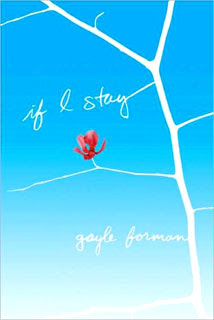
If I Stay by Gayle Forman

If I Stay by Gayle Forman is a young adult fiction novel about a teenage musical prodigy and her family.  She’s got a boyfriend with a band that is just taking off, and she’s under pressure to gain admission to Julliard playing the cello.  Tragedy strikes and changes everything, shaking up her world.

Forman’s prose is engaging from the first page, but the tragedy that befalls Mia is a predictable plot device that forces this blossoming 17-year-old to reassess her life.  Her music transports her to a safe place and even though she is not as confident as she thinks she must be to perform it, it is as much a part of her as her family and her boyfriend.  The strength of this novel is Mia’s character, her introspection, her trepidation at experiencing new things, and her ability to overcome embarrassment and fear.

“And I didn’t know how to rock-talk at all.  It was a language I should’ve understood, being both a musician and Dad’s daughter, but I didn’t.  It was like how Mandarin speakers can sort of understand Cantonese but not really, even though non-Chinese people assume all Chinese can communicate with one another, even though Mandarin and Cantonese are actually different.”  (page 47)

Mia often feels on the outside of her family, which has deep rock-and-roll ties in the community, and from her boyfriend, who is a lead guitarist in a up-and-coming rock band, and sometimes even from her own classical music because she has not done many of the things that other classical music prodigies have done with local quartets, etc.  However, Mia continues to plug along, beating back her insecurities and striving for the life she wants.  Forman has a firm grasp of a teenager’s life — the peer pressures they face, the insecurities that haunt each decision they make, and the passions in which they lose themselves.

Forman builds tension by shifting from Mia’s present into her past, careful not to rush through each moment and unfurling revelations as Mia sees them in each fragment of time.  Readers will be moved by Mia’s story and her struggle to find her true self amid high school pressures and more.  But If I Stay by Gayle Forman is more than a coming of age story, it’s about the ties that bind us to one another and how we keep those ties alive and relevant.

This is my 15th book for the 2011 Wish I’d Read That ChallengeI’ve wanted to read this book since reading Jill’s dual review in June.


This is my 32nd book for the 2011 New Authors Reading Challenge.


The Secret Lives of the Four Wives by Lola Shoneyin

Lola Shoneyin’s The Secret Lives of the Four Wives is set in modern-day Nigeria where men are supreme and wives are meant to breed children — an obsession of Baba Segi and the reason he has four wives.  However, his newest wife, Bolanle, is the youngest and most educated of the four — Iya Segi, Iya Tope, Iya Femi, and Bolanle — and her entry into the household generates jealousy and change.

Baba Segi’s only concerns are being catered to by his wives and procreation, and when Bolanle fails to produce an heir after much “pounding” (his words), he seeks counsel from his male friends and the “Teacher,” who advises him to bring her to the hospital.  It is then that the jealousy of the women becomes more concentrated on Bolanle, as they struggle to protect a family secret.

“Even a child would have worked out why my father was extolling qualities that had previously vexed him; I was compensation for the failed crops.  I was just like the tubers of cassava in the basket.  Maybe something even less, something strange — a tuber with eyes, a nose, arms and two legs.  Without fanfare or elaborate farewells, I packed my bags.  I didn’t weep for my mother or my father, or even my siblings.  It was the weeds I didn’t get the chance to uproot that year that bothered me.”  (page 91)

Shoneyin adopts what many might consider a very masculine prose that creates a crass view of sex in a polygamist household and a not-so-favorable perspective of Baba Segi, the husband.  Even when the narrative shifts to Bolanle’s first-person point of view, the language is harsh, making it difficult for readers to discern the speaker with each shift.  However, these shifts gradually become easier to discern, and each perspective adds a new layer to the narrative and deepens the complexity within the Segi family.

Readers may want more background and detail of Nigeria and its customs or at least its a more vibrant picture of its places and culture.  Shoneyin generates a harsh world that is not only Nigeria, but could be any country at any time in which polygamy is the norm and women are seen as second-class citizens.  What is absent here is a clear sense of place and time — a setting that could have made the story more vivid and memorable.

The Secret Lives of the Four Wives may have been long-listed for the Orange Prize, but the characters and story are reminiscent of other oppressed women under similar circumstances.  However, what makes this novel unique is the four wives and their perspectives on why they became wives of Baba Segi — what circumstances led them to that choice and why they continue to stay.  Each has a compelling story to tell, and while Baba Segi is not a sympathetic character, he does provide his wives with an oasis from their pasts and with the confidence to rule their own lives.  Overall, readers will get a glimpse into another world and of what it means to be one of many wives.


About the Author:

Lola Shoneyin lives in Abuja, Nigeria, where she teaches English and drama at an international school. She is married, with four children and three dogs.  Please visit her Website and her blog.


Please check out the other stops on the TLC Book Tour by clicking the icon.


This is my 31st book for the 2011 New Authors Reading Challenge.

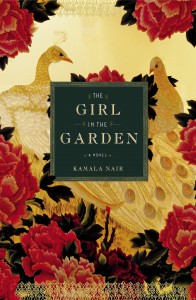
The Girl in the Garden by Kamala Nair

The Girl in the Garden by Kamala Nair is a stunning debut novel framed by an older Indian woman who leaves her fiance to return to her ancestral home and deal with the past, which is a bit cliche.  However, the bulk of the novel settles on Rakhee’s summer spent in India before her 11th birthday with her mother’s (Amma) mysterious family and away from her father, Aba.  Clearly Nair’s prose has been influenced by fairy tales and is sometimes reminiscent of The Secret Garden and Little Red Riding Hood, which makes the story that much richer.

“Slowly I moved toward the wall with my arm outstretched until my fingertips touched its vine-smothered surface.  I waited for something drastic to happen when my skin made contact with the stone, but when neither I nor the wall burst into flames or evaporated into thin air, I continued dragging my hand along the wall, emboldened, until my palm felt the roughness of the vines give way to a smooth, hard wood.

A door.” (page 67)

In a way the garden she discovers is like a fantasy with its beautiful plants and fanciful creatures.  Rakhee struggles a lot with her identity at home and abroad as a child, but its her curiosity and determination bred by the confidence of her father that will endear her to readers.  The world created by Nair is so absorbing that readers may even forget about the adult Rakhee.

“The thunder was deafening — I had only ever watched and listened to storms from behind the safety of a glass window.  But I was part of the storm now, ran-whipped and shaking.”  (page 140)

Rakhee is that young girl looking for her place in the world, a world where she doesn’t look like everyone else and doesn’t know or understand all of her family and their customs.  Nair paints a vivid landscape of India and the young girl’s odd family with its wizened aunties and an uncle with his broken dreams.  But the mystery of her mother’s past is just as captivating, if not predictable in some ways.

The Girl in the Garden by Kamala Nair is not just a coming of age story, its a clash of cultures, a love story, and a struggle between desire and family obligations.  Nair has crafted a world that readers will be reluctant to leave, especially as the storm kicks up more skeletons and other mysteries are unraveled about the past that could affect Rakhee’s future.  One of the best novels of this year, and it includes a bit of poetry from Mirabai.

About the Author:

Kamala Nair was born in London and grew up in the United States. A graduate of Wellesley College, she studied literature at Oxford University and received an M.Phil in Creative Writing from Trinity College Dublin in 2005. She currently lives in New York City, where she has worked at ELLE DECOR.

Connect with Kamala on her Website, Facebook, or on Twitter.

I read this novel as part of a TLC Book Tour, for the rest of the tour stops, go here, or click on the icon at the right.

This is my 2nd book for the South Asian Reading Challenge.


This is my 30th book for the 2011 New Authors Reading Challenge.

Lagan Love by Peter Murphy

Lagan Love by Peter Murphy is a dense novel steeped in Irish lore and angst.  Janice, a Canadian, is a young student at the famed Trinity in Dublin, and she is easily swept up in the tumult that clings to the brooding poet Aiden.  She’s a student who dreams of painting and traveling the world, and at one point dreams of her life with Aiden as the famous poet and painter duo.  Is Aiden a struggling poet who has sold his soul for a few hundred dollars and a published collection, or is he the next Seamus Heaney?

His first collection of poems is published with the help of Gwen/Bridey, with whom he’s sleeping and who is married.  Aiden thinks that by introducing Gwen and Janice, he can ensure Janice’s paintings get noticed and that his affair with Gwen remains a secret because publicly Janice will be seen as his muse/girlfriend.  It’s not just Gwen, Aiden, and Janice, but Sinead as well who are searching.  Searching for love or the darknesss within the light and vice versa.

“The dawn sprinkled the suburbs with golden promise that paled in the older parts of town, down streets broad and narrow to the docklands where everything was just plain and ordinary.  Another brave new world beckoned, but Dublin was dubious — too often hope had been trampled down by foreign armies or strangled in dark alleys by the shadows of avarice and graft.”  (page 9)

There are a number of references to ghosts, love, revolution, and even a succubus, which readers will have to wade through, discern the meaning of, and tackle before they can care about these characters with any real depth.  Some cliched images and language are used throughout the novel, but those should not detract from the picture Murphy creates with his words.  However, the density of the narration and metaphors does become too heavy, distancing the reader from the characters and possibly even causing them to step away from the book for a while.  Beyond the density of the narration, there are several moments in the novel where the reader will be distracted by transitions between scenes and characters that are muddied, making it a puzzle readers must solve before they can delve back into the story (i.e. like the aftermath of one fight between Sinead and Janice — where readers may have a difficult time determining which character is in the next scene).

“His mind was a mess of disorganized verses piled on top of each other.  Some were orphans and would wither, but others lingered defiantly, like stones in his shoes.  They were the ones he found the time to polish.  But even some of them were destined to irrelevance.” (page 20)

Like the love song, “My Lagan Love,” the novel is a bumpy ride but with an undercurrent of devotion to love and country.  Murphy explores not only love and inspiration, but what it means to be an artist, especially an artist hungry for their voice to be heard.  What is an artist willing to give up or what kind of compromises are they willing to make?  He answers these questions, but also leaves a bit of mystery behind for the reader to examine and unravel.  Lagan Love is a complex as love itself, particularly when artists and simply men and women are competing for the affections of the same person — even if only to be in control.  Murphy’s style is as complex as his characters, but readers will be absorbed in the forlorn myths and legends created and expounded upon.

About the Author:

Peter Murphy was raised in Dublin, in a house full of books.  After a few years studying life in Grogan’s, he wandered through the cities of Europe before setting out for Canada, for a while, and has been there ever since, raising a family.  Lagan Love is his first novel.


This is my 1st book for the Ireland Reading Challenge.


This is my 29th book for the 2011 New Authors Reading Challenge.

A Wife for Mr. Darcy by Mary Lydon Simonsen

A Wife for Mr. Darcy by Mary Lydon Simonsen continues the slew of Pride & Prejudice spinoffs and continuations coming from Sourcebooks.  In this version, Simonsen explores what may have happened had Mr. Darcy apologized to Elizabeth Bennet after the Meryton Assembly for calling her beauty only tolerable.  Would the connection between them be as strong? Would Lizzy and Darcy cast aside their assumptions and simply enjoy one another’s company?  But what if Darcy also had been seen in the company of another young lady in London and her father had political plans following the match?  All of these questions are explored and more.

Simonsens writing is as close to Austen’s as you can get, but it is modern at the same time, with sexual intimacy talked about, but never shown explicitly.  The wit of Austen is here as well, though with a more modern sensibility.  Readers will enjoy this creative exploration of these characters, the introduction of new characters, like Sir John Montford and his daughter Letitia and Bingley’s older sister and her brood the Crenshaws.  One of the most amusing scenes in the novel is when Jane takes on the task of taming the savagery of the Crenshaw children, who are prepared to survive any apocalypse.

“‘Please.  You must say please, Master Lucius,’ Mrs. Bennet told the more compliant twin.
‘Soldiers don’t say please,’ he answered in a voice revealing just how insecure he was feeling.
‘Are you an officer or an enlisted man?’ Mr. Bennet asked.
‘An officer.’
‘Any officer in His Majesty’s Army would be regarded as a gentleman, and as such, would know the proper manners to use when dining.’
‘Well, then, I am an enlisted man,’ he said, even less sure than when he had been an officer.
‘Enlisted men follow orders,’ and after staring him in the eye, he continued, ‘or they are flogged.'” (page 119 of ARC)

Simonsen showcases Mr. Bennet’s trademark wit and knowledge in this book like no other, and he appears more frequently, which many readers will enjoy.  While certain plot points from the original are modified, there are some that remain the same or are slightly varied from their originals.  However, the scene of Darcy proposing to Lizzy at Rosings is not in this novel, and that particular exchange or the passion of that exchange will be missed by readers looking for the tension it creates.

Tension, on the other hand, is created by the introduction of another woman — though not a woman who he views with love, but merely obligation.  In this way, Simonsen has called attention to societal norms in a way that Austen would have, pointing to their shortfalls and ridiculousness.  Another interesting element of the novel is the inclusion of song lyrics, which will make readers curious as to whether those songs were from the time period or merely created for the occasion.   A Wife for Mr. Darcy is a quick read that allows readers to revisit their favorite characters, see more of Austen’s characters who were more on the sidelines in the original, and be introduced to new and interesting characters.