Quantcast

My Life on the Road by Gloria Steinem (audio)

Source: Public Library
Audiobook, 8 CDs
I am an Amazon Affiliate

My Life on the Road by Gloria Steinem, narrated by Debra Winger, is not only about the feminist movement, but also literally about her life as an activist and a woman on the road, who practiced the art of active listening.  Learning in India of a decentralized way of making decisions and interacting, Steinem learned that discussing different points of view on an even plane, without hierarchy, can be much more productive and diplomatic.  Debra Winger is a great narrator because her cadence is very similar to Steinem’s narration of the introductory material.

I love how her parents left their mark on her early on – a mother who wanted a different life than the one she lived and a father who had a hard time staying still, traveling and selling as much as possible.  Her early life and how she travels from one place to the next are captivating, but there are times that the narrative wanders pretty far afield, leaving readers at sea as to what time period they are in until she mentions another year or date.  Steinem, co-founder of Ms. Magazine, has a deep fear of public speaking on her own, though she would speak before groups with others.

Among the most memorable events are the large convention she organizes for the women’s movement, her talk at Harvard University that was mostly male, and her interactions with taxi drivers and others on the streets because she does not drive.  As someone who gets that question a lot about why I don’t drive, this part of the story resonated with me.  I want to be and remain connected to my world, and separating myself in a car alone is not accomplishing that at all.  Steinem says that her adventure begins the moment she walks out the door.

Her discussion of the election process is very similar to what I as a mere voter expected, even though she had more of an insider’s perspective.  In particular, her struggle during the Democratic primary to choose between President Obama and Hillary Clinton was fascinating.  While many people voted because they wanted a woman president and others voted for a black president, Steinem’s thought process was more detailed based upon their track records and their abilities, and more.  For those interested in politics and the political process, these aspects of the book are wonderful, and for those who listen, they will see that they need to adopt Steinem’s ability to listen and examine the minute details of each candidate before voting.

My Life on the Road by Gloria Steinem, narrated by Debra Winger, is engrossing in that it provides a detailed account of the women’s movement, the civil rights movement, and the political process.  How did women get the vote, how did they use and keep it, and are voices of women heard now?  Steinem is optimistic in our ability to change and evolve into a more inclusive society through careful listening toward shared solutions.

***I read this as part of Emma Watson’s Book Club on GoodReads***

About the Author:

Gloria Marie Steinem is an American feminist, journalist, and social and political activist who became nationally recognized as a leader of, and media spokeswoman for, the women’s liberation movement in the late 1960s and 1970s. A prominent writer and key counterculture era political figure, Steinem has founded many organizations and projects and has been the recipient of many awards and honors. She was a columnist for New York magazine and co-founded Ms. magazine. In 1969, she published an article, ” After Black Power, Women’s Liberation”, which, along with her early support of abortion rights, catapulted her to national fame as a feminist leader.

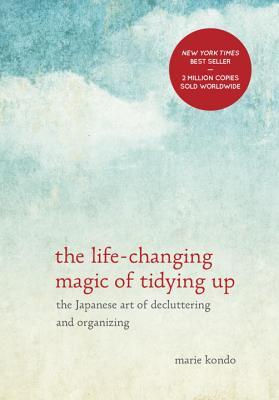
The Life-Changing Magic of Tidying Up by Marie Kondō

Source: Public Library
Hardcover, 224 pgs.
I am an Amazon Affiliate

The Life-Changing Magic of Tidying Up by Marie Kondō, translated by Cathy Hirano, provides a step-by-step process for her KonMari Method of tidying, which she says should bring you joy and possibly lead to other life-changing moments.  The first step is to discard, and when she says discard, she means get rid of everything that does not bring you joy or has no use.  Discarding should be undertaken by category of items not by room, as many homes stash lotions and hair clips and other items in multiple rooms.  These may sound like daunting tasks, but if the entire household participates, it might take less time.  She says the entire process for tidying the house can take up to six months or more.  Crazy!

Sentimental items like letters from loved ones and photos should be kept for last, because these will be the hardest items to part with and sort through.  All of our clothes should be collected from the various places throughout the house — drawers, closets, linen closets, coat closets, etc. — and placed in piles sorted by tops, bottoms, coats, dresses, etc.  Once they are sorted, you should hold them in your hands, and think about whether they bring joy when you wear them.  They also should be examined for any wear that cannot be repaired and tossed if they cannot be repaired.  This is just one example.  Placing everything in one category into a pile on the floor ensures that you visually see how much stuff you have.  I recently did this with clothes on my own and felt much better once everything was sorted and discarded, but I did this without the help of this book.  Once everything that is to be kept is identified, it needs to be put into its place and when used, it must be put back into its rightful place.

Kondō’s method is very detailed and deliberate.  Each item is held to ensure that the person understands what the item is, what its purpose is, and whether it brings joy.  Some clothes, for example, looked great in the store but not on you when they got home — so these should be discarded.  One piece of advice about lounge wear and that women should wear elegant nightwear to bed struck me as an old-fashioned idea, given that I’ve always found those kinds of bedtime wear uncomfortable to sleep in.  But I may be out of the norm on that one, preferring my t-shirts and shorts or t-shirts and flannel pj bottoms.

While readers will see the points she is trying to make — and it may just be the translation — there are times when the book is too repetitive, which can become bothersome.  Also, there is a mindfulness here that may not translate into American culture like it does in Japanese culture.  Thanking items for serving their purpose, caressing items to ensure they are alive before you take them out of storage, that kind of thing might appear a bit wacky to some.

The Life-Changing Magic of Tidying Up by Marie Kondō, translated by Cathy Hirano, has some great ideas about what papers should be saved, how clothes should be folded to maximize space, and how to rethink about the items we keep.  Attachment is something Buddhists talk about letting go of, and in many ways, Kondō is suggesting something similar in they way she focuses on discarding items.

About the Author:

Marie Kondo (近藤 麻理恵) is a Japanese organizing consultant and author. Kondo’s method of organizing is known as the KonMari Method, and one of the main principles is keeping only possessions which “spark joy.”  Kondo’s best-seller The Life-Changing Magic of Tidying Up: The Japanese Art of Decluttering and Organizing has been published in more than 30 countries.  She was listed as one of the world’s 100 most influential people by Time Magazine in 2015.

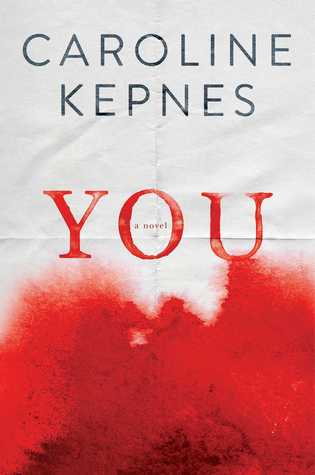
You by Caroline Kepnes

Source: Public Library
Hardcover, 422 pgs.
I am an Amazon Affiliate

You by Caroline Kepnes is creepy, obsessive, and twisted, and Joe Goldberg and Guinevere Beck are certifiable.  This thriller will pull you in and suck you dry, as Beck walks into a bookstore and flirts with the wrong man.  Kepnes has created two downright sinister characters who are perfect for each other and when circumstance brings them together, everyone around them better watch out.  Check your morals at the door with this one; these two are not redeemable, but you can’t help but watch how everything unfolds between them and how it impacts those around them.  Truly one of the unsettling novels out there.  Kepnes’ prose easily draws in the reader, making them wonder who this obsessive man is and why he’s so drawn to this particular girl.

“‘This will sound crazy, but I’m saving it.  For my nursing home list.’
‘You mean bucket list.’
‘Oh, no, that’s totally different.  A nursing home list is a list of things you plan on reading and watching in a nursing home.  A bucket list is more like … visit Nigeria, jump out of an airplane.'” (pg. 8)

Through careful manipulation of social media and a few lucky breaks, this relationship begins to take a life of its own, and while both parties have their demons, it’s clear that they cannot keep away from one another.  Even though you know throughout what will happen in the end, readers will be up late and turning pages in this psychological thriller.  Joe sees himself as a protector, someone charged with saving Beck from predators, but those predators are not who you’d expect them to be.  Meanwhile, Beck loves new things, and this love of wanting and being wanted is something that drives her incessantly.

“‘There’s no such thing as a flying cage, Joseph,’ he said.  ‘The only thing crueler than a cage so small that a bird can’t fly is a cage so large that a bird thinks it can fly.  Only a monster would lock a bird in here and call himself an animal lover.'” (pg. 47)

Joe is her opposite in that he obsesses over old things and continuously covets old books and collects old and broken typewriters.  He’s waiting for social media to overheat and die, he prefers anonymity, but is it only because he feels unworthy or is it because it enables him to stalk and obsess more freely?  He hates pretentious people who live their lives for others and share everything with everyone, but he too is pretentious in that he’s a book snob.  Dan Brown is not a good enough author, and people should be reading Paula Fox, and they should never pretend to read books.

For those who do not like graphic violence or sex, you should stay away.  You by Caroline Kepnes is riveting and disturbing.  What does it mean to be you?  What is your true self and do you share that with everyone or only a special few?  And what if the real you is scary?  Do you share that self with anyone? Lock it up? Or simply let it out?

About the Author:

Caroline Kepnes is the author of You and Hidden Bodies. She splits her time between Los Angeles, California and Cape Cod, Massachusetts.

Find her on Facebook.


Go Set a Watchman by Harper Lee (audio)

Source: Public Library
Audio, 6 CDs
I am an Amazon Affiliate

Go Set a Watchman by Harper Lee, narrated by Reese Witherspoon, was a book that was anticipated by many and vilified by others, and I honestly had no desire to read it because of the hype.  (I only picked up this audio because it was available at the library and I needed a new one.)  Jean Louise Finch, known as Scout in To Kill a Mockingbird, has returned to Maycomb, Ala., and her aging father, Atticus.  As the civil rights movement gains speed and the NAACP continues to push for rights, the South balks at integration and federal government interference.

Witherspoon is the perfect choice in a narrator for the story, and it is not just about her ability to play Southern characters.  She provides the right amount of empathy, emotion, and detachment needed by each of the characters to make them wholly different from one another, and yet still share similar experiences but view them differently.  There are differences between this novel (which is said to be Lee’s first) and the previously published book (TKAM), and those differences can be stark, especially when there are outcomes in the previously published book that go very differently here. Those are things an editor should have attended to before publishing, but are not the main crux of this story.

This is not about the rape case that Atticus defended, this is about us as children and how we generally worship our parents in one way or another, only to be disappointed that they are humans and not gods.  It’s a book about a young girl who worshiped her father, took in everything he said with little examination, and continued to apply it to her daily living.  Scout has held her father to an impossible standard, and when she returns to find him at a council meeting — one in which she would expect him to protest not take part in — her images are shattered, and she is forced to not only reconcile what she thought she knew about her father but what she knew about herself.

Go Set a Watchman by Harper Lee, narrated by Reese Witherspoon, is a novel about finding the courage and strength to change and to help those around you do the same. The south was in the midst of heavy transitions when Scout returns, and while she was “blind” to the hearts of those around her, even when her eyes are opened to their motivations, it is clear she still has a lot to learn.  The end seems to leave things wide open and unresolved in a way, like Scout’s journey is not finished.

About the Author:

Harper Lee, known as Nelle, was born in the Alabama town of Monroeville, the youngest of four children of Amasa Coleman Lee and Frances Cunningham Finch Lee. Her father, a former newspaper editor and proprietor, was a lawyer who served on the state legislature from 1926 to 1938. As a child, Lee was a tomboy and a precocious reader, and enjoyed the friendship of her schoolmate and neighbor, the young Truman Capote.

After graduating from high school in Monroeville, Lee enrolled at the all-female Huntingdon College in Montgomery (1944-45), and then pursued a law degree at the University of Alabama (1945-50), pledging the Chi Omega sorority. While there, she wrote for several student publications and spent a year as editor of the campus humor magazine, “Ramma-Jamma”. Though she did not complete the law degree, she studied for a summer in Oxford, England, before moving to New York in 1950, where she worked as a reservation clerk with Eastern Air Lines and BOAC. Lee continued as a reservation clerk until the late 50s, when she devoted herself to writing. She lived a frugal life, traveling between her cold-water-only apartment in New York to her family home in Alabama to care for her father.

Having written several long stories, Harper Lee located an agent in November 1956. The following month at the East 50th townhouse of her friends Michael Brown and Joy Williams Brown, she received a gift of a year’s wages with a note: “You have one year off from your job to write whatever you please. Merry Christmas.” Within a year, she had a first draft. Working with J. B. Lippincott & Co. editor Tay Hohoff, she completed To Kill a Mockingbird in the summer of 1959. Published July 11, 1960, the novel was an immediate bestseller and won great critical acclaim, including the Pulitzer Prize for Fiction in 1961. It remains a bestseller with more than 30 million copies in print. In 1999, it was voted “Best Novel of the Century” in a poll by the Library Journal.

About the Narrator:

Laura Jeanne Reese Witherspoon, known professionally as Reese Witherspoon, is an American actress and producer. She began her career as a child actress, starring in The Man in the Moon in 1991. Witherspoon quickly established herself as a talented actress in films such as Pleasantville (1998), Election (1999) and Cruel Intentions (1999). While filming Cruel Intentions. Behind the camera, Witherspoon launched her own production company Pacific Standard in 2012, which was behind the 2014 films Gone Girl and Wild. The latter, based on the memoir by Cheryl Strayed, stars Witherspoon as a woman who takes to the road after the death of her mother. Witherspoon has earned raves for the role, receiving Oscar, Golden Globe, and SAG Awards nominations.

Close Quarters by Larry Heinemann

Source: Public Library
Hardcover, 335 pgs.
I am an Amazon Affiliate

Close Quarters by Larry Heinemann provides a stark view of the life of draftees, like Philip Dosier (Flip), and he pulls no punches in his account of this young man’s life in war.  He’s too young at home to buy alcohol or to vote, but in Nam, he can kill, swear, smoke pot, drink, and die for his country all without explanation or understanding.  Troops are to follow orders, and not to question, but in Flip’s case, and those around him, ignoring, circumventing, or blatantly disregarding orders can be a sign of brotherhood or stupidity.  Close quarters is a fine-tuned look at soldiering, the interactions between grunts and officers, and the friendships fired in the kiln of war.

“I can never go home.  I just want to see it.  I won’t say a thing, cross my heart.  I just want to see it one more time.  I want to smell it, touch it ever so lightly, put my ear to it and hear it tap, tap, tap.” (pg. 279)

“When I first came into the platoon, that was what struck me about the tracks.  They were huge and lumbering, stunted animations of some slow and wild thing.  Noisy and fat, grunting cartoons, smelling of thirty-weight oil and gunpowder and beer piss, … And I am filthy all the time.  I feel that grit, that crawl of the skin, something itching all the time, and greasy.” (pg. 280)

As these men run on adrenaline and beer — one to get through the fear and the other to numb the horror — they are unaware that they have changed.  In the lulls between ambushes, missions, and unexpected firefights, these men are like friends who hang out drinking beers and becoming sounding boards.  To become a sounding board for someone else is far easier than dealing with the war’s affect on yourself in some cases, but there are some images that cannot be shaken.

Close Quarters by Larry Heinemann is claustrophobic in its graphic violence, its frank spoken dialogue between male soldiers, and the threat of war that surrounds them all — it’s that unexploded bomb in the next room.  It ranges from lull moments of camaraderie and R&R with a prostitute in Tokyo to the small round hole left in the head of the man next to you.  Heinemann expresses the complexities of war in one soldier’s account, and he examines post-traumatic stress disorder (PTSD) so that readers realize just how real the war still is even when veterans arrive home.

About the Author:

Larry Heinemann (born 1944) is an American novelist born and raised in Chicago. His body of work is primarily concerned with the Vietnam War. Mr. Heinemann served a combat tour in Vietnam from 1967 to 1968 with the 25th Infantry Division, and has described himself as the most ordinary of soldiers. Mr. Heinemann’s military experience is documented in his most recent work, Black Virgin Mountain (2005), his only nonfiction piece. Black Virgin Mountain also chronicles his return trips to Vietnam and his blunt personal and political views concerning the country and the war. He has often referred to his books about Vietnam as an accidental trilogy.

While serving in Vietnam, Mr. Heinemann fought in a battle near the Cambodian border in which filmmaker Oliver Stone also participated. Mr. Heinemann writes of the battle in his first novel, Close Quarters (1977), and in Black Virgin Mountain, and it also forms the basis for the climactic battle scene in Stone’s Platoon.

His fictional prose style is uncompromisingly harsh and honest, and reflects his working class background. His second and critically acclaimed novel is Paco’s Story (1986), which won the 1987 National Book Award for Fiction, topping Toni Morrison’s Beloved in a decision that some thought controversial.[1] At the time, Mr. Heinemann’s only response to the controversy was that the prize, a check for $10,000, was already cashed, and that the Louise Nevelson sculpture, a gift from the National Book Foundation, was not likely to be returned. Paco’s Story relates the quasi-picaresque postwar experiences of its titular protagonist, who is haunted by the ghosts of his dead comrades from the war. These ghosts provide the novel’s narrative voice. The story deals with the role of the American GI as both victim and victimizer. It is interesting to note that ghost stories are common in both American and Vietnamese literature about the war.

His third novel, Cooler by the Lake (1992), departed from the topic of Vietnam and was not very successful, either critically and commercially.

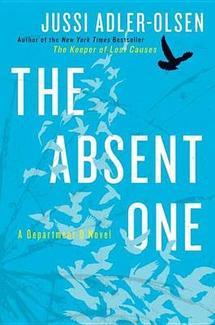
The Absent One by Jussi Adler-Olsen (audio)

Source: Public Library
Audiobook, 12 CDs
I am an Amazon Affiliate

The Absent One by Jussi Adler-Olsen, narrated by Steven Pacey and translated by K.E. Semmel, is the second book in the Department Q series — though you don’t have to read the previous one to follow along with this one — and Detective Carl Mørck is leading the new department with his assistant Assad in Copenhagen, Denmark.  This department’s focus is cold cases, reopening them to find new clues with fresh eyes, and what Mørck finds is a little more is disturbing.  Reviewing a case of murders from 1987 that involved a gang of young men and women, the detective, Assad, and his new assistant Rose Knudsen are forced to reassess their world view and the motivations of killers.

Adler-Olsen creates a set of murders that are not only over-the-top, but the perpetrators are as well.  Their hyped-up sense of pleasure from beatings, killings, and torture is reminiscent of the television show American Horror Story.  Some of these killers come from the upper echelons of society, and like those before them, they believe they are untouchable because of their place in society and what they have accomplished.  It’s clear that these accomplishments are not enough to sustain their attention or satisfaction; these are men and women who are dissatisfied with their success and are seduced by the dark side (pun intended).  Despite these absurdly crazy characters, and the absent one from the murderous gang who seems to stay enough on the radar to attract the attention of Detective Mørck but not her cohorts, the story has great tension and a layered revealing of events that keep readers hooked.

The Absent One by Jussi Adler-Olsen, narrated by Steven Pacey and translated by K.E. Semmel, is a well paced thriller with bits of comedic banker between Mørck, Assad, and Rose that will leave readers wondering about what they missed in book one if they start here.  This seems like a series readers will get sucked into without really knowing how.  The unusual characters, the foreign setting for U.S. readers, and the noir quality of the situations will entice readers to enter Adler-Olsen’s world cautiously.

About the Author:

Author Jussi Adler-Olsen began in the 1990s to write novels after having followed a comprehensive career as publisher, editor, film composer for the Valhalla-cartoon and as bookseller.

He made his debut with the thriller “Alfabethuset” (1997), which reached bestseller status both in Denmark and internationally just like his subsequent novels “And She Thanked the Gods” (prev. “The Company Basher”) (2003) and “The Washington Decree” (2006). The first book on Department Q is “Kvinden I buret” (2007) and the second “Fasandræberne” (2008). The main detective is Deputy Superintendent Carl Morck from the Department Q and he is also the star of the third volume, “Flaskepost fra P” which was released in the fall of 2009 and secured Adler-Olsen ”Readers’ Book Award” from Berlingske Tidende-readers, the Harald Mogensen Prize as well as the Scandinavian Crime Society’s most prestigious price ”Glass Key”. The fourth volume in the Department Q series, “Journal 64” was published in 2010 and he was awarded the once-in-a-lifetime-prize of “The Golden Laurels” for this in 2011”. In December 2012 the fifth novel was published, “Marco Effekten”.

Photo Credit: Eric Druxman

About the Translator:

K. E. Semmel is a writer and translator whose work has appeared in Ontario Review, Washington Post, World Literature Today, Southern Review, Subtropics, and elsewhere. His translations include books by Naja Marie Aidt, Karin Fossum, Erik Valeur, Jussi Adler Olsen, Simon Fruelund and, forthcoming in winter 2016, Jesper Bugge Kold. He is a recipient of numerous grants from the Danish Arts Foundation and is a 2016 NEA Literary Translation Fellow.

The Sleeper and the Spindle by Neil Gaiman, illustrated by Chris Riddell

Source: Public Library
Hardcover, 72 pgs.
I am an Amazon Affiliate

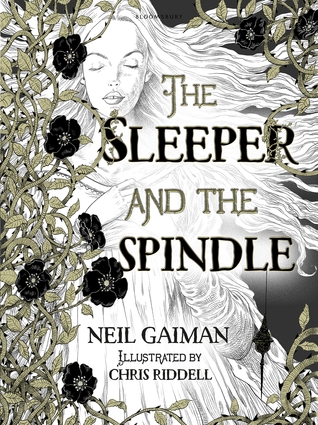
The Sleeper and the Spindle by Neil Gaiman, illustrated by Chris Riddell, intertwines the fairy tales of Sleeping Beauty and Snow White, and in this beautifully illustrated book, these fairy tales come to life.  In beauty and with courage, these young royals must beat back the darkness with cunning strategy.

Gaiman’s prose mimics the fairy tale language of these tales and he drops hints as to the identities of the queen and the princess.  Younger readers and their parents will enjoy these stronger role models, who do not wait around to be rescued but rescue themselves.  Rather than simply marry as expected, can a queen choose another path for herself, something unknown but more satisfying?  Should a princess wait for another queen to rescue her, or use her own mind to puzzle out a solution that can save her life and defeat the darkness?

While there are not seven dwarfs, but three, and they tend the queen with beautiful textiles, rather than jewels, these dwarfs are inquisitive and adventurous.  The detailed descriptions of the townspeople and their sleeping postures, alongside the illustrations, provider readers with a well-rounded picture.  The Sleeper and the Spindle by Neil Gaiman, illustrated by Chris Riddell, is gorgeous both in visual beauty and in substance, mirroring the strong royals in Gaiman’s tale.

Other Reviews:

About the Author:

Neil Gaiman is the #1 New York Times bestselling author of more than twenty books, and is the recipient of numerous literary honors. Originally from England, he now lives in America.

Find out more about Neil at his website, find all his books at his online bookstore, and follow him on Facebook, tumblr, and his blog.

Sinner by Maggie Stiefvater

Source: Public Library
Hardcover, 357 pgs.
I am an Amazon Affiliate

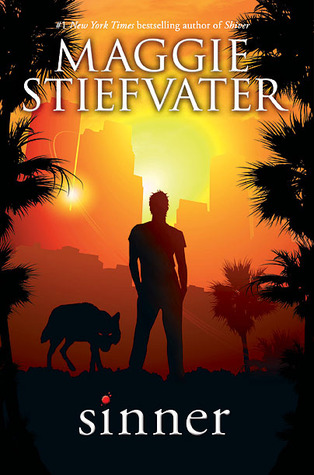
Sinner by Maggie Stiefvater is the culmination of everything readers will love about the Shiver series; these characters, flawed as they are, have come a long geographic distance to outrun their problems but instead are faced with the reality that they cannot be run from.  Cole St. Clair, a former famous rocker, has come to Los Angeles to get away from the empty quiet of Minnesota, and as the new star on a reality TV series, he hopes that he’ll find a way to win Isabel Culpeper’s heart and keep her forever by his side.  However, he has forgotten one thing, Isabel is not interested in being an accessory for anyone’s life; she’s a star of her own show, even if it is inside a cold winter not-so-wonderland.

Baby, the producer of the reality TV series, is well aware that Cole is a reformed addict — though she doesn’t know about his baser nature — and she’s ready to make some great TV, even if she has to throw naked women at the fallen rock star. Isabel, however, is made of tougher stuff, or so she thinks. She’s an ice queen, but like ice under pressure, she’s bound to crack.

Stiefvater’s characters may have supernatural problems, but those only really magnify what’s broken inside them emotionally. Feeling abandoned, out of place, unloved — all are deep problems that cannot be ignored, lest they destroy the victim.  Sinner by Maggie Stiefvater is a wonderful addition to the Shiver trilogy, and it will have readers cheering for that reality TV happy ending. But will they get it?

Other Reviews:

About the Author:

New York Times bestselling author of The Shiver Trilogy, The Raven Cycle, and The Scorpio Races. Artist. Driver of things with wheels. Avid reader. All of Maggie Stiefvater’s life decisions have been based around her inability to be gainfully employed. Talking to yourself, staring into space, and coming to work in your pajamas are frowned upon when you’re a waitress, calligraphy instructor, or technical editor (all of which she’s tried), but are highly prized traits in novelists and artists. She’s made her living as one or the other since she was 22. She now lives an eccentric life in the middle of nowhere, Virginia.

Emma: A Modern Retelling by Alexander McCall Smith (audio)

Source: Public Library
Audiobook, 9 CDs
I am an Amazon Affiliate

Emma: A Modern Retelling by Alexander McCall Smith, narrated by Susan Lyons, updates Jane Austen’s tale of a young woman in high society who starts meddling in the lives of those around her.  Smith’s Emma Woodhouse is far more brazen in her comments of others, and its clear that when she returns from university that she wants to make her mark by making people happier.  Unfortunately, taking her interior design education and applying it to the relationships of her friends and neighbors is not a good fit.  Lyons does an excellent job with the narration, and she really knew which parts to emphasize.

Unlike her sister, who is happy to meet a man and start a family, Emma doesn’t have a conventional future in mind.  She wants to start her own business in the suburbs, rather than in London, which suits her hypochondriac father well.  He thinks London is a place that will make people ill, but his eldest daughter takes off with her new husband to begin their family there.  Meanwhile, Emma is content to stay in the village and take the summer to assess her options.  Smith follows the original plot pretty well with his rendition, with many of his modern elements woven in well, but some of the main conflicts appear glossed over — beginning and ending swiftly.

One area that is tough to take is Emma’s harsher characterization, which can be attributed to the much harsher and self-absorbed nature of today’s society.  However, how Emma is still given a pass in a modern society where class does not hold as much respect or weight as it once did in Austen’s time is left unexplained.  Smith creates a different backstory for Emma and Mr. Knightly, which works in this modern retelling, but may not win points with Austen’s fan base.  Mr. Woodhouse, however, is treated with a bit more respect than he was in Austen — he’s a little less ludicrous, which was a refreshing change.  The governess, however, seems to be a mouthpiece for the author, steering Emma in the right direction and the relationship between the two seems flat.

Emma: A Modern Retelling by Alexander McCall Smith, narrated by Susan Lyons, was a mixed bag with modern updates, like including cars and women going to college, but lacking in the obsession with selfies, cellphones, and other technology.  It also was mixed in terms of Smith’s treatment of the characters and the original story.  While Knightly was a guiding force for Emma, here he is relegated to the sidelines and a new character emerges, the governess.

About the Author:

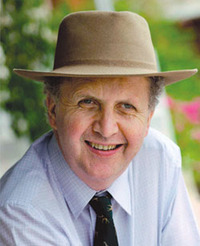
Alexander McCall Smith is the author of the international phenomenon The No. 1 Ladies’ Detective Agency series, the Isabel Dalhousie Series, the Portuguese Irregular Verbs series, and the 44 Scotland Street series. He is professor emeritus of medical law at the University of Edinburgh in Scotland and has served on many national and international bodies concerned with bioethics. He was born in what is now known as Zimbabwe and he was a law professor at the University of Botswana. He lives in Scotland. Visit him online at www.alexandermccallsmith.com, on Facebook, and on Twitter.

The Pioneer Woman Cooks: Food from My Frontier by Ree Drummond

Source: Public Library
Hardcover, 293 pgs.
I am an Amazon Affiliate

The Pioneer Woman Cooks: Food from My Frontier by Ree Drummond, which was a February book club pick, is a fantastic cookbook for novice cooks and those with a little more experience.  This cookbook not only provides step-by-step instructions that are easy to follow, uses items that are pre-prepared (such as Pillsbury Crescent Rolls), and offers alternative ingredients, but it also tells a story of frontier life and gives step-by-step photos to show what recipes look like throughout the process to ensure that those following along are doing things as close to her instructions as possible.  I found the instructions and pictures of each step very helpful; they kept me on track, which I need with a 4-year-old helping in the kitchen who tends to get me easily distracted and missing steps.

For Thanksgiving week, I made the Peach-Whiskey Chicken using chicken legs, but you can use breasts and other types of pairings and types of chicken.  The directions were easy to follow with the measurements laid out, though the times for cooking in each step were approximate depending on your stove type and some steps could take longer.  We thoroughly enjoyed these messy chicken legs, and while I had a hard time finding peaches — I ended up using frozen peaches — it was good to make something so tasty from scratch.  This was the recipe that took me the longest time to prepare.

For the actual Thanksgiving dinner, I made the Whiskey-Glazed Carrots — are you sensing a theme here? — which was a relatively simple recipe to follow, though it took me a bit to find the skillet I have that has a lid — many of my pans do not have lids.  There’s something I do each Thanksgiving — I make different types of carrots with the hope that I can get Anna‘s daughter to eat them.  She doesn’t like carrots very much.  So far, I’ve gotten 2 okays in the last couple of years.  I’ll take it.  Next year, I’ll find another recipe for carrots.

After the Thanksgiving holiday, I had a day off to do some editing and decided to take a break and make Apple Dumplings using Pillsbury Crescent Rolls.  Cutting the apples was the hardest part because I don’t own an apple corer for some reason, so I had to cut the apples into 8 pieces — no they were not the same size — and core them once I cut the apple.  The rest of the recipe was a breeze, though I didn’t use Mt. Dew as the recipe indicated.  I used the variation of ginger ale, and I think they came out really well.  I don’t often eat ice cream, but I bet these would taste delicious with some vanilla bean ice cream.

The Pioneer Woman Cooks: Food from My Frontier by Ree Drummond is delightful cookbook, filled with great recipes, anecdotes about frontier life, and advice on alternative recipes and pairings.  This is a cookbook I would recommend to anyone who wants to try something new but wants it kept simple.  I love that there are a variety of meals from spicy to mild, and the desserts in this book look so good just from the pictures.

About the Author:

Ree Drummond began blogging in 2006 and has built an award-winning website, where she shares recipes, showcases her photography, and documents her hilarious transition from city life to ranch wife. She is the author of the #1 New York Times bestselling cookbook The Pioneer Woman Cooks. Ree lives on a working cattle ranch near Pawhuska, Oklahoma, with her husband, Ladd; their four kids; their beloved basset hound; and lots of other animals.

Blue Lily, Lily Blue by Maggie Stiefvater (audio)

Source: Digital Library
Digital audio, 9+ hrs
I am an Amazon Affiliate

Blue Lily, Lily Blue by Maggie Stiefvater, narrated by Will Patton, is the third book in this series, and it is such a strong series of books.  Listening to these back to back on audio with the fabulous Will Patton as the narrator has been an immersive experience.  Where a hot room can feel like a jacket closing you in, readers will fall into the world Steifvater has created, wanting to uncover the magic and secrets within the pages quickly, but at the same time struggle not to linger over her images and poetic prose.  Adam and Blue are sent on a journey into the caves with the other Raven Boys, but as they are less sure of their own abilities, they are edging closer to a precipice they may not come back from.

What do you so when your psychic mother disappears, the Greenmantle comes to down to unearth darkness, and the Raven Boys are ever closer to discovering the resting place of a former Welsh king, Glendower?  While things have seen more certain, they are less certain than ever because the ley lines are in disorder, dream thieves are rifling with things they do not fully understand, and others are scrying in the search for guidance.  Time is fluid in this book, and so is what is real and what is not.  Stiefvater has woven a believable world in which readers will be trapped with Blue and the Raven Boys, searching for the unknown and hoping for answers.

Blue Lily, Lily Blue by Maggie Stiefvater, narrated by Will Patton, reveals answers and poses more questions, but readers will never tire of this world and its fantastical elements.  Her characters are nuanced, engaging, twisted and damaged, but they all cling to some form of hope, a hope that things will improve, things will go their way, and that all will be re-aligned as it should be.  However, what they believe it to be, might not be how it ends up when all is said and done.  Stiefvater is a rare talent in the young adult fiction genre.

Other Reviews:

About the Author:

New York Times bestselling author of The Shiver Trilogy, The Raven Cycle, and The Scorpio Races. Artist. Driver of things with wheels. Avid reader. All of Maggie Stiefvater’s life decisions have been based around her inability to be gainfully employed. Talking to yourself, staring into space, and coming to work in your pajamas are frowned upon when you’re a waitress, calligraphy instructor, or technical editor (all of which she’s tried), but are highly prized traits in novelists and artists. She’s made her living as one or the other since she was 22. She now lives an eccentric life in the middle of nowhere, Virginia.

The Dream Thieves by Maggie Stiefvater (audio)

Source: Public Library
Audiobook, 11 CDs
I am an Amazon Affiliate

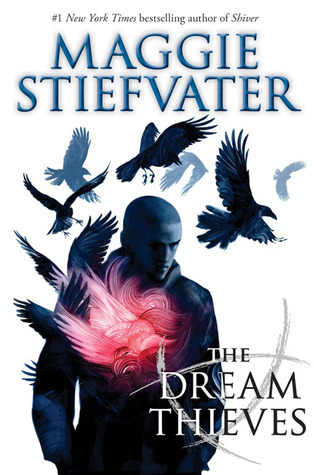
The Dream Thieves by Maggie Stiefvater, narrated by Will Patton, continues the series with the Raven Boys and Blue fighting the dark forces of dreamland.  The ley line has been awakened but the Raven Boys and Gansey continue their search for the dead ancient king Glendower.  As they continue their search, the Gray Man is searching for a mechanism, but even with the help of Blue’s psychic family, he has no idea what he is searching for. The romantic tension is present here, but the book is less about teen romance than about the battle between good and evil and the known versus the unknown.

Meanwhile, the magic of Cabes Water has disappeared or fizzled out, as if a power surge has disrupted its power.  Ronan, who has been the black sheep, has finally found a purpose, and in this volume, he has come into his own, while Adam still seems lost.  Despite the fluid relationships between the Raven Boys and Blue and her family, they have little choice but to push aside their emotions to save the magic of Cabes Water, jumpstart the power of the fading lay line, and keep the evil forces at bay.  Stiefvater’s prose is thrilling, visually arresting, and unforgettable.

The Dream Thieves by Maggie Stiefvater, narrated by Will Patton, is a whirlwind of magic that will leave readers wanting more.  Will these boys survive the magic? Can they wield the magic with aplomb and responsibility? Or will they be devoured by the fire that threatens to burn the town and take the magic with it?  This is a series that will have readers begging for more, and they’ll be unable to get these living nightmares out of their head long after the book is closed.

Other Reviews:

About the Author:

New York Times bestselling author of The Shiver Trilogy, The Raven Cycle, and The Scorpio Races. Artist. Driver of things with wheels. Avid reader. All of Maggie Stiefvater’s life decisions have been based around her inability to be gainfully employed. Talking to yourself, staring into space, and coming to work in your pajamas are frowned upon when you’re a waitress, calligraphy instructor, or technical editor (all of which she’s tried), but are highly prized traits in novelists and artists. She’s made her living as one or the other since she was 22. She now lives an eccentric life in the middle of nowhere, Virginia.