Quantcast

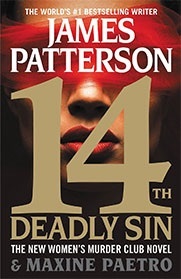
14th Deadly Sin by James Patterson and Maxine Paetro

Source: Public Library
Hardcover, 384 pgs
I am an Amazon Affiliate

14th Deadly Sin by James Patterson and Maxine Paetro brings to light the possibility of police corruption in San Francisco, and Lindsay Boxer doesn’t know who to trust.  When drug houses get hit and all of the perps are killed by men wearing SFPD windbreakers and latex masks, Boxer and her team have to determine if those men are really cops or if they are criminals trying to smear the reputation of the police department.

Meanwhile, Lindsay’s husband, Joe, has to adjust to a new set of circumstances when he becomes a stay-at-home dad.  While he loves his little girl, Julie, the adjustment is a lot harder than he expects.  A former FBI agent at home doing laundry and other household chores, while his wife is chasing bad guys all over the city, what could be more of an adjustment, especially with the long hours she keeps.  At least, that’s until he and his wife begin working on an off-the-books case regarding stabbings that happen on the same date every year.

Patterson and Paetro make a great writing team for this series.  These women are full of spunk and passion, but they’re also not married to their jobs like some.  They love to be able to come home to their families and friends and just have a good time.  These gatherings of the Women’s Murder Club are often pow-wows about their cases or stories, but they also are a great way for the ladies to blow off steam.

14th Deadly Sin by James Patterson and Maxine Paetro is a solid addition to the series, and while the audio for this one was unavailable at my library, I’m sure I would have enjoyed it much the same.  This one has got a little of everything — mystery, fun, relationships, and adjustments to new career/life situations.

About the Author:

James Patterson is a prolific author of thrillers, mysteries, young adult novels and more. His first successful series featured psychologist Alex Cross.

About the Co-Author:

Maxine Paetro collaborates with best–selling author James Patterson, co–writing The 4th Of July, The 5th Horseman, The 6th Target, The 7th Heaven, The 8th Confession, The 9th Judgment, 10th Anniversary and The 11th Hour, just released in May 2012. All are New York Times #1 best–sellers in the Women’s Murder Club Series.

The Great War: Stories Inspired by Items from the First World War illustrated by Jim Kay


Source: LibraryThing Early Reviewers
Hardcover, 304 pgs
I am an Amazon Affiliate

The Great War: Stories Inspired by Items from the First World War illustrated by Jim Kay is an engaging way for young readers (age 10+) to learn about World War I through the touchstones and artifacts left behind by soldiers, their families, and the war itself.  From a writing case to a toy soldier, these stories draw inspiration from these objects, building a world in the past that could be as real today as it was then.  There are stories from Michael Morpurgo and Tracy Chevalier, and like many short story collections some stories shine brighter than others, with “Captain Rosalie” being bitter sweet and “Our Jacko” inspiring.  These stories will evoke deep emotions in readers, as they learn not only about the realities of war and loss, but also the connections we have to objects that come from our ancestors.

“I keep the compass shined up and the safety catch on so the little needle doesn’t swing and break.  When I hold it and let it go and hunt out north, it bobs around like anything, like something on water, and it’s hard to tell where you are or what it’s saying.  That’s because I can’t keep my hands still enough.  But my dad could.  He kept his hands steady all the way, and he found home.” (“Another Kind of Missing,” pg 27)

“For in order for a story to work, it has to have a purpose, a structure, a journey, and a resolution.  And in reality, war has none of these things.  War is simply a near-random sequence of horrors, and so to make a story out of war is to lie.”  (“Don’t Call It Glory,” pg 65)

“But for music, I might have just stayed there,
keeping time with the
swoosh, swoosh, swoosh
of my push broom
for always.

Maybe making something of yourself is about
not
just keeping time
but doing something of substance,
something risky,
something you couldn’t fathom having the
skill
guts
nuts
to do until
you
do it. (“A Harlem Hellfighter and His Horn,” pg. 153)

Beyond the short stories told in this collection, there is one, long narrative poem, “A Harlem Hellfighter and His Horn,” which mirrored the rhythm and blues played by the main character.  But it also highlights the desire to seize the moment when it comes, rather than wait until its gone to desire it.

“So I won’t waste it:
War can break a man.
Slam him down on his back in the
dark.” (“A Harlem Hellfighter and His Horn,” pg. 166)

Each of these pieces brings forth some of the hidden feelings of those left behind by soldiers and those who are less than eager to fight, but they also illustrate the complexity of war and its allure.  Kay’s illustrations are in black and white and give the collection just the right amount of gruesome horror, but these are accompanied by facts about the war from women entering the workforce and the types of jobs they assumed to the conditions of the trenches.

The Great War: Stories Inspired by Items from the First World War illustrated by Jim Kay would be a great addition to any classroom willing and able to go beyond the traditional teachings of just WWII and other wars.  WWI was an important part of history that should not be forgotten, as it illustrates not only the brutality of ambitious people, but also the realities of bravery and cowardice, particularly through the eyes of children who are left behind.


Stencil Craft: Techniques for Fashion, Art & Home by Margaret Peot

tlc tour host

Source: TLC Book Tours
Paperback, 128 pgs
I am an Amazon Affiliate

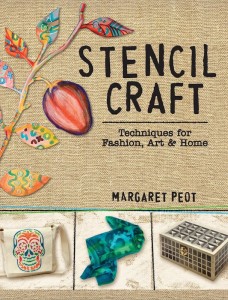
Stencil Craft: Techniques for Fashion, Art & Home by Margaret Peot is a gloriously laid out how-to guide for stenciling on fabric and other materials, and Peot outlines what tools work best and how to choose the best brushes and materials for making stencils.  She says in the introduction, “In this book you will make your mark literally — using stencil techniques to paint on clothes, paper, and home furnishings for fashion, interior design, art, and crafting.”  However, she does warn, “while experimenting with the projects in this book, you will make some beautiful things and some ugly things.”  (page 7)

My husband is the more crafty one when it comes to art, though I’ve done some pastel drawings and some collage in scrapbooks previously, but this book was a way that our family could create something together.  With the gorgeous examples in the book, it was very hard to decide, but we ultimately chose to do a project with found items, which can be those found outside, like feathers and leaves, or just stuff from around the house like ribbon, lace trim, or other items. Then, after rummaging around the house and looking at the stuff we had, we changed our minds. Obviously, this is a book that can generate a ton of ideas.

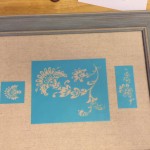
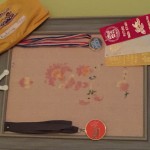
Finally, we decided to create a board that our daughter could use for her achievements, like her swim ribbons and her medals from soccer, etc. We wanted to create something with stencils and acrylic that she could use. However, rather than cut out our own stencils, we bought some we liked to try out; we’ll probably be more adventurous later when we redo the kitchen cabinets.

You can see the progression and results we had for our first time. We thought that the instructions about picking out brushes and paints was pretty straightforward. The techniques for brushing on the paint was relatively easy to follow, though it seems that we were both using different techniques on the same project. The overall result is good, but I think we’ll need a little more practice before we tackle a larger project. Stencil Craft: Techniques for Fashion, Art & Home by Margaret Peot will have us busy for some time, and I think theses are some great projects for families to do together or even to teach little ones. I’ll be sharing this book with both my husband and daughter for sure.

There are two giveaways with this review, one through Rafflecopter, and one for a single copy of the book to a U.S. resident.

So please do enter both. Leave a comment about what kinds of stencil projects you’d be interested in doing in the comments for your chance to win a copy of the book.  Enter by July 12, 2015, 11:59 PM EST


About the Author:

Margaret is an artist, writer and costume painter. Margaret’s book Inkblot: Drip, Splat and Squish Your Way to Creativity (Boyds Mills 2011) was awarded a Eureka! Silver Medal for non-fiction children’s books. She is also the author of The Successful Artist’s Career Guide (F&W 2012), Alternative Art Journals (F&W 2012), and Make Your Mark (Chronicle Books, 2004), voted one of Library Journal’s best how-to books of 2004. She is looking forward to the publication of two new books in 2015, Stencil Craft (F&W) and an early reader picture book, Crow Makes a Friend (Holiday House).

Margaret has painted costumes at Parsons-Meares, LTD for more than twenty years. Projects include Broadway (Aladdin, The Lion King, Wicked, Turn Off the Dark, Will Rogers Follies, Shrek the Musical, Phantom of the Opera, Mary Poppins, among many others), dance (ABT, Joffrey Ballet, Pilobolus, Feld Ballet, Nevada Ballet), film (Bram Stoker’s Dracula), as well as for circuses, arena shows and ice shows. For more information, please visit her websites: MargaretPeot.com and TheInkBlot.com.

Enter the Rafflecopter Giveaway:

a Rafflecopter giveaway

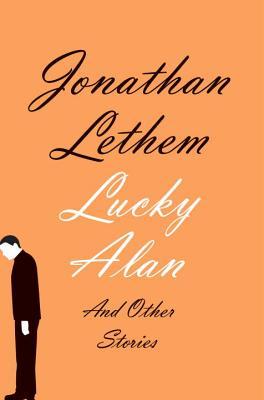
Lucky Alan and Other Stories by Jonathan Lethem

Source: Random House
Hardcover, 157 pgs
I am an Amazon Affiliate

Lucky Alan and Other Stories by Jonathan Lethem is an eclectic collection of short stories that range from the experimental to the surreal and traditional, but many of these stories lack the final punch readers make expect from short stories. While characters in these stories may experience smaller revelations, they often fall a little flat in the telling as the prose tends to be overly flowery or down-right boring. Of the collections that should be engaging to the reader given the title alone, they often lack the glitter readers will expect, such as “The Porn Critic.” And even these stories with catchy titles are some of the best in the collection, despite their flaws.

The first story, “Lucky Alan,” chronicles a neighbor who is obsessed with a reclusive Alan in his building and upon his marriage and later his growing family, the neighbor feels less important and pushed aside. In reality, he learns that this friend he tried so hard to win, was not who he thought him to be at all. And after the entire building sides with Alan, it is hard for him to continue living in a place that is unaware of Alan’s true nature. There are more nuances in the story, but they often get lost in the strange dialogue between friends and the situations that seem outlandish even in a large city of eclectic people.

In “The King of Sentences,” Lethem takes a look at the other side of fame, not so much the emphasis on the crazed fan, though there are some here, but on the perceptions we have of these famous people and how they may be very far from reality. In fact, the reality presented here is very scary for those of us who wish to meet those famous stars and writers we love. Meanwhile, “Their Back Pages,” seemed to be riffing off of Survivor and Lord of the Flies, but there are some pieces within the story that worked better than others, which made the overall effect of the story muted and confused.

Lucky Alan and Other Stories by Jonathan Lethem was a collection of stories with a lot to recommend it, but unfortunately, I can’t. I was disappointed with the individual stories and those that worked for the most part just didn’t wow me. Others might have a different view, but when reading short stories, I shouldn’t be falling asleep.

About the Author:

Jonathan Allen Lethem is an American novelist, essayist and short story writer. His first novel, Gun, with Occasional Music, a genre work that mixed elements of science fiction and detective fiction, was published in 1994. It was followed by three more science fiction novels. In 1999, Lethem published Motherless Brooklyn, a National Book Critics Circle Award-winning novel that achieved mainstream success. In 2003, he published The Fortress of Solitude, which became a New York Times Best Seller. In 2005, he received a MacArthur Fellowship.

Longbourn by Jo Baker (audio)

Source: Public Library
Audio, 13.5 hrs.
I am an Amazon Affiliate

Longbourn by Jo Baker, narrated by Emma Fielding, is a look at the servants behind the scenes of Pride & Prejudice by Jane Austen.  Sarah is an orphaned, hard-working housemaid in the Bennet household at Longbourn, but even as she keeps within the confines of her role, she begins to wish for something more.  Baker clearly delineates the roles of the household servants, and depicts the realities of that life with a frankness that cannot be ignored.  While readers may be cheering Sarah on in her dreams of something more, they also realize that dreaming for too much can become a devastating blow when it does not come to pass.  With the arrival of a new footman, Sarah finds herself torn between her feelings for him and that of Ptolemy Bingley, a mulatto servant of the Bingley family.  What readers will find here is that the servants interactions with the main characters of Austen’s work reinforce their flaws for the most part, which is to be expected when writing from the perspective of those in the lower class.

Fielding is a great narrator and does really well with the prose that closely mirrors that of Austen, ensuring that readers get wrapped up in the story.  The only drawback in this story is Ptolemy because he is a character who is under-developed and whose back story becomes a mere catalyst for Sarah’s evolution beyond her current status in the household.  It is almost as if he could have been someone that was talked about among the servants, rather than actually met by Sarah, as she’s only superficially tempted by him and what he represents tangentially.

It is almost as if the naive housemaid believes Ptolemy represents a greater freedom than he actually does, especially given that he was a former slave on a plantation owned by the Bingleys.  To another point, would the Bingleys actually have been plantation owners?  Perhaps not, given that most newly rich families earned their money in business dealings, not that plantation ownership could not be a business dealing.  This part of the story is not fully fleshed out, leaving readers with a very superficial view of his life and current situation.

Austen’s main story is not disrupted by Baker’s novel in any major way, with the girls being married off and some more favorably than others.  What’s strong here is the steady hand of Mrs. Hill and her ability to not only see past her own misfortunes but to also offer hope within her sage advice to Sarah.  Longbourn by Jo Baker, narrated by Emma Fielding, is engaging and captivating, while never putting window dressing on the lives of servants.

About the Author:

Jo Baker was born in Lancashire. She was educated at Oxford and at Queen’s University, Belfast, where she completed a PhD on the work of the Anglo-Irish writer Elizabeth Bowen. Her first novel, Offcomer, was published by William Heinemann in 2001. Her second book, The Mermaid’s Child, is was published in August 2004. Jo Baker has also written for BBC Radio 4, and her short stories have been included in a number of anthologies. From 2001-2003 she was the Artistic Director of the Belfast Literary Festival. She lives in Belfast with her husband, the playwright and screenwriter Daragh Carville, and their son Daniel. The Telling is her third novel.

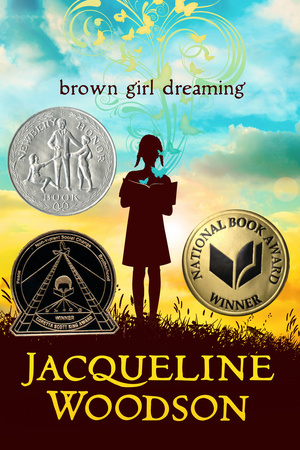
Brown Girl Dreaming by Jacqueline Woodson

Source: Public Library
Hardcover, 337 pgs.
I am an Amazon Affiliate

Brown Girl Dreaming by Jacqueline Woodson, a National Book Award Winner and Newbery Honor Book, is a coming-of-age novel in verse that is fresh and child-like in its perspective.  Jacqueline Woodson clearly bases her novel on her own experiences as a young black girl who grows up in a home with a single mother and older siblings.  Moving from Ohio and her father to Greenville, S.C., in the 1960s to live with her mother, siblings, and grandparents, Jackie is too young to understand the breakup of her family and remember her past.  Running in parallel to the Civil Rights Movement, young Jackie learning her letters and trying to keep up with her older siblings.  As she finds she doesn’t measure up to her smart sister in the classroom, she also learns that each sibling may have hidden talents, like her brother’s singing voice.

From "February 12, 1963" (pg.1-2)

I am born in Ohio but
the stories of South Carolina already run
like rivers
through my veins.

From "My Mother and Grace" (page 25-26)

Both know that southern way of talking
without words, remember when
the heat of summer
could melt the mouth,
so southerners stayed quiet

Jackie is a young girl finding her way, looking to be strong, but also learning to listen to her elders and to others influencing the civil rights movement. She hasn’t made up her mind, but she’s learning piece by piece what it means to be a young black woman in the south and how that differs from being black in New York.  Woodson’s style is frank, but firmly rooted in the point of view of a young girl who observes both the benefits of the movement and the drawbacks of fighting for what you believe in.  Along the way, she becomes friends with Maria whose mother cooks the best Hispanic food, and they do everything together, including swap dinners in the stairwell.

Brown Girl Dreaming by Jacqueline Woodson is a journey of a young black woman growing up in the 60s and 70s and serves as an excellent introduction to not only the time period, but also the struggles of black in the south and in the north for those ages 10 and up.  There are moments in which the author relies on a dream-like quality to present her narrator’s ideals, but at other points, it is very clear cut what has happened.  In many ways, this rendition is a mere outline of the harsher parts of life and it is reflected well through a child’s eyes.

About the Author:

Jacqueline Woodson is an American writer of books for children and adolescents. She is best known for Miracle’s Boys, which won the Coretta Scott King Award in 2001, and her Newbery Honor-winning titles Brown Girl Dreaming, After Tupac & D Foster, Feathers, and Show Way. Her work is filled with strong African-American themes, generally aimed at a young adult audience.

For her lifetime contribution as a children’s writer, Woodson won the Margaret Edwards Award in 2005 and she was the U.S. nominee for the biennial, international Hans Christian Andersen Award in 2014. IBBY named her one of six Andersen Award finalists on March 17, 2014. She won the National Book Award in 2014 in the category of “Young People’s Literature” for Brown Girl Dreaming.


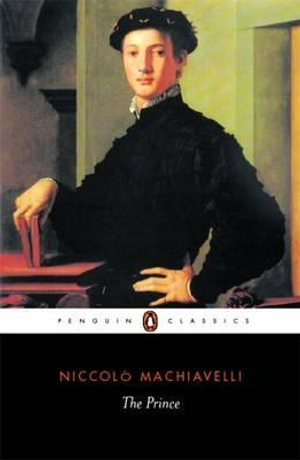
The Prince by Niccolò Machiavelli

Source: Public Library
Paperback, 85 pgs
I am an Amazon Affiliate

The Prince by Niccolò Machiavelli, which was our June book club selection and my second reading (I haven’t read this since college), is a nonfiction analysis of different types of principalities and how a prince can keep them when factions or people move against him.  The work is considered a classic and it is an examination of what traits make principalities hard to maintain or easy to keep, as well as what characteristics a prince should foster in himself to hold onto his principality.  Although this is a slim volume, the economy of the language makes it quite dense and oftentimes dry.  Many often attribute the sayings of “the ends justify the means” and “might makes right” to Machiavelli, though they are not necessarily accurate interpretations of what he espoused.

It is clear that his life experiences as a civil servant in Italy, which had been far from unified under one government and was operated more through a balance of various factions and the strength of the truth.  It is clear that Machiavelli viewed political success from a practical standpoint, without an emphasis on morality.  More accurate attributions of wisdom to him might be that you can gauge the intelligence of a prince by those he has around them or that it is better to be feared than loved.

“The main foundations of every state, new states as well as ancient or composite one, are good laws and good arms; and because you cannot have good laws without good arms, and where there are good arms, good laws inevitably follow … ” (page 40)

The Prince by Niccolò Machiavelli has become a guidebook for many leaders, and has been perverted by others, including Hitler and Stalin.  Whatever readers may take away from his advice on principalities, Machiavelli is clearly a keen observer of human behavior, especially among rulers.  It is highly humorous that he would give this book as a gift to a new ruler of the Medici family in the hope of gaining favor with the new government, especially since the book tends to provide a framework for governing as if the reader would need pointers.  How many rulers would take to that kindly?

What the book club thought:

Everyone seemed to agree that this was almost like a how-to guide on how to become a prince and maintain the power they gain, regardless of the political or geographical situation.  One member expressed the opinion that Machiavelli seemed to focus on his own ambitions, despite his couching of his advice as something to help Medici, who was currently in power at the time the book was written.  Others did not see that, and I mentioned that he was incredibly disappointed that his political and civilian government life had come to an end too quickly and that he was motivated to ensure his return to that life.  Overall, most people found the book interesting and though that it would be interesting to see what Machiavelli would have written about the U.S. presidency or if his guide would work in today’s modern world.  The book generated a great deal of discussion, and most were surprised that it was not more evil than they expected.

About the Author:

Niccolò di Bernardo dei Machiavelli was an Italian political philosopher, musician, poet, and romantic comedic playwright. He is a figure of the Italian Renaissance and a central figure of its political component, most widely known for his treatises on realist political theory (The Prince) on the one hand and republicanism (Discourses on Livy) on the other.

Changes: A Child’s First Poetry Collection by Charlotte Zolotow, illustrated by Tiphanie Beeke

Source: Sourcebooks/Shelf Awareness
Hardcover, 40 pgs
I am an Amazon Affiliate

Changes: A Child’s First Poetry Collection by Charlotte Zolotow is gorgeously illustrated by Tiphanie Beeke, and the 28 poems are divided into seasons to reflect the title.  This collection is published posthumously, poems her daughter calls clean and clear about what changes and what stays the same.  The collection opens with “Changes” that talks about the differences between the seasons but that they always come around the same time each year, even though the narrator has changed through the years.  These verses are fantastic for little kids, projecting images that are complemented by the illustrations and allowing them to visual nature and the seasons.

These poems read as if told from the perspective of a child who stares in awe at the birds in the sky, the birds flying by, and all that surrounds them.  From the cool breezes of spring and the budding flowers to the salty wind of the sea in summer on vacation, children will see the fun and get absorbed in the costumes of Halloween, the beginning of school in the fall, and the winter wonders of snowmen and the first snow.  Beeke’s images are reminiscent of the whispy-ness of water color images and pastel smudges.  Zolotow clearly has a firm grasp of the wonder most children have when they are young; they are curious and inquisitive, but there also are some who are contemplative.  Read aloud these poems create a new world of rhyme and lyrical verse for children.

Changes: A Child’s First Poetry Collection by Charlotte Zolotow, illustrated by Tiphanie Beeke, is a great collection to start young readers with the wondrous world of poetry.  The illustrations are well matched with Zolotow’s lines.  My daughter and I have read this collection several times, and she often asks what season we are in when we read the poems.

About the Author:

Charlotte Zolotow—author, editor, publisher, and educator—had one of the most distinguished careers in the field of children’s literature. Born in Norfolk, Virginia in 1915, Changes: A Child’s First Collection of Poetry is published on the occasion of Charlotte Zolotow’s 100th birthday.

Doctor Sleep by Stephen King (audio)

Source: Public Library
Audio, 18 hrs
I am an Amazon Affiliate

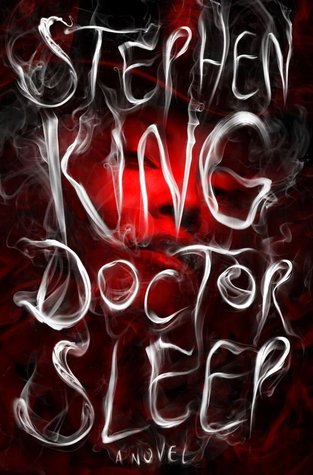
Doctor Sleep by Stephen King is a sequel to The Shining, starring Dan Torrance who was just a young boy in the first book.  In this novel, we learn about the life Dan led after the infamous events at the Overlook Hotel.  Dan has struggle most of his adult life against addiction to alcohol, like his father, but in many ways, the alcohol became a way for him to hide from his gifts.  As he copes with his addiction, he finds solace in that he can help those leaving this world for the next go peacefully.  Eventually, he becomes known as Doctor Sleep in a small New Hampshire town at a nursing home.

Meanwhile, Abra Stone, a gifted twelve-year-old girl, has caught the eye of the members of the True Knot who are human and not-human.  The True Knot seems to be an unstoppable force that are sucking the life force out of those with special gifts, but they haven’t yet met their match.  This novel is a slow builder, but in true King style, the characters are varied and dynamic.  Blending not only the supernatural with small town creepiness, King creates an atmosphere that is at once familiar and other worldly.

Doctor Sleep by Stephen King is an adventure and otherworldly with interesting characters, but there were times during the audio that my mind wandered.  The narrator, Will Patton, does a great job of creating voices that are nuanced enough to be separate entities in the performance.  I enjoyed the audio performance, but felt as though Dan’s flaws lost their impact along they way — does that mean his character evolved or that they were forgotten? — and Abra has gone from a scared Shiner to a formidable foe awfully quickly.  There are some story arcs that are quickly wrapped up and others that seem glossed over, leaving readers to fill in the gaps.  However, in terms of a sequel, written so many years after the first book, King has created a book that could be read wholly on its own, but is richer if readers have read the first book.

About the Author:

Stephen King is the author of more than fifty books, all of them worldwide bestsellers. His recent work includes Doctor Sleep and Under the Dome, now a major TV miniseries on CBS. His novel 11/22/63 was named a top ten book of 2011 by The New York Times Book Review and won the Los Angeles Times Book Prize for Mystery/Thriller as well as the Best Hardcover Book Award from the International Thriller Writers Association. He is the recipient of the 2003 National Book Foundation Medal for Distinguished Contribution to American Letters. He lives in Bangor, Maine, with his wife, novelist Tabitha King.

Citizen: An American Lyric by Claudia Rankine

Source: Purchased
Paperback, 169 pgs
I am an Amazon Affiliate

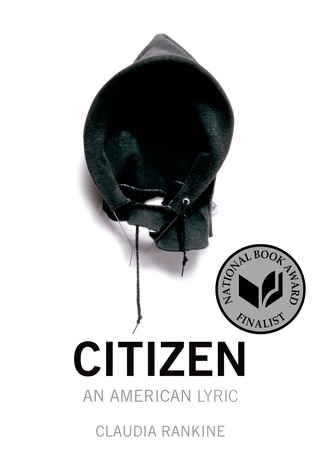
The power of Citizen: An American Lyric by Claudia Rankine makes me wonder what the winner of the National Book Award could have written to outshine Rankine’s words in 2014.  In her collection of essays, poems, and vignettes, Rankine points: “‘The purpose of art,’ James Baldwin wrote, ‘is to lay bare the questions hidden by the answers.'” (page 115)  She took this to heart when writing this collection because she raises up those questions about race in America and brandishes them like a flag.  That is not to say that racism is something that is wholly owned by just white people or white police, but that it is perpetuated by the actions, behaviors, and assumptions both races make about one another.  What does it mean to be American? Does it mean as citizens we brush aside these issues and move forward? Does it mean that we must embrace all of this darkness into ourselves and find solutions that may not work for everyone? Or does it mean that we must take a more internal approach and remedy that which we do to perpetuate those wrongs around us?

from page 135:

because white men can’t
police their imagination
black men are dying

What is engaging about Rankine’s work is that she blurs the lines between the you, the I, the she, the he, to make it less clear cut who is being discriminated against and who is suffering. In this way she takes the time to juxtapose the traditional black victim of white racism formula with a less black-and-white distinction, and it’s done with purpose.

“In any case, it is difficult not to think that if Serena lost context by abandoning all rules of civility, it could be because her body, trapped in a racial imaginary, trapped in disbelief — code for being black in America — is being governed not by the tennis match she is participating in but by a collapsed relationship that had promised to play by the rules.  Perhaps this is how racism feels no matter the context–” (page 30)

Lest you think this book is about racism only through the lens of the victim, it is not.  There a great deal to discuss about racism, its roots, its ignorance, and its pervasiveness in American society.  While many, if not all, the references are contemporary, they could have been pulled from many times throughout history.  Book clubs could discuss this collection of essays and poems for hours.  I cannot explain to you how deeply affected by the book I have been.  I will likely read and re-read this book many times.  I may even put it forth to my book club as a suggestion.

Citizen: An American Lyric by Claudia Rankine is essential reading for every American — young or old, black or white, Hispanic or Asian; it is the beginning of a dialogue that is desperately needed in this country where the presumption of ignorance or incivility is based upon a skin color rather than an individual’s actions and behaviors.  While discrimination against “other” continues, it is not merely one-sided, and until we are able to break down those walls to the truth of our humanity, discrimination and racism will always exist.

***Best of 2015 — not a contender, firmly on the list***

About the Author:

Claudia Rankine was born in Jamaica in 1963. She earned her B.A. in English from Williams College and her M.F.A. in poetry from Columbia University. She is the author of four collections of poetry, including Don’t Let Me Be Lonely (Graywolf, 2004); PLOT (2001); The End of the Alphabet (1998); and Nothing in Nature is Private (1995), which received the Cleveland State Poetry Prize.

Rankine has edited numerous anthologies including American Women Poets in the Twenty-First Century: Where Lyric Meets Language (Wesleyan, 2002) and American Poets in the Twenty-First Century: The New Poetics (2007). Her plays include Provenance of Beauty: A South Bronx Travelogue, commissioned by the Foundry Theatre and Existing Conditions, co-authored with Casey Llewellyn. She has also produced a number of videos in collaboration with John Lucas, including “Situation One.” A recipient of fellowships from the Academy of American Poetry, the National Endowments for the Arts, and the Lannan Foundation, she is currently the Henry G. Lee Professor of English at Pomona College.  (Photo credit: John Lucas)


William Shakespeare’s The Phantom of Menace by Ian Doescher

Source: Quirk Books
Hardcover, 176 pgs
I am an Amazon Affiliate

William Shakespeare’s The Phantom of Menace by Ian Doescher is just what it espouses to be, a Shakespearean rendition of Star Wars.  Doescher has clearly studied enough Shakespeare and is creative enough to pull this off, and as an avid reader and lover of Shakespeare and Star Wars, this one was a perfect fit.  In fact, I was chuckling to myself as I heard the movie version of Jar Jar Binks in my head speaking in near iambic pentameter.  It was hilarious.  If I could see this one filmed, I would.  There are people who hate Jar Jar, and there are people like me who just adore him.  What I loved about Doescher’s rendition of him is that there is more to the character than appears outwardly to the other characters.  The re-imagining of this polarizing character was fascinating, and I couldn’t wait to see what happened next – even though I know the story.

Amidala: “A youth is no more frail than older folk,
No less intelligent, no less sublime.
Our steps are newer, yet we are no jewel
To be protected and encas’d by them.” (pg. 20)

Anakin: “Why do we worship at the shrine of change?
Hath change e’er put a meal upon our board?
Is change betoken to something positive?
Or may it be that change for changing’s sake
But changes good to evil, bad to worse?” (pg. 99)

This rendition can be read for its homage to Shakespeare and Star Wars, and it can be read for its humor, but it also is multi-layered with meaning. What does it mean to accept change so easily, and does it mean that youth is unequal to older people with experience? Doescher also speaks of the hidden commentary in Star Wars about perception and the “locals” of Naboo, in that the Jedi believe them to be primitive and less worldly. Fans of the movie franchise and its many incarnations have debated many things like these, as they have been debated in the study of Shakespeare and other literature, why not do it in a modern and fun mash-up like William Shakespeare’s The Phantom of Menace by Ian Doescher.

ianAbout the Author:

Ian Doescher is a Portland native, and lives in Portland with his spouse and two children. He has a B.A. in Music from Yale University, a Master of Divinity from Yale Divinity School, and a Ph.D. from Union Theological Seminary. He is currently the Director of Nonprofit Marketing at Pivot Group LLC, a full service marketing, research and web agency in Portland, Oregon.

The Cherry Harvest by Lucy Sanna

tlc tour host

Source: TLC Book Tours
Hardcover, 336 pgs
I am an Amazon Affiliate

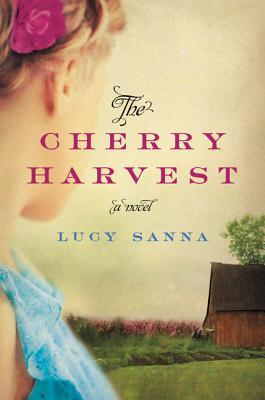
The Cherry Harvest by Lucy Sanna is a World War II novel set in the Wisconsin around the time of the cherry harvest, and for a novel focused on the home front of the war, the tension is still great.  As rationing affects the nation’s farmers, but not those like the lighthouse keeper, readers will get a sense of the tensions that wars bring for those at home and not just fighting the battles.  The narrative is split between Charlotte Christiansen and her daughter, Kate, and as two strong women, they struggle with what is right for their family, right for the town, and right for themselves.  Thomas Christiansen is a bookish man who gave up his university studies to take over the family farm, and he married a good woman from a local dairy farm who could make some award winning pies.  When the war begins to take the immigrant labor from the farm, his wife hatches a plan to save their upcoming harvest because without a plan of action, their son Ben may not have a home to come to when the war is over.

“Worry? In addition to all they had to do before, lighthouse keepers are now charged with protecting our shores from the enemy.  The shores of the Saint Lawrence Seaway and the Great Lakes.” She leaned in.  “And you think a few prison guards can protect us from that madman Hitler, who’s bent on controlling the world?” (pg. 30 ARC)

Kate is struggling, too.  Her dreams of attending university seem to be thwarted at nearly every turn as her mother takes the one possession she has to sell to pay for college and uses it to feed them, and as she learns she needs additional help with math in order to pass the entrance exam.  But beyond these trials, she realizes that life is moving forward without her in many ways, with her friend Josie already planning a wedding to Ben, even while he continues to fight overseas and his likelihood of coming home is slim.  As she finds out what kind of woman she wishes to become, Kate uncovers her own compass and learns that she needs to rely on her own courage to achieve her goals.  This self-reliance is something she learns from her mother, even as Kate comes to the realization that her mother is not perfect.

Sanna has created a dynamic cast of characters for this home front novel, but where it lacks strength is in the twists of plot.  Some situations come from left field or are simply there to check a box in what a WWII novel should have — including two star-crossed love affairs and battles between Americans and Nazis, though not on the battlefield.  Additionally, Charlotte’s character is a bit all over the place — one minute she wants the Nazis to be used as labor and in the next minute she wants them no where near her family.  Her hypocrisy is part of her undoing, but readers also may find that some things are left to unresolved to be satisfactory.  There are certain situations that did not jibe well with the character development, which made the fallout of those situations difficult to believe.

Where The Cherry Harvest by Lucy Sanna shined was in its depiction of troubled economic times because of the war, the tensions between those in the same town over those troubles, and the impact of war on soldiers and the uncertainty among family how to act or react to those soldiers coming home.  Had the novel a more refined focus, Sanna would have hit one out of the park with this one.  Due to the plot issues and other issues, this was a mixed read for me in the end.

About the Author:

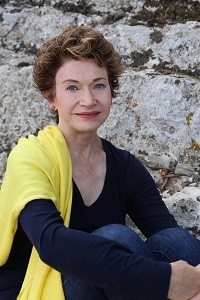
Lucy Sanna has published poetry, short stories, and nonfiction books, which have been translated into a number of languages. Born and raised in Wisconsin, Sanna now divides her time between Madison, Wisconsin, and San Francisco. The Cherry Harvest is her first novel.

Find out more about Lucy at her website and connect with her on Facebook. (Photo Credit: Hope Maxwell Snyder)