Quantcast

59th Virtual Poetry Circle

Welcome to the 59th Virtual Circle!

Remember, this is just for fun and is not meant to be stressful.

Keep in mind what Molly Peacock’s books suggested. Look at a line, a stanza, sentences, and images; describe what you like or don’t like; and offer an opinion. If you missed my review of her book, check it out here.

We’re returning once again to the classic poets. Since I was talking with Jeanne from Necromancy Never Pays on Facebook, and she told me that Robert Browning is one of her favorites.  We’re going to highlight him today.  I haven’t read much of his work, but I have read that of his wife, Elizabeth Barrett Browning.

Soliloquy of the Spanish Cloister

Gr-r-r--there go, my heart's abhorrence!
   Water your damned flower-pots, do!
If hate killed men, Brother Lawrence,
   God's blood, would not mine kill you!
What? your myrtle-bush wants trimming?
   Oh, that rose has prior claims--
Needs its leaden vase filled brimming?
   Hell dry you up with its flames!

At the meal we sit together;
   Salve tibi! I must hear
Wise talk of the kind of weather,
   Sort of season, time of year:
Not a plenteous cork crop: scarcely
   Dare we hope oak-galls, I doubt;
What's the Latin name for "parsley"?
   What's the Greek name for "swine's snout"?

Whew! We'll have our platter burnished,
   Laid with care on our own shelf!
With a fire-new spoon we're furnished,
   And a goblet for ourself,
Rinsed like something sacrificial
   Ere 'tis fit to touch our chaps--
Marked with L. for our initial!
   (He-he! There his lily snaps!)

Saint, forsooth! While Brown Dolores
   Squats outside the Convent bank
With Sanchicha, telling stories,
   Steeping tresses in the tank,
Blue-black, lustrous, thick like horsehairs,
   --Can't I see his dead eye glow,
Bright as 'twere a Barbary corsair's?
   (That is, if he'd let it show!)

When he finishes refection,
   Knife and fork he never lays
Cross-wise, to my recollection,
   As do I, in Jesu's praise.
I the Trinity illustrate,
   Drinking watered orange pulp--
In three sips the Arian frustrate;
   While he drains his at one gulp!

Oh, those melons! if he's able
   We're to have a feast; so nice!
One goes to the Abbot's table,
   All of us get each a slice.
How go on your flowers? None double?
   Not one fruit-sort can you spy?
Strange!--And I, too, at such trouble,
   Keep them close-nipped on the sly!

There's a great text in Galatians,
   Once you trip on it, entails
Twenty-nine district damnations,
   One sure, if another fails;
If I trip him just a-dying,
   Sure of heaven as sure can be,
Spin him round and send him flying
   Off to hell, a Manichee?

Or, my scrofulous French novel
   On grey paper with blunt type!
Simply glance at it, you grovel
   Hand and foot in Belial's gripe;
If I double down its pages
   At the woeful sixteenth print,
When he gathers his greengages,
   Ope a sieve and slip it in't?

Or, there's Satan!--one might venture
   Pledge one's soul to him, yet leave
Such a flaw in the indenture
   As he'd miss till, past retrieve,
Blasted lay that rose-acacia
   We're so proud of! Hy, Zy, Hine...
'St, there's Vespers! Plena gratia
  Ave, Virgo! Gr-r-r--you swine!

Let me know your thoughts, ideas, feelings, impressions. Let’s have a great discussion…pick a line, pick an image, pick a sentence.

I’ve you missed the other Virtual Poetry Circles. It’s never too late to join the discussion.

Twelve Moons by Mary Oliver

Twelve Moons by Mary Oliver is her fourth collection and as always nature is front and center.  But above all this collection is about transformation and by extension the journey of life.  Parallels are drawn between the grief humans feel and the changing seasons and the self-confidence of nature as it is seen in humans as mere glimpses or slivers of the moon.

“And sometimes, for a moment,/you feel it beginning — the sense/of escape sharp as a knife-blade/hangs over the dark field/of your body, and your soul/waits just under the skin/to leap away over the water./”  (From At Blackwater Pond, page 49)

Oliver’s love of nature and awe of it transcends her lines and these pages, tapping into readers’ sense of childlike wonder about the world.  It reminds us that there is a greater world beyond the meetings, the email, and the stress of our lives — a world where things can just be and live.  Beyond the sense of wonderment is an air of caution about how we interact with this natural world and how we are at times the enemy.

From Mussels (page 4), “In the riprap,/in the cool caves,/in the dim and salt-refreshed/recesses, they cling/in dark clusters,/in barnacled fistfuls,/in the dampness that never/leaves, in the deeps/of high tide, in the slow/washing away of the water/in which they feed,/ . . . Even before/I decide which to take,/which to twist from the wet rocks,/which to devour,/they, who have no eyes to see with,/see me, like a shadow,/bending forward.”

Like the mysterious phases of the moon, Oliver’s poems often take on a mystical quality, blurring the lines between reality and dreams.  Is her father the explorer he always dreamed he would be?  Do the fish feel the same way about children that humans do?

Twelve Moons is a collection dealing with immortality, nature, and our place in and against it.  Oliver’s poetry is enjoyable on the surface and as deeper meanings are sought upon multiple readings and even immediately.  Beginning readers of poetry would have little trouble understanding her lines and easily find correlations to their own lives.  An excellent collection, and one of the best I’ve read this year.

***I purchased my copy of Twelve Moons by Mary Oliver at a local library sale.***

This is my 11th book for the Clover Bee & Reverie Poetry Challenge.

The Short Second Life of Bree Tanner by Stephenie Meyer

Stephenie Meyer‘s The Short Second Life of Bree Tanner is a short novella that takes a glimpse at the other side of vampirism . . . the darker side.  Written as a companion to the Eclipse novel and the release of the movie, readers will experience what it truly is to be a newborn vampire, to crave the blood, and to think of nothing else.

“She opened her mouth to scream, but my teeth crushed her windpipe before a sound could come out.  There was just the gurgle of air and blood in her lungs, and the low moans I could not control.”  (Page 10)

Bree Tanner is a young teen turned vampire thrust into a vicious world of vampire gangs, who hides behind Fred, a young vampire with the power to repel others.  She’s timid and fearful of the new world she’s in, but she cannot control her thirst any more than her other counterparts.  Bree meets an older vampire teen, Diego who takes her under his wing and allows her to find comfort with her new life.

Overall, the novella is a quick read and helps shed light on the vampire world not seen in the Twilight series, but it lacked the gruesome and detailed slashing that one would expect from newborn vampires.  Much of The Short Second Life of Bree Tanner focuses on teen angst about fitting in and finding one’s way in the world, and naturally about a budding love.  Meyer is a gifted storyteller, but her timidity with regard to the vicious nature of vampires will leave many fans feeling flat.

***I borrowed my copy of Meyer’s novella from the local library.  I’d also like to thank Not Enough Books for the recommendation.***

This is my 4th book for the 2010 Vampire Series Challenge.

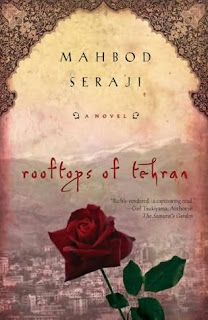
Giveaway of Rooftops of Tehran by Mahbod Seraji

Last year I reviewed Rooftops of Tehran by Mahbod Seraji, which is now in its fifth printing and second edition.

Check out some of the honors the book has received:

Villanova University One Book Selection

Broward College wRites of Spring 2010 Selection

American Book Seller Association Outstanding Debut Selection

Book Reporter Bets On Book

Top 25 Book Club Favorite List for 2009

Indie Next Notable

50 Bay Area Notable Book of 2009

Why am I telling you all this?  Naturally, the author wants to celebrate by offering my readers 3 copies of the book in a giveaway!

The giveaway is global and will run through August 31.

1.  All you need to do is tell me why you are interested in reading Rooftops.

2.  You can get a second entry for Tweeting, Facebooking, or otherwise spreading the word about the giveaway.

Good Luck.

Mailbox Monday #92

Mailbox Mondays (click the icon at the right to check out the tour) has gone on tour since Marcia at The Printed Page passed the torch.  This month our host is Shanyn at Chick Loves Lit.  Kristi of The Story Siren continues to sponsor her In My Mailbox meme.  Both of these memes allow bloggers to share what books they receive in the mail or through other means over the past week.

Just be warned that these posts can increase your TBR piles and wish lists.

Here’s what I received:

1.  A Curable Romantic by Joseph Skibbell, which I received from Algonquin Books unexpectedly and a few of the pages are ripped.

2.  Serena by Ron Rash, which I won in a giveaway.

3.  Becoming Jane Eyre by Sheila Kohler, which I won in a giveaway.

4.  The Lost by Daniel Mendelsohn, which I won in a giveaway.

5.  My Life in France by Julia Child, which I won in a giveaway.

6.  The Guernsey Literary and Potato Peel Pie Society by Mary Ann Shaffer and Annie Barrows, which I won in a giveaway.  I’ll probably be passing this one on since I already have a copy.

What did you receive in your mailbox?

Winner of The Hypnotist

I just wanted to let everyone know that A winner was selected for The Hypnotist by M.J. Rose giveaway, which also included this cool phoenix pin.

Out of 14 entrants, random.org selected #3, Ziblee of Raging Bibliomania.
Congrats.  I’ve sent you an email.

58th Virtual Poetry Circle

Welcome to the 58th Virtual Circle!

Remember, this is just for fun and is not meant to be stressful.

Keep in mind what Molly Peacock’s books suggested. Look at a line, a stanza, sentences, and images; describe what you like or don’t like; and offer an opinion. If you missed my review of her book, check it out here.

You may have seen my review of Sweta Srivastava Vikram‘s chapbook, Because All Is Not Lost on Friday, and I’ve got a treat for you from her collection for our return to contemporary poets.

Moving On (page 3)

Loss, like the seeds
on strawberries,
is littered everywhere,
drowning
faith in its pulp.

A letter cannot swim
across the ocean
if the griever
is insistent
and smiles
reach only halfway
through the feet.

The effort has to come
from the reef
that’s hidden
underneath
the guilt of mortal burdens,
the caves of hopelessness.

Loss:  a bookmark for embalmed pages marked with stains
that should be revisited — only to learn, not memorize the events.

Let me know your thoughts, ideas, feelings, impressions. Let’s have a great discussion…pick a line, pick an image, pick a sentence.

I’ve you missed the other Virtual Poetry Circles. It’s never too late to join the discussion.
Because All Is Not Lost by Sweta Srivastava Vikram

Sweta Srivastava Vikram‘s Because All Is Not Lost is a new chapbook of poems about grief and recovery.  While recovering from grief is never the same for everyone, these poems speak to the void that death can leave.

“One day she will stop/digging up maggots of loss/breeding in her memory.//” (From Convalescence, page 18)

Vikram uses simple imagery and encapsulated stories to illustrate grief and the possible reactions to loss.  In the introduction, the poets explains her inspiration for the collection, the deaths of her grandfather and her mother’s sister.  The collection is sad and weighs heavily on the reader, and readers should consider taking each poem in separately to absorb their meaning.  However, there are rays of hope within the poems.

From A permanent address, “Flood of affection is what I get from her -/jasmine flowers mixed with olive and a soft kiss// of assurance.  She whispers/that it was a recurring nightmare./That I was safe” (page 20)

Because All Is Not Lost is a chapbook that will affect readers like no other poetry collection. Readers will be absorbed by the grief and the glimmers of light as the narrators deal with emptiness and blame.

***Thanks to the poet Sweta Srivastava Vikram for sending me a copy for review***

Now for the global giveaway; 2 copies up for grabs:

1.  Leave a comment about a moment of loss you’ve felt and how you dealt with it.

2.  Blog, Facebook, or Tweet this giveaway and leave a link here.

Deadline Aug. 27, 2010, at 11:59 PM EST

This is my 10th book for the Clover Bee & Reverie Poetry Challenge.

This is my 41st book for the 2010 New Authors Reading Challenge.

To Conquer Mr. Darcy by Abigail Reynolds

To Conquer Mr. Darcy by Abigail Reynolds is another of the author’s variation of Jane Austen’s Pride & Prejudice novel.  In this rendition, Reynolds begins with the premise that Mr. Darcy will not give up after Miss Bennet’s refusal of his marriage proposal and continues to pursue her relentlessly.  However, it does take some convincing by his cousin, Colonel Fitzwilliam.

Reynolds stays true to Austen’s characters for the most part, and the inner struggle facing Elizabeth is well depicted as she begins to change her mind about Mr. Darcy and his merits as a man and suitor.  Using more modern language and sensibilities, Reynolds updates the classic and will appeal to most modern readers.  However, readers should be warned that there are a number of intimate moments between the couple that are very detailed, which could weigh on certain sensibilities.

Reynolds has successfully created an alternate scenario to Austen’s novel, with the expected cast of characters — the Gardiners, Jane Bennet, Mr. Bingley, Mr. Wickham, and Georgiana.  What readers will enjoy most about this Elizabeth is that she does not cower from her responsibilities as a potential Mistress of Pemberley as she has done in other re-imaginings.  With all the convincing Darcy must do to win Lizzy, readers may think a more apt title for this novel would be To Conquer Miss Bennet.  Overall, To Conquer Mr. Darcy is a delightful look at how things could have been different between Lizzy and Darcy and good summer read.

**Thanks to Sourcebooks for sending me a review copy of To Conquer Mr. Darcy by Abigail Reynolds for review.

This is my 5th book for the Jane Austen Challenge 2010.

This is my 1st book for the Everything Austen II Challenge.

Dangerous Neighbors by Beth Kephart

Beth Kephart‘s Dangerous Neighbors, which hits stores on August 24, is set in 1876 in Philadelphia on the verge of the 100th anniversary of the birth of the United States as two sisters, twins, struggle with changes in their relationship and find the ability to fly on their own.

Katherine and Anna may be twins, but they are very different with Anna considered the beauty and adventurous one and Katherine as the dependable protector.  As adolescence hits and Anna falls in love with the baker’s son, Bennett, the relationship between the girls changes, forcing Katherine to make tough choices and keep secrets.  Anna is like the Schuylkill River near Philadelphia in that she winds her way through a society on the cusp of change and modernity.  She takes the plunge even though her love for the Bennett would be frowned upon by her family given his status in the city compared to that of her father, a banker.

“Nothing in this world is safe.  Clouds form.  Trees split.  Horses rear.  Ice breaks.  Fire rages.  Maybe the bird in that girl’s cage is better off, but then again, Katherine thinks, the cage could crack, the prison could itself perish, along with its prisoner.”  (Page 32 of ARC)

Dangerous Neighbors is told from Katherine’s point of view, which limits what the reader sees and hears from Anna’s perspective, but in this way, readers know the story is Katherine’s and not Anna’s.  Katherine must protect her wayward sister, or at least that’s the pressure she feels from her parents, particularly her father.  Their mother barely plays a role in their lives as she focuses all of her energy on the Centennial celebration and women’s rights.

While references are made to dangerous neighbors by her father and others in the book, readers will find that the true dangers lie in the decisions one makes about his or her own life and how those decisions can sometimes lead to unexpected tragedy.  Dangerous Neighbors is a young adult novel dealing with very adult themes of family, growing up, and moving past grief. Kephart’s attention to historical and descriptive detail will transport readers back in time, while tugging them along emotionally and with some suspense as Katherine unravels her tragic story.  Another delightful novel from Kephart, though readers may wish to see more of the mysterious William, who rescues Katherine from herself.

***I received my signed ARC of Dangerous Neighbors by Beth Kephart from Book Expo America.***